


Discounted Gift Cards: The Quiet Way to Save on Almost Anything
A step-by-step guide to saving online with discounted gift cards, card-linked offers, and smart stacking—without getting burned at checkout.
Saving money online isn’t always about finding a louder promo code. One of the most reliable “quiet deals” is paying with discounted gift cards—then stacking that discount with the normal stuff (sales, coupons, and cash back) in a way that still plays nice with returns and checkout rules.
This mini-guide walks you through a practical US-focused workflow you can use for everything from everyday household orders to big seasonal purchases.
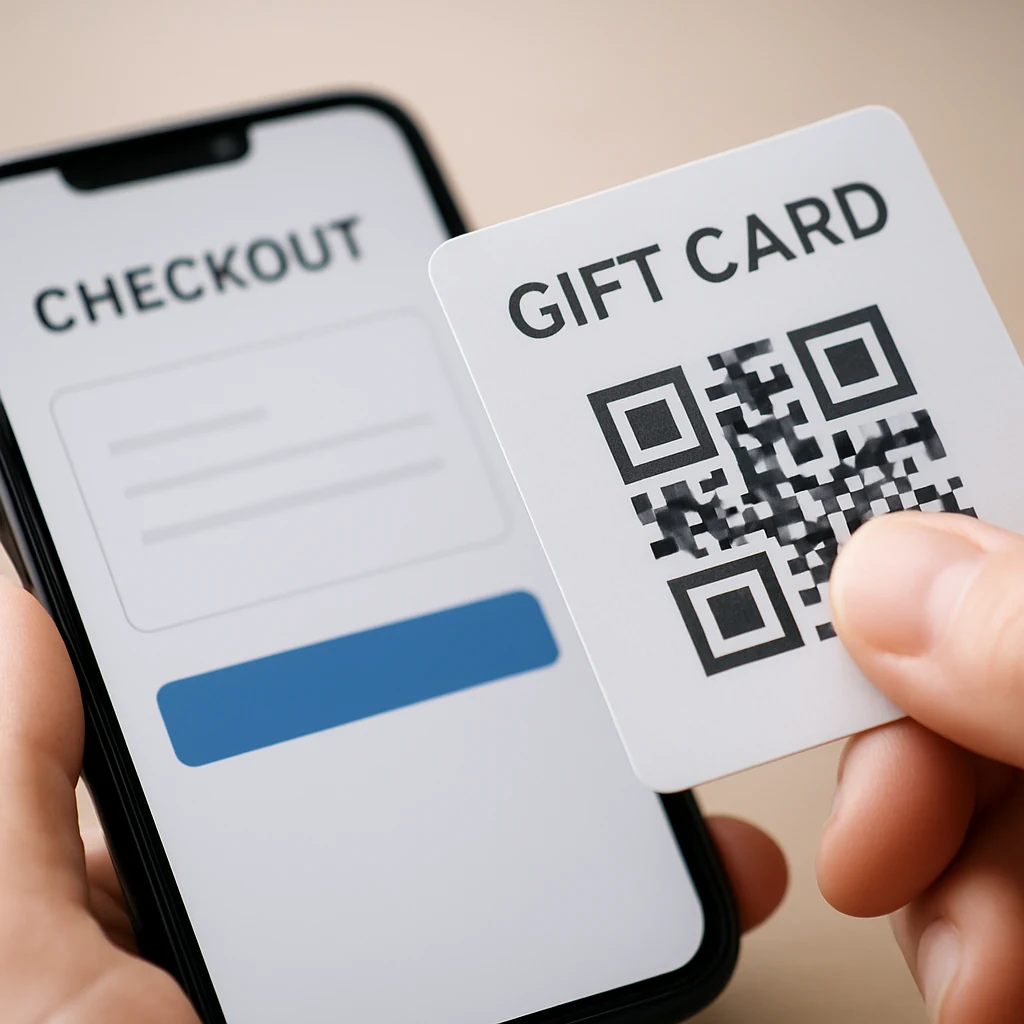
Step 1: Start with the “payment layer” (before you even shop)
Most people shop first, then hunt for a coupon. With gift cards, flip it: get the discount on the money you’ll use to pay, then spend it.
In the US, the simplest versions look like this:
- A retailer gift card bought at a discount (so your $100 spend might cost you less upfront)
- A cash-back credit card category you’re already using (like groceries, gas, or online shopping—whatever your card offers)
- A card-linked offer (bank “Offers,” PayPal deals, etc.) that triggers when you pay
The key idea: you’re not “finding a cheaper item.” You’re buying the same item with cheaper dollars.
Where this works best: retailers you already buy from (big-box stores, home improvement, beauty, pet supplies), and repeat purchases you can predict.
Where you should be cautious: one-off merchants you may never use again, or stores with complicated return policies.
Step 2: Choose the right gift card type for your purchase
Not all gift cards behave the same at checkout—and that affects your ability to stack discounts or handle returns.
Retailer gift card vs. Visa/Mastercard gift card
A retailer gift card is usually the easiest for online checkout. A Visa/Mastercard gift card can work too, but online merchants sometimes treat them like prepaid cards with extra verification steps.
If your goal is smooth stacking, retailer cards are typically less annoying.
Digital vs. physical
Digital is fast, but don’t rush. If you need something same-day, confirm the delivery timing and any security checks. Some platforms hold first-time orders or larger amounts.
Physical cards are slower but can be simpler to store if you’re managing multiple balances.
One big card vs. several smaller ones
This matters because many US checkouts limit how many gift cards you can use per order. If a site only allows one or two gift cards, having your balance spread across several cards can force you into awkward workarounds.
If you’re planning a bigger cart, a higher-balance card can make checkout cleaner.
Step 3: Stack in the right order (so you don’t break the deal)
Once you have your discounted gift card ready, the stacking order is what keeps your savings from disappearing.
Here’s the usual “safe” sequence for US online shopping:
- Get to the lowest item price first (site sale price, then coupon code if allowed)
- Confirm shipping costs (free shipping threshold, delivery fees, membership requirements)
- Check sales tax in your state (it’s usually based on your shipping address and won’t change with most coupons)
- Pay with the gift card (or split gift card + credit card if the site allows it)
- Use a rewards card for any remaining balance (and to trigger card-linked offers)
A common surprise: some stores calculate the minimum spend for a promo (like “$X off $Y”) based on the pre-tax subtotal and sometimes after certain exclusions. So if your coupon isn’t applying, it’s often not the gift card—it’s the promo rules.

Step 4: Don’t let returns turn your “deal” into stuck money
Gift card savings are real, but they change the refund game.
In many US retailers:
- If you pay with a gift card, returns often go back to a gift card or store credit.
- If you split payment (gift card + credit card), your refund may be prorated back to each method.
- Shipping fees can be nonrefundable depending on the retailer and the reason for return.
Before you place a big order, take 60 seconds to scan the return policy for two lines:
- Refund method (original payment vs. store credit)
- Return shipping (free returns, label fees, or in-store return options)
If you’re buying something you might return—like apparel in multiple sizes—consider using a smaller gift card amount and leaving more of the charge on your credit card. You still get savings, but you keep refunds more flexible.
Step 5: Use seasonal timing to make gift card stacking easier
Gift card discounts and promos tend to pop up around the same US shopping seasons when retailers compete hard and consumers buy in bulk.
A few times when this strategy naturally fits:
- Black Friday/Cyber Monday: you’re already buying discounted items, so paying with discounted gift cards can compound the savings.
- Back-to-school: predictable categories (clothing basics, electronics, dorm items) make it easier to buy gift cards confidently.
- Holiday gifting season: if you know you’ll spend at a specific retailer anyway, pre-buying discounted cards can reduce December sticker shock.
- Post-holiday clearance: using gift cards on clearance helps you avoid paying full-price “with discounted money” (the best combo).
No need to chase every event. The point is to align gift card buys with planned spending so you don’t end up with leftovers.

Step 6: Make it a repeatable system (not a one-time hack)
The fastest way to save consistently is to turn this into a small routine you run before any non-trivial order.
Here’s a simple workflow that doesn’t take over your life:
Build a short “go-to retailer” list
Pick 5–10 stores you genuinely use. Gift cards are most powerful when you’re not guessing.
Keep notes on checkout rules
Every site is different. When you learn something (like “only one gift card allowed” or “gift cards don’t buy subscriptions”), jot it down. Future you will be grateful.
Track balances like you track packages
If you buy multiple gift cards, make sure you can quickly find the balance and code. A messy system is how “savings” quietly turn into forgotten money.
If you want to keep your broader deal strategy organized, start from the basics and build from there—this site’s main guides hub is a good anchor: /
Quick tips (the stuff that prevents headaches)
- Don’t buy discounted gift cards for a store you’re not already confident you’ll use.
- Before you check out, confirm how many gift cards the site lets you apply to one order.
- If you might return the item, don’t cover 100% of the purchase with a gift card unless you’re okay getting store credit back.
- Screenshot or save the gift card confirmation email until you’ve spent the full balance.
- If a deal looks “too perfect,” slow down and double-check the seller and terms.
A real-world example (how the stack can look)
Say you’re shopping a weekend sale on a retailer you use all the time. You:
- Add items already marked down on the site.
- Apply an eligible promo code (if allowed for those brands/categories).
- Notice you’re $8 away from free shipping, so you add a planned household item you’ll need anyway.
- Sales tax calculates based on your address.
- You pay most of the total with a discounted retailer gift card.
- You put the remainder on a rewards card that also has a card-linked offer for that retailer.
Nothing about this requires extreme couponing. It’s just layering discounts in a way that usually survives checkout.

FAQs
Are discounted gift cards safe to use online?
They can be, but it depends on where you buy them. Focus on reputable, well-known sources and keep proof of purchase. The biggest practical risk is not “checkout fraud,” but ending up with a code that’s invalid or drained and having a hard time resolving it.
Do gift cards reduce sales tax?
Usually, no. In the US, sales tax is typically based on the taxable item price and your shipping address. A gift card is a payment method, not a tax reducer.
Can I still use coupons if I pay with a gift card?
Most of the time, yes—because coupons apply to the cart, and gift cards apply at payment. The exceptions are store-specific (some promos exclude certain brands, categories, or minimum subtotals).
What happens if I return something I bought with a gift card?
Often the refund goes back to a gift card or store credit. If you used a gift card plus a credit card, refunds may be split. Always check the retailer’s returns page before a big order.
Should I buy gift cards in bulk for Black Friday or Prime-style events?
Only if the store is one you reliably shop and you’re confident you’ll use the balance soon. Bulk buying can lock your money into one retailer, which is fine for staples and risky for impulse spending.
If you want one takeaway: treat discounted gift cards like a pre-discount on your budget, then stack them with the normal sale-and-coupon flow. Done carefully, it’s one of the most repeatable ways to cut your total without relying on a single promo code miracle.
You may also be interested

Cash Back or Coupon? Keep Your Online Savings From Disappearing
Learn when to use coupons, cash-back portals, or card offers—and how to avoid tracking mistakes before Black Friday and Cyber Monday.

Open-Box and Refurbished Deals: A Smarter Way to Shop Holiday Sales
Learn how to vet open-box and refurbished deals before Black Friday, from condition and warranties to battery health, seller quality, and gift readiness.

Discounted Gift Cards: 6 Mistakes That Can Erase Your Savings
Buying discounted gift cards for holiday shopping? Avoid balance problems, refund traps, and bonus-card restrictions before locking up your money.