

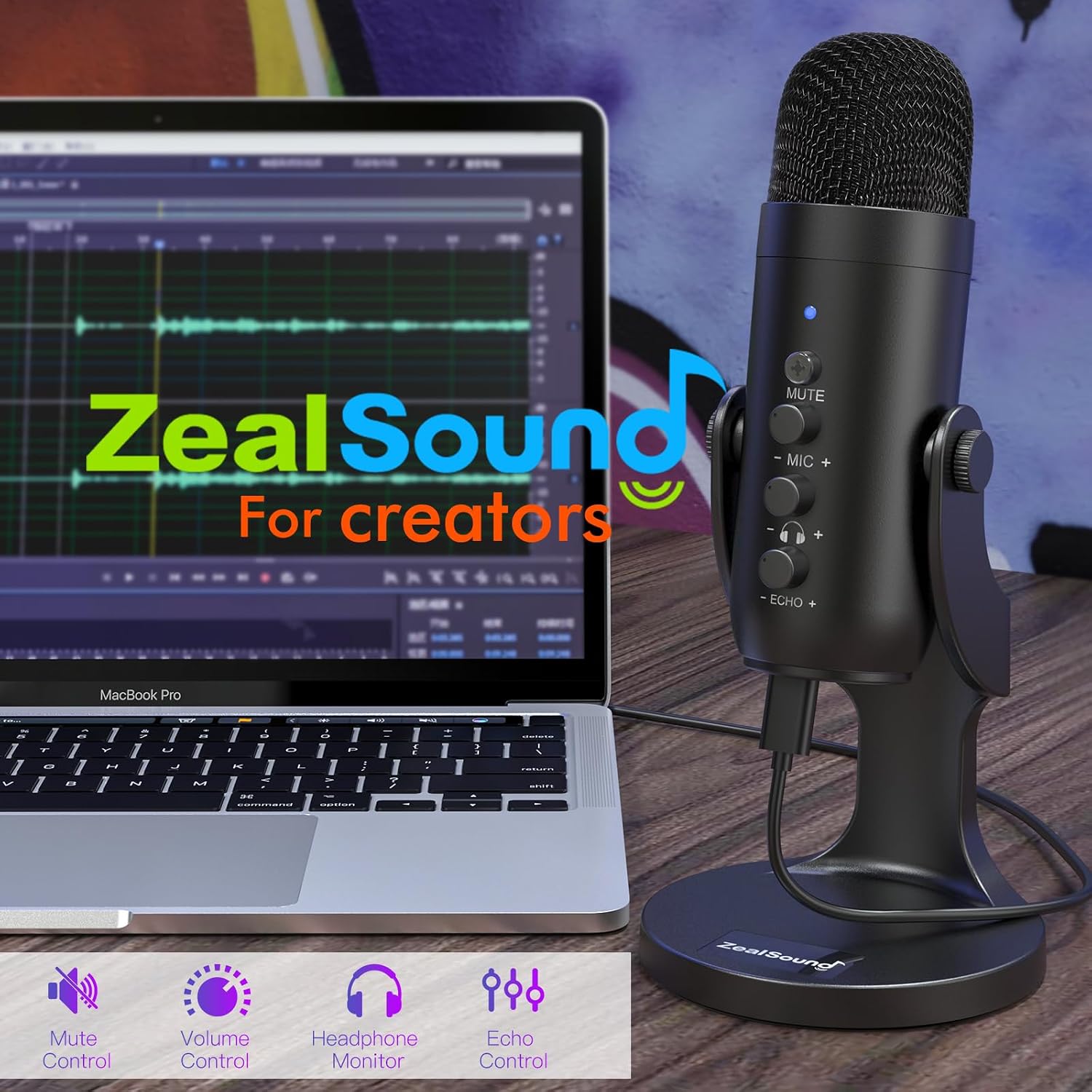
zealsound K66 USB Microphone – A solid all‑rounder for podcasts, streaming and gaming
Reviews
Price
Product description
What it is and what it’s for
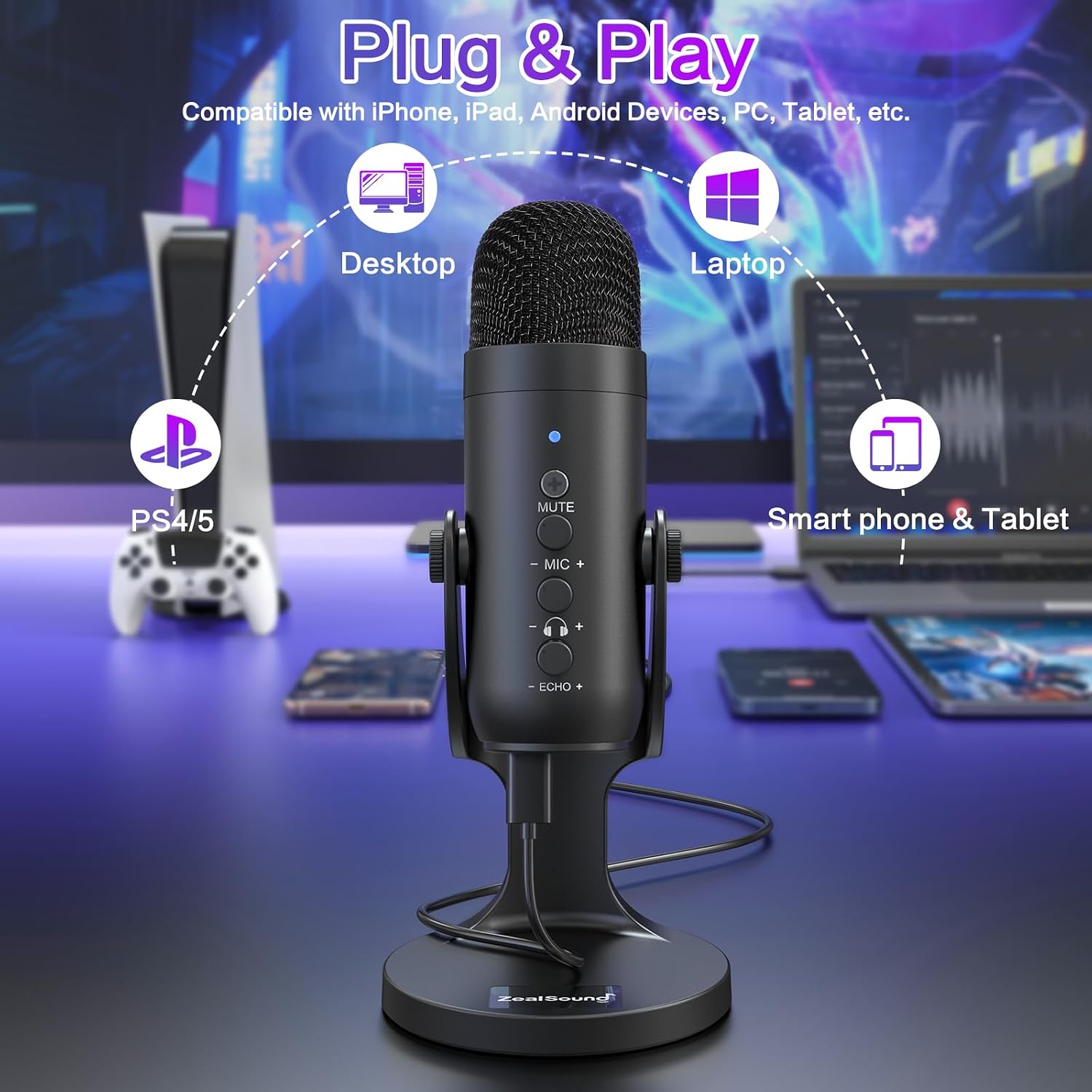
The zealsound K66 is a desktop condenser USB microphone designed for PC use, but with broad compatibility across iPhone, Android and other devices. On the page you’ll see it pitched for podcasting, recording, gaming and ASMR, with a focus on a clear cardioid capture and a built‑in reverb option to suit different scenes. On paper, it aims to be plug‑and‑play without drivers, with a dedicated mute button, gain control and a real‑time monitoring output for zero‑latency listening. This makes it a pragmatic pick for creators who want a single microphone setup that can travel and adapt to live streaming, voiceovers and casual singing.
How it sounds and how it adapts
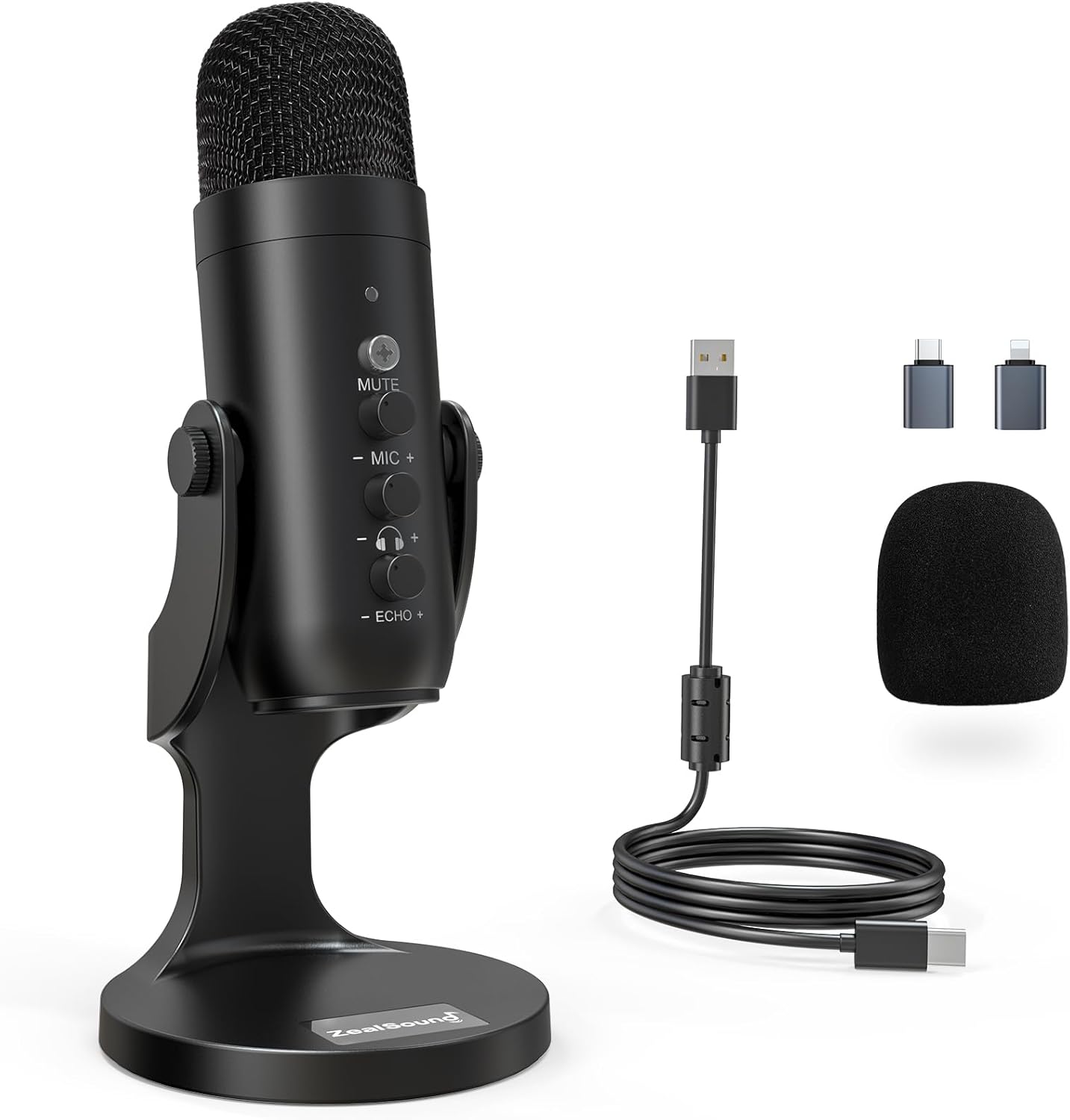
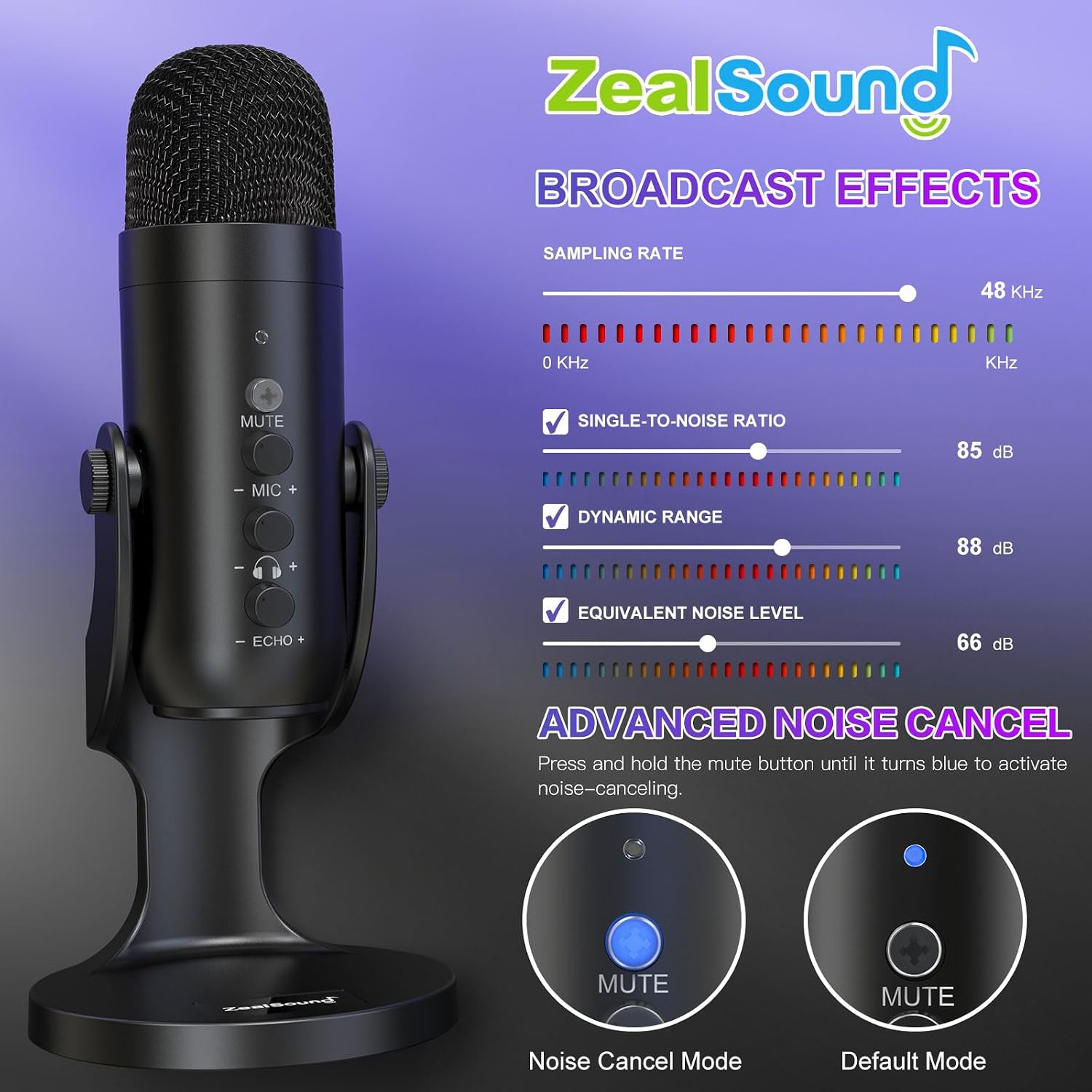
Sound quality is presented as crystal‑clear and detailed, thanks to a cardioid pickup pattern and an upgraded noise‑reducing chipset. The on‑board reverb adds a bit of ambience when you want it, though you might prefer a clean voice for interviews or scripting. The mic is described as capable of handling ASMR due to its sensitivity, especially with the tip suggesting keeping the mic gain around halfway for balanced output. The inclusion of a dedicated 3.5mm headphone jack enables real‑time monitoring, which matters for timing and expression when you’re live.
Key controls and what they do
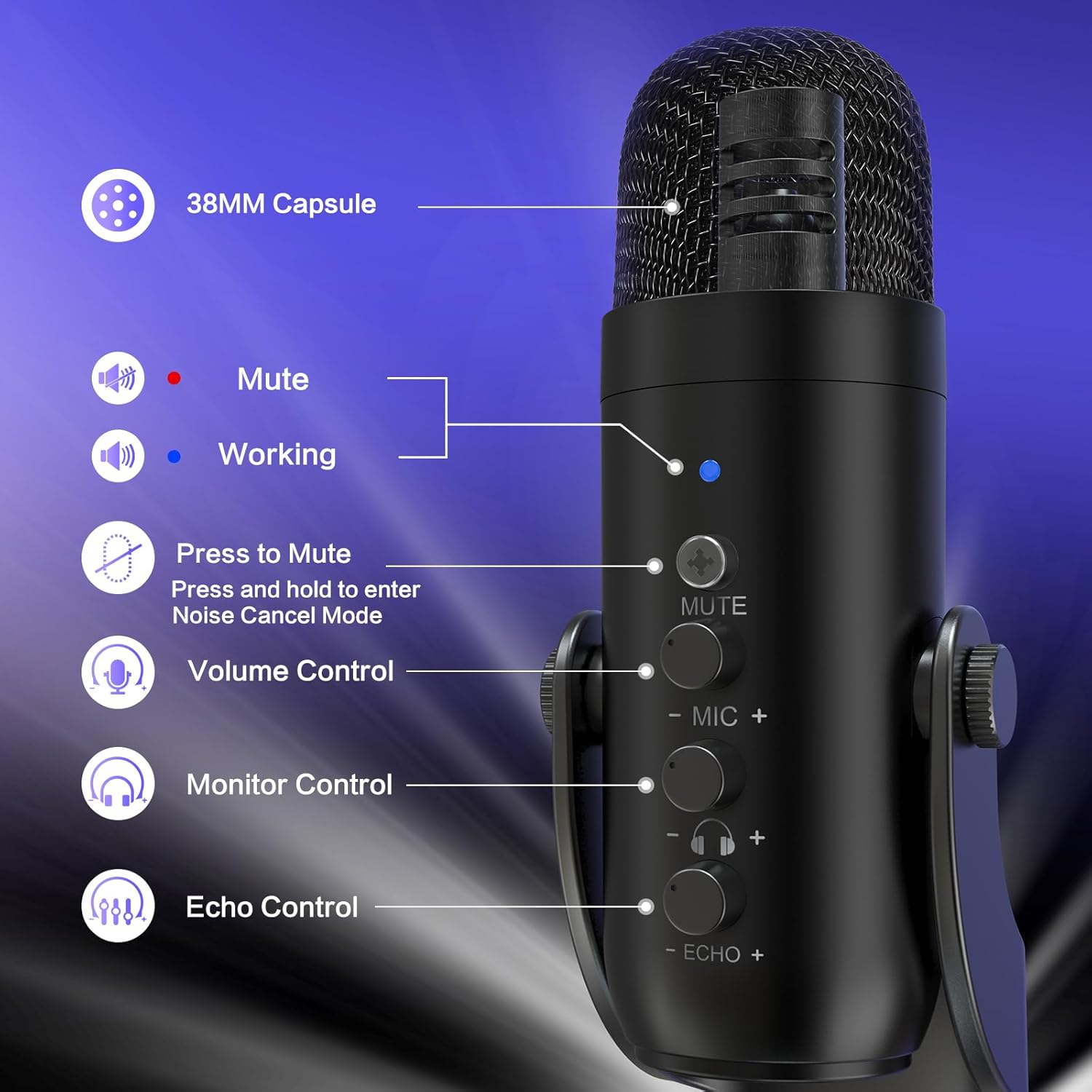
You’ll find precise mic gain, a mute button, and an echo control, with indicators to show status. The mute press also doubles as a quick way to engage Noise Reduction Mode. The idea is to give you straightforward dial‑in for voice presence, background noise handling and a touch of space in the sound when needed. It’s not a studio‑grade chain of processors, but it reduces the need for external gear in casual to mid‑level setups.
What you’ll notice in use
The 360° rotatable top‑address design and the metal base aim to keep the microphone stable and easy to point at your voice. In practice this tends to translate to less fiddling during recordings or streams and a more reliable focal point for your voice. The device is promoted as versatile for a broad range of creators, from podcasters and streamers to ASMR artists and online teachers, and it’s designed to work with native apps and software used for recording and streaming.
Pros and cons in plain terms
Pros: plug‑and‑play across many platforms without extra drivers, real‑time monitoring for latency‑free feedback, adjustable reverb for different styles, and a solid build with a stable base. The mute and noise reduction features are convenient for live sessions where noise control matters. Cons: as a USB desktop mic with a cardioid pattern, it may not be the best option if you need multi‑pattern versatility or broadcast‑grade isolation, the reverb is a feature you’ll likely use sparingly in professional setups. Some Android users may need to enable OTG in settings for full compatibility.
Who it’s for and who should think again
It suits beginner to mid‑level content creators who want a single, carry‑friendly mic for podcasts, streams, YouTube videos or online teaching. If you prioritise ultra‑tight noise handling or a neutral, studio‑grade voice with no colouring, you might prefer a more neutral setup or a microphone with selectable polar patterns. It may also not be ideal if you require a compact, yet premium‑looking build for a high‑end studio environment.
What to check before buying
- Compatibility with your primary device and OS: Windows, iOS, macOS, Linux, Chrome OS, and OTG Android devices are listed, but confirm OTG and USB‑C adapters if you’re using newer devices.
- How you plan to use the mic: if you want clear voice with a hint of ambience, the built‑in reverb can help, for purely clean dialogue, you might bypass it.
- Monitoring needs: the 3.5mm jack provides zero‑latency monitoring, ensure your headphones are comfortable for long sessions.
- Stability and setup: the metal base is designed for stability, but ensure your desk space allows a comfortable angle towards your mouth.
Practical use case and comparison to common approaches
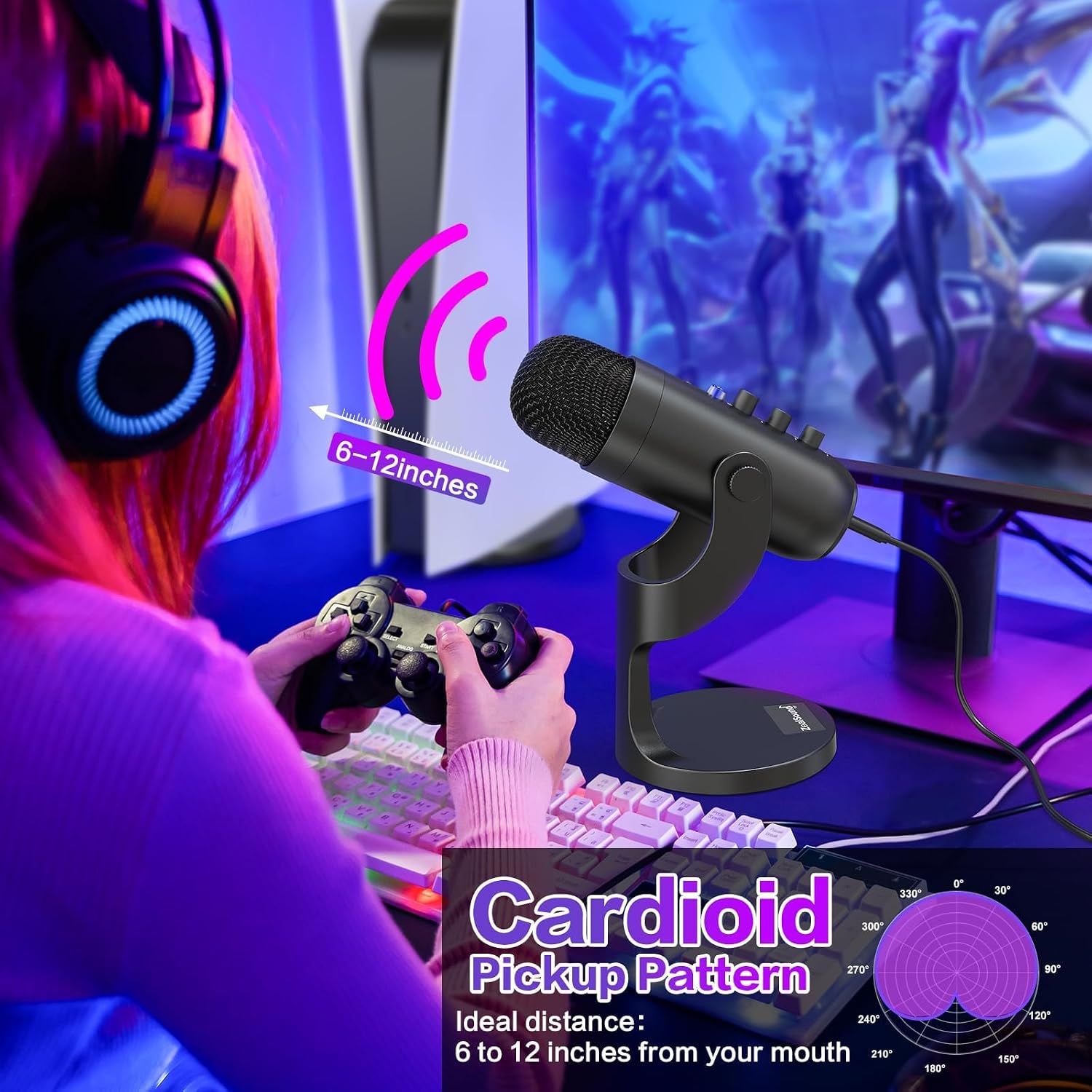
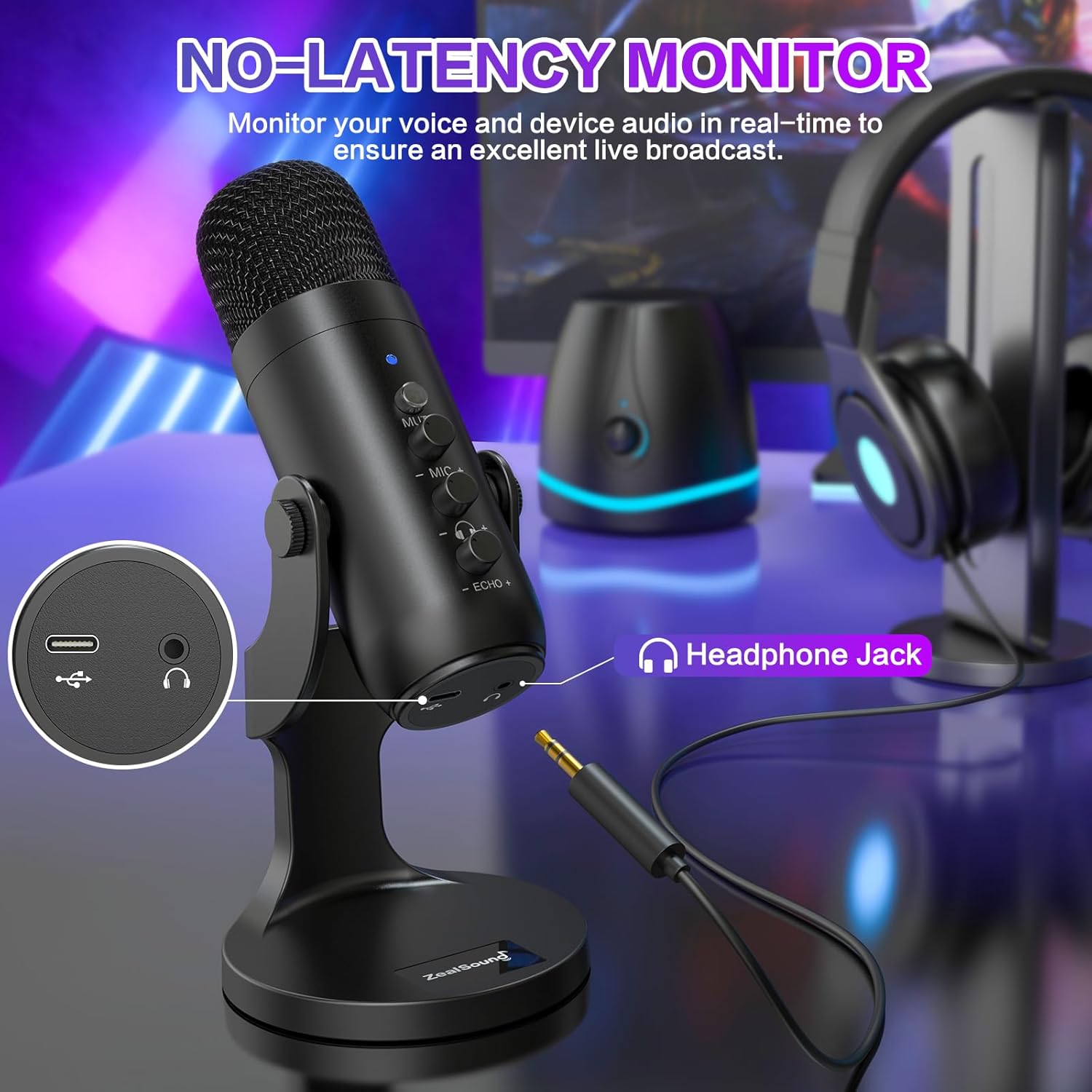
Imagine recording a bedtime ASMR clip or a live podcast with a straightforward setup: you plug in, set gain to about halfway, and use the mute to handle any background rustle. If you’re deciding between this and a more feature‑light USB mic, the K66’s built‑in reverb and monitoring give you immediate, usable tweaks without extra gear. If you need multiple polar patterns or a more neutral, pro‑grade voice, you might look at higher‑end options or dedicated audio interfaces, for on‑the‑go creators or those who want a single, uncomplicated solution, this mic fills a comfortable middle ground.
Final decision and who should buy it
Is it worth it?
Worth considering if you want a versatile, plug‑and‑play USB microphone with handy monitoring and a touch of onboard ambience, usable across a variety of software and devices. It’s a sensible option for casual to semi‑professional creators who value ease of use and a stable setup.
FAQ
- Can I use this mic with my iPhone? Yes, it’s designed for PC and iPhone with compatible USB adapters.
- Do I need extra accessories? The package mentions it includes a USB‑A cable and adapters, but check exact contents if you need a specific connector for your device.
- Will the noise reduction work in a busy office? The mic supports Noise Reduction Mode via the mute button, which can help reduce background noise, though performance depends on the environment.