

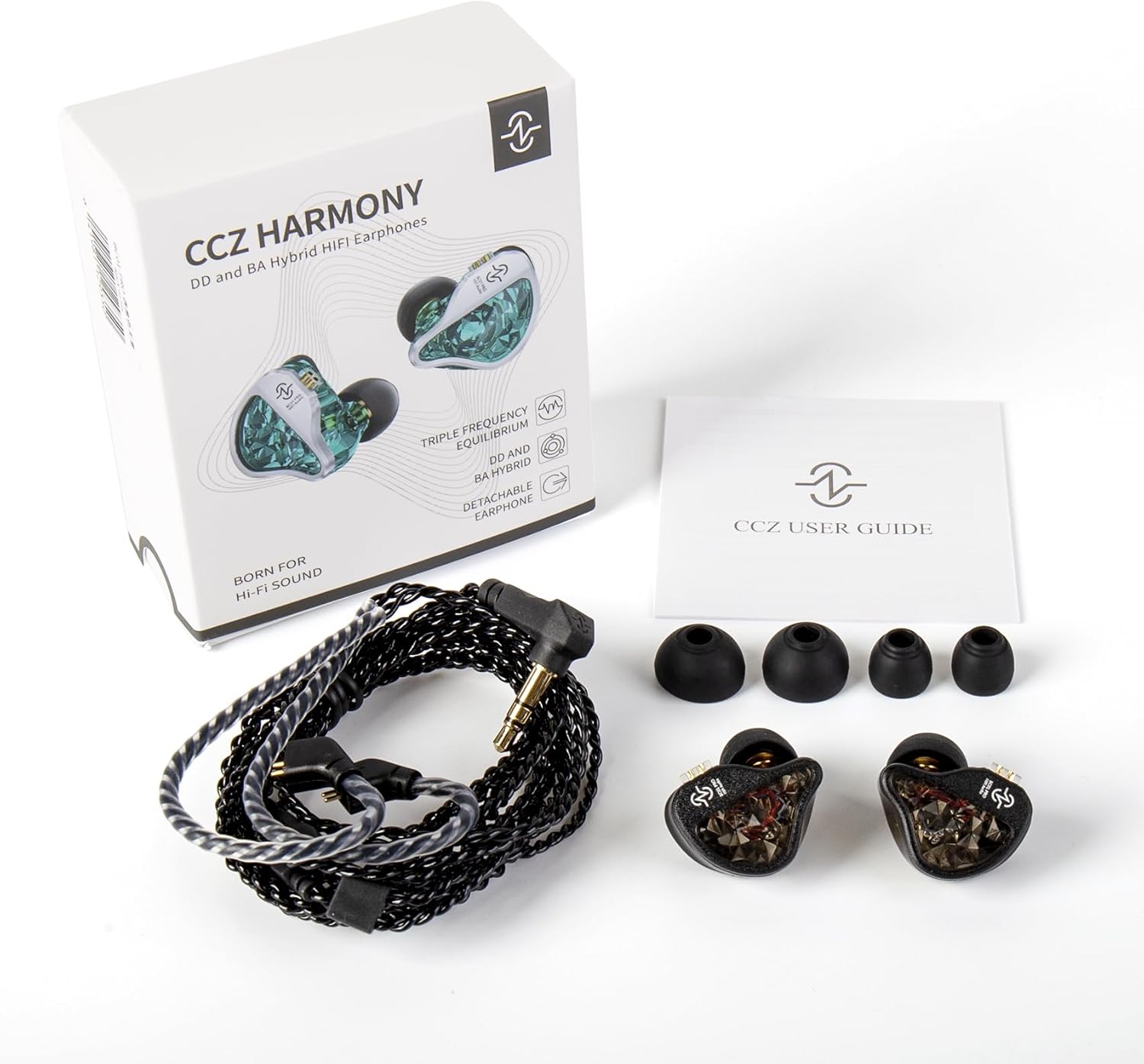
Yinyoo CCZ Harmony BC01 Pro wired in-ear monitors (BC01 Pro) with microphone and earhooks
Product description
What they are, and why people look at them
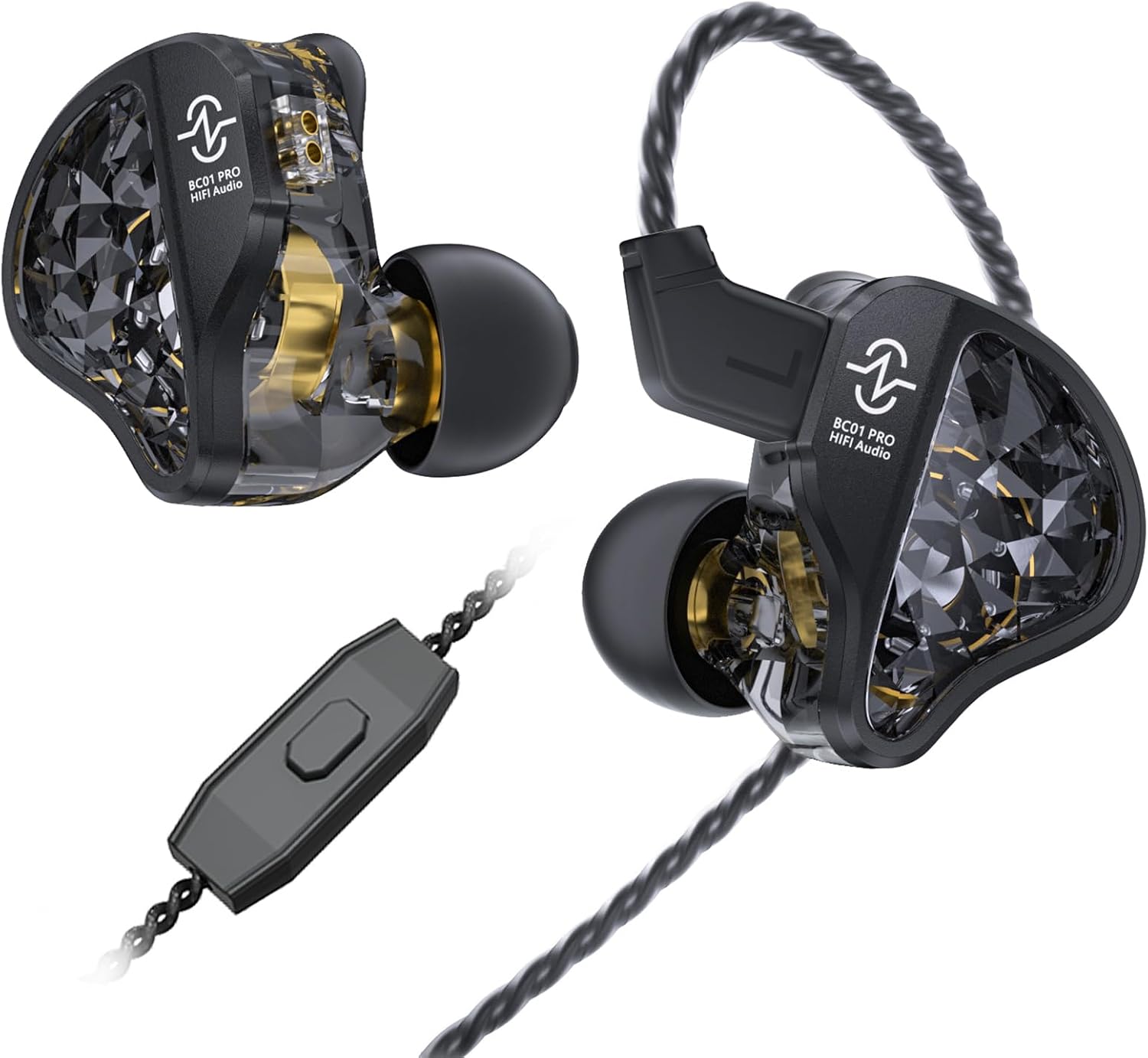
Yinyoo CCZ Harmony BC01 Pro are wired in-ear monitors designed for everyday listening and motion-heavy use such as sports and running. The “hybrid” angle here is about using more than one driver approach to spread sound across the audible range, with a focus on a three-frequency balance. They’re not pitched (in the wording you’ve shared) as active noise-cancelling, but they are described as noise-isolating, which is usually the more realistic expectation from in-ears.
For anyone searching for opinions on whether a wired in-ear can handle both music and workouts, these read like a practical, comfort-led set: the ear canal fit and earhooks are there to help them stay put, and there’s a microphone included for calls on the go.
Sound character: three-frequency balance, not one-size-fits-all
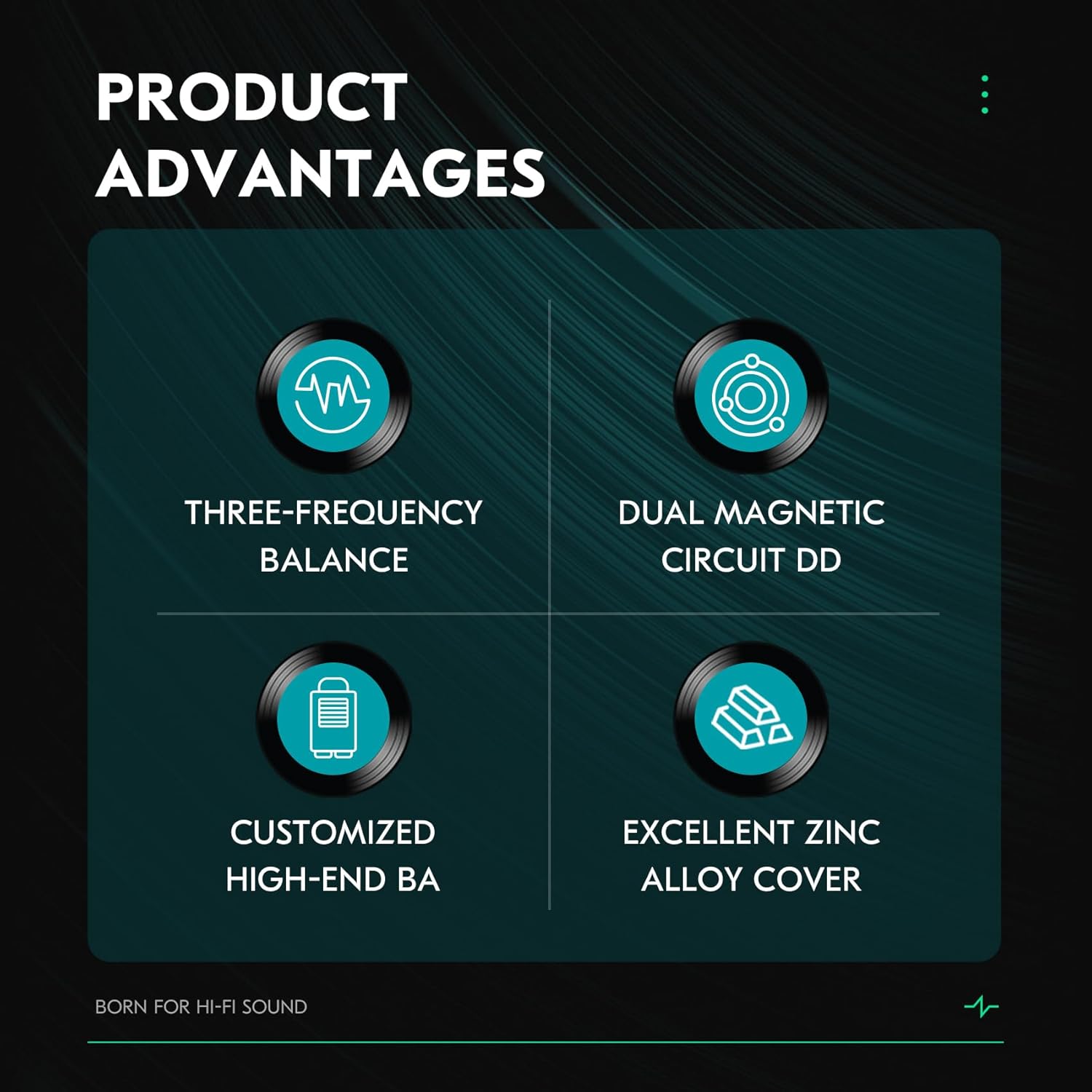
On paper, the biggest story is the “three frequency balance” tuning: clear treble, fuller mids, and deeper, more powerful lows. In normal human terms, that tends to translate to vocals and instruments sounding present (good for tracks where you want lyrics to sit forward), while bass should add rhythm rather than just rumble. The product description also mentions an open sound field, which is notable because many basic in-ear designs can feel a bit closed-in.
You should still keep expectations sensible. “Open sound field” and “natural wide sound field” are promises about perceived space, but wired in-ears will always be limited compared with larger headphones. If you mainly want massive soundstage for immersive listening, you may find you’re comparing these against a different class of gear.
Comfort and fit for active use
The BC01 Pro are described as having an ergonomically designed cavity to fit the ear canal, with an intent to reduce the “stethoscope effect” (a common complaint with some in-ears that feel too sealed or too intrusive). There’s also the zinc alloy face cover mentioned, with an emphasis on a smooth finish and easy cleaning/maintenance.

The earhooks are a key part of the design logic for running and sports. If you’ve ever had earbuds loosen during a sprint, you’ll understand why this matters. However, earhooks aren’t for everyone: if you dislike the feeling of anything pressing or hooking around the ear, these might feel a bit more “there” than straight in-ears.
Tech highlights that matter (and what’s missing)
The description points to a 10mm dual magnetic circuit moving coil driver with an ultra-thin PET diaphragm for sound details and a natural wide sound field. It also references a 30095 moving iron unit for resolution and dynamic response.
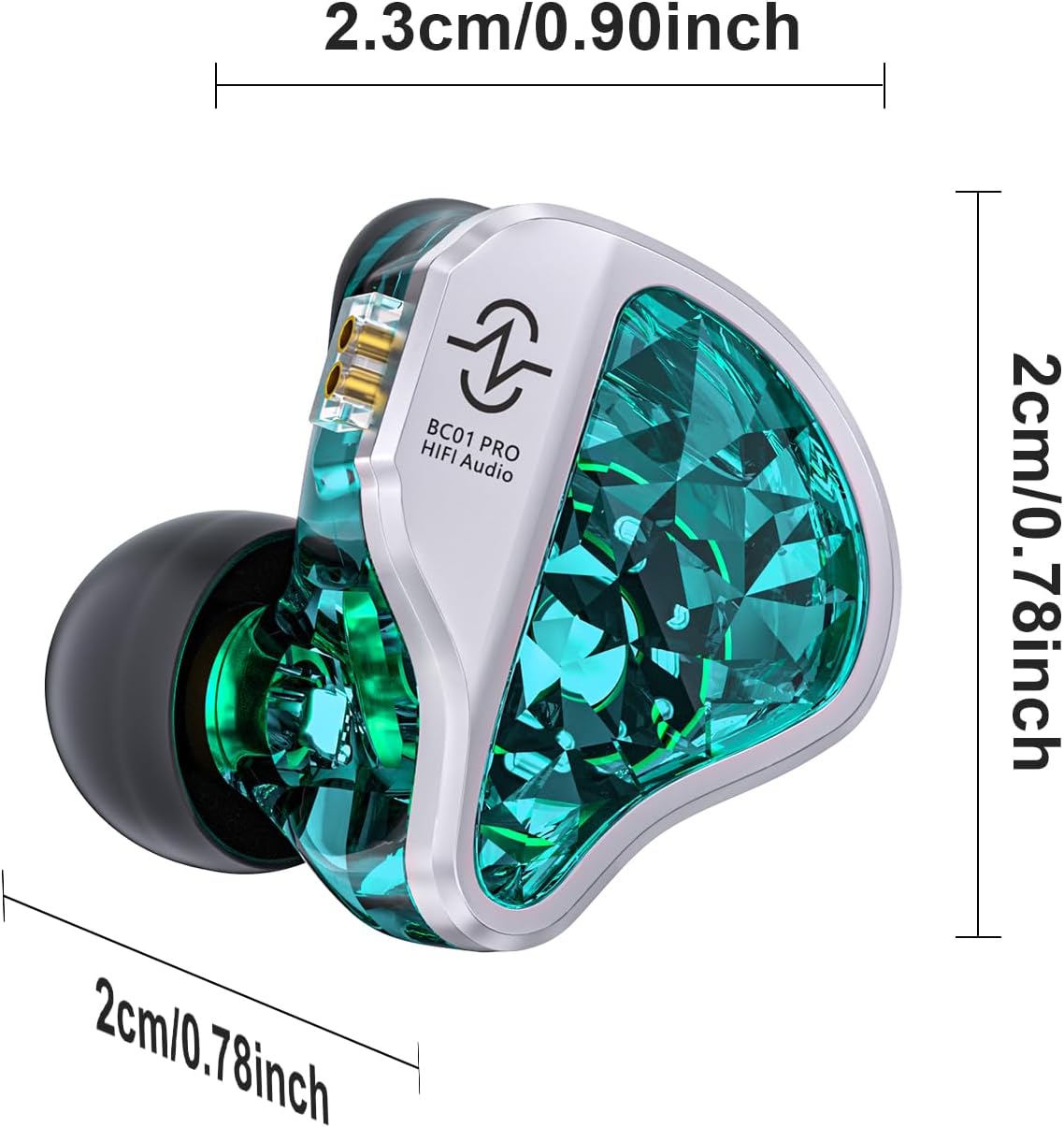
What’s reassuring about this is that it’s specific. What’s missing is equally important: you haven’t provided sensitivity, impedance, frequency response range, cable length, connector type details, or microphone specs. Those omissions make it harder to judge compatibility with every phone/laptop combination or to predict how loud they’ll go with a weaker headphone output.
If you’re sensitive to technicalities, it’s worth checking the listing details on amazon UK for: connector type, in-line controls (if any), and any stated noise-isolation method (passive vs. active).
Durability and day-to-day practicality
A zinc alloy face cover can be a sensible choice for daily wear, mainly because it’s less “toy-like” than fully plastic shells and should handle knocks better than flimsy housings. The wording also calls out easy-to-clean and maintenance, which matters if you’re using them for training.
Still, don’t treat them as indestructible. In-ear monitors get most damage at the cable strain points and at the connector, so the real-world durability will also depend on how the cable is built and how you store them between sessions—details that aren’t included in the information you shared.

Who they suit, and who should look elsewhere
It’s a good fit if you want a wired in-ear with a microphone for sports or running, and you prefer a more stable, earhook-led fit. It also makes sense if you like a balanced, three-part sound approach—clear highs, full mids, and deeper lows—rather than an extreme bass-only tuning.
It may not suit you if you’re specifically after heavy active noise cancellation, because the description only promises noise-isolating behaviour rather than anything active. You might also want to skip these if you find earhooks uncomfortable, or if you need lots of technical specs (sensitivity/impedance/frequency response) to match exactly with a particular device.
Getting the most from them (quick, practical tips)

If you’re buying for running, fit is everything. Aim for the earhook position so the earbud sits securely without twisting, then use the ear canal cavity fit described in the text to get a consistent seal. Once you have that, you’re more likely to hear the intended balance across highs, mids and lows and get the claimed noise-isolating effect.
For commuting or gym sessions, keep an eye on cable management. Wired in-ears can tug more than Bluetooth sets, especially when you move your head quickly—so routing the cable away from straps can help prevent micro-disconnects and strain.
Mini FAQ
Are these active noise-cancelling headphones?
The information you’ve shared describes “noise isolating”, but it doesn’t mention active noise cancelling. So you should treat expectations as passive isolation rather than ANC.
Are they designed for running and sports?
Yes—sports and running are explicitly referenced, and the inclusion of earhooks plus a comfort-focused in-ear fit suggests they’re meant for movement.
Do they include a microphone?
Yes, the product description refers to headphones with a microphone.
What type of sound balance do they target?
They’re described as tuned for three frequencies: clear treble, full mids, and deep/powerful bass.
Final verdict
Worth considering if you want a wired in-ear monitor for sports and running, with earhooks for a more secure fit and a three-frequency balanced sound approach. They look like a comfort-led, practical choice where the tuning and driver setup are meant to keep vocals clear and bass rhythmic.
But it’s not the best match if you need active noise cancelling, or if earhooks tend to bother you. Also, because key specs like impedance/sensitivity and connector details aren’t provided here, it’s smart to double-check those in the Amazon UK listing before you commit—especially if you’re pairing with a device that doesn’t drive headphones very strongly.