


Wootoyz Walkie Talkie for Kids, ages 3–8
Product description
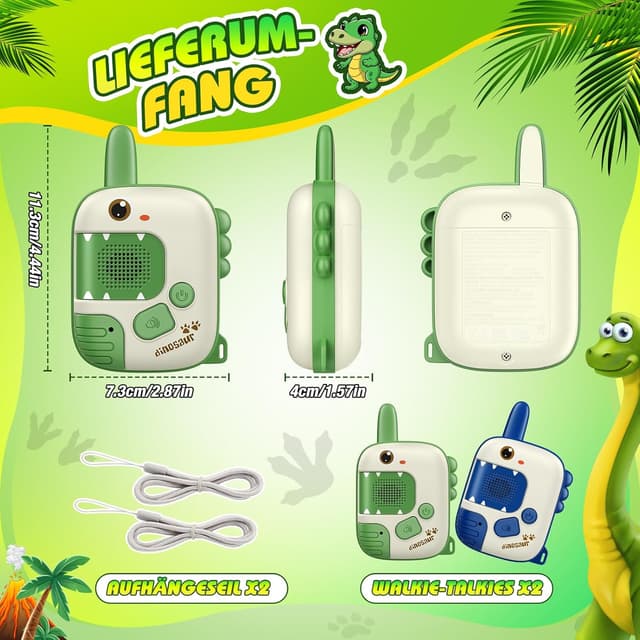
This compact pair of walkie talkies from Wootoyz brings simple radio play to outdoor adventures and indoor games, with easy one-button talk operation and a child-friendly shape that fits small hands. If you are looking for kids walkie talkies for 3 4 5 6 year olds, these units offer clear push-to-talk communication and playful dinosaur and unicorn designs that encourage exploration and role play.
Key Points
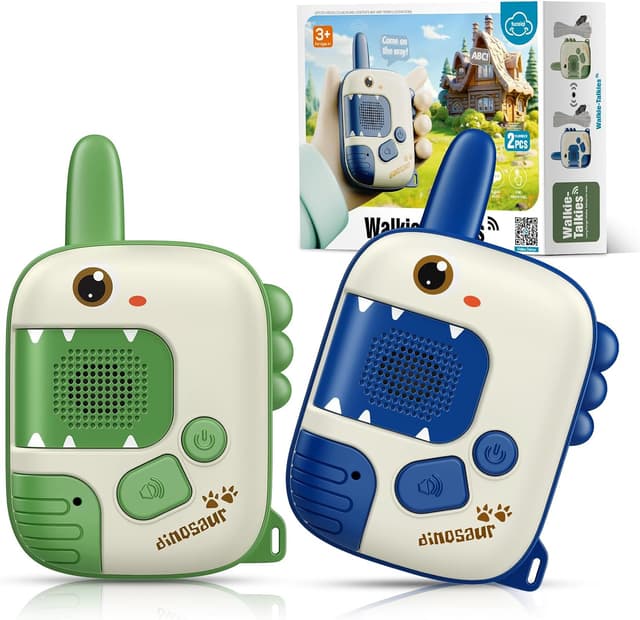
The design focuses on usability for young children with large push-to-talk buttons and few controls, so little ones can start communicating straight away. The lightweight ABS housing is robust enough for garden games and campsite use, and the bright colours make the set easy to spot among toys. 📡
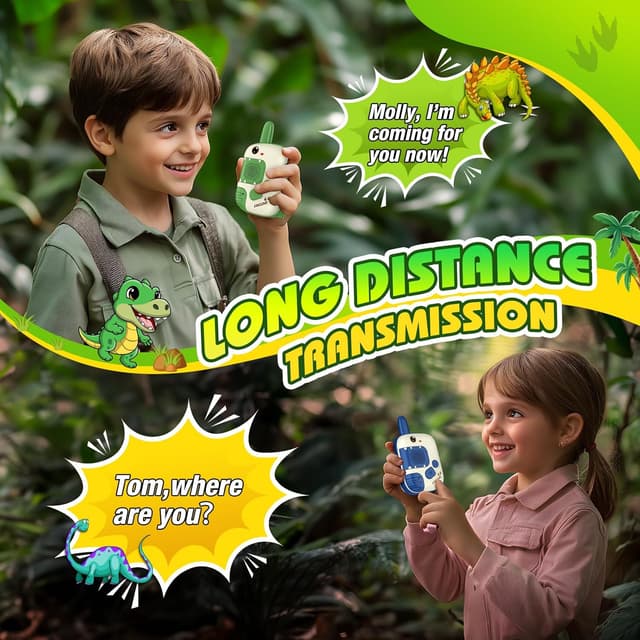
Sound is tuned for clarity rather than range, and according to the manufacturer the radios can reach up to 1000 feet in ideal conditions, making them useful for short outdoor excursions and playtime around the home. They work on a single channel so there is no need to tune frequencies, which simplifies play and keeps frustration to a minimum. 🦖
Consider that these walkie talkies are tailored for children and may not perform like adult-grade two-way radios in crowded or heavily obstructed environments. Battery life will depend on usage and is not specified by the manufacturer, so carrying spare batteries on longer trips is advised.
Technical Specifications
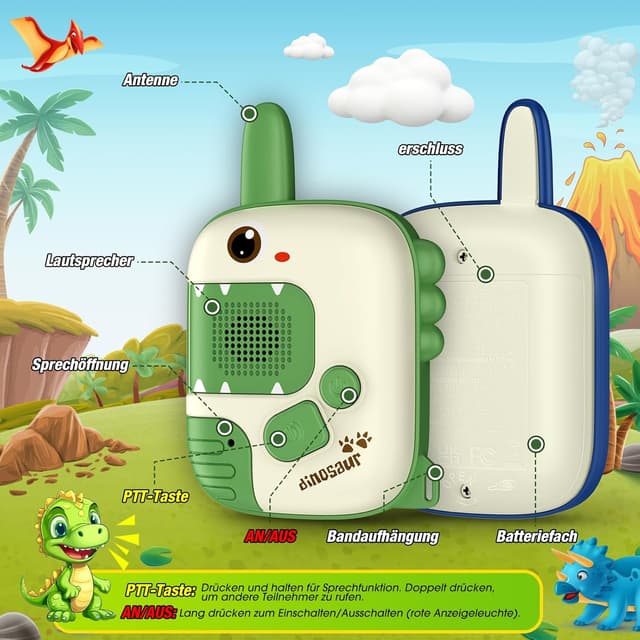
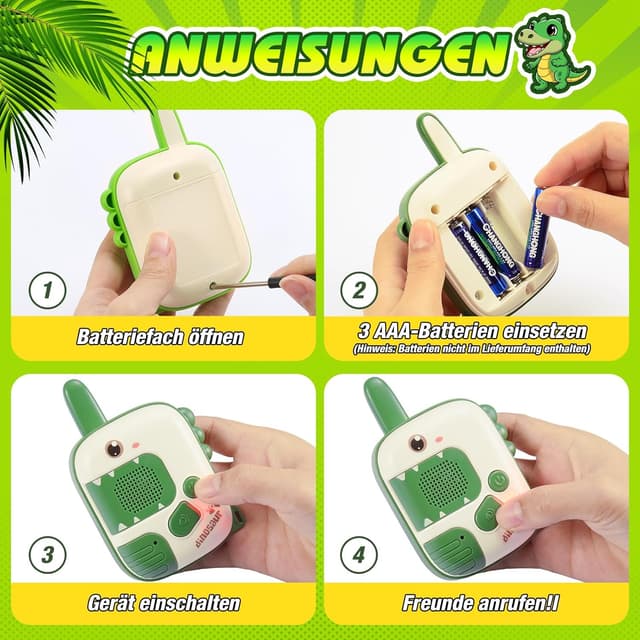
- Name: Wootoyz Walkie Talkie Kids
- Age range: 3–12 years
- Range: Up to 1000 ft (according to the manufacturer)
- Material: ABS plastic
- Channels: Single channel, push-to-talk operation
Usage Recommendations
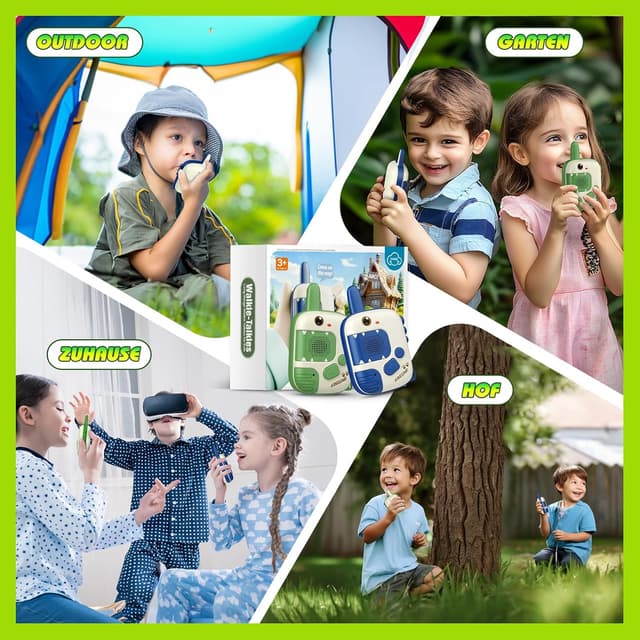
For best results use the pair during backyard adventures, scavenger hunts and family camping trips where short-range communication keeps play safe and organised. Place each unit in a pocket or belt clip for hands-free moments while running or exploring. Also try simple games like treasure hunts or role-play missions to extend imaginative play and vocabulary skills. 🎒
When testing the range, perform a trial run in the area of use to gauge practical coverage in real conditions. Outdoors with clear line of sight will give the best performance, whereas walls and dense foliage can reduce range and clarity.