

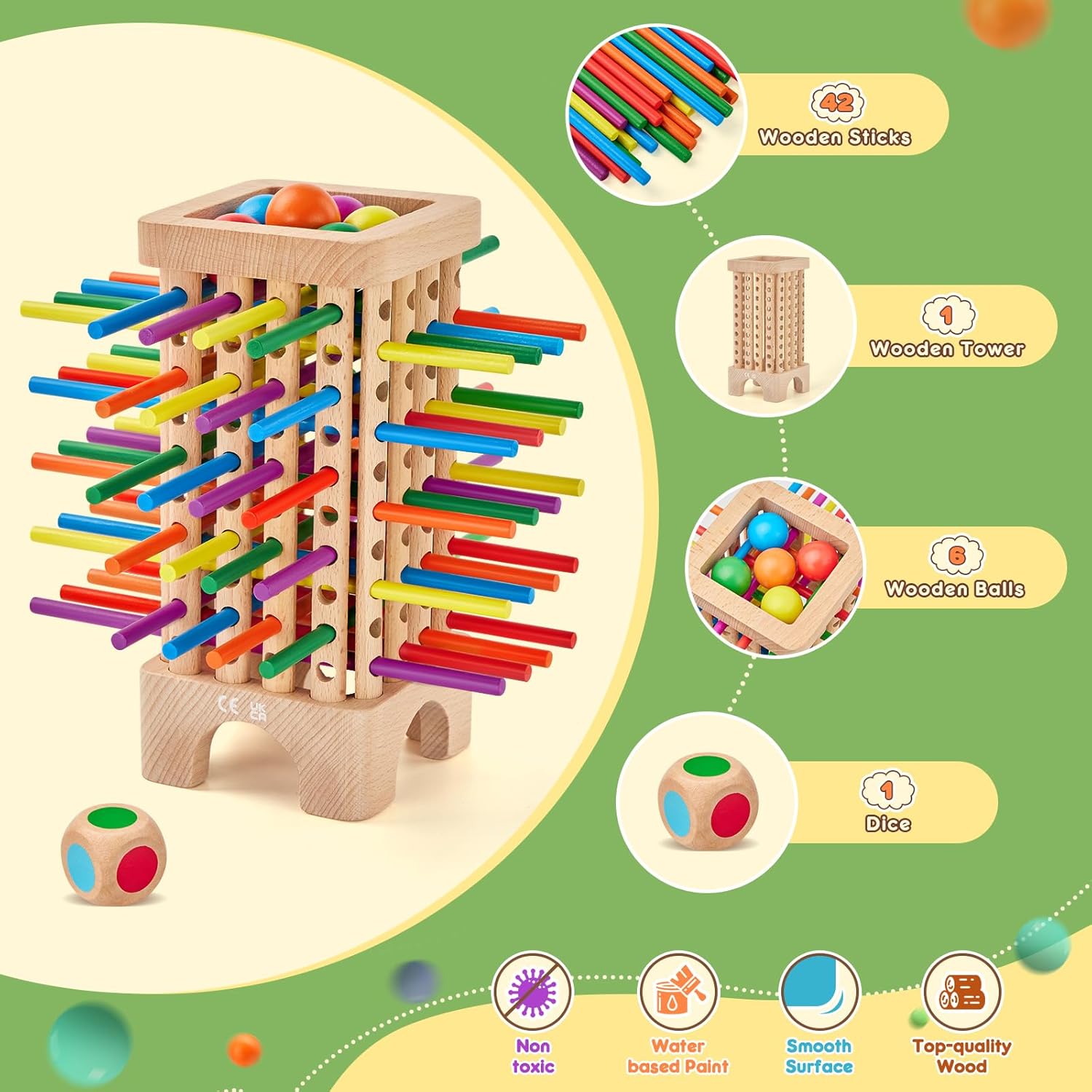

Wooden Board Game 42‑piece Montessori toy 🎲
Reviews
Price
Product description
This wooden stacking game recreates a falling-tower challenge in a hand-held format that combines simple rules with strategic play. It works as a montessori ball dropping game for kids and families, helping to develop coordination and quick thinking while offering portable entertainment for travel or family nights.
Key Points
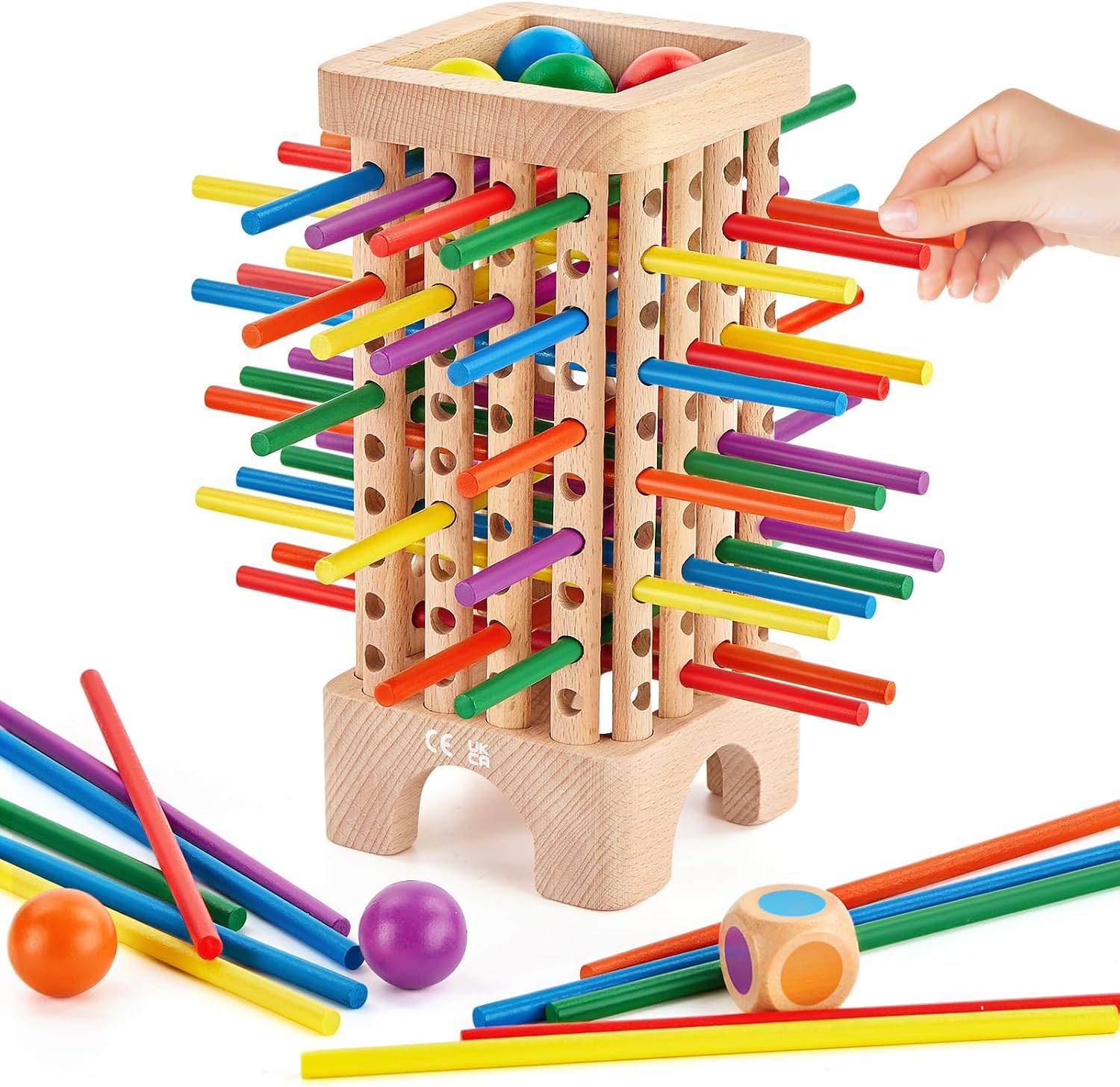
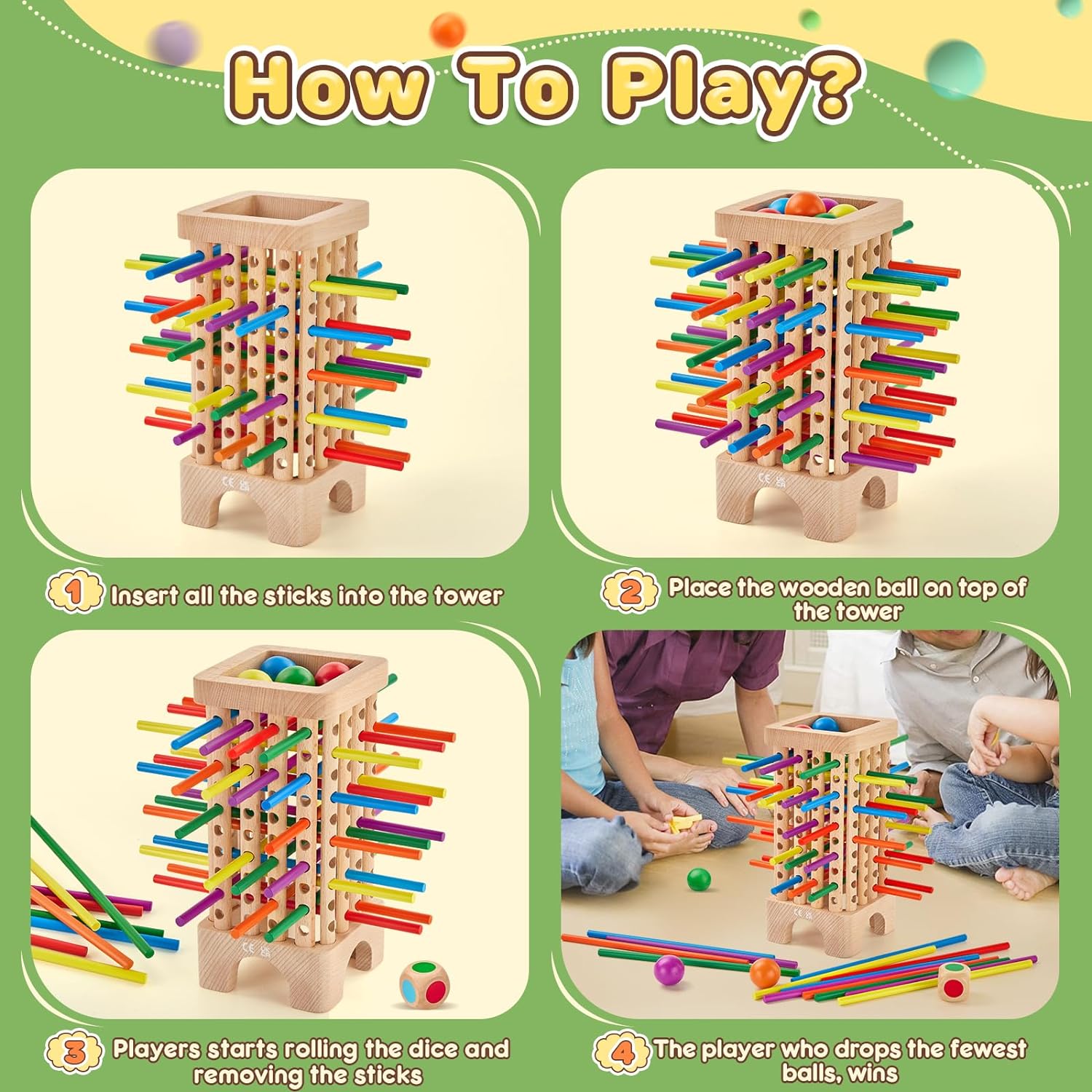
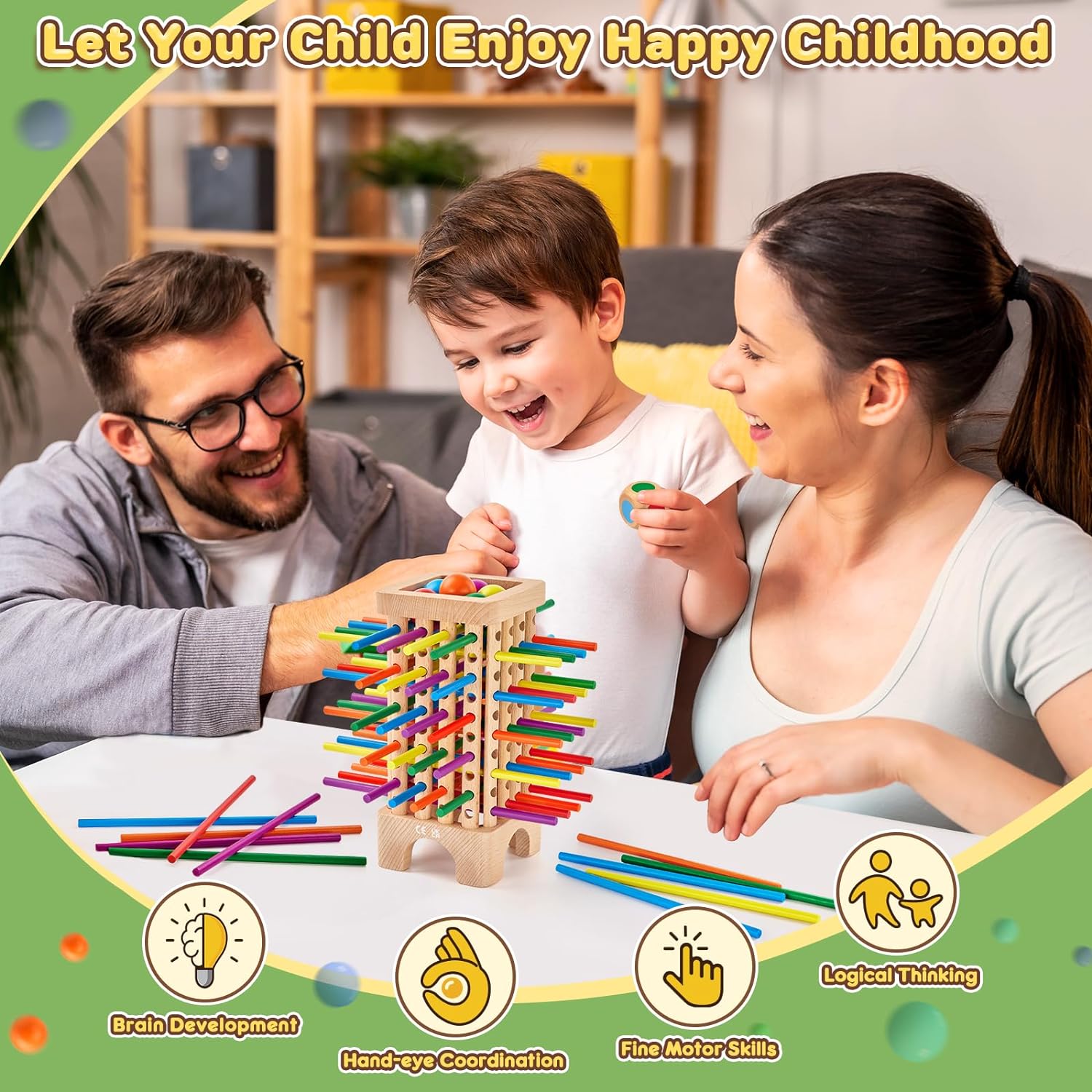
The concept is straightforward and engaging. Players take turns rolling a die and removing sticks from the tower while trying to keep the wooden ball balanced on top. The set encourages turn-taking and observation skills, and play can be adapted for a single child or groups of up to six players. Brightly coloured sticks add visual appeal and make it easy to link dice outcomes to moves, which helps with early counting and colour recognition 🟩🟦.
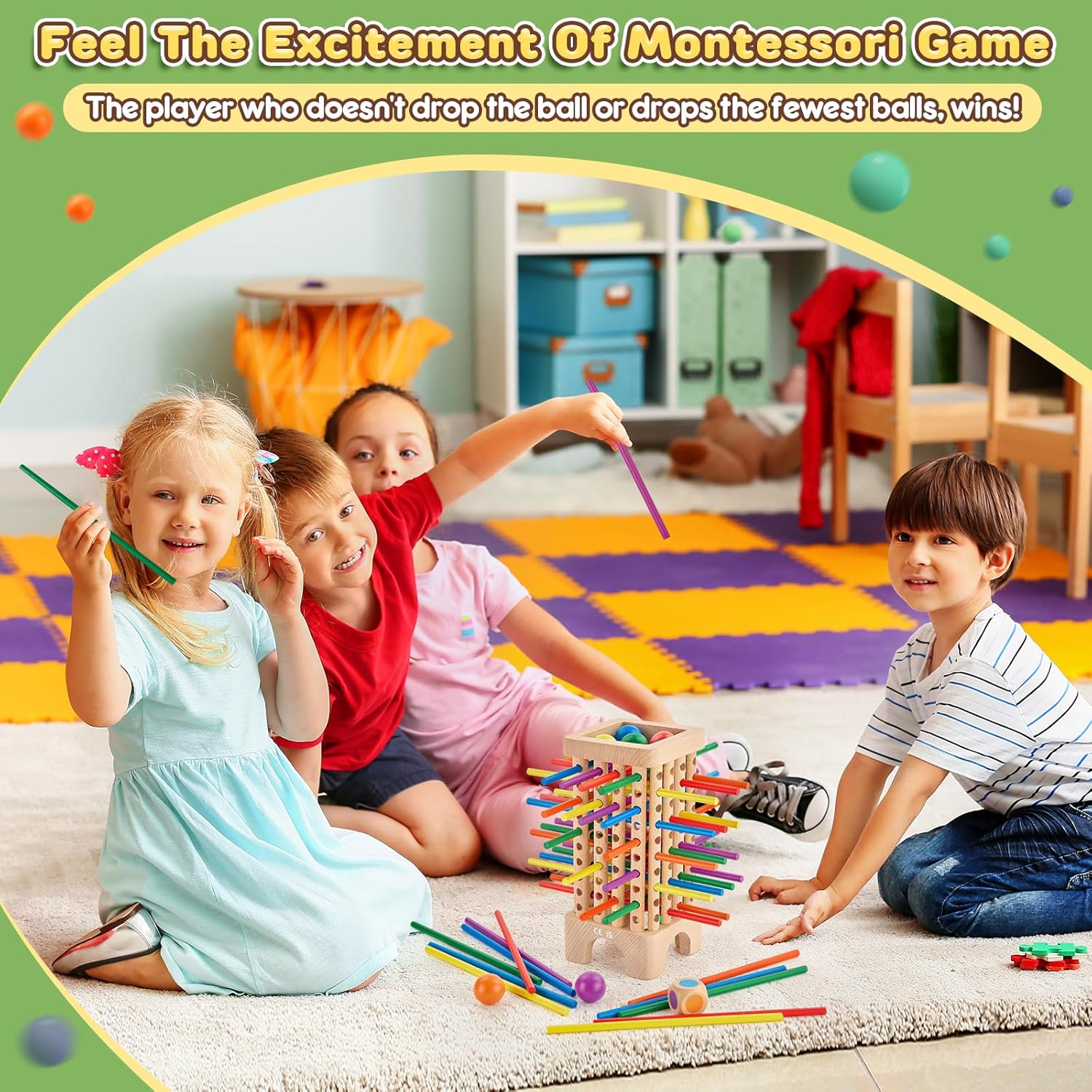
Tactile quality matters here. The wooden pieces are smooth and designed to resist splinters, so young hands can push sticks into angled holes and extract them without discomfort. The game is described as suitable for ages three to six, and it also functions as a simple travel game thanks to its compact footprint.
Technical Specifications
- Name: Wooden Board Game Montessori, 42 Colourful Sticks
- Components: 1 wooden tower, 42 sticks, 1 wooden ball, 1 die
- Players: 1 to 6 players
- Recommended age range: 3 to 6 years
- Material: beech wood, smooth finish
Practical Tips
Begin with relaxed rounds to let children learn the mechanics, and then introduce small variations to keep interest high, such as timed turns for older players or counting how many sticks remain when the ball drops. If a stick seems tight when inserted into an angled hole, apply steady pressure rather than forceful wiggling to avoid damaging the piece. For group play, encourage younger children to verbalise their choice of which colour to remove so that observational and language skills are practised as part of the game 🎲.
This toy is also useful for short supervised travel sessions because it does not require a large playing area. Place the tower on a flat surface and store pieces in a small bag between rounds. Consider using the game as a brief exercise in turn-taking at parties or family gatherings, with quick rounds that fit into varied schedules.
Benefits
The play dynamics promote hand-eye coordination, fine motor skills and basic numerical thinking. Removing and balancing sticks trains dexterity and sequencing, while the colour-matching element supports early visual discrimination. According to the manufacturer, the dyeing process resists fading, which helps the colours stay vivid over repeated use. A minor limitation to note is that very young children may need help with inserting sticks into angled holes until their manipulative skills develop, and supervision is advisable during initial sessions 🧠.