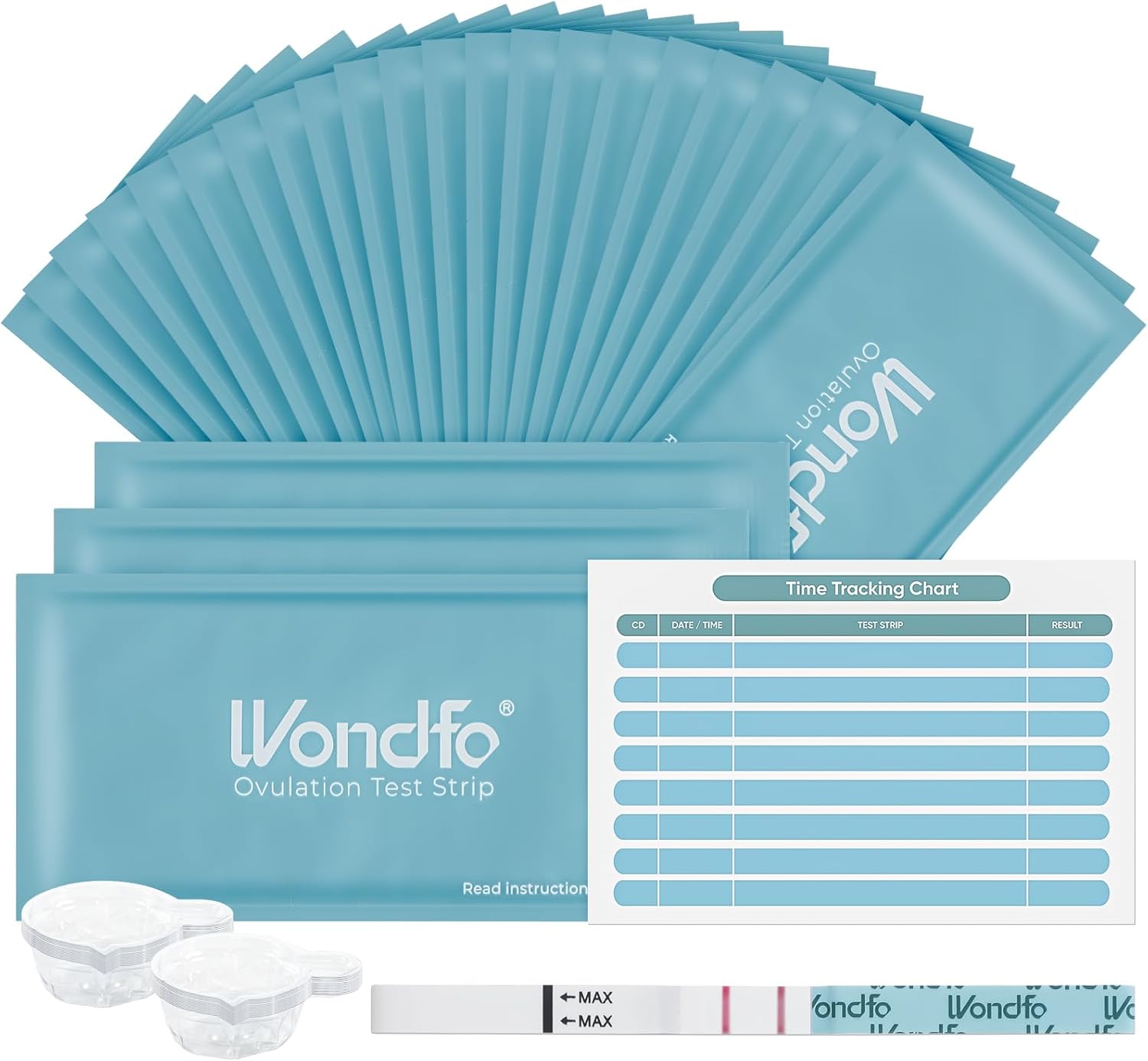
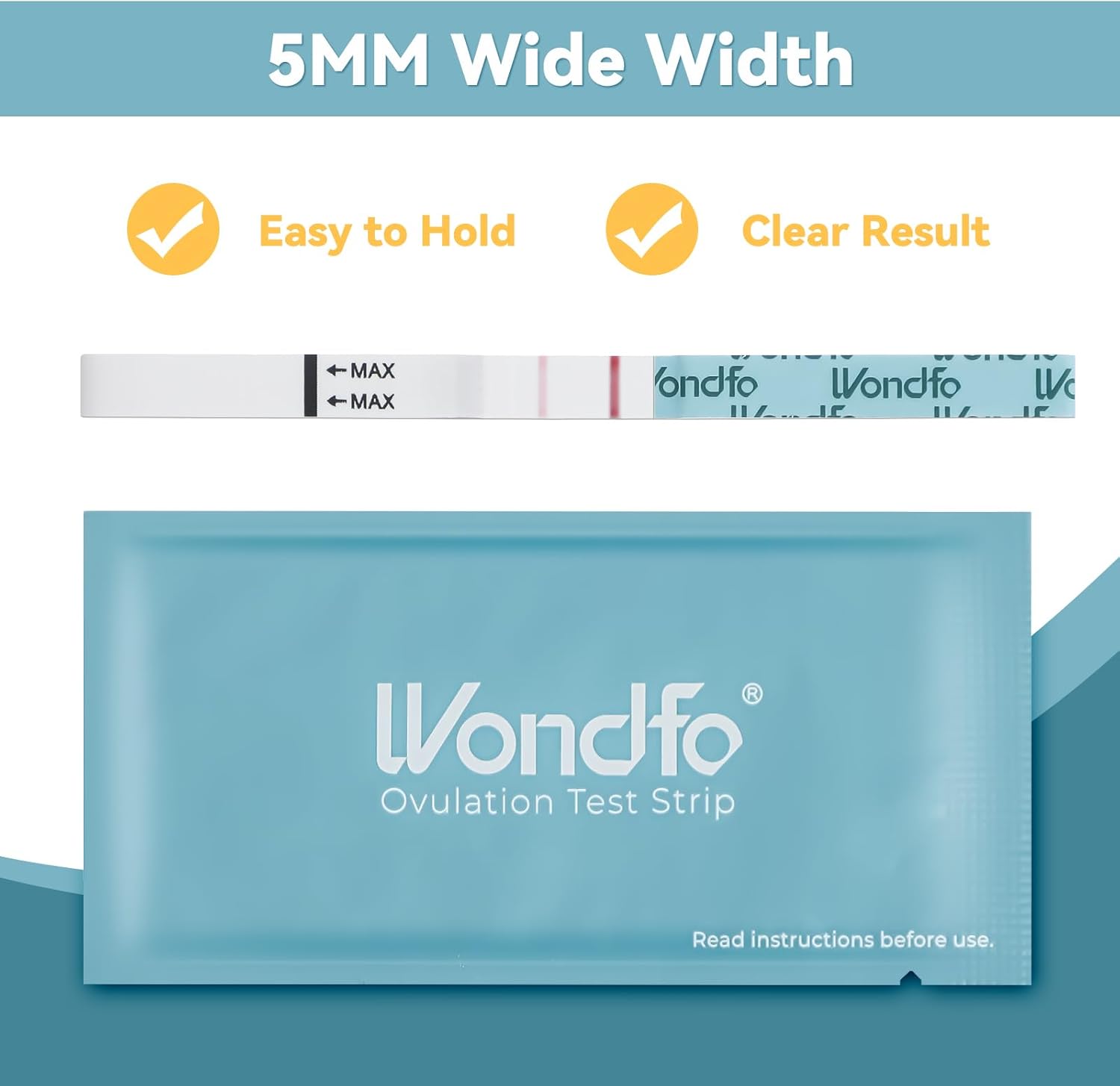
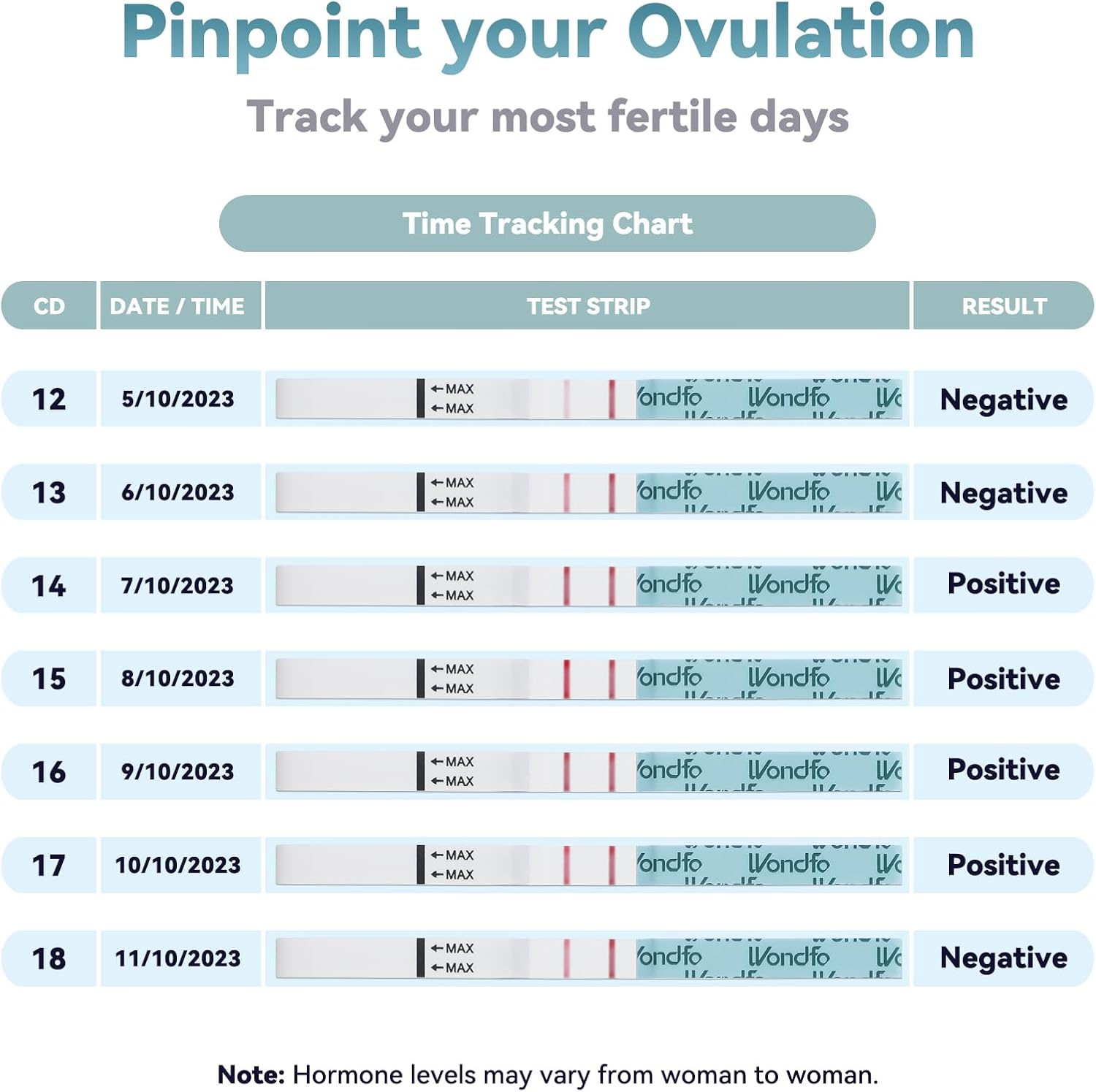
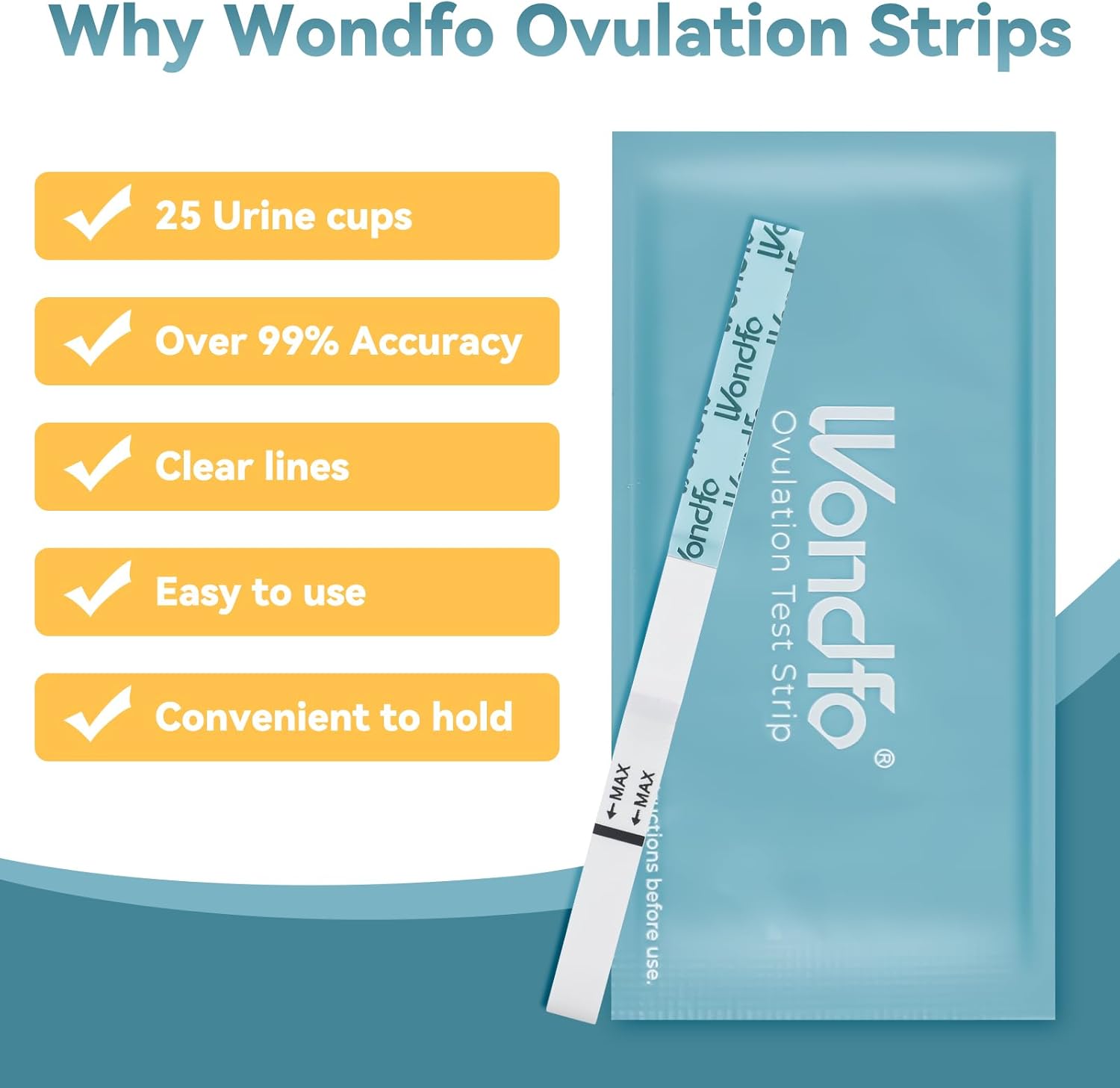
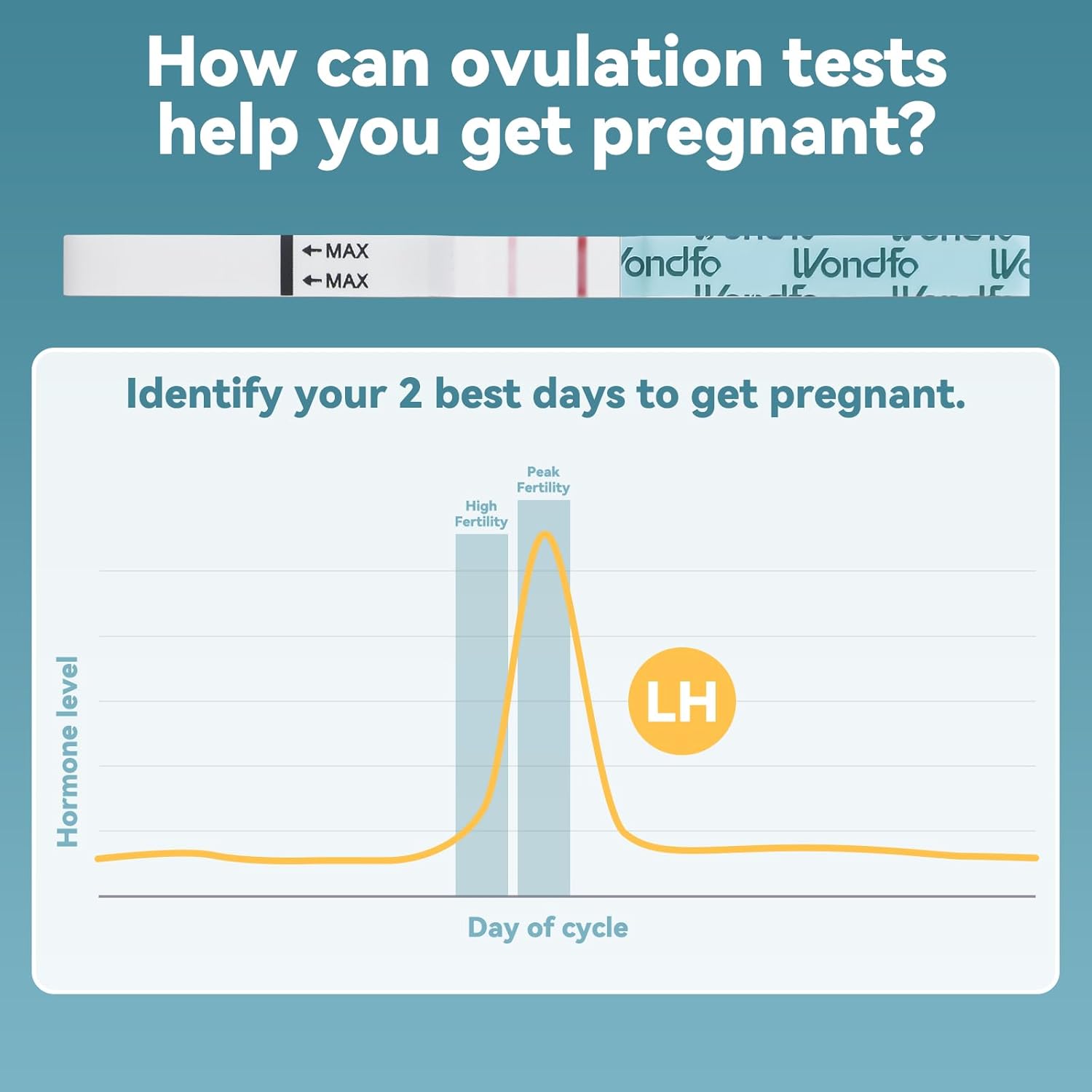
What this product is and what it’s for\nThe Wondfo Ovulation Test Strips come as a 25-pack with accompanying urine cups, designed to help you track LH surges and identify your most fertile days. On the surface, it’s a straightforward home kit: you dip the broad 5mm test strip into urine and read the line results. If you're organising your TTC journey, these strips offer a practical, low-friction option to observe hormonal changes over a few cycles, with the aim of timing intercourse more effectively.\n\n## How it works and what you can expect\nThe kit is built around detecting LH levels as low as 25 mIU/ml, which should capture the LH surge that precedes ovulation. The extra-wide 5mm strips are designed for easy reading, with clear lines that indicate a positive or negative result, helping to reduce guesswork. You dip the strip into the supplied urine cup and compare the test line to the control line. This is a simple technique, but it does rely on consistent testing timing and proper dipping technique.\n\n## What’s included and what it means in practice\nEach pack contains 25 ovulation test strips plus 25 urine cups. The inclusion of cups makes the process tidier and more convenient for regular testing, especially if you’re trying to track more than one cycle. If you’re managing irregular cycles, this kit can still be used to monitor LH trends, though the timing of peak fertility may vary cycle to cycle.\n\n## Pros and what stands out\n- Clear, easy-to-read results thanks to the wide 5mm format.\n- Sensitivity reported at 25 mIU/ml, which should catch most LH surges ahead of ovulation.\n- Individual packaging of each strip helps with privacy and portability, useful for the traveller or those juggling a busy schedule.\n- Includes urine cups, simplifying the workflow and reducing the need for separate supplies.\n\n## Cons and limitations to consider\n- The test relies on regular, consistent testing. If you skip days or test at inconsistent times, you may miss the fertile window or misread a borderline result.\n- Like all LH tests, factors such as hydration, certain medications, or polycystic ovary syndrome (PCOS) can affect results, so it’s wise to use them as part of a broader tracking approach rather than in isolation.\n- The product description notes that the day of ovulation can vary from cycle to cycle, which is normal but means you may need to continue testing across multiple cycles to understand your pattern.\n\n## Who this is best for\n- Anyone actively trying to conceive who wants a cost-conscious, straightforward LH tracking method.\n- Users who value a higher-readability strip and the convenience of included urine cups.\n- Those comfortable with home testing and tracking over several cycles to map their fertile window.\n\n## Who it isn’t ideal for\n- If you require absolute precision with additional fertility indicators (like basal body temperature tracking alongside LH), this kit stands on its own as a basic LH predictor rather than a comprehensive fertility toolkit.\n- If you have irregular cycles caused by a medical condition and expect highly variable LH patterns, you may need to supplement with professional guidance.\n\n## When it makes sense to buy\n- When you want a cost-efficient 25-test supply that you can use flexibly across multiple cycles.\n- If you prefer a simple dip-and-read approach with clearly indicated results and included cups to streamline the process.\n\n## What to check before buying\n- Ensure you’re prepared to test consistently at roughly the same time each day during your suspected fertile period.\n- Consider how you’ll interpret borderline lines, if in doubt, test again or consult guidance to avoid over-interpretation.\n- Confirm you’re buying the correct type for your needs (LH only vs. multi-parameter fertility kits) and recognise that hydration levels can influence results.\n\n## Practical usage example\nImagine you’re planning for a two-week window around your expected ovulation. You dip a strip into the cup each morning, compare with the control line, and note when the test line becomes as strong as or stronger than the control line. That positive reading marks a likely surge, guiding you to focus on timing intercourse over the next 24–36 hours. If the line remains faint or you miss days, you’ll have built a pattern over subsequent cycles rather than relying on a single reading.\n\n## How this compares to other approaches\nIf you prefer a budget-friendly option that requires minimal gear, this kit’s simplicity is appealing. It’s less comprehensive than some fertility trackers that combine temperature, digital readings, and app-driven insights, but it serves as a practical, low-friction way to identify LH surges without extra equipment. For those who want diversity in testing methods, LH strips pair well with basic cycle tracking or digital fertility apps that accept non-digital readings.\n\n## Is it worth it?\nIt makes sense if you want a straightforward, value-focused approach to predict your fertile days and you’re comfortable interpreting line results rather than relying on digital readouts. If you prefer a more diagnostic setup or highly granular data across several months, it may not be the best fit.\n\n## FAQ (practical answers you might want)\n- Do you need to test every day? Regular testing during your suspected fertile window increases the chance of spotting the LH surge.\n- Can hydration affect results? Yes—very dilute urine can make lines harder to read, try to test with midstream or after a reasonable interval of hydration.\n- What about irregular cycles? It’s feasible to use these strips to track patterns across multiple cycles, though timing of the surge may vary.\n\n## Final note\nFor many, the Wondfo 25-pack with urine cups offers a practical balance of simplicity, cost, and readability. It’s not a premium, feature-rich fertility kit, but it can be a sensible part of a patient, methodical approach to TTC. If you prioritise clear visuals and a compact supply, this kit is worth considering.