


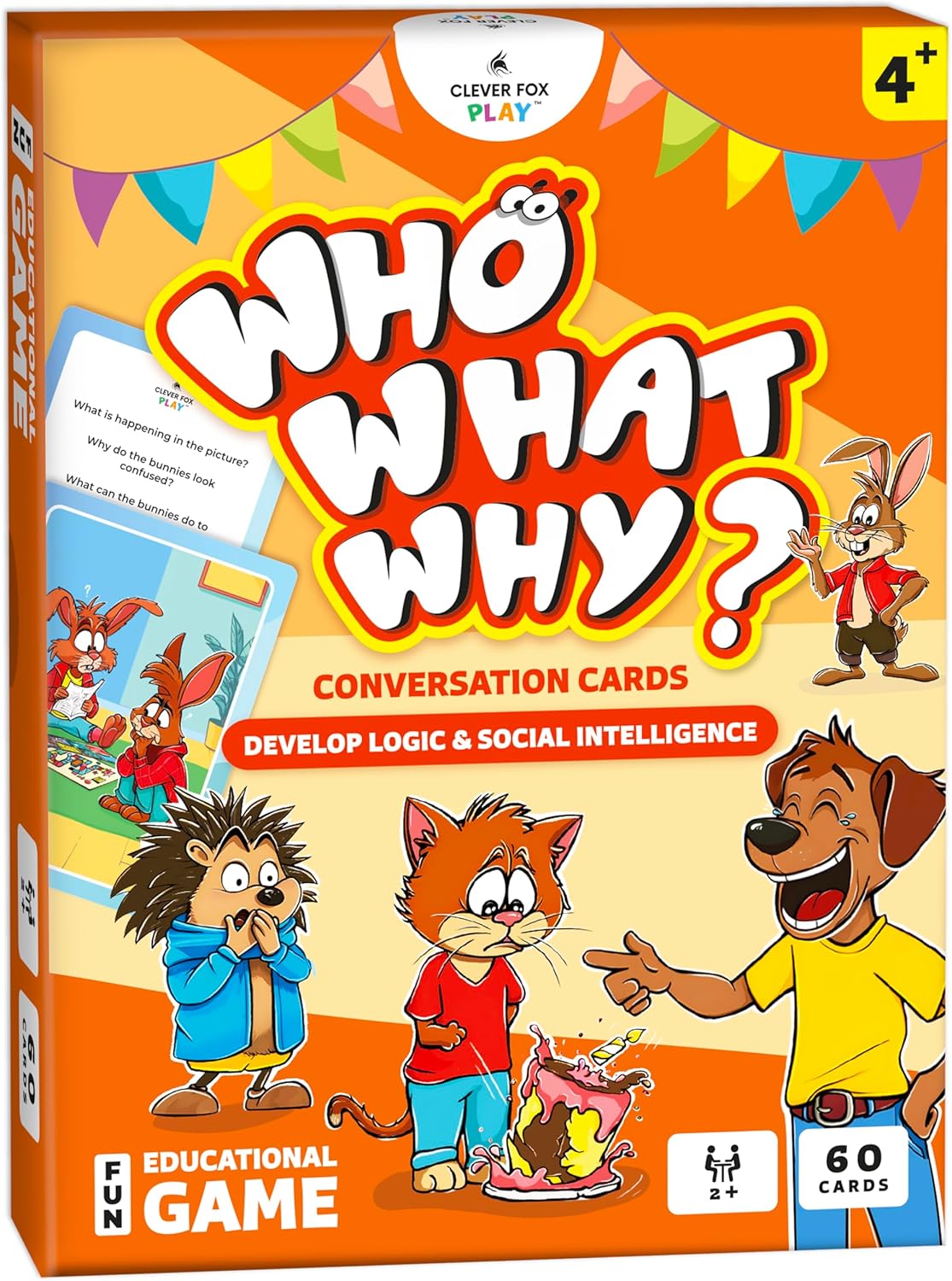
Who What Why Conversation Cards Ages 4+ 🎲
Reviews
Price
Product description
This set of illustrated conversation cards helps children practise empathy, communication and observation through short, relatable scenes and questions. The conversation cards for kids open up everyday topics for family, classroom or therapy use and make it easier to start meaningful discussions using animal characters and visual cues.
Key Points
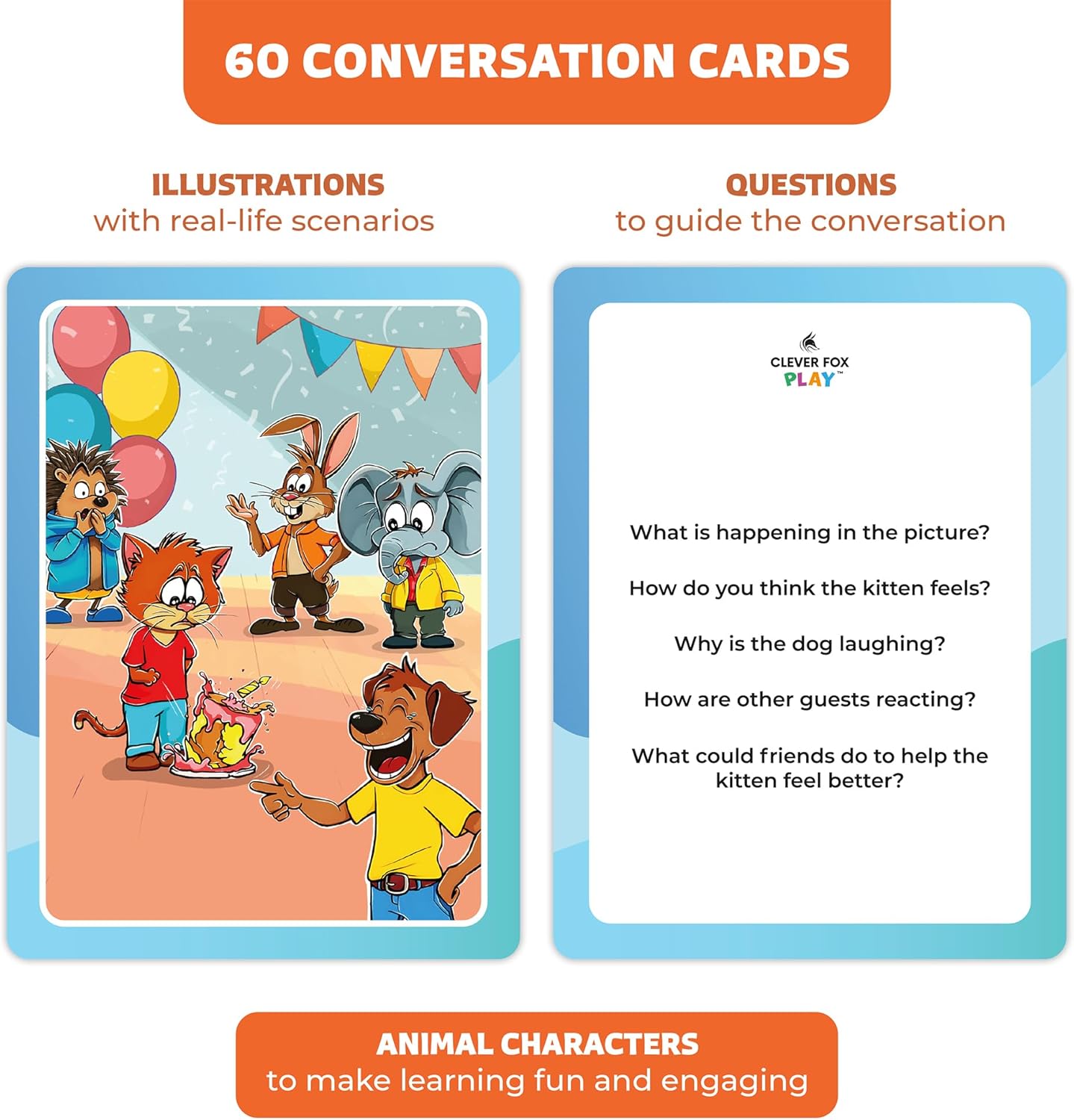
Who What Why Conversation Cards use friendly, animal-based illustrations to present 60 everyday scenarios that encourage children to notice feelings, explain behaviour and think about possible outcomes. Questions on each card prompt simple answers and deeper reflection, so a single deck can support quick chats as well as longer guided activities. The cards are presented as a low-pressure way to develop vocabulary for emotions and social understanding, and some descriptions from the manufacturer indicate the material is suitable for group work or one-to-one sessions. 🐻

Technical Specifications
- Name: Who What Why Conversation Cards for Kids
- Age: 4+
- Number of scenarios: 60
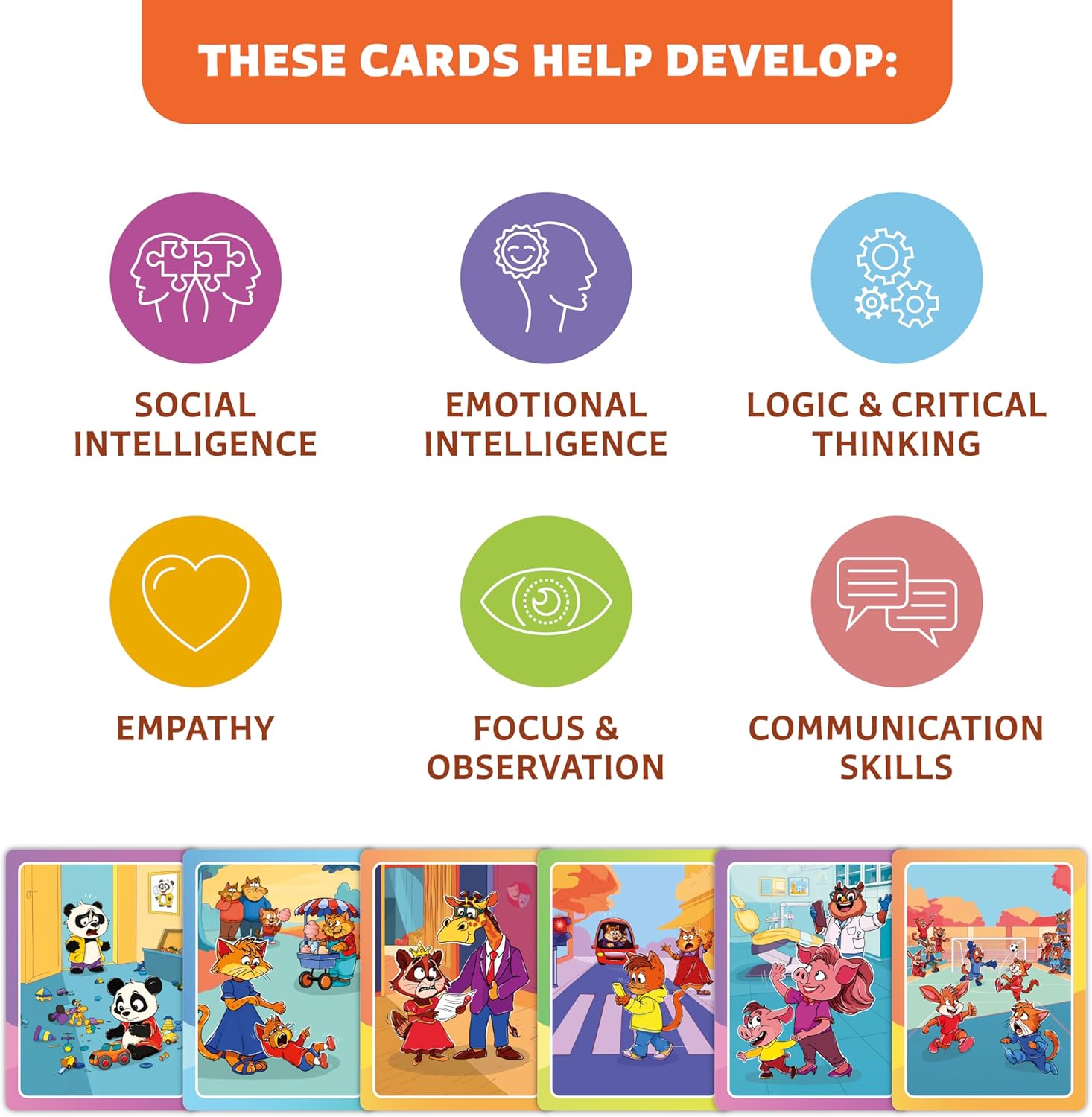
- Content focus: emotional and social intelligence, observation and critical thinking
- Format: illustrated card deck
Usage Recommendations
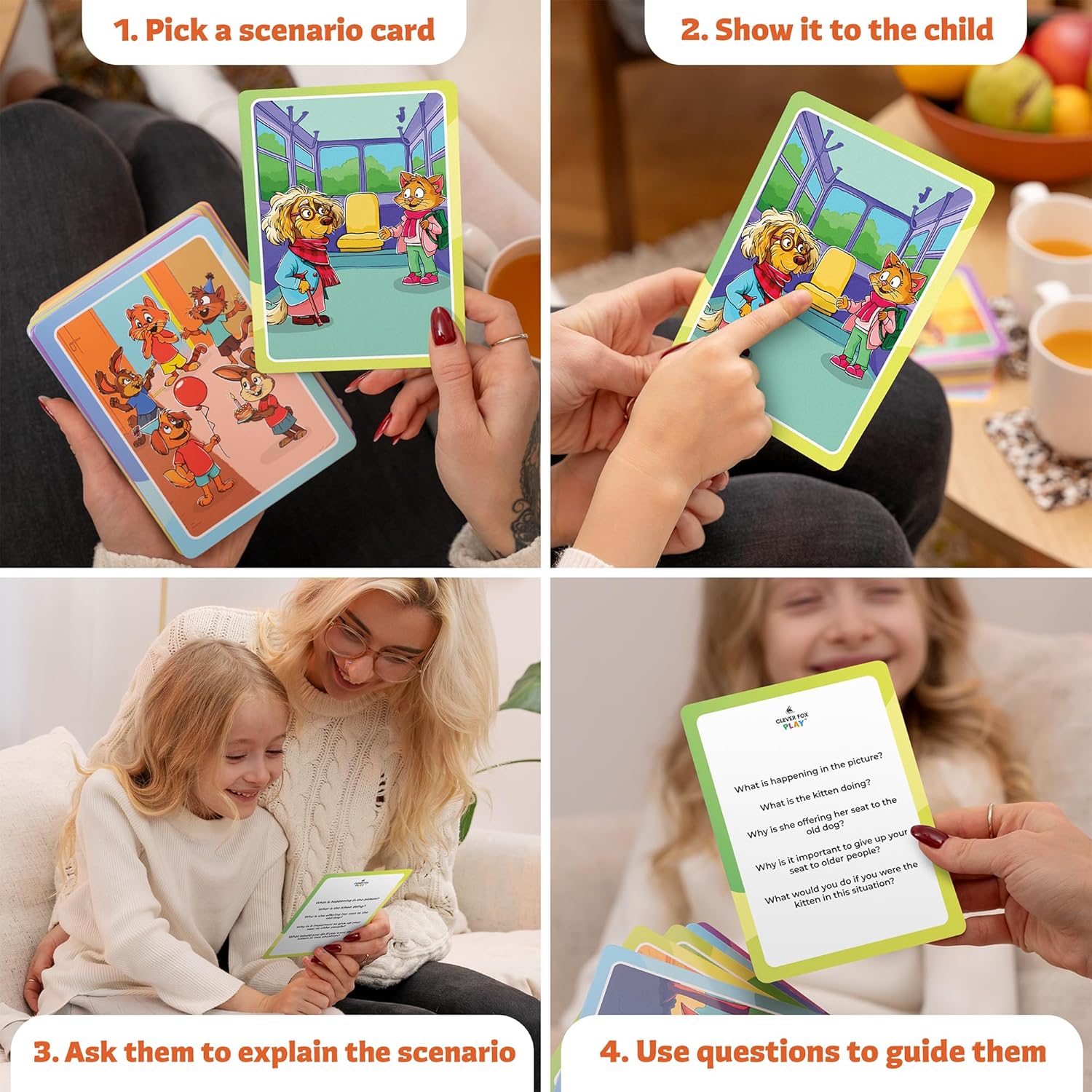
Use the cards in short daily sessions to build familiarity with emotional words and social cues, or select a single card for a focused conversation during circle time. For younger children, ask simpler, concrete questions about what they see and how characters might feel. For older children, encourage them to suggest alternatives or explain motives and consequences. Teachers and therapists may adapt the pacing and depth depending on the group, and parents can introduce a card at mealtimes or during car journeys to spark casual discussion. 🗣️
Benefits
The cards aim to strengthen communication skills by giving children prompts that are easier to respond to than open-ended questions. Visual clues on each card support observational thinking and guide children to interpret facial expressions and contextual details, which can improve critical thinking over time. Using animal characters reduces pressure and makes scenarios more approachable, which can help hesitant children join the conversation. Consider that some product listings mention suitability from six years and up according to the manufacturer, so you may want to match the complexity of questions to your child’s developmental stage. 🐾