

Welding Helmet Auto Darkening Shade 4/9-13 🛡
Product description
This auto darkening welding helmet combines solar-powered operation with an expanded viewing area to make welding and grinding tasks easier to monitor. The adjustable shade range and lightweight headband aim to reduce visual fatigue and keep you comfortable during longer TIG, MIG or ARC sessions. This auto darkening welding helmet offers practical protection for workshop and site use.
Key Points
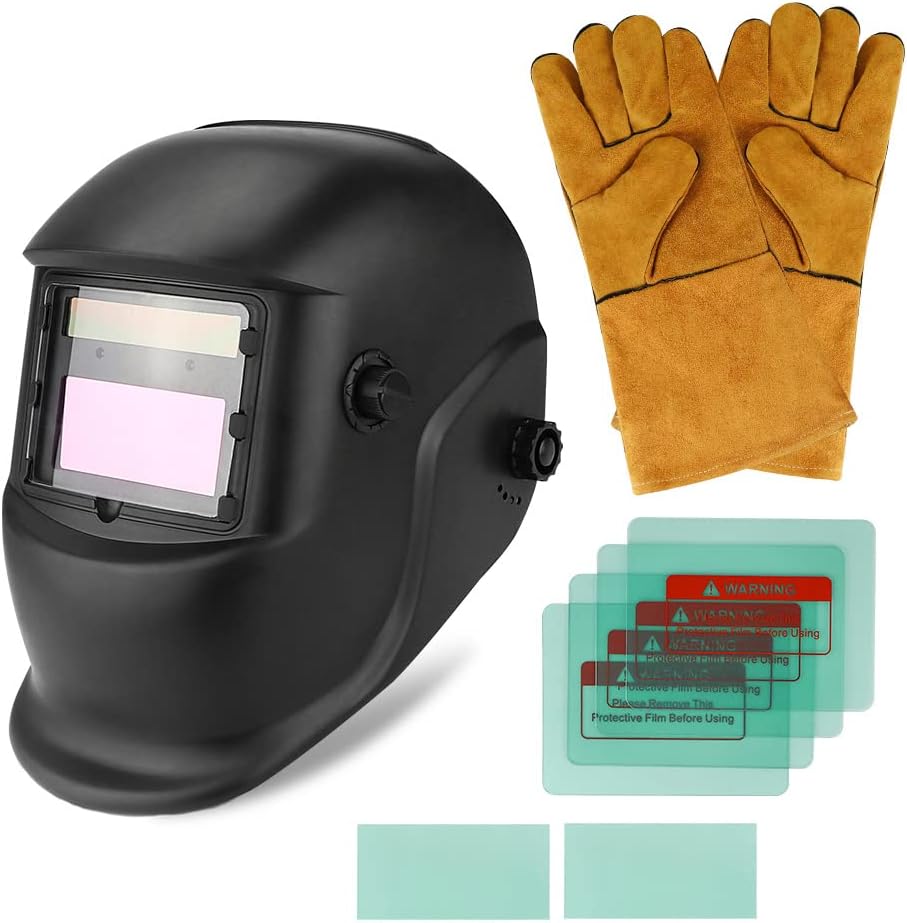
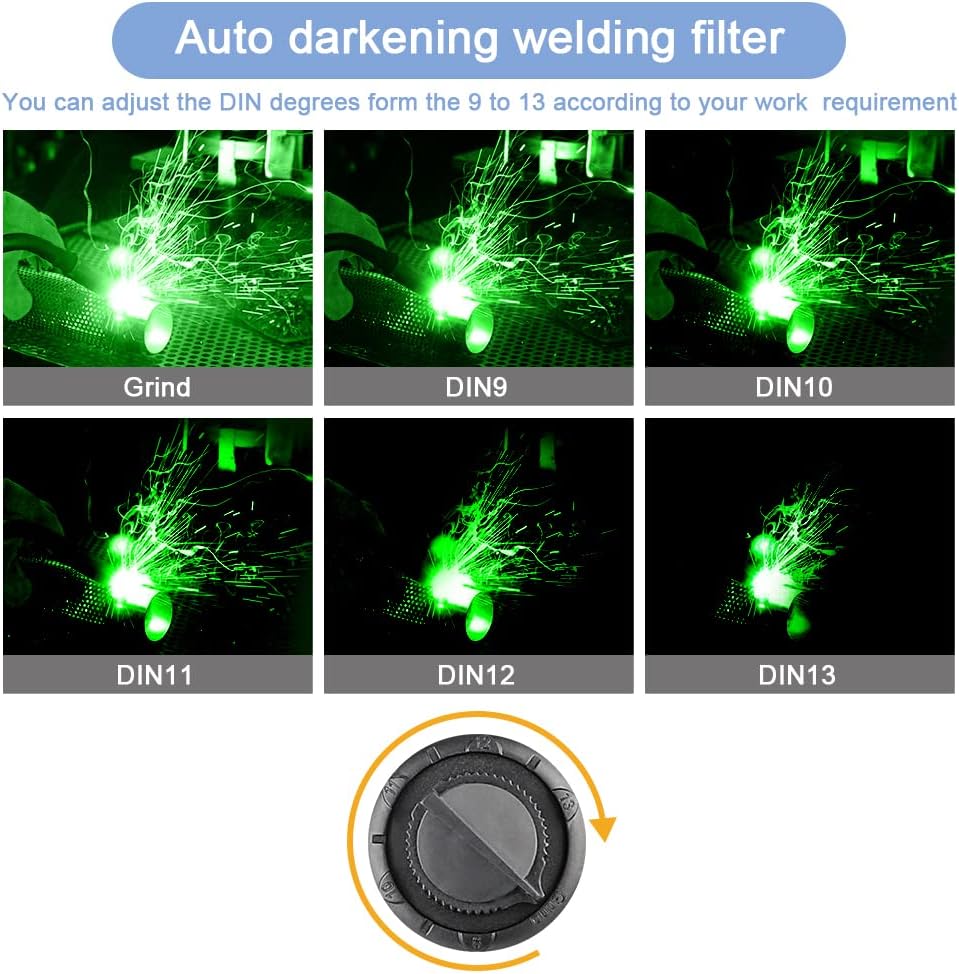
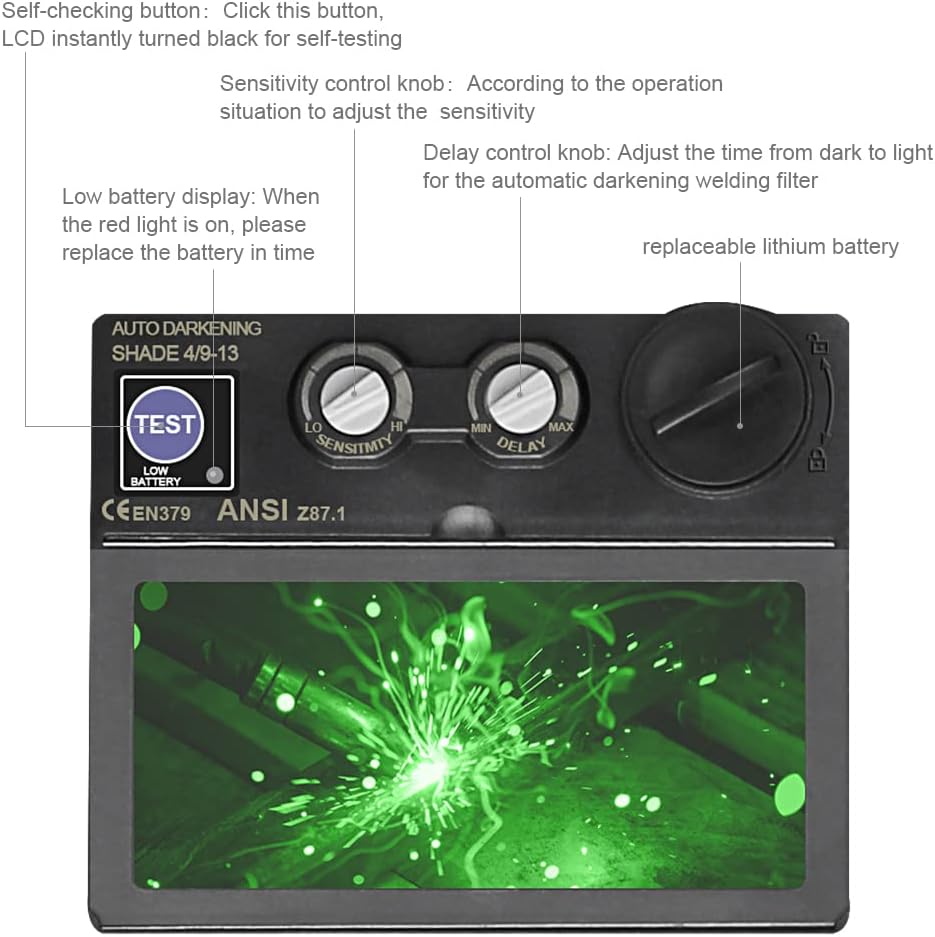
The helmet features a large viewing window that improves peripheral sight and makes it simpler to follow the arc and electrode movement. Two independent sensors activate the darkening filter as the arc strikes and there are sensitivity and delay settings to match various welding conditions. The headband is adjustable and balanced to help keep the mask steady while you work. The shell includes contoured edges to deflect sparks and splashes, and a low-battery indicator warns when the internal power is running low, according to the manufacturer. ⚙️
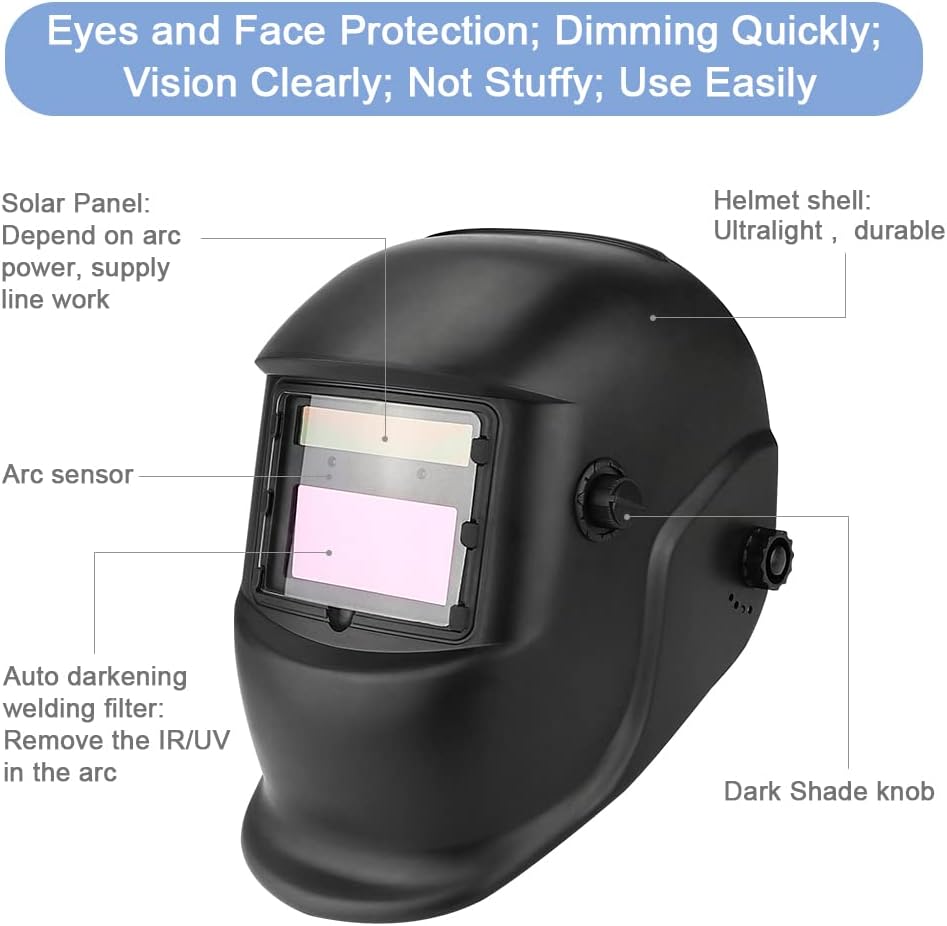
Technical Specifications
- Name: Welding Helmet Auto Darkening Solar Powered Welder Helmet with 6 Replacement Lens
- Viewing area: 92.5 x 42.5 mm
- Optical clarity: 1/1/1/2
- Light level (inactive): DIN 4
- Shade range: 4, 9-13
Benefits
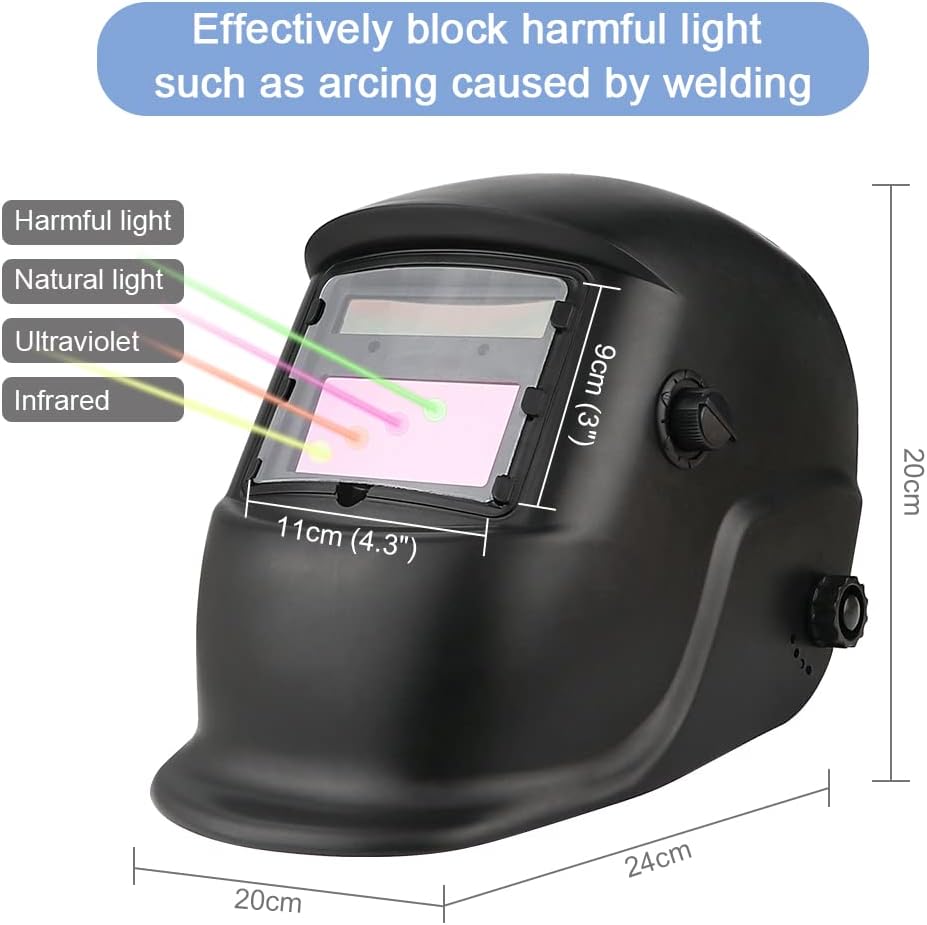
The expanded viewing area reduces the need to move the head constantly and may decrease neck strain during long jobs. The solar-powered cells extend battery life and reduce the need for frequent replacements, which is convenient on longer shifts. Adjustable sensitivity and delay let you fine tune the response for low-current TIG work or higher-current ARC welding, and the variable shade accommodates a wide range of applications. One nuance to consider is that this model has two sensors, which generally perform well but may be less responsive than helmets with more sensors in some complex positions. 🔧
Usage Recommendations
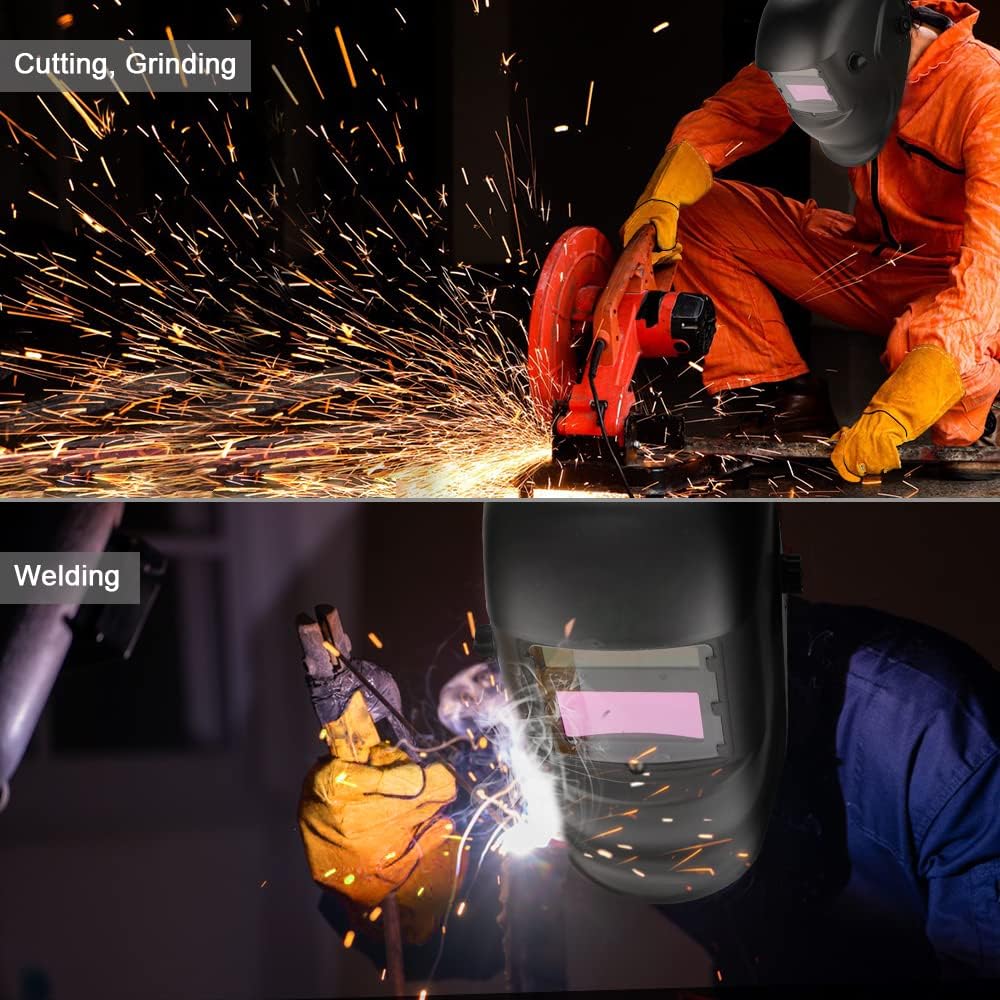
For grinding or light welding tasks leave the shade at the lower settings to keep visibility while still protecting against flashes. When tackling MIG, MAG or ARC welding switch to the darker DIN settings between 9 and 13 to ensure adequate eye protection. Check the position of the headband and tighten it for a secure no-slip fit before starting work, and use the delay control to avoid the lens staying dark longer than needed after the arc stops. Keep the replacement lenses clean and store them flat to avoid scratches, and note that the low-battery indicator should prompt lens and sensor checks as part of routine maintenance.