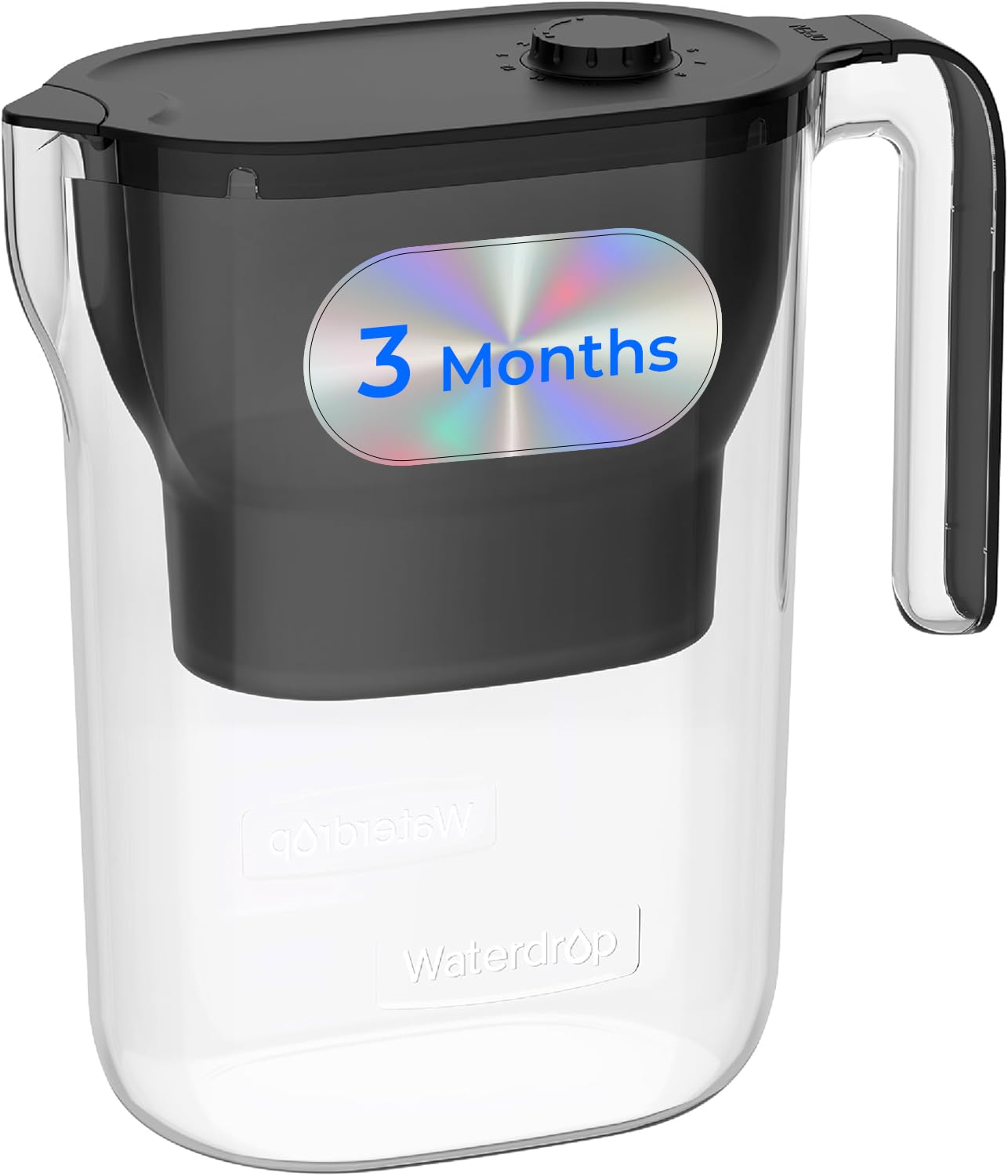
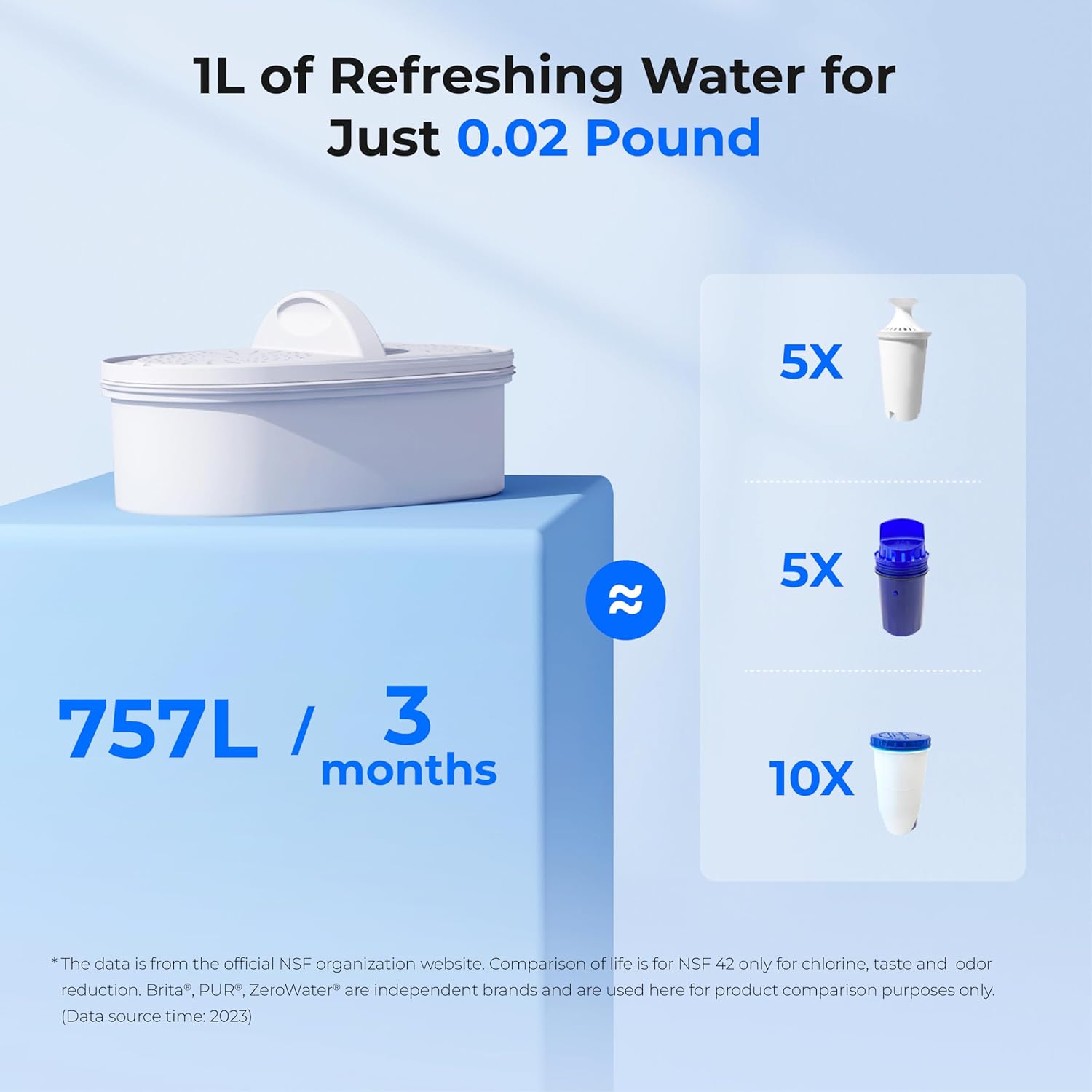
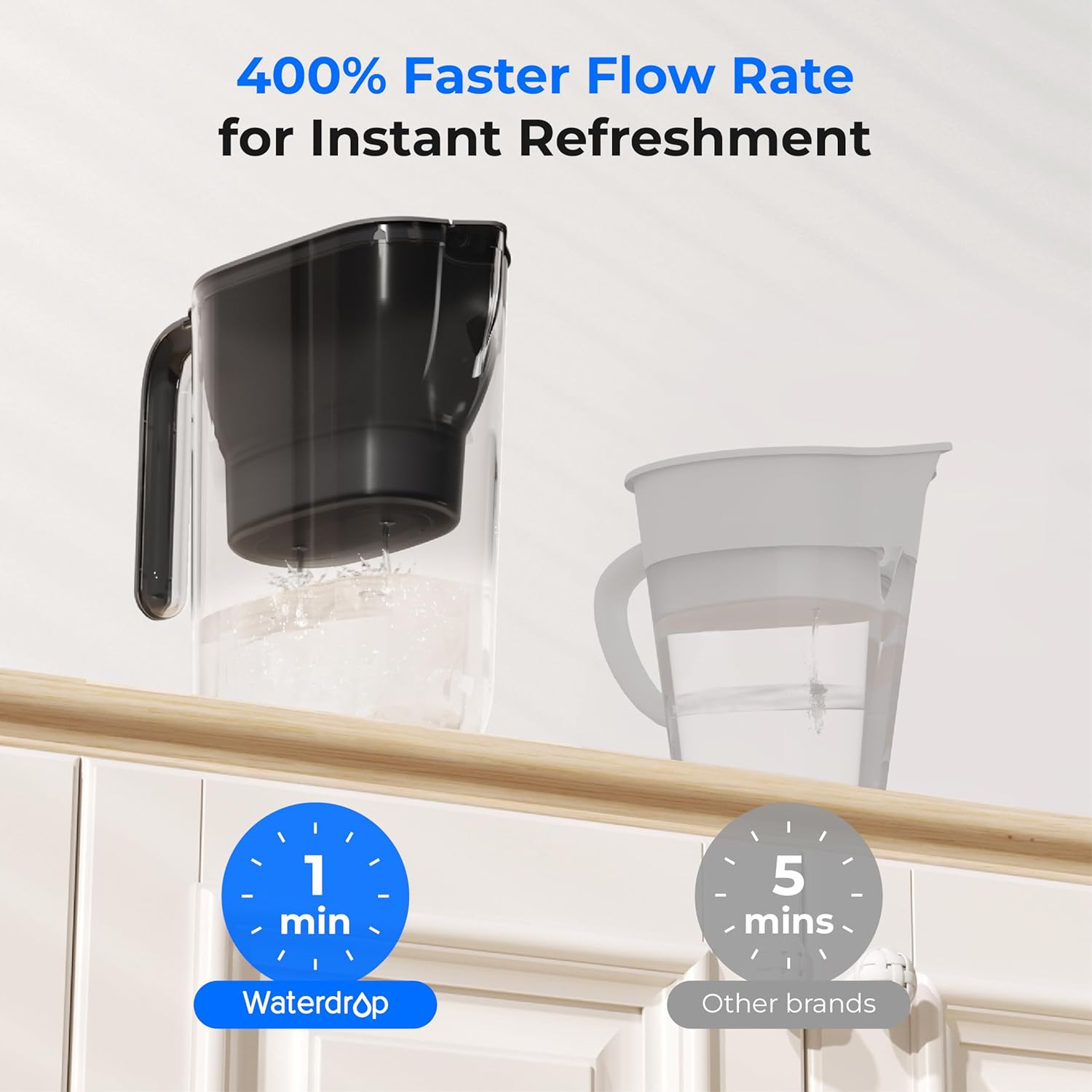
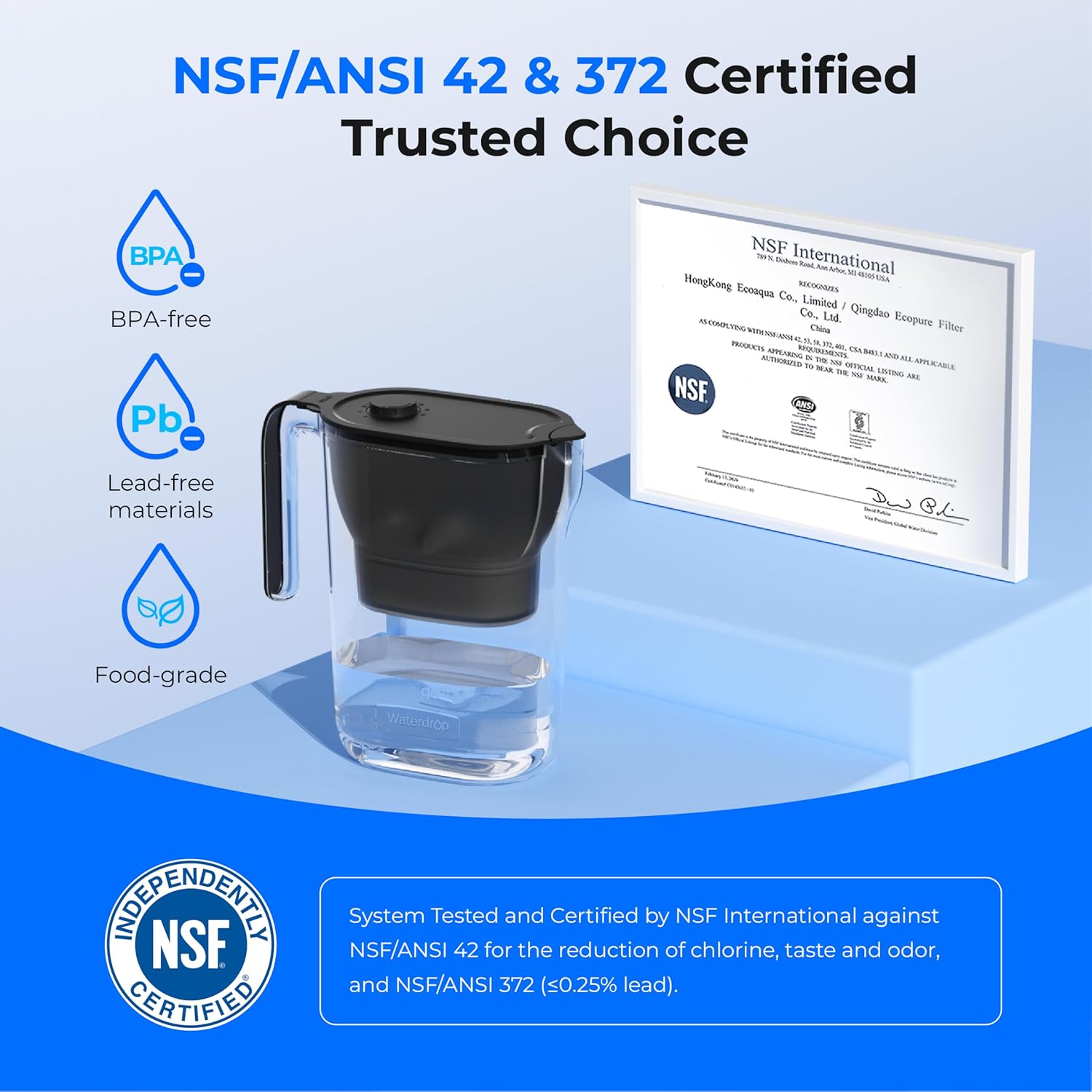
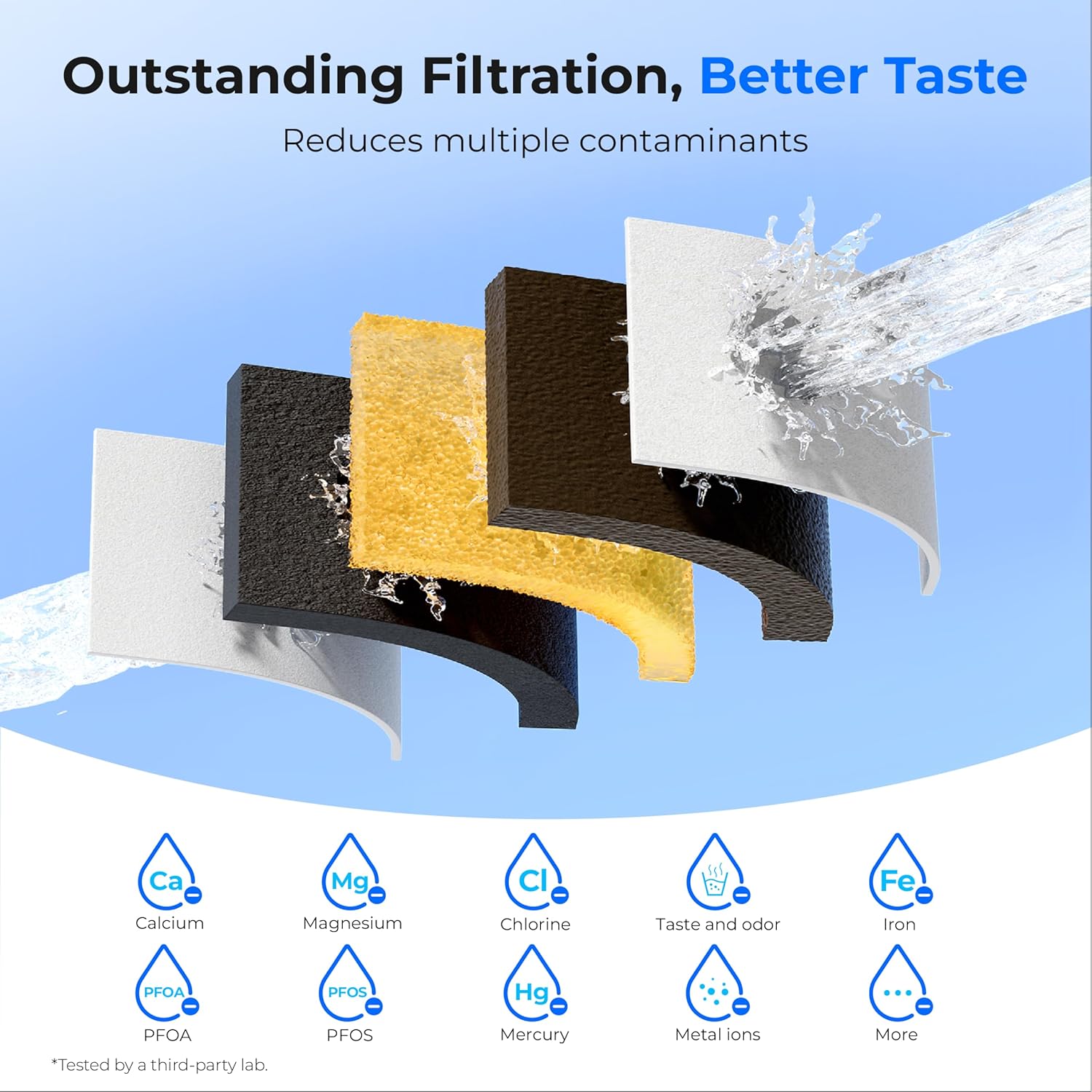
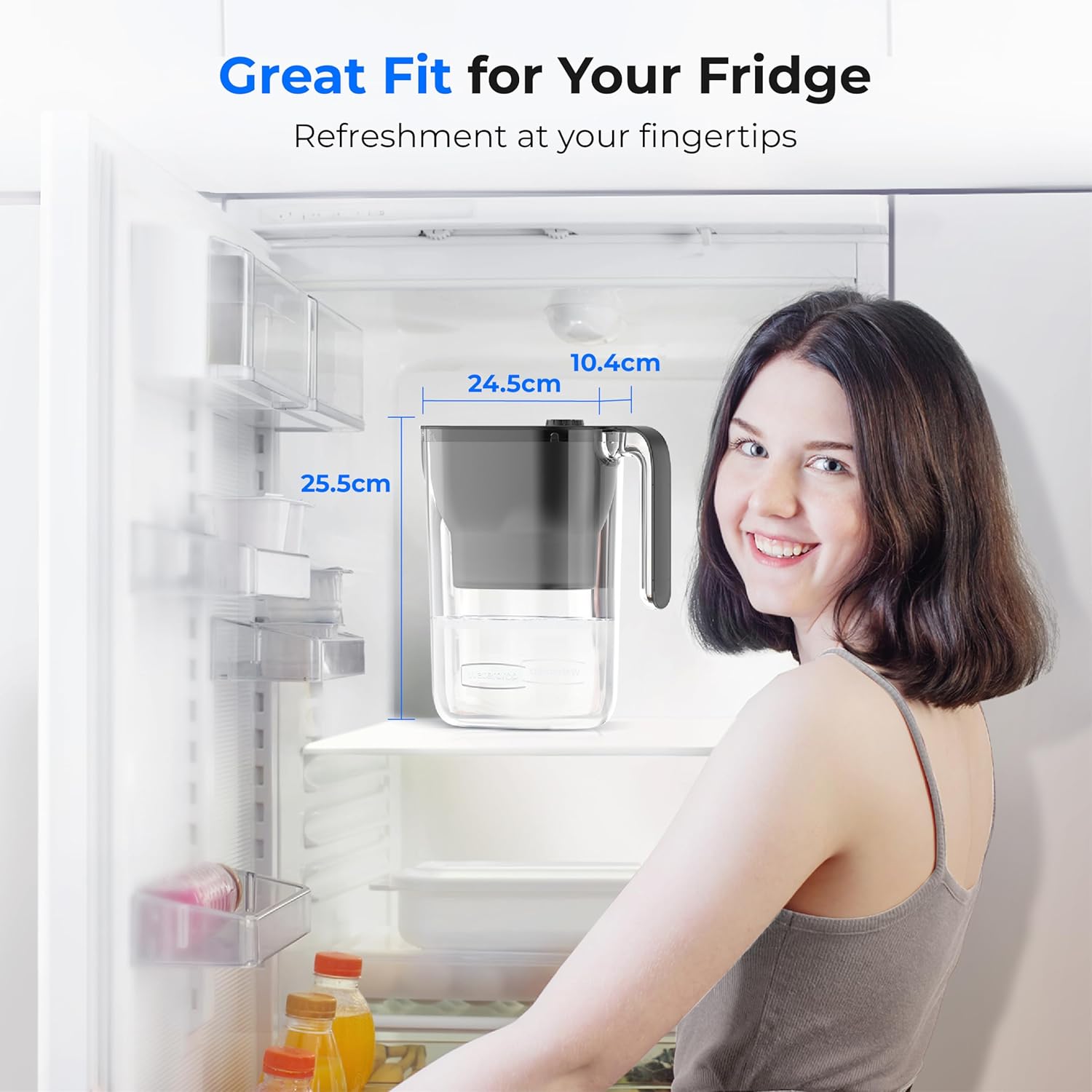
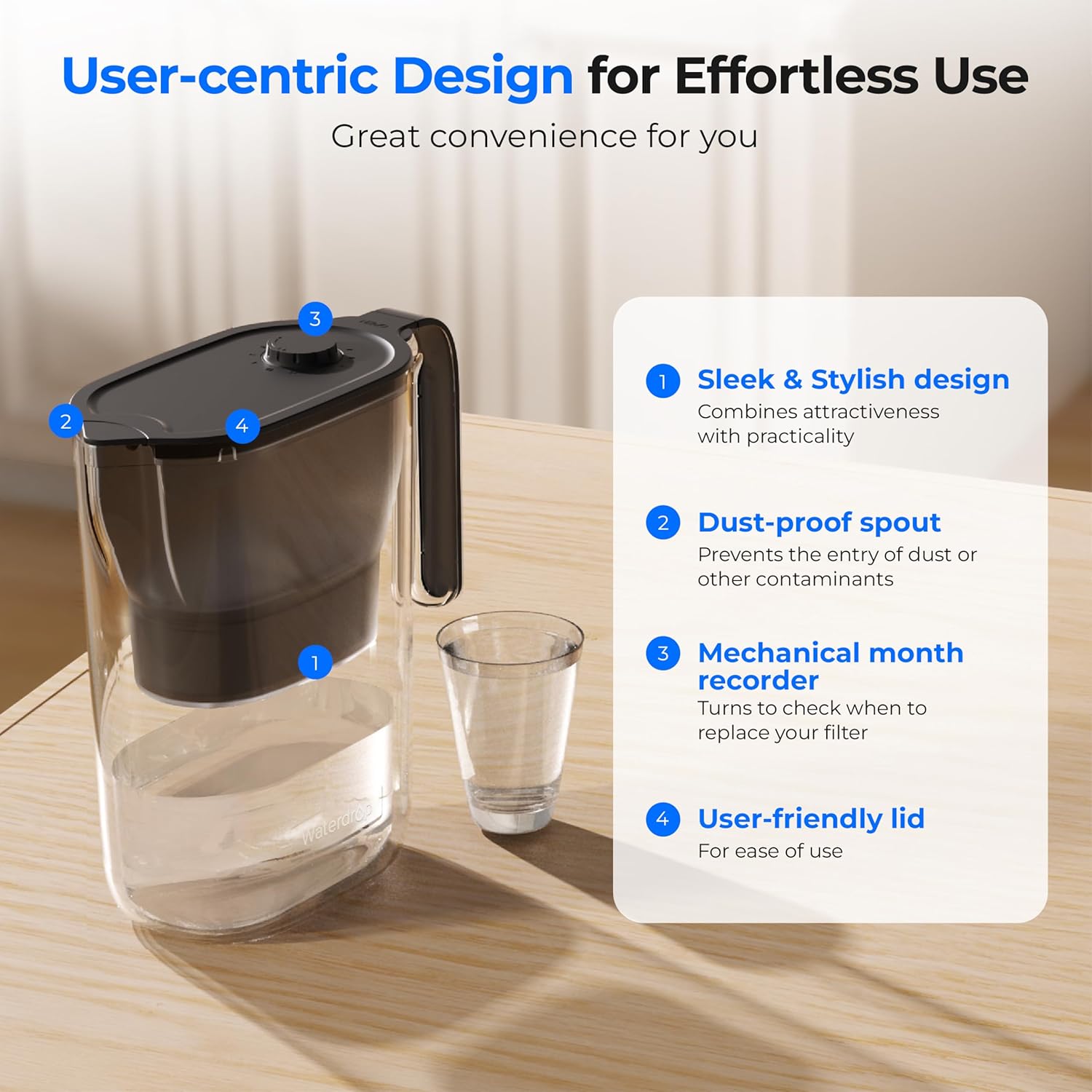
What it is and what it solves\nWaterdrop’s 2.5L Water Filter Jug is a compact pitcher designed to improve tap water taste and reduce common contaminants. It targets everyday hydration needs in homes and offices where filtered water is valued but a full filtration system would be impractical. On paper, the design emphasises affordability alongside a credible filtration workflow, aiming to cut down on bottled water waste while delivering water that tastes more pleasant. If you prioritise cost-conscious filtration without sacrificing performance, this model presents a straightforward option.\n\n## How it performs in real life\nThe pitcher carries NSF/ANSI 372 and 42 certifications, suggesting the use of approved activated carbon filtration elements. The stated benefits include reductions in chlorine, taste and odour, and a range of minerals or contaminants such as PFOA, PFOS, iron, calcium, copper, mercury and magnesium. In practical terms, that can translate to clearer-tasting water and a perceived improvement over unfiltered tap water. The 2.5L capacity is suitable for small to medium households or shared spaces where multiple cups of filtered water are needed daily. However, the exact improvements you notice will depend on your local water quality.\n\n## Lifespan and maintenance\nA notable feature is the 3-month extended lifespan claim, equivalent to roughly 757 litres, which may vary with usage and water hardness. The mechanical life recorder helps you keep track of when to replace the filter, reducing the risk of using a spent cartridge. The filter model referenced for replacements is WD-PF-01A Plus. Practically, this means less frequent replacement than some budget options, but you’ll still have to budget for periodic filter changes.\n\n## Build and materials\nThe jug is made from food-grade BPA-free plastic, with an ergonomic handle to aid pouring. The filtration relies on silver-loaded activated carbon and a highly efficient ACF (activated carbon fibre) medium. These materials are common for mid-range pitchers and are designed to balance cost with reliability. If you’re sensitive to plastics or seeking a premium glass alternative, this may feel less premium, but the BPA-free claim is aligned with contemporary consumer expectations.\n\n## Who it’s for\nIt suits households or small offices looking for a cost-effective filtration solution that doesn’t require a bulky setup. It’s a practical choice if you want to reduce single-use bottles and enjoy water that’s marginally more pleasant than straight tap water. It’s not the strongest option if you need ultra-affordable replacements or if your local water is already very clean and taste-neutral.\n\n## What to watch before buying\nCheck water hardness and your daily water intake to estimate whether a 757L lifespan fits your usage. Consider whether you’re comfortable with a plastic jug and whether the 2.5L capacity aligns with your daily hydration needs. If you rely on very cold water, remember that filtration performance can be affected by flow rate and residence time in the cartridge.\n\n## How it compares to other approaches\nIn the spectrum of at-home filtration, this pitcher sits between basic countertop filters and more advanced under-sink systems. For users wanting simpler setup, immediate taste improvements and a modest ongoing cost, it offers a reasonable compromise. If you require higher-grade contaminant removal, or want a larger capacity for a busy family, you might look at alternatives with bigger jugs or more aggressive filtration stages.\n\n## Practical usage example\nImagine filling the jug in the morning, letting the filter do its job, and pouring a cold glass after a short shake of the jug to settle the water. By midday you’ve got purified water ready for tea, coffee or simply to sip, with the filter life indicator guiding the next replacement decision.\n\n## Should you buy it?\nIs it worth it? It makes sense if you’re after a budget-friendly, NSF-certified filtration option that reduces common tap-water tastes and odours while cutting single-use plastic. It’s not the best option if you need the highest possible filtration performance on a tight budget or if you want a larger capacity without refilling so often. Consider your daily intake, local water quality, and whether you’re prepared to replace filters periodically.\n\n## Frequently asked questions\n- How often should I replace the filter? The label references a 3-month lifespan under typical use, about 757 litres, but varying water conditions can adjust this.\n- Does it remove lead? The product description indicates lead reduction among its targets, but check local regulations and your water report for expectations.\n- Is it dishwasher safe? The base materials are BPA-free plastic, however, filter cartridges and possibly the lid may have care instructions that favour handwashing.\n