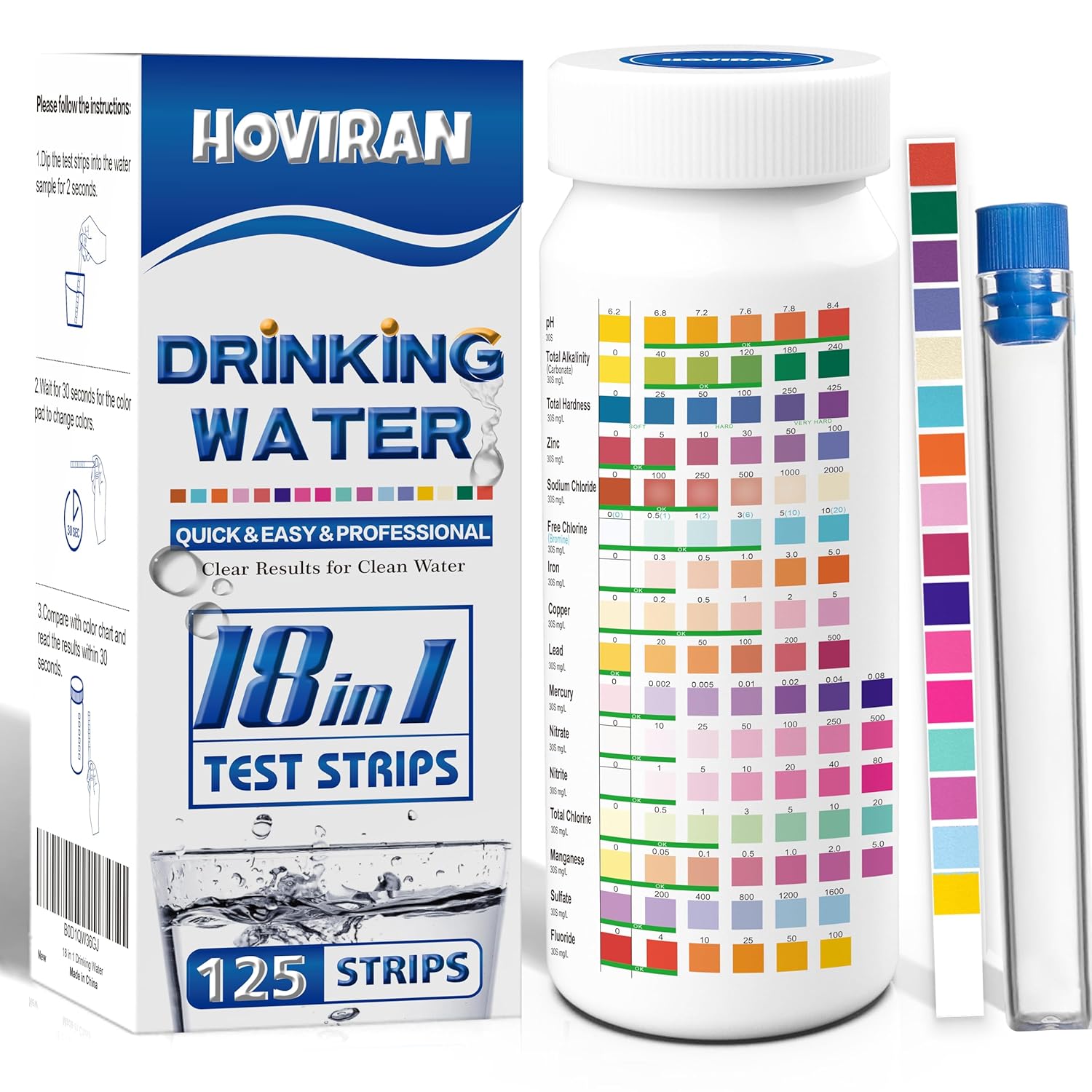
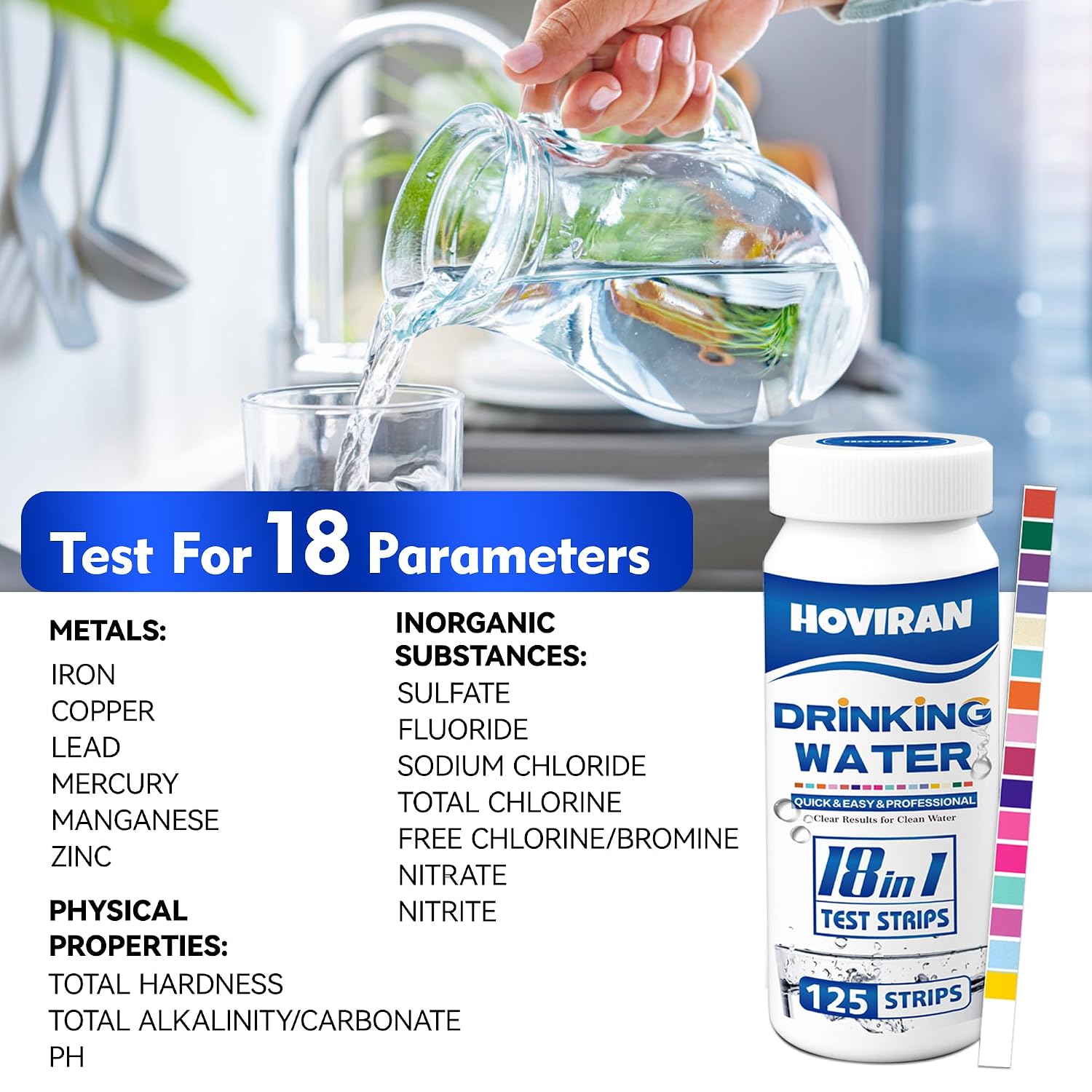
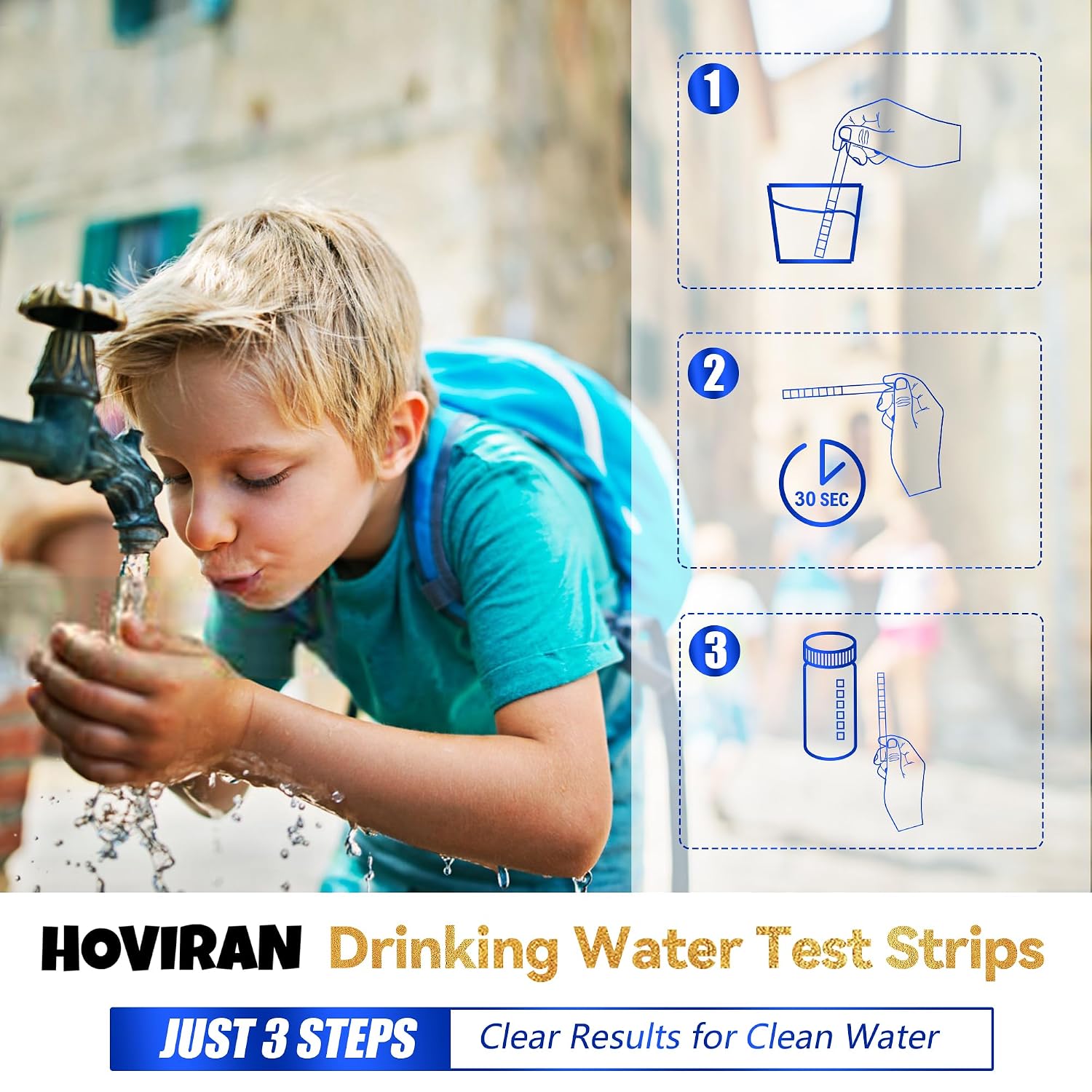
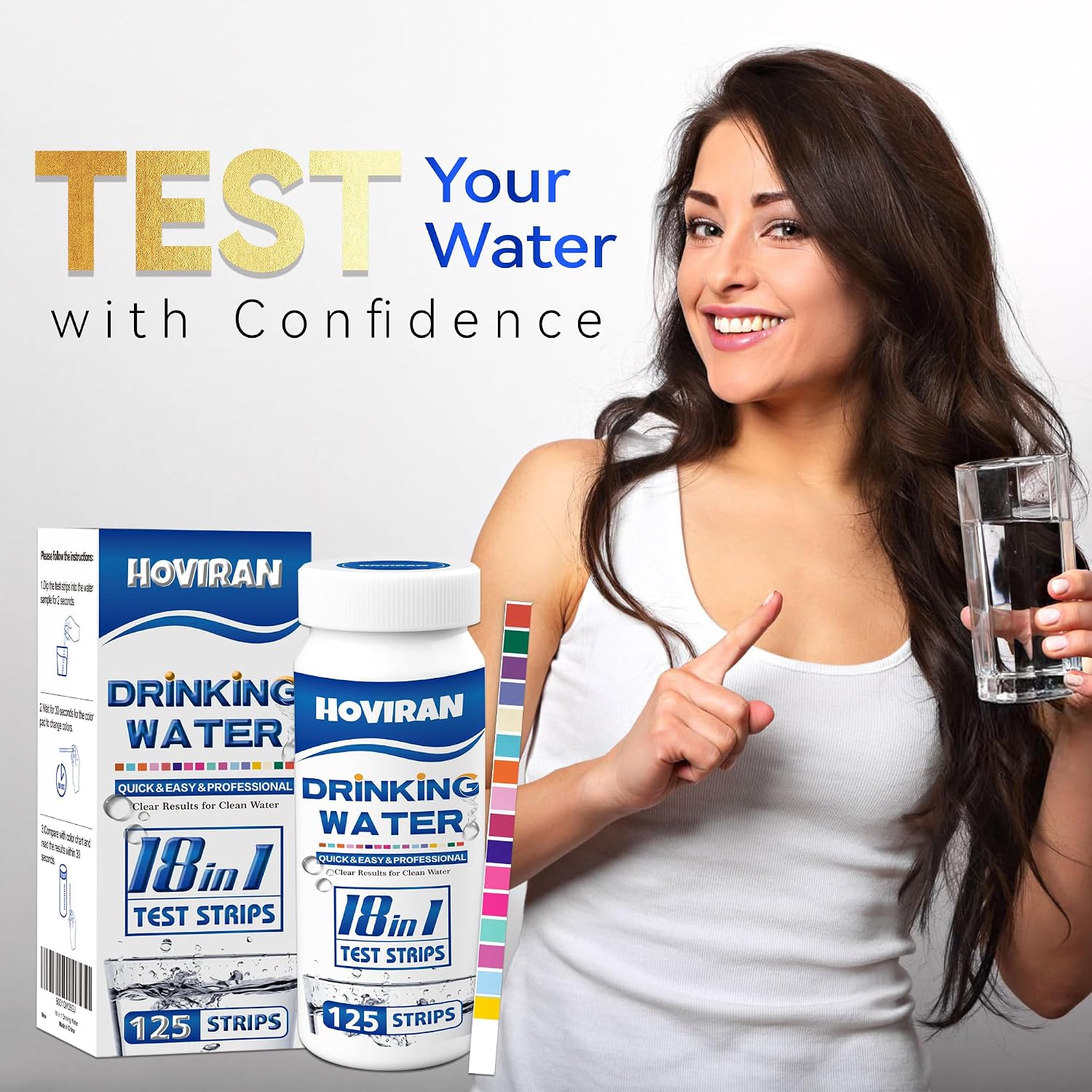
What it is and what it’s for\nThis is a home water testing kit designed to assess drinking water quality across multiple parameters. With 125 strips and an accompanying test tube, it aims to help you quickly gauge whether your water meets basic safety and quality expectations. On the surface, it offers an affordable way to screen for common contaminants and hardness, which can be useful for households relying on well or tap water.\n\n## How it works\nThe process is described as a straightforward 3‑step test: dip a strip into water for 2 seconds, remove and hold horizontally for 30 seconds, then compare to a colour chart read within 30 seconds. The manufacturer emphasises avoiding touching the test area, reading in natural daylight, and storing strips in a cool, dry place to improve reliability.\n\n## What stands out (pros and cons)\nPros: broad coverage with 18 parameters, portability, and a clearly laid‑out colour chart for quick results. The kit is positioned as affordable and convenient for routine checks at home, well water, or even pool and spa scenarios. Contras: colour interpretation can be subjective, and results are approximate rather than a professional lab measurement. If you prioritise exact concentrations or regulatory compliance, lab testing would still be the gold standard.\n\n## Who it’s for\nThis kit seems well suited for households who want a practical, low‑cost way to screen water quality across a range of common indicators. It could be useful for people who notice taste or odour changes, have well water, or simply like to keep an eye on basic water parameters without arranging external testing.\n\n## Who it isn’t for\nIf you need precise, legally defensible measurements or comprehensive chemical analysis, this kit may not meet those requirements. It also relies on visual colour matching, which may not suit users with colour vision differences or for very subtle contaminant levels.\n\n## When it makes sense to buy\n Buy when you want a quick, entry‑level snapshot of multiple water quality indicators without the cost or wait of laboratory tests. It’s reasonable to use as a periodic check to identify obvious issues or to monitor changes over time.\n\n## What to review before purchasing\nEnsure you understand the limitations of colour‑matching tests and recognise that not all possible contaminants are covered. Consider how you’ll interpret “out of range” readings and whether you’ll follow up with more accurate testing if something looks off. Read the instruction notes about measurement conditions, such as reading in daylight and storage conditions.\n\n## Practical usage example\nImagine you’ve just filled a kettle from a home borehole and notice a slight metallic aftertaste. A quick test with this kit could flag elevated levels of metals like iron or lead, prompting a more thorough assessment or a professional test if results are concerning.\n\n## FAQ (based on available details)\n- What parameters are tested? The kit covers 18 parameters including hardness, chlorine (free and total), bromine, iron, copper, lead, mercury, nitrate, nitrite, manganese, sulfate, zinc, fluoride, sodium chloride, total alkalinity, carbonate, and pH.\n- How long does it take to read results? About 30 seconds after dipping and aligning the strip with the colour chart.\n- How should strips be stored? In a cool, dry place to help maintain accuracy.\n\n## Final verdict\nIs it worth it? Worth considering if you want a practical, budget‑friendly way to screen a range of common water quality indicators at home, with the caveat that results are indicative and require careful interpretation. It may not replace professional testing if you need precise measurements or regulatory compliance.