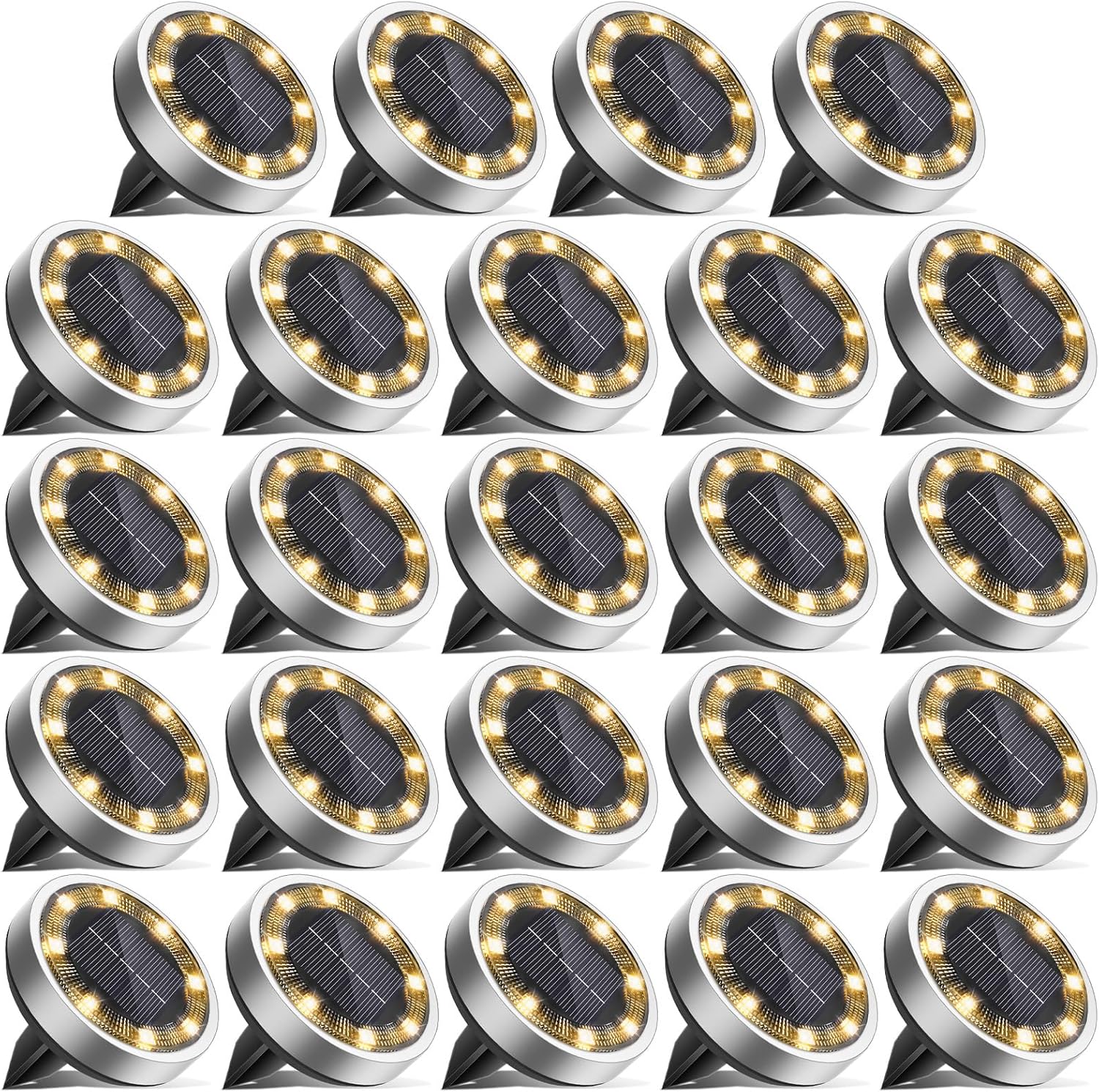
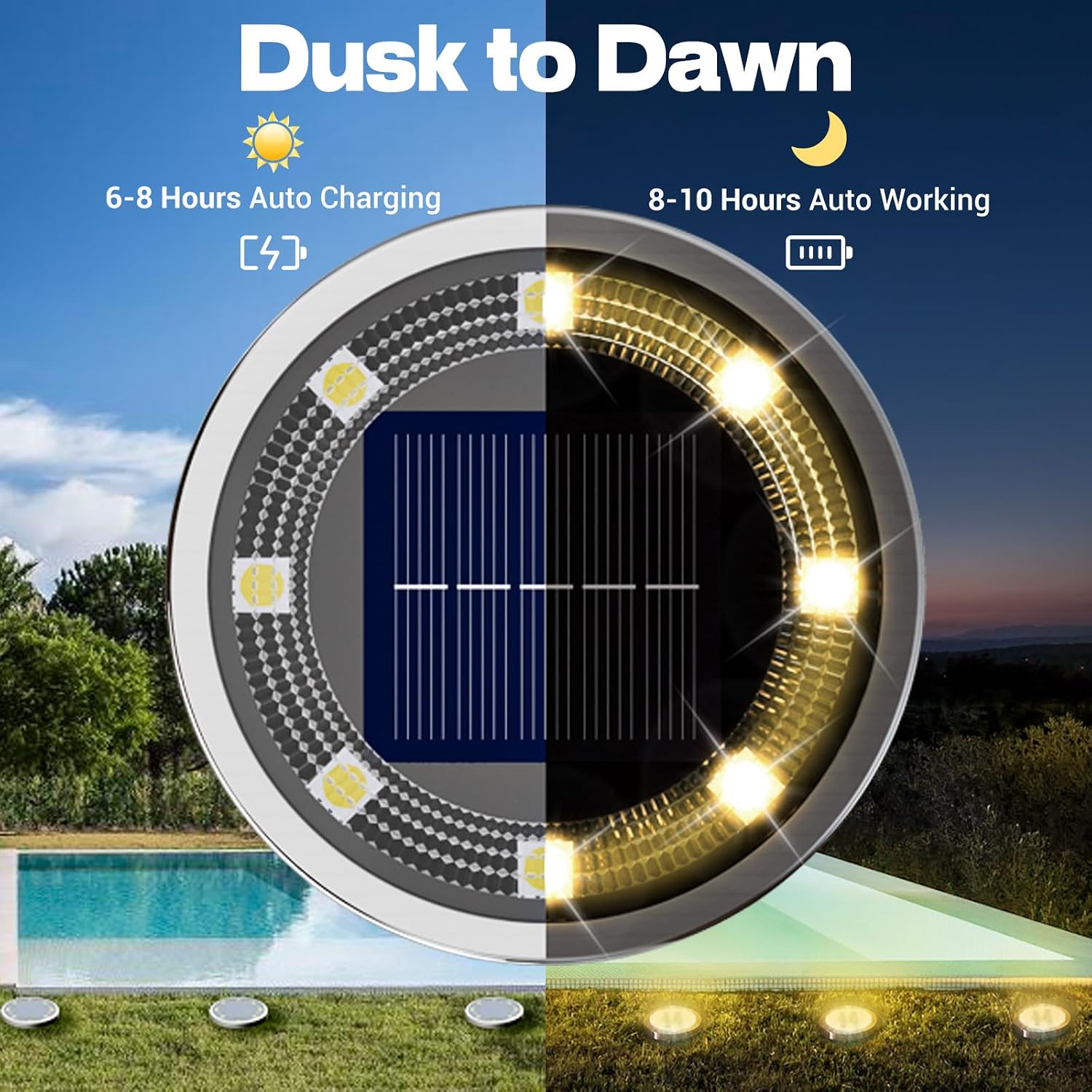
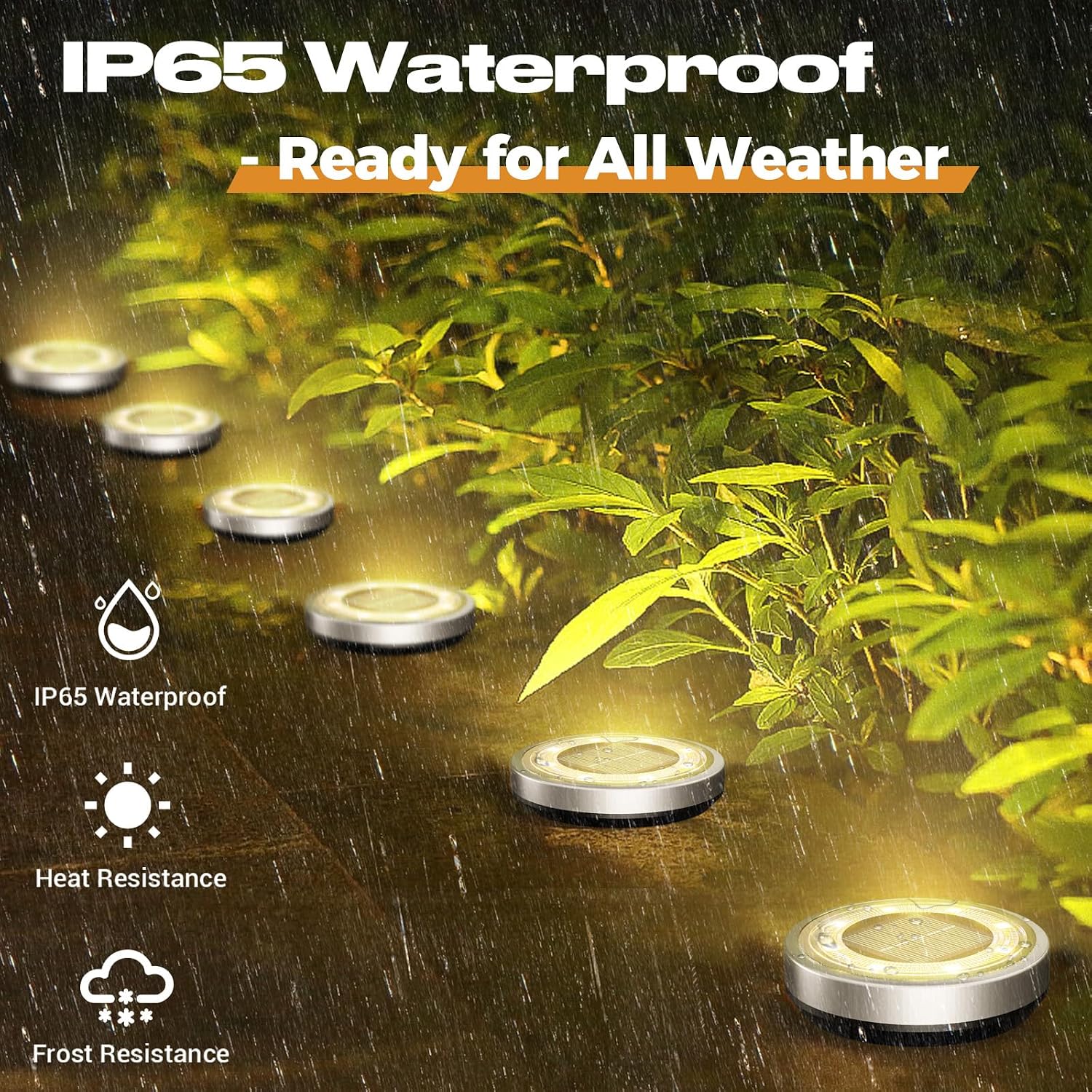
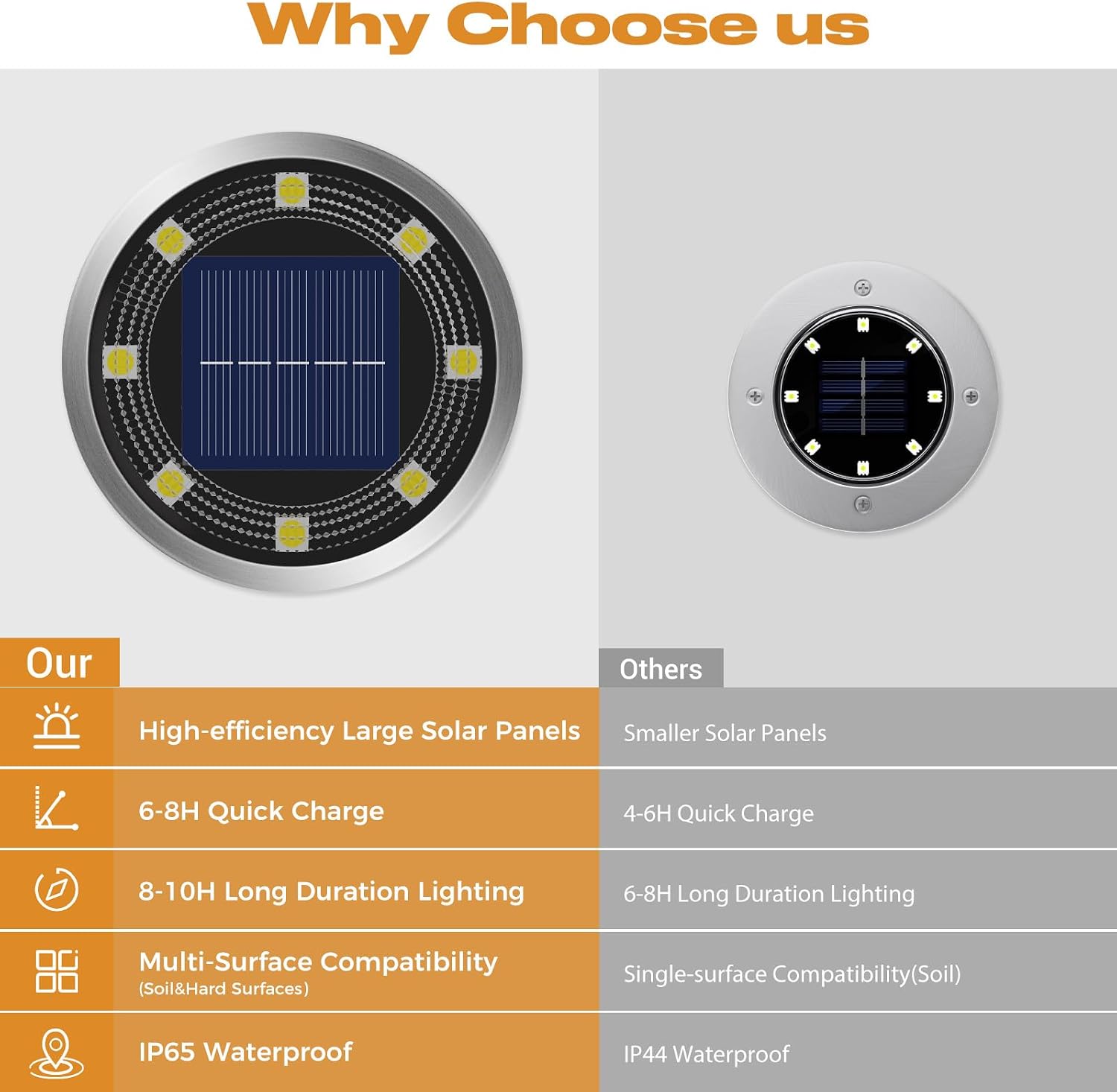
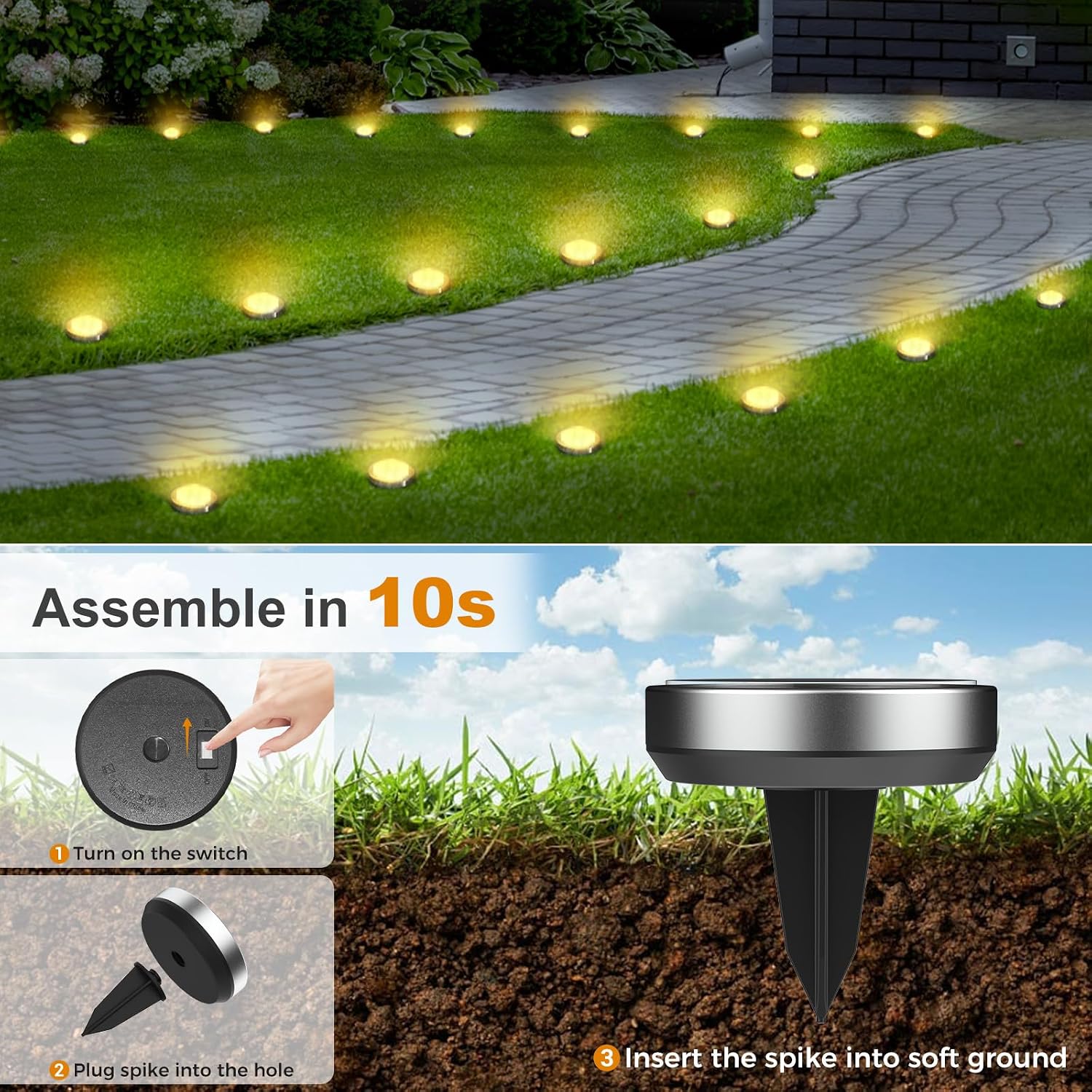
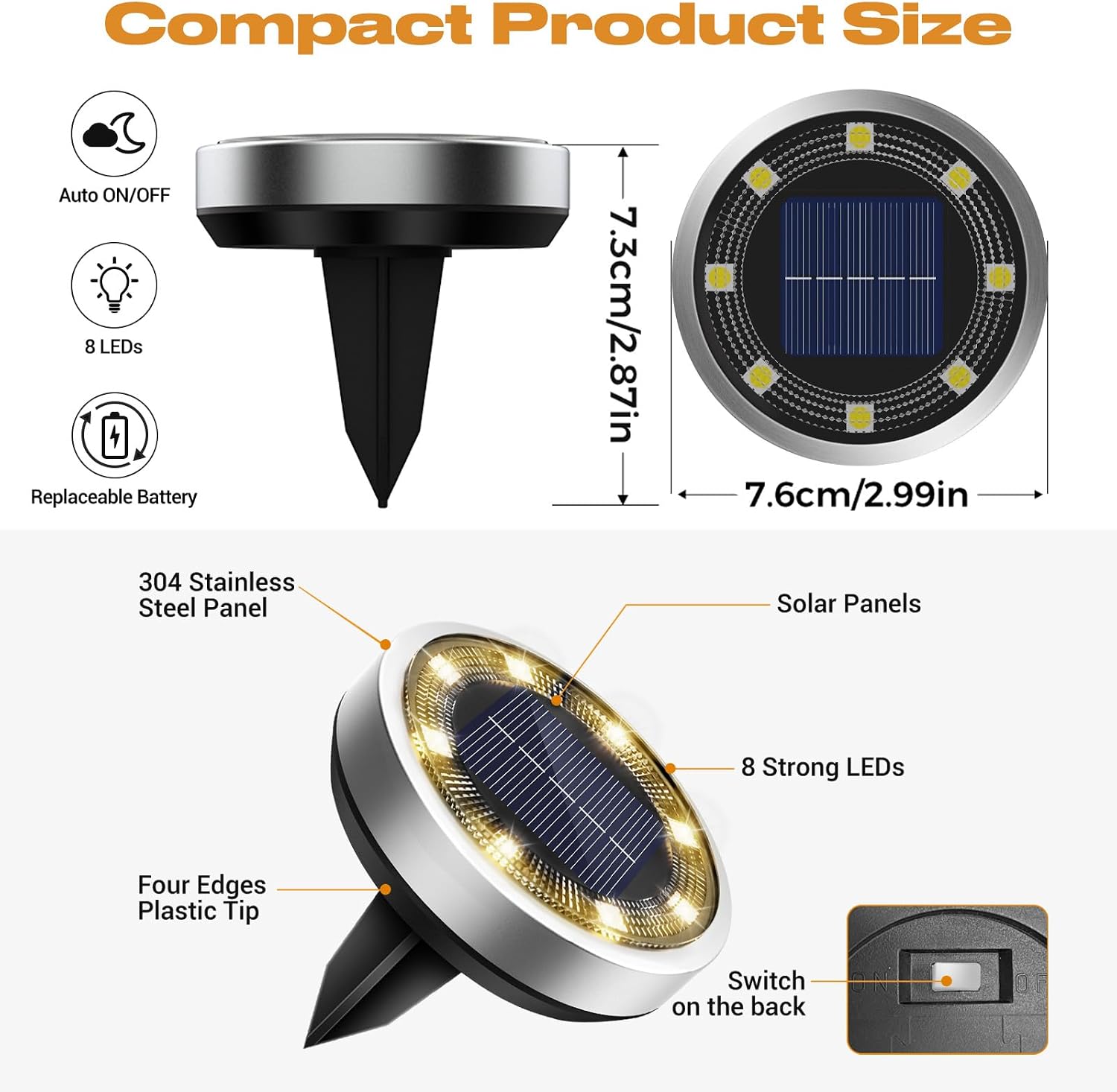
What you get and what it’s for\nThese are solar-powered ground lights designed to light paths, borders and key features in gardens and patios. With a built‑in solar panel and a 600mAh battery, the lights claim to charge fully in 6–8 hours of sun and deliver 8–12 hours of illumination. They are IP65 rated, so they should stand up to rain, frost or snow, and the durable ABS body aims to resist rust and fading. The lights come as a 24‑pack, making them a practical option if you want consistent low-level ambience or safer footpaths across larger outdoor spaces.\n\n## How they work and what to expect\nOn the surface these rely on daylight to recharge during the day and illuminate after dark. The eighth LEDs are energy efficient, which helps extend runtime. You should expect steady light output throughout the evening rather than a dramatic bright burst. If you’re replacing existing wired lighting, they’ll require a straightforward ground installation: connect the stake, push into soil or gravel, and leave the solar panel exposed to sun. Do note that there are differences between the earlier and later batches in installation steps, a standard upgrade.\n\n## Pros and cons in practice\n- Pros: easy, tool-free installation, weatherproof design, no ongoing electrical costs, good coverage for pathways and borders, decent runtime for typical evening use.\n- Cons: light output is modest by design and may not replace higher‑powered wired lighting, performance can vary with cloud cover and shorter winter days, installation guidance changed slightly between batches, so follow the latest procedure.\n\n## Ideal use cases\nIf you’re looking to demarcate a walkway, highlight garden features, or create a gentle ambience along a deck or lawn, these solar disk lights offer a practical, low‑effort solution. They’re suited to spaces where you want ongoing visibility without wiring, such as narrow paths, patios or edging along a driveway.\n\n## Who it’s for and who might skip it\nThey’re best for homeowners seeking budget‑friendly, temporary or seasonal external lighting, especially in sunny windows or direct sun exposure. Not ideal if you need high‑intensity lighting for security or if you’re in a consistently cloudy region where solar charging is limited.\n\n## Before you buy: quick checks\n- Ensure the installation area gets direct sunlight for most of the day.\n- Slide the switch to ON and remove any protective film from the solar panel before use.\n- Consider the layout to avoid shading that could reduce charging.\n- If you’re coordinating a large outdoor area, think about spacing to achieve even illumination across the space.\n\n## Practical example in use\nImagine a night time stroll along a garden path where the warm white glows softly underfoot, guiding you from the patio to the lawn without any cables. The 24‑pack gives you the flexibility to extend lighting to multiple edges or features without a complicated setup.\n\n## What to look for in the bigger picture\nThis approach sits between entry‑level decor lighting and more robust wired systems. If you prioritise low maintenance and straightforward installation in a daylight‑rich spot, it’s worth considering. If you prefer bright, security‑focused lighting, you might want to explore higher output options.\n\n## Is it worth it?\nFor practical garden illumination that’s easy to install and maintain, the vighep 24‑pack offers sensible value for money. It suits casual use and boundary lighting, especially where wiring isn’t desirable. You’ll like it if you want to cover multiple areas without trenching or mains power. You may want to skip it if you need very bright light or expect unreliable charging in dull climates.\n\n## FAQ (brief)\n- How long does charging take? About 6–8 hours in full sun.\n- How long does it last at night? Approximately 8–12 hours per charge, depending on sunlight and weather.\n- Is it weatherproof? Yes, IP65 rated.\n- Can you install them on a lawn or gravel? Yes, the stake fits into soil or gravel.\n- Do installation steps differ by batch? Yes, there were optimisations in a later batch, follow the current guidance.\n