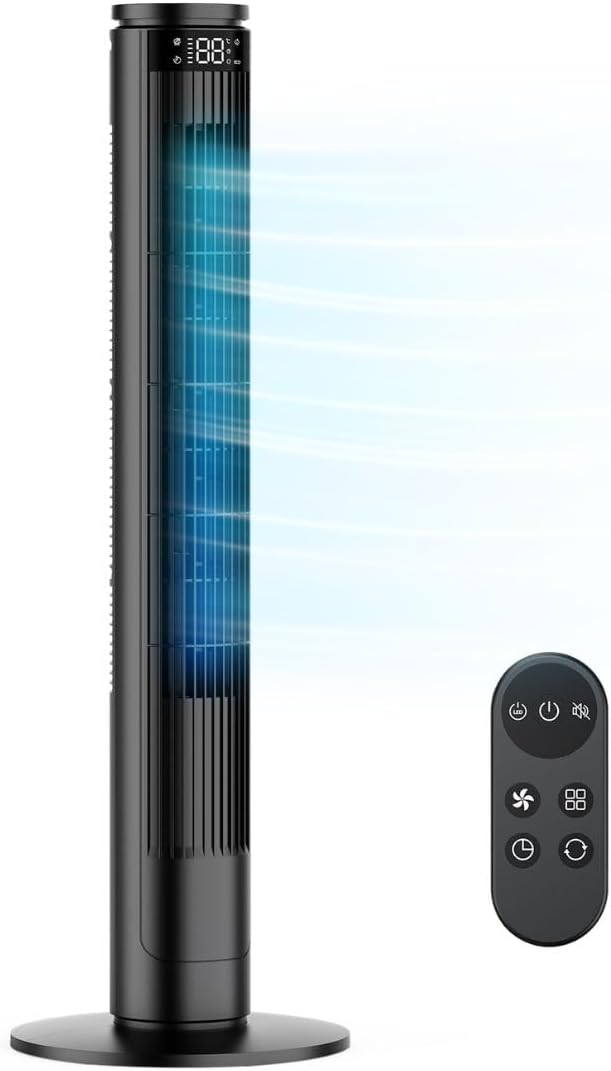
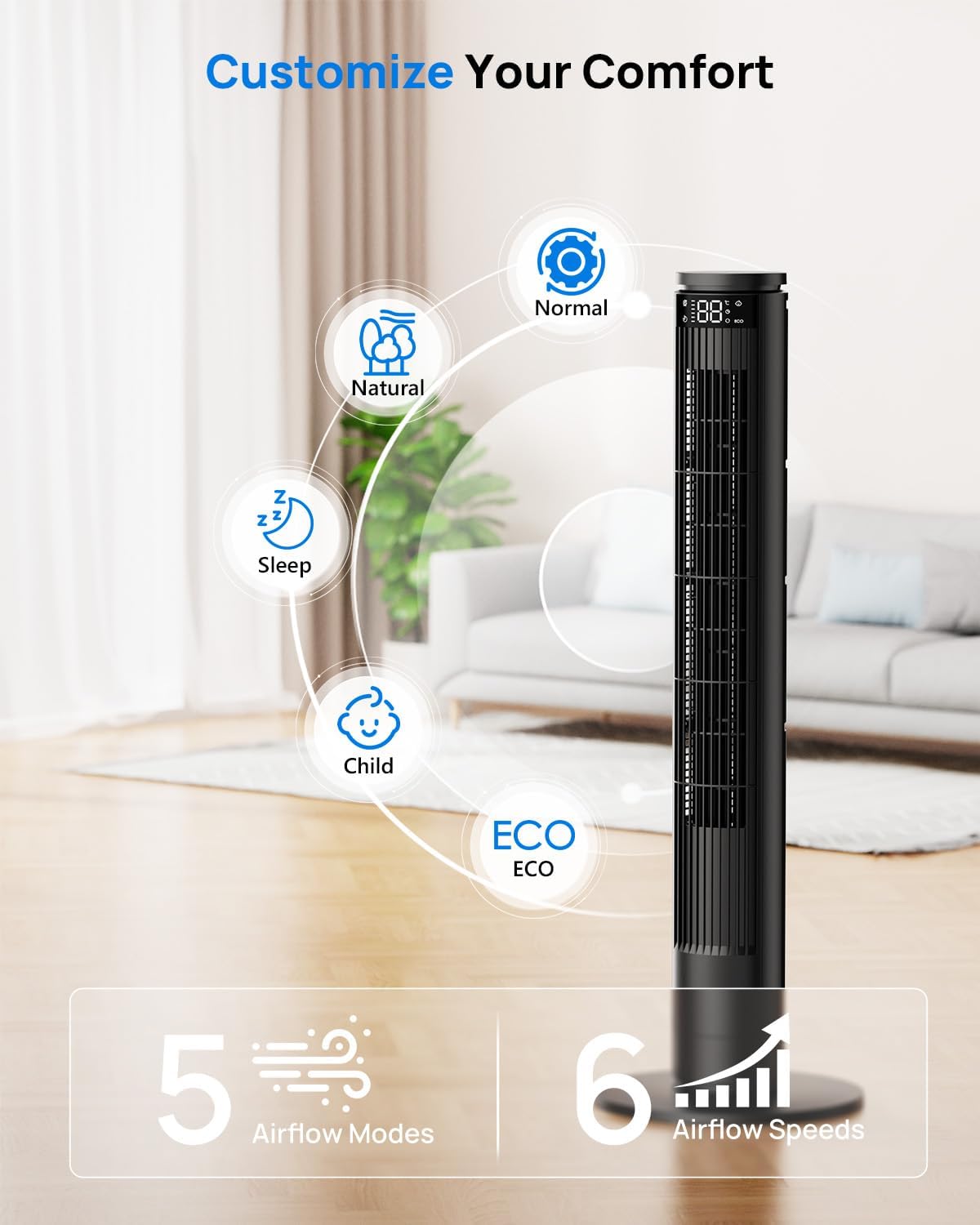
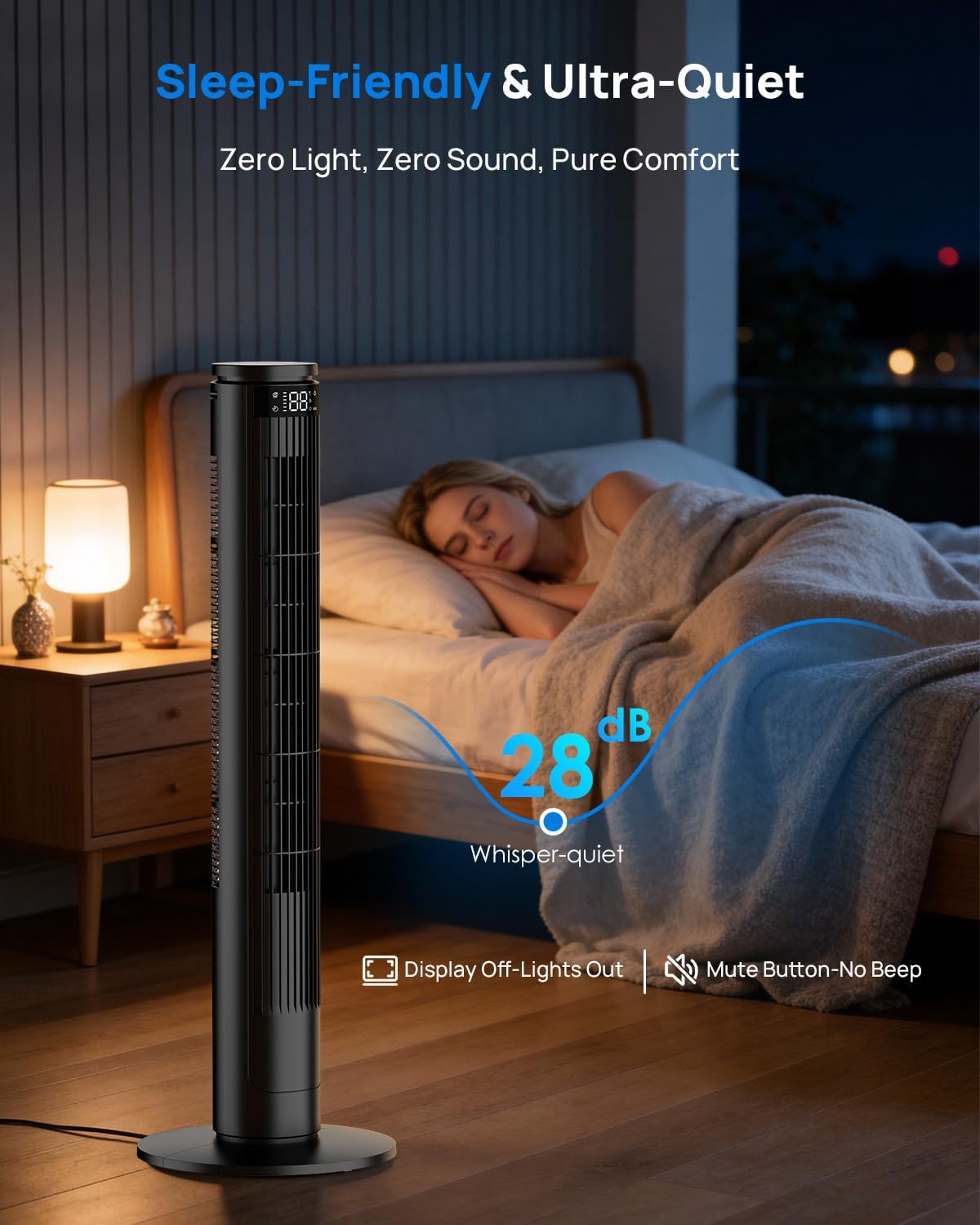
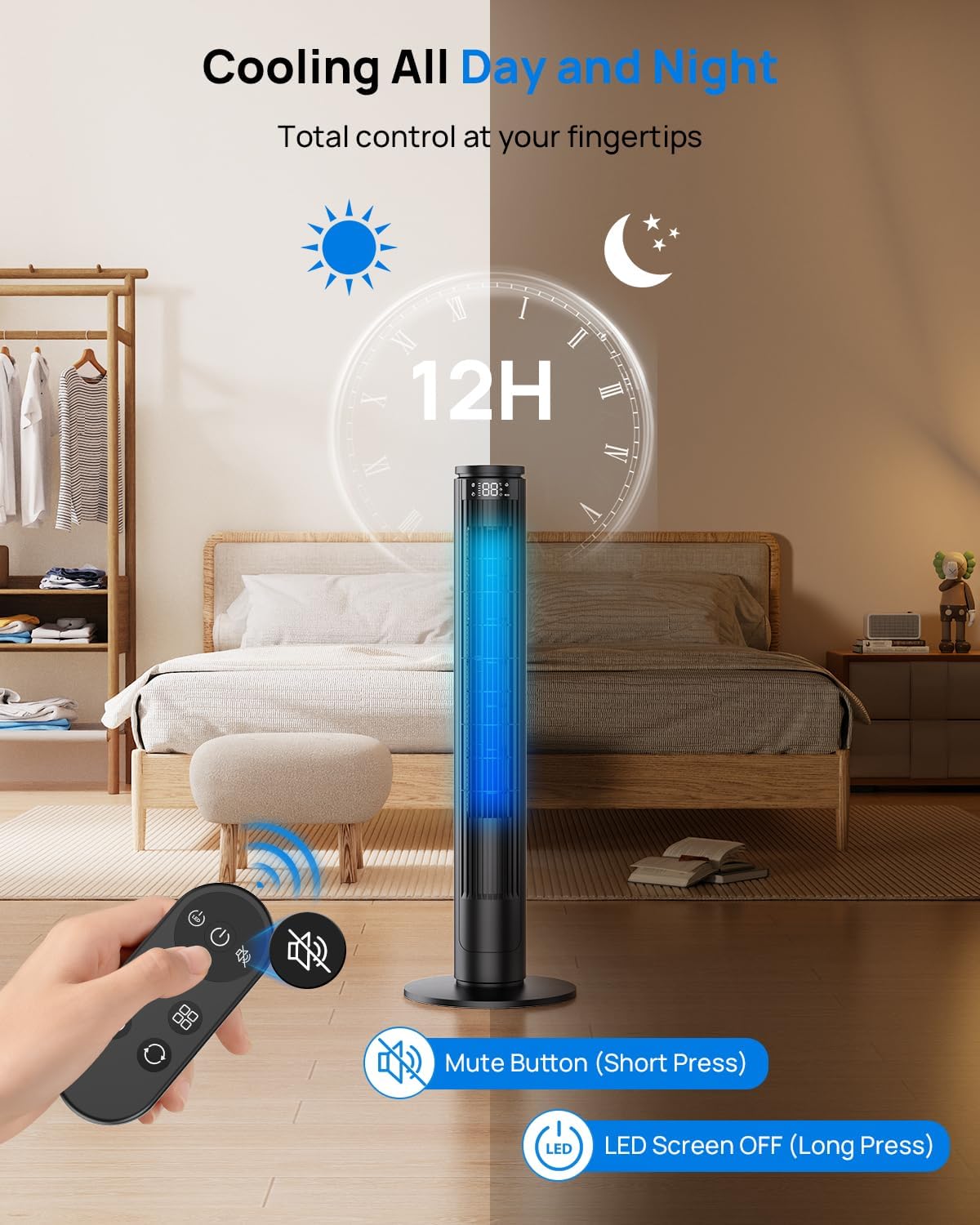
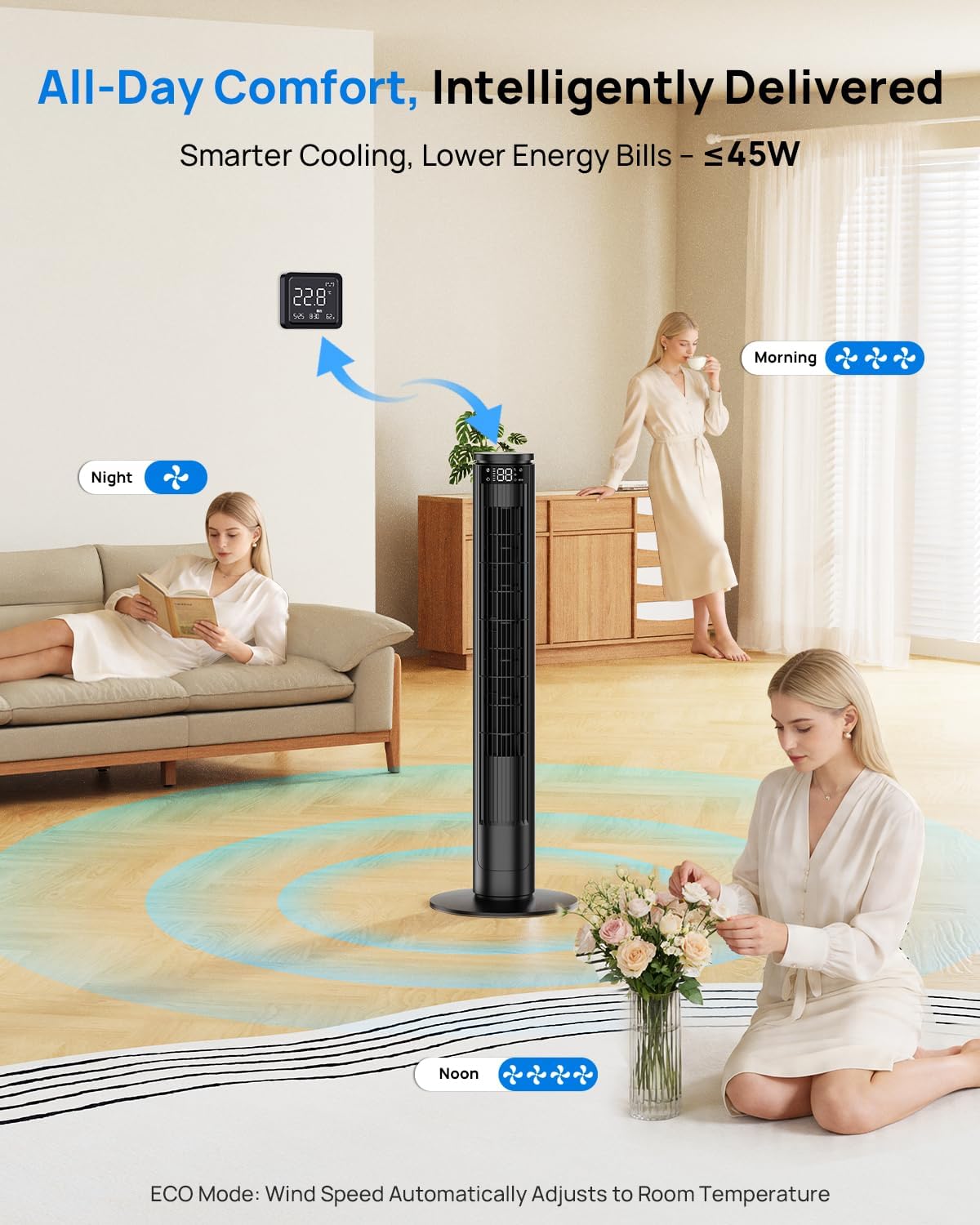
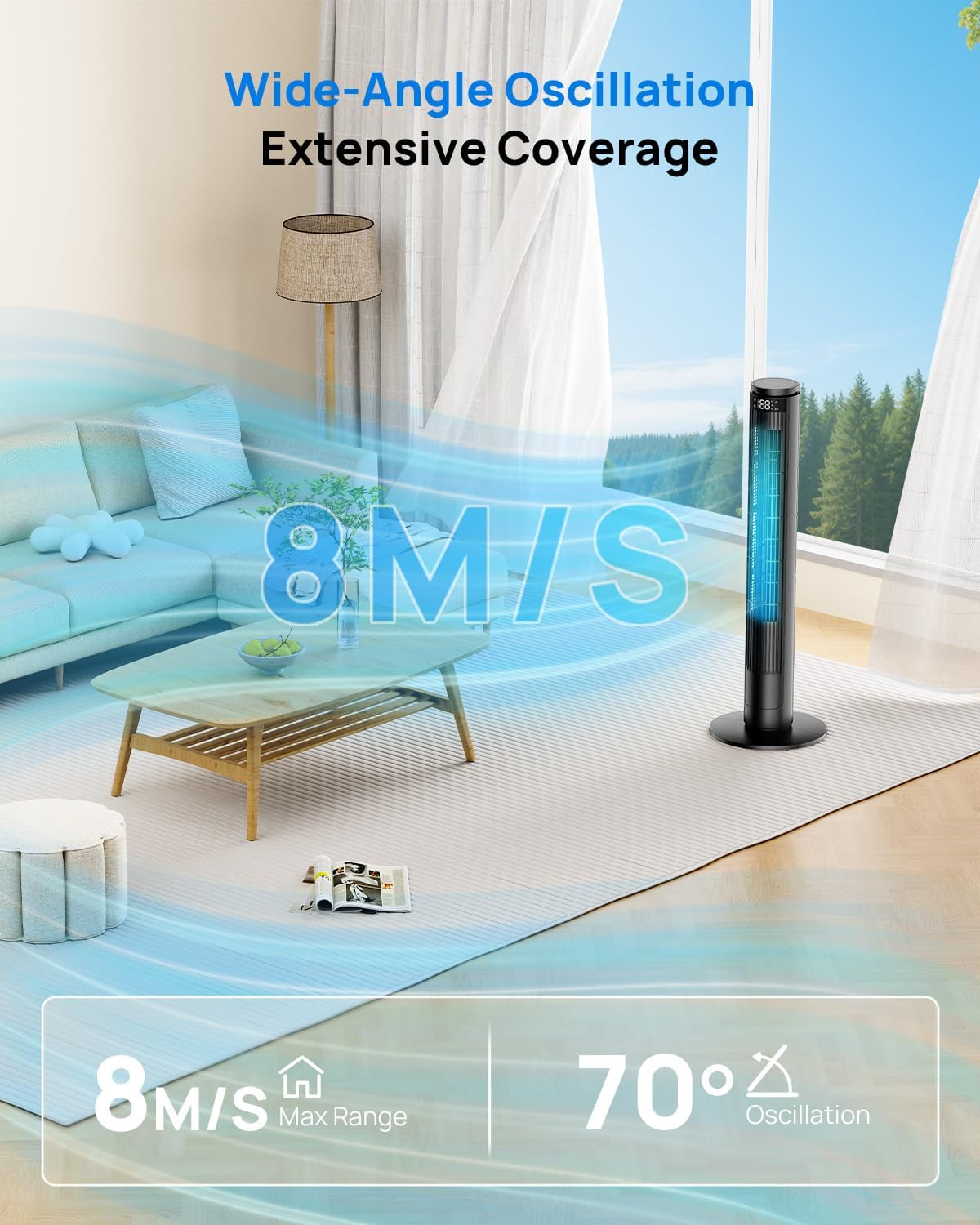
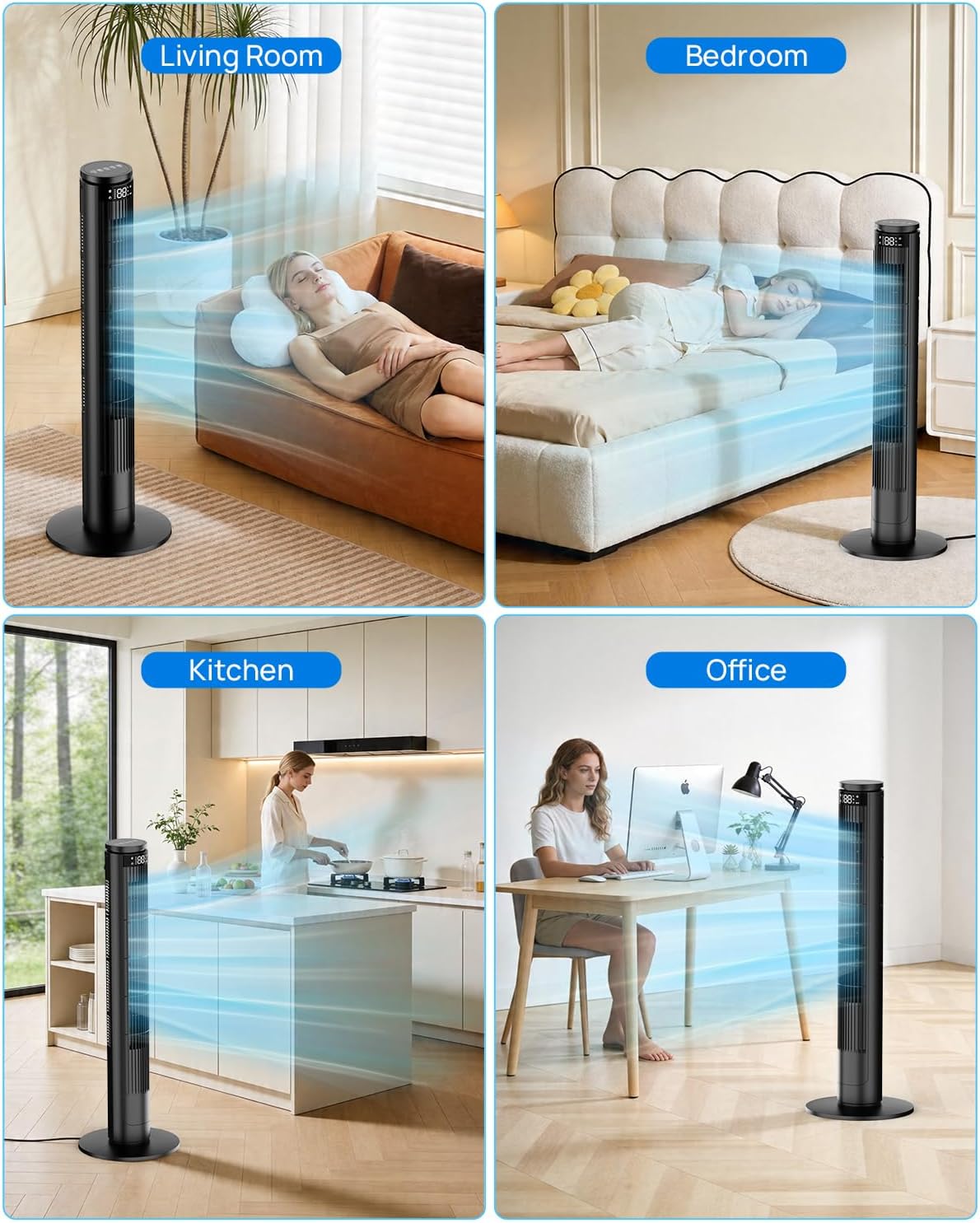
What it is and what problem it solves\nThis is a bladeless floor tower fan designed to deliver broad, quiet cooling for a range of spaces—from nurseries to home offices. The enclosure around the airflow aims to reduce the risk of curious fingers while providing a steady breeze across the room. If you’re prioritising safety, quiet operation and flexible cooling, it’s worth considering for hot summers or spaces where a traditional fan feels too exposed.\n\n## How it performs on balance\nThe unit offers 6 speeds and 5 modes (Normal, Nature, ECO, Child, Night). The ECO setting adjusts power based on room temperature, which can help keep electricity usage sensible without sacrificing comfort. With a 70° oscillation and an 8 m/s airflow, it aims to reach most corners of a typical living room or bedroom. On paper, the motor is described as 45W, which aligns with low-to-mid energy consumption for a tower fan.\n\n## What stands out and what may fall short\nOn the plus side, the bladeless design reduces risk for homes with children or pets and the LED display is controllable via a remote that includes a mute function to avoid noise disturbances. The ability to shut off the display for dark bedrooms is a small but practical touch. However, without hands-on testing, it’s sensible to note that real-world cooling power can depend on room size, layout and ambient conditions.\n\n## Who it’s for\n- Sleep-focused users who value quiet operation and a gentle night-time breeze.\n- Families seeking a safer alternative to fans with exposed blades.\n- Remote-control users who prefer adjusting settings from bed or a sofa.\nNot ideal if you need extremely brisk cooling for a very large open-plan space, or if you require ultra-compact footprint with minimal height.\n\n## Before you buy: key considerations\n- Room size: with 70° oscillation, consider whether the airflow will reach far corners in larger rooms.\n- Noise expectations: 28 dB is described as quiet, but real-world perception varies with distance from the unit.\n- Height and footprint: the unit claims a tall tower form, check ceiling clearance and storage when not in use.\n- Power and modes: ECO mode aims to save energy, test whether the mode adapts well to your typical daily rhythm.\n- Display and remote: the ability to switch the display off is helpful for light sleepers, ensure the remote’s battery and range meet your needs.\n\n## Practical usage example\nIn a toddler’s nursery, you could run ECO mode during the day for gentle airflow, switch to Night for calmer, low-speed airflow overnight, and use the remote from a chair or bed for quick adjustments without entering the room.\n\n## How this compares to other approaches\nIf you’re weighing bladeless vs traditional blade fans, the main difference is safety and aesthetics, with the trade-off potentially being the feel of air movement and noise profile. For rooms where safety and a calmer look matter more than maximum blast of air, this type of tower fan often makes more sense than a standard bladed unit.\n\n## FAQ (where data allows)\n- Does the ECO mode adjust based on room temperature? Yes, it is described as adjusting power to save energy while maintaining comfort.\n- Is the display permanently on? No, it can be shut off for a dark environment.\n- How easy is it to move between rooms? The unit is described as portable with a carry handle for simple relocation.\n\n## Is it worth it?\nIt makes sense if you want a tall, quiet, and safer alternative to traditional fans, with flexible modes and remote control for convenience in everyday use. It may not be the best choice if you need aggressive cooling for large open spaces or if you prioritise ultra-compact dimensions.