

Tilswall Paint Sprayer – ultra-light electric HVLP spray gun with 2 nozzles and 3 patterns (white)
Product description
If you’re the type of person who wants a smoother finish than a brush, but you don’t fancy the faff, this Tilswall paint sprayer is built for straightforward DIY spraying. On paper it’s an ultra-light, electric HVLP-style gun with interchangeable nozzles and multiple spray patterns, aimed at tackling everything from fences and sheds to walls, ceilings and furniture.
That “easy to use” angle is the headline here, and it’s backed up by guidance included in the product description (like tightening the trigger screw before use and thinning paint to a target viscosity for finer atomisation). The trade-off? With sprayers, results can depend quite a lot on your paint consistency and your prep work—so it’s not a magic wand if you’re after a flawless cabinet-grade finish straight away.
What it is and what it’s for
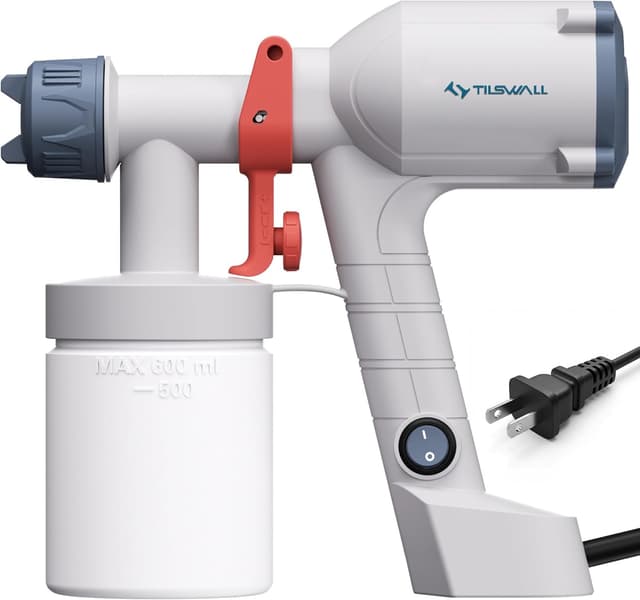
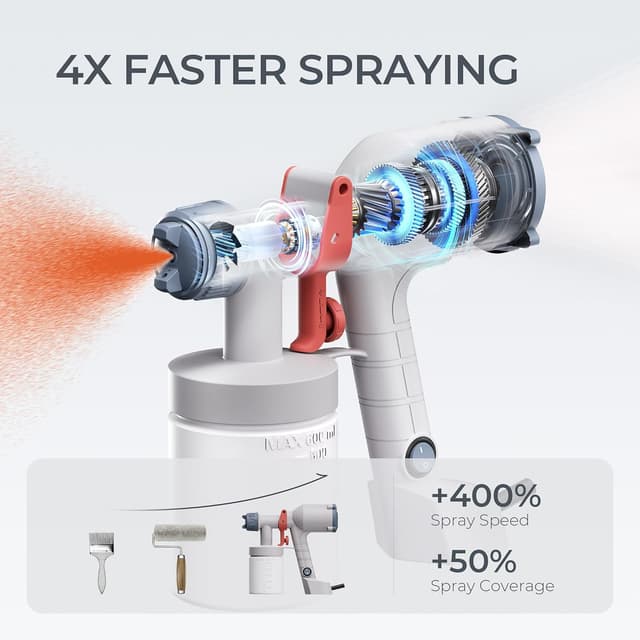
This is an electric paint spray gun designed to apply paint via a spray process, with HVLP positioning mentioned in the description. The practical appeal is that you can cover areas more quickly than with a brush/roller, which is especially handy for larger DIY jobs.
Based on the listed use cases, it’s pitched at projects like: - fences and garden items - sheds and outdoor wood - walls and ceilings - furniture, cabinets and other indoor pieces
In other words, it’s a tool for both “area coverage” tasks and “detail” tasks—at least in the sense that you can change nozzles and patterns.
The essentials at a glance
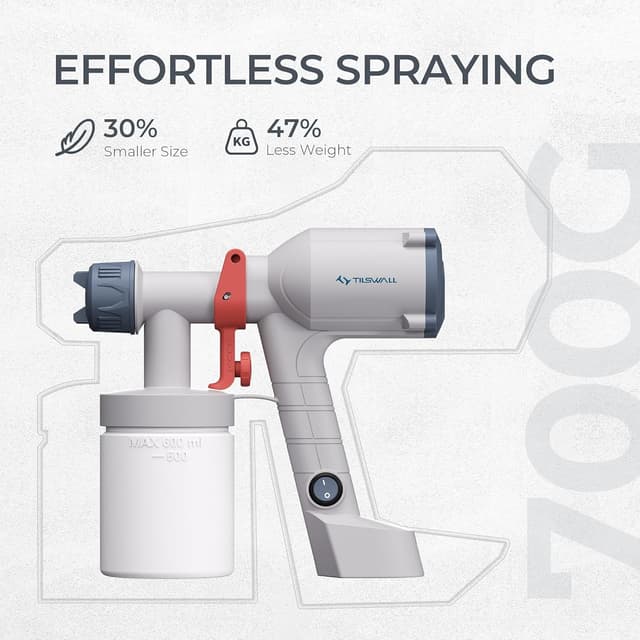
The description calls it ultra-light and comfortable, using aerospace-grade materials, and says it’s 47% lighter than traditional models. It also highlights an ergonomic build designed to reduce fatigue, which matters if you’re spraying for an extended session.
There are two main controls for versatility: - 2 interchangeable nozzles (1.5mm and 2.0mm are mentioned) - 3 spray patterns
It also explicitly positions itself as suitable for beginners, with the straightforward instruction being to pull the trigger for smooth, even coverage on wood, metal and more. There’s even a paint-thinning tip: thin paint to 100 DIN viscosity for finer atomisation and a flawless coat.
Worth noting: “zero skill required” is optimistic, and in real life you’ll still want to practise on scrap or test panels, especially when switching patterns.
What you’ll notice in everyday use
The light weight is the part that most clearly separates this from heavier “spray rigs” people struggle to hold for long periods. If you’ve ever had arm fatigue mid-way through painting a fence or a section of decking, this kind of ergonomic focus is genuinely relevant.
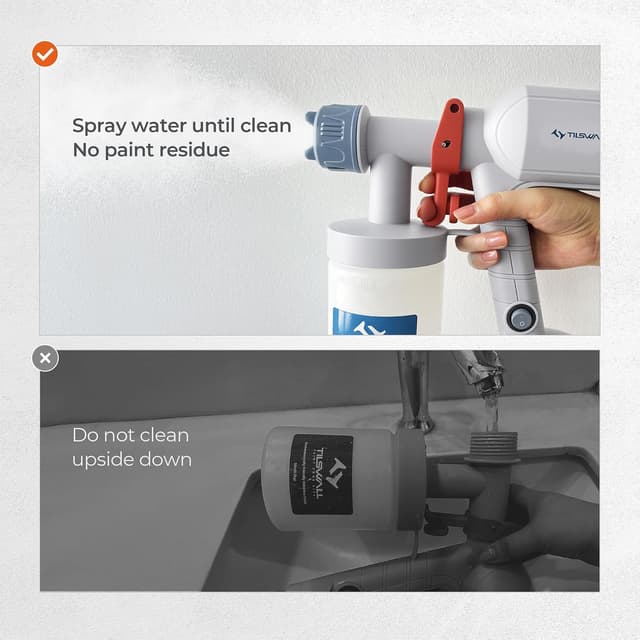
Another detail that can make or break a sprayer experience is how consistent the spray is session to session. The product description stresses two habits: - Always tighten the trigger screw before use to prevent air leaks and subsequent paint application failure. - Clean the electric paint spray gun promptly after each session.
That’s not just marketing—sprayers can clog or lose consistency if you leave paint to dry. However, you should still be realistic: if you’re comparing with a simpler brush/roller approach, this tool asks for a bit more care in setup and cleaning.
A practical micro example
Imagine you’re painting garden furniture. You switch to the more suitable nozzle and pick a pattern, then you spray in controlled passes—rather than trying to “cut in” with a brush around edges. The goal is an even coat on wood surfaces. After the session, you clean it promptly so the next use doesn’t suffer from dried paint build-up.
Where it shines (and where it may fall short)
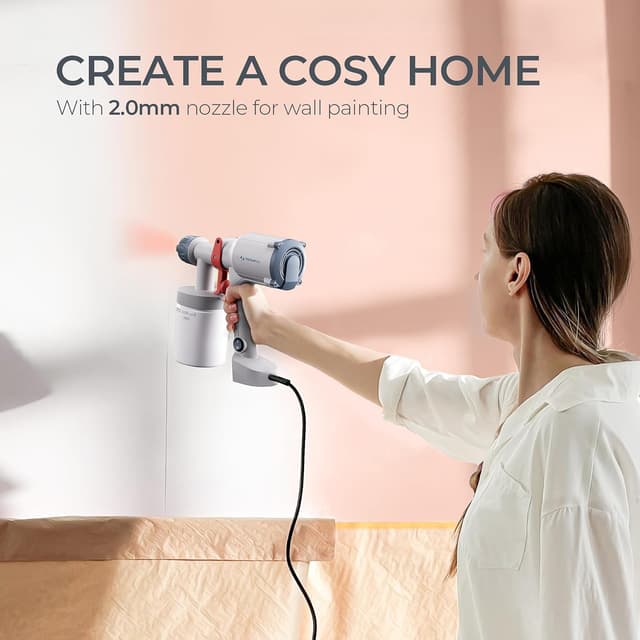
This sprayer seems best suited if you want: - quicker coverage on fences, sheds, walls or ceilings - an ultra-light gun that’s easier to keep steady for longer - versatility via two nozzle sizes and three spray patterns - a beginner-friendly setup, without needing advanced painting experience
On the downside, sprayers can be fussy about paint thickness and maintenance. The description itself points to paint thinning to 100 DIN viscosity for finer atomisation, if your paint isn’t prepared accordingly, you may find the finish doesn’t look as even as you expected. Also, the “47% lighter than traditional models” claim sounds great, but it doesn’t remove the usual sprayer requirements—masking, prep, and correct technique still matter.
It might not be a great match if you only plan a tiny touch-up now and then, because the time spent setting up and cleaning after use can outweigh the benefit.
Key things to check before you buy
Before choosing this Tilswall paint sprayer, it’s worth aligning your expectations with what the description supports: - Are you comfortable thinning paint to 100 DIN viscosity (as suggested) for finer atomisation? - Do you plan to clean it promptly after each session? - Do you need the flexibility of 1.5mm vs 2.0mm nozzles and three spray patterns for your mix of furniture/detail versus larger surfaces? - Are you buying for DIY projects like fences, sheds, walls, ceilings and cabinets, where faster coverage is a clear benefit?
If you’re trying to avoid any prep/cleanup routine, an alternative approach (like brush/roller or other simpler applicators) may suit better.
Buying verdict
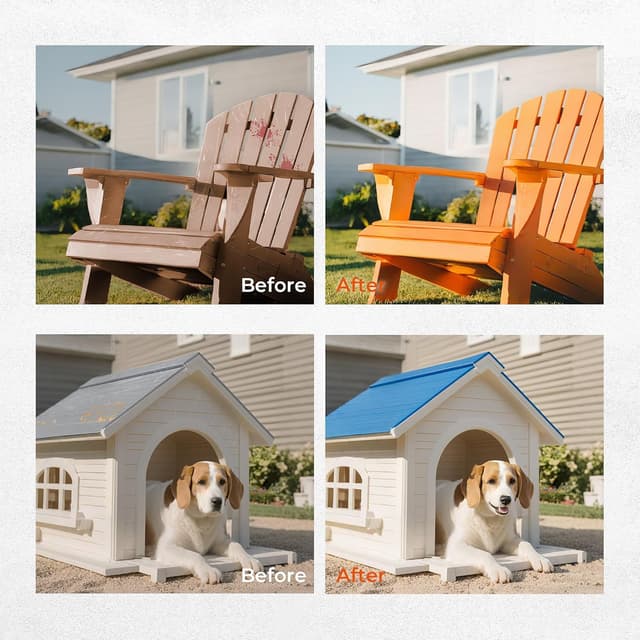
It’s a sensible pick if you’re after an electric HVLP-style sprayer for typical home and garden DIY jobs, and you care about comfort for longer sessions—especially given the “ultra-light” and ergonomic focus, plus the 1.5mm/2.0mm nozzle and 3-pattern setup.
You may want to skip it if you only need occasional touch-ups, or if you’d rather not handle paint thinning and the prompt cleaning routine a sprayer demands. Spraying isn’t always forgiving: if paint consistency and prep aren’t right, results can disappoint.
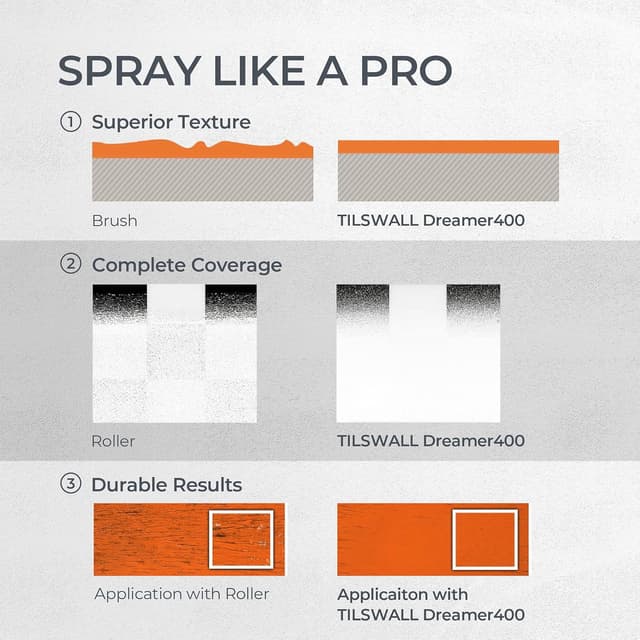
Overall, this one looks positioned for practical value—aiming to make spraying less intimidating for beginners—while still offering enough adjustability for mixed project types.
Mini FAQ
Is it suitable for beginners?
The description states it’s easy to use even for beginners, with the core action being to pull the trigger for smooth, even coverage. That said, practising on a test surface is still a smart move.
Do I need to thin the paint?
The included guidance says thin paint to 100 DIN viscosity for finer atomisation and a flawless coat. If you don’t want to thin paint, you may find the results inconsistent.
Why does the trigger screw matter?
The product description advises tightening the trigger screw before use to prevent air leaks, which could otherwise lead to paint application failure.
How important is cleaning?
It’s emphasised that you should clean the electric paint spray gun promptly after each session. This helps maintain consistent performance.
Does it include support if something goes wrong?
The description mentions 24/7 support and that brand-new replacement parts are provided rather than repairs.