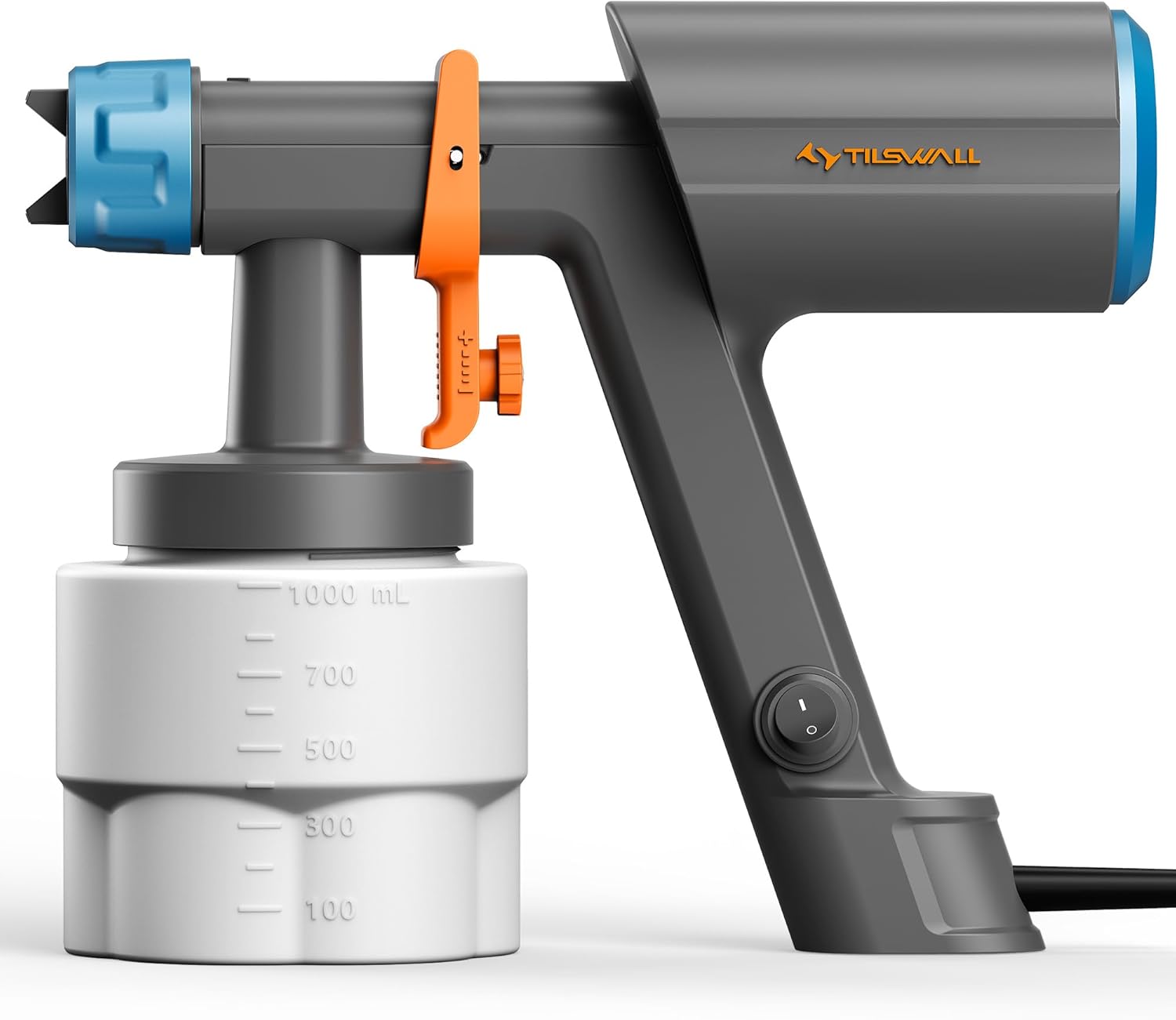
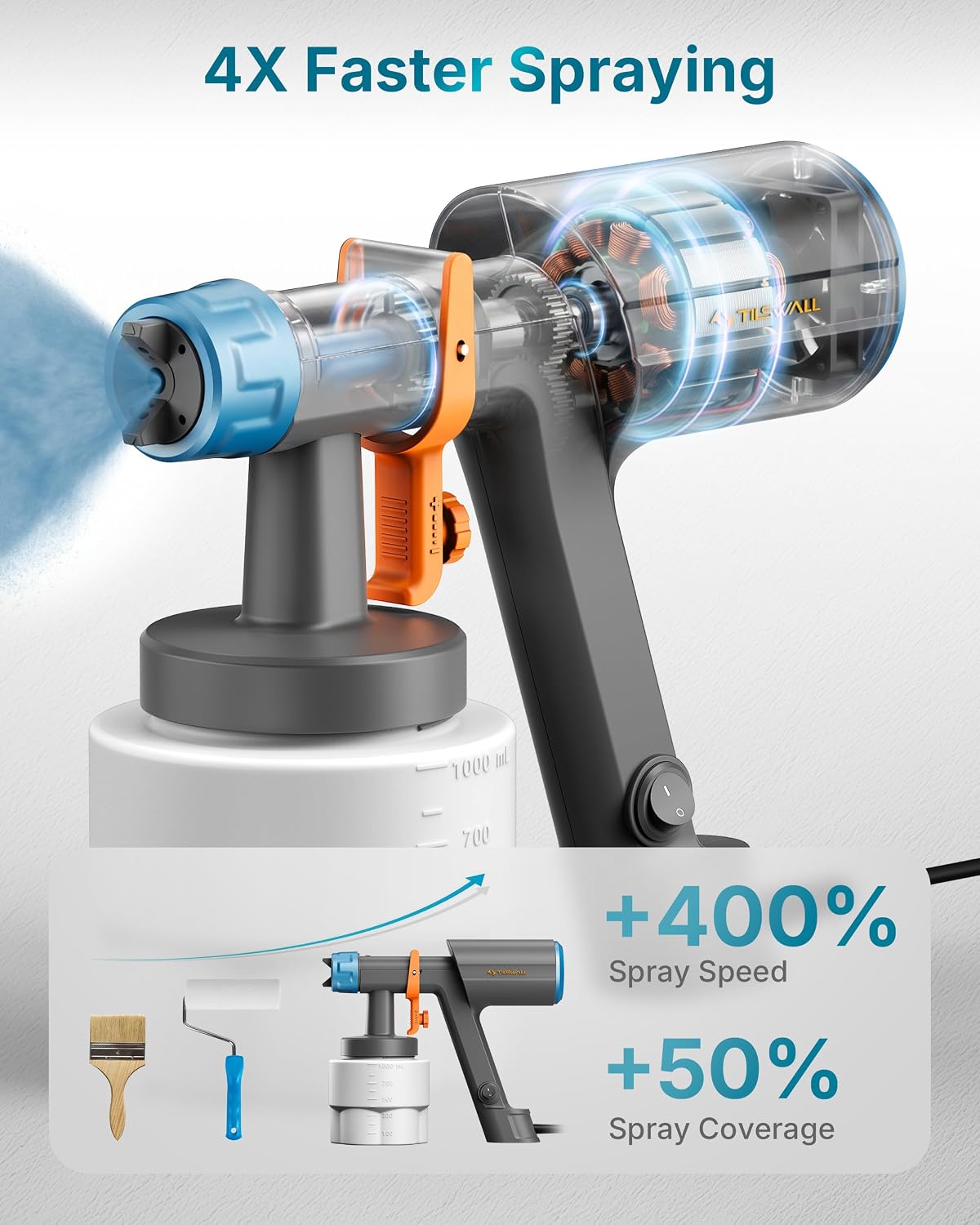
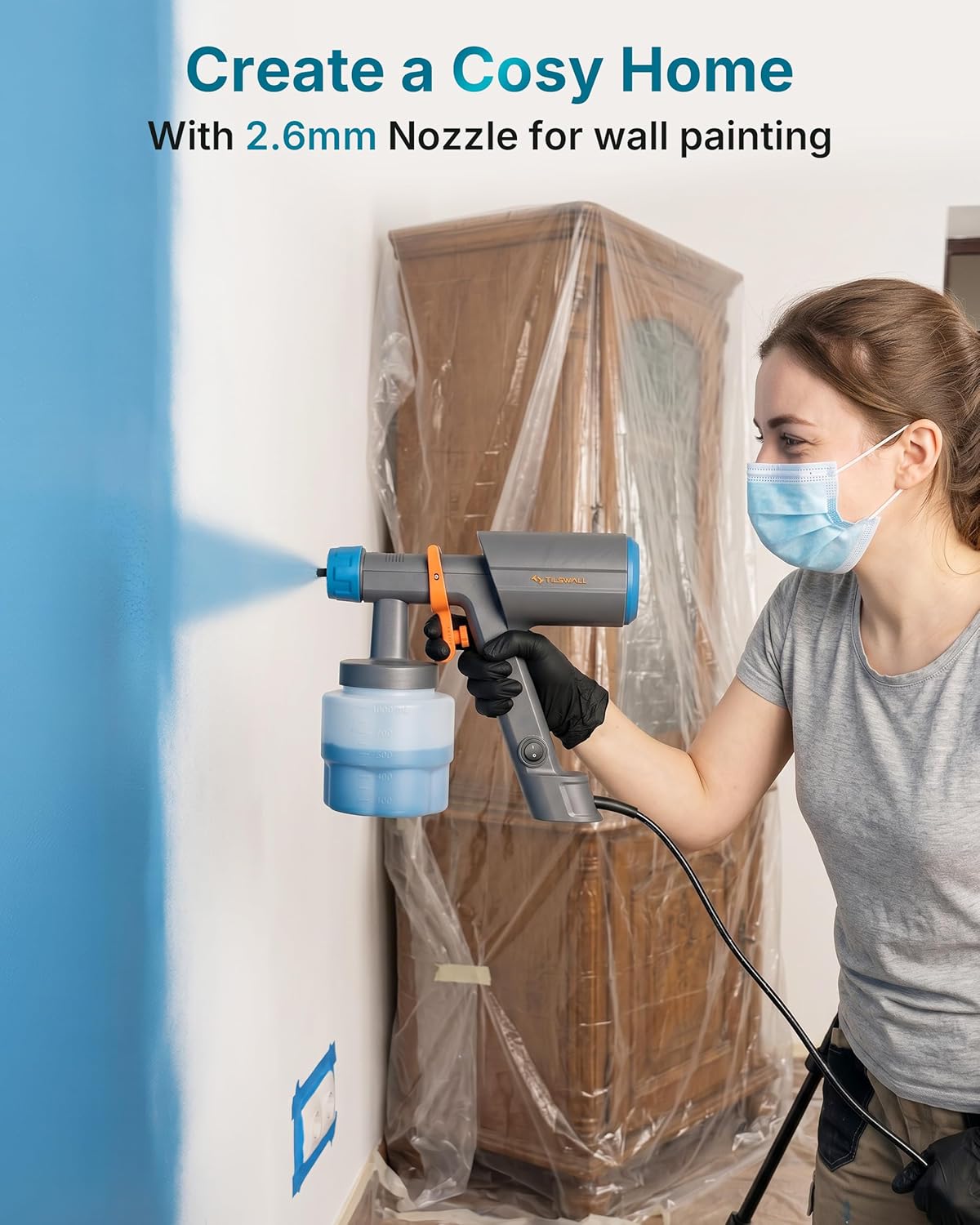
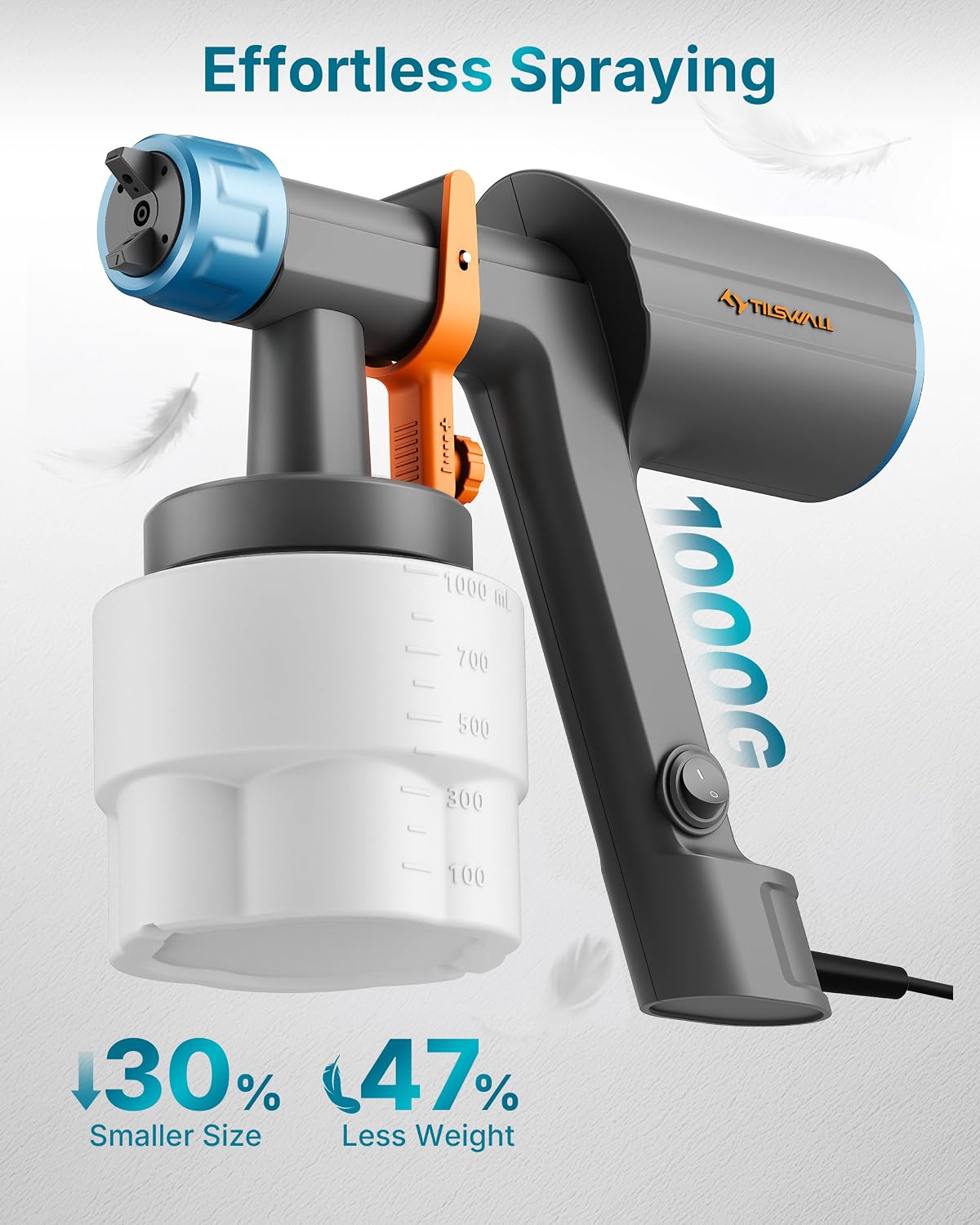
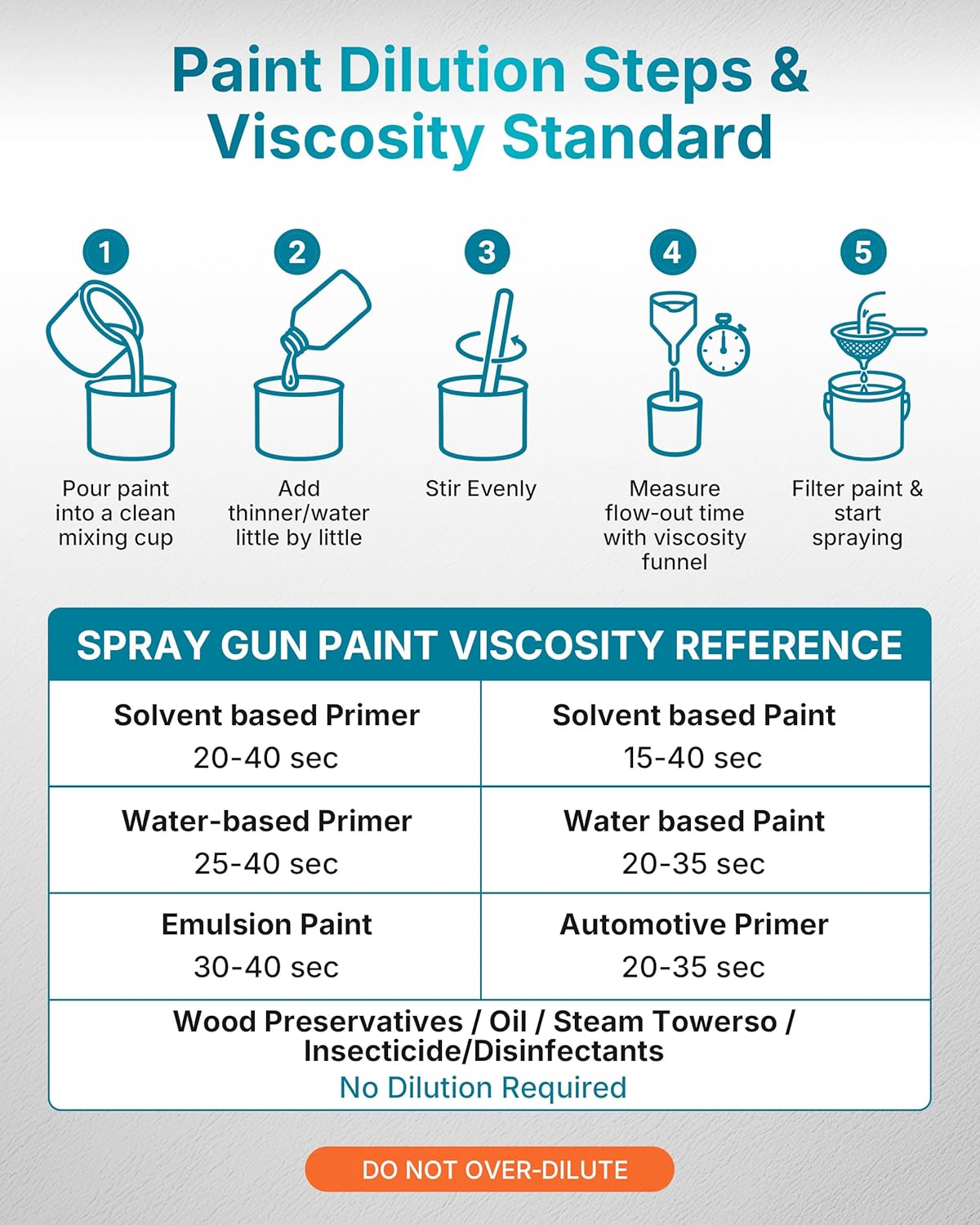
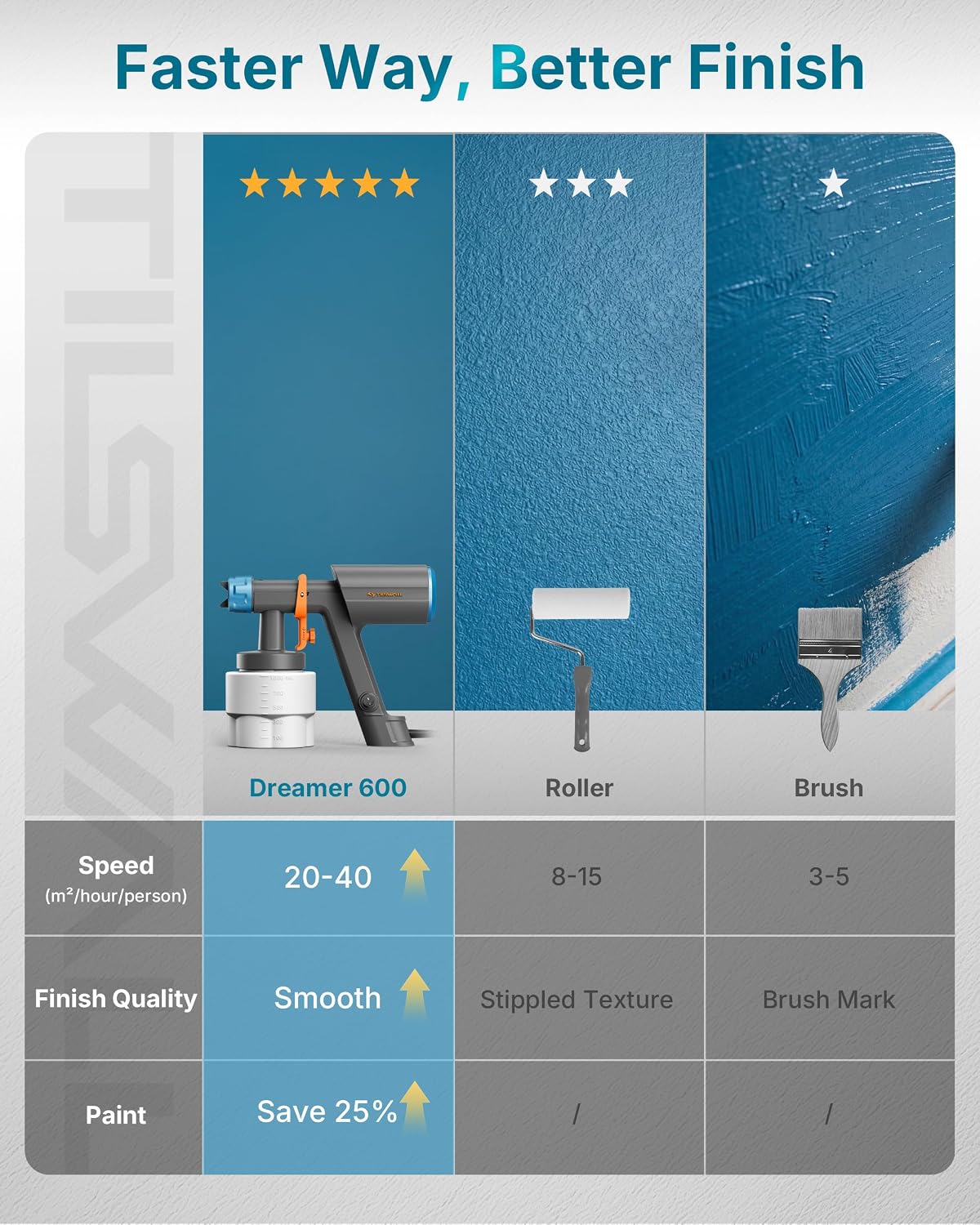
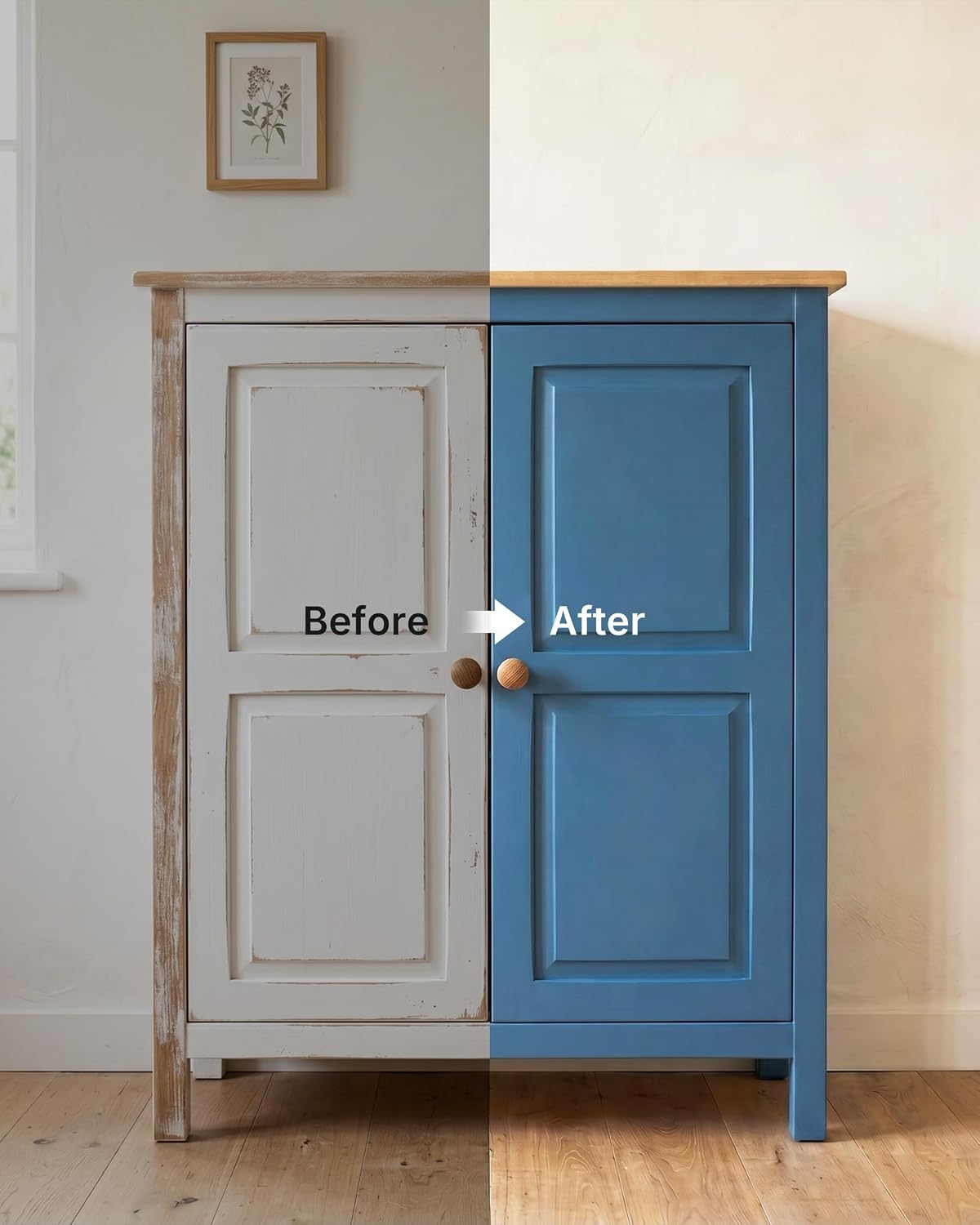
What this is and what it’s for\nThe Tilswall Paint Sprayer 600W HVLP is a portable electric spray gun designed to make large-scale painting tasks easier and neater. With a sizeable 1000 ml reservoir and a claimed spray capacity of up to 1200 ml/min, it aims to cover walls, fences, sheds, ceilings and furniture more quickly than brushes or rollers. If you’re tackling frequent DIY decorating or a handful of renovation projects, this sprayer promises speed without a heavy setup.\n\n## How it works and what you get\nPowered by a 600W motor, the unit uses high-volume, low-pressure (HVLP) technology to atomise paint for a finer, more controllable spray. It ships with three nozzle sizes (1.3 mm, 1.8 mm, 2.6 mm) and three spray patterns (vertical, horizontal, circular), giving you flexibility across materials from sealers and varnishes to thicker latex paints. The 1000 ml container reduces the need for constant refills on mid‑size jobs. Practical use tips note thinning to about 120 DIN viscosity for better atomisation.\n\n## Practical use and examples\nIn practice, you might use the 1.8 mm nozzle for varnish on furniture or cabinets and the 2.6 mm for heavier paints on fences or sheds. The vertical and horizontal patterns help with broad walls, while the circular option can cover curved or detailed surfaces. A one‑kilogram‑ish tool is manageable for extended sessions, especially when you’re painting multiple panels, rails or a small room. An example: you start on a fence with the 2.6 mm nozzle in a steady, overlapping pattern to reduce runs, then switch to the 1.8 mm for edging and corners for a consistent finish.\n\n## What’s great about it (on paper)\nThe combination of a sizeable tank, a respectable maximum spray rate and multiple patterns makes it convenient for DIY enthusiasts who want faster results without paying top‑tier professional prices. The three nozzles provide a sensible range for common materials, and the HVLP approach aims to minimise overspray. The 15‑minute post‑use cleaning rule is practical for preserving the mechanism between jobs.\n\n## What could be a constraint or caveat\nPerformance depends on using properly thinned paints and correct viscosity. If you’re working on very small, intricate areas or ultra‑thin finishes, a steady hand and careful masking will still be needed. Some users might find it less suited to specialised coatings or very high‑viscosity paints without thinning. There’s also a reminder to tighten the trigger screw before use to avoid air leaks, which is a small setup detail that can affect results if overlooked.\n\n## Who it’s for and who it’s not\nIt’s well‑suited for DIYers and homeowners looking to speed up painting large surfaces like walls, sheds, fences and furniture, provided they’re comfortable with a spray method and basic paint thinning. If you primarily need fine detail work or very delicate finishes, or you expect to spray in confined spaces with minimal masking, you might prefer alternatives tailored for precision.\n\n## Before you buy: what to check\n- Ensure your paints are compatible and thinned to the recommended viscosity for smoother atomisation.\n- Have masking and ventilation prepared to manage overspray.\n- Plan for cleaning after each session to extend the device’s life. The manufacturer notes cleaning within 15 minutes after use.\n- Consider how often you’ll spray thicker coatings, you may appreciate the 1000 ml capacity for bigger tasks but refills still come into play on lengthy projects.\n\n## How this compares to other approaches\nCompared with brushes or rollers, this sprayer should cut application time on flat surfaces and large areas, albeit with a learning curve for even passes and masking. It sits between entry‑level DIY sprayers and higher‑end units in terms of capacity and versatility, making it a sensible middle ground for a homeowner who wants speed without committing to a more expensive setup.\n\n## Quick FAQ (practical answers based on available data)\n- Do I need to thin the paint? Yes, follow the viscosity guidance to achieve even spray and reduce sagging.\n- How do I prevent clogs? Clean the spray gun within 15 minutes of finishing and water/solvent before storage.\n- Can I spray on wood and metal? The device is described as suitable for wood, metal and more, with a range of coatings including sealers, varnish and latex paints.\n\n## Final decision: Is it worth it?\nWorth considering if you’re doing medium to large DIY projects and want faster coverage with adjustable patterns. It makes sense for those who can work with paint thinning and masking to achieve a clean finish. If your tasks are mainly fine detail work or you require the very highest precision, you may prefer a model focused on tighter control.\n