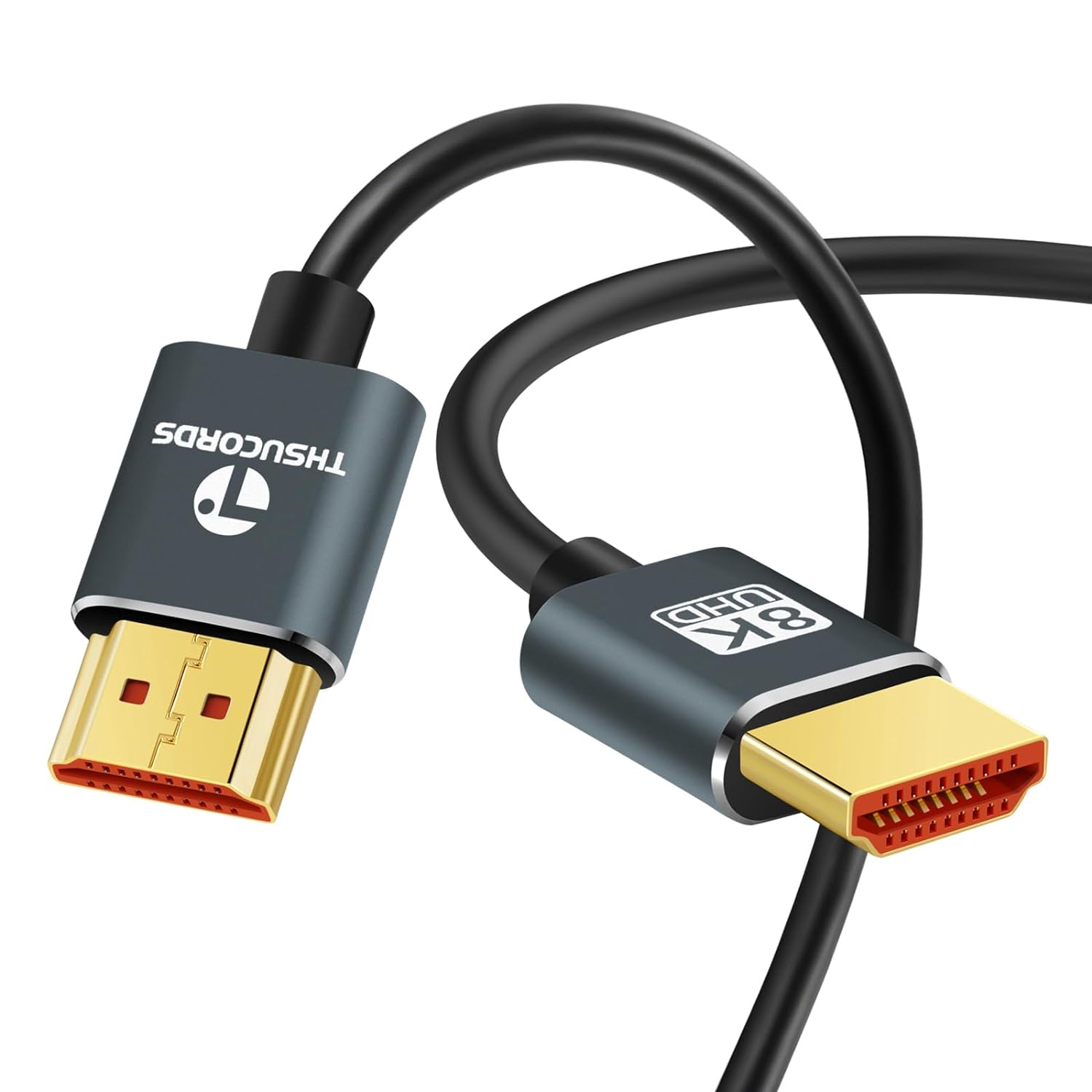
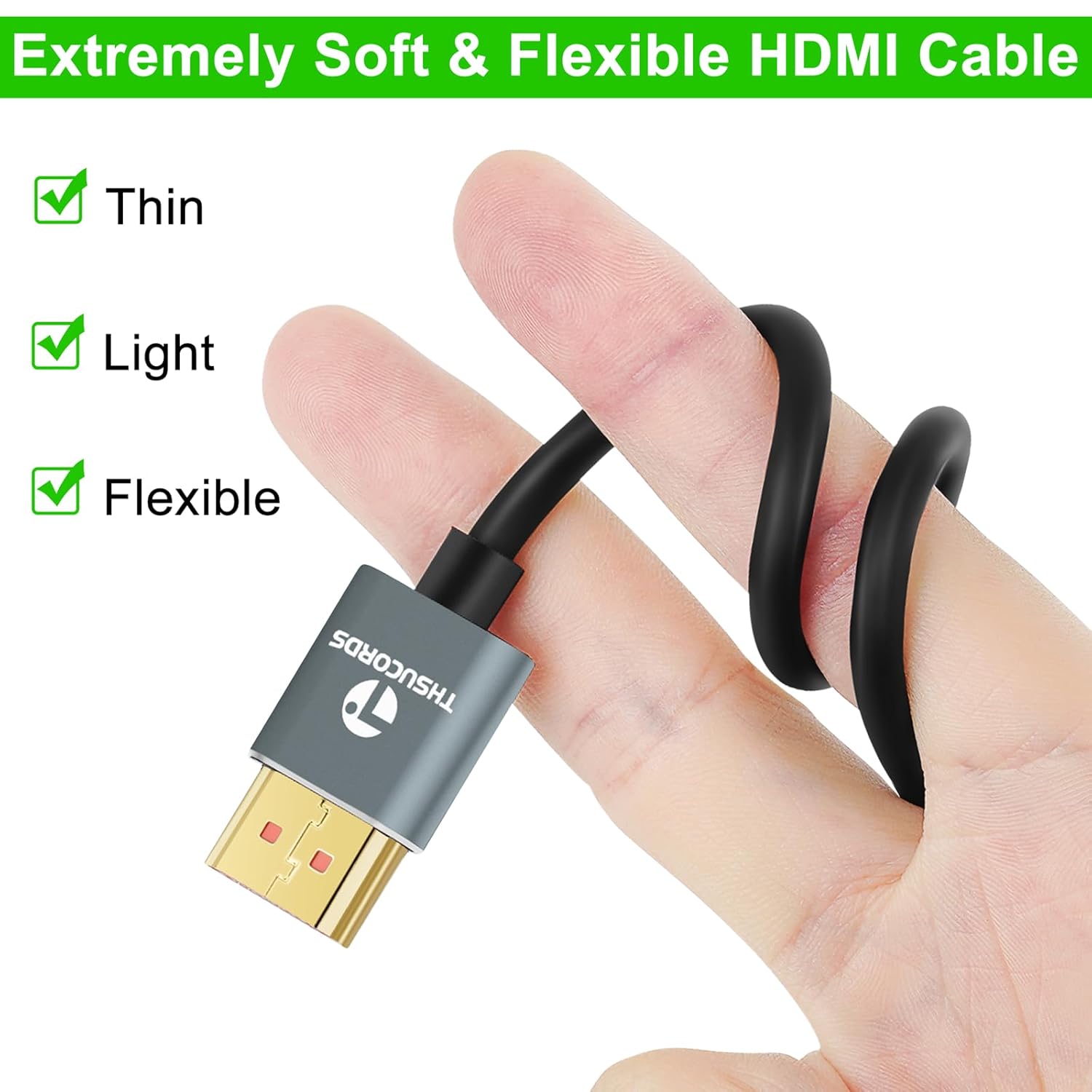
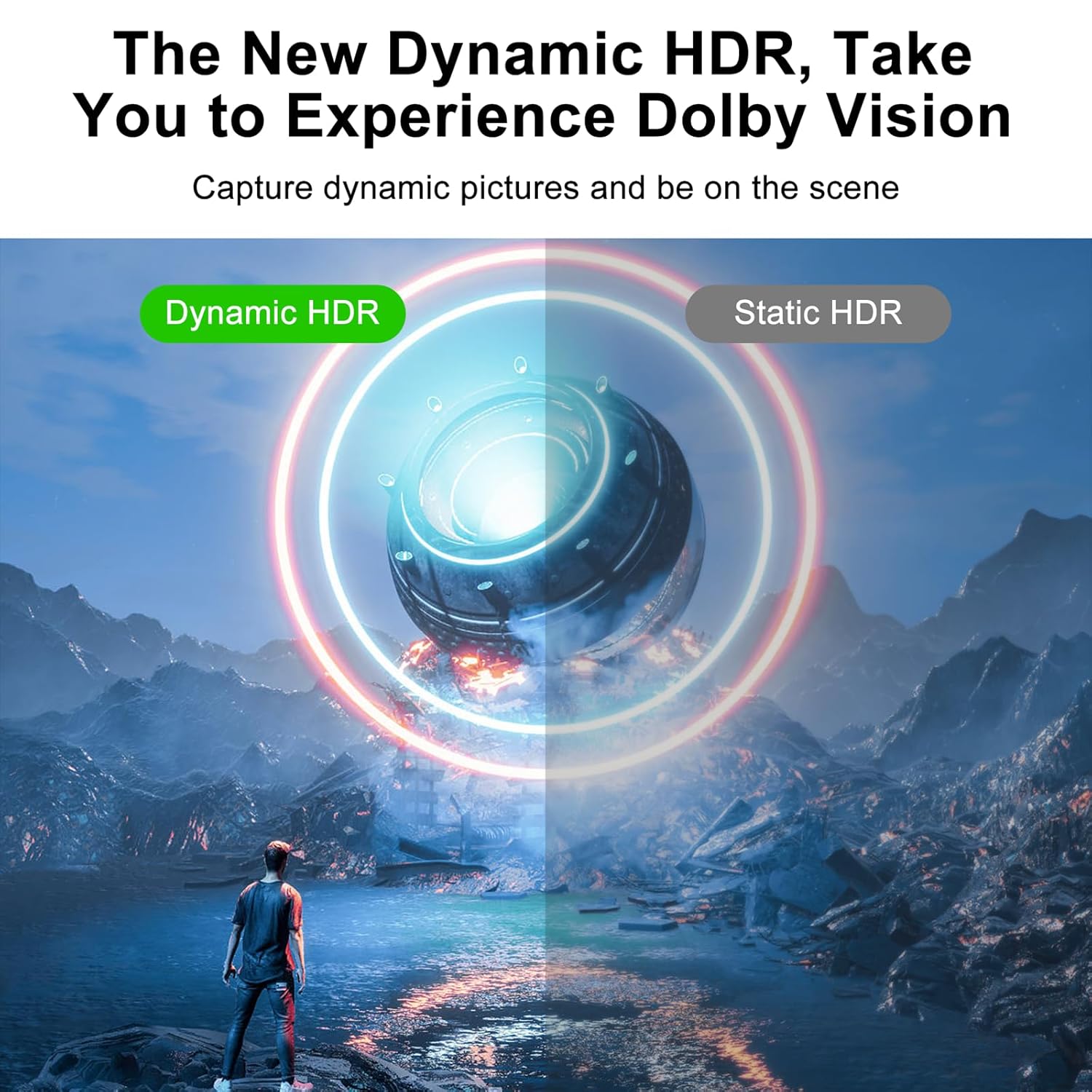
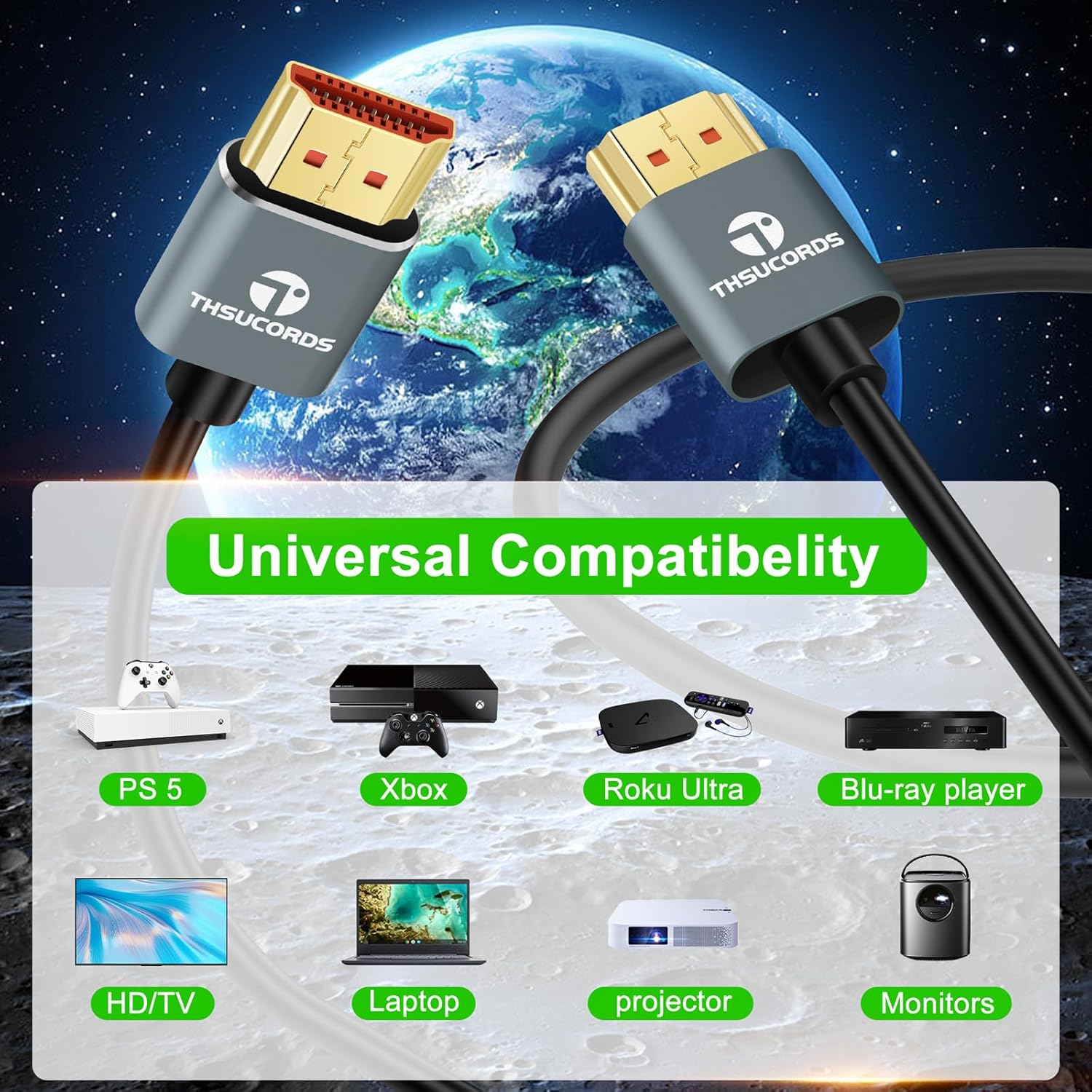
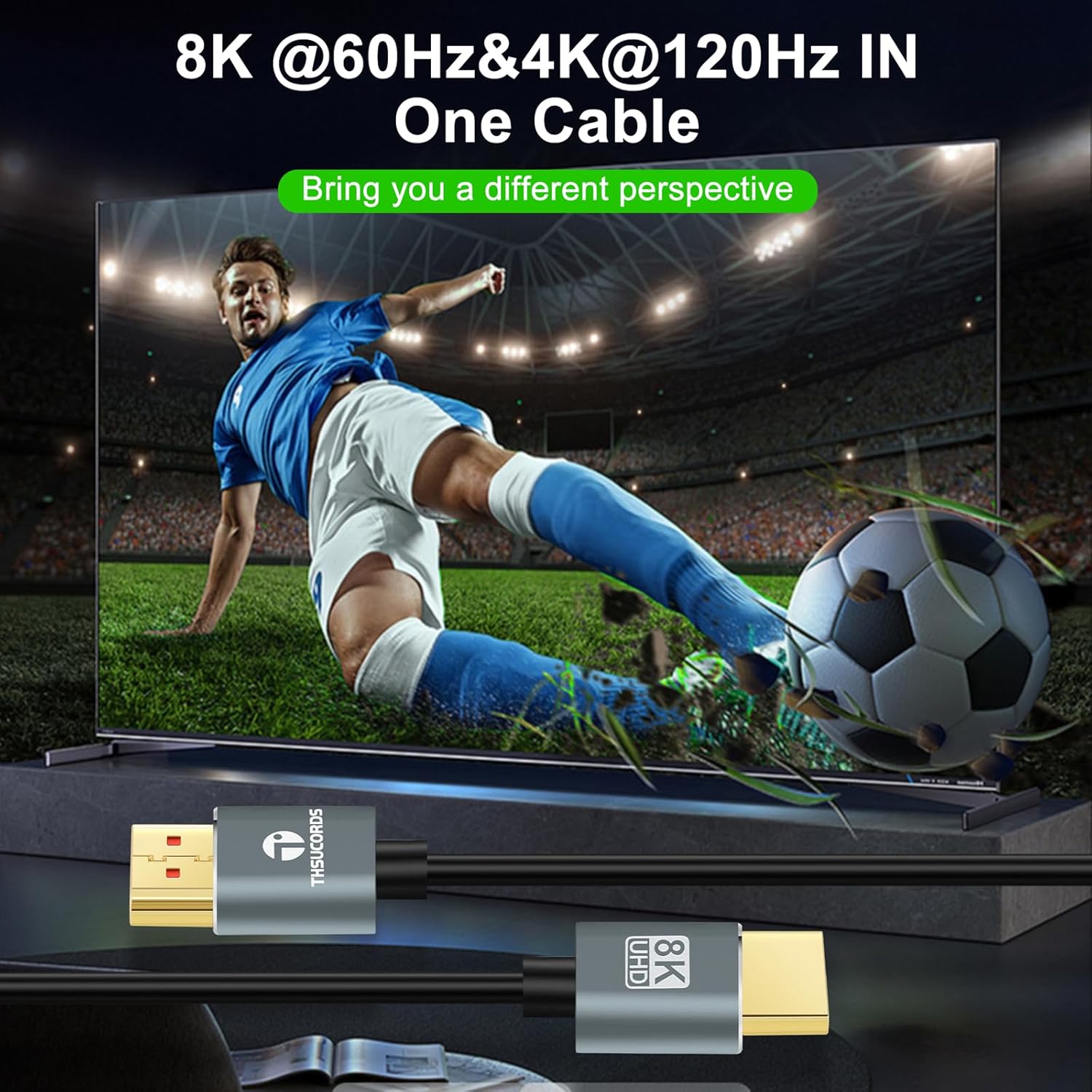
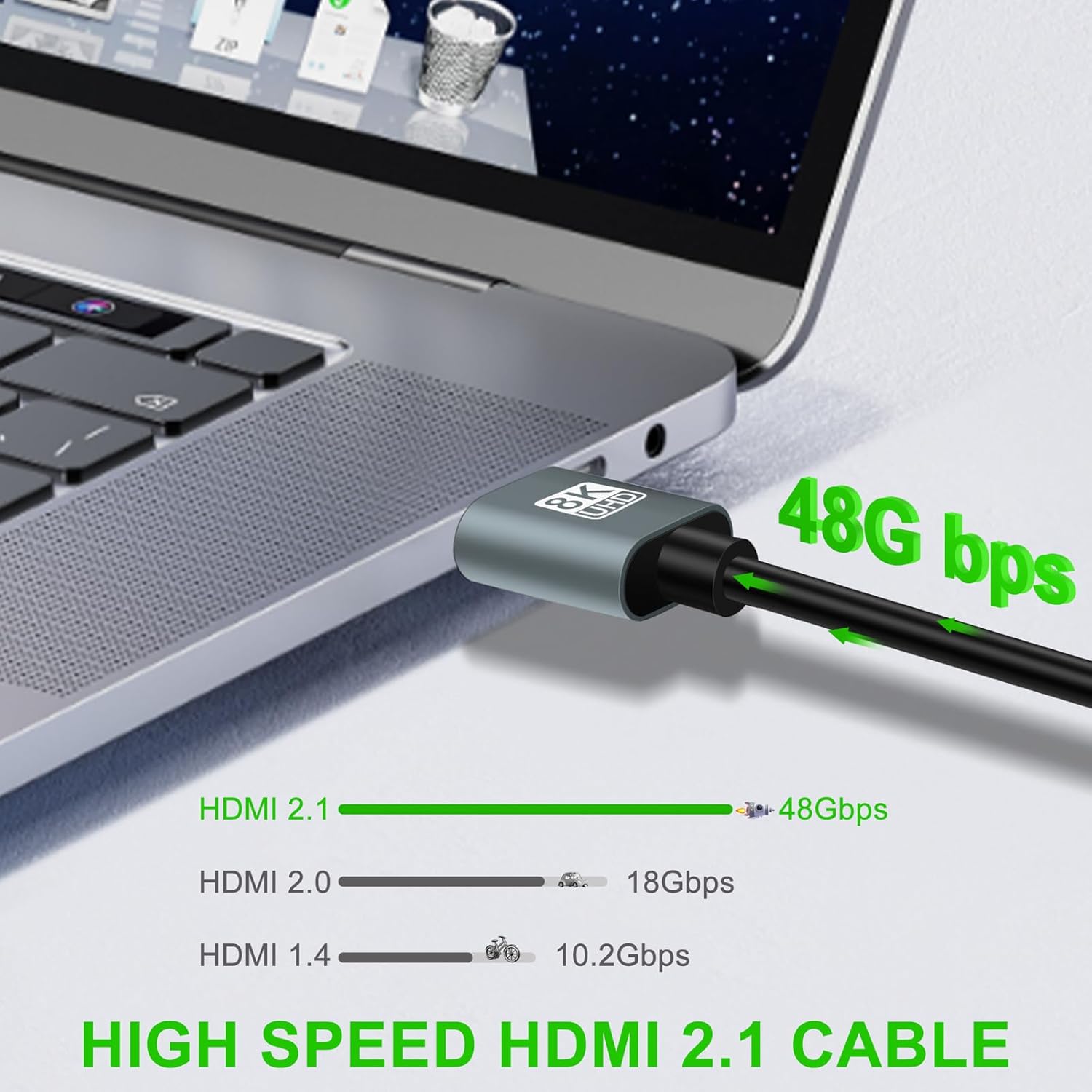
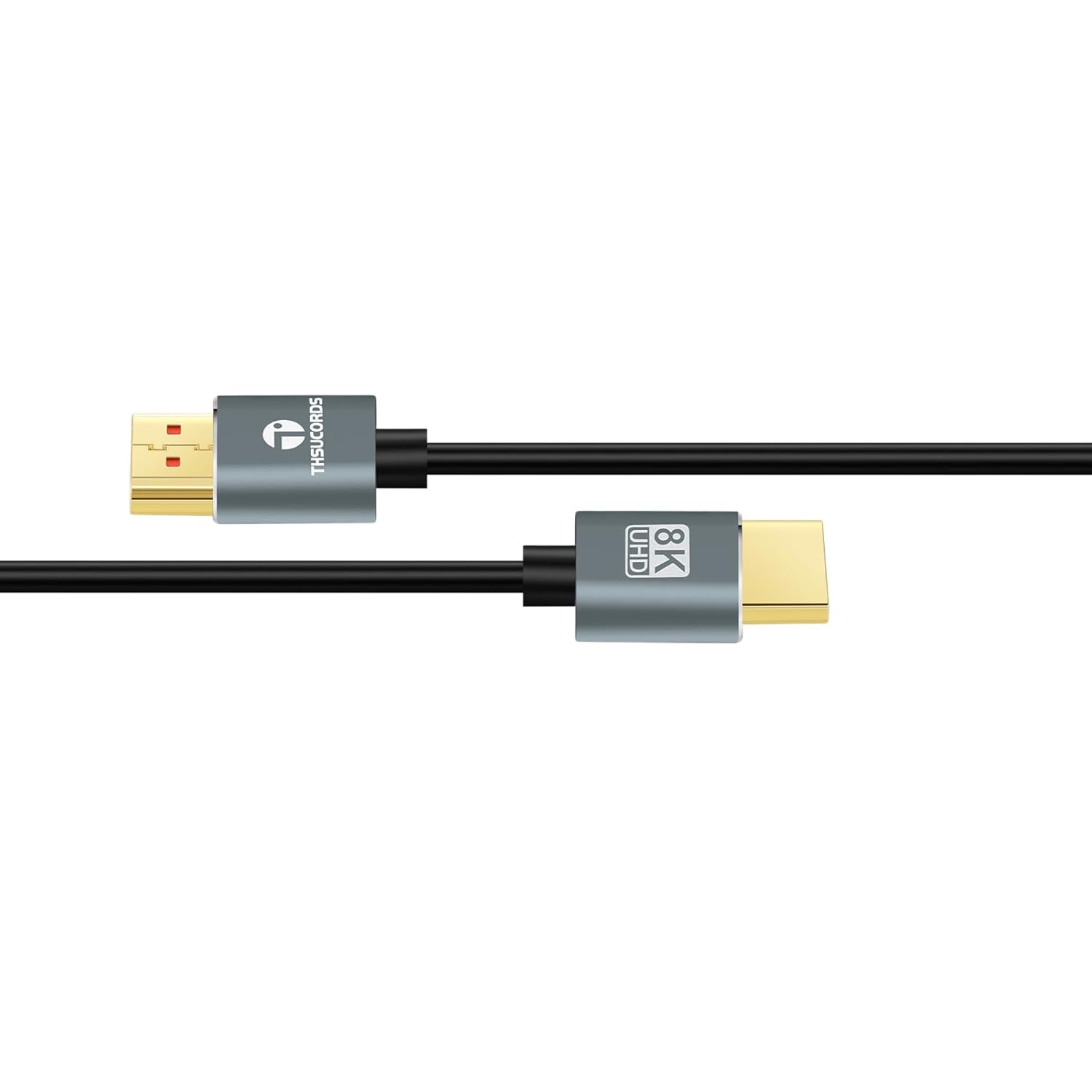
What it is and what it’s for\nThsucords’ Ultra Thin HDMI cable is a 3-metre, lightweight, highly flexible HDMI 2.1 lead designed to carry high-bandwidth video and audio signals. On paper, it supports up to 8K at 60Hz and 4K at 120Hz with a 48Gbps bandwidth, plus features like Dynamic HDR, VRR, QFT and QMS, and eARC. For everyday use, that translates to cleaner cables on camera rigs, TV setups, gaming consoles and home theatres where space, bendability and ease of handling matter. It’s pitched as a practical option for those who value portability without sacrificing performance.\n\n## Who it’s for\nIf you’re a home cinema enthusiast, a gamer pairing a PS5 or Xbox with a modern display, or a professional setting where compact, soft cables can help manage rigs or media setups, this cable could fit the bill. Its slim profile and lighter bulk may make it a reasonable pick for mounted or cluttered spaces where standard-thickness HDMI cables feel cumbersome. However, whether it truly justifies its premium data rate depends on your actual hardware and usage.\n\n## What stands out and where it may fall short\nOn the plus side, the 3-metre length provides flexibility for couch setups or away-from-wall routing, and the softness helps with routing around rig components or in tight enclosures. The claimed 48Gbps bandwidth and HDMI 2.1 feature set align with current expectations for high refresh rate gaming and high‑resolution video. If you prioritise a clean, easy-to-route cable for 8K/60Hz or 4K/120Hz needs, this model’s form factor can be compelling. On the downside, the higher-speed HDMI 2.1 market includes cables at various price points, and real-world performance often depends on both source and display compatibility, cable length, and ambient conditions. It may not deliver noticeable gains if your setup sits well within HDMI 2.0 capabilities or if your display doesn’t take advantage of the higher bandwidth.\n\n## What to know before you buy\nCheck your devices’ HDMI compatibility and bandwidth needs. If you’re not running at 8K/60Hz or 4K/120Hz, you might not need the full 48Gbps. The cable is backward compatible with older HDMI versions, which helps future‑proofing, but the ultimate experience hinges on the source device, display, and game or video content. Consider how you’ll route the cable in your room or rig—an ultra-thin design helps, but bend radius and connector orientation still matter.\n\n## Practical use cases\nIn a home cinema, you can cloak messy cabling behind furniture while preserving full 4K/120Hz gameplay from a PS5 or PC with compatible GPUs and displays. In professional settings, the softness can aid on-camera rigs and mobile shoots where lighter cables reduce fatigue and snagging. A hypothetical day‑to‑day scenario: you pull the 3‑metre lead from storage, thread it along a desk leg, and connect a high‑end TV from a comfortable seating position without fighting a stiff, bulky cable.\n\n## How it compares to the alternatives\nIf you’re weighing options, you’ll likely consider standard HDMI cables with lower bandwidth or longer leads that aren’t as flexible. For most current living-room or gaming setups, a well-made HDMI 2.1 lead like this one makes sense when you want headroom for future content and a tidy installation. It’s less about edge‑of‑tech brag and more about practical compatibility and handling. If your needs are strictly basic 1080p or 60Hz, you could save money by opting for a simpler HDMI 2.0/1.x cable.\n\n## Final decision point\nIs it worth it? Worth considering if you value ease of use, neat cable routing and future‑proofing for high‑refresh content, provided your devices support HDMI 2.1 features and you’re aiming for 8K/4K at high refresh rates. It may not be the best choice if your setup is firmly within HDMI 2.0 capabilities or if you’re chasing the lowest price. For a setup that prioritises flexibility and durability in a compact form, this cable is a reasonable contender.\n\n## FAQ\n- Does it support eARC? Yes, according to the specification set.\n- Can I use it with older devices? It is backward compatible with HDMI 2.0/1.x devices.\n- Is 3m length suitable for my console to TV distance? It should cover typical living-room layouts, but consider your room geometry before purchase.\n