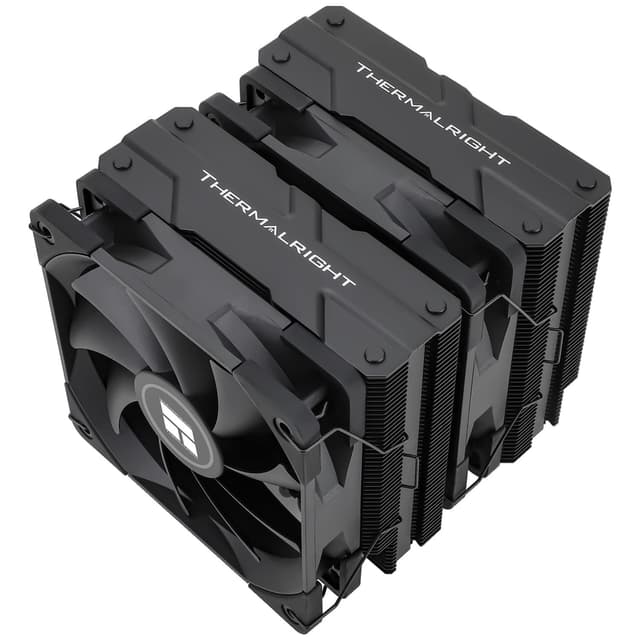
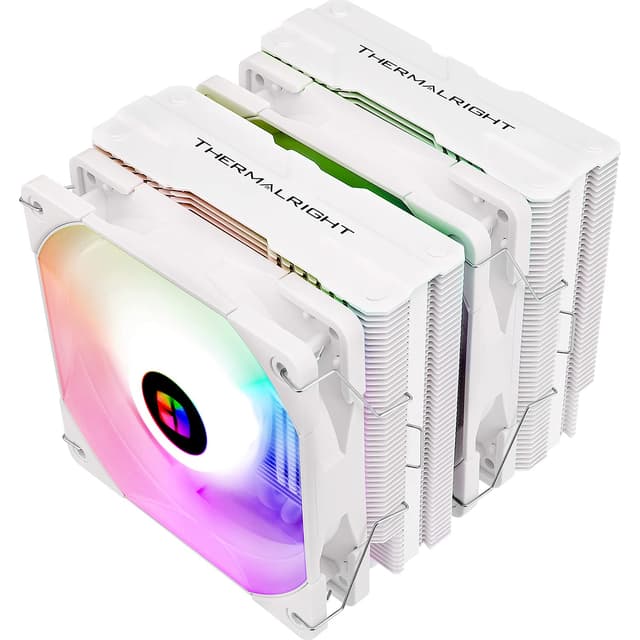
Thermalright Peerless Assassin 120 6 heat pipes

Reviews
Price
Price evolution
Product description
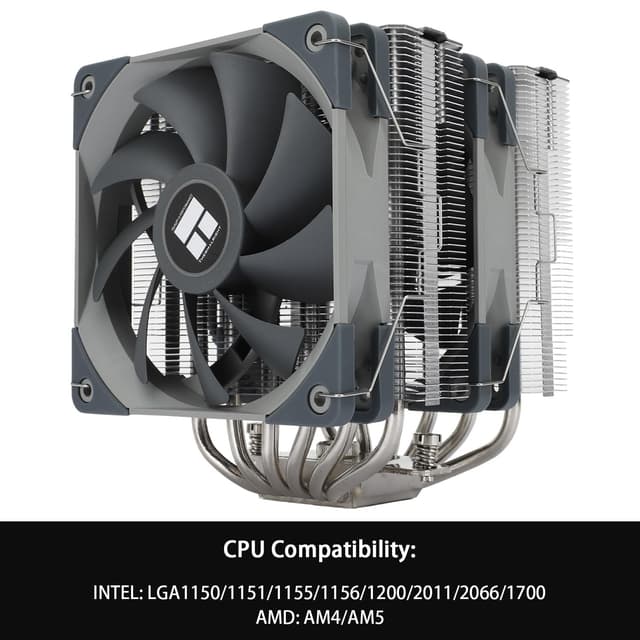
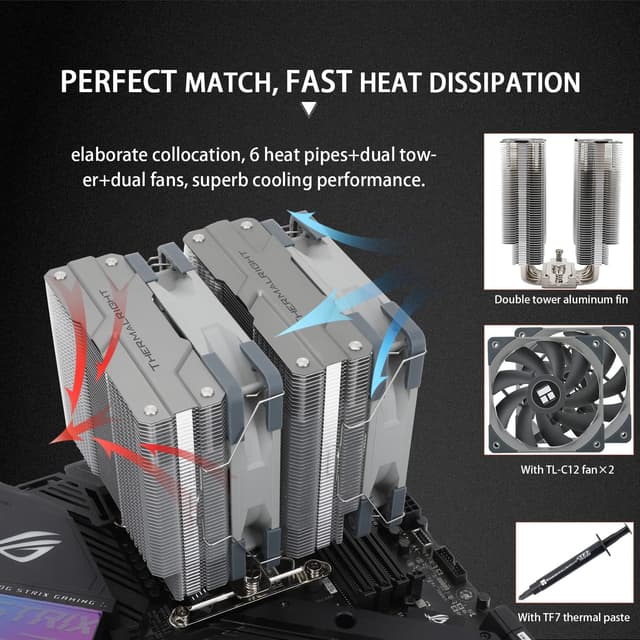
This dual-tower CPU air cooler brings serious cooling to mainstream builds, combining a compact footprint with strong dissipation thanks to its six heat pipes. The design prioritises practical clearance around memory slots and GPU first-slot compatibility, so you can fit it in many mid‑tower systems while keeping temperatures under control. The long-tail search term "CPU air cooler" fits naturally when buyers want a quiet, high‑performance fan setup for sustained loads. 🧊
Key points
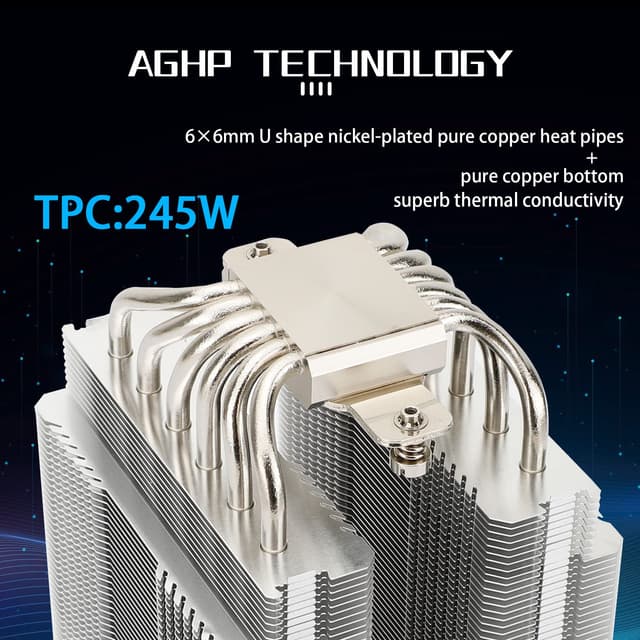
The cooler pairs an aluminium heatsink cover with a copper base and six sintered copper heat pipes using full reflow soldering for improved contact across fins. Fans are standard 120 x 120 x 25 mm TL‑C12 PWM models, offering up to 1550 rpm ± 10% and a noise ceiling below 25.6 dB(A), according to the manufacturer. AGHP technology aims to mitigate inverse gravity effects for different mount orientations, which helps under varied case layouts. The asymmetric offset means the unit sits clear of the first PCIe slot on most motherboards, giving more flexibility when installing large graphics cards. 🛠️
Tech specs
- Name: Thermalright Peerless Assassin 120
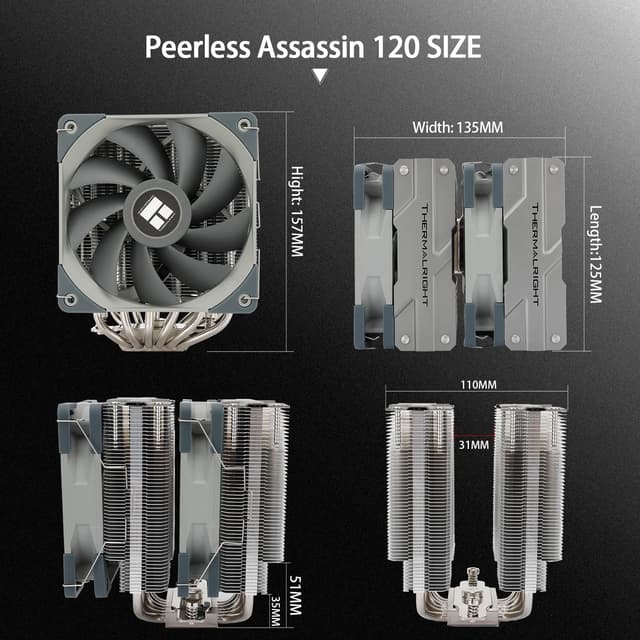
- Dimensions: 125 x 135 x 157 mm
- Material: Aluminium heatsink, copper base and sintered copper heat pipes
- Size: 120 x 120 x 25 mm fans
- Capacity: 6 heat pipes
- Weight: 1.02 kg
- Connectivity: 4 pin PWM fan headers
Who it’s for
It suits you if you want a mid‑tower friendly cooler that balances noise and cooling performance, especially when using high TDP processors and when RAM clearance matters. You’ll find the dual fans helpful for heavier CPU loads and longer gaming or rendering sessions without large acoustic penalties. Worth considering if you plan to mount the cooler in a variety of orientations because the AGHP approach reduces performance loss that can happen with traditional heat pipe designs.
It may not be a great match if you seek an ultra‑compact ITX solution or if you need a near‑silent passive unit, as the design relies on active airflow to reach rated performance. Also note that while the asymmetric layout helps GPU fitment it does not guarantee clearance on every chassis, so check case dimensions if space is very tight.