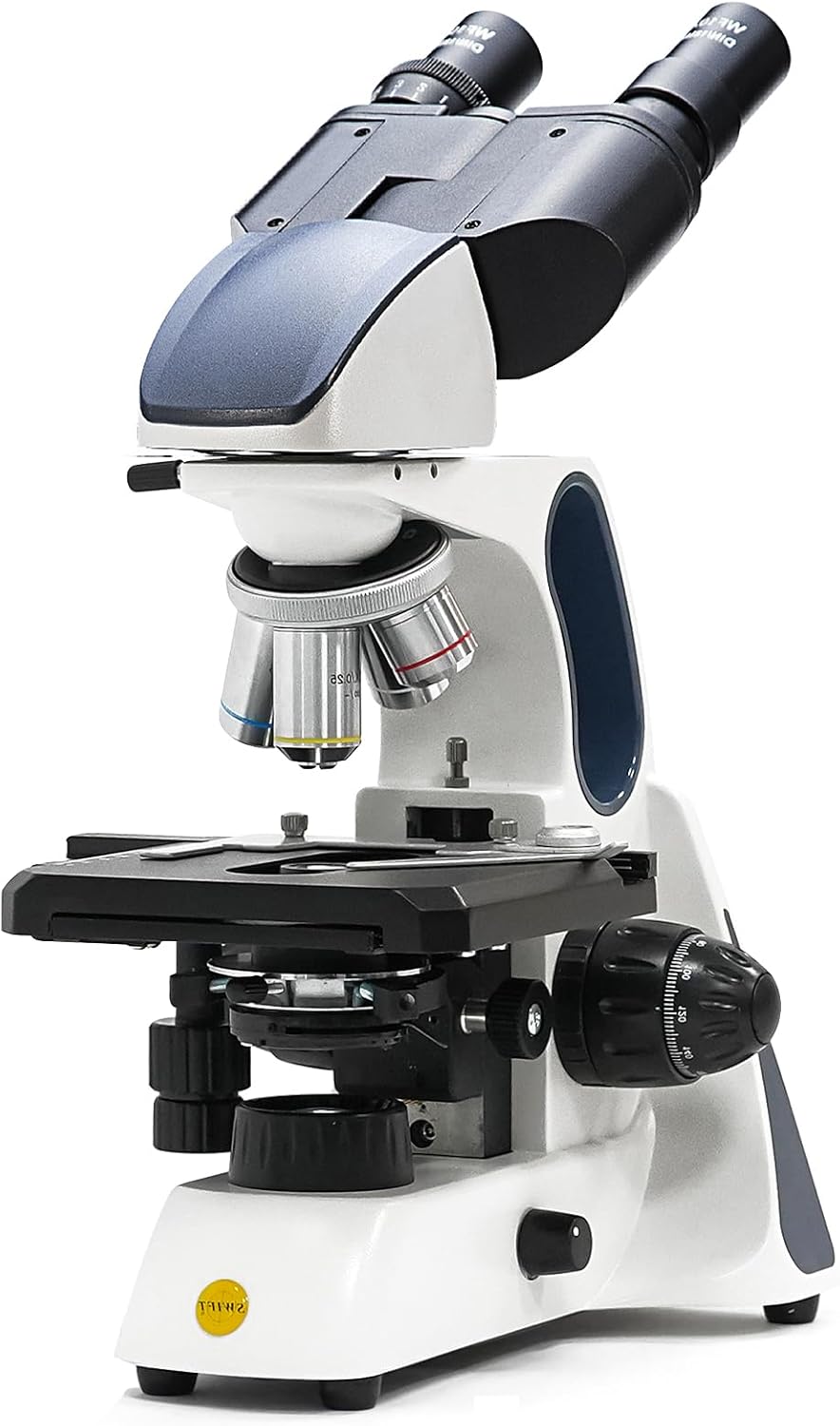
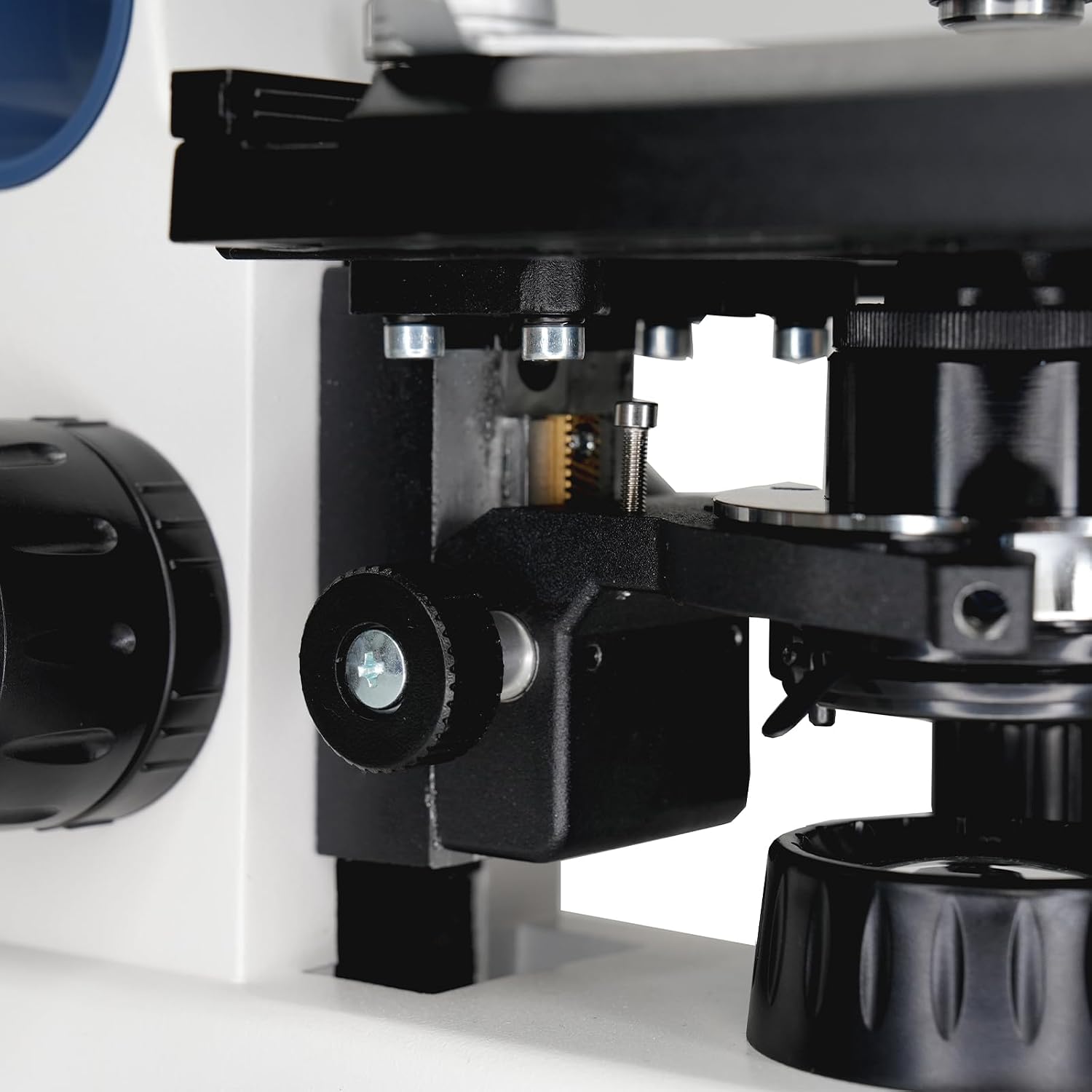
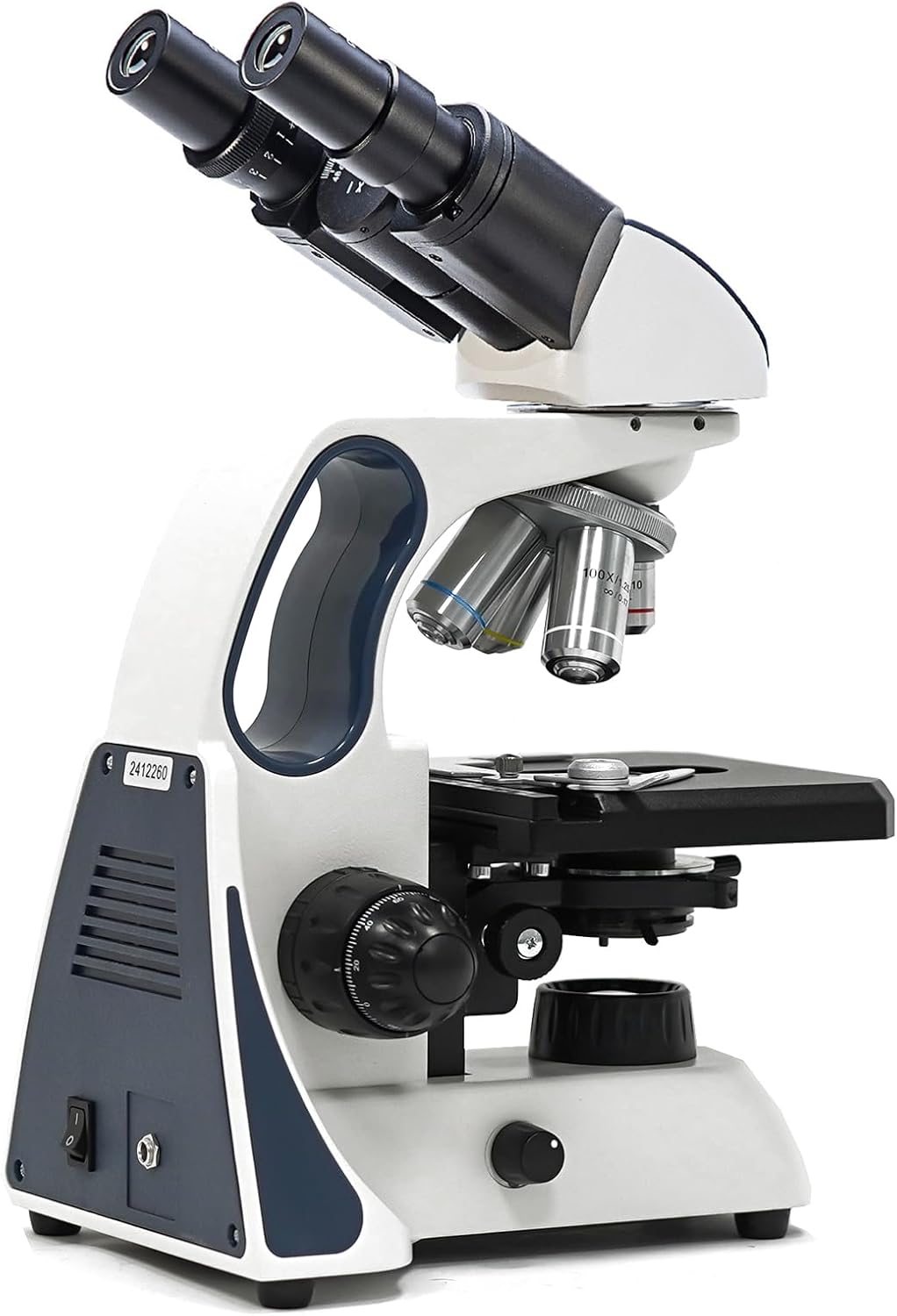
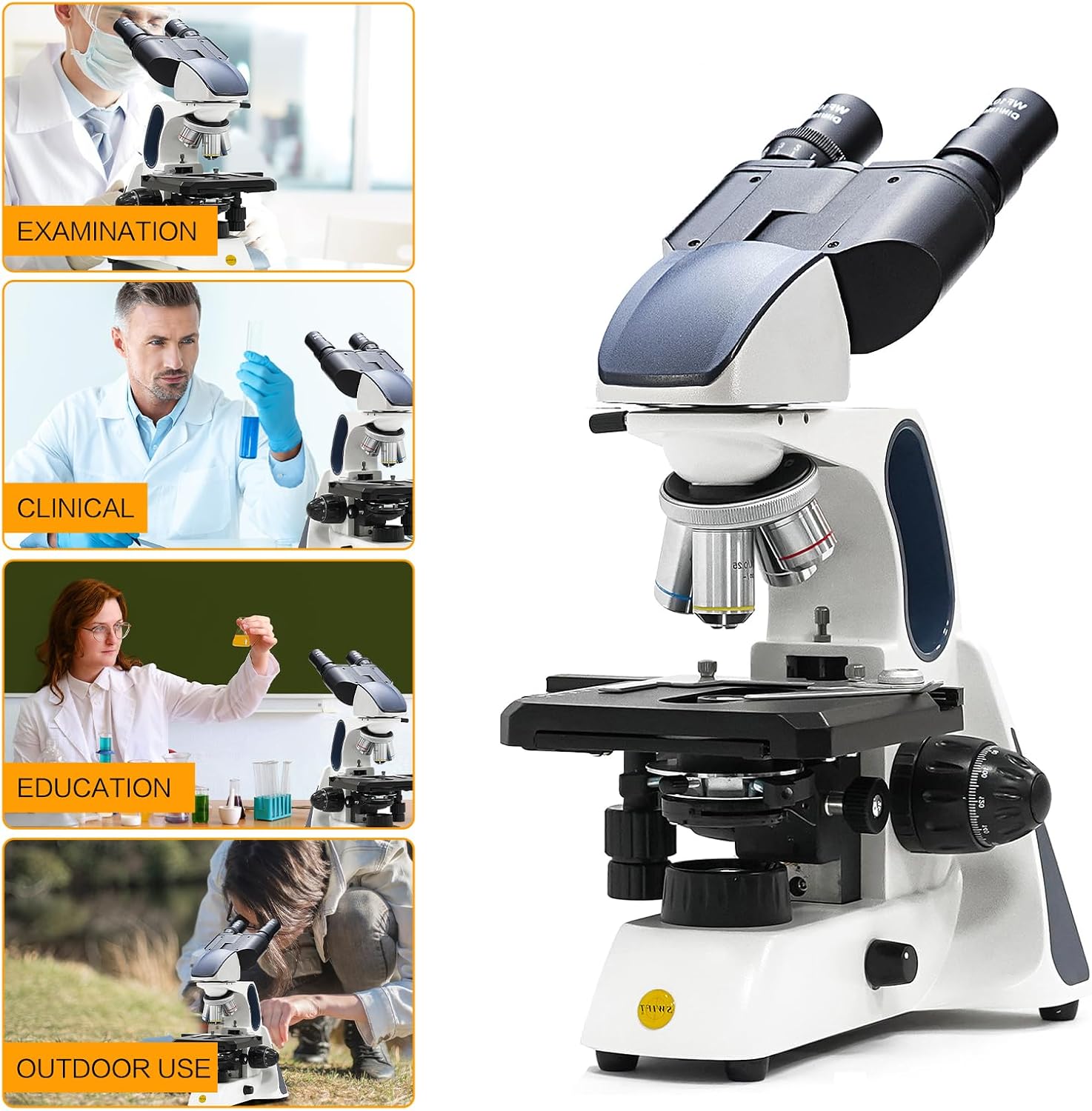
What it is and what it solves\nThe Swift SW400 is a binocular compound microscope designed for viewing fine details on microscope slides. It utilises an infinity-corrected optical path to minimise distortion and improve colour accuracy, which can be important when identifying tiny features in clinical, educational or life-science contexts. It aims to offer a practical balance between image quality, usability and flexibility for everyday lab or hobby use.\n\n## How it’s built for clarity and detail\nThe instrument uses four wide-band, fully multi-coated Infinity Achromatic objectives. Together with interchangeable wide-field 10X and 25X eyepieces, you get six magnification levels: 40X, 100X, 250X, 400X, 1000X and 2500X. The focusing mechanism pairs coaxial coarse and fine adjustment with precise gearing to deliver smooth, accurate focus. A dedicated camera port enables future attachment of a microscope camera to view, livestream, or capture magnified images.\n\n## Who it’s for\nThis microscope is suited to clinical and educational settings, basic life-science research, and serious hobbyists who want more reliable imaging than entry-level models. If you prioritise consistent colour and low distortion across a wide magnification range, it has clear advantages on paper.\n\n## What stands out in use\nOn the bench, the infinity system helps maintain parallel light between objective and tube lens, reducing distortion compared with standard finite optical paths. The high-contrast, high-resolution images are aided by achromatic corrections, which can help with sample differentiation at higher magnifications. The built-in LED illumination provides a self-contained light source, and the rechargeable element reduces dependency on mains power for mobile or temporary setups.\n\n## Where it might fall short\nNo single microscope excels in every situation. For instance, while six magnifications cover many common tasks, high-end users who need ultra-precise metrology or extremely specialised objectives might still seek advanced or dedicated configurations. The camera attachment is not included, so you’ll need to source a compatible camera separately.\n\n## Who should consider alternatives (and why)\nIf you primarily need a compact, simple instrument for occasional slide viewing, a lower-magnification, more portable model could be preferable. If you require rapid live imaging with integrated digital capture and advanced automation, consider models that include a built-in camera and motorised stage.\n\n## What to check before buying\n- Confirm the compatibility of a future microscope camera with the camera port.\n- Check the working distance and field of view at each magnification to ensure it suits your typical slides.\n- Consider battery life and how often you’ll rely on the rechargeable system vs. mains power.\n- If you plan to use it with learning aids or demonstrations, think about how easy the eyepieces and objectives are to swap.\n\n## Practical usage example\nImagine a university lab where students compare prepared slides and lamination samples. You’d start at 40X for a quick scan, then hone in to 100X or 400X to inspect cell structures. The infinity optics should help keep subject colours faithful as you move between slides, and the LED light makes it feasible to run demonstrations without depending on external lighting.\n\n## FAQ (brief)\n- Does it come with a camera? Answer: Not included, camera compatibility is available via the dedicated port.\n- How many magnifications are available? Answer: Six levels: 40X, 100X, 250X, 400X, 1000X and 2500X.\n- Is it suitable for teaching? Answer: Yes, its design and optics favour classroom demonstration and student learning.\n\n## Final decision\nIt makes sense if you want a bench-top microscope with stable optics and a flexible magnification range for routine lab work or education, and you’re prepared to source a camera separately if digital capture is a priority. If you need built-in advanced analytics or a self-contained digital system, you might look for a model with an integrated camera and more automation.\n\n## What you’ll notice in use\nThe instrument feels sturdy and practical for everyday lab tasks, with easy-to-grip focusing controls. It’s not a throwaway instrument, but it’s not aimed at the most demanding research environments either. If your goal is reliable slide viewing with decent resolution across multiple magnifications, the SW400 has a credible built-in rationale for consideration.