

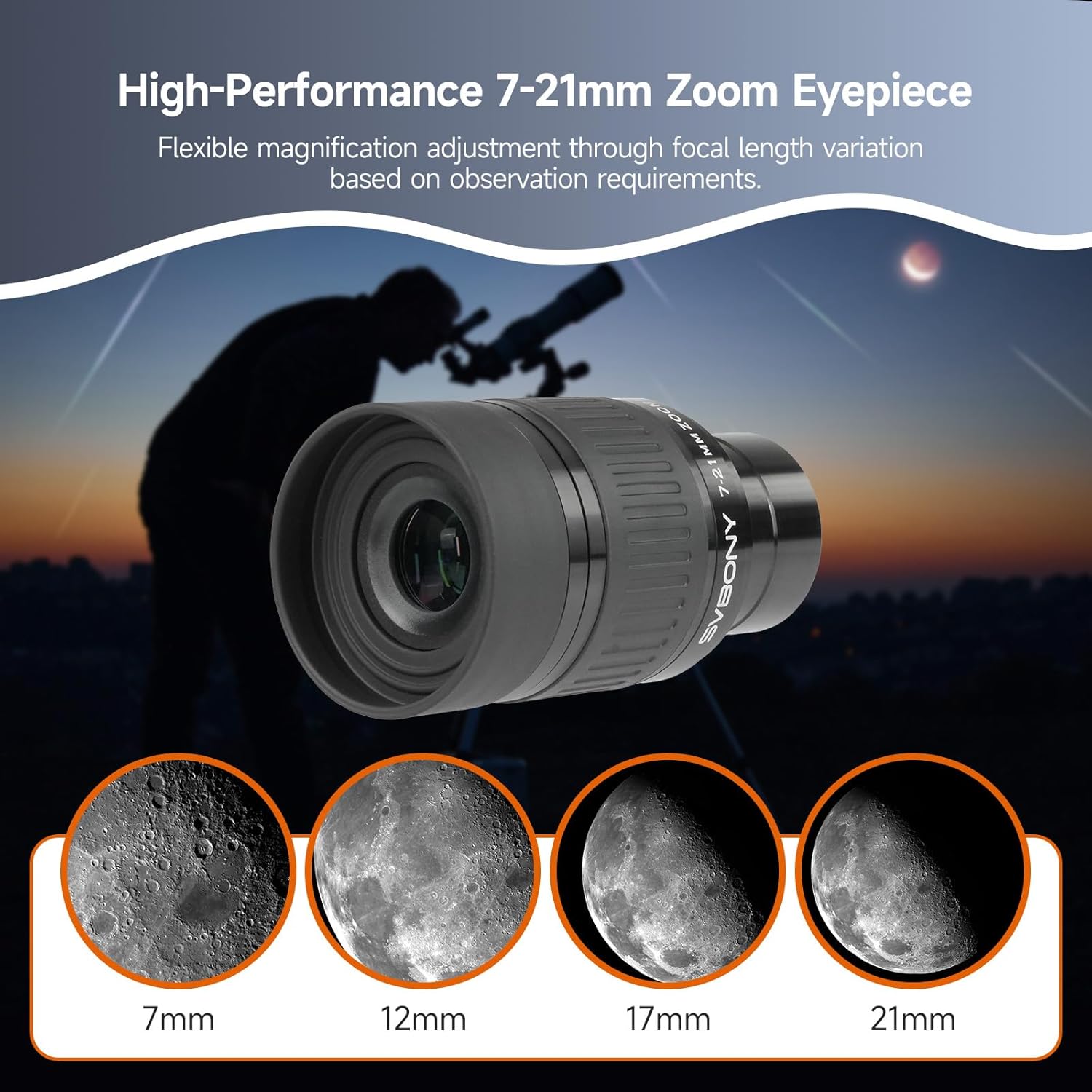
Svbony SV233 Telescope Accessory Kit 7–21mm zoom 🔭
Product description
This Svbony accessory kit gathers essential eyepieces and filters to expand the capabilities of a 1.25 inch telescope for visual observation and basic astrophotography. It combines a 7–21 mm zoom eyepiece, several fixed focal eyepieces and a 2x Barlow lens to cover a wide range of magnifications when observing the Moon, planets and deep sky objects.
Key Points
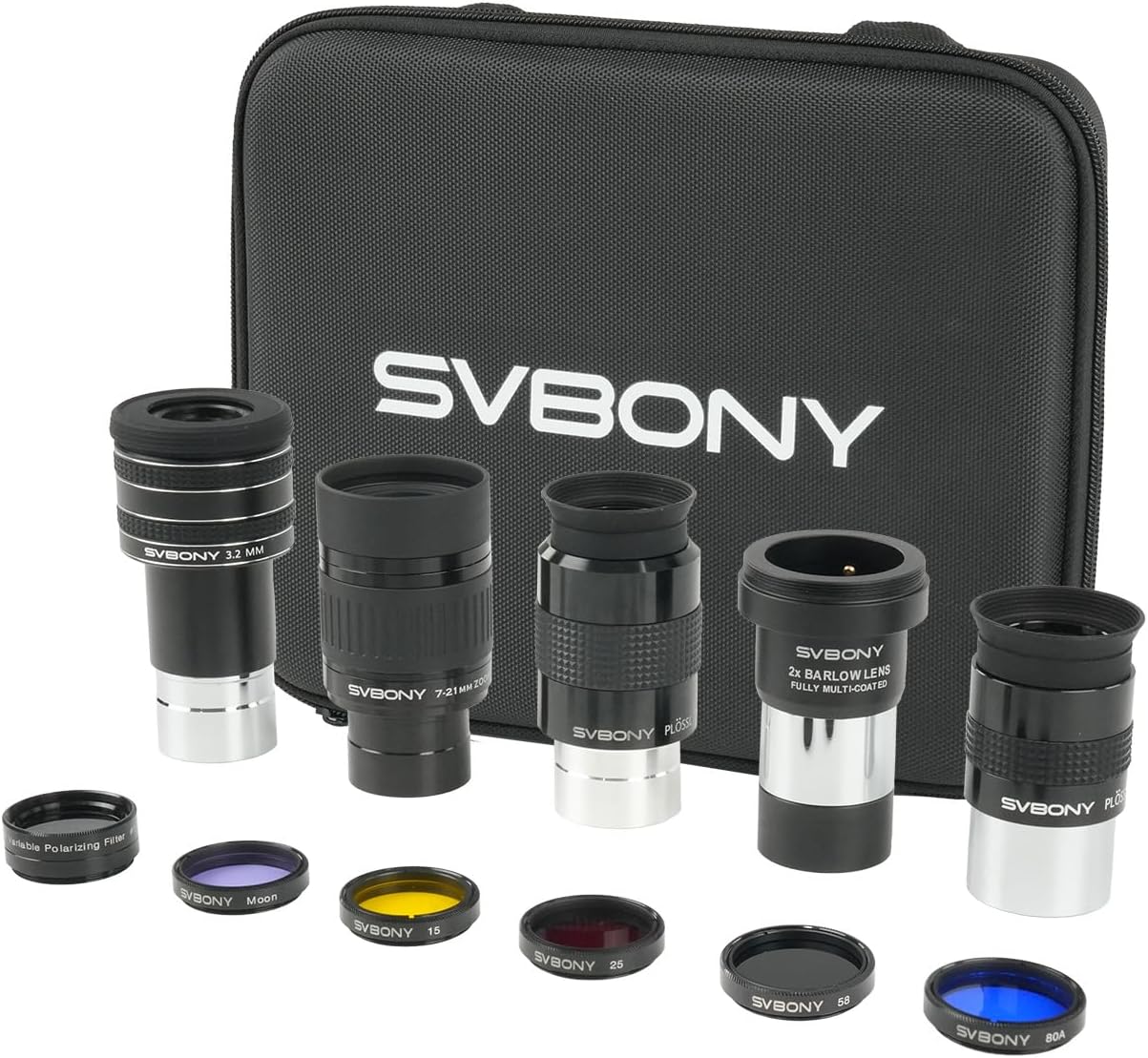
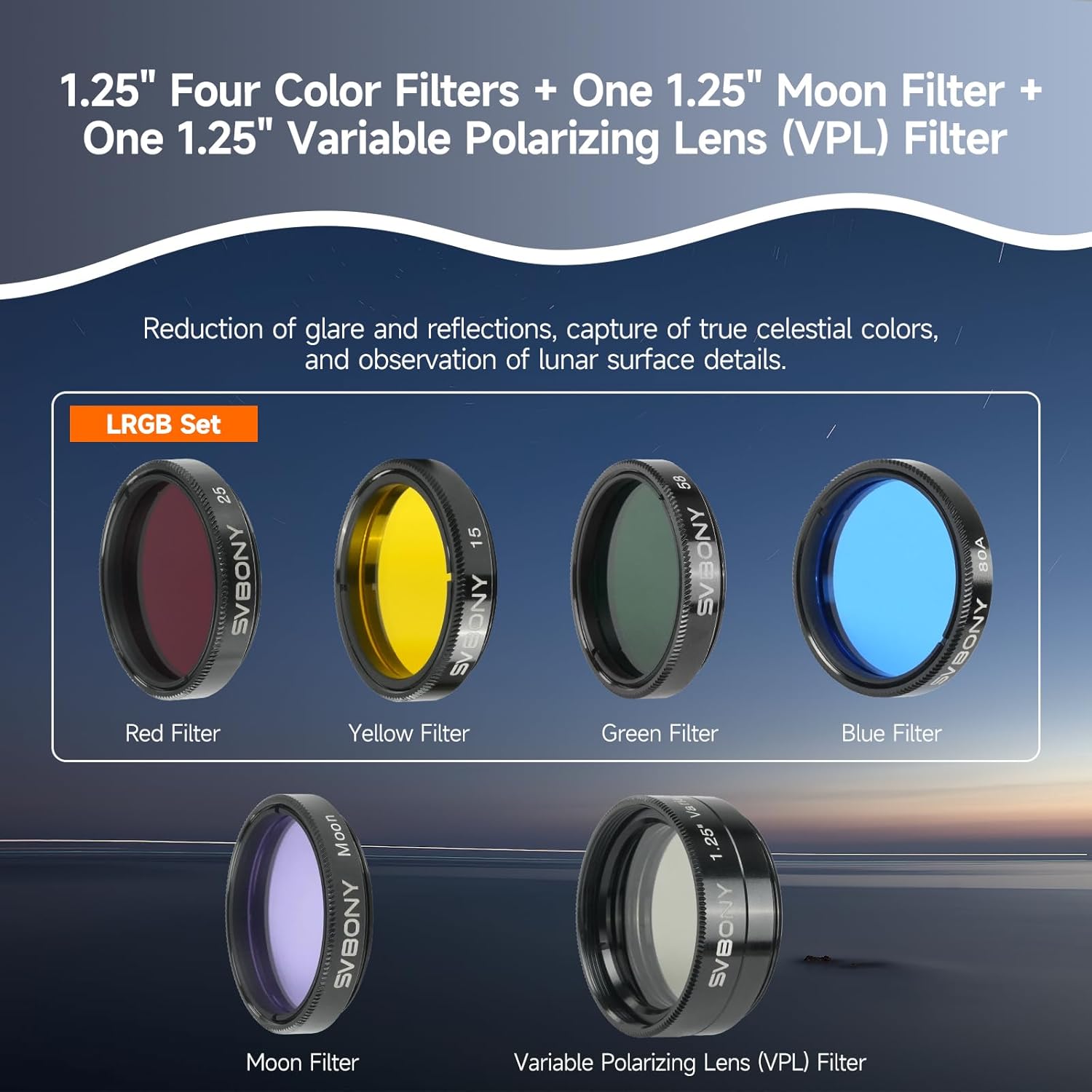
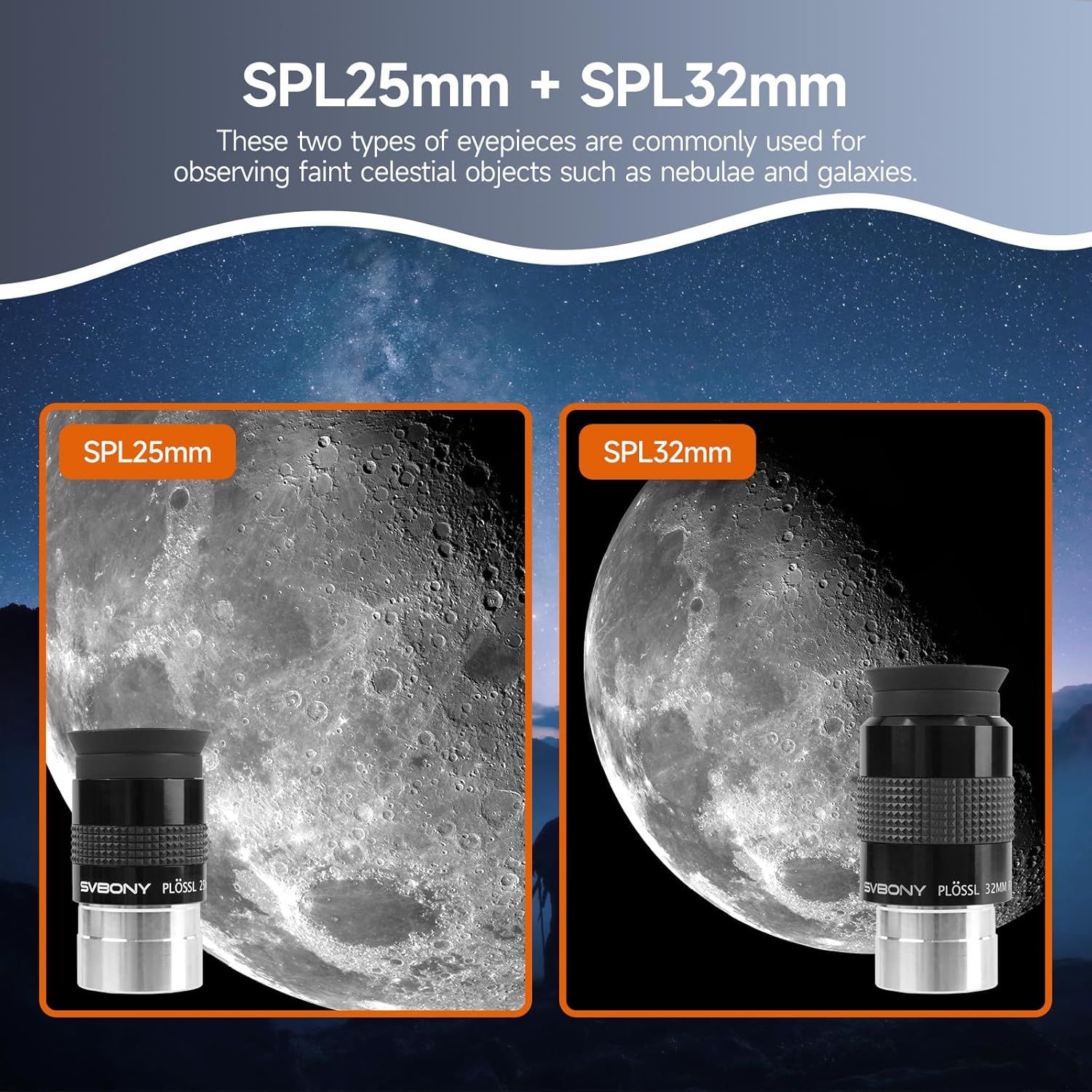
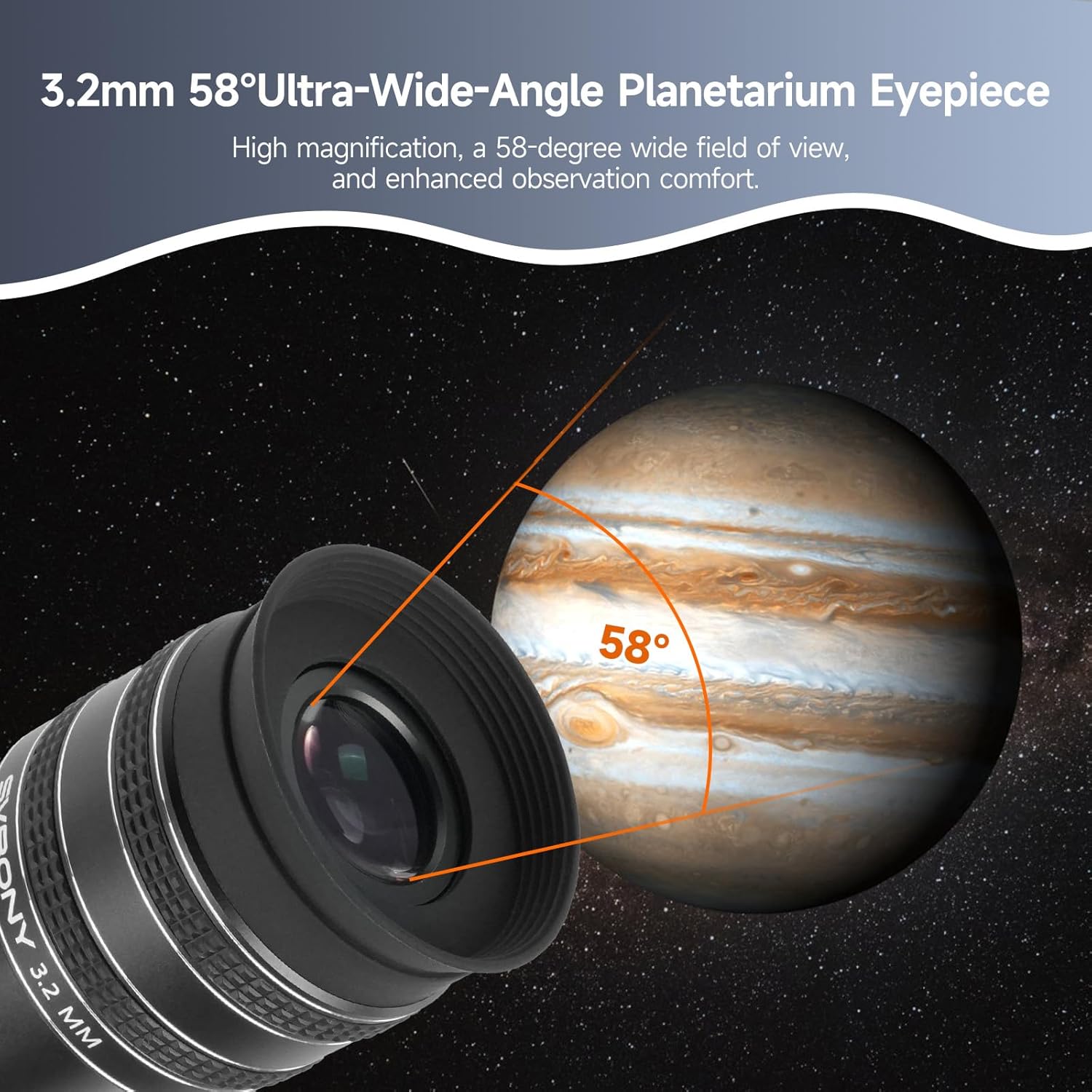
The set includes a high-performance 7–21 mm zoom eyepiece for flexible magnification without swapping eyepieces, plus a 3.2 mm 58° ultra-wide-angle eyepiece for higher-power planetary views. Two additional fixed eyepieces of 25 mm and 32 mm give lower magnification and wider fields useful for star clusters and large nebulae. The kit also features LRGB colour filters and a moon filter to help increase contrast and reveal subtle surface details on planets and the Moon. A Variable Polariser reduces glare from very bright objects and can improve on-axis contrast during coastal or snowy conditions. The included Oxford-style cloth bag with foam lining stores the components safely and makes the kit portable for night-time field use. 🌙🔭
Technical Specifications
- Name: Svbony SV233
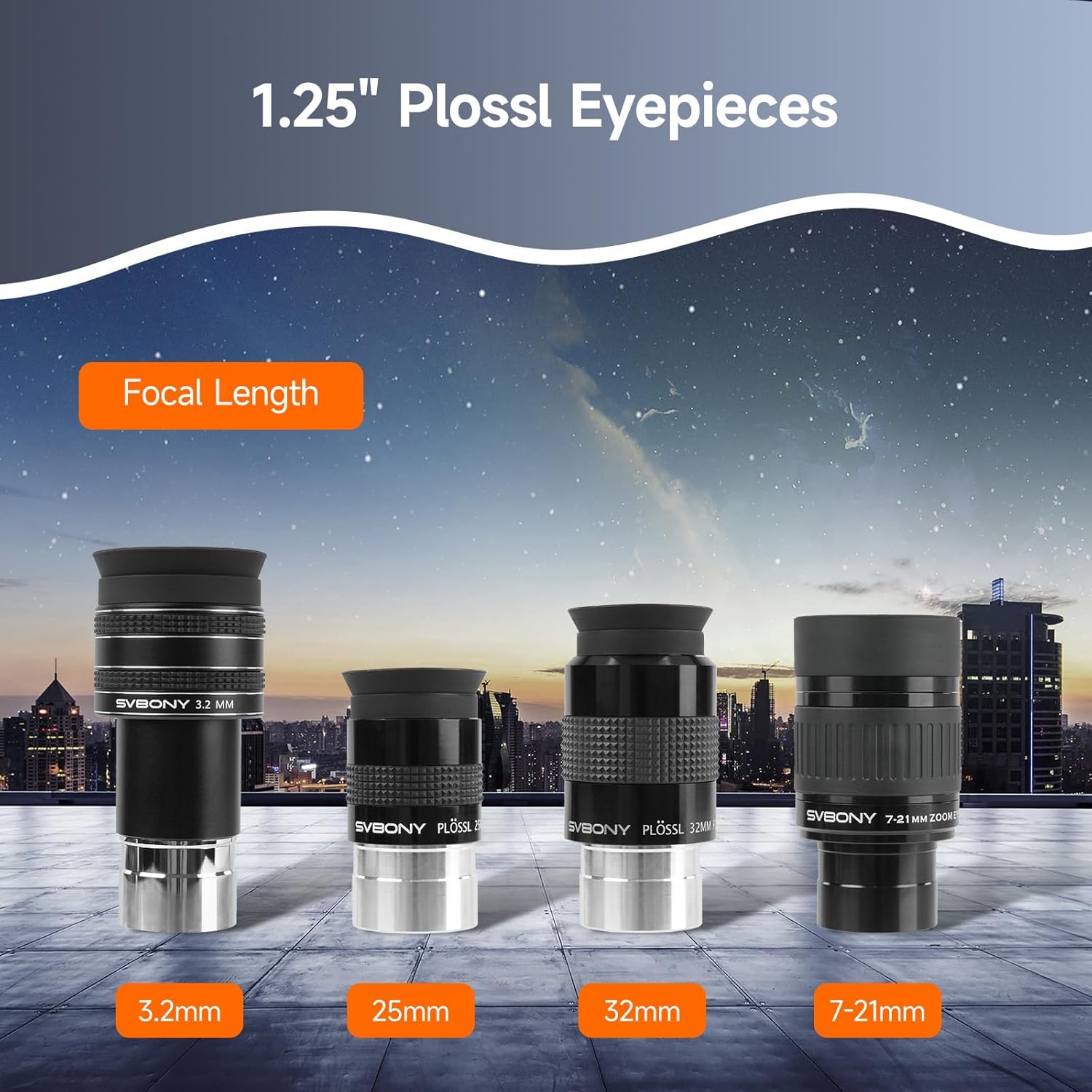
- Eyepieces included: 7–21 mm zoom, 3.2 mm 58°, 25 mm, 32 mm
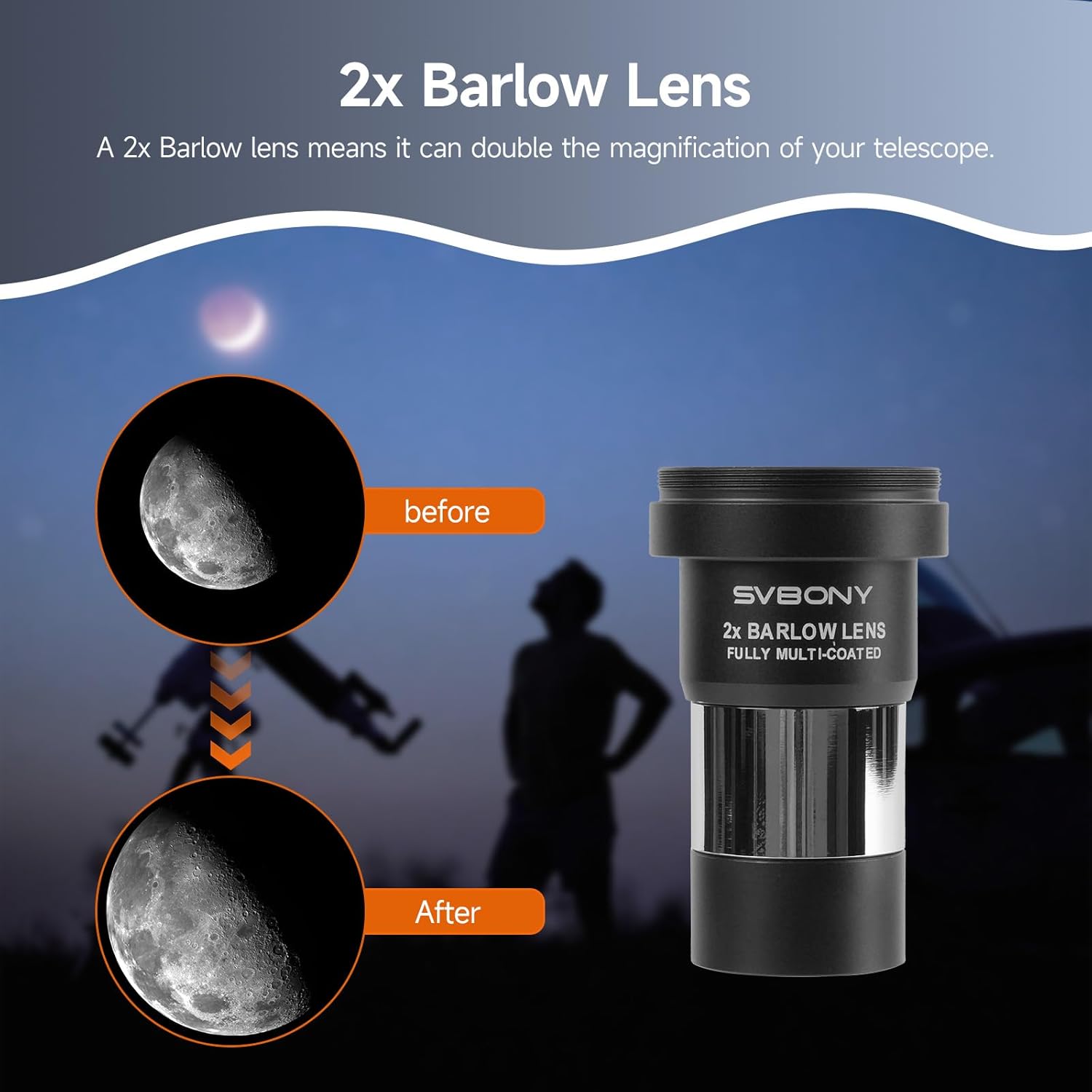
- Barlow lens: 2x, 1.25 inch
- Filters: LRGB set, Moon filter, Variable Polariser (1.25 inch, M28.5*0.6 thread)
- Case: Oxford cloth bag with foam lining
Usage Recommendations
For quick changes in magnification during an observing session, start with the 32 mm eyepiece to locate the target and then switch to the zoom eyepiece to refine framing and detail. Use the 3.2 mm eyepiece for high-power planetary work when conditions are steady, and pair it with the 2x Barlow for even greater magnification if the telescope optics support it. When observing the Moon, the Moon filter will tone down brightness and enhance shadow contrast without altering apparent colour significantly according to the manufacturer. The LRGB colour filters can help emphasise features on gas giants and surface markings by selectively boosting contrast, though they may require practice to use effectively. Consider that very high magnifications can suffer from atmospheric turbulence and will not improve image detail if seeing is poor.