

Supet Soft Cat Recovery Collar (EPE) for Post-Surgery Licking, Adjustable Blue, M
Product description
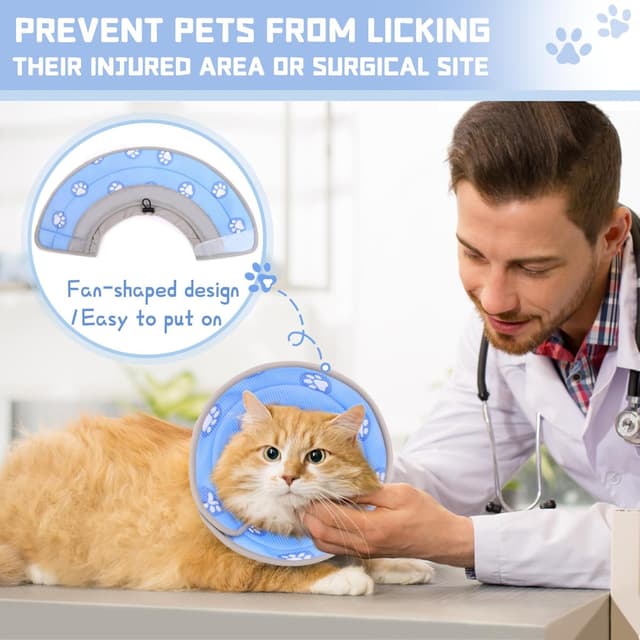
If your pet keeps going back to an injured or post-surgery spot, the “just leave it alone” approach rarely works. A soft recovery collar is one of those simple tools that can make a real difference to healing by preventing biting and licking where it matters.
This Supet cone-style collar is designed as a softer alternative to rigid plastic Elizabethan collars. On paper, that trade-off is the point: it aims to reduce the everyday discomfort some cats get from harder cones, while still creating a physical barrier.
The essentials
This is a soft cat recovery collar in EPE material, intended to stop scratching, biting and licking of an injured or surgical area. It’s adjustable thanks to a strap, so you can set the fit based on your pet’s neck size.
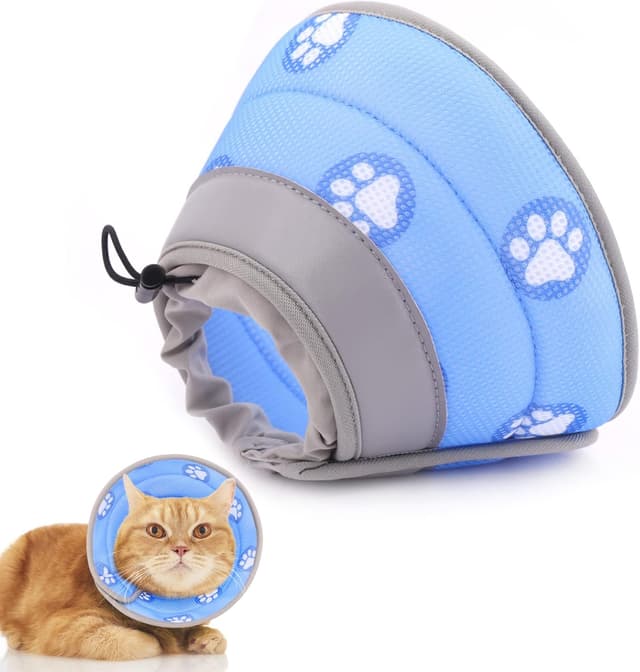
It also uses a folding-edge cone shape. The idea is that the folded edges don’t block your cat’s vision in the same way as more traditional, more “full bowl” collars—so your cat can still move around and behave more naturally.
What stands out in day-to-day use
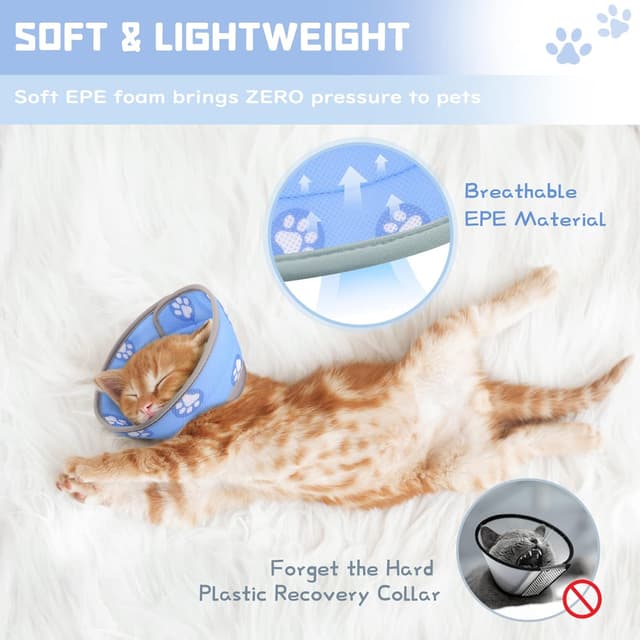
Softness matters here. Conventional hard plastic cones can be stiff, awkward and stressful, especially for smaller cats and kittens. This collar swaps that rigid feel for an EPE cone with breathable properties, which should help with comfort in everyday wear.
You can also expect an easier routine: the adjustable strap lets you tweak tightness to match your cat’s neck circumference. There’s a practical note included with the product: after adjustment, you should make a knot.
One more small but important point is the folding edge design. It’s meant to keep your cat’s vision less obstructed, which is useful for normal routines like walking around the room or settling on familiar spots.
Limits to keep in mind before buying
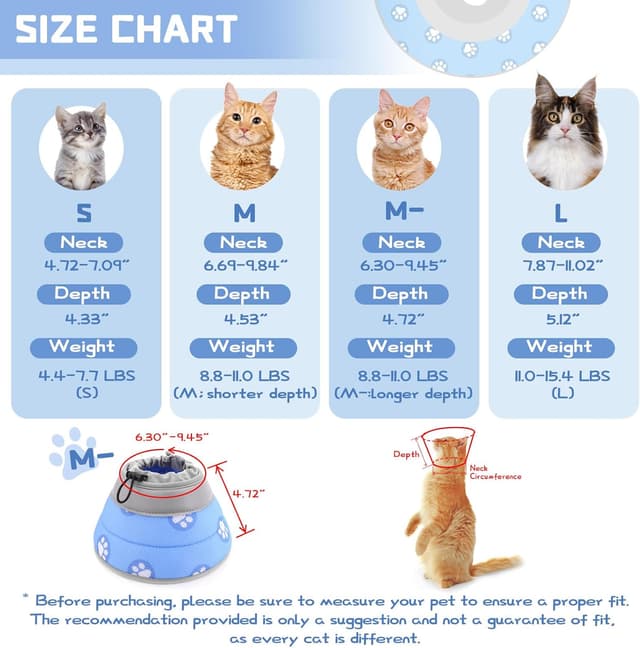
A recovery collar is only as good as the fit. Measure first. The product guidance asks you to measure your cat’s neck circumference and also to make sure the length of the cat’s head is less than the depth of the kitten cone.
That depth/length detail is easy to overlook, and it can be the difference between a collar that acts like a barrier and one that’s too short (or too loose). Also, while the soft cone is designed not to block vision like harder options, it can still feel like something “new” for some pets—especially if they’re already uncomfortable after surgery.
Who it suits (and who should be cautious)
It makes sense if you’re dealing with post-surgery care where licking and biting are a risk, and you want a gentler approach than a rigid plastic cone.
It may not be ideal if you’re struggling to get a secure fit, or if your pet is very determined and needs a more robust barrier. In those cases, the soft material might not feel as “unyielding” as a harder collar, so it’s worth thinking through how persistent your cat is.
How to choose the right size and fit
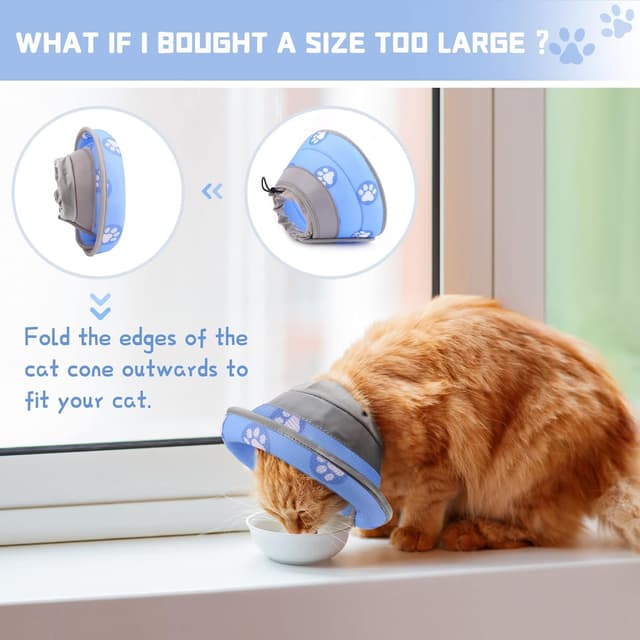
Before you commit, don’t skip measuring. The guidance provided is fairly clear: measure your cat’s neck circumference and check the head length against the cone depth so it can properly cover/stop reach to the surgical area.
When you fit it, adjust the strap to the tightness you need and then make a knot after adjustment. If you don’t knot it, you risk the collar loosening and becoming less effective.
A quick micro-check you can do once it’s on: watch whether your cat can easily reach the target area. If they can get at it, you’ll likely need to revisit the fit rather than just letting it run.
Final verdict
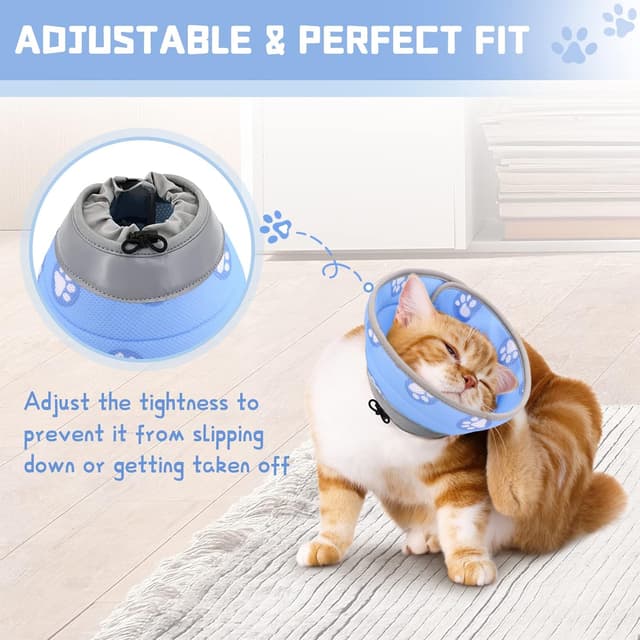
Worth it if you want a soft, adjustable recovery collar for post-surgery licking control, and comfort matters for your cat’s day-to-day behaviour. The EPE, breathable build and folding-edge design are aimed at reducing the “hard plastic collar” downside while still acting as a barrier.
Skip it (or double-check your measurements first) if you’re not confident you can match the neck circumference and the head length vs cone depth. A soft collar can only do its job properly when the fit is right—and that’s where most people get caught out.
Mini FAQ
Is a soft recovery collar as effective as a hard plastic cone?
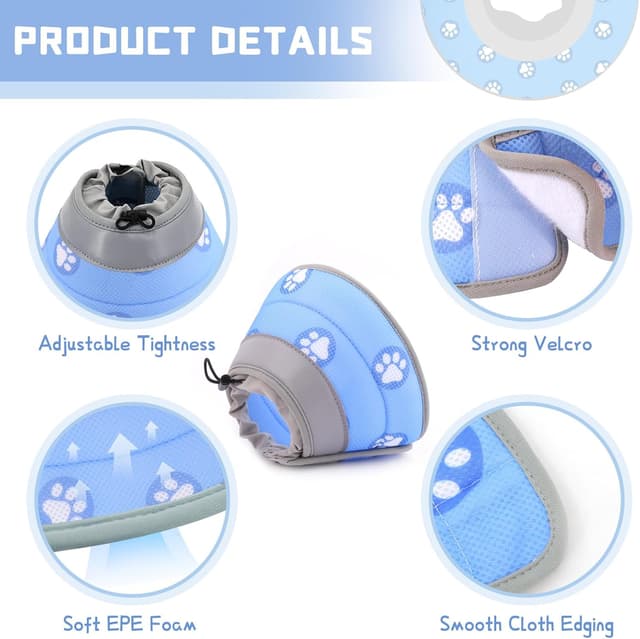
A soft cone can still prevent biting and licking by blocking access to the injured area. That said, effectiveness depends heavily on fit, and very determined pets may need reassessment if they manage to reach the target.
Will it block my cat’s vision?
The product notes a folding-edge design intended not to block vision like traditional Elizabethan collars, so your cat should be able to see more normally than with some rigid cones.
How do I size it?
Measure your cat’s neck circumference first, then check that the cat’s head length is less than the depth of the kitten cone, as recommended. That helps ensure the barrier sits correctly.
Do I need to adjust it every day?
The collar is adjustable, so you may need fine-tuning if your cat’s comfort level changes or if the fit shifts. Follow the adjustment guidance and secure it with a knot after tightening.
Where is this collar meant to be used?
It’s designed for stopping scratching, biting and licking around injured or surgical areas during recovery.