

SUNLU Silk Dual-Color PLA+ 1.75mm 1kg filament
Product description
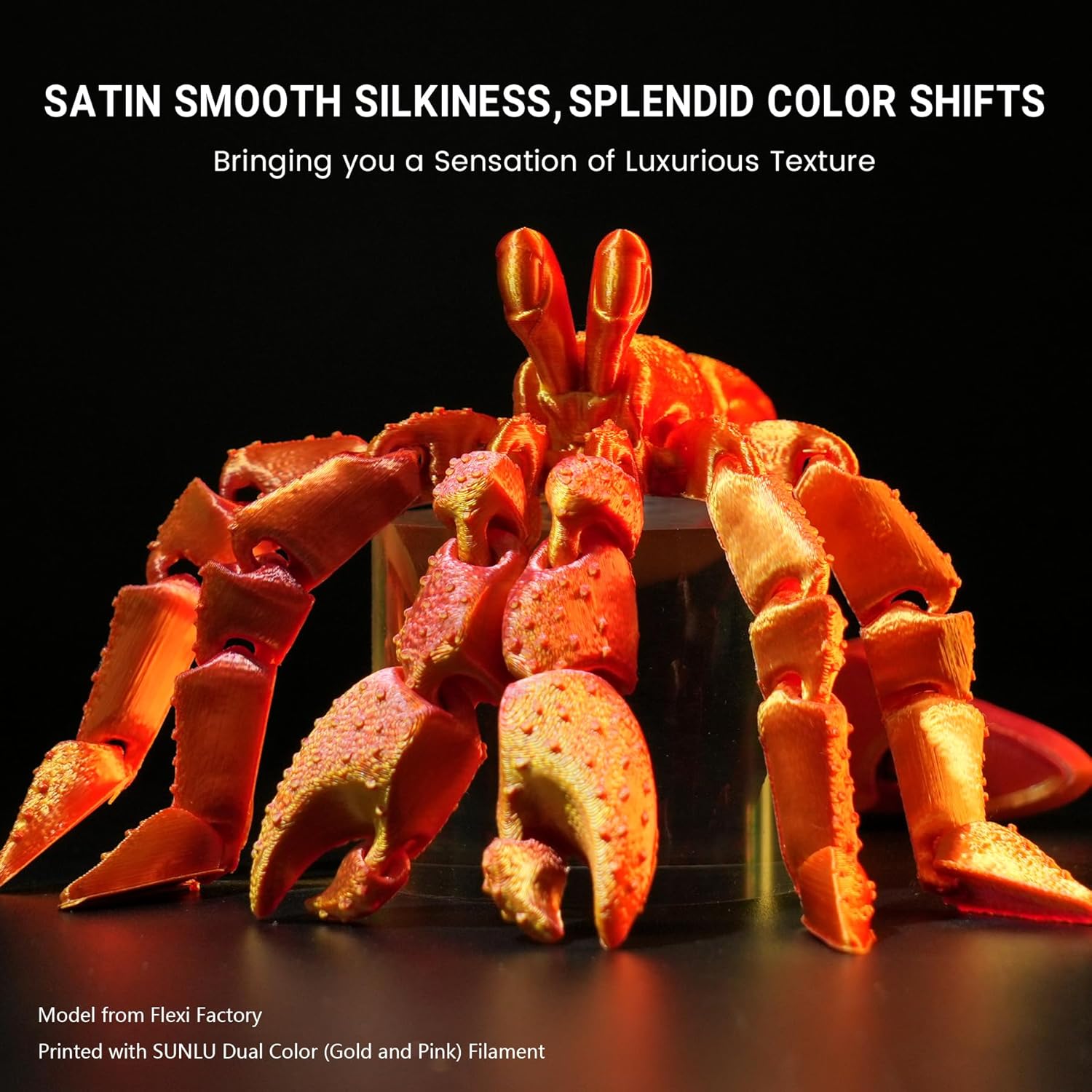
This silk-finish PLA+ filament from SUNLU creates vivid, glossy prints that show changing hues when viewed from different angles. It is a 1.75 mm dual-colour spool that combines visual flair and easier printing for decorative models and display pieces.
Key Points
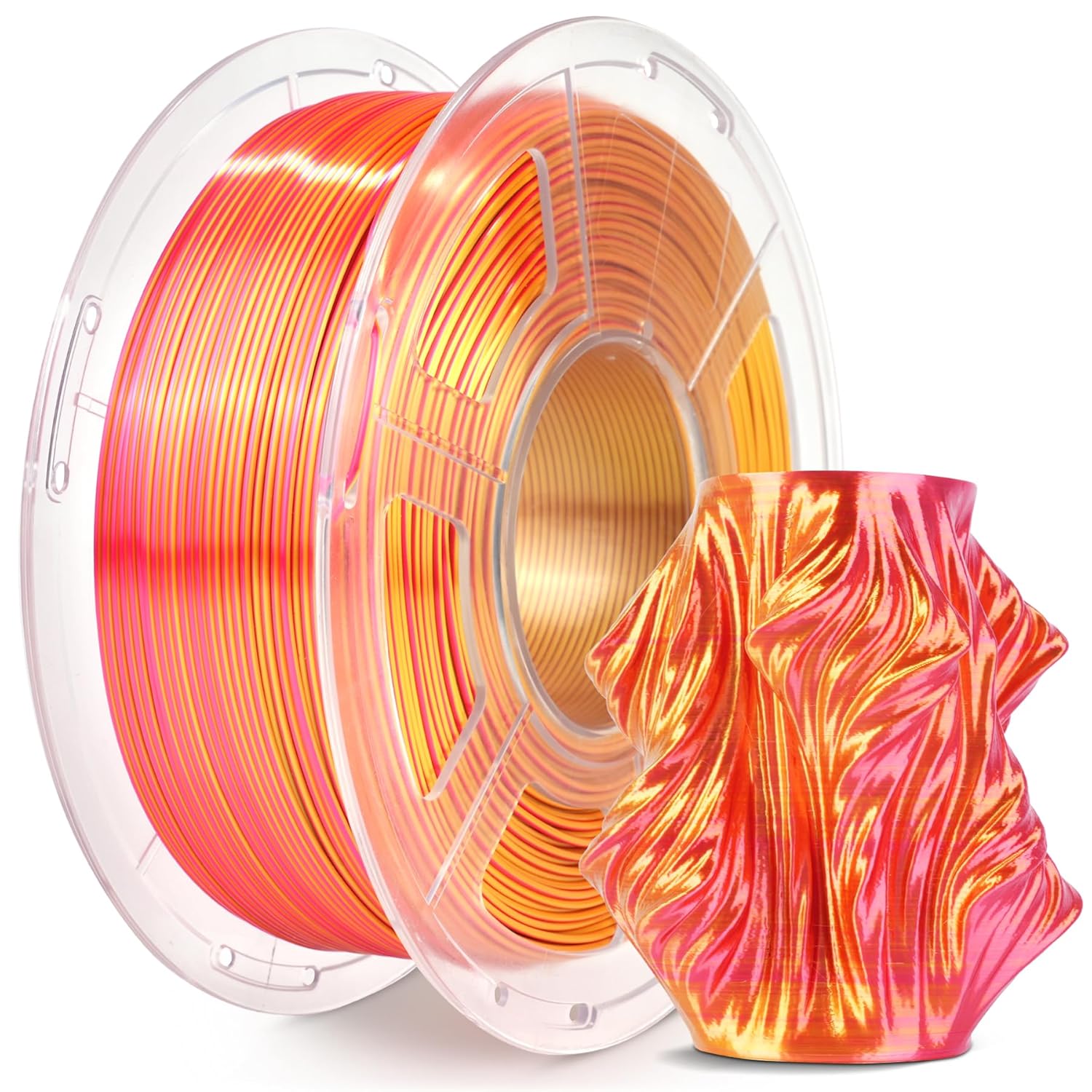
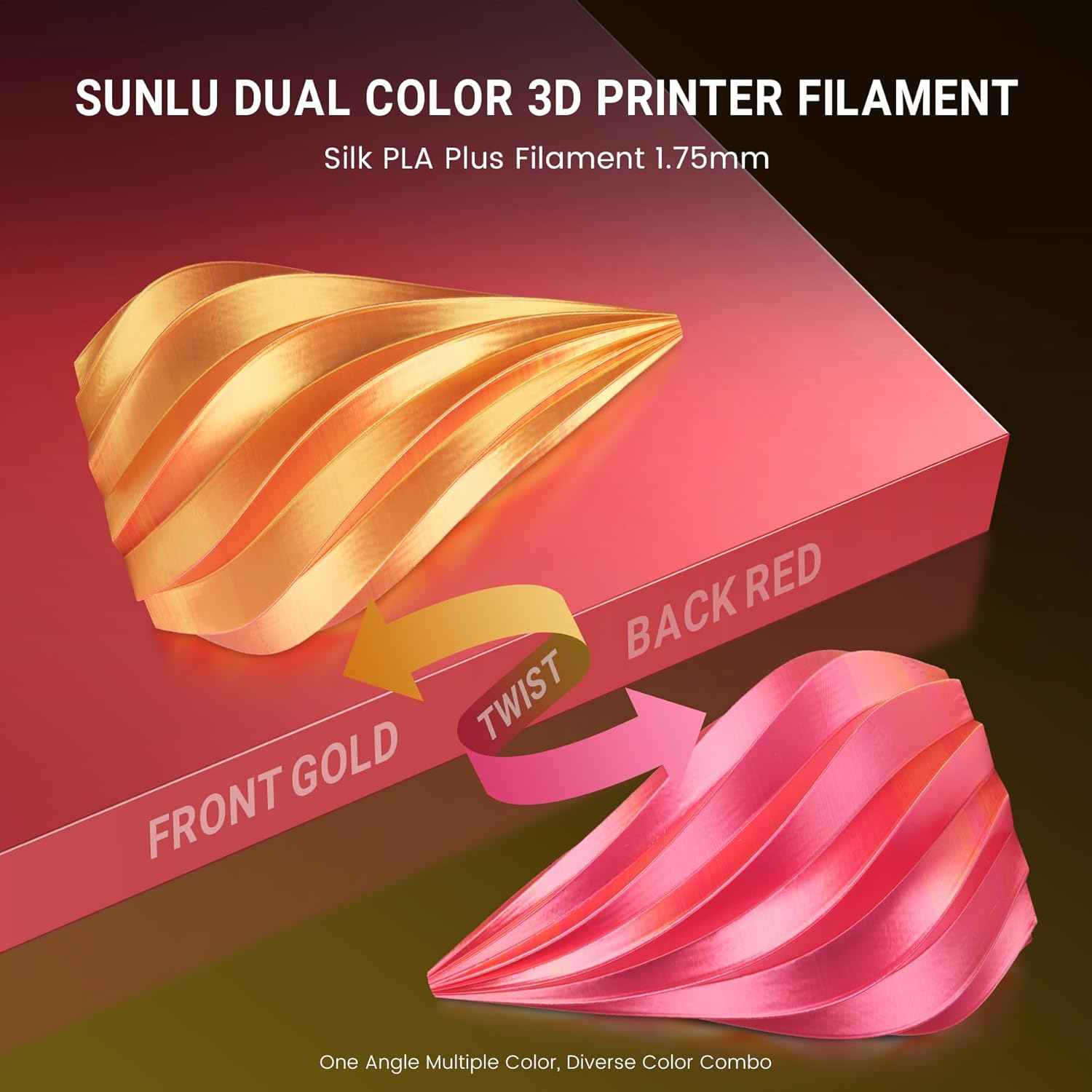
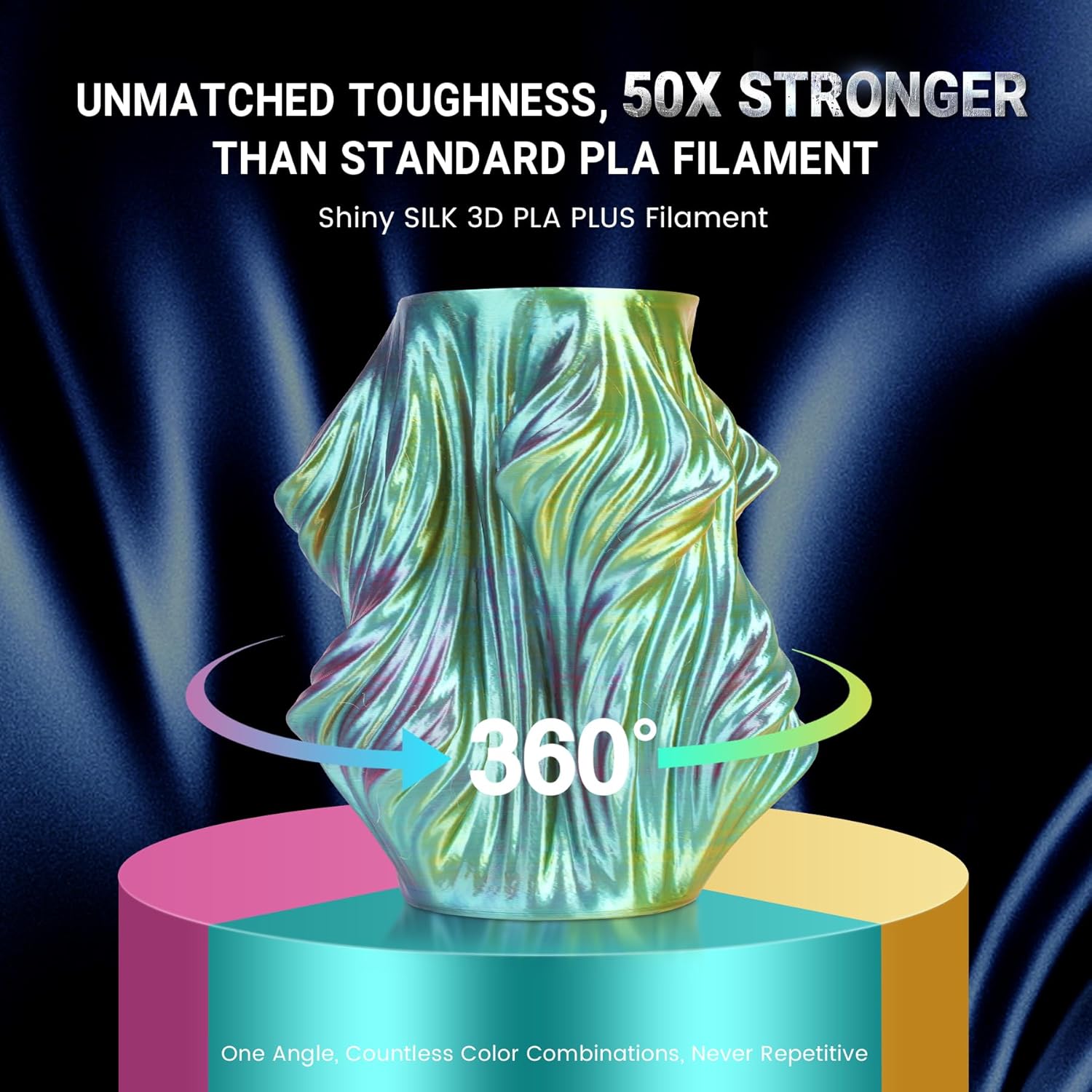
This filament offers a distinctive visual effect thanks to its 360° colour shift, which reveals mixed red and gold tones across curved surfaces. The surface feels smooth and glossy, giving prints a silk-like sheen that often removes the need for post-polishing. 🎨
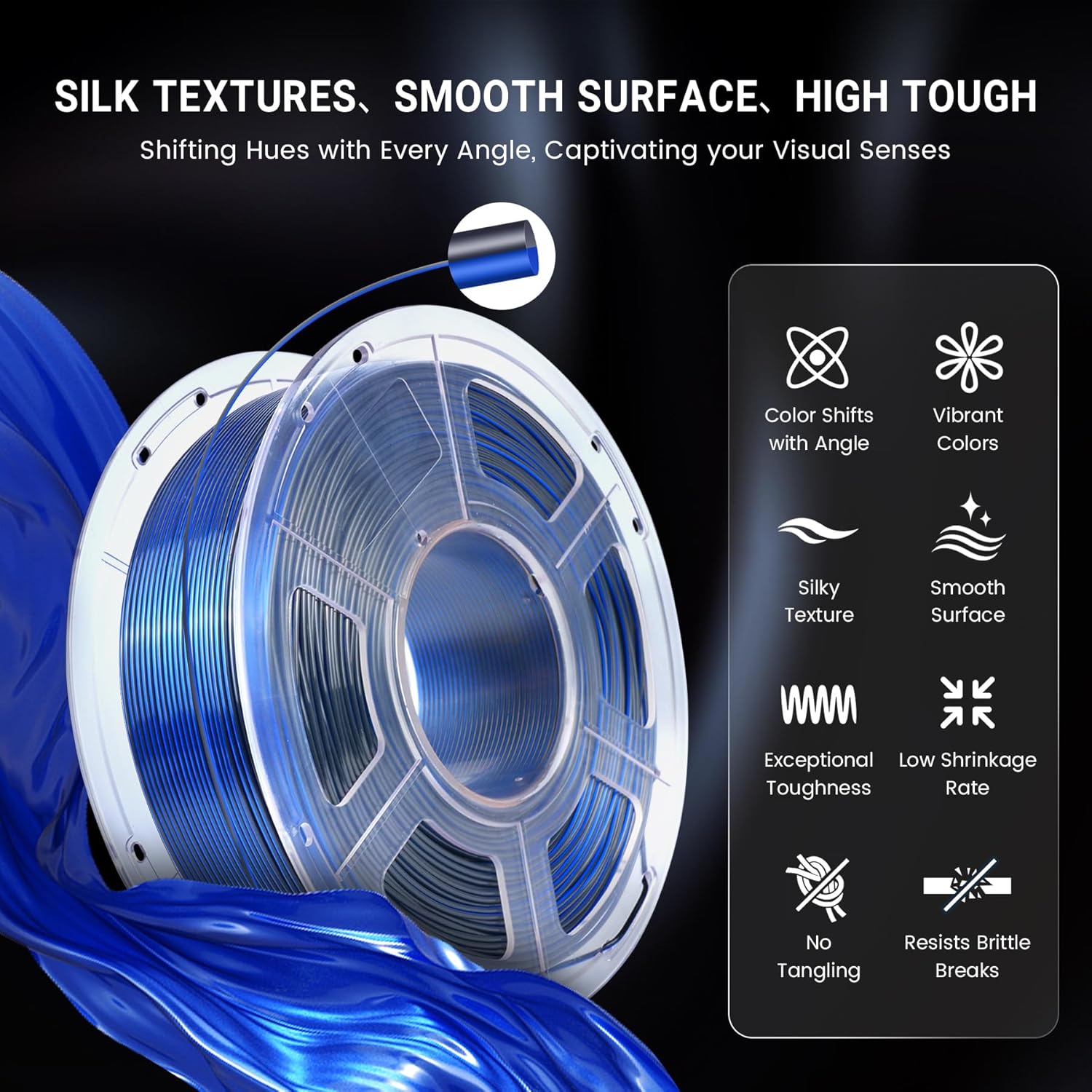
Mechanical behaviour is tuned for durability, with the manufacturer stating improved toughness over regular PLA. The material balances flexibility and impact resistance, so small decorative items and functional prototypes both benefit from reduced brittleness. Note that very thin, flexible parts may still perform better with a specialised flexible filament rather than this silk PLA.
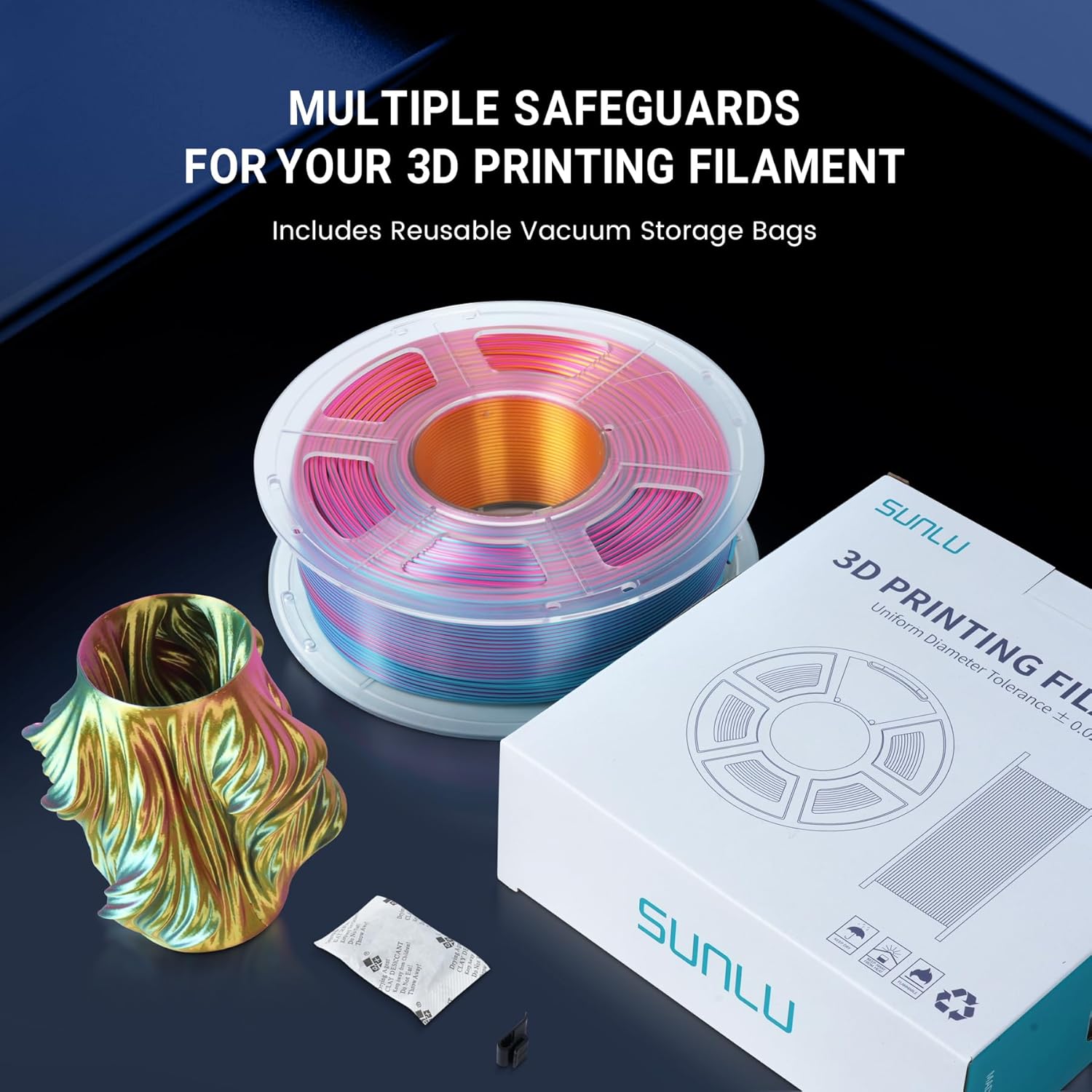
Feed reliability and dimensional consistency are emphasised by the producer. According to the manufacturer, the spool is vacuum packed with a desiccant to prevent moisture uptake and minimise printing issues. For complex, multicolour-looking pieces, this filament can add an artistic touch without extensive finishing. ✨
Technical Specifications
- Name: SUNLU Silk Dual Color PLA Plus, Silk Dual-Color Red Gold
- Diameter: 1.75 mm
- Net weight: 1 kg (2.2 lbs); approximately 330 m per spool
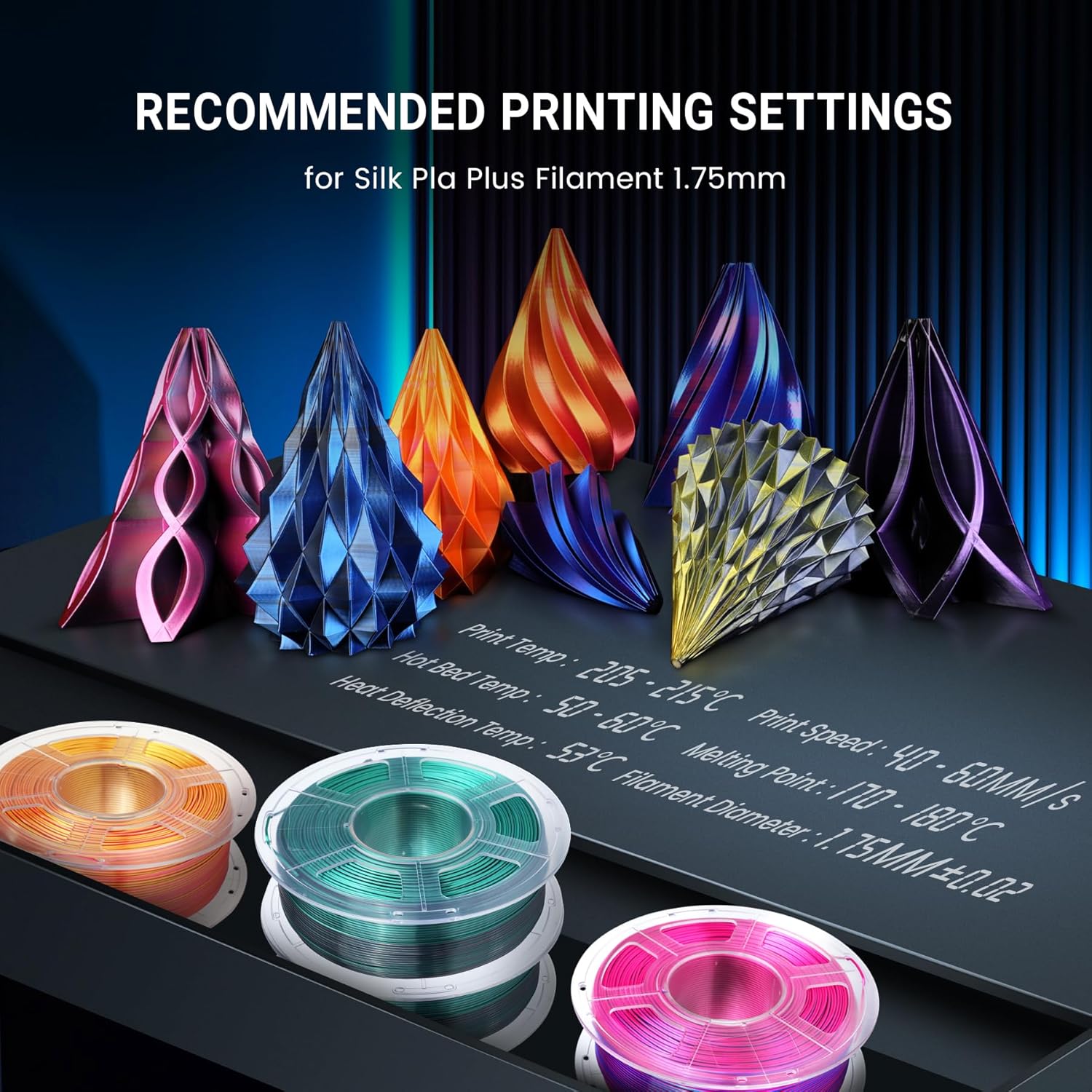
- Recommended nozzle temperature: 205-215 °C
- Recommended hot bed temperature: 50-60 °C
Usage Recommendations
Print with a standard 0.4 mm nozzle for best balance between detail and smooth colour transitions. Moderate print speeds of 50-100 mm/s are suggested by the manufacturer to maintain consistent extrusion and to reduce the chance of under-extrusion or nozzle clogs. Use a heated bed set to around 50-60 °C to limit warping for larger flat parts, and ensure the filament is dry before printing to preserve surface quality and interlayer adhesion. 🛠️
If you need very high-temperature performance or chemical resistance, consider an engineering filament instead because this PLA+ variant is primarily optimised for visual finish and ease of printing rather than extreme mechanical or thermal loads. Also consider a slightly higher nozzle temperature within the recommended range if you encounter layer adhesion issues, and reduce print speed when producing very fine details.