

SUNLU PLA Filament 1.75mm Black (1kg spool) for FDM printing
Product description
The essentials
If you’re running an FDM 3D printer and want PLA that’s meant to behave predictably, this SUNLU PLA filament is built around a pretty sensible promise: consistent diameter, low shrinkage, and a smooth melt flow for fewer headaches during prints. It’s a black PLA roll supplied as a 1kg spool, intended to be a straightforward “fit it, load it, print” choice.
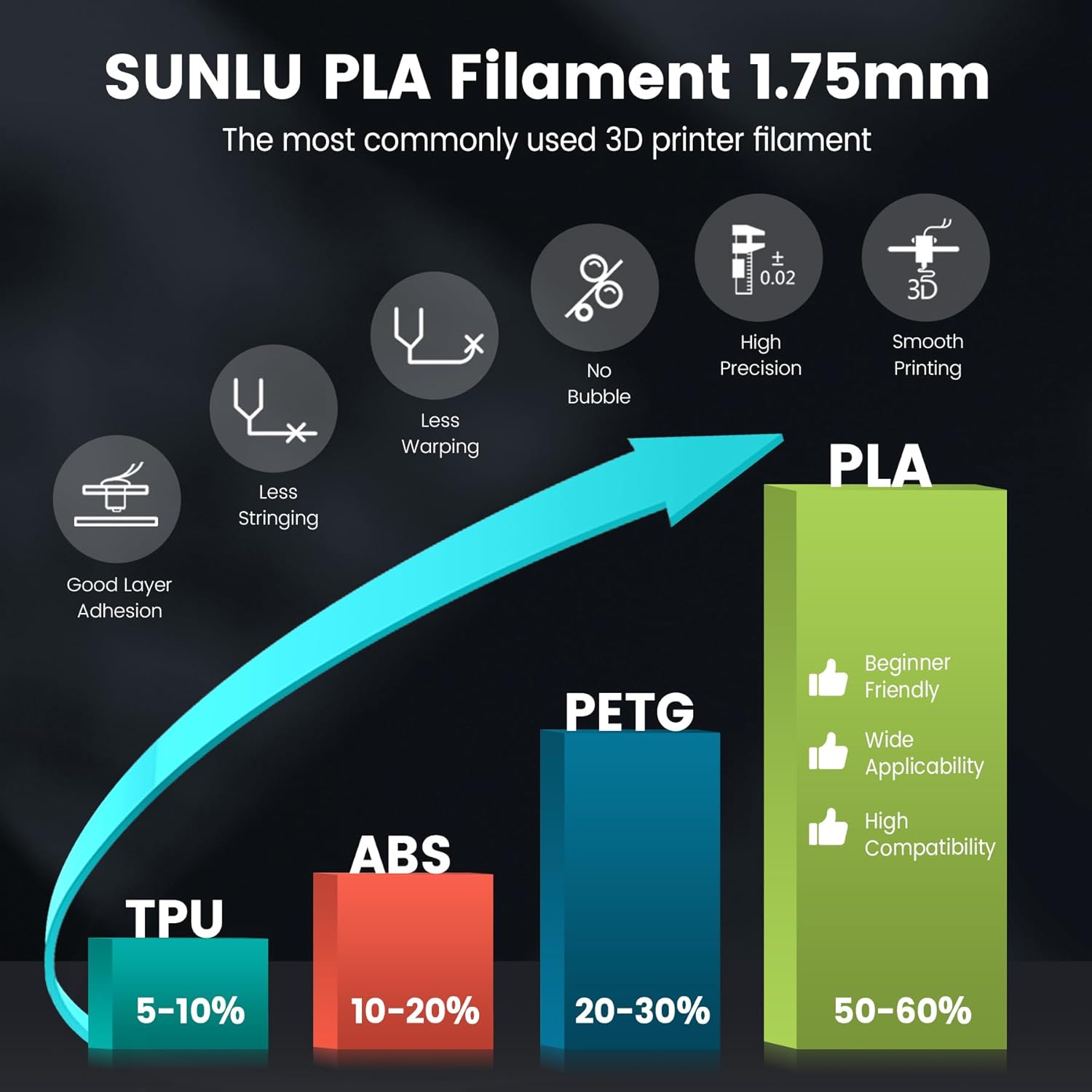
On paper, the most practical thing here is the dimensional accuracy. The listing claims a diameter tolerance of ±0.02mm and an automated calibration process, which matters because PLA that varies more than expected can make your slicer settings feel a bit more guessy. Also worth noting is the emphasis on low shrinkage and dimensional stability, which is often what people notice when parts need to hold their intended shape.
That said, PLA is not a universal miracle material. It can still be affected by printer setup, cooling, and environment, and the recommended temperature range is only a starting point—if your printer runs hotter/cooler than typical, you may need to dial things in.
What it’s for (and where it fits)
This is the sort of filament you buy when you want clean, reliable PLA results for everyday FDM projects: functional prototypes, bracket-like shapes, jigs, housings, visual models, and generally anything where you care more about consistency than exotic material performance.
Because it’s described as having low shrinkage and good dimensional stability, it’s also a sensible pick if you’ve previously had PLA that pulled in too much or made tight dimensions harder to keep.
It’s a solid match if your goal is repeatable prints and you don’t want to spend every session fighting clogging or inconsistent extrusion. The “fits for most FDM 3D printers” wording suggests it’s aimed at mainstream users rather than a specific proprietary machine.
Key benefits you’ll feel during printing
The listing highlights a few things that are genuinely relevant to day-to-day use:
- Dimensional accuracy (±0.02mm): the idea is steadier extrusion and more predictable slicer behaviour.
- Low shrinkage and dimensional stability: helps parts keep their intended geometry.
- Superior melt flow / clog-free printing: no product can guarantee zero issues, but the goal here is to reduce common PLA pain points.
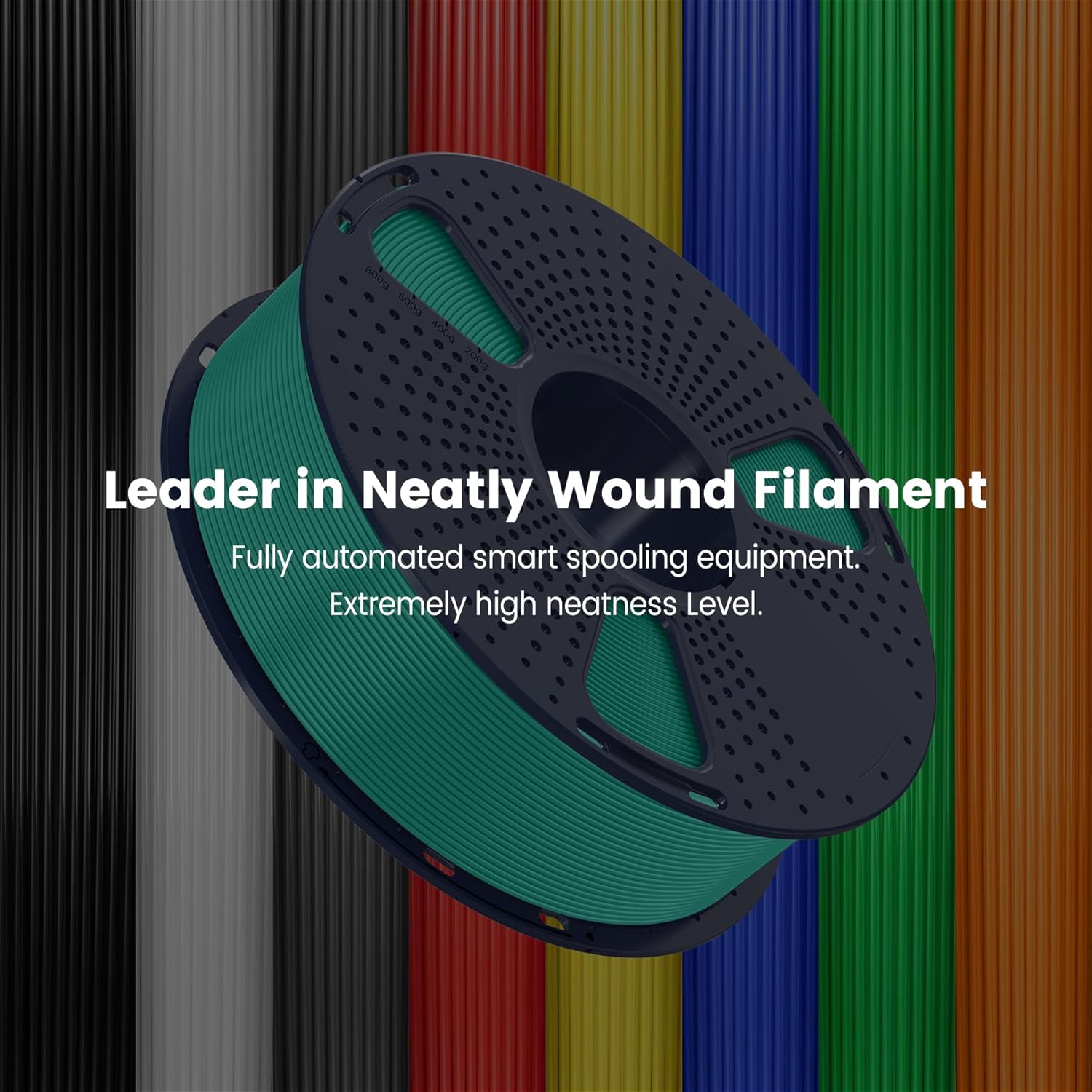
- Neatly wound spool: it’s wound to help prevent tangles, and the edges are described as reinforced to reduce loosening during transport.
A small practical example: when you load a new roll and print a few calibration test pieces—like a small peg-and-hole set or a thin wall cube—consistent diameter and stable flow tend to show up as cleaner surfaces and less variation between runs. You’re essentially using the filament as the variable that you don’t want to keep changing.
What to know about compatibility and settings
Compatibility is described broadly for most FDM printers. That’s helpful, but it doesn’t remove the need to check your own printer’s guidelines. PLA still relies on correct nozzle/bed temperatures, correct cooling, and a healthy extruder.
The listing recommends these starting parameters for best results with PLA:
- Nozzle temperature: 200–230°C
- Bed temperature: 50–65°C
- Print speed: 50–100mm/s
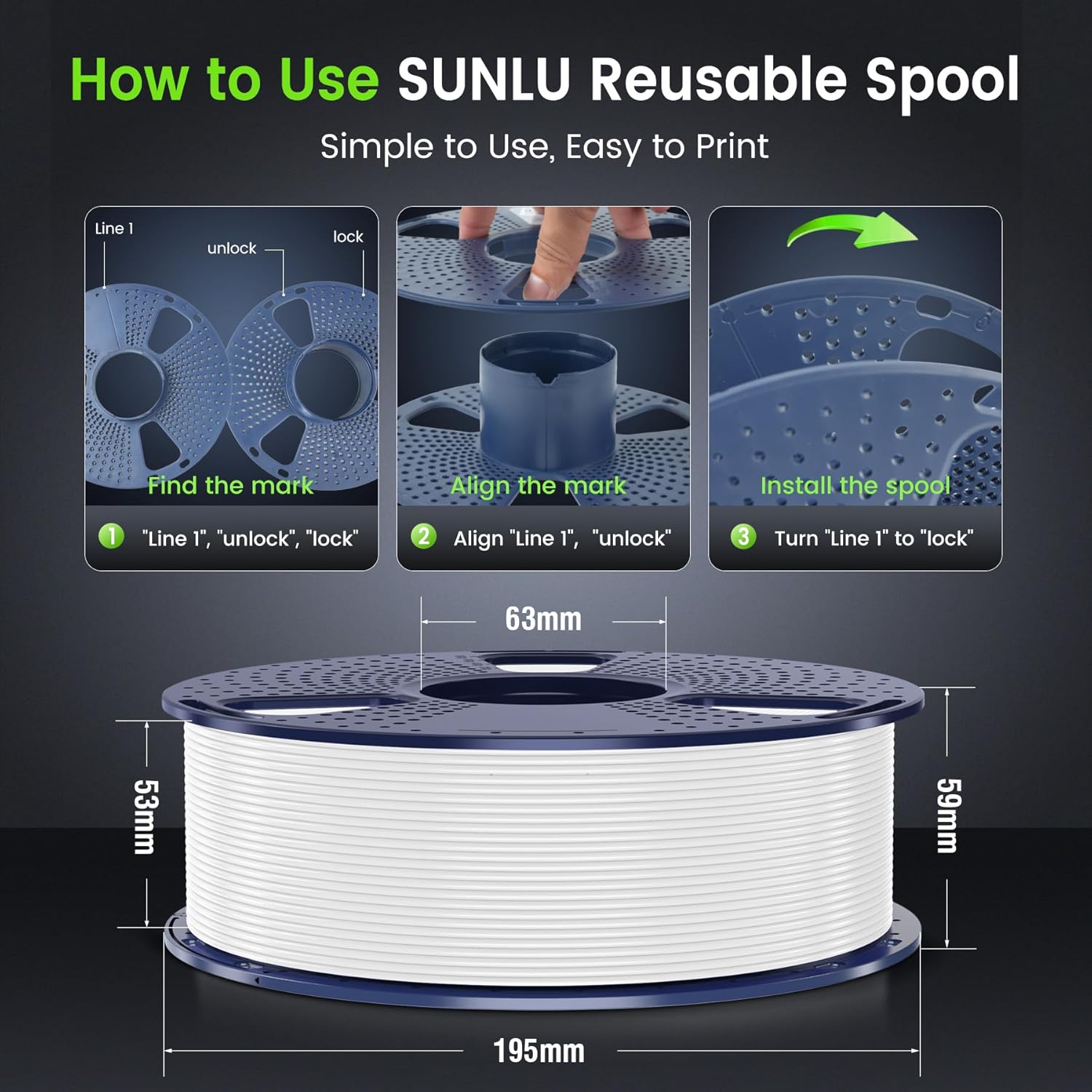
Also, the spool’s stated physical dimensions suggest it’s meant to mount easily on common printer stands. The exact fit can vary by printer, so it’s worth a quick look at your spool holder clearance if you’ve ever struggled with large rolls.
The main limitation to keep in mind: if you’re printing at the edge of what your printer can do (very small nozzles, unusual hotend cooling, or very aggressive speeds), PLA filaments can still show stringing, warping, or layer issues. This is aimed at dependable results, but your machine setup still drives a lot of the outcome.
Where it may fall short (and who should skip it)
This isn’t the best choice if you need a material outside the usual PLA use case. The description is clearly PLA-focused, so if your project needs high-heat performance, toughness, or chemical resistance, you’ll likely want to consider different material types.

It may also not be ideal if you’re chasing ultra-high precision without testing: while ±0.02mm accuracy is a positive sign, real-world tolerances still depend on your printer calibration and slicing settings. If your printer is poorly tuned, you’ll probably get inconsistent results regardless of the filament.
Finally, if your printer prefers a narrower temperature window than the recommended 200–230°C range (or if you frequently run outside it), you might find it less convenient than filament brands that align more closely with your established profile.
Final verdict: Is it worth it?
You should buy the SUNLU PLA Filament Black (1kg spool) if you’re an FDM user who wants PLA with an emphasis on dimensional accuracy, low shrinkage, and good melt flow, and you’d rather spend time printing than troubleshooting. It’s a practical “day-to-day” filament for typical PLA projects where consistency and shape retention matter.

You may want to skip it if you’re after a non-PLA performance profile, or if your printer setup is still unreliable—because the filament can only compensate so much. Before ordering, it’s worth checking your spool holder compatibility and having a PLA profile ready for the suggested nozzle/bed range, then doing a quick calibration print to confirm your settings.
Mini FAQ
Is this filament only for specific printers?
The listing says it fits for most FDM 3D printers, but it still helps to confirm your printer supports 1.75mm PLA and that your spool holder can accommodate the stated spool dimensions.
What makes the ±0.02mm accuracy important?
More consistent diameter can lead to steadier extrusion and more predictable results between prints, especially when you’re printing parts that rely on tight dimensions.
Does the spool arrive ready to use?
It’s described as neatly wound and reinforced at the edges to help prevent loosening during transport, with the implication that it’s ready straight out of the box.
What temperature should I start with?
The recommended starting point for PLA is 200–230°C for the nozzle and 50–65°C for the bed, with a suggested print speed of 50–100mm/s.