

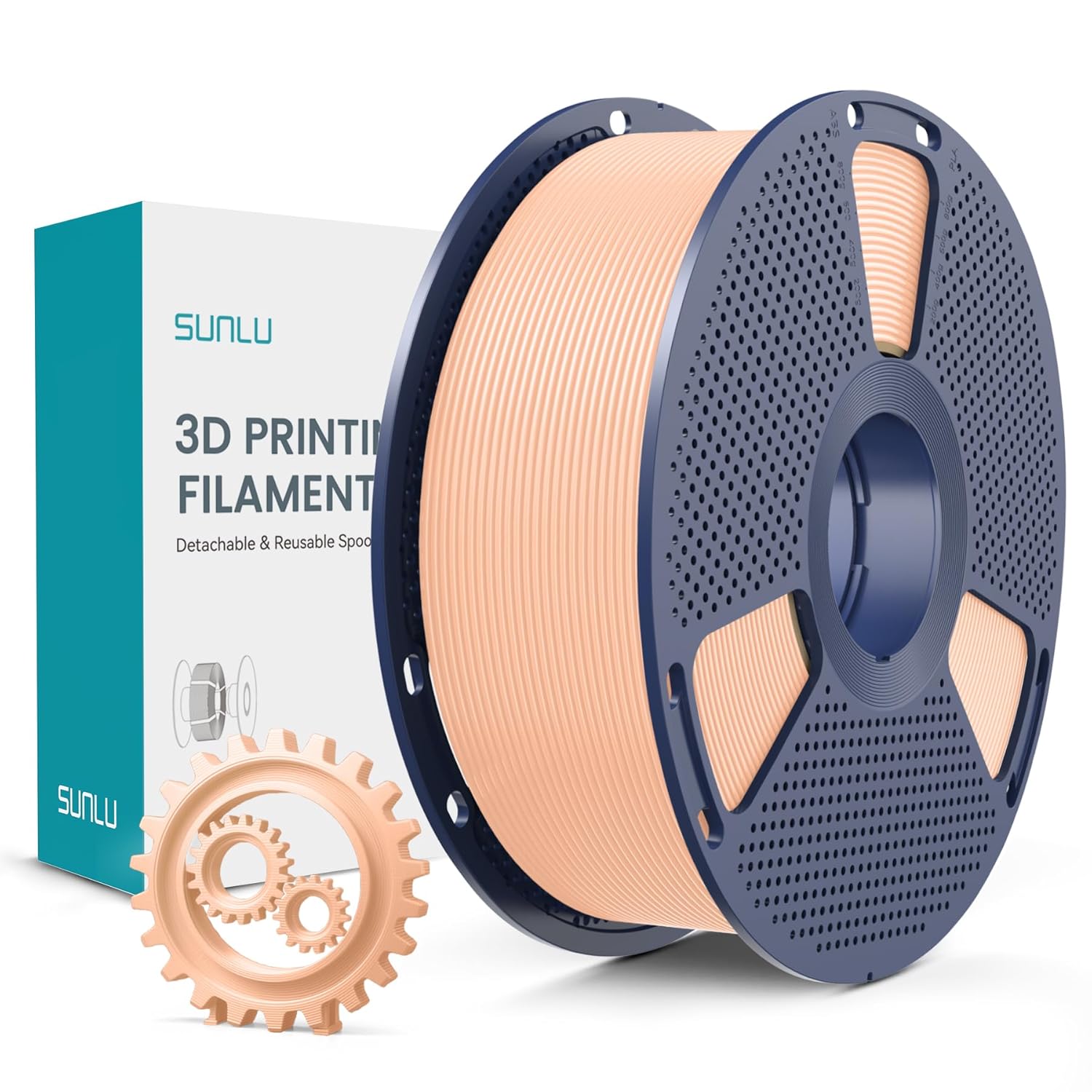
SUNLU PLA+ Filament 1.75mm (Beige) – 1kg spool for FDM 3D printers
Reviews
Price
Product description
What it is and why people pick it
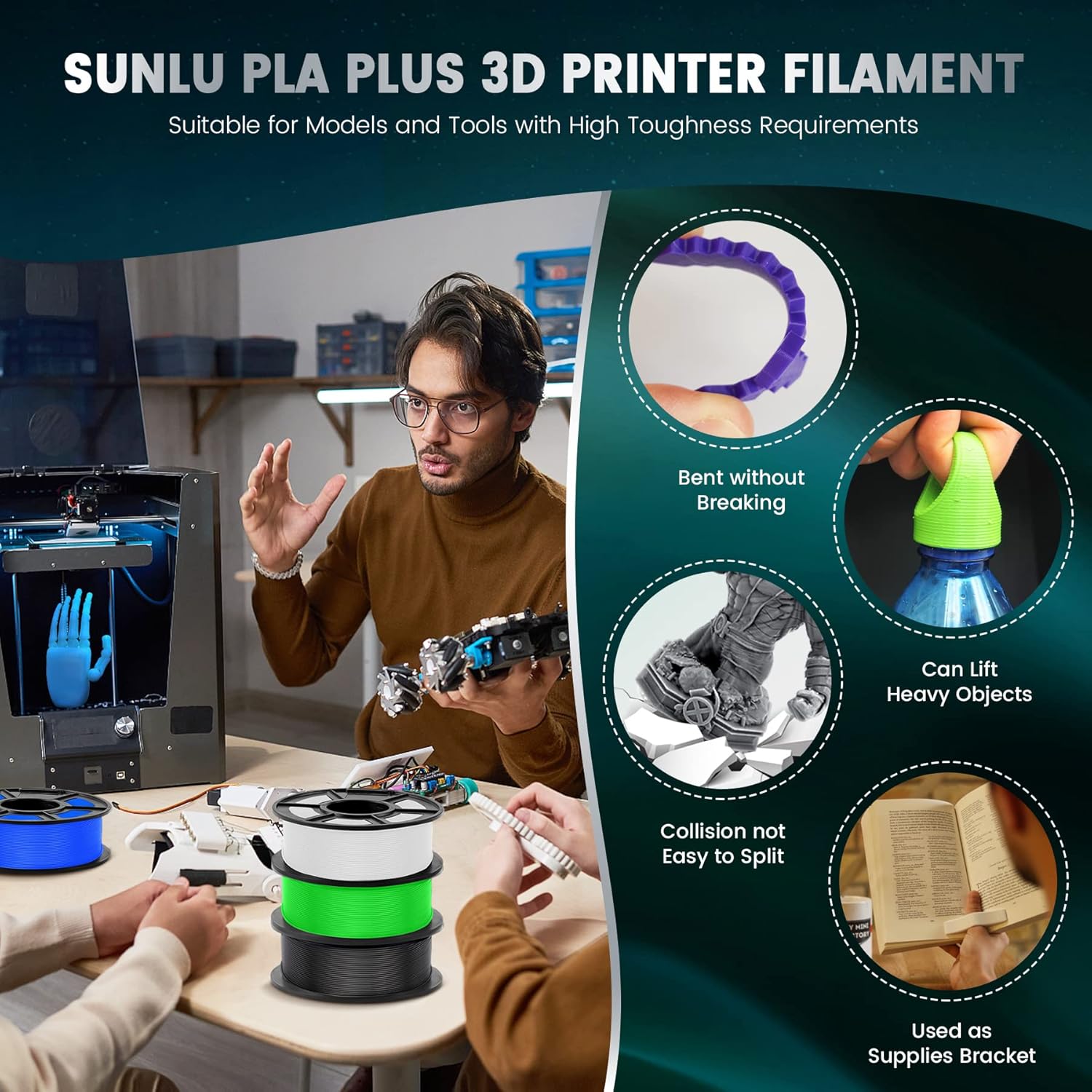
SUNLU PLA+ filament is a 1.75mm PLA “plus” style material aimed at FDM 3D printer users who want something a bit tougher and more reliable than basic PLA. On paper it’s designed to improve interlayer adhesion (so layers bond more strongly), while also keeping the surface looking glossy and visually clean.
The colour here is Beige, supplied as a 1kg spool. If you’re printing everyday parts, functional-ish prototypes, or models where you’d rather not baby the print, PLA+ is often chosen for that middle ground: it’s still PLA-based and approachable, but it’s positioned as stronger and more impact-resistant than standard PLA.
Key features that affect real printing
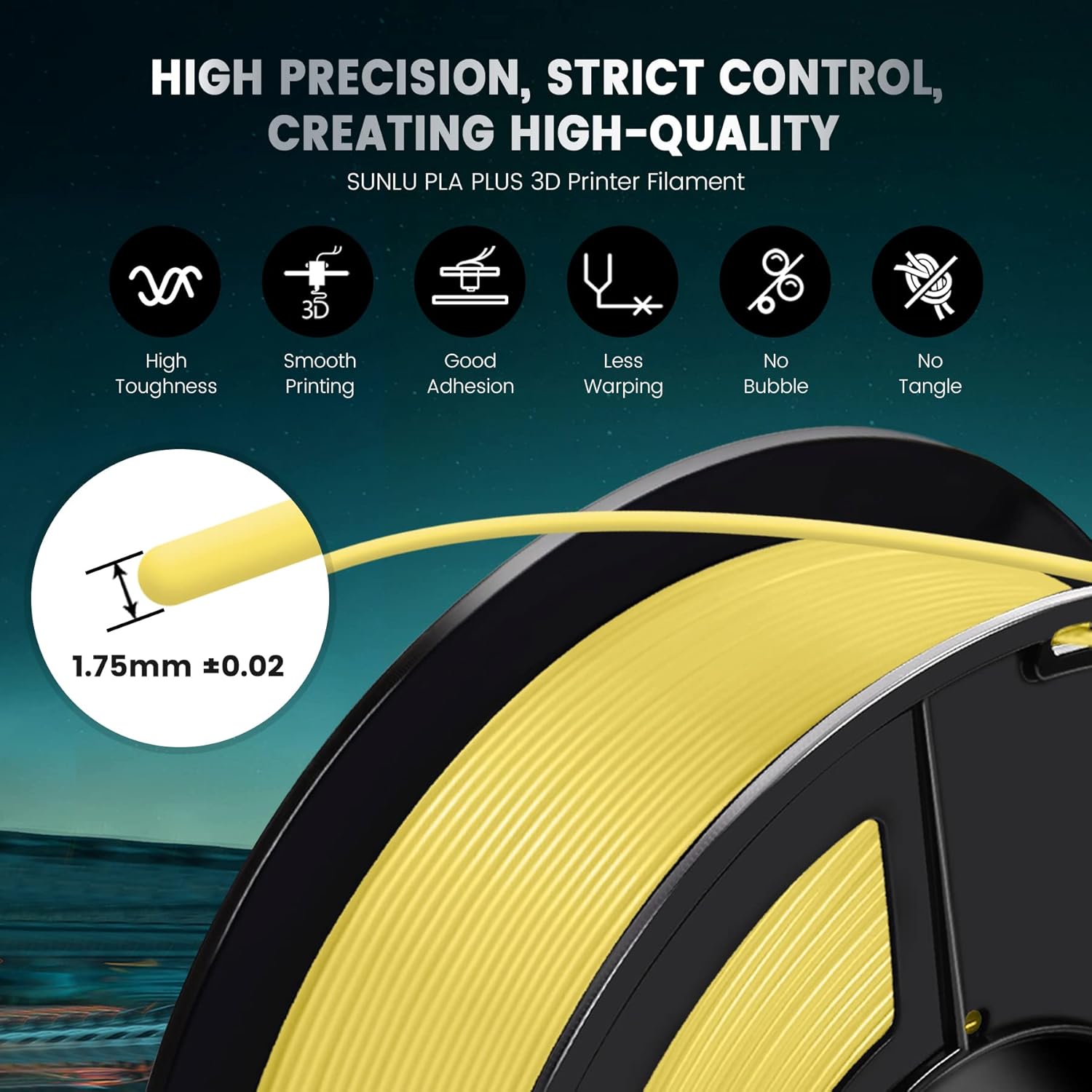
Where the spec sheet matters is in the day-to-day friction points people face with PLA: stringing, oozing, and inconsistent extrusion. SUNLU PLA+ is described as offering “effortless precision” with sharp detail output, which—if your printer settings are broadly dialled in—can translate to fewer cleanup steps and fewer failed sections.
There’s also a durability angle. The filament is marketed as reinforced for toughness, including better resistance to drops compared with standard PLA. It’s a sensible target if your prints are likely to get handled, knocked, or used in ways where a brittle-looking PLA part would be disappointing.
A small reality check
That said, “stronger than basic PLA” doesn’t automatically mean “load-bearing engineering material”. For anything that needs to take serious stress or long-term structural loads, you’ll still want to sanity-check the design and expected performance rather than assume PLA+ will behave like a purpose-built engineering plastic.
Where it shines (and where it may fall short)
It makes sense if you want:
- Better layer bonding and a glossy surface finish than you’d typically expect from plain PLA
- More toughness for parts that take knocks during normal use
- More consistent dimensional results so details look cleaner
It might not be the best match if your main goal is absolute maximum strength for critical mechanical use. PLA+ is still a filament choice within the PLA family, and its “toughness” pitch should be treated as an improvement, not a replacement for high-performance polymers.
Technical overview
The details that are actually relevant for buying are straightforward:
- Filament type: PLA+
- Diameter: 1.75mm
- Spool size: 1kg
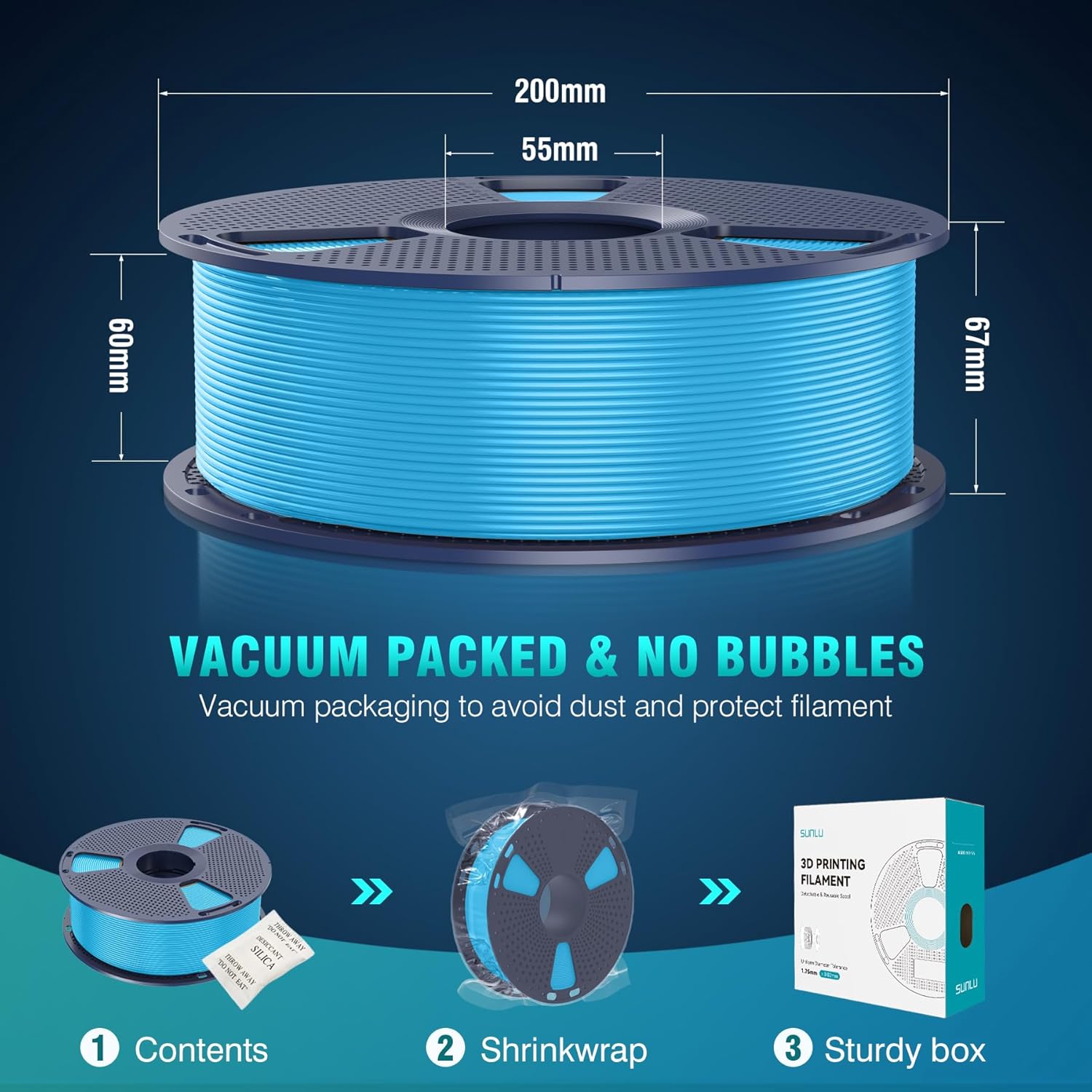
- Packaging approach: vacuum-sealed to help keep moisture down before printing
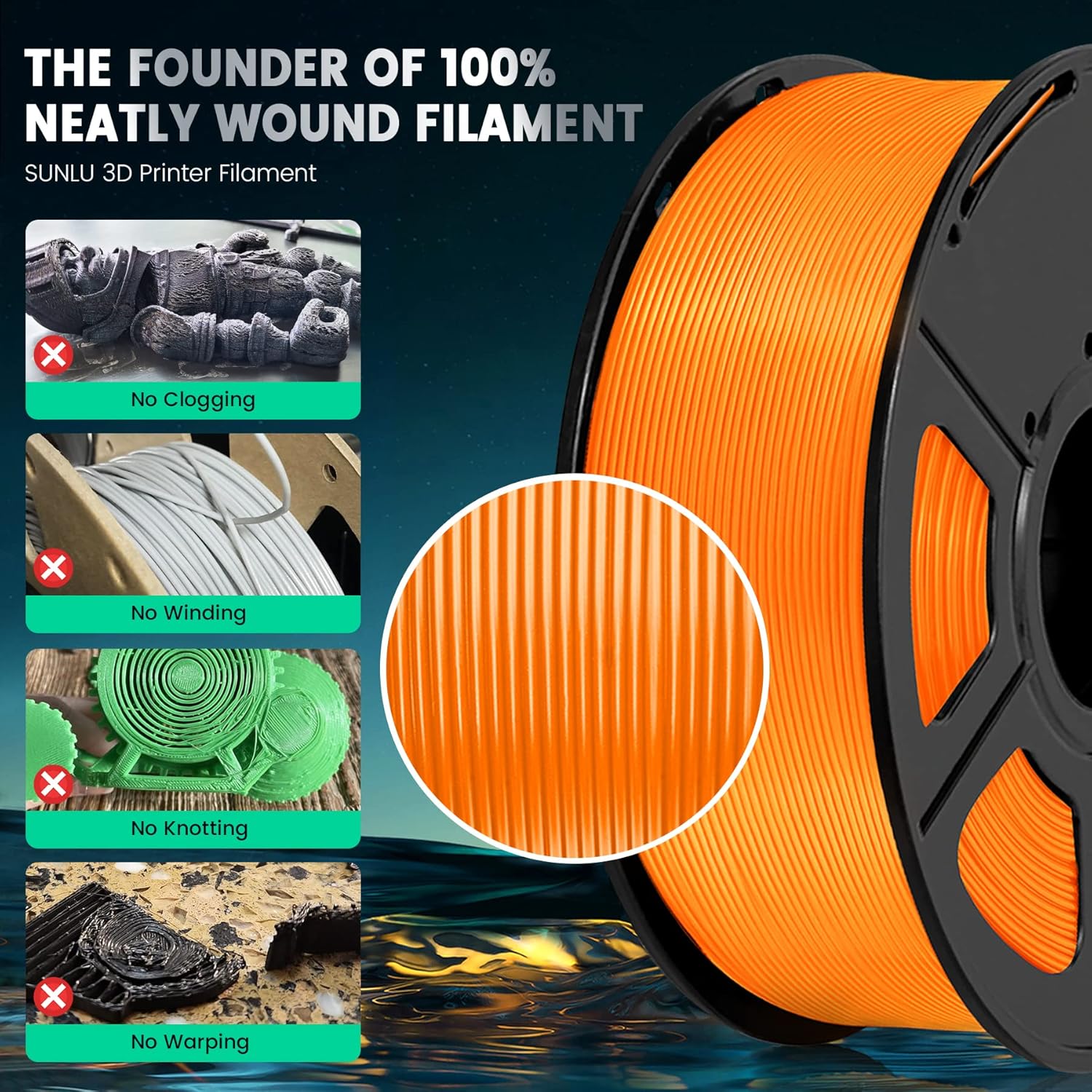
One note for planning: vacuum-sealed packaging helps reduce moisture exposure from factory to printer, but how well the filament performs still depends on storage and how much time it spends in humid conditions once opened.
Getting the most from PLA+ filament
If you’re new to PLA+, a good first approach is to treat it like “PLA, but a bit more demanding on expectations”. You’ll usually still be adjusting temperatures and speeds, and dialing retraction settings is often where the stringing/oozing improvements become obvious.
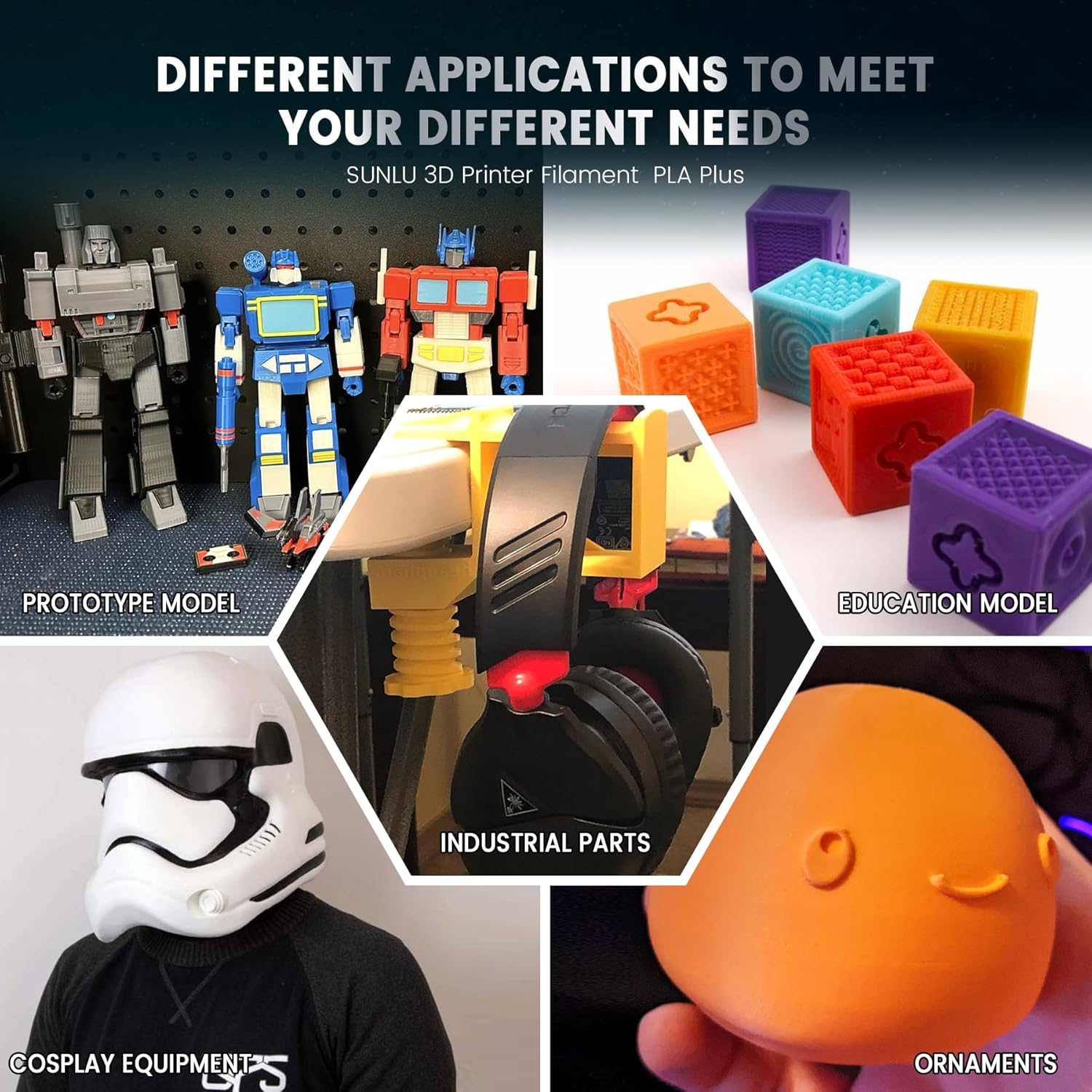
A practical example: imagine printing a beige enclosure cover or a small bracket. With a filament like this, you’d typically aim for crisp edges and fewer wispy strands around corners. If the print comes off with clean surfaces and you can snap pieces together without the part feeling overly fragile, that’s the benefit people are chasing.
Also consider the colour side. SUNLU mentions a range of carefully calibrated hues, and it’s a decent buy if you want consistent visual tones across multi-part projects. Batch consistency is specifically called out for coordinated bundles, though this listing is focused on the Beige spool.
Pros, cons, and what to double-check before buying
Pros - Reinforced durability vs basic PLA, including improved toughness for drop resistance - Interlayer adhesion and glossy surface finish are explicitly targeted - Positioned for less stringing/oozing and more consistent extrusion - Vacuum-sealed packaging to help protect against moisture
Cons / limitations - It’s described as high-strength compared to basic PLA, not “industrial-grade” by default - If your printer is very inconsistent, the filament alone may not fix everything—settings still matter - Beige colour is great if it fits your project, but it won’t suit every aesthetic requirement
Before you commit, it’s worth checking a couple of basics: that your printer is an FDM model designed for 1.75mm filament, and that you’re comfortable spending a little time on tuning (especially retraction) so the “clean details” promise can show up in your prints.
Final verdict
It’s worth considering if you want a more durable, better-bonding PLA alternative for everyday FDM printing—particularly when you care about smoother surfaces and cleaner detail without turning the process into a constant troubleshooting exercise.
You may want to skip it if you’re chasing maximum engineering strength for critical parts, or if you already know your printer setup struggles with filament consistency and you’re not willing to tune settings. In that case, PLA+ can still help, but it won’t replace good calibration and thoughtful design.