

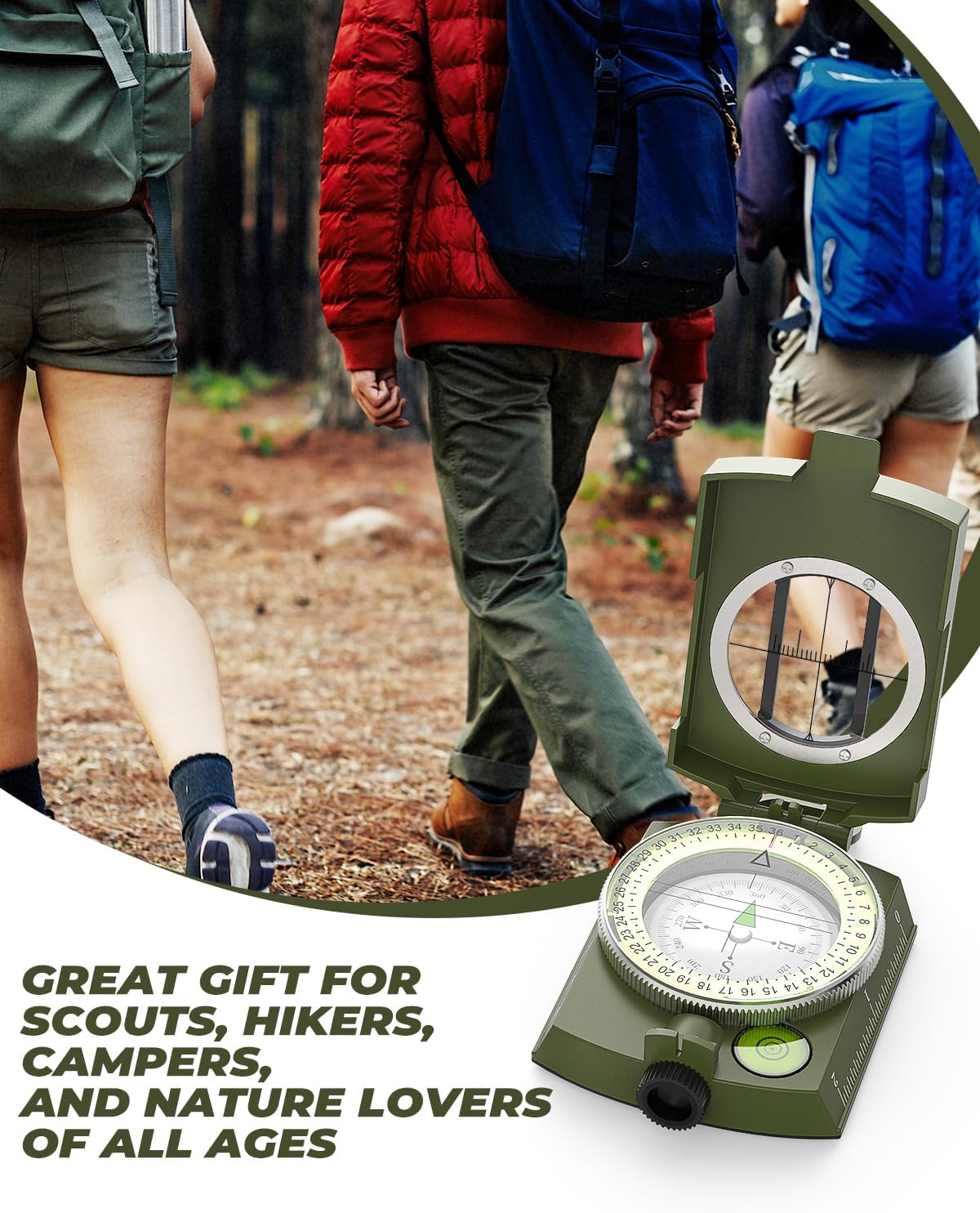
Sportneer Hiking Compass Navigation – waterproof, shockproof lensatic military compass
Product description
Key points
If you’re heading into proper outdoors territory, a compass is one of those essentials that’s easy to forget… until you actually need it. The Sportneer Hiking Compass Navigation is a military-style lensatic compass aimed at hikers, climbers and other people who want a straightforward way to keep bearings when conditions get a bit chaotic.
On paper, the appeal is mostly practical: it’s described as waterproof and anti-shock/anti-tremor, with an ergonomic lensatic design meant to make readings easier to take. It also comes with a way to carry it close to you via a belt carabiner, plus a transport pouch so it doesn’t rattle around in a pocket. It’s not a smart device, and that’s the point—no batteries, no charging, just a tool for navigation.
That said, it’s worth keeping expectations realistic. The information provided focuses on build and reading approach, but it doesn’t spell out certain details you might care about (for example, how the dial markings are laid out, or any specific accuracy claim). So this is the sort of compass you buy for dependable basics and ruggedness, rather than for precision-geek tuning.
What to know before you buy
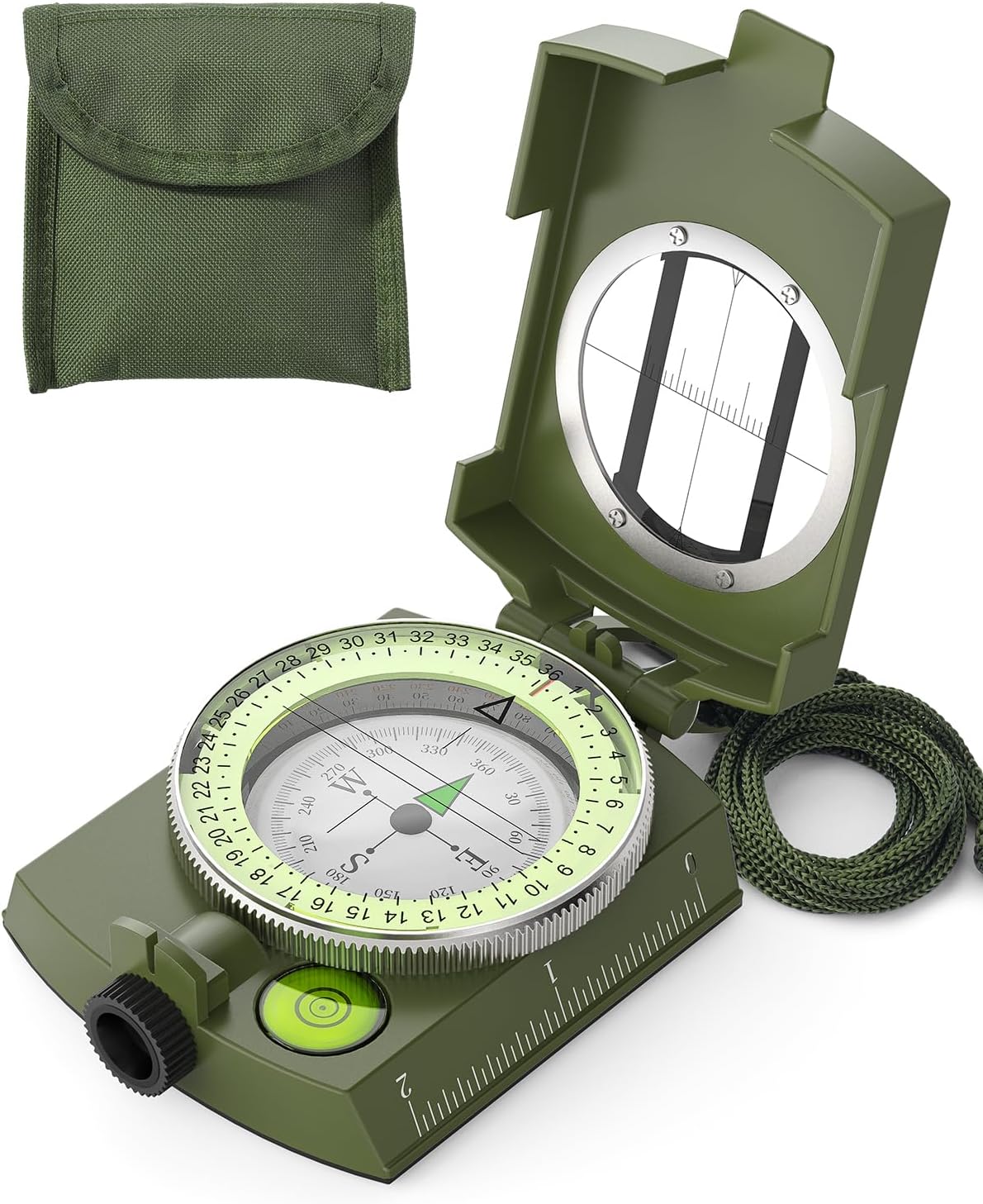
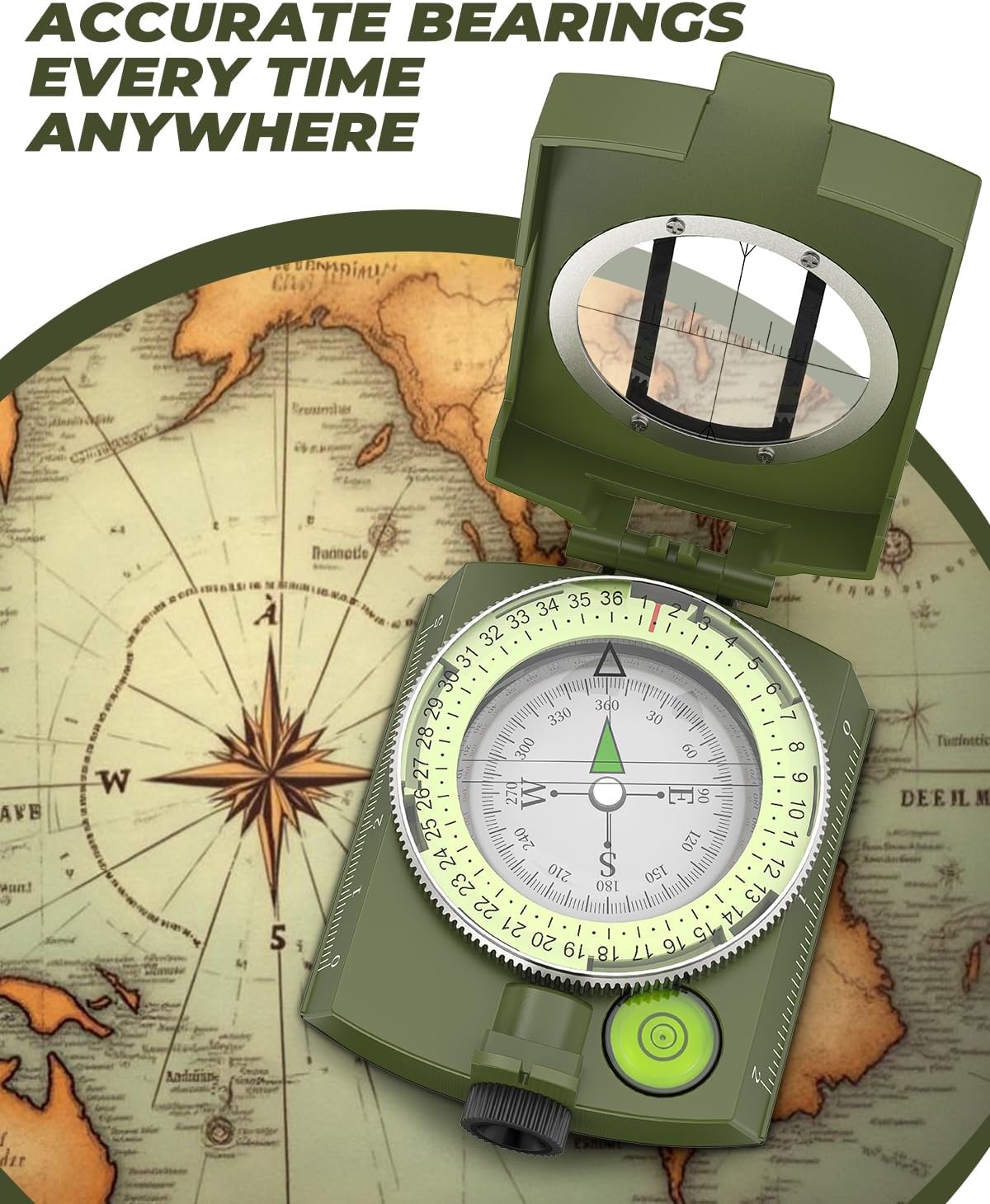
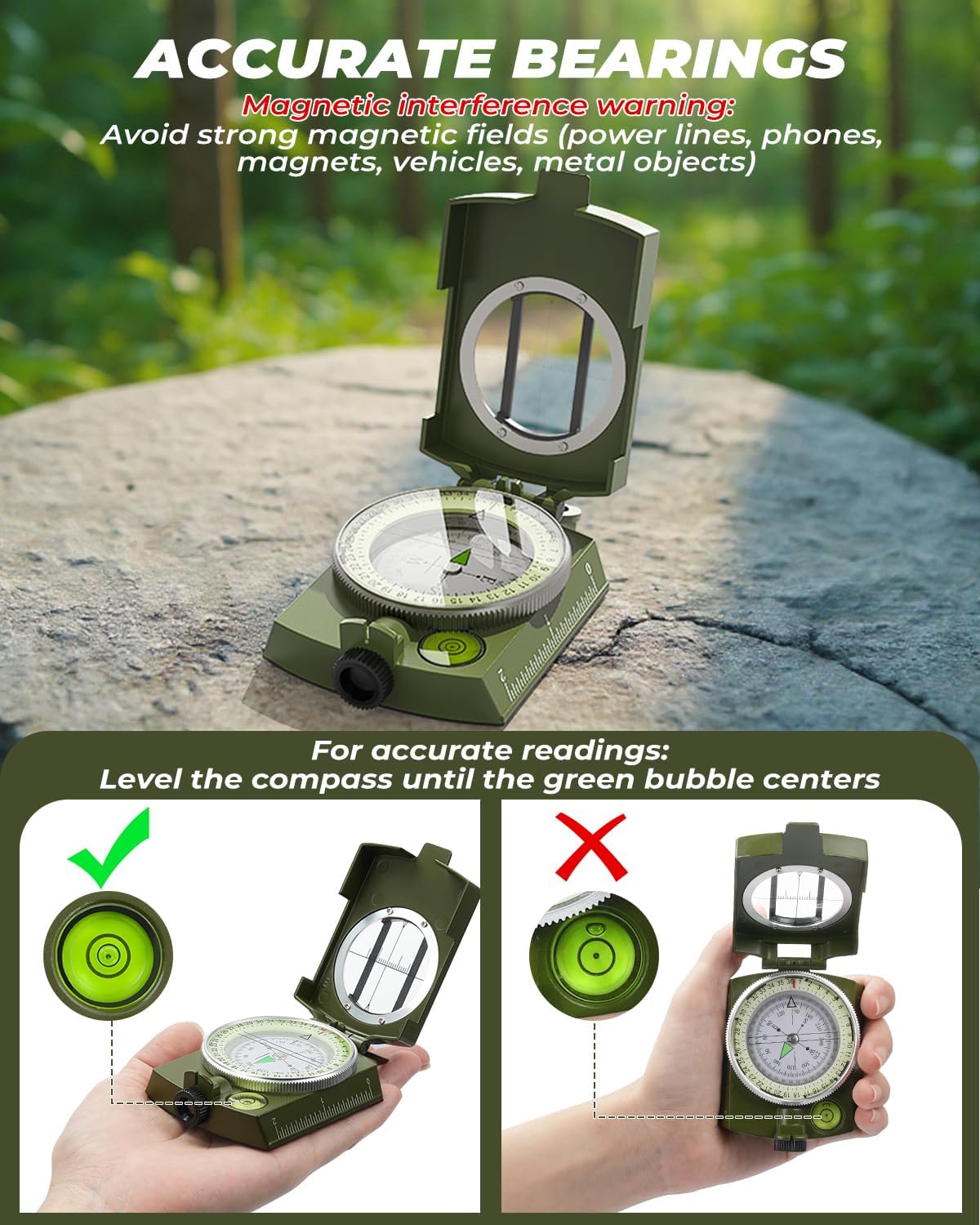
A compass is only useful if you can read it comfortably and use it confidently. Here, the big design theme is the lensatic function: the description says it uses a rear-view target and an objective in view that enlarges what you’re seeing on the card. In real-world terms, that generally helps when light is uneven or when you’re trying to take a bearing quickly without squinting.
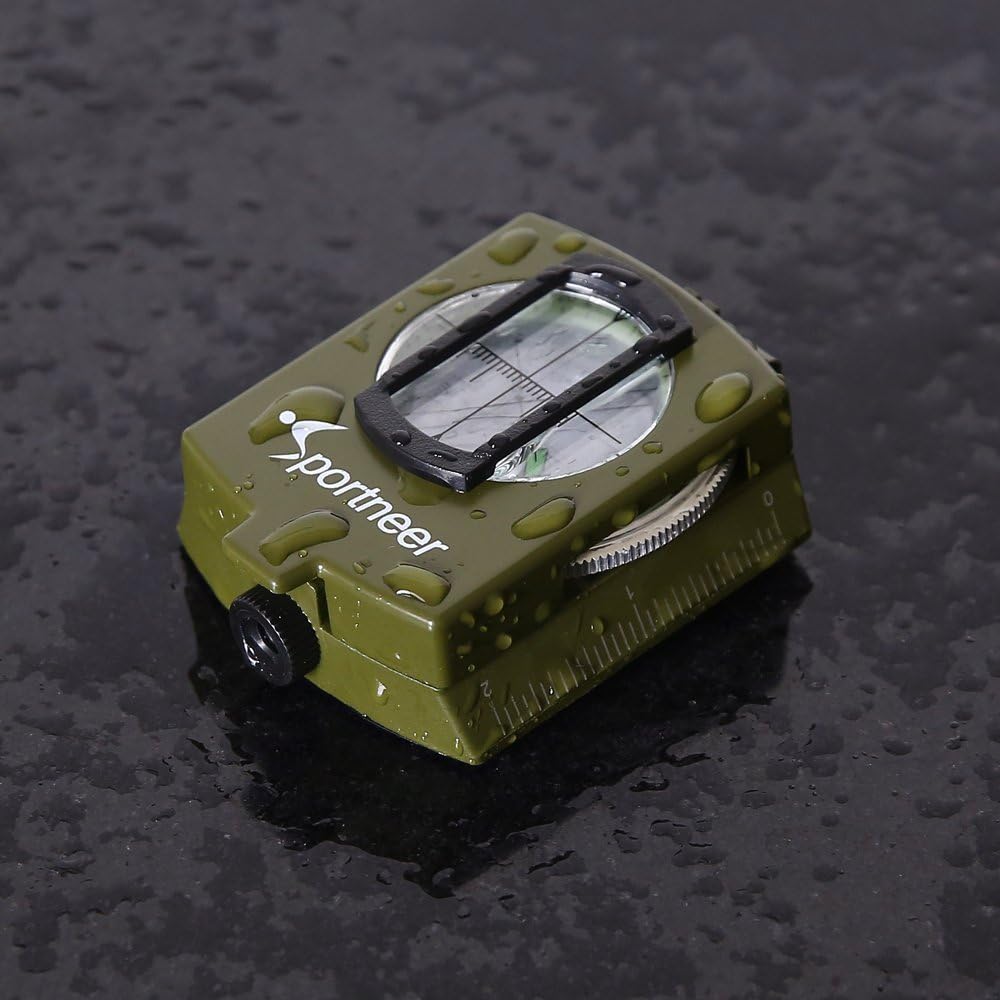
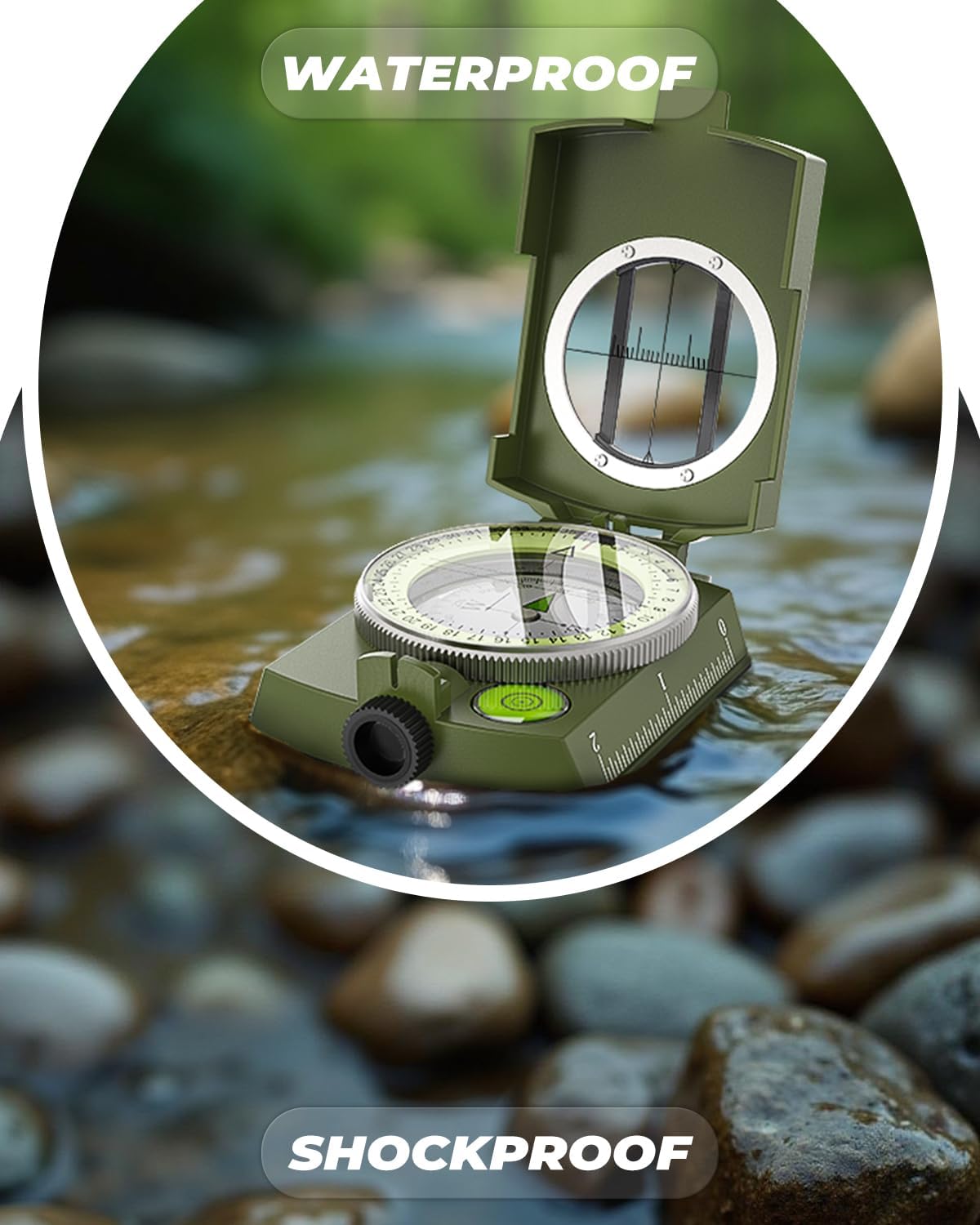
Another practical element is the “military” build approach. It’s described as strong and tough, with waterproof properties and resistance to shaking/tremors. If you spend time on uneven ground—scrambling, climbing, cycling over bumps, or simply hiking with a backpack that knocks against gear—this kind of framing suggests the compass is meant to handle movement without turning into a delicate item.
What you’ll notice day to day
Reading comfort
The lensatic approach is the main reason this model may feel less fiddly than some basic compasses. Instead of trying to line up small details with your eyes, you use a sighting setup intended to support clearer, more direct readings. This can matter when you’re moving, stopping briefly, and then moving again.
Carrying without drama
Two carry options are mentioned: a belt carabiner to keep it nearby, or a transport pouch for pocket use. That’s a small feature set, but it’s exactly the kind of thing that affects whether you’ll actually bring the compass with you.
Picture a quick scenario: you’re on a hike where the trail has split and the route isn’t obvious. You stop, take a bearing, and then walk in that direction while the terrain changes. A compass that’s easy to access and readable without constant fuss tends to be more useful in those moments.
Key features (in plain English)
- Lensatic design intended to improve the precision of readings by enlarging what you see on the card (via rear-view sighting)
- Waterproof and anti-tremor/shockproof construction, positioned as built for harder trips
- Ergonomic, military-style construction designed to stay reliable when the trail gets rough
- Portable carrying options: belt carabiner and a transport pouch
Pros
- Built and positioned for tougher outdoor use, including conditions where shaking and wet weather could be an issue
- Lensatic sighting concept should make it easier to read bearings without excessive squinting
- Practical portability (carabiner + pouch) so it’s less likely to stay at home
It may not be the best choice if
It might not suit you if your priority is a super-precise navigation instrument with fully specified accuracy details—nothing in the provided information lets you judge that side properly. It also may feel like overkill if you only use a compass occasionally on easy walks and you mainly want a minimal, ultra-light carry.
And one more limitation to consider: while the description emphasises waterproof and shock resistance, it doesn’t provide any detail on how water seals are achieved, or how it performs in extreme conditions—so it’s a “built to handle the outdoors” type of reassurance rather than a lab-backed guarantee.
Who it suits (and who should look elsewhere)
It makes sense if you want a rugged, straightforward compass for hiking, climbing, biking, exploring, geology trips, camping or emergency-use scenarios—where a basic navigation tool still matters. The lensatic design suggests the target user is someone who wants clearer readings and doesn’t want the compass to feel delicate.
You may want to skip it if you’re shopping purely for ultra-specific technical accuracy, or if you’re expecting a highly detailed spec sheet covering measurement limits, marking style and performance. In that case, you’ll probably get more confidence by focusing on products that clearly publish those finer points.
Final verdict
Worth considering if you like the idea of a military-style, lensatic compass that’s designed to be waterproof and shock resistant, with a practical way to carry it while you’re out moving. It fits the “grab it and go” category—especially for hikers and outdoor users who want a dependable, mechanical navigation tool.
Better avoided if you’re looking for clearly documented accuracy specifications and very fine-grain technical confidence from the outset. Without those details, you’re buying more on build intent and usability design than on hard numbers.
If you’re the kind of buyer who values ruggedness and readable design over fancy extras, this is likely to be a sensible pick. If you’re not, it could end up as a compass you keep as a backup rather than rely on.
Mini FAQ
Is this compass meant for waterproof use?
The description states it has waterproof properties, so it’s presented as suitable for wet outdoor conditions.
What does “lensatic” add in practice?
It’s described as improving reading precision by enlarging what you see via a rear-view target and lensatic function.
How is it carried when hiking?
It mentions a belt carabiner to keep it close, or a transport pouch if you prefer to keep it in a pocket.
Is it designed to handle rough movement?
Yes—it's described as shockproof/anti-tremor, aimed at tougher, more demanding outdoor use.
Who is it for?
It’s positioned for hiking, climbing, biking, exploring and activities where a durable compass helps with navigation or emergency preparedness.