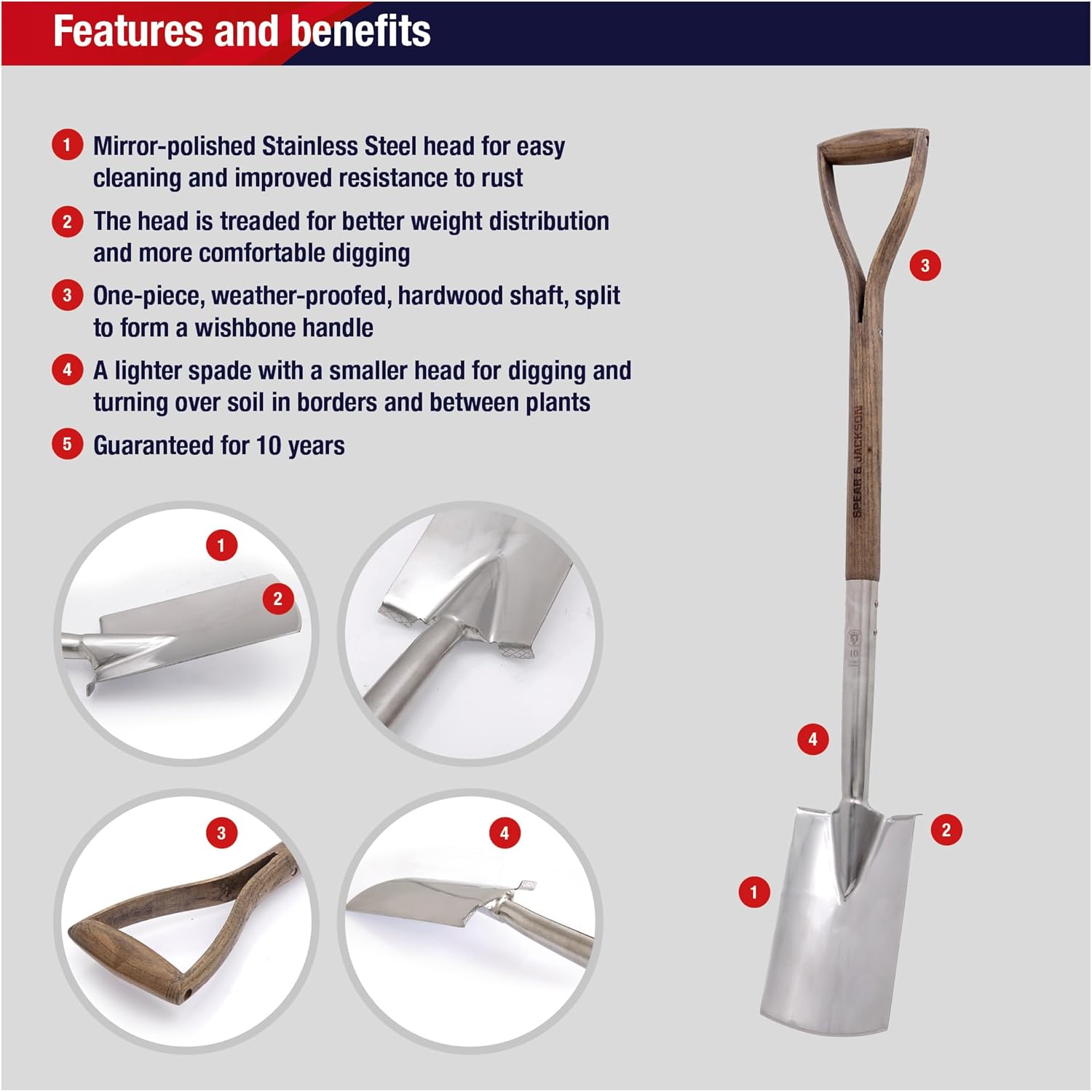
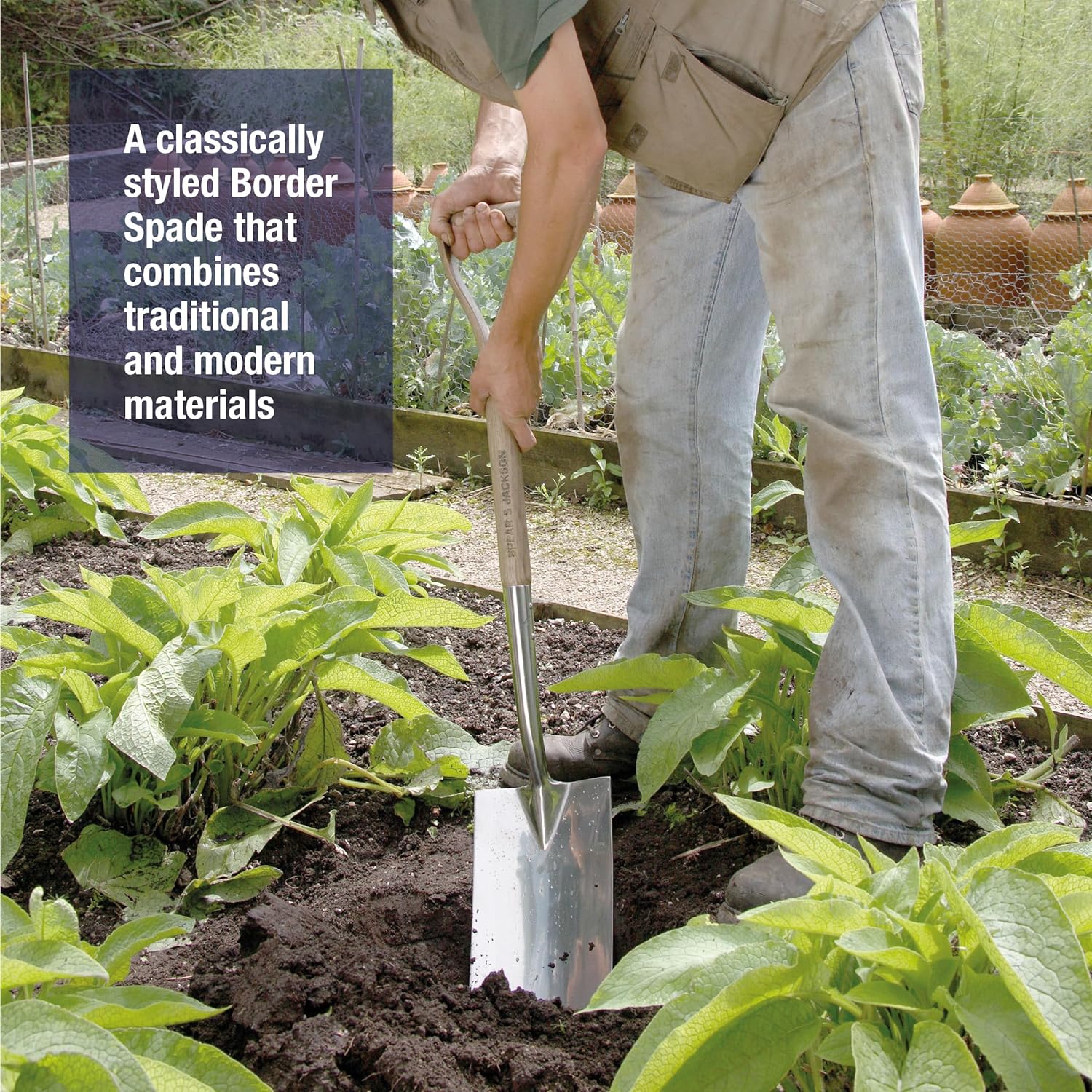
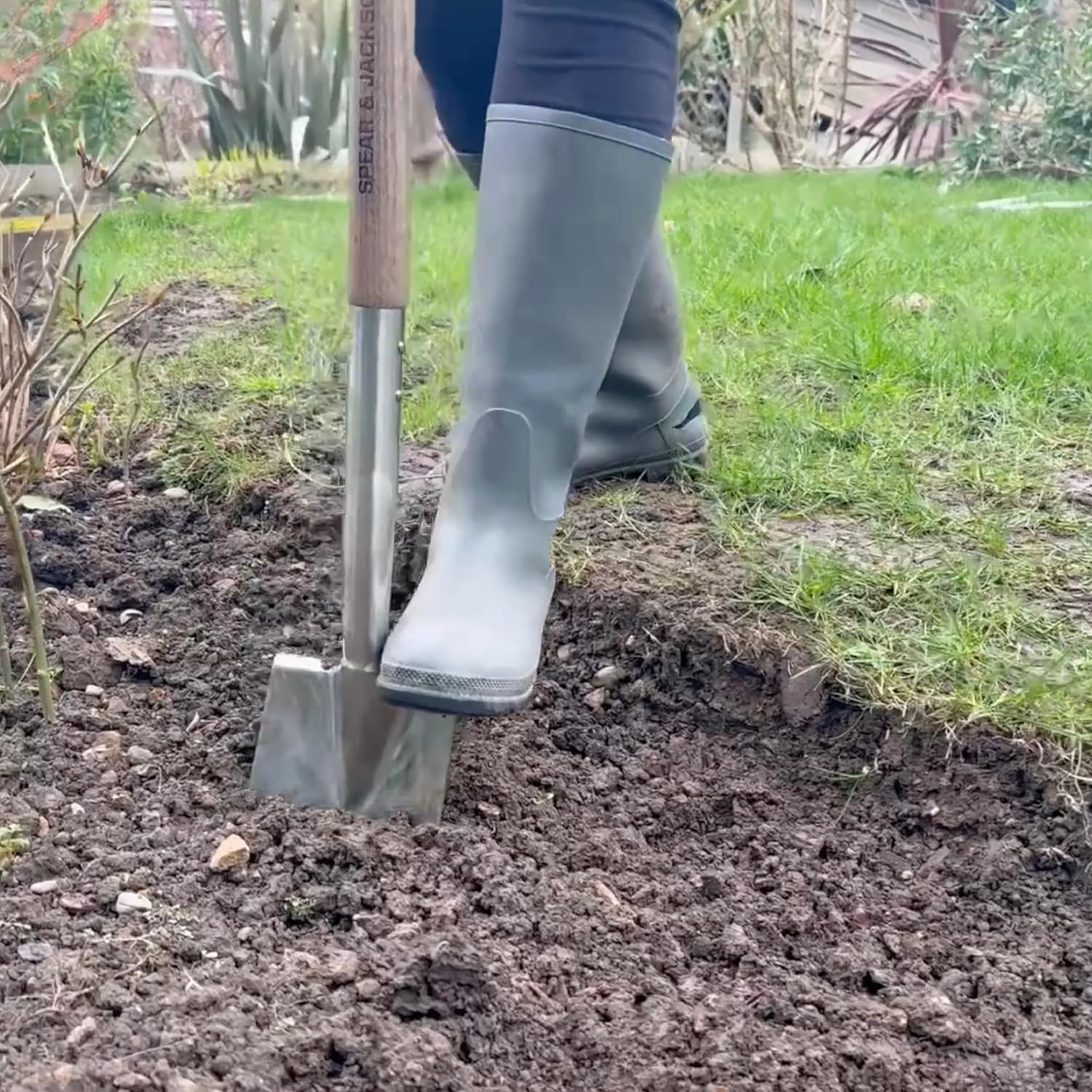
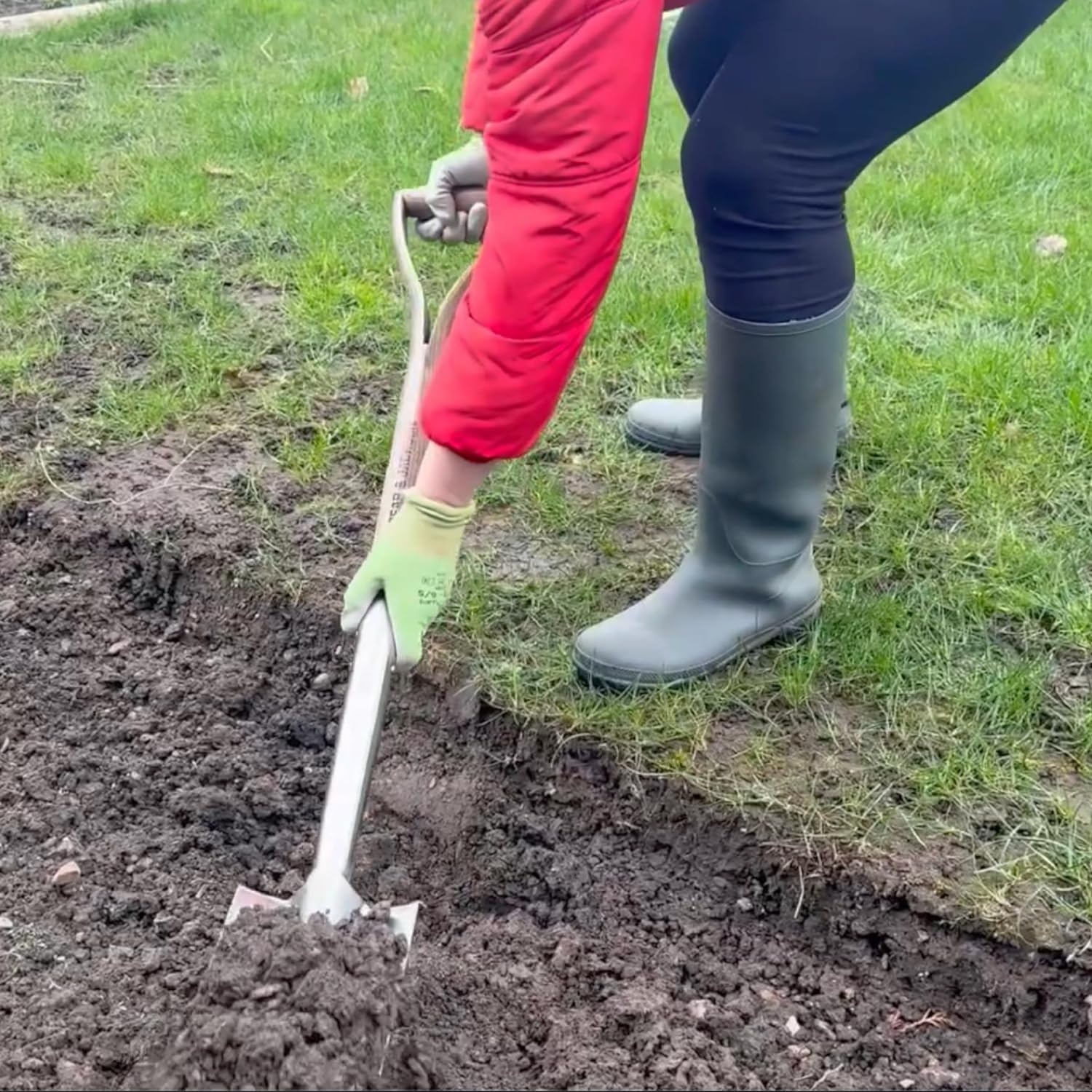
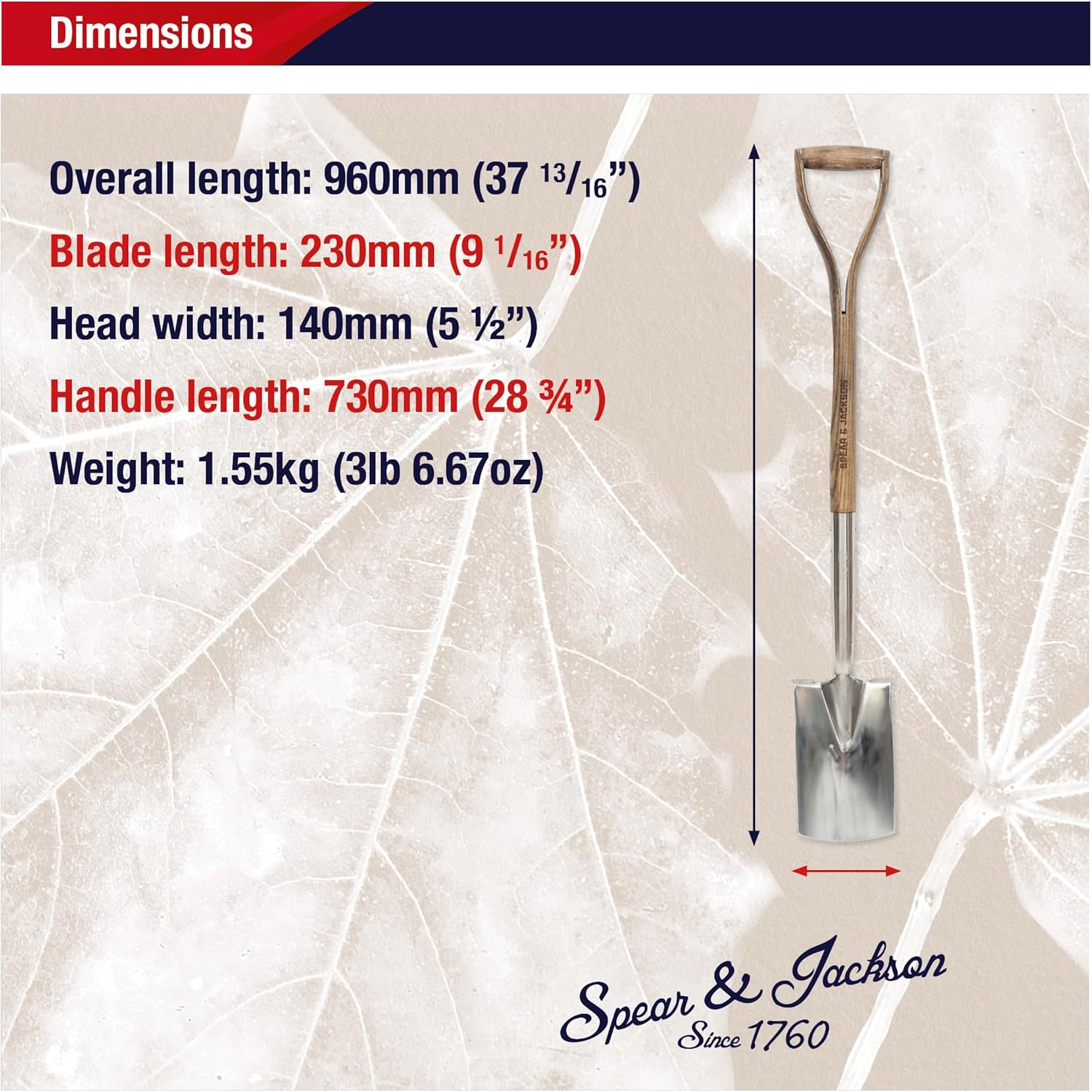
What it is and what it’s for\nA traditional border spade built for garden edging and tidy soil mantling, featuring a mirror-polished stainless steel head and a weatherproofed hardwood shaft. The one-piece shaft is split to form a classic wishbone handle, aimed at offering a comfortable grip and reliable control while digging narrow borders or working in confined spaces. With a blade sized at 230 mm and overall proportions around 28 inches (712 mm) for a balanced reach, it’s designed to combine durability with reasonable user effort for regular border maintenance. If you prioritise low soil adhesion and rust resistance, this design addresses those points on paper, thanks to stainless steel and a straightforward, traditional construction.\n\n## Build quality and materials\nThe head is described as mirror polished stainless steel, which should resist rust and corrosion in typical UK garden conditions. The stainless profile also contributes to ease of cleaning after soil contact. The shaft is a weather-proofed hardwood, intended to stand up to outdoor use and seasonal changes. The connection between head and shaft is formed by a single-piece construction, but with a split to create the familiar wishbone handle. In practice, this is meant to reduce wobble and offer a steady digging motion, though real-world performance will depend on soil hardness and user technique.\n\n## Design notes and what stands out\nOn the surface, the tool prioritises a traditional look with practical updates through stainless steel. The combination of steel and hardwood is a classic pairing that should feel solid in the hand and offer straightforward maintenance. The explicit sizing (blade 230 mm, shaft about 28 inches) suggests a tool aimed at standard border work rather than heavy, all-day excavation. If you like a lightweight, seemingly fuss-free spade that still behaves well in narrow plots, this model fits that intention. However, the one-piece shaft described as split into a wishbone may feel less forgiving to users who prefer a continuous, full-length grip for leverage.\n\n## Advantages and potential limitations\nYou’ll notice durability from rust resistance and the expected wear resistance of stainless steel in a border spade context. The weatherproofed hardwood shaft should cope with regular outdoor use and damp UK conditions. The classic design can be comfortable for many hands, particularly if you favour a contained, controlled digging style. On the downside, there’s no mention of modern ergonomic moulding or soft-grip features, and the traditional handle shape may not suit every user, especially if you need a longer reach or a more forgiving grip in heavy soils. The attachment method (split wishbone) is simple and durable, but it may not suit everyone’s preference for continuous grip feel.\n\n## Who it’s for\nThis border spade looks like a sensible choice for gardeners who value a traditional aesthetic combined with rust resistance and straightforward maintenance. It should suit those who typically work in defined borders, edging paths, or planting beds where a relatively narrow blade and modest digging depth are adequate. It may be particularly appealing to gardeners who prioritise durability with minimal soil adhesion and a robust, classic feel in hand.\n\n## Who it isn’t for\nIf you routinely tackle heavy clay soils, very wide digging tasks, or require maximum leverage and ergonomic refinements, this tool might feel a touch under-equipped compared with more modern or heavily ergonomic designs. If you prefer a continuous, non-split shaft for a more fluid grip, the wishbone handle approach could be a limitation.\n\n## When it makes sense to buy\nConsider this border spade when you want a blend of traditional style, rust resistance, and a solid all-round performer for light to moderate border work. It’s sensible when your priority is durability, ease of cleaning, and a tool that should hold up in typical UK garden conditions without special maintenance beyond normal cleaning and drying after use.\n\n## Prudent checks before you buy\n- Confirm the blade size (230 mm) and the shaft length (around 28 inches) align with your height and preferred digging stance.\n- Consider how the split wishbone handle will feel during longer sessions, some users prefer a continuous grip for leverage.\n- If you expect heavy soil or frequent damp conditions, ensure you’re comfortable with a traditional hardwood shaft and the limited modern ergonomics.\n- Think about storage and drying after use, hardwood shafts benefit from a dry, well-ventilated space to prevent any long-term moisture effects.\n\n## Practical use in day-to-day gardening\nIn a typical border project, you’ll likely reach for this tool to create clean edges, replace topsoil, or loosen soil within a narrow bed. Picture a chilly morning, a straight line of young perennials along a path, and you carefully slice into the soil with measured depth. The stainless head should wipe clean after use, and the shaft should feel sturdy in your hands as you pull away compacted soil without overexerting the wrist. The concrete test is whether the blade bites cleanly and the handle remains comfortable after a few minutes of continuous use.\n\n## Technical snapshot (brief)\n- Blade/head: 230 mm, 9 x 145 mm, 5.5 inches, mirror polished stainless steel.\n- Shaft: 28 inches (712 mm) wooden, weather-proofed, split to form a wishbone handle.\n- Construction: one-piece shaft with a distinctive split for grip.\n- Type: border spade designed for edging and border work.\n\n## What to know about alternatives\nIf you’re weighing options, you’ll typically compare with border spades that emphasise ergonomic handles, lighter alloys, or multi-tasking designs. This Spear & Jackson model leans into durability and traditional aesthetics rather than high-tech ergonomics. For some gardeners, that means a straightforward tool that does the job without fuss, for others, it may feel restrictive if you want a lighter tool or a more modern grip.\n\n## Is it worth it?\nFinal verdict: It is worth considering if you value a traditional border spade with rust resistance, straightforward maintenance, and a durable wooden handle. It may not be the best choice if you need advanced ergonomics, ultra-lightweight construction, or a tool optimised for very heavy clay soils.\n\n## FAQ (quickfire)\n- Q: Is the head truly rust resistant? A: It’s described as stainless steel with rust resistance, which should help in damp conditions, though maintenance still matters after use.\n- Q: How long is the handle? A: The shaft is 28 inches, which provides a modest reach for typical borders.\n- Q: Will it handle hard ground well? A: It should perform adequately for standard border tasks, though extremely compacted soil may require extra effort.\n- Q: Is it suitable for left- and right-handed users? A: The design appears symmetrical, so it should suit both hands without a bias.\n