


Soyee Magnetic Blocks Build Mine Magnet World set (magnetic building toys for ages 5–7)
Product description
What it is and what it’s for
Soyee’s Build Mine Magnet World set is a screen-free magnetic building toy aimed at kids who enjoy tinkering with shapes, planning simple layouts and experimenting with how pieces stick together. The idea is pretty straightforward: create “game world” builds using magnetic blocks, then keep iterating—because once you’ve made one level, you’ll want to try another.
It leans into learning through play. The set is described as encouraging basic design and building, plus tactile and spatial skills. There’s also a clear “STEM through doing” angle, especially around magnet properties, with an emphasis on concentration and fine motor skills.
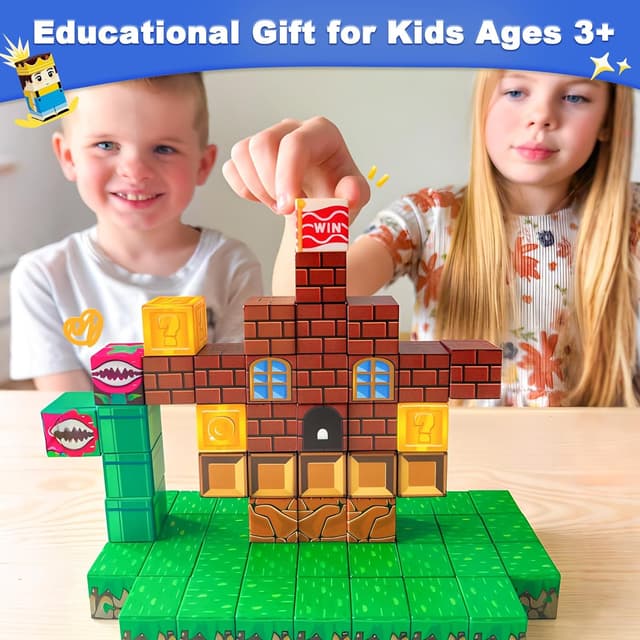
The “Mine Magnet World” part isn’t just branding on paper. The kit includes buildable game elements like characters, walls, gold coins, question marks, mushrooms and other classic game-style pieces, so children can assemble something that feels like a level rather than a random sculpture.
The essentials at a glance
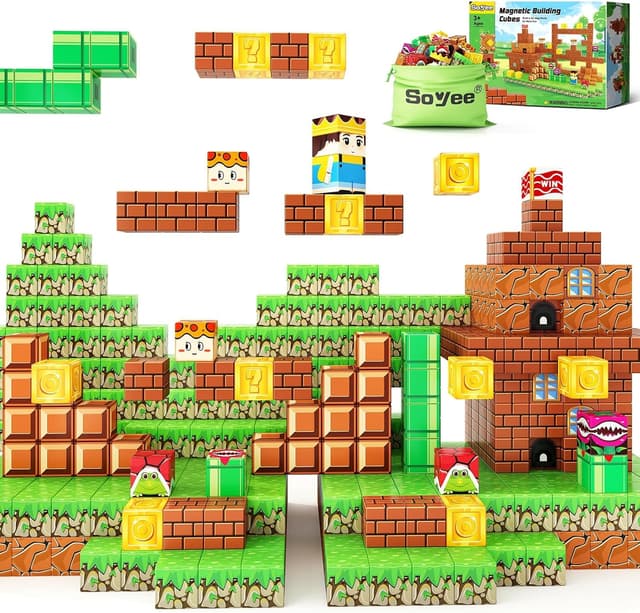
This is a magnet-based building kit, designed so pieces attract and stay together rather than easily collapsing. That matters in practice: when models hold, kids can keep building without the frustration of constant resets.
The set is positioned for children roughly in the ages 4–8 range in the description, with an explicit mention of ages 5–7 in the product name. If you’re deciding for a child, it’s worth considering maturity and patience—magnetic building is fun, but it still needs some hand control to align pieces.
One of the more reassuring details in the listing is the safety materials claim: the blocks use food-grade ABS plastic and are said to be free from BPAs, phthalates and latex, finished with natural water-based paint and smooth edges and corners for small hands.
Where it shines in everyday play
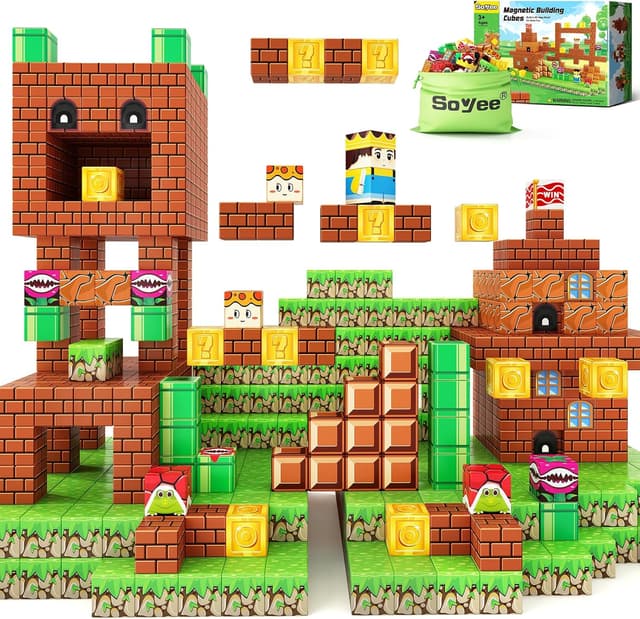
If your child likes building on the desk, this set fits nicely into day-to-day life. The listing suggests it can be stacked on a desktop, or built on an iron door or refrigerator door. That gives you a couple of play modes: “build a level” on a flat surface, then “rebuild the challenge” by transferring or expanding the layout.
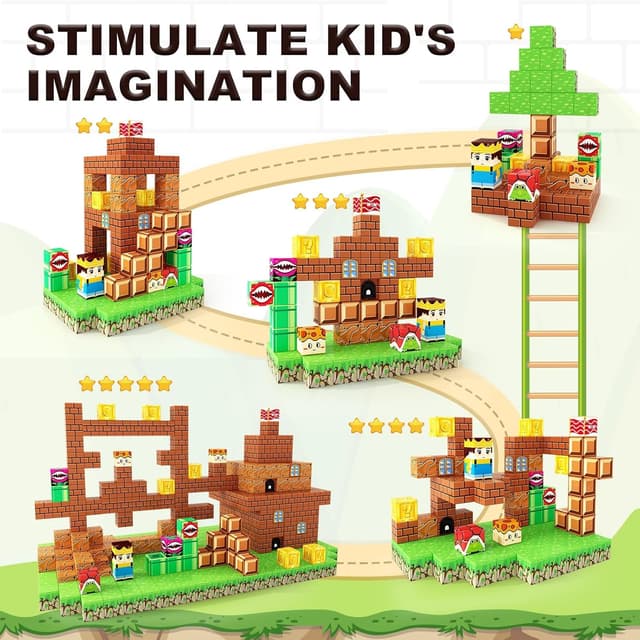
A small example: imagine a child placing a few walls, adding characters and then arranging gold coins and question marks to create a simple path. They can then tweak the layout—move a wall, swap a coin placement—until the “level” feels right.
Because the magnet pieces are described as not easy to collapse, kids can spend longer in that iterative loop where they test ideas, fix placements and try again.
What you’ll notice day to day (and the one limitation to keep in mind)
The main “feel” of this toy is the magnet interaction: quick attraction when pieces line up, and more resistance to collapsing once built. That’s great for confidence and keeping kids engaged.
That said, magnetic toys can be a bit dependent on how children handle alignment. If you’re buying for a very young or impatient child, they may find it frustrating at first—especially if they expect instant success every time.
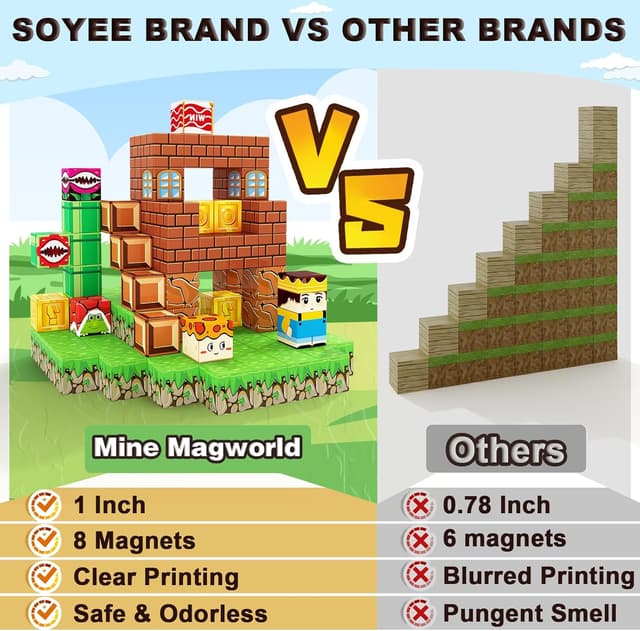
Also, while the listing describes strong magnets and sturdiness, it doesn’t give much detail about how large builds can get before stability becomes an issue. So if your plan is towering, complex structures, it may end up being better for “levels” and compact scenes rather than giant architecture.
Who it suits (and who might want to skip it)
It makes sense if you’re looking for a STEM-leaning, screen-free magnetic building toy that also has a game-like theme. Kids who like classic game elements and turning play into “levels” will likely get more mileage from this than from purely geometric block sets.
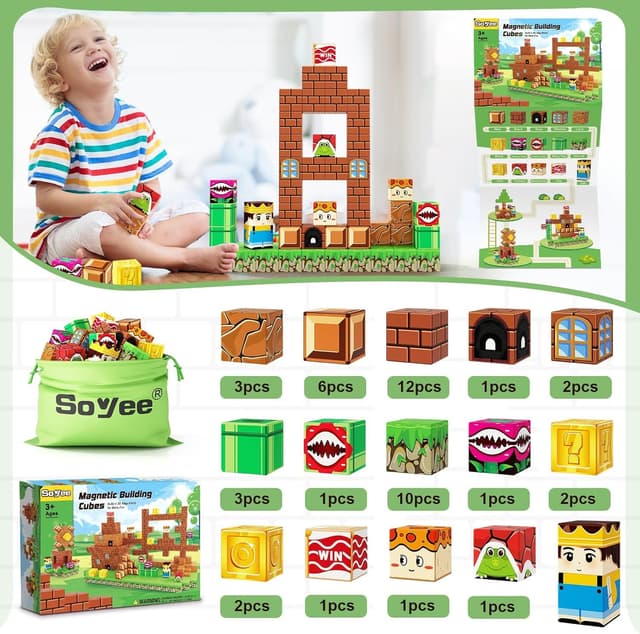
It may not suit you if: - your child mainly wants traditional building with non-magnetic parts - you’re after a very open-ended construction system without a game-world structure - your child struggles with patience and careful placement (magnet alignment is part of the fun, but it can be a learning curve)
What to check before buying
A few practical things to consider based on the listing details:
- Age fit: The naming says ages 5–7, but the description also mentions broader ranges (4–8, and also refers to gifts for 3 to 12). Choose based on the child’s steadiness and attention span.
- Where you’ll play: If you want to build on a refrigerator door or iron door, make sure you actually have a suitable magnetic surface at home.
- Safety materials: The listing specifies food-grade ABS plastic and water-based paint with smooth edges and corners—helpful reassurance for small hands. If you have sensitivities, it’s worth double-checking the materials info shown on the retailer page.
Final verdict
Is it worth it?
Worth considering if you want a magnet toy that combines “building” with a game-world theme—characters, walls, coins and question marks make it feel like more than just stacking blocks. The magnets holding better (as described) should support longer play sessions and confidence, especially for children who enjoy experimenting without a screen.
It may not be the best choice if your child wants purely freestyle construction, or if they’re likely to get irritated by the alignment work magnetic building asks for. For most families buying for school-age development through hands-on play, it’s the kind of set that fits neatly into a desk, table or magnetic door routine—so long as you’re comfortable with the idea that the toy’s strengths are “levels” and scenes rather than massive, complex structures.
Mini FAQ
How does this toy work during play?
Kids attach magnetic pieces to build game-like scenes—then they can rearrange and create new layouts, using the set’s included elements like walls, coins and characters.
Can it be used on a fridge or metal door?
The listing suggests it can be built on an iron door or refrigerator door, as well as stacked on a desktop.
Is it aimed at STEM learning?
It’s marketed as STEM-oriented through play, with the listing mentioning magnet properties, plus fine motor skill and concentration.
What ages is it suitable for?
The product name references ages 5–7, while the description also references ages 4–8 and broader “gift” ages. For best fit, consider the child’s hand control and patience.
Is it safe for small hands?
The listing claims smooth edges and corners and materials that are said to be free from BPAs, phthalates and latex, using food-grade ABS plastic and water-based paint.