

Sovol PLA Filament Silk Tri-Colour 1.75mm 1kg 🎨
Product description
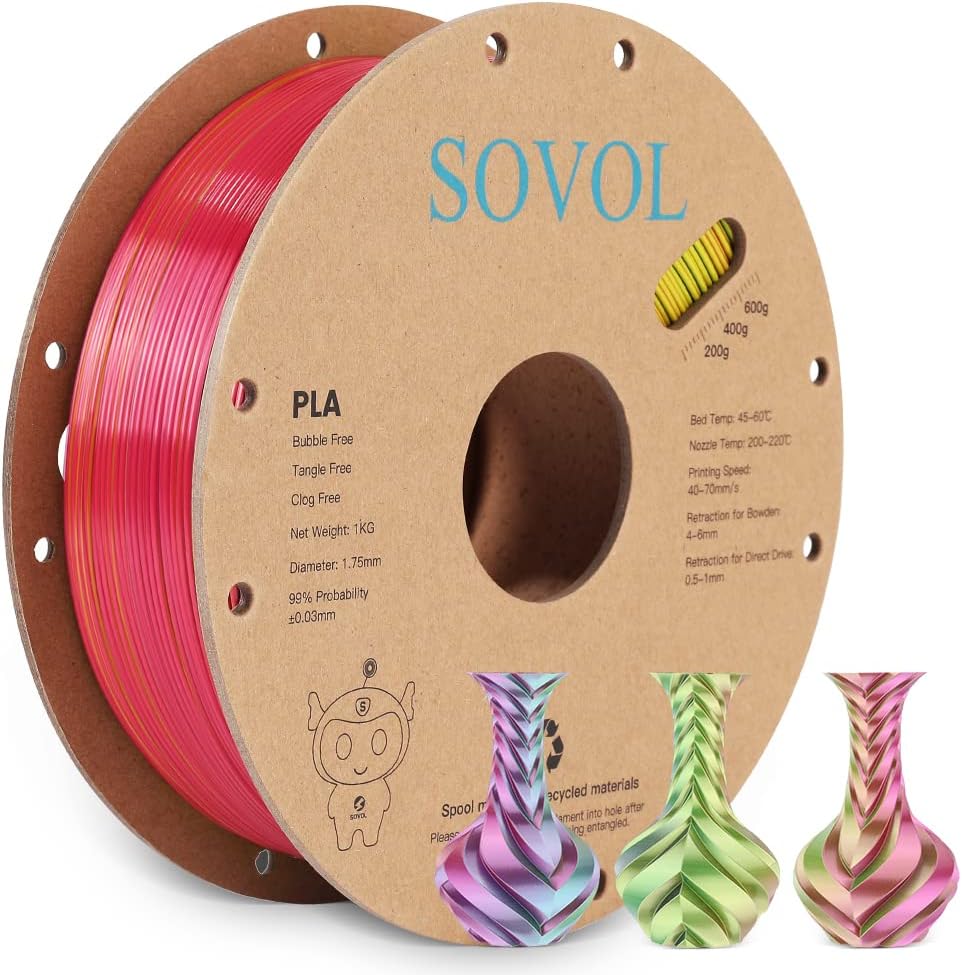
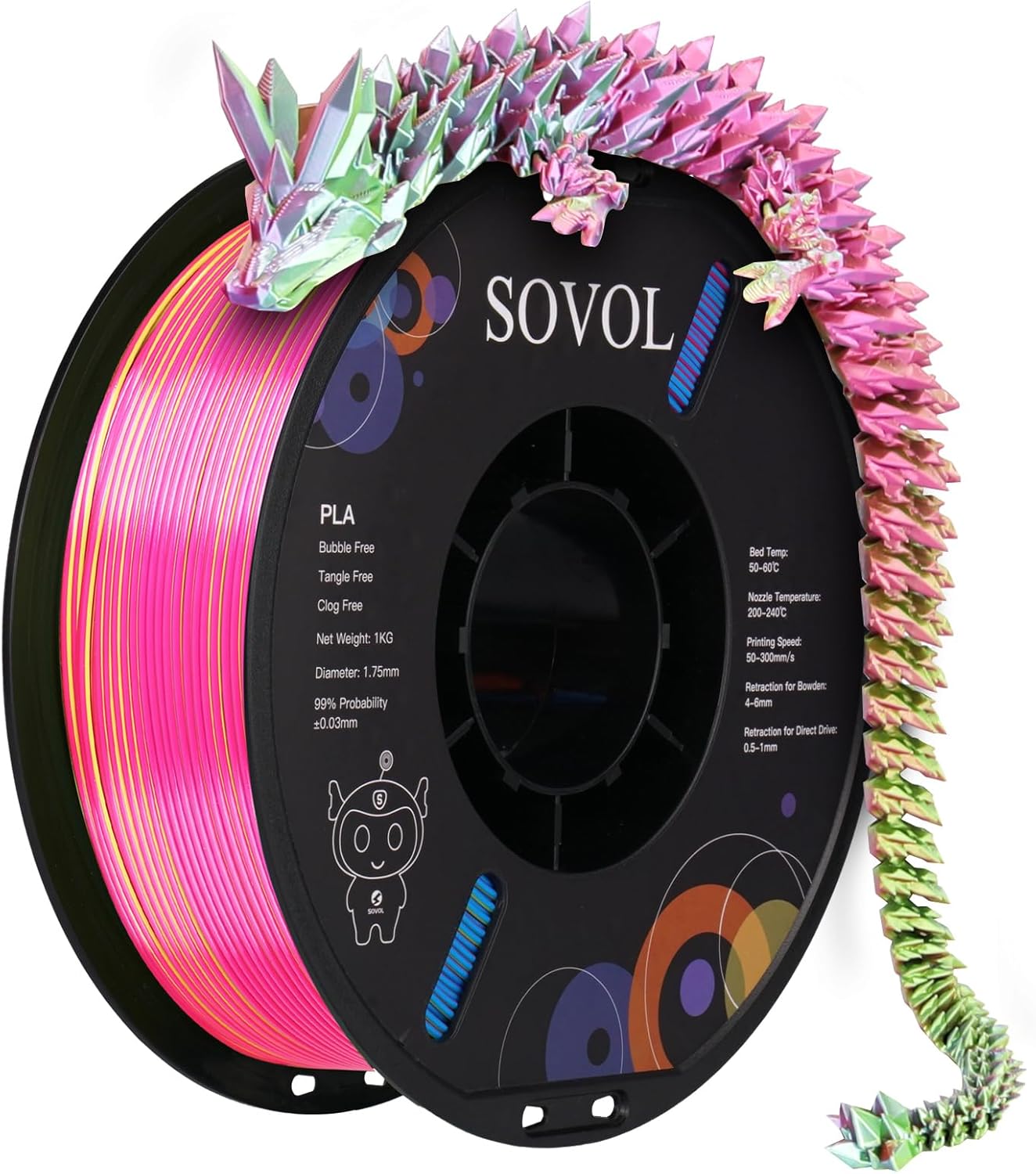
This tri-colour silk PLA filament brings pearlescent, glossy finishes to small decorative prints and detailed models, ideal for makers who want vivid colour transitions without complex filament changes. It is a 1.75 mm PLA co-extrusion that blends rose, blue and yellow along the filament so even small parts can show multi-hued effects and a shiny surface.
Key Points
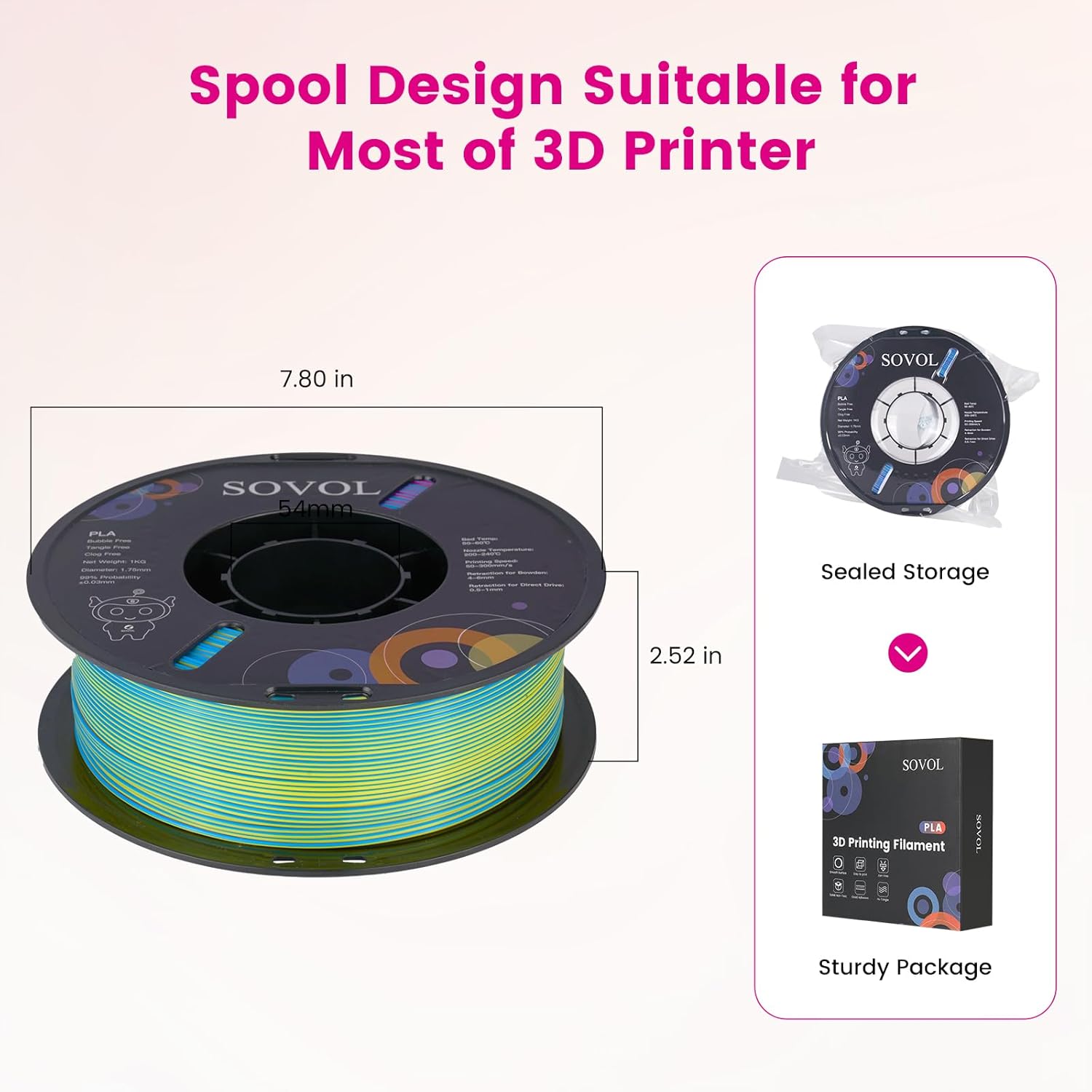
The filament combines three colours in a single strand, producing continuous colour variation as the print progresses. According to the manufacturer, the PLA raw material is imported from the United States and formulated to deliver a smooth, lustrous finish with reduced visible layer lines. Diameter tolerance is stated as +/- 0.03 mm which helps maintain consistent extrusion and fewer surprises during printing. Packaging uses a paper spool and box, with vacuum sealing and desiccant to protect the coil from moisture during storage and transport. Some users may find that the strongest pearlescent effect depends on print orientation and part geometry.
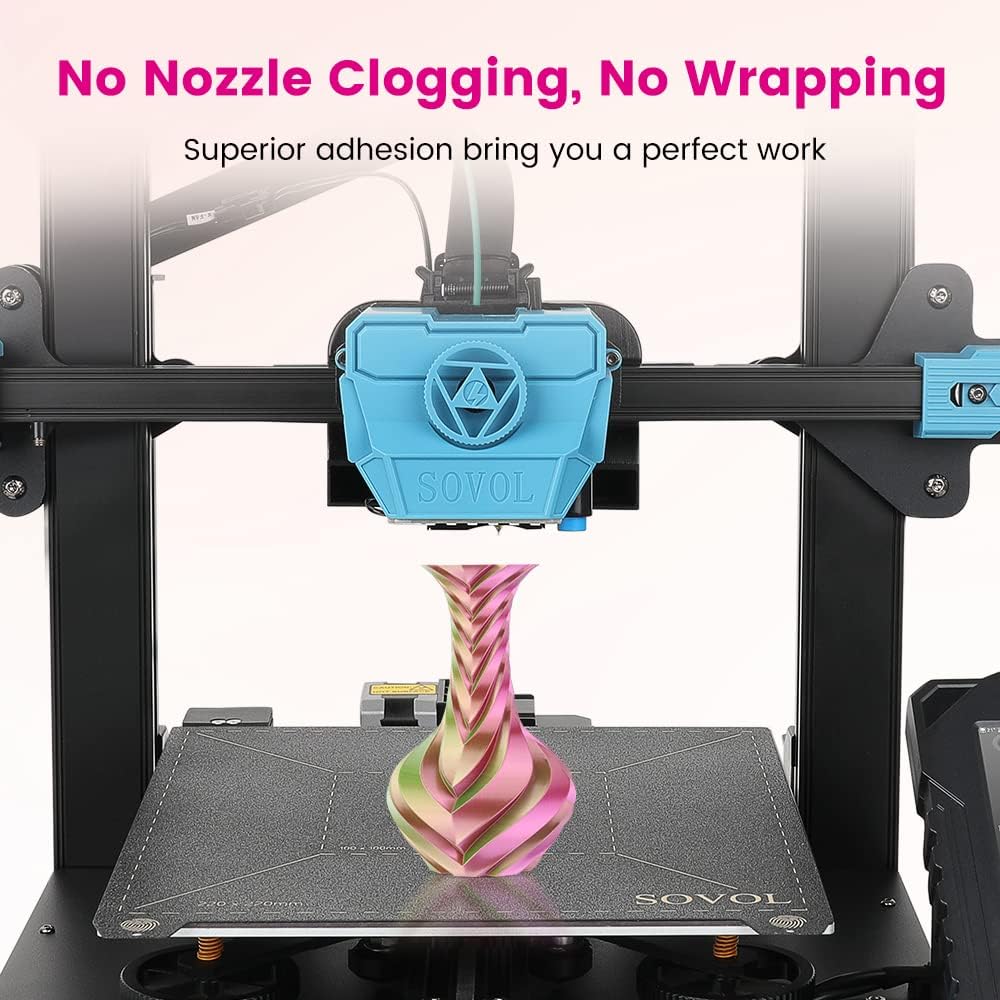
Technical Specifications
- Name: Sovol PLA Filament Silk Tri Color Co-Extrusion 1.75mm
- Diameter: 1.75 mm
- Tolerance: +/- 0.03 mm
- Net weight: 1 kg (2.2 lbs)
- Colours: Rose, Blue, Yellow co-extruded
- Material: PLA (imported raw material according to the manufacturer)
Benefits
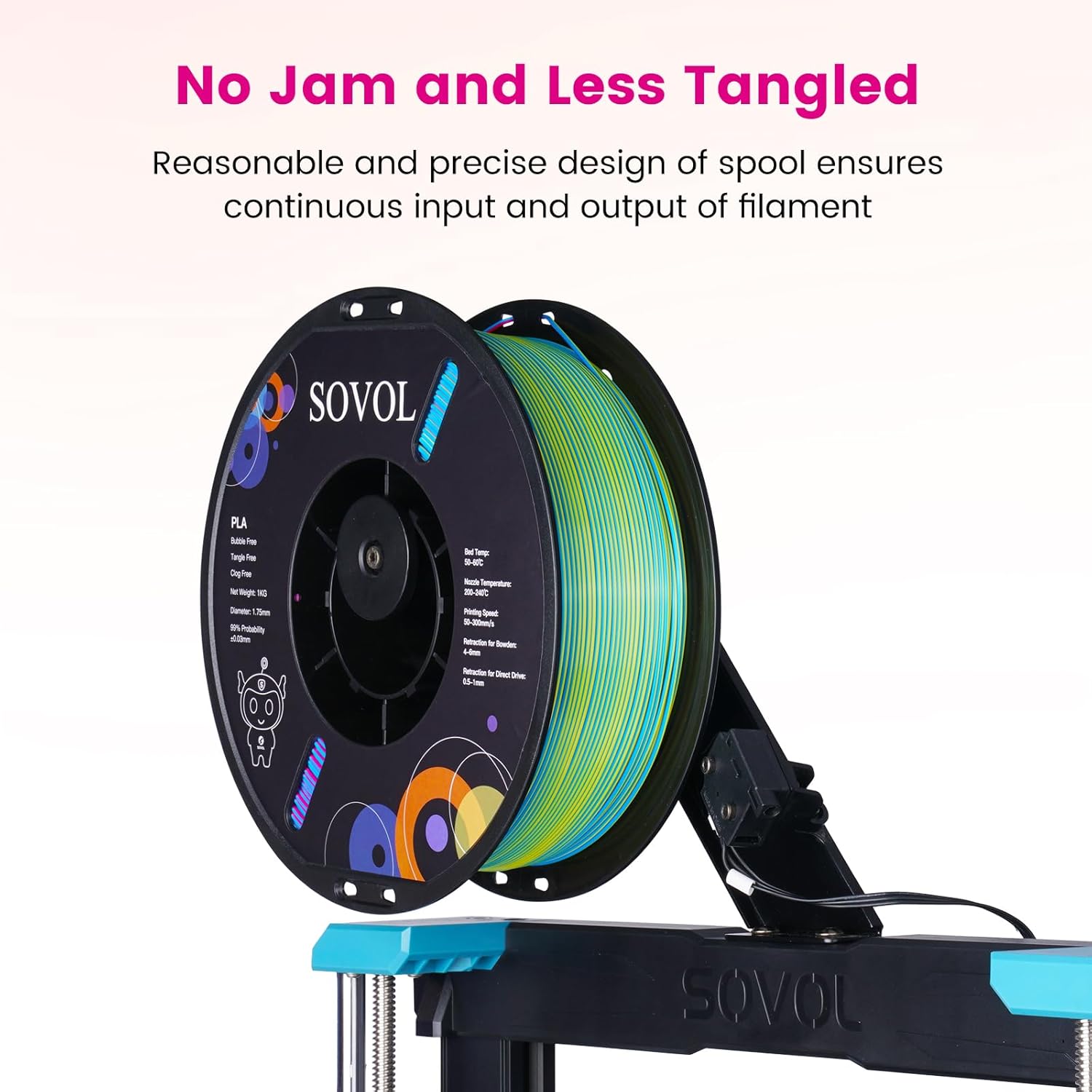
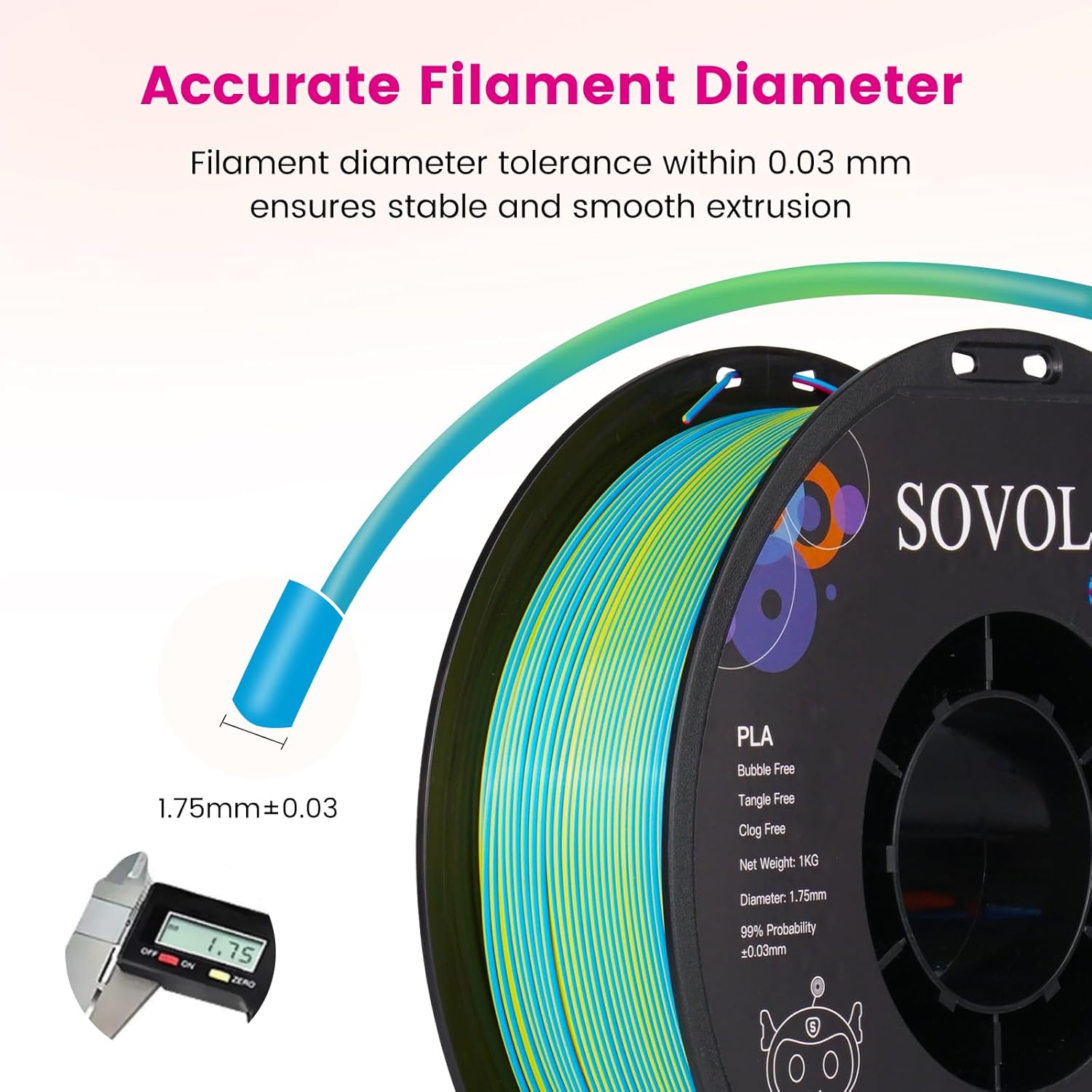
Multicolour output without swapping filaments simplifies multi-hued prototypes and decorative objects and reduces downtime. The silk formulation emphasises a glossy, pearlescent look that can make figurines, ornaments and display pieces stand out under ambient light. Compatibility with most FDM printers and 3D pens allows you to test creative ideas quickly and with minimal setup. Additionally the controlled diameter and anti-tangle spool design help lower the chance of extrusion issues during longer prints.
Usage Recommendations
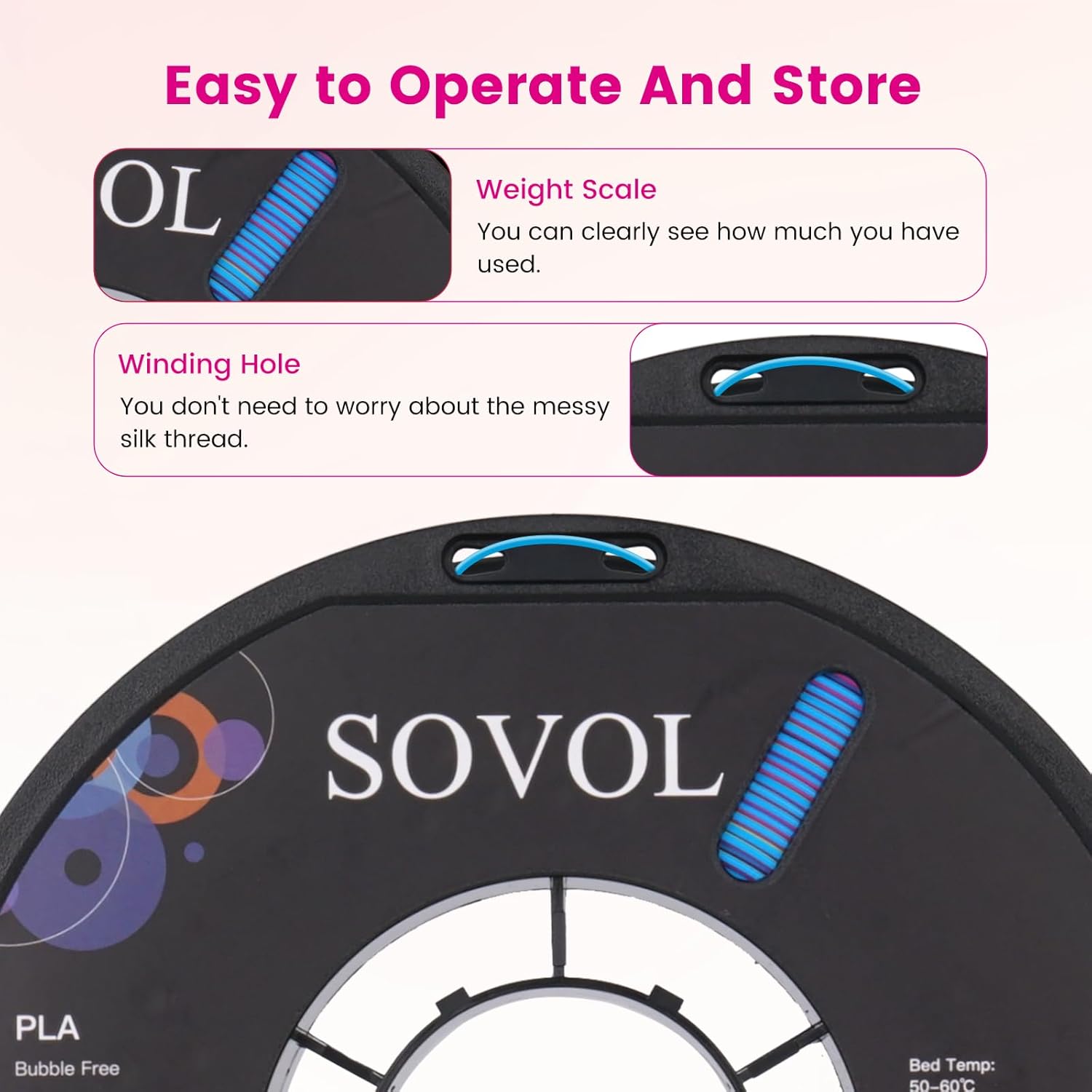
For best colour transitions, experiment with part orientation and rotation of the spool to control which face receives which hue. Print temperatures commonly used for PLA are a good starting point, but adjust within your printer’s range if you notice under- or over-extrusion. Because the filament is silk-style, bridging and fine surface detail will show sheen differently, so test small calibration prints to dial in retraction and cooling. Consider using a well-leveled bed and proper first-layer settings to take advantage of the filament’s adhesion properties and to reduce warping, according to the manufacturer.