

SOLARBABY Wind Up Solar Radio 4000 mAh 🔊
Reviews
Price
Product description
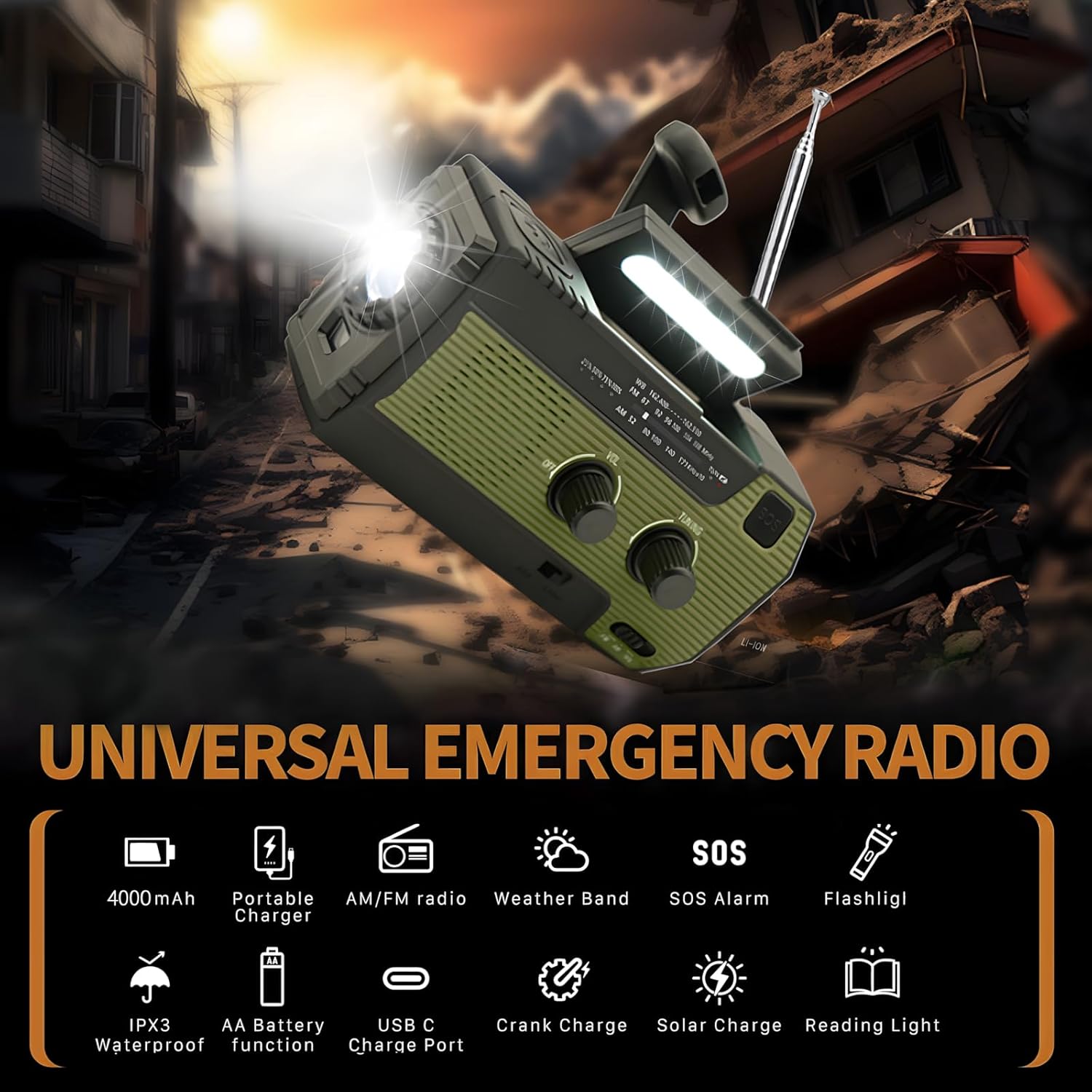
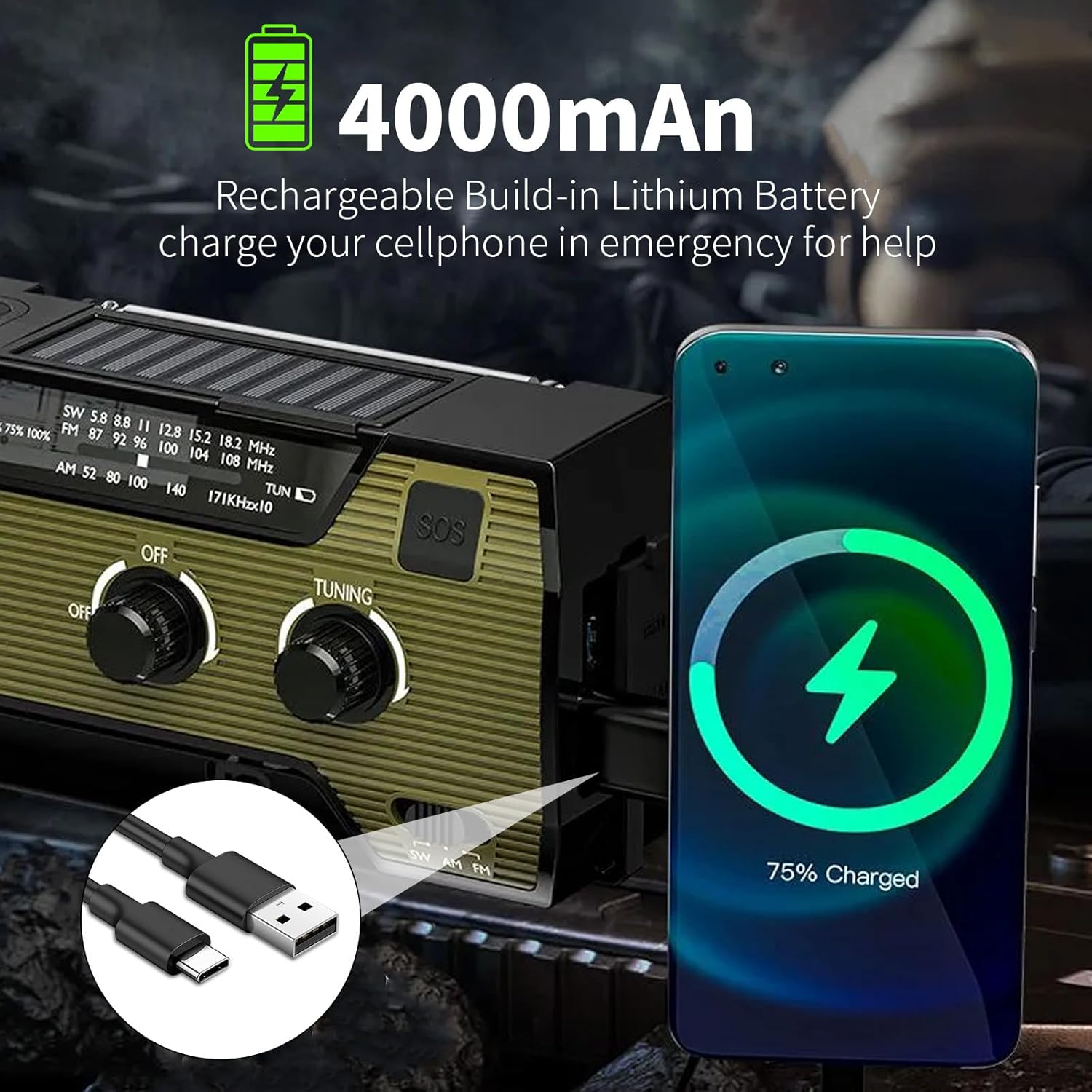
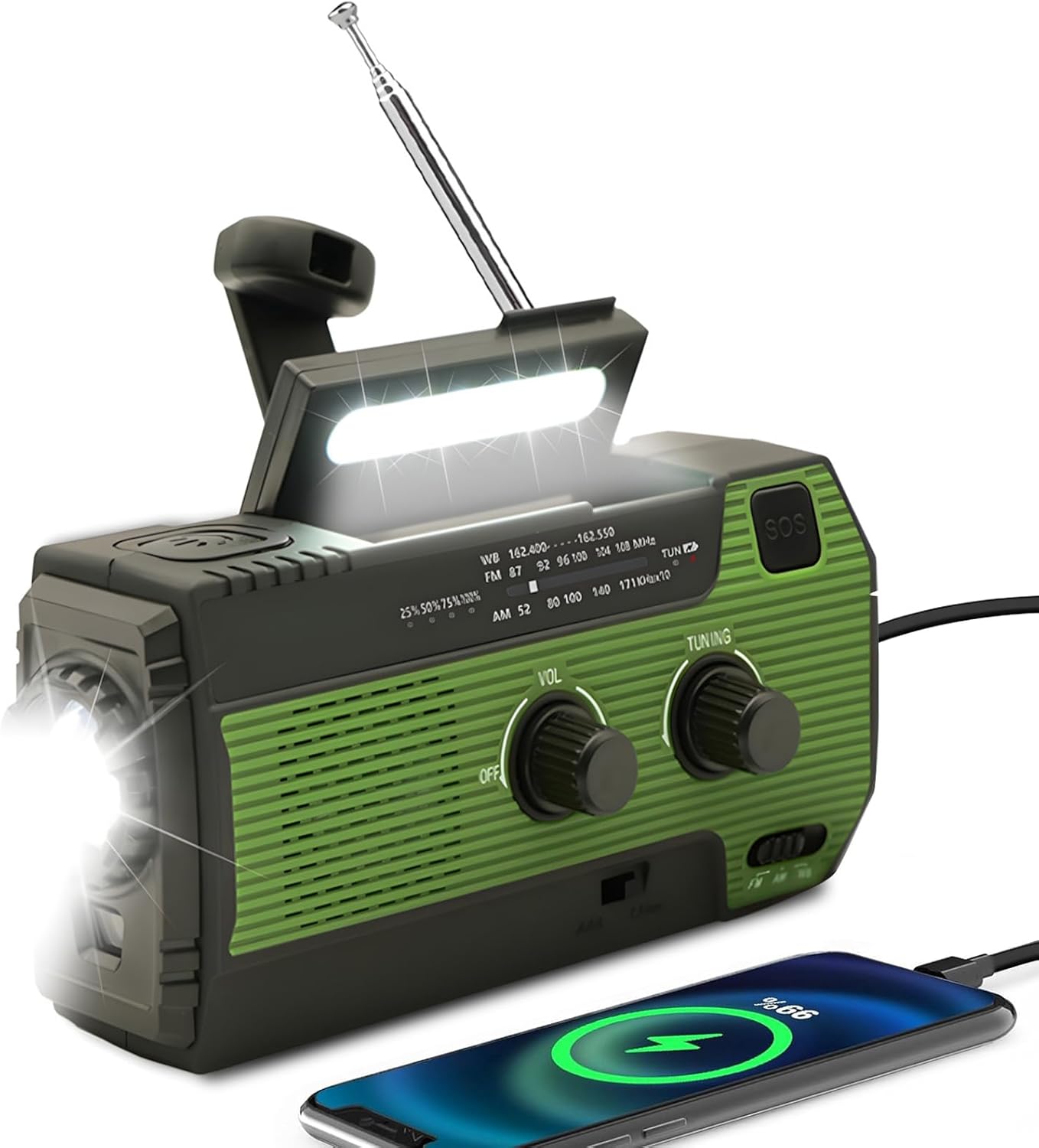
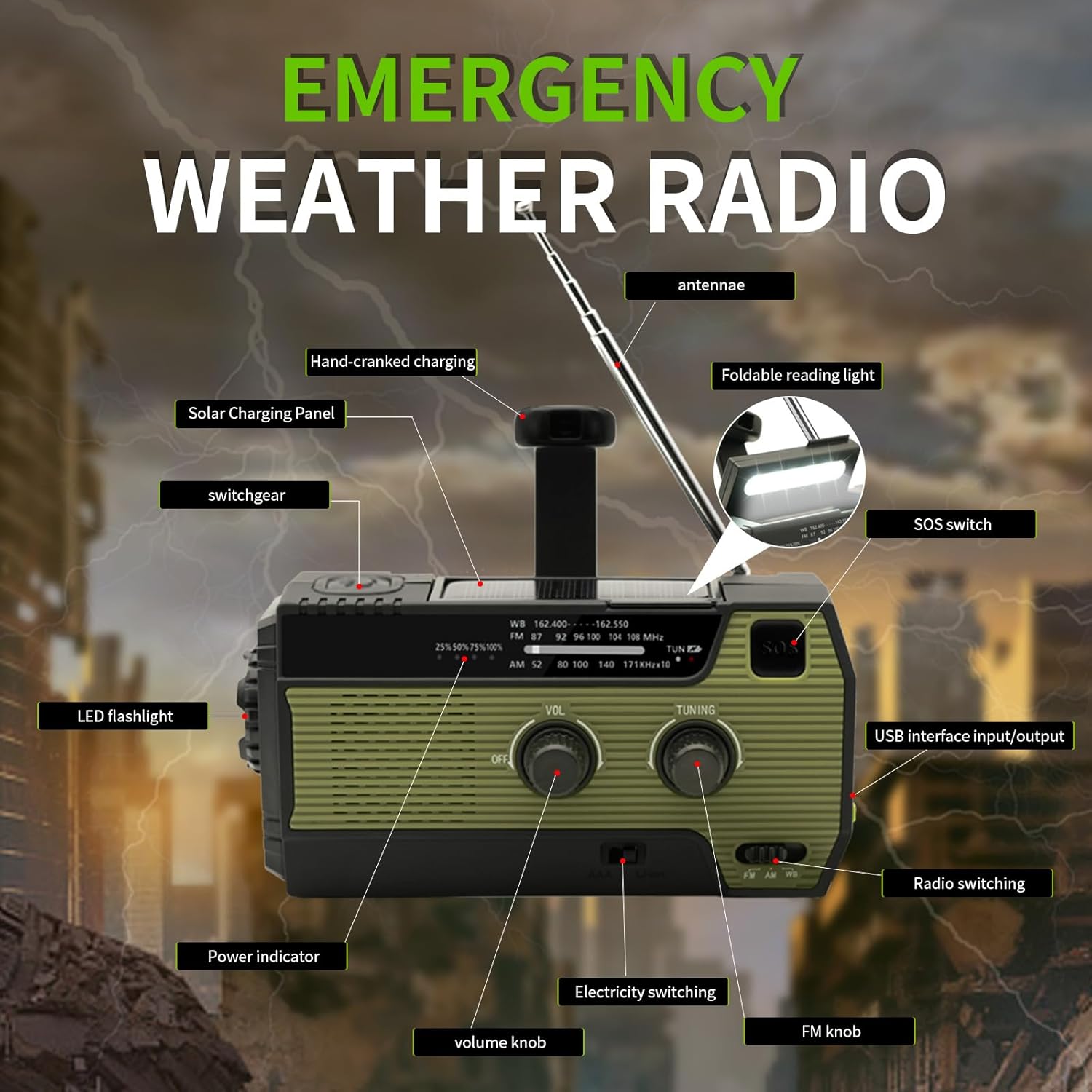
This compact emergency radio from SOLARBABY combines multiple power options and practical survival features to keep you connected during outages and outdoor trips. It includes a 4000 mAh rechargeable battery that can be charged by USB, by a built-in solar panel or by manual crank, so it works as a portable radio and as an emergency power source for smartphones. Ideal for camping, hiking or household emergency kits, the unit also integrates an LED torch and an SOS alarm for added safety.
Key Points
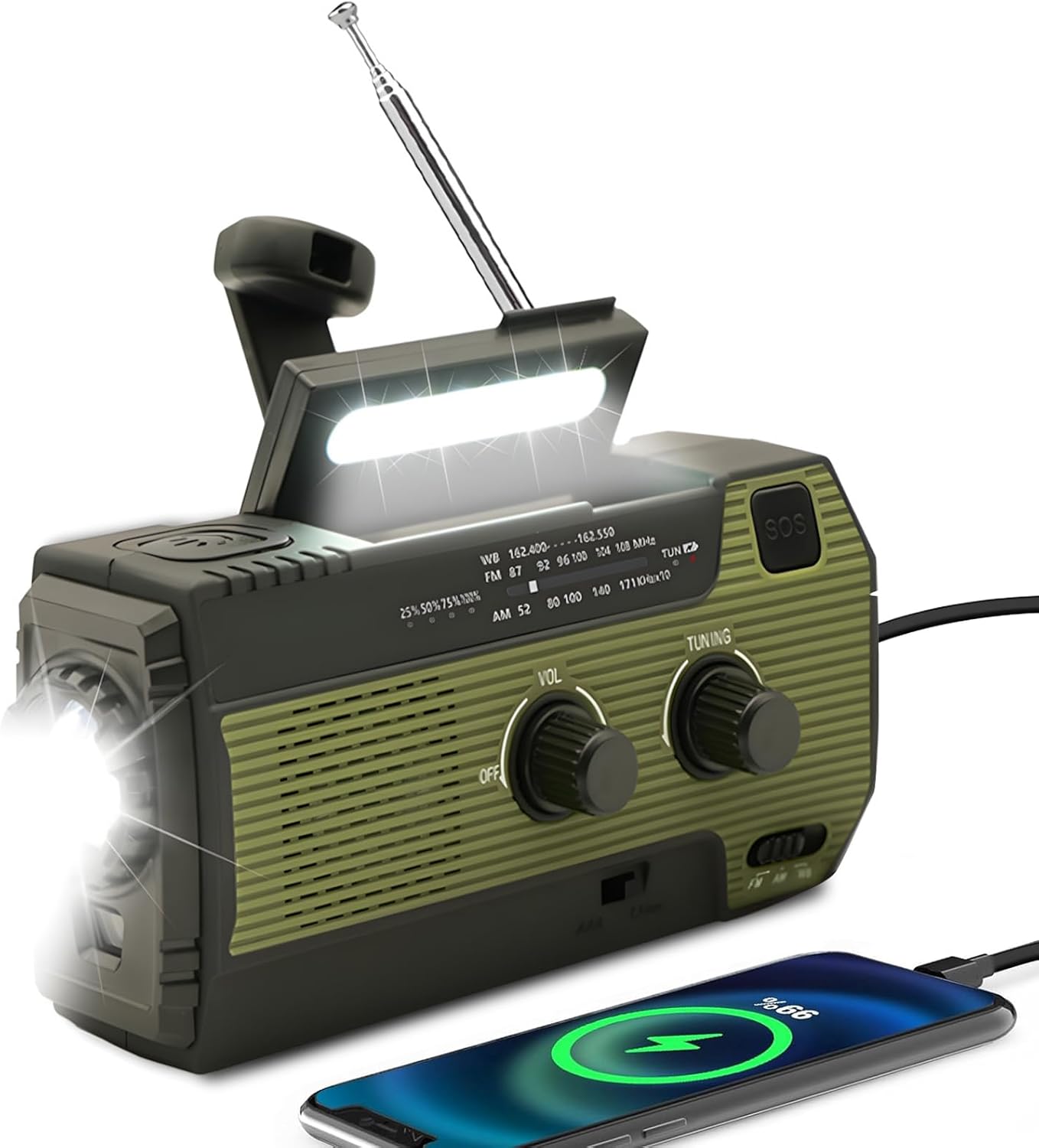
The radio receives AM and FM broadcasts, giving a wider AM range and clearer FM reception for news, talk and entertainment according to the manufacturer. It is equipped with a built-in antenna and a signal strength indicator to help tune stations more precisely. A compact LED light and an SOS alarm extend the device’s usefulness beyond audio, making it a multipurpose tool for emergencies and outdoor activities. Consider that weather band reception for official forecasts is available only in some regions, mainly the United States and Canada.
Technical Specifications
- Name: SOLARBABY Wind Up Solar Radio
- Battery capacity: 4000 mAh
- Power options: USB charging, solar panel, hand crank
- Radio bands: AM, FM, NOAA weather channels (region dependent)
- Torch: 1W LED and 3 LED emergency light
- Antenna length: up to 12 inches
Benefits
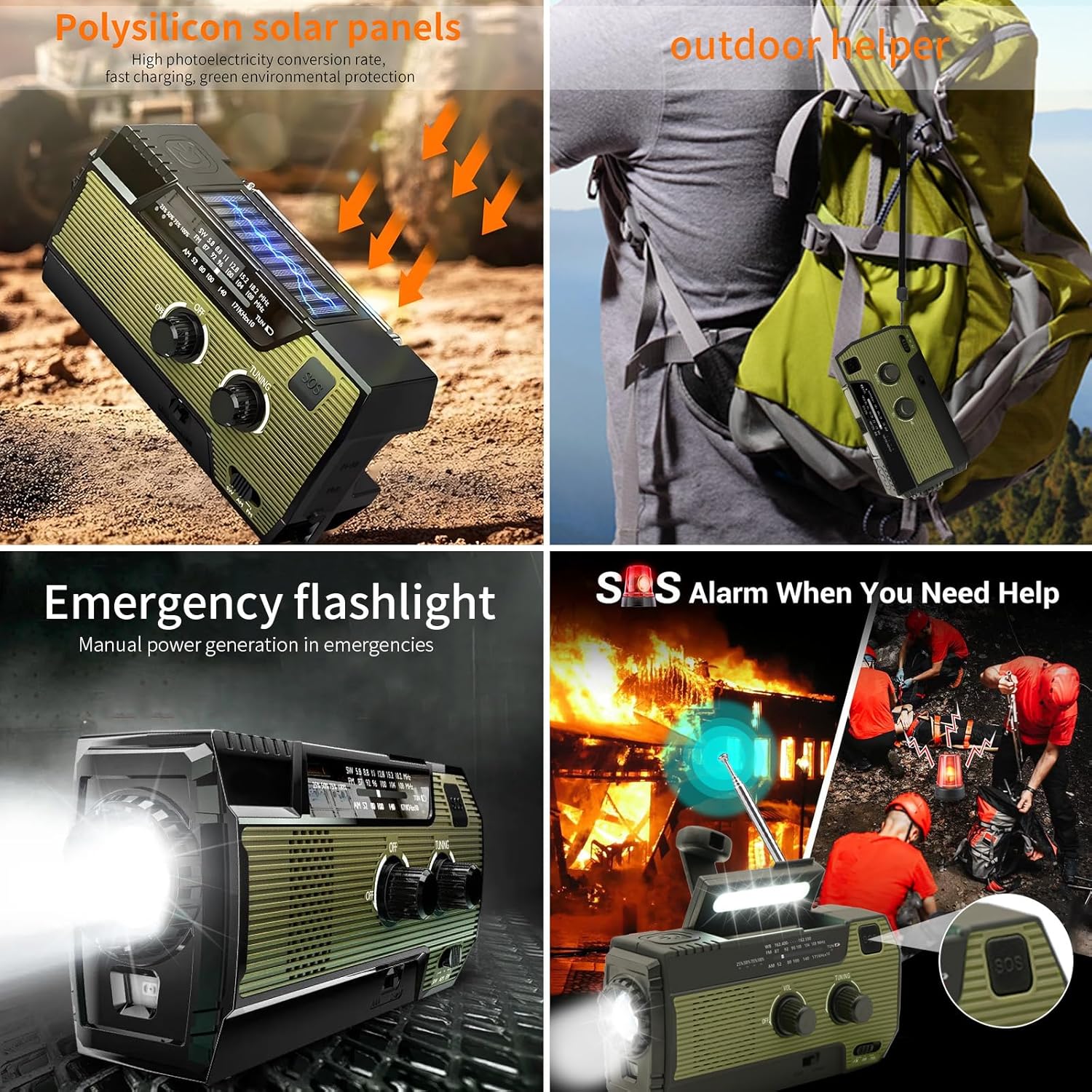
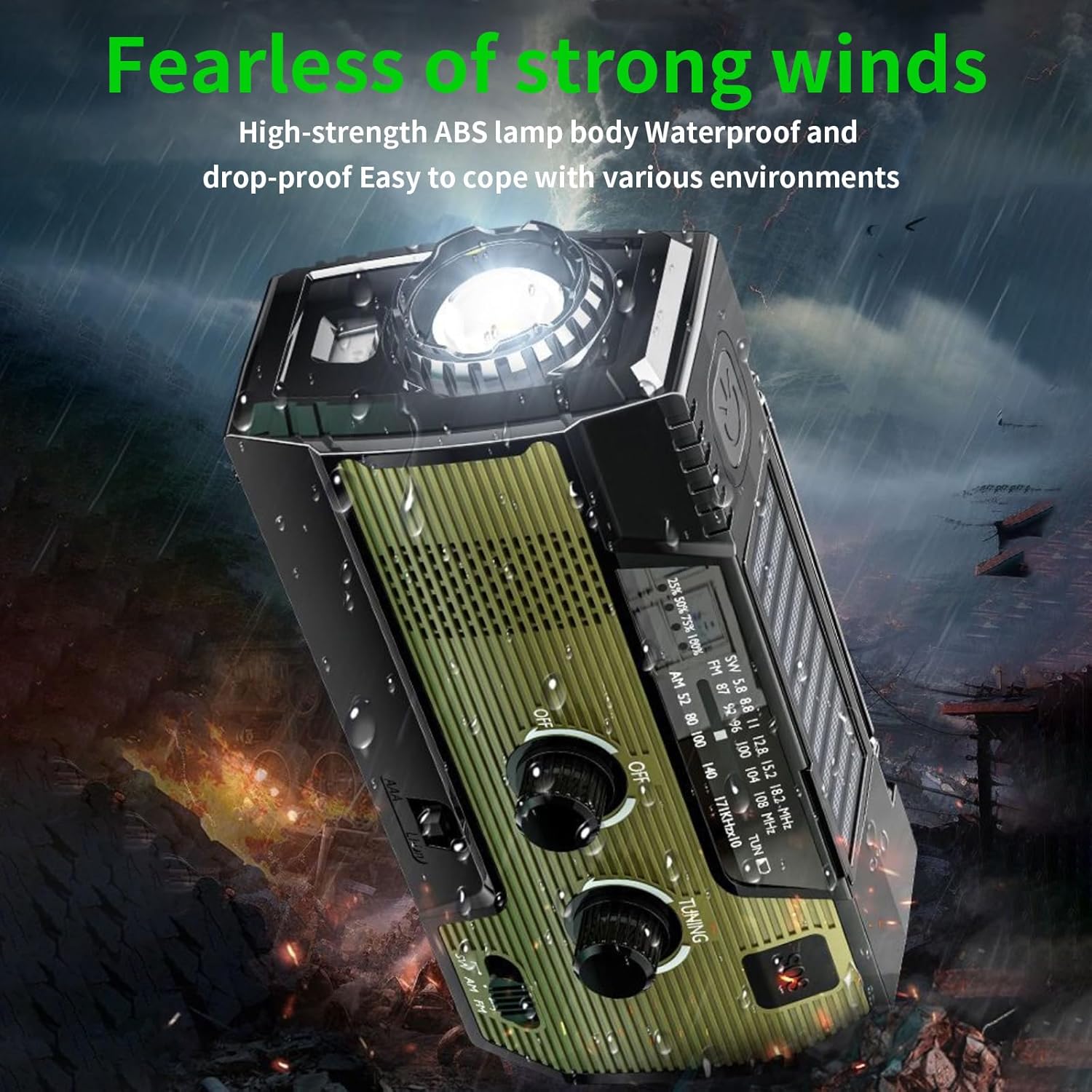
This SOLARBABY model offers flexibility in power management, allowing you to recharge via USB when an outlet is available or rely on solar energy and manual winding when it is not. The capacity to charge external devices from the internal 4000 mAh battery gives the radio a secondary role as a power bank for phones in an emergency. The inclusion of both a bright LED torch and a low-power emergency light provides illumination options for different situations, while the SOS alarm adds an audible signalling function if help is required.
Usage Recommendations
For best reception, extend the telescopic antenna fully and adjust the unit’s position to reduce interference. Keep the solar panel exposed to direct sunlight when relying on solar recharging, and wind the crank in short, steady bursts to avoid overheating the mechanical components. Use the signal strength indicator to fine-tune station selection and switch to AM for longer-range reception when FM is weak. If you plan to use the radio as a backup charger, conserve battery by limiting light and alarm use during prolonged outages.
Note that NOAA weather channel coverage and specific features may vary by location according to the manufacturer, and the device’s solar charging speed depends on light conditions.