

Schleyer STE Synchrometer SK1-30 Carburettor Balancer for carb synchronisation
Product description
What it is and what it’s for
If you’re working on motorcycles with progressive carb set-ups, a carb balancer is one of those tools that quietly matters. The Schleyer STE Synchrometer SK1-30 is designed to measure air flow so you can check and adjust carb synchronisation in a more controlled way.
On paper, its job is simple: it helps you balance the secondary stage throttle response on progressive carbs. In real-world workshop terms, that can mean smoother pickup, steadier running and fewer carb-related quirks after an adjustment. It’s not a “turn it on and everything is perfect” gadget, though. You’ll still need patience with throttle positions and a methodical approach to adjustments.
Key takeaways
The SK Synchrometer measures flow mass in the range of 1 to 30 kg/hour, which is reflected in its air-flow indication range of 1 to 30 kg/h. The big selling point is that it’s intended for precise indication at different angles and positions, so you’re not fighting the tool as much when you’re working in cramped engine bays.
It’s also specifically positioned for checking and adjusting the air flow of the secondary stage throttle at a closed position on progressive carbs. If your carb setup matches that kind of use case, it should make the synchronisation task feel more like measurement than guesswork.
Where it stands out in day-to-day use
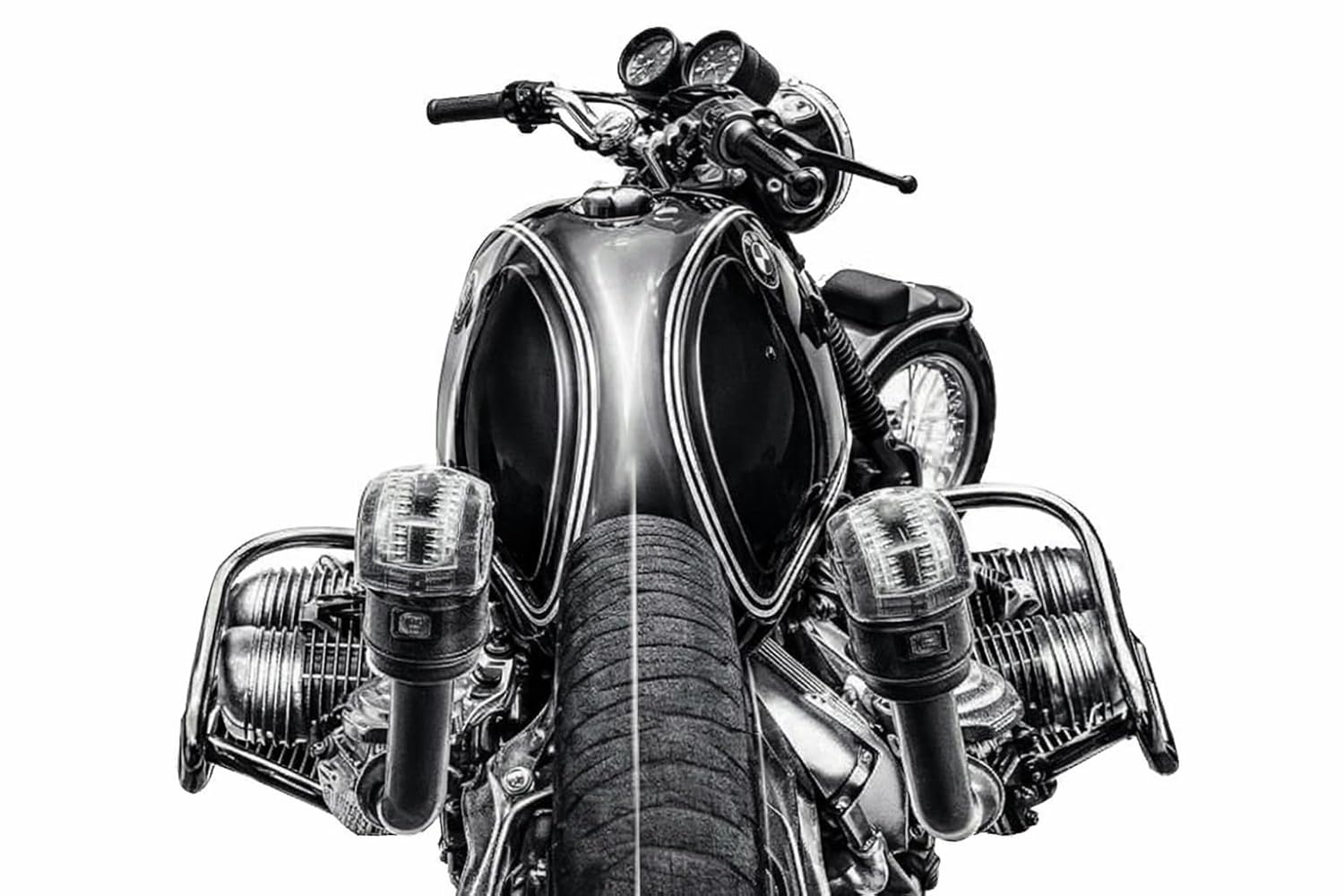
A carb synchroniser used “by feel” can get you only so far—especially when you’re trying to nail consistency across stages. This unit aims to give you a more direct read on flow mass, within its stated range.
That range (1–30 kg/h) is a practical window for many workshop diagnostics, but it also hints at a limitation: if your measured values sit outside that band, the tool won’t magically widen its capability. It’s a good idea to sanity-check your expectations before committing.
It’s also described as maintaining precise indication across angles and positions. That matters when the sensor and hoses don’t sit exactly where you’d like them to, which is a common problem with bikes and multi-carb engines.
Specs at a glance (so you know what you’re buying)
Tech specs
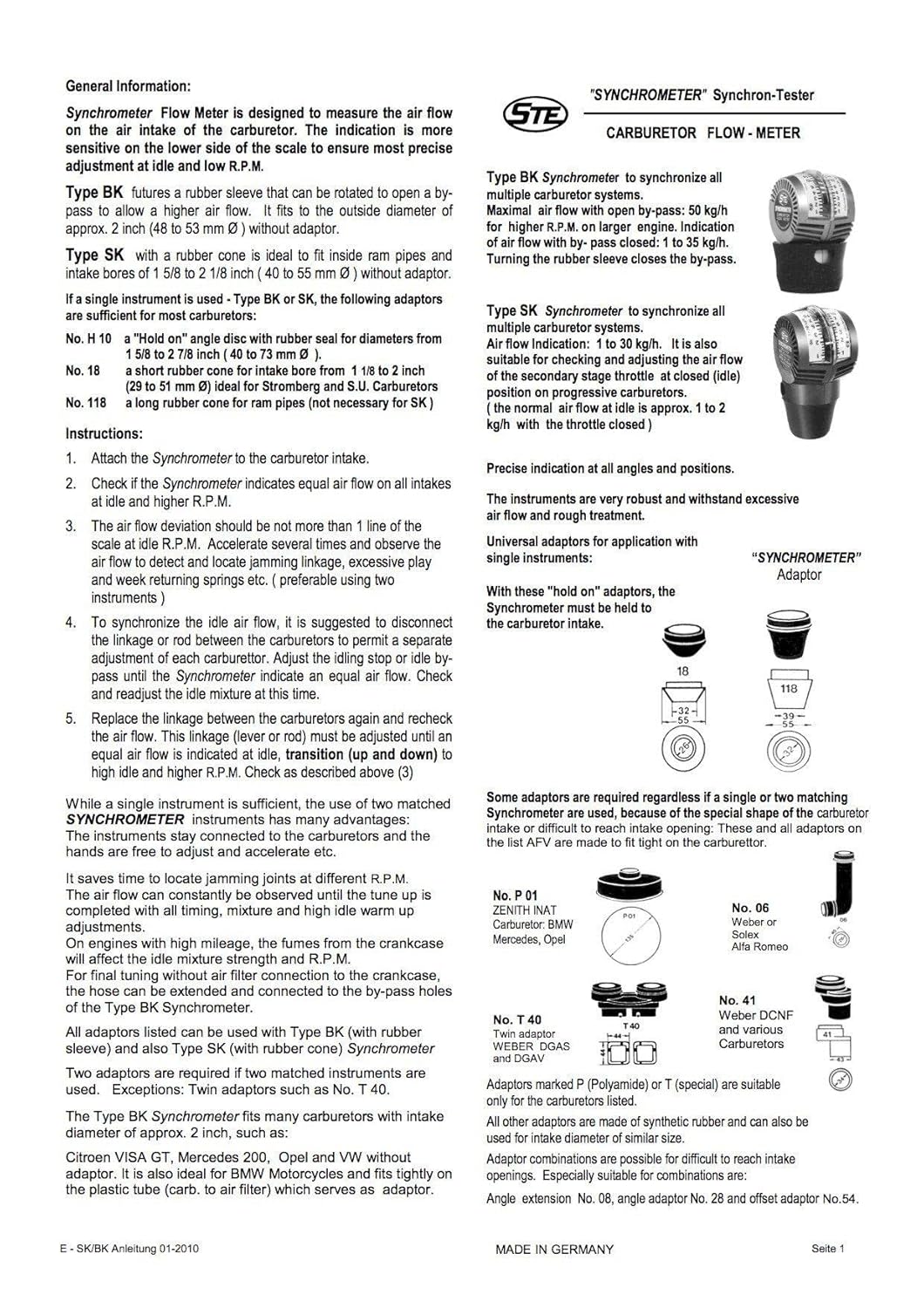
- Name: Schleyer STE Synchrometer SK Synchrometer (SK1-30)
- Type: Carburettor balancer / precision air flow meter for carb synchronisation
- Measurement range: 1 to 30 kg/hour (air flow indication: 1 to 30 kg/h)
- Intended use: checking and adjusting air flow of the secondary stage throttle at a closed position on progressive carbs
Pros, limits, and who should buy it
What you’ll like
- It’s built around measurable air-flow indication, rather than relying purely on subjective adjustments.
- The stated precision at all angles and positions is the kind of detail that can save time during setup.
- It’s targeted at motorcycle and multi-carb engine scenarios where carb synchronisation is part of maintenance.
Ten seconds of honesty (where it may fall short)
- The information provided points to a specific job: secondary stage airflow on progressive carbs at a closed throttle position. If your carbs don’t match that approach, it might not be the right tool for your synchronisation needs.
- With a defined 1–30 kg/h indication range, you may find it less useful if your setup tends to produce readings outside that window.
It makes sense if
It’s a good fit if you routinely work on progressive carbs, want a more structured way to check secondary-stage airflow at closed throttle, and value a meter that’s meant to stay readable even when positioned awkwardly.
You may want to skip it if
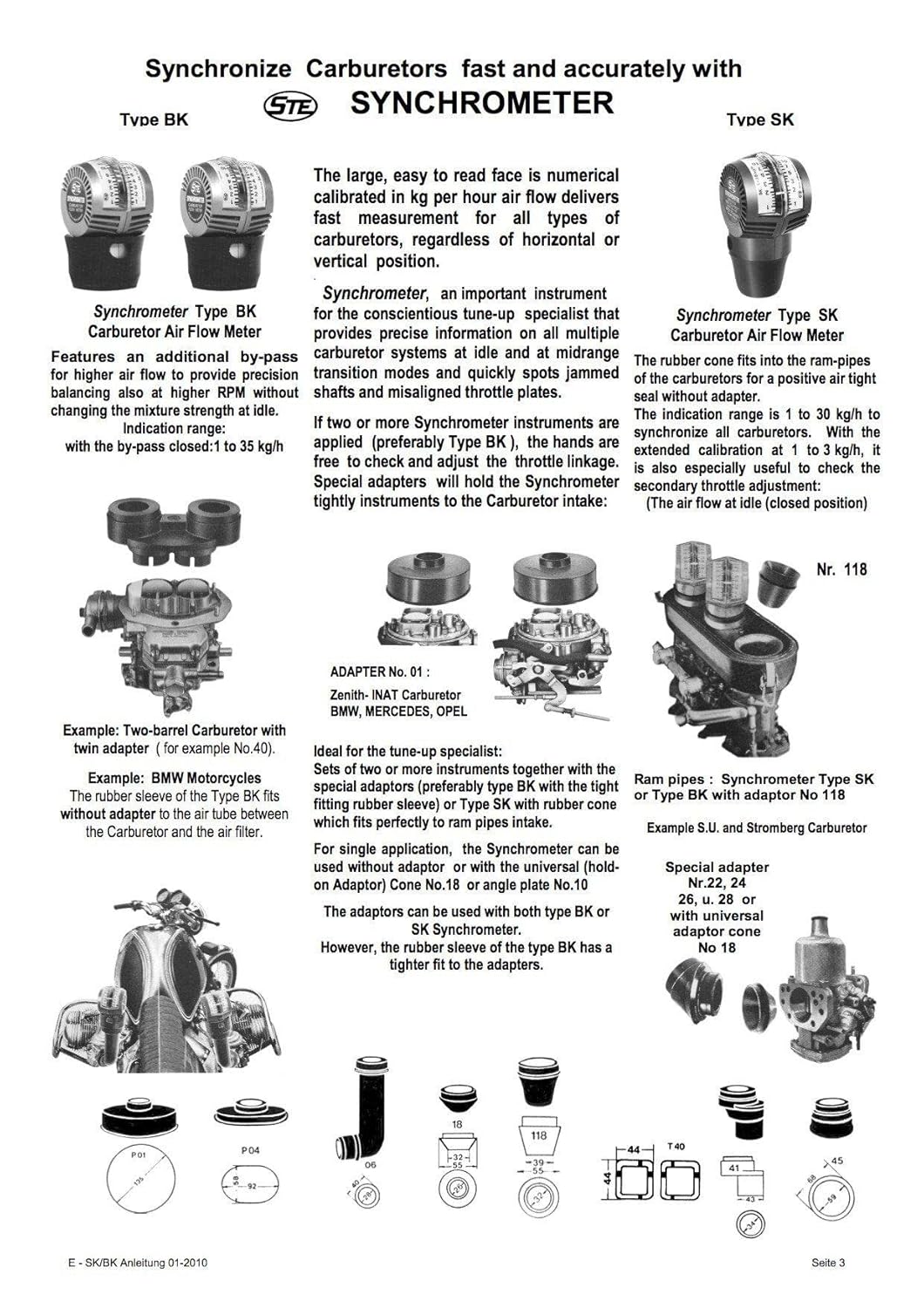
It may not suit you if your synchronisation process doesn’t revolve around the secondary stage/closed throttle approach, or if you mainly need a general-purpose balancing method for a different style of carb system.
Getting the most from it (practical approach)
A practical way to use a tool like this is to treat synchronisation as a repeatable routine: set everything to a known baseline, take readings, adjust in small steps, and re-check. Since this synchrometer is focused on secondary-stage airflow at a closed position on progressive carbs, your results will depend quite a lot on consistent positioning and throttle state while you measure.
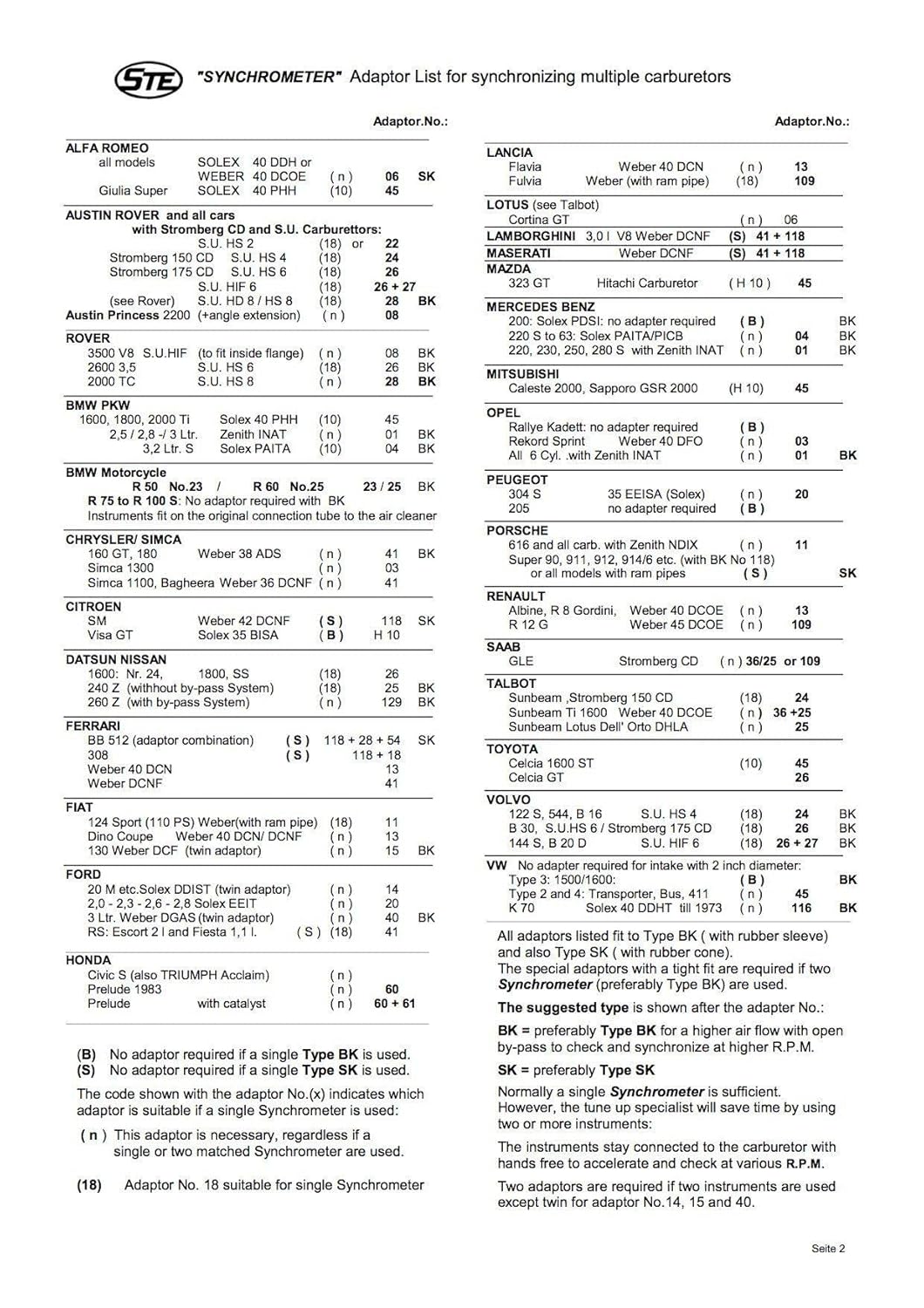
For example, imagine you’ve just adjusted linkages and you’re not fully confident the secondary stage is responding evenly. Using the SK1-30 to measure airflow in its 1–30 kg/h range can help you compare what’s happening between carbs, rather than guessing from engine feel alone.
Mini FAQ
Is it mainly for carb synchronisation on motorcycles?
Yes, it’s described as fit for motorcycles and multi-carb engines, specifically for checking and adjusting air flow for carb synchronisation.
What does the SK1-30 measure?
It measures flow mass in the range of 1 to 30 kg/hour, with air flow indication of 1 to 30 kg/h.
Does it suit progressive carbs?
The description points to progressive carbs and focuses on the secondary stage throttle at a closed position.
Will it be accurate if the sensor is positioned awkwardly?
It’s stated to provide precise indication at all angles and positions, which suggests it’s designed to handle less-than-ideal access.
Final verdict
Is it worth it?
A solid pick if you’re maintaining or tuning progressive carb setups and you want a meter-led approach to secondary-stage airflow at a closed throttle position, especially when access angles make simpler methods frustrating. You should seriously consider it as a workshop tool when synchronisation accuracy is the goal.
It may not be the best choice if your carbs don’t align with that secondary-stage/closed-throttle use case, or if you expect readings that consistently fall outside its 1–30 kg/h range. In that scenario, you’d likely be better off with a tool that matches your system’s balancing method more directly.