

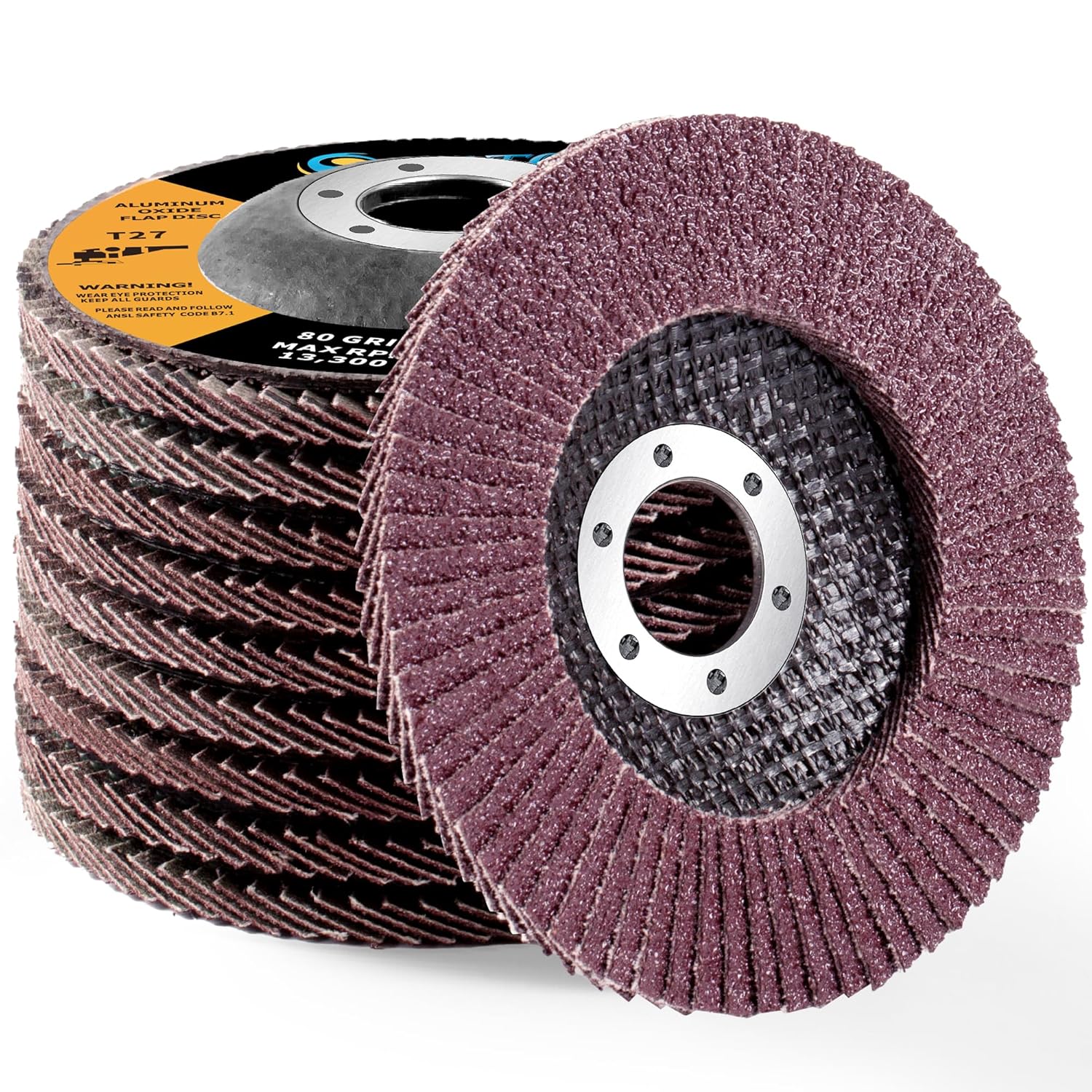
SATC 115mm flap discs 20 pack (80 grit) for angle grinders
Product description
What these flap discs are for
SATC’s 115mm flap discs are designed for fast, practical sanding and grinding with an angle grinder. If you’re dealing with rough edges, weld blends, or surface prep, flap discs are often chosen because they combine abrasive action with a more forgiving “feathering” effect than a flat grinding wheel. This 20 pack in 80 grit puts them in the middle of the workflow: not for ultra-fine finishing, but well suited to getting material moving and cleaning things up.
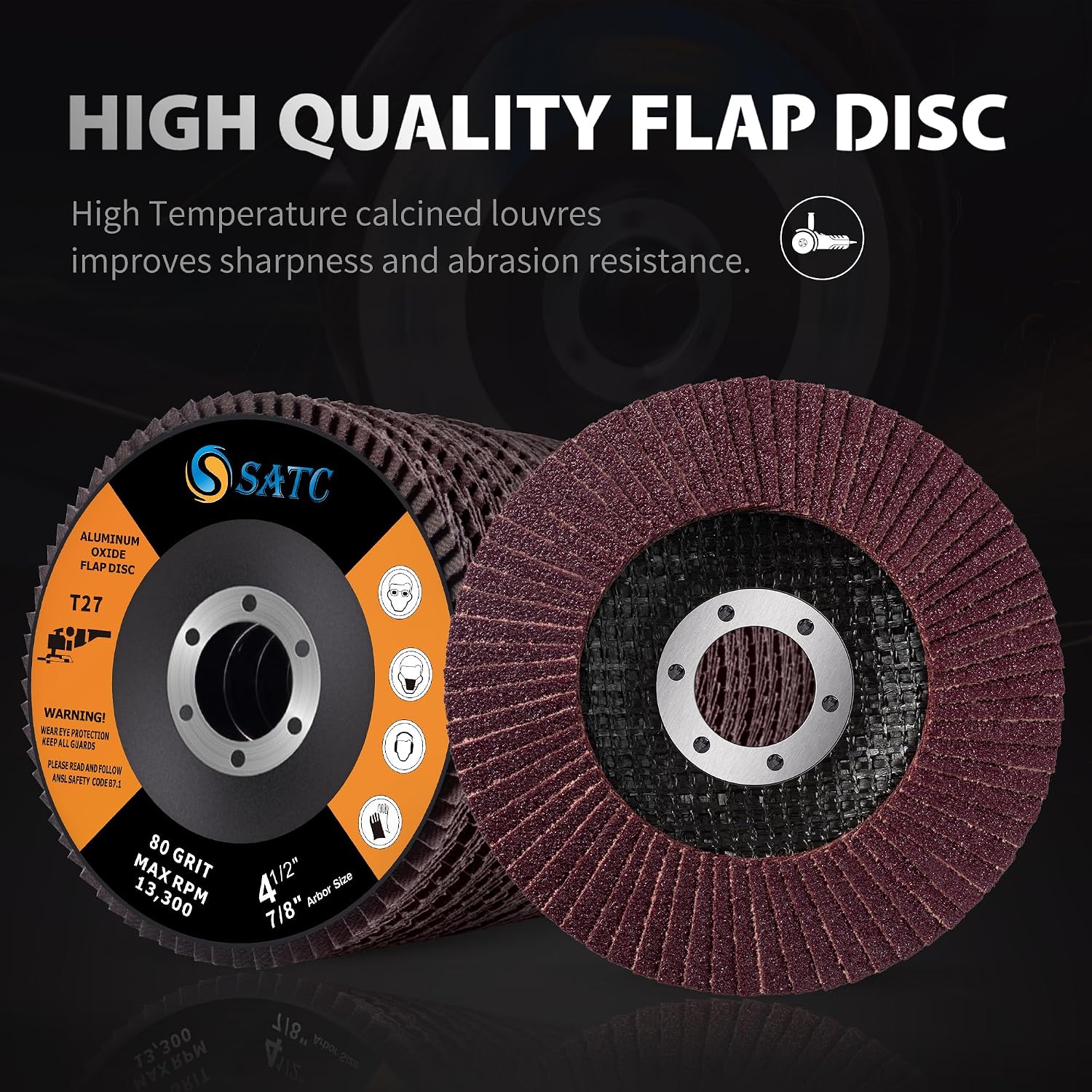
On paper, the idea is simple: you get polyester flaps with aluminium oxide grains and a multilayered fiberglass backing plate, aiming to reduce how often you need to change discs. It’s the kind of consumable that can make a difference to workflow if you’re doing repetitive metal prep rather than one-off touch-ups.
The essentials: build and performance focus
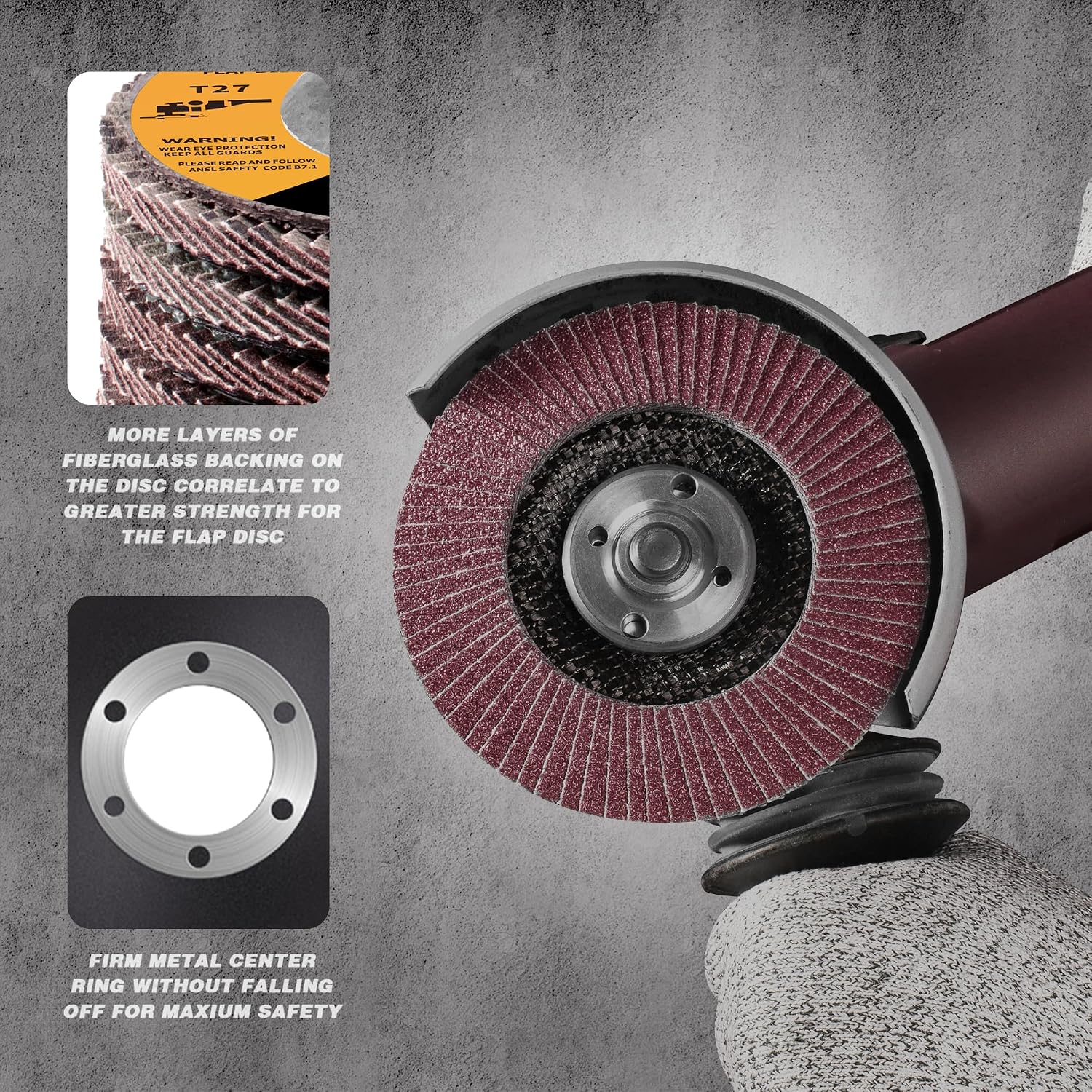
A big part of the appeal here is the construction. The discs use high-strength polyester flaps with premium aluminium oxide abrasive, backed by a robust multilayered fiberglass plate. The listing also highlights more layers of glass fibre backing for durability, vibration absorption, and strength. That’s a sensible mix for angle grinder work, because flap discs take a fair amount of stress through contact and heat.
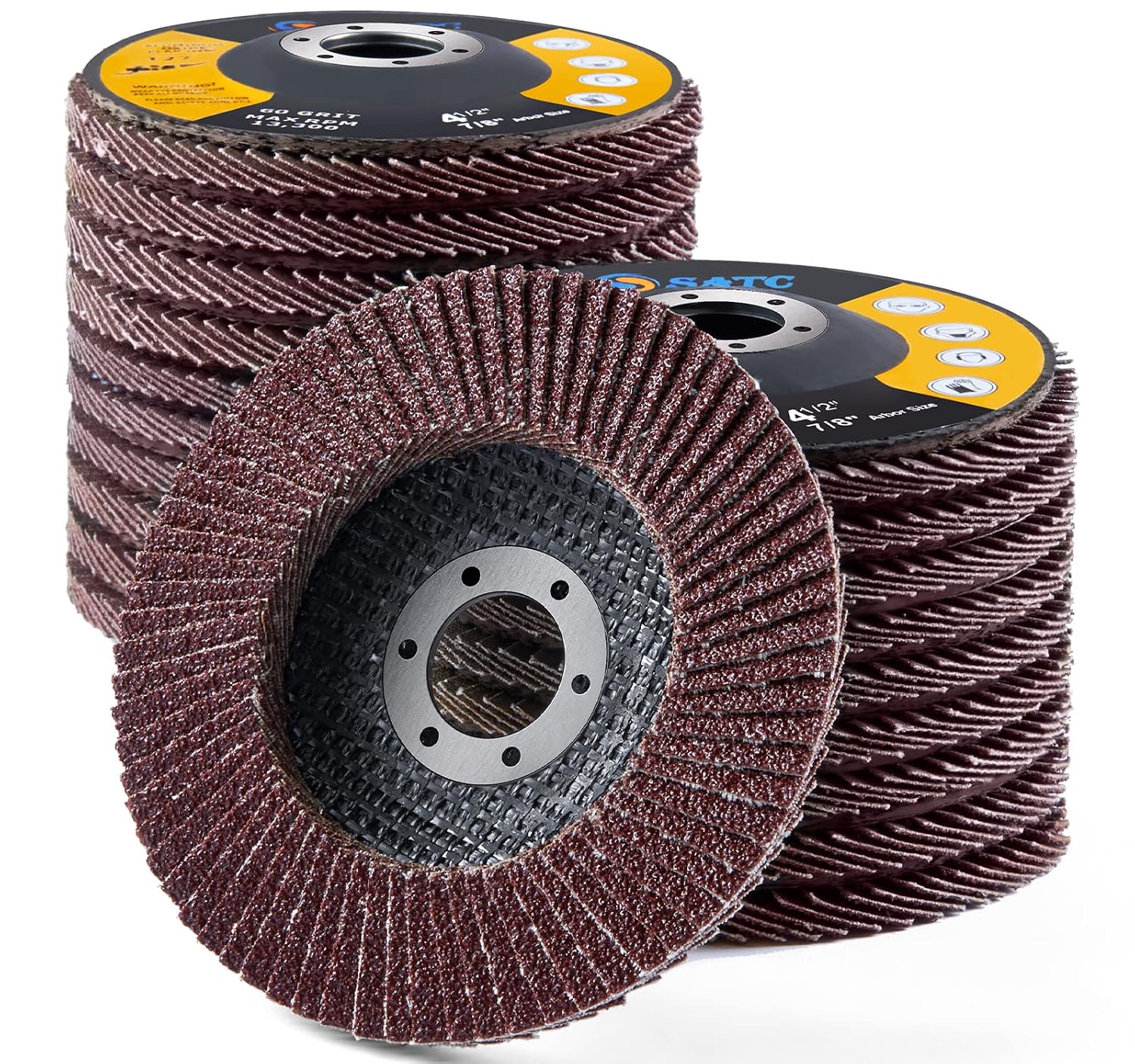
It’s worth noting that flap discs are still abrasive tools: they can get hot, and they’re not meant for abuse. The included reminder is clear—comply with OSHA and ANSI B7.1, don’t overspeed, don’t drop the wheel, and always use a guard and proper personal protective equipment. That’s not marketing language, it’s the difference between “works as intended” and “dangerous if mishandled”.
What the 80 grit is good for (and where it may fall short)
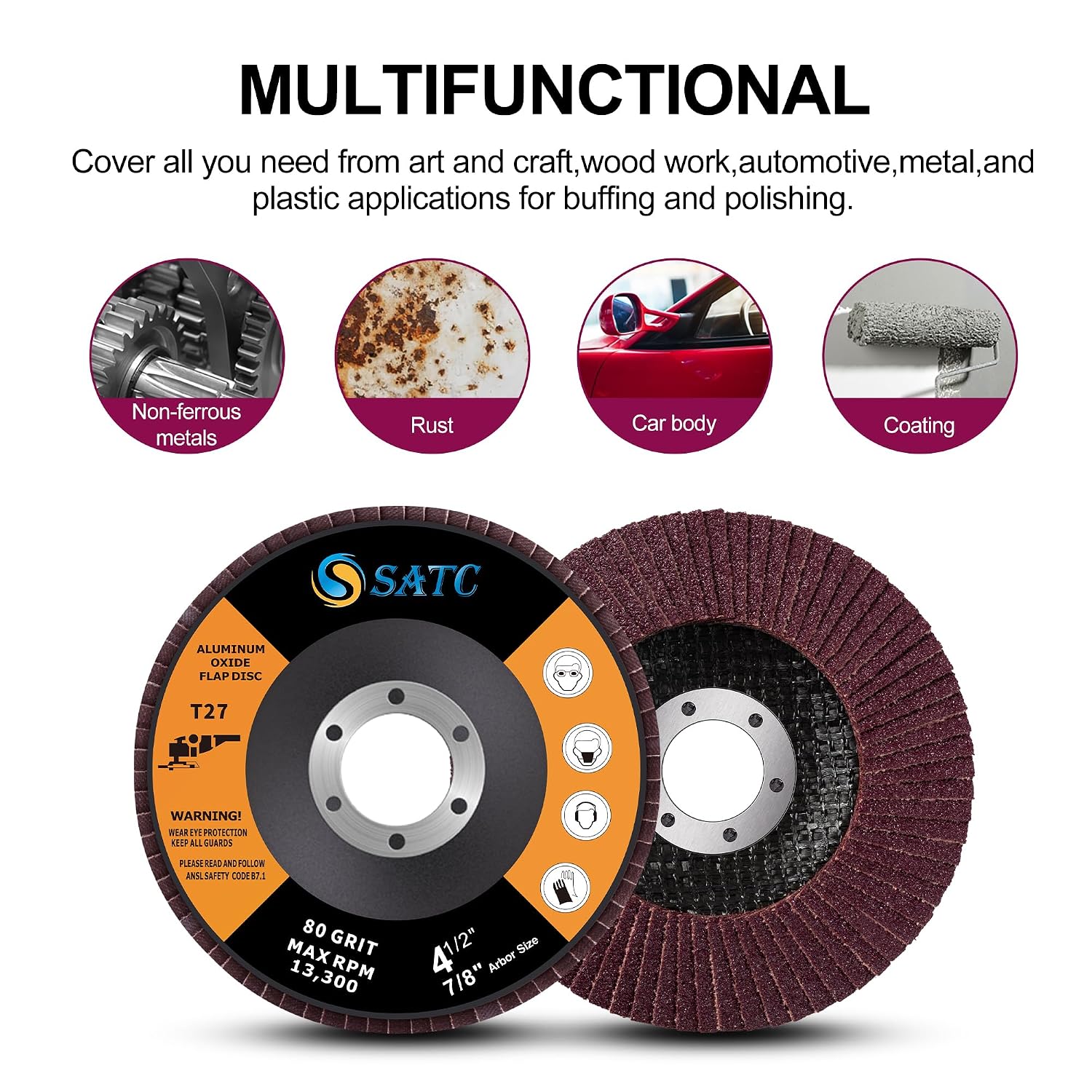
With 80 grit, these discs are positioned for “finer” work compared to very coarse grits—especially for tasks like rust removal and blending. They’re also described as suitable for stainless steel, mild steel, hardened steel and high-grade steel when used with right-angled grinders.
In real-world buying terms, 80 grit usually means you’ll remove material and even out surfaces without jumping straight to finishing sandpaper. If you’re expecting mirror-smooth results or a final finish ready for coating, you may find you still need a finer abrasive after these. So yes, they’re versatile, but they’re not a one-disc solution for every stage.
Key specifications to check before you buy
You’ll want to make sure these match your grinder and your existing disc system, because flap discs live and die by correct size.
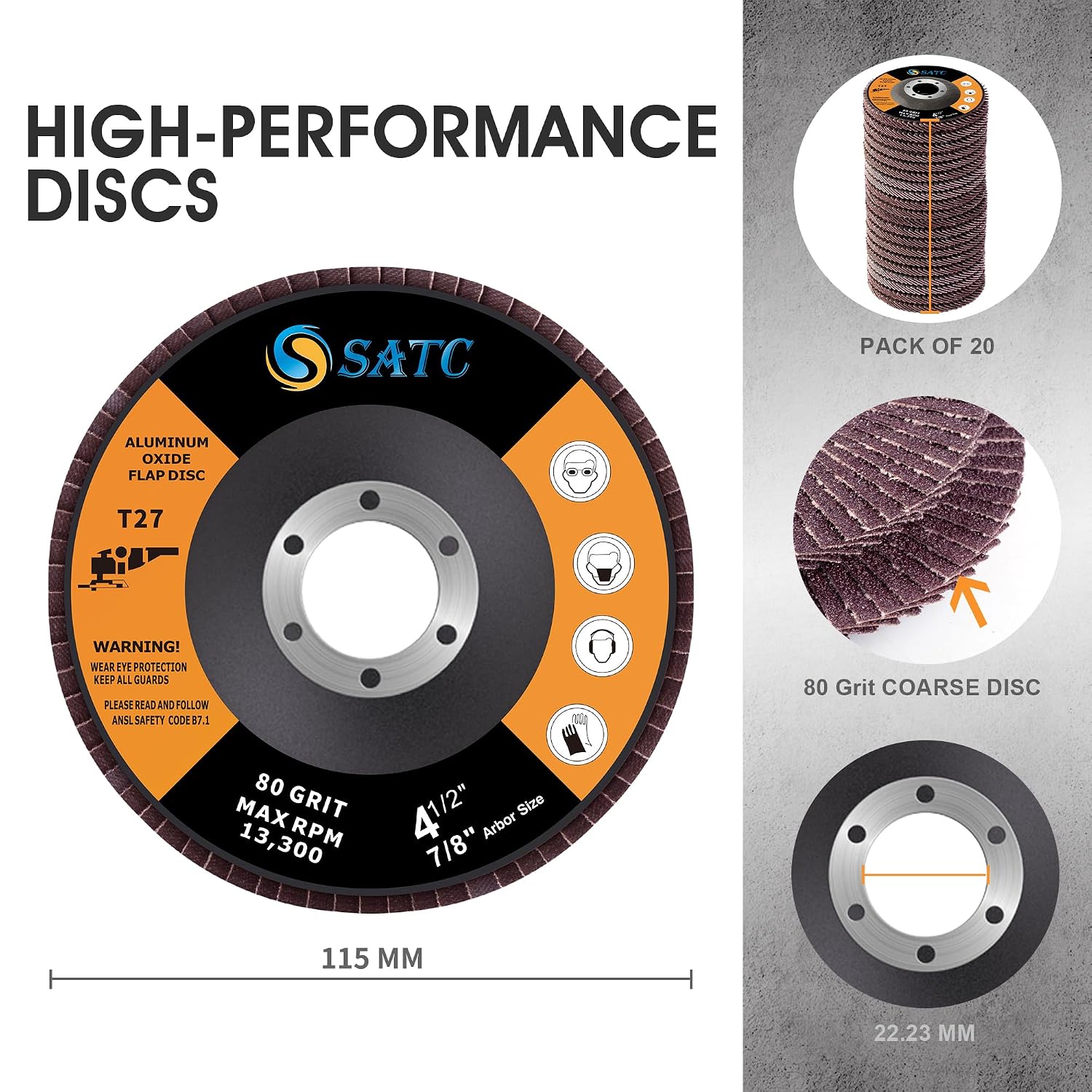
- Outer diameter: 115 mm
- Inner diameter: 22.23 mm
- Maximum speed: 13300 rpm
- Maximum linear speed: 80 m/s
If your angle grinder setup can’t run safely at the required mounting and speed limits, it’s better to pause. The listing also explicitly stresses following machine manuals and proper mounting procedures.
Pros and practical trade-offs
What stands out
- The design focuses on less downtime: the listing claims “less time for changing discs” thanks to durability.
- Multi-layer fiberglass backing is aimed at vibration absorption and strength, which can feel nicer during extended sessions.
- 80 grit is a useful middle ground for rust removal and blending.
- The pack size (20 discs) suits jobs where you expect ongoing use.
The limits you should keep in mind
- 80 grit can be too aggressive if your goal is fine finishing. For that, you’ll likely want a later step with a finer grit.
- Safety and speed limits matter here. If you tend to run tools beyond recommended settings, you may not love using discs like this.
- The listing doesn’t mention any special coatings for long life beyond the backing and construction, so if you’re chasing maximum lifespan above all else, it’s worth comparing against other flap disc families by construction details.
Where it fits best in your workflow
It’s a solid choice if you do regular metal surface prep: cleaning rust, blending weld seams, knocking back high spots, or preparing stainless/mild/hardened steel surfaces before further work. Picture this: you’ve got a stainless section with surface discolouration—80 grit helps you cut through without immediately going too fine, and the flap style helps you avoid the “flat spot” look you can get when grinding too aggressively.
It may not be the best match if you mainly do delicate finishing, sanding wood to a smooth final surface, or projects where you want the final coat-ready texture from one abrasive stage. Also, if you’re not confident about disc mounting and grinder speed control, you may want to reassess rather than rush in.
Is it worth it?
Worth buying if you want a 115mm flap disc pack in 80 grit for metal grinding and blending with an angle grinder, and you care about durability features like multilayer fiberglass backing. The 20 pack also makes sense for anyone who uses abrasive discs often enough for consumables to add up.
You may want to skip it if you’re after fine finishing in one step, or if your grinder setup can’t comfortably match the 115mm / 22.23mm mounting and the stated maximum speed. In general, it’s best treated as a working-stage abrasive—not the final sanding answer.

Mini FAQ
How do I know these flap discs will fit my angle grinder?
Check the outer diameter (115 mm), inner diameter (22.23 mm), and the maximum speed (13300 rpm). Also follow your grinder’s manual for correct mounting and guard use.
Are 80 grit discs good for rust removal?
Yes—80 grit is described as optimal for rust removal and blending, so it’s aimed at removing surface issues without going all the way to very fine finishing.
Can I use them on wood?
The listing mentions use for sanding grinding metal, wood, and different steel types, but it doesn’t go into a specific wood recommendation. If you’re mainly working wood, it’s worth being cautious and testing on a small area first.
Is safety gear really necessary for flap discs?
The listing includes a reminder to use a guard, personal protective equipment, and proper mounting, and to comply with OSHA/ANSI B7.1. That’s a good sign you shouldn’t treat them casually.
Do these discs replace other grits?
They’re a “middle” grit for work like blending and prep. If you need a smoother final surface for coatings or a finer look, you’ll likely want to move to finer abrasives afterwards.