

Salewa Ortles Dyneema Sling 8mm, Green, 60 cm | Unisex
Product description
What it is
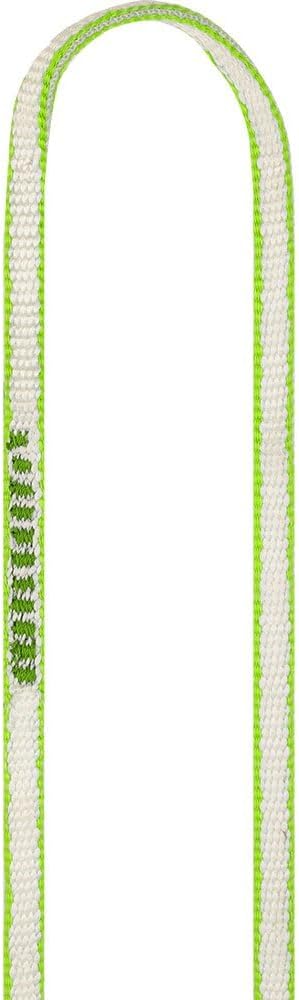
The Salewa Ortles Dyneema Sling is a compact, lightweight 8mm webbing sling finished in Salewa’s distinctive green. Designed for general outdoor use, it combines a slim profile with the durability of Dyneema, aiming to save weight without compromising on function. It’s sold as a unisex accessory, suitable for a range of quick-draw, anchor, or prusik-style applications that rely on reliable webbing rather than rigid hardware.
What it’s for
If you value simple gear that stays out of the way on long approaches or crag days, this sling can serve as a lightweight versatile option. It’s the kind of piece that tends to stay in the pack for multipitch climbs, alpine objectives, or general rope-work where a compact length with a predictable colour cue helps with quick identification.
How it performs in use
On paper, 8mm Dyneema is known for a strong strength-to-weight ratio and excellent knot-holding capability. The green colour coding is meant to aid quick visual identification, which can be handy when you’re routing gear in limited light or high-stress moments. However, the actual performance depends on the specific load paths and how you use it in real scenarios. It’s worth noting that Dyneema can be more slippery in certain knots and gear configurations, so it benefits from thoughtful setup and inspection before every use.
The best bits
- Very light for its size, reducing overall pack weight.
- Small and compact, easy to carry or stash in a belt pouch or climbing rucksack.
- Distinctive colour coding supports quick recognition among other slings and gear.
Potential limitations
- As a single 60 cm length, it may not suit every anchor or rigging scenario out of the box. If you routinely need longer lengths, you might prefer a second sling of a different size.
- Dyneema’s knot performance can vary by knot type and loading, so it’s sensible to test in a safe environment before relying on it in critical situations.
- It’s a general-purpose connector, for more complex loads or fall-factor scenarios, you may want to pair it with additional equipment that’s matched to the task.
Who it’s for
This sling is well suited to climbers, mountaineers, and outdoor enthusiasts who prioritise light gear and straightforward setups for routine rope work. If you’re building a lightweight rack or replacing an older, heavier sling, it can be a practical choice as part of a balanced kit. It’s less ideal for anyone who needs a long-term, high-load solution or specialized rigging gear where specific strength ratings and certification details are required.
Who it isn’t for
If you regularly demand longer slings, or you need ultra-high-strength rigging for advanced systems, this 60 cm 8mm Dyneema sling may feel limited. Likewise, if you prefer traditional nylon slings for their knot familiarity, the Dyneema feel and performance could be a shift from what you’re used to.
When it makes sense to buy
- You want a lightweight, easy-to-identify sling for standard anchor building and routine rope work.
- You favour a compact option that won’t bulk up your rack.
- You already understand how Dyneema behaves in common knots and rigging and want to add a high-colour, low-weight sling to your kit.
What to check before you buy
- Confirm the length (60 cm) fits your typical rigging needs and consider whether you need additional lengths for broader applications.
- Inspect the colour coding and how it integrates with your current rack to ensure quick identification under your usual conditions.
- Be aware of how Dyneema responds to knots you commonly use and practice safe, tested configurations.
Practical use example
On a crag day, you might use this sling to fashion a quick anchor with simple knotting and rely on its lightness to keep your pack manageable. In alpine terrain, its compact size helps when you’re jugging or moving quickly, provided you’ve planned the setup in advance and tested the rigging at ground level.
Comparison in context
If you’re choosing between a lightweight Dyneema sling and a standard nylon alternative, the primary considerations are weight savings and knot feel versus durability and familiarity. For casual day climbs or routine rope work, a slim Dyneema sling like this can be worthwhile for the marginal weight savings. For high-load, critical anchors or long-term rugged use, you might balance it with a more robust option.
Is it worth it?
Worth considering if you prioritise light gear and simple, quick setups for everyday climbing tasks, but not the best fit if you frequently require longer lengths or need maximal rigidity and traditional feel in knots.
FAQ
- What happens if the sling gets wet? In typical use, Dyneema maintains its light profile, but check your knot choice and loading in wet conditions.
- Can this be used for dynamic rope work? It’s intended for general sling use, for dynamic loads, confirm suitability with your usual safety practices.
- How should I store it? Keep it dry and away from sharp edges, inspect for wear before each session.