

Rymora Compression Socks for Men and Women (Sports, Running, Work & Flights)
Product description
What these compression socks are for
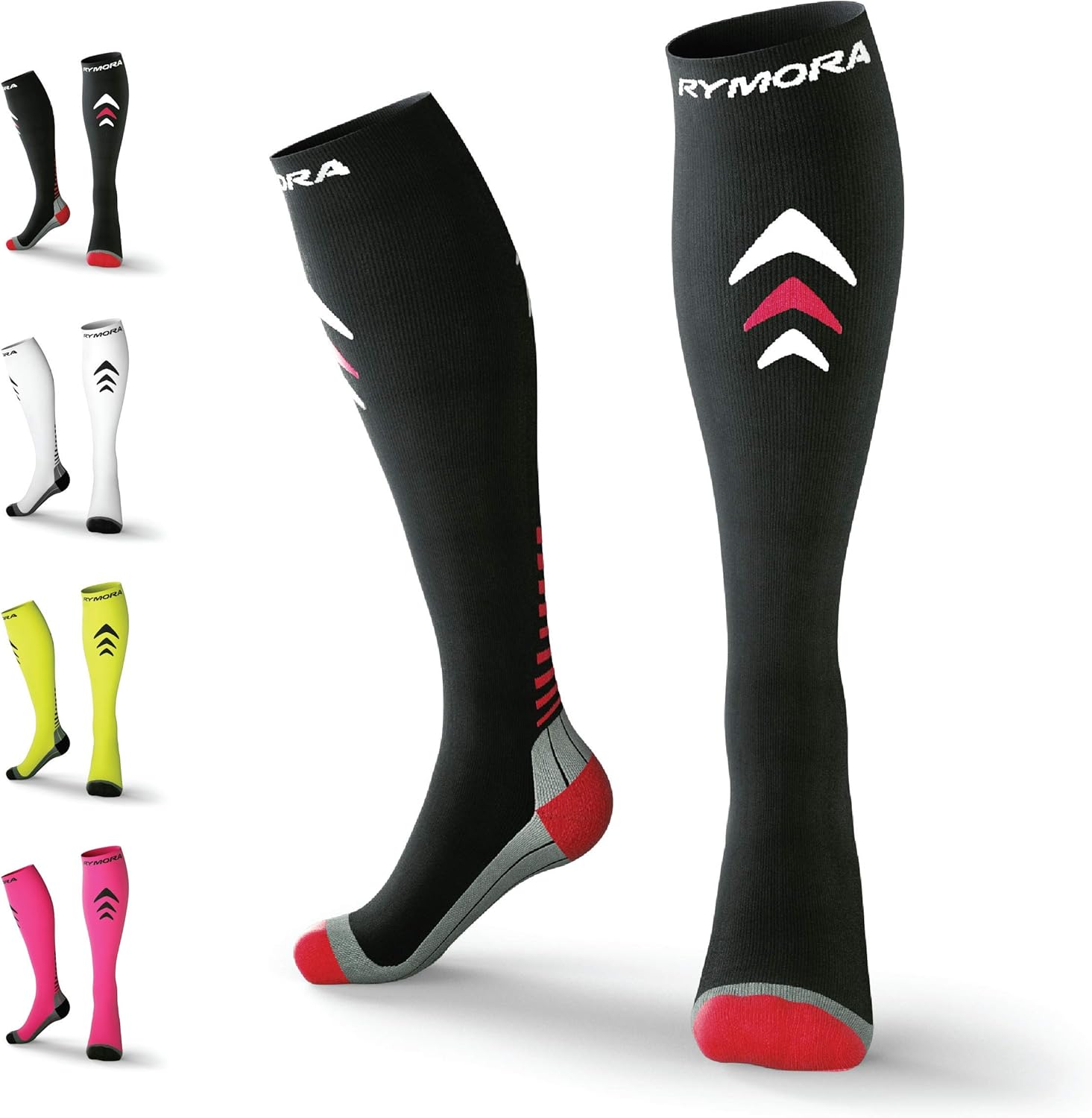
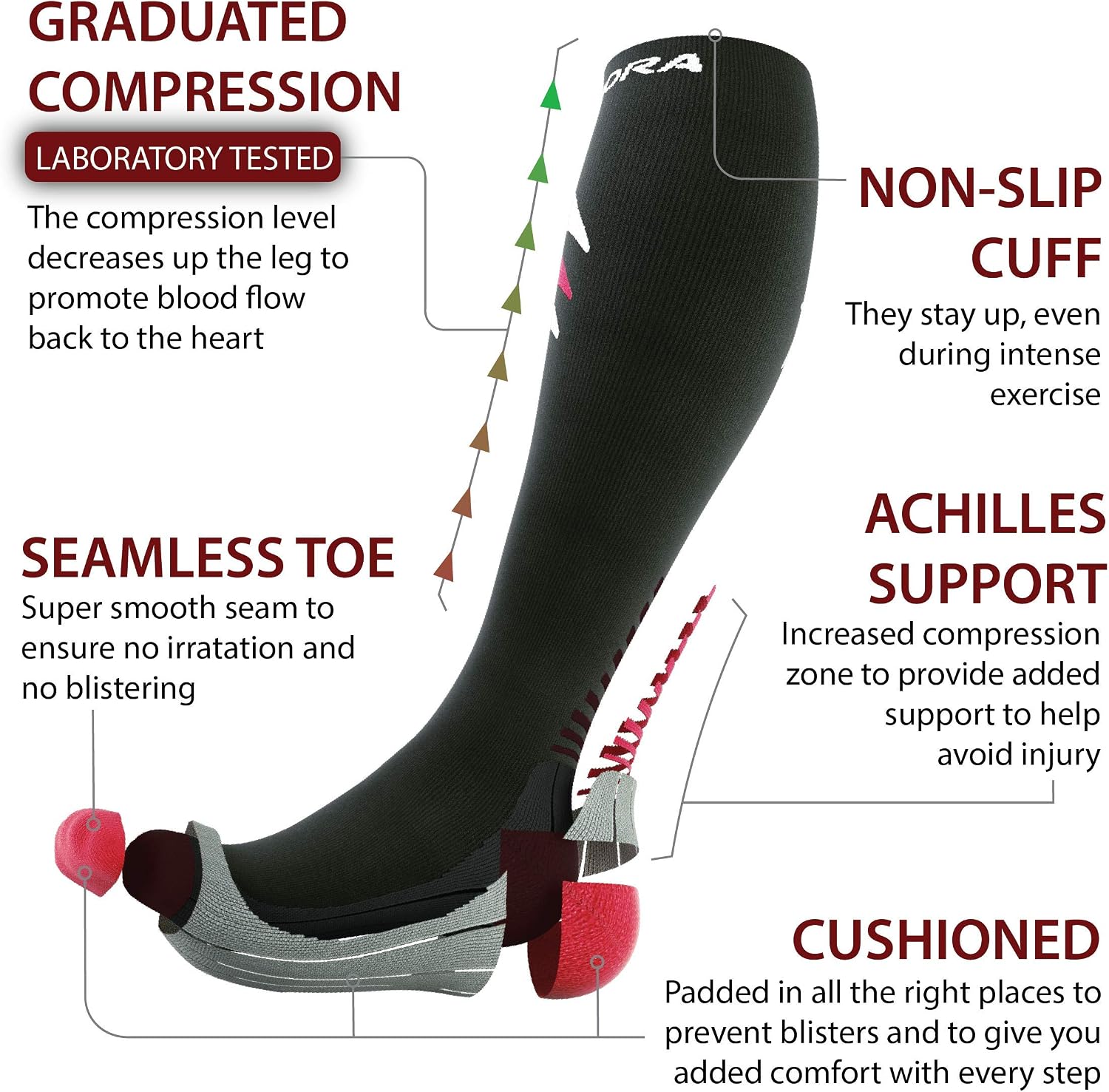
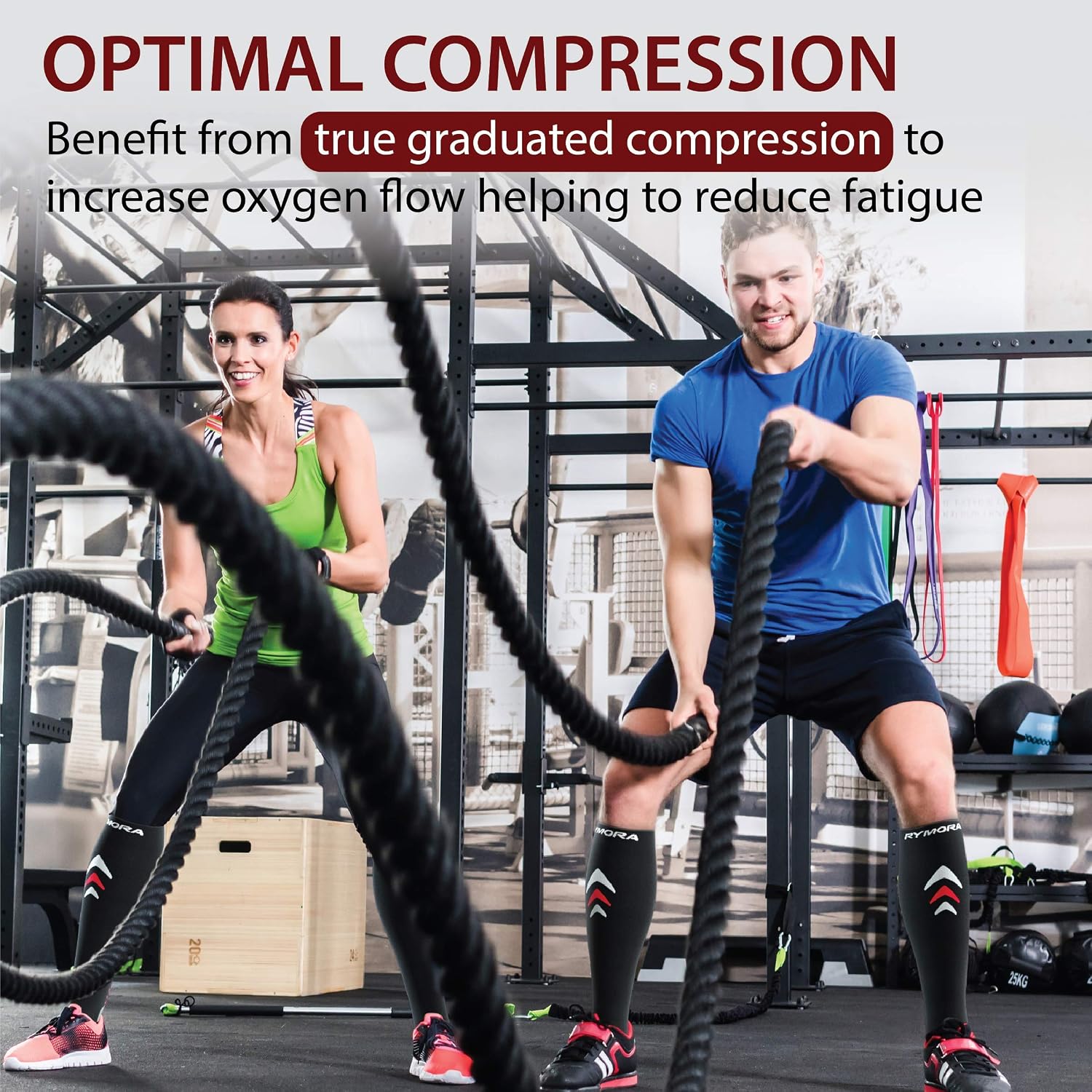
Rymora’s compression socks for men and women are designed around one main idea: graduated compression, meaning the pressure is higher around the ankle and then eases as it moves up towards the knee. On paper, that should offer more support to your calves and help encourage better blood flow through the leg. The brand also links this to practical outcomes people look for in day-to-day wear—helping to prevent cramps and reduce leg fatigue, especially when you’re active or on your feet for long periods.
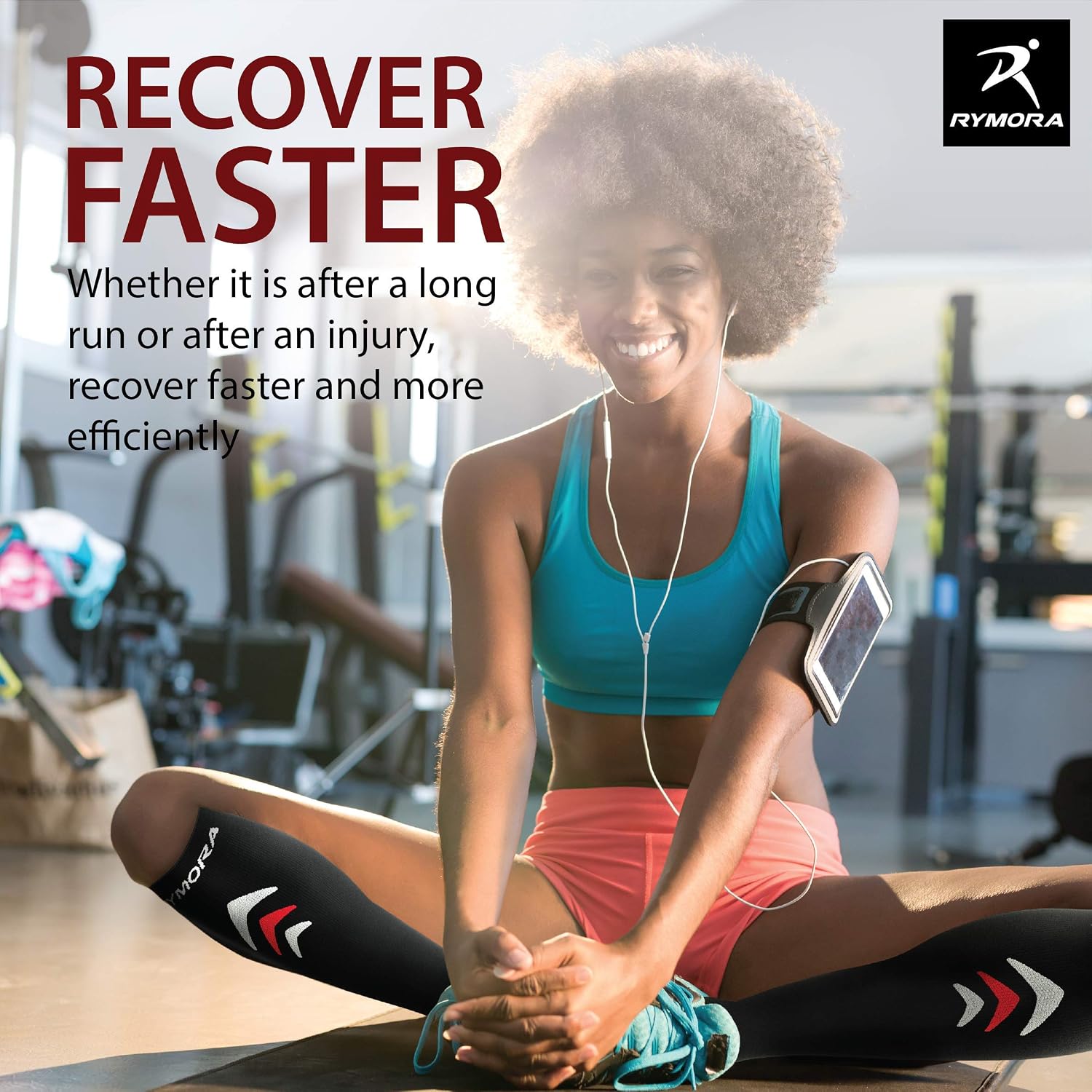
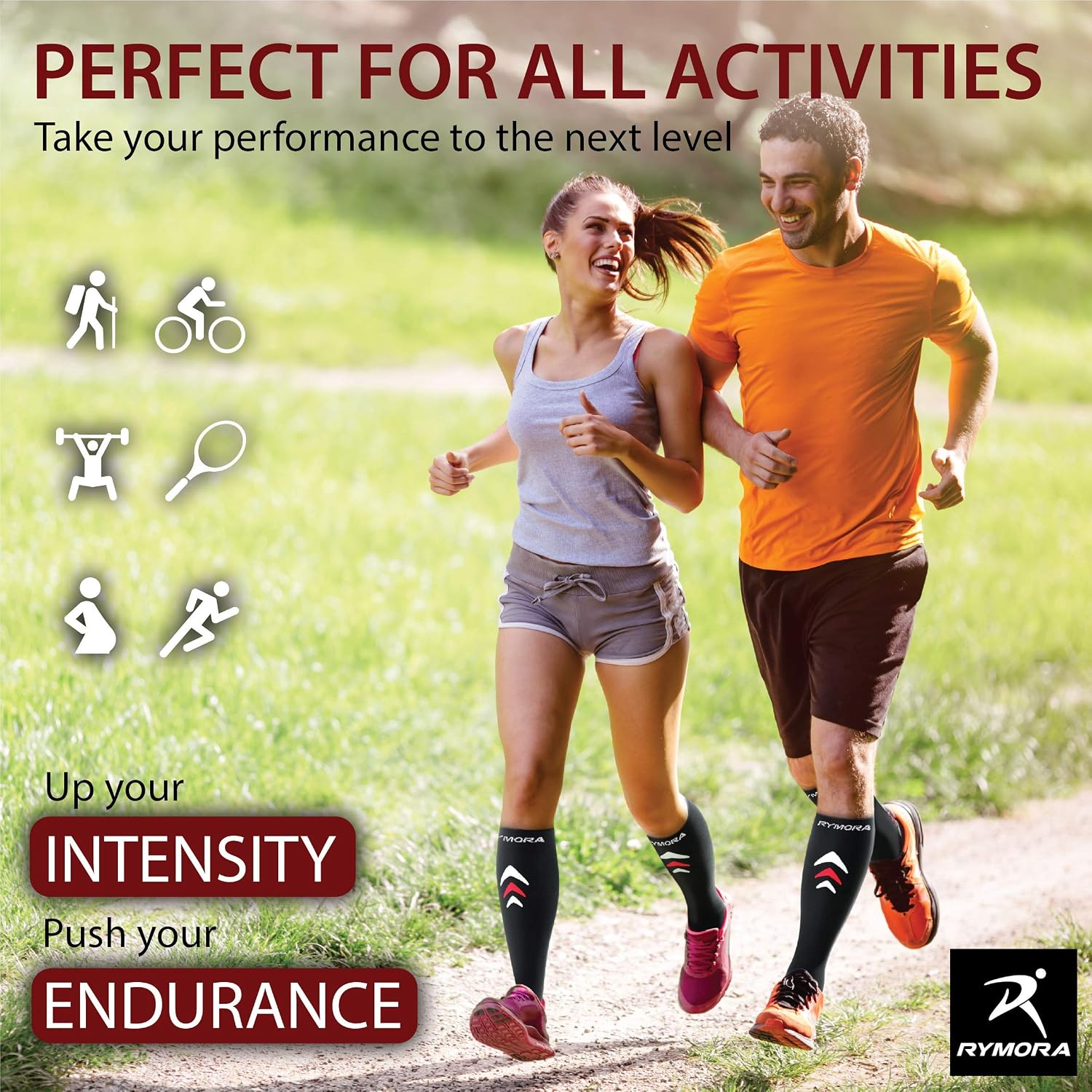
They’re positioned as a versatile pair rather than a niche training-only sock. The base description explicitly points to use during sports and running, as well as work wear (for people who stand all day), recovery, and even flying. That broad “from training to downtime” angle can be useful if you don’t want to buy separate pairs for every situation, although it does mean you should think carefully about what you need most (support during workouts vs. everyday comfort).
Key features that matter in real use
The compression is described as graduated from the ankle up to the knee. That matters because you’re not just wearing a regular sock with a bit of stretch—you’re buying a planned pressure pattern. If you’re the kind of person who notices calf tightness after long walks or gets leg fatigue after a long shift, this is exactly the sort of design you’d expect to look for.
Comfort is handled in two ways in the description. First, there’s additional cushioning in places that commonly cause wear or pressure: the toes, heel, the sole of the foot, and the Achilles tendon area. Second, the socks include ventilation strips in those regions “to ensure breathability”. In practice, that’s the difference between socks that feel fine at first and socks you can tolerate for a full run, a gym session, or a long day on your feet.
There’s also the materials mix, which is fairly specific: 54% nylon, 39% polyester, 7% elastane. The presence of elastane points to stretch and fit retention, while nylon and polyester support durability and breathability—again, it’s a sensible mix for compression socks meant to be worn repeatedly.
Where they fit best (and where they might not)
It’s easy to see why these are pitched for multiple scenarios. The listed sport use cases include running, marathons, hiking, cycling, football, rugby, tennis, basketball, triathlon, weight lifting, and general fitness. For work wear, the description calls out roles where standing for long periods is common, such as nurses, teachers, pharmacists, police, and warehouse operators.
So if you want one sock to cover: commuting and errands, a workout day, and even long flights, the “unisex and versatile” approach will appeal.
That said, a small limitation to keep in mind: the description doesn’t give a compression level (for example, measured in a specific range). If you’re buying with the expectation of a very defined medical-style compression level, you may find the detail here a bit light. It’s not necessarily a downside, but it’s a reason to set expectations—these look like performance and comfort compression socks rather than a precisely specified therapeutic product.
What you’ll notice day to day
A practical way to judge socks like these is to think about pressure, friction, and heat.
- The graduated compression should feel like calf support as you walk or run, rather than a uniform “tight sock” sensation.
- The extra cushioning on the toes, heel, sole, and around the Achilles area is aimed at reducing blister risk and improving comfort—useful if you’re doing distance running or wearing them with trainers for work.
- Ventilation strips in those same zones are there for breathability, which can help if your feet run warm.
However, comfort is personal. If you’re sensitive to firm pressure around the ankle or Achilles tendon area, these could feel too snug for casual, all-day lounging. In other words: they’re built for support, not for “as loose as possible” comfort.
Materials, fit and durability (what to check before buying)
The description includes the fabric composition (54% nylon, 39% polyester, 7% elastane), which is helpful because it signals a blend built for stretch and longevity. But you should still consider two buying checks.
First, compression socks rely heavily on getting the right fit. Even with elastane for stretch, the graduated pressure effect is meant to sit correctly from ankle to knee. If you end up with a sock that’s too loose or rolls down, you’ll lose the intended support.
Second, the cushioning and ventilation zones are mapped to common problem areas (toes, heel, sole, Achilles tendon). That’s good for reducing hot spots and abrasion, but it also means the sock will feel more structured in those areas than a basic trainer liner.
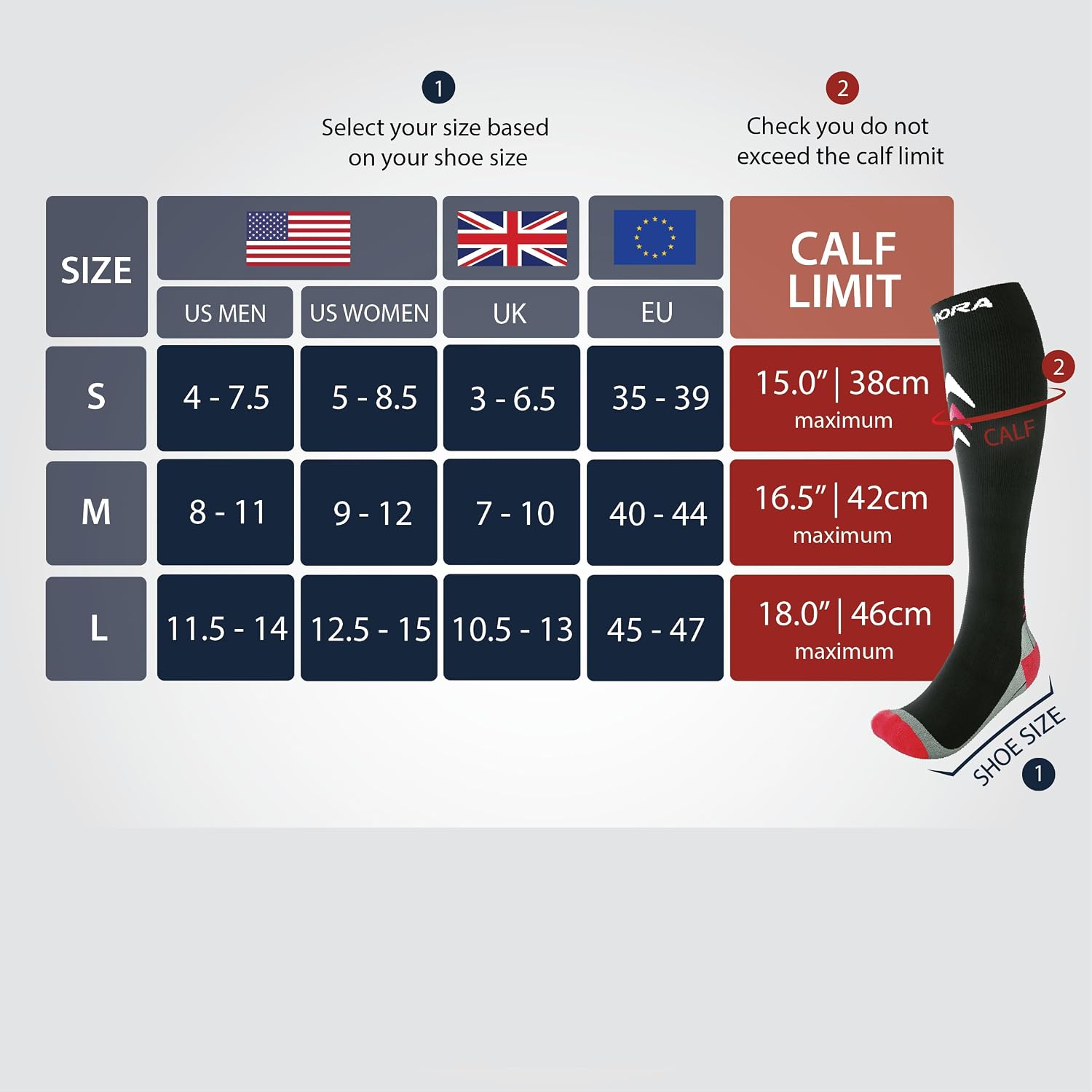
If the listing includes size options, it’s worth comparing your usual sock size to the specific guidance provided there, because this type of product is only as good as its sizing accuracy.
Pros
- Graduated compression from ankle to knee, intended to support calves and reduce fatigue/cramps (as described)
- Extra cushioning in toes, heel, sole and around the Achilles area to help prevent blisters and improve comfort
- Ventilation strips positioned where you’d typically want airflow
- Unisex design suitable for sports, work, recovery and flying
- Material mix includes elastane for stretch and nylon/polyester for durability and breathability
Cons
- No specific compression “level” is stated in the information provided, so it may not satisfy people looking for a precisely measured therapeutic compression range
- Fit sensitivity is likely: compression socks should sit correctly, and comfort depends on personal tolerance of pressure
Is it worth it?
A good fit if you want supportive compression socks that cover multiple real-world situations—running or gym sessions, standing jobs, recovery days, and even flights—then Rymora’s graduated compression design plus targeted cushioning is a sensible package.
It may not be the best choice if you’re specifically chasing a clearly stated compression level for a medical or clinically prescribed purpose, or if you already know you dislike firmer pressure around the ankle/Achilles area. In that case, it’s safer to look for more explicit compression specifications and sizing guidance.
For most buyers, the decision comes down to whether you value: support that’s stronger at the ankle, comfort-focused cushioning in key rubbing points, and breathability through ventilation strips. If that matches what you’re trying to solve—fatigue, cramps, blister-prone training or long standing shifts—these are worth considering.
FAQ
Can these compression socks be used for flights?
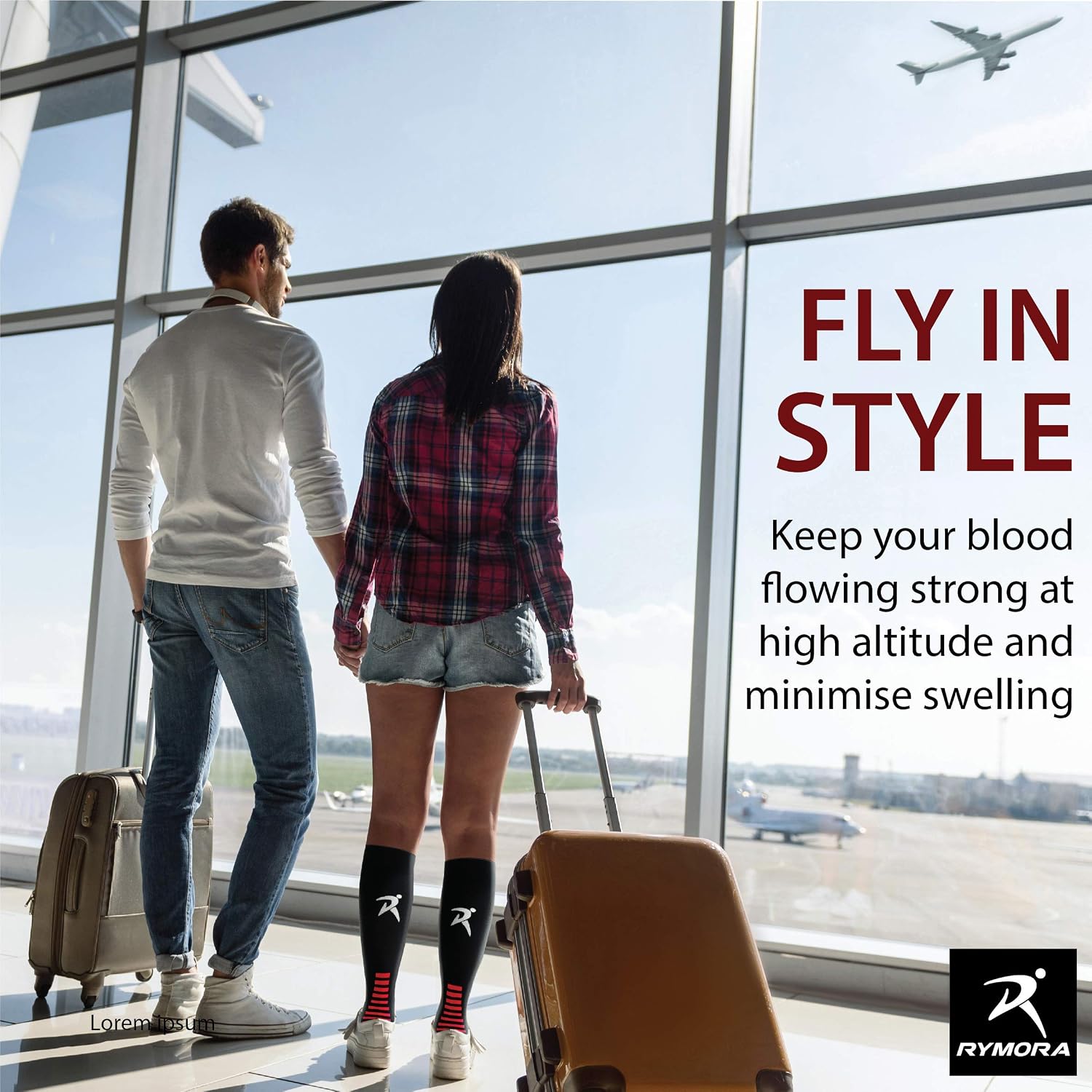
The description explicitly includes flying as a use case, alongside recovery. If your main goal is leg comfort during travel, they’re clearly marketed with that in mind.
Are they suitable for both men and women?
Yes, they’re described as unisex and intended for both men and women.
Do they include extra cushioning?
Yes. Additional padding is mentioned for the toes, heel, sole of the foot and the Achilles tendon area.
Do they focus on breathability?
They do: the description states the socks use a high-quality nylon/polyester/elastane blend and includes ventilation strips in the cushioning areas.
Who are they aimed at for work?
The base description calls out professions involving long periods of standing, such as nurses, teachers, pharmacists, police and warehouse operators.