

Roshield Rat Drain Guard 4" stainless steel drain protector 🛠
Product description
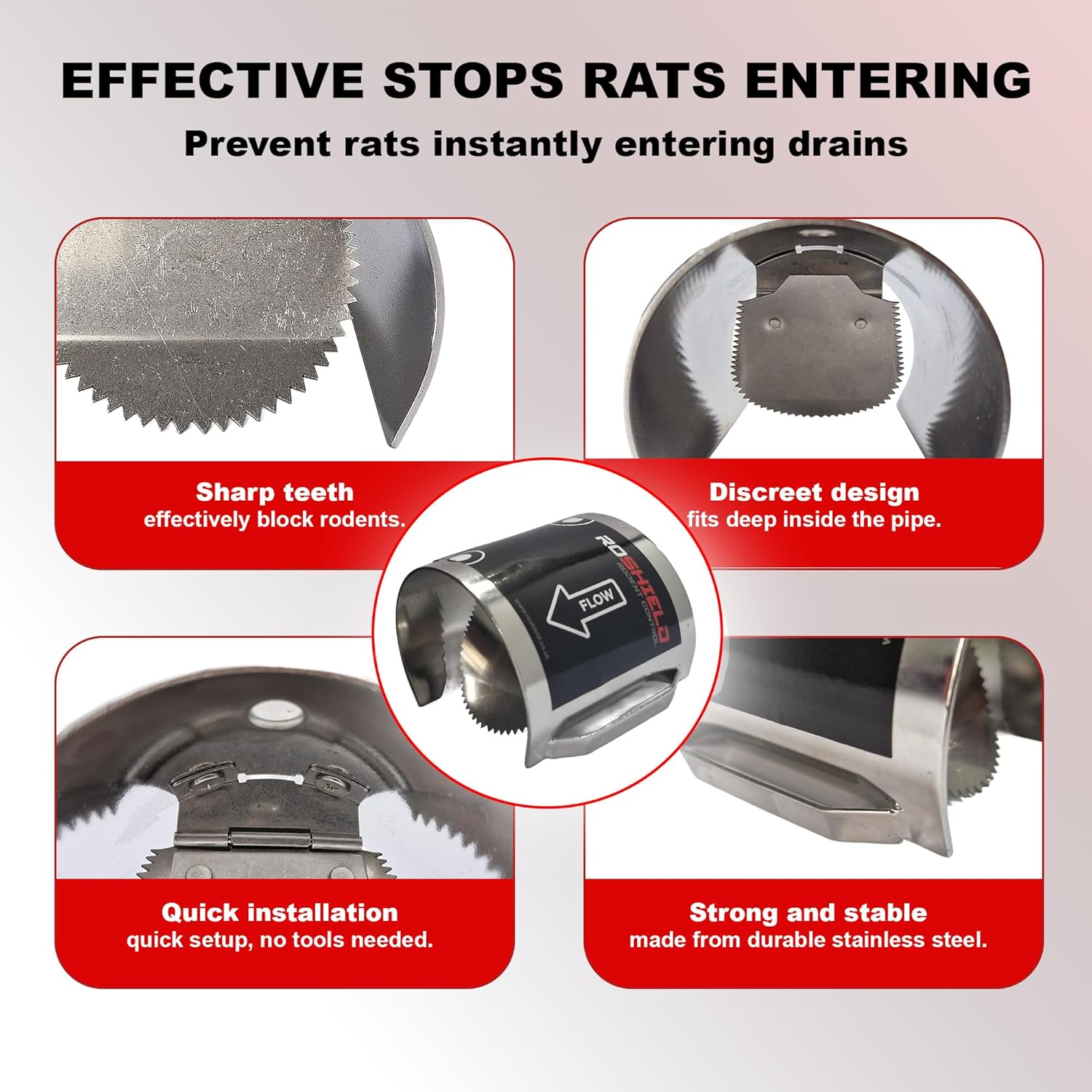
This drain guard from Roshield prevents rodent entry through underground drainage by combining a one-way flap and sturdy mesh to let waste flow while blocking rats. It is aimed at protecting both domestic and commercial properties from infestation, and it can be fitted inside inspection chambers to control access at pipe entry points.
Key Points
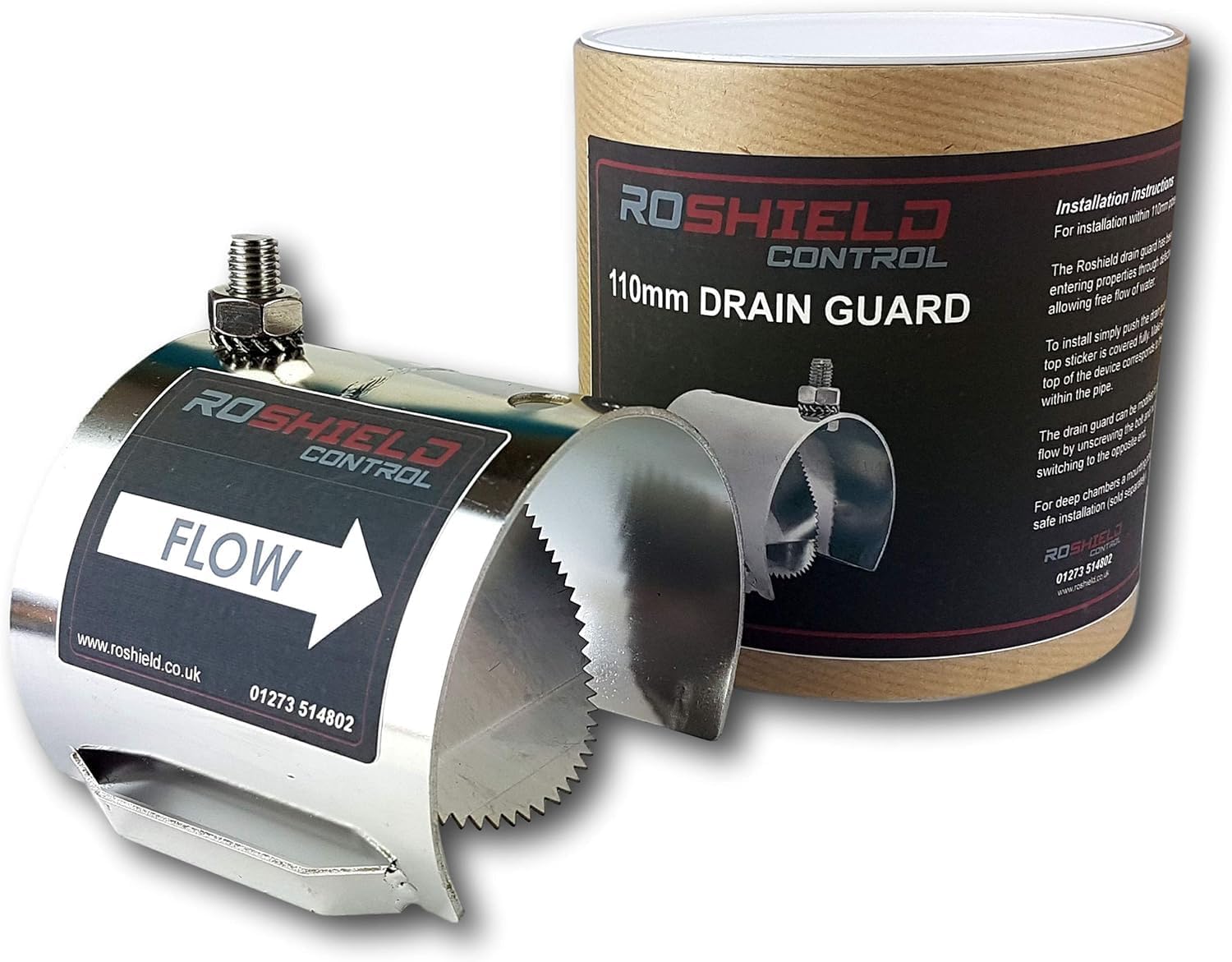
The device uses a unidirectional flap that allows liquids and solids to pass downstream while preventing rats from moving upstream into a property. Installation is straightforward and requires no specialist tools, making it practical for maintenance teams and property owners alike. Manufactured in the United Kingdom from marine-grade materials, the guard is intended for the wet and corrosive environment typical of sewers and inspection chambers. 🛠️🐀
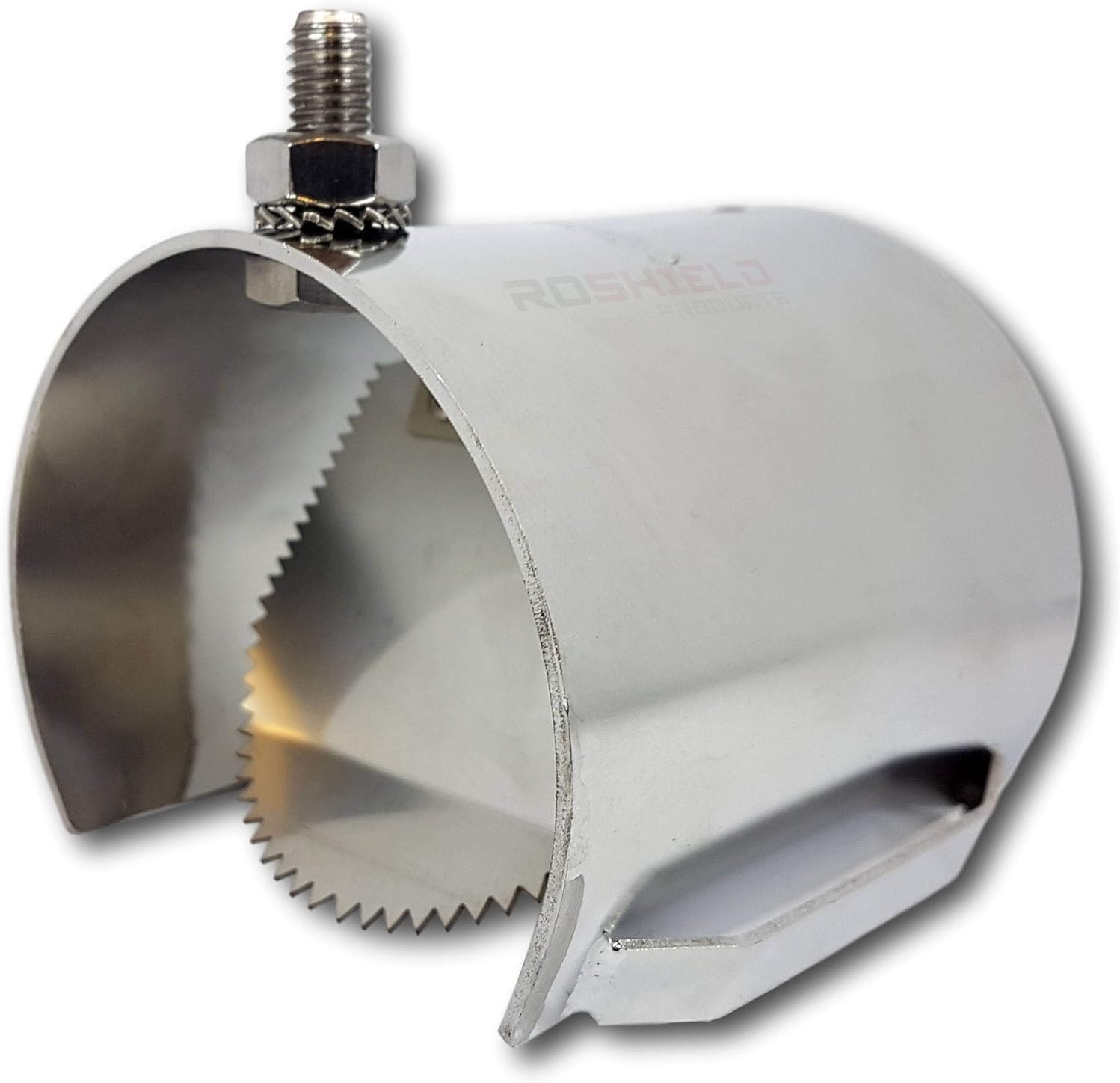
The flap and barrier are designed to resist gnawing and blockage from debris, according to the manufacturer, which helps reduce the chance of re-infestation through the same drain run. Consider that heavy sediment build-up in older pipes may require occasional clearing to keep the mechanism operating smoothly.
Benefits
This solution reduces a common point of pest entry without altering the external profile of drainage openings. Its compact design means it can be fitted on both inlet and outlet sides of a pipe, and the included bolt can be flipped to match flow direction during installation. The guard is low maintenance once fitted and does not require ongoing adjustments under normal conditions. ⚙️
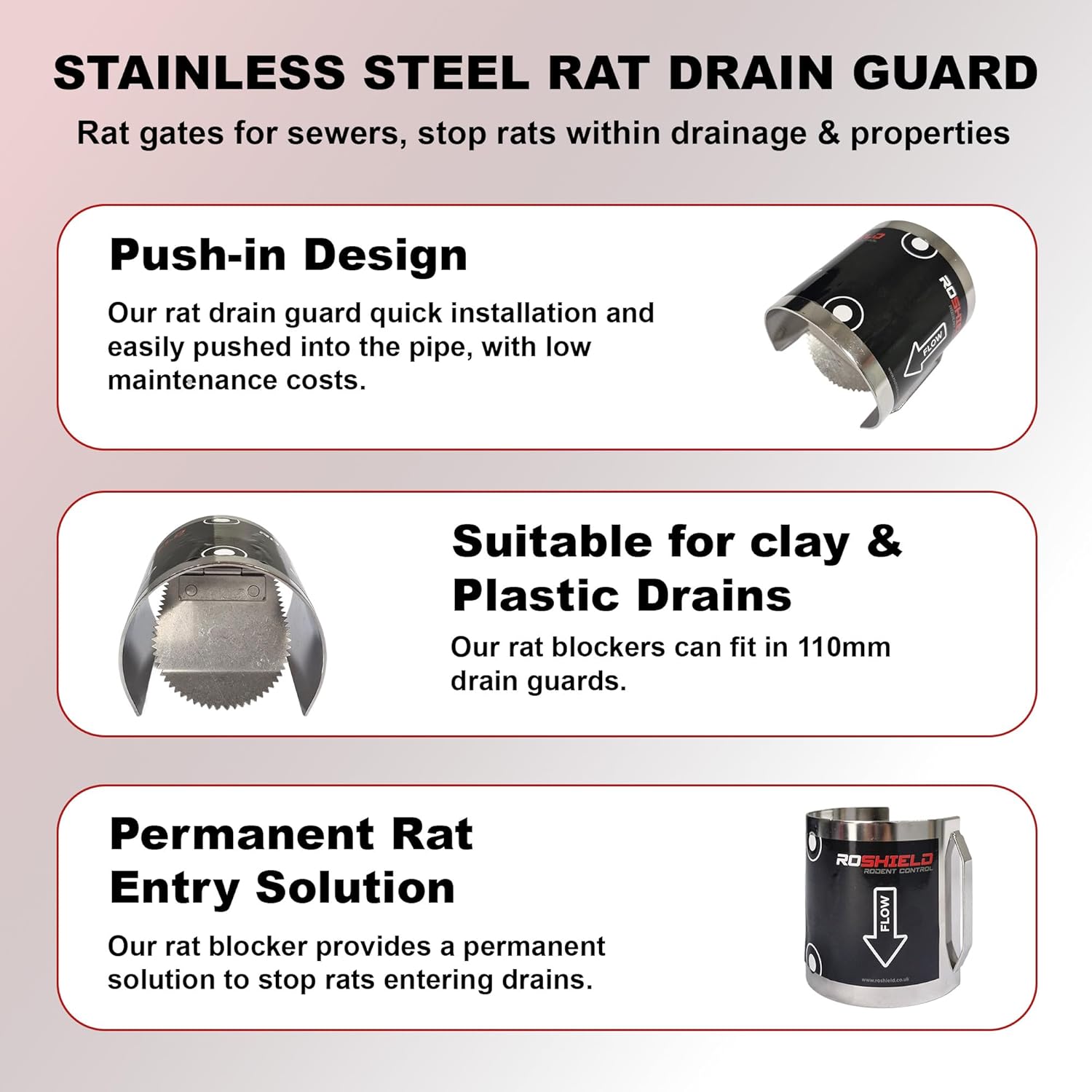
One nuance to bear in mind is that while the flap prevents rodent access, it relies on sufficient flow to move solids past the barrier. In very low-flow situations a periodic check is advisable, particularly in long or partially collapsed runs.
Technical Specifications
- Name: Roshield Rat Drain Guard
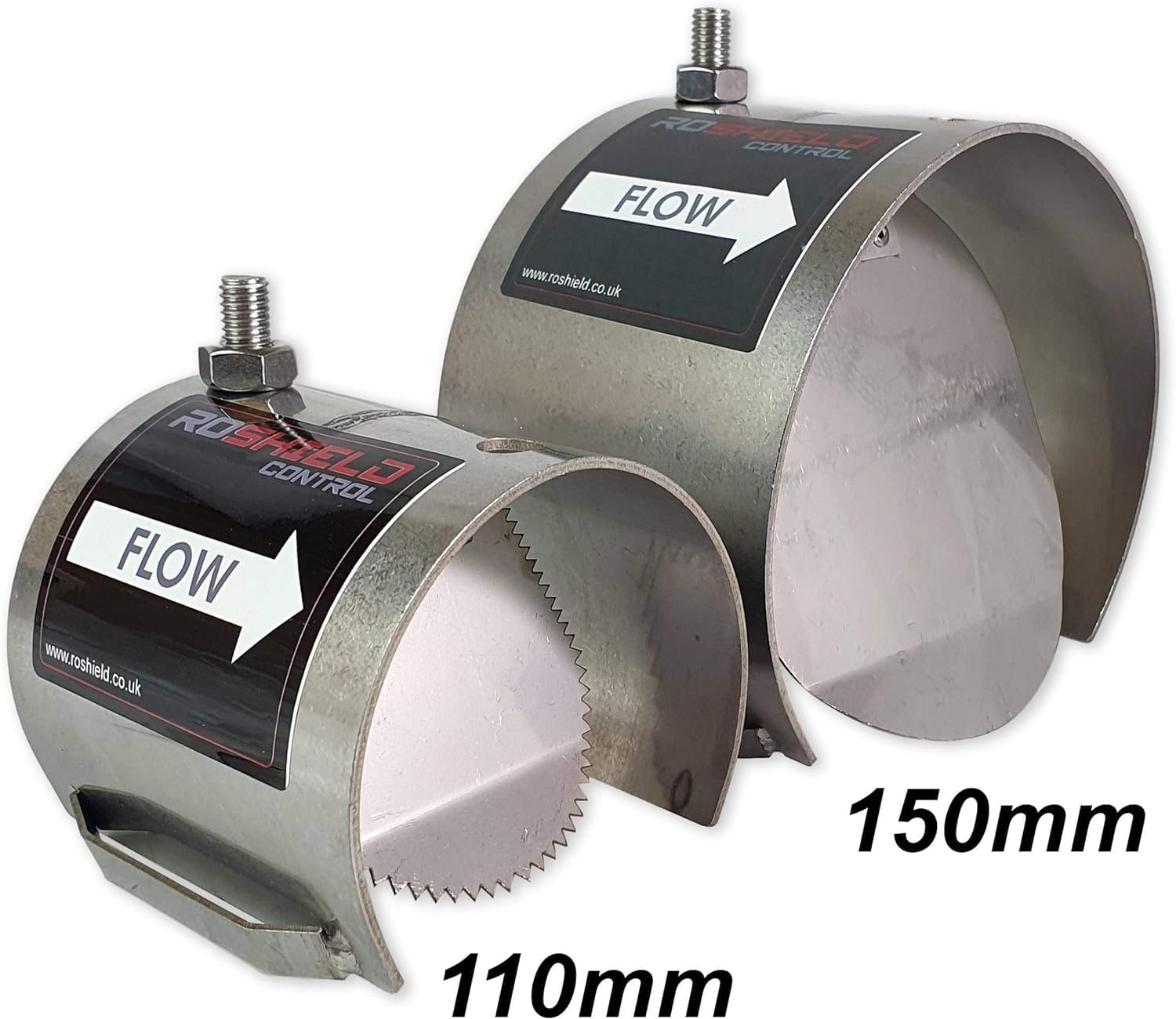
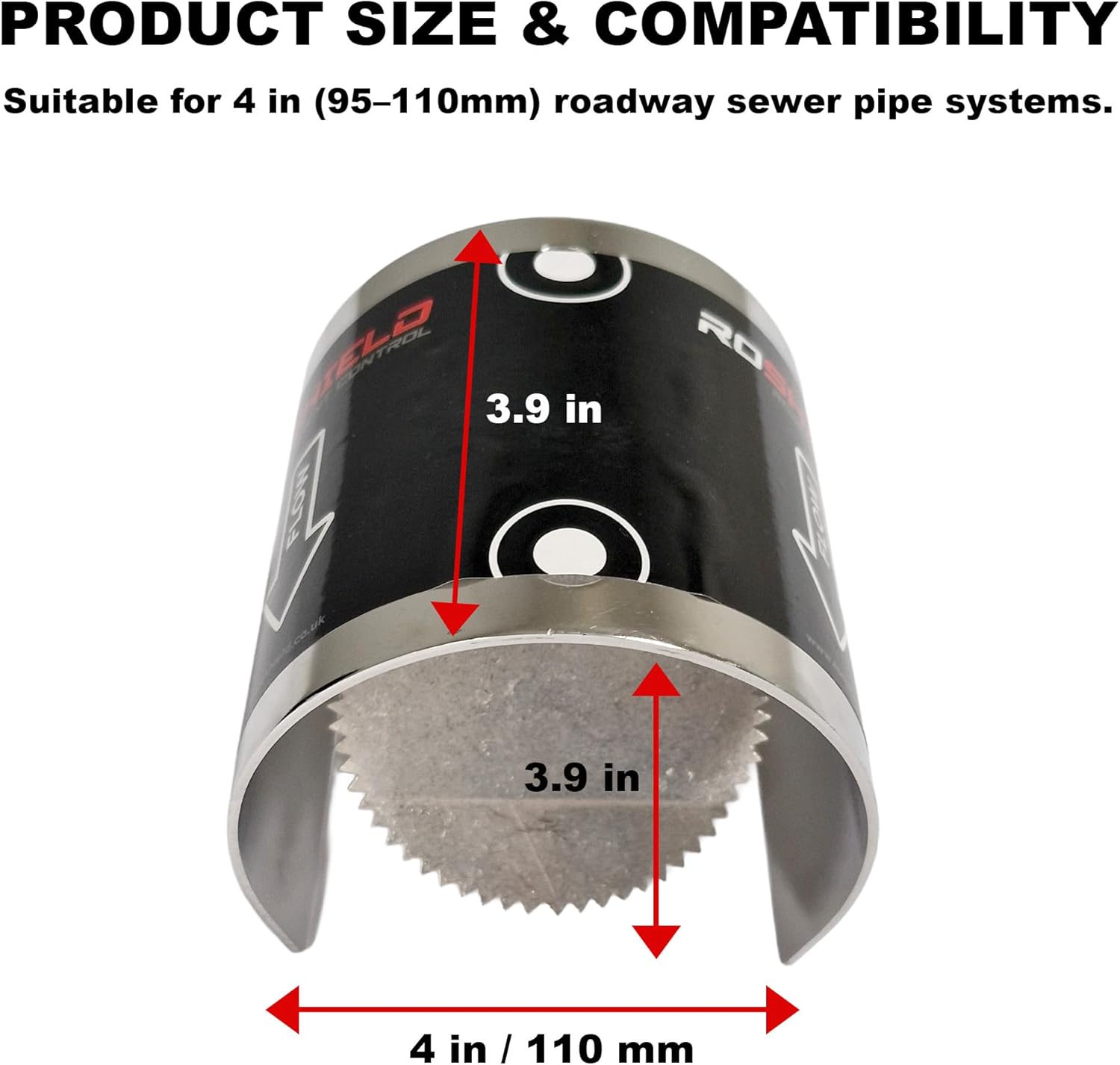
- Size: 4"/110mm
- Material: 316 stainless steel
- Suitable pipe types: Victorian 100 mm and standard 110 mm chambers
- Origin: United Kingdom
Usage Recommendations
Fit the guard inside the inspection chamber where the pipe is accessible and orient the bolt to match the prevailing flow direction. If fitting at both ends of a run, test the flap movement with a water flow to confirm free passage of solids and liquids. In older networks, inspect for blockages before installation to ensure the flap will not be obstructed by debris or collapsed sections. For commercial pest-control applications, installers often check the mechanism during routine site visits to confirm continued operation.