

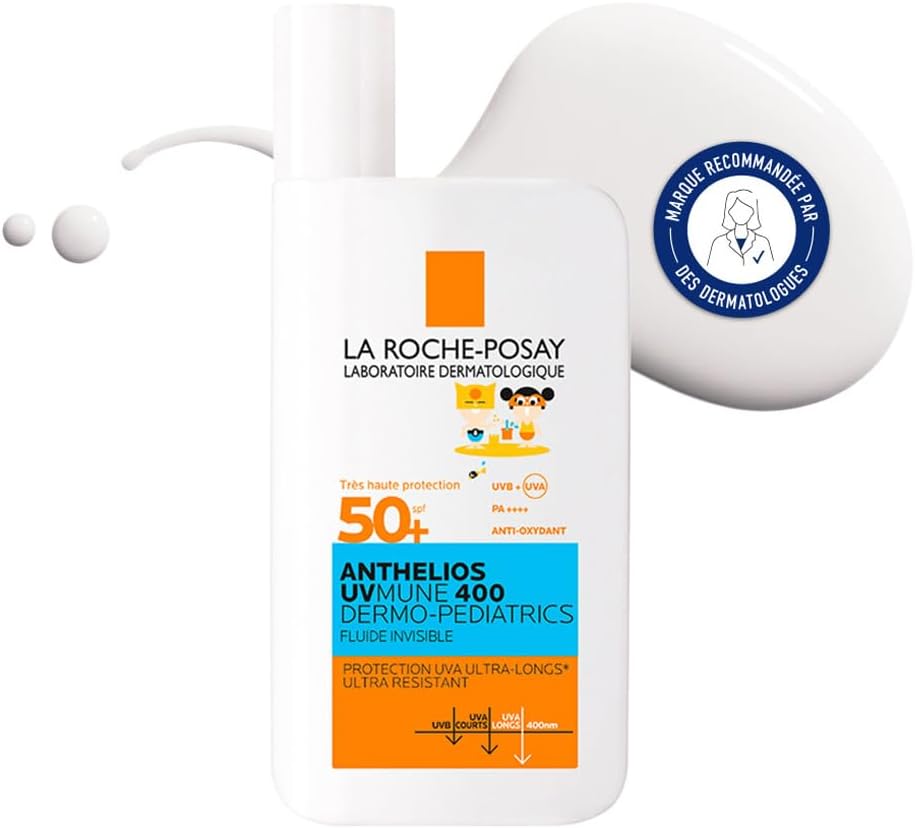
La Roche-Posay Anthelios UVMune 400 Dermo-Pediatrics Ultra Light Invisible Fluid SPF50+ 50ml (Kids)
Reviews
Price
Product description
If you’re shopping for children’s sun protection, it helps to focus on what matters day to day: broad protection, a finish that doesn’t feel heavy, and a formula that’s meant for sensitive or atopy-prone skin. This La Roche-Posay Anthelios UVMune 400 Dermo-Pediatrics Ultra Light Invisible Fluid SPF50+ is positioned as a lightweight, invisible fluid that’s designed to go on easily and blend in without that dreaded white cast.
On paper, it’s aimed at kids who need reliable sunscreen support, including children with sensitive skin, atopy-prone tendencies, or sun intolerance. The brand also frames it as dermatologically tested and suitable for daily routines, not just “special occasion” trips.
What it is and what it’s for
This is a children’s sun screen fluid with SPF50+ and broad spectrum protection intended to help shield skin from UVA/UVB rays, and it also includes protection against IR-A and pollution exposure. The practical takeaway is simple: you’re not only covering the classic sunburn angle, you’re also covering other exposure factors the product description calls out.
The “Dermo-Pediatrics” positioning suggests it’s made with kids in mind, and the Ultra Light Invisible Fluid format is all about reducing friction when you’re applying sunscreen to children who may not be patient.
What stands out in everyday use
The most noticeable selling point is the texture and finish. It’s described as light, with an invisible feel and without white marks. That matters if you’re trying to apply sunscreen quickly at the start of a school day, before a park visit, or ahead of outdoor play.
A realistic micro-scenario: imagine a child comes out for a short outdoor break and you need something that spreads without looking obvious on the skin. An “invisible” finish can make reapplication feel less like an event.
You do still need to be organised with reapplication. The label guidance in the description is to apply before sun exposure and reapply regularly—so it’s less of a one-and-done product.
Key protection claims (and the limit of what you can confirm)
The information provided highlights broad spectrum UVA/UVB and protection including IR-A and pollution. That’s a fairly comprehensive set of claims for a kids’ SPF.
That said, since we only have the product description details and not independent lab results, you should treat the protection claims as “what the product is intended to deliver”, not as something you can fully verify from the listing alone.
Who it suits (and where it may fall short)
It makes sense if you’re buying sunscreen for children with sensitive or atopy-prone skin, or if you’ve found that some sunscreens are uncomfortable for your child under the sun.
It’s also a solid fit if you prioritise a light, easy-to-spread texture and an invisible finish. If you’ve ever dealt with white cast or heavy creams on kids, this direction should feel more practical.
Where it might not suit everyone: if you strongly prefer a very traditional cream feel, or if your child’s routine needs a different format for application speed, you may find this “fluid” style doesn’t match your exact expectations. And if you’re looking for a sunscreen with specific extra features (like a particular water resistance statement), that isn’t included in the information provided here—so it may leave you checking other details before committing.
Things to check before you buy
- Application timing and reapplication: the description stresses applying before exposure and reapplying regularly. If your routine doesn’t realistically allow frequent top-ups, no sunscreen will perform as intended.
- Skin needs: it’s presented for sensitive, atopy-prone skin and sun intolerance. Still, every child is different, so it’s sensible to consider patch-testing if you’ve been cautious with other products.
- Finish expectations: the “invisible” claim and no white marks are helpful, but your own skin tone and product application thickness can affect how any “invisible” sunscreen looks.
Care, handling and usage tips
To get the most from a lightweight fluid, try to apply enough to cover properly and spread evenly, rather than using a thin layer you might regret later. For kids, it usually helps to apply when they’re calm—before leaving the house, then plan reapplication around break times.
In terms of practicality, this type of product is best approached as part of a routine: sunscreen before going out, then reapply regularly according to your schedule.
Is it worth it?
This is worth considering if you want a kids’ SPF50+ fluid that’s designed for sensitive or atopy-prone skin, with broad spectrum protection (including UVA/UVB and the product’s additional IR-A/pollution angle) and an invisible finish with no white marks.
You may want to skip it if you specifically need a clear statement about water or sweat performance (it isn’t mentioned in the information provided), or if your routine can’t realistically support regular reapplication.
Overall, it fits the “everyday family sunscreen” category: the kind you’ll actually reach for when getting children ready for outdoor time is the priority—not the chemistry of the label.
Mini FAQ
Is this suitable for children with sensitive skin? The description states it’s suitable for sensitive and atopy-prone skin, and for sun intolerance.
Does it leave a white cast? It’s described as having an invisible finish with no white marks.
What does it protect against? The listing highlights protection from UVA/UVB, plus IR-A and pollution exposure.
How should it be used? Apply before sun exposure and reapply regularly.
Can I rely on the protection claims from the listing alone? The product description provides the claims, but without independent test details here, it’s best to treat them as intended performance rather than something you can confirm fully from the text provided.