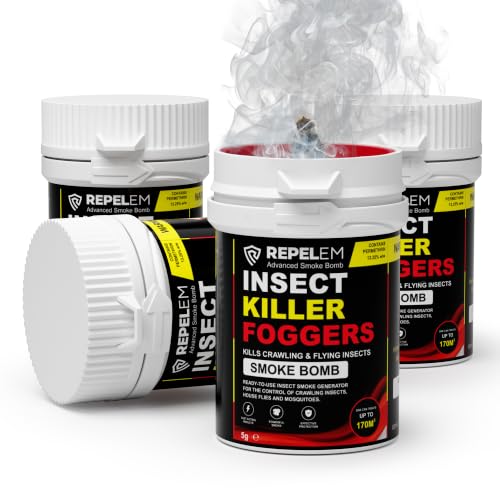
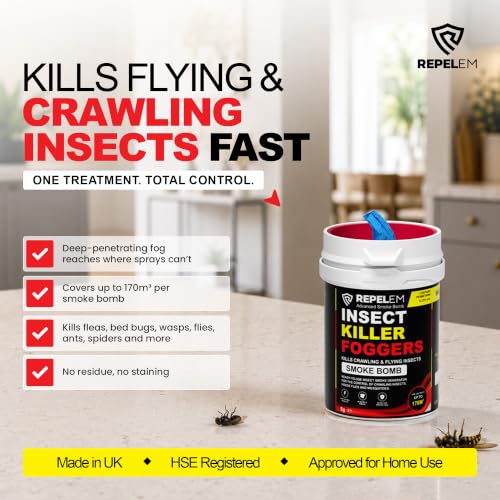
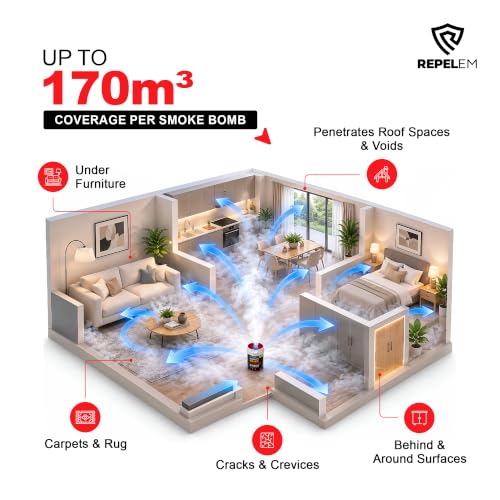
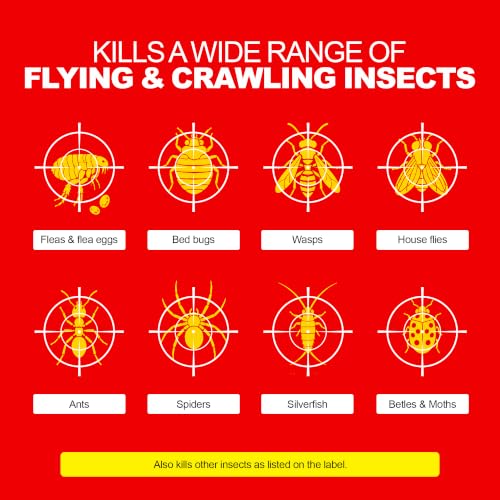
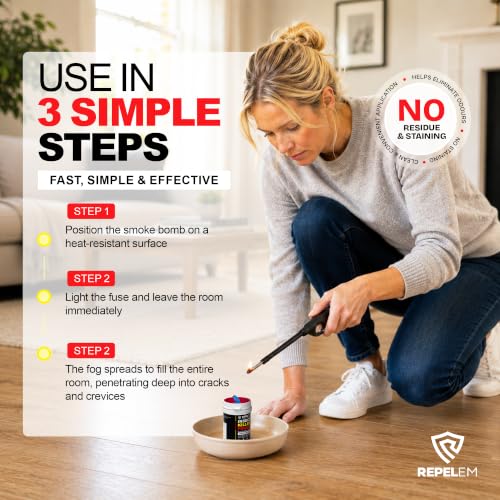
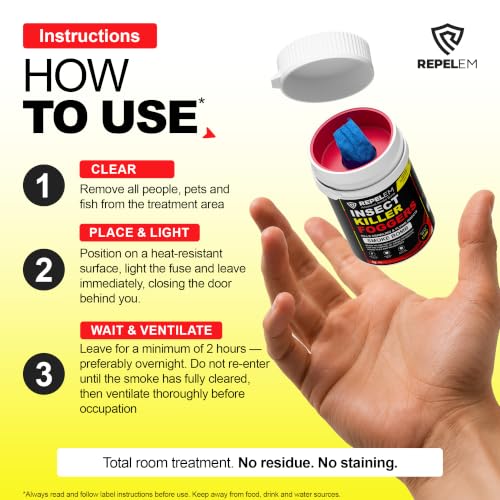
What it is and what it aims to do\nREPELEM Insect Killer Smoke Bombs are a set of indoor pest control fumigants designed to tackle a range of crawling and flying insects with a permethrin fog. Sold as a 4 pack, each bomb is claimed to fumigate up to 170m³ and target pests such as fleas, flies, ants, bed bugs, spiders, wasps, silverfish, carpet beetles and carpet moths. On paper, this approach is intended to penetrate deep into cracks and voids where insects breed, with the aim of providing a single, broad treatment.\n\n## How it works and what to expect\nThe product relies on permethrin to generate a fog that spreads through the treated space. The usage requires placing a canister on a heat‑resistant surface, lighting the fuse, and leaving the room for at least two hours (overnight is preferable). After the space is ventilated, occupants can re‑enter. An important caveat is that the space should be fully vacated during treatment, and the area must be kept free of food and drink during and after use. There should be no residue left behind, and no staining is expected, but ventilation is essential before re‑occupation.\n\n## Suitability and typical use cases\nThis option is framed for indoor infestations and is pitched for lofts, garages, roof spaces and enclosed storage areas. It can be positioned as a broad‑spectrum approach when there are multiple pests present, rather than a targeted solution for a single species. If you’re dealing with a heavy infestation in a compact area, this product is presented as a single‑treatment option with fast results on paper.\n\n## Strengths and what may give you pause\nOn the positive side, the approach claims quick action, no residue and no staining, with a total area coverage per bomb that can suit mid‑sized spaces. It is marketed as trusted by UK pest professionals and aligned with a permethrin formula that is familiar in professional use. On the downside, the effectiveness of any fumigant depends on proper use and adequate ventilation, the requirement to vacate the space for hours and the need to avoid re‑entry until clear could be inconvenient in busy homes or spaces with ongoing occupancy needs. The lack of specifics about exact concentration and the breadth of pest coverage in real‑world conditions means it’s prudent to temper expectations.\n\n## Who it’s for (and who it isn’t)\nIt’s reasonable for households with mixed indoor infestations looking for a broad, ready‑to‑use solution and who can comply with the safety instructions (vacate the area and ventilate well). It may not be the best choice if you need a rapid, re‑entry‑friendly solution in a space that cannot be left unoccupied for several hours, or if you require targeted control for a single pest without scent or residue considerations.\n\n## Before you buy: what to check\n- Confirm the infestation scale and whether a single room or larger area is the target.\n- Plan for sufficient ventilation after use and ensure there are no pets or people present during treatment.\n- Read the label for any specific restrictions on foods, water sources or surfaces that could be affected.\n- Consider whether a single‑treatment fumigation aligns with your expectations about long‑term pest prevention.\n\n## How it compares to other approaches\nCompared with ongoing spray regimens or targeted traps, fumigation with a smoke bomb offers a one‑time intervention that relies on dissemination of a mist rather than surface application. It may be preferable when dealing with pests hiding in cracks and crevices, but less ideal if you require pinpoint control or treatments in spaces that cannot be left empty for several hours.\n\n## What you get in the box\n4 smoke bombs designed for indoor use, each described as capable of fumigating up to 170m³. The pack size is intended to match the scale of infestation.\n\n## Practical usage snapshot\nImagine moving through a loft space after lighting a smoke bomb: the fog is supposed to permeate timber crevices and shelf gaps where insects hide. A practical takeaway is to plan around a quiet period for the space, then ventilate thoroughly before re‑occupation. For example, in a storage area with stacked boxes, this method could reach between and behind items where pests may breed.\n\n## FAQ\n- Is this safe for inhabited homes? The label requires vacating the area and thorough ventilation before re‑entry. Always follow the instructions and keep food and water sources away during treatment.\n- How long before I can return? Typically a minimum of 2 hours, preferably longer depending on room size and airflow.\n- Can it be used around pets or children after ventilation? Re‑entry is only advised once the space is fully cleared and ventilated according to the label.\n\n## Should you buy it?\nShould you buy it? It makes sense if you need a broad indoor fumigation approach that covers multiple common household pests in a single treatment, and you can commit to the space being unoccupied for a couple of hours. It may not suit every situation—especially if ongoing access to the treated area is required or if you prefer targeted, low‑disruption methods.