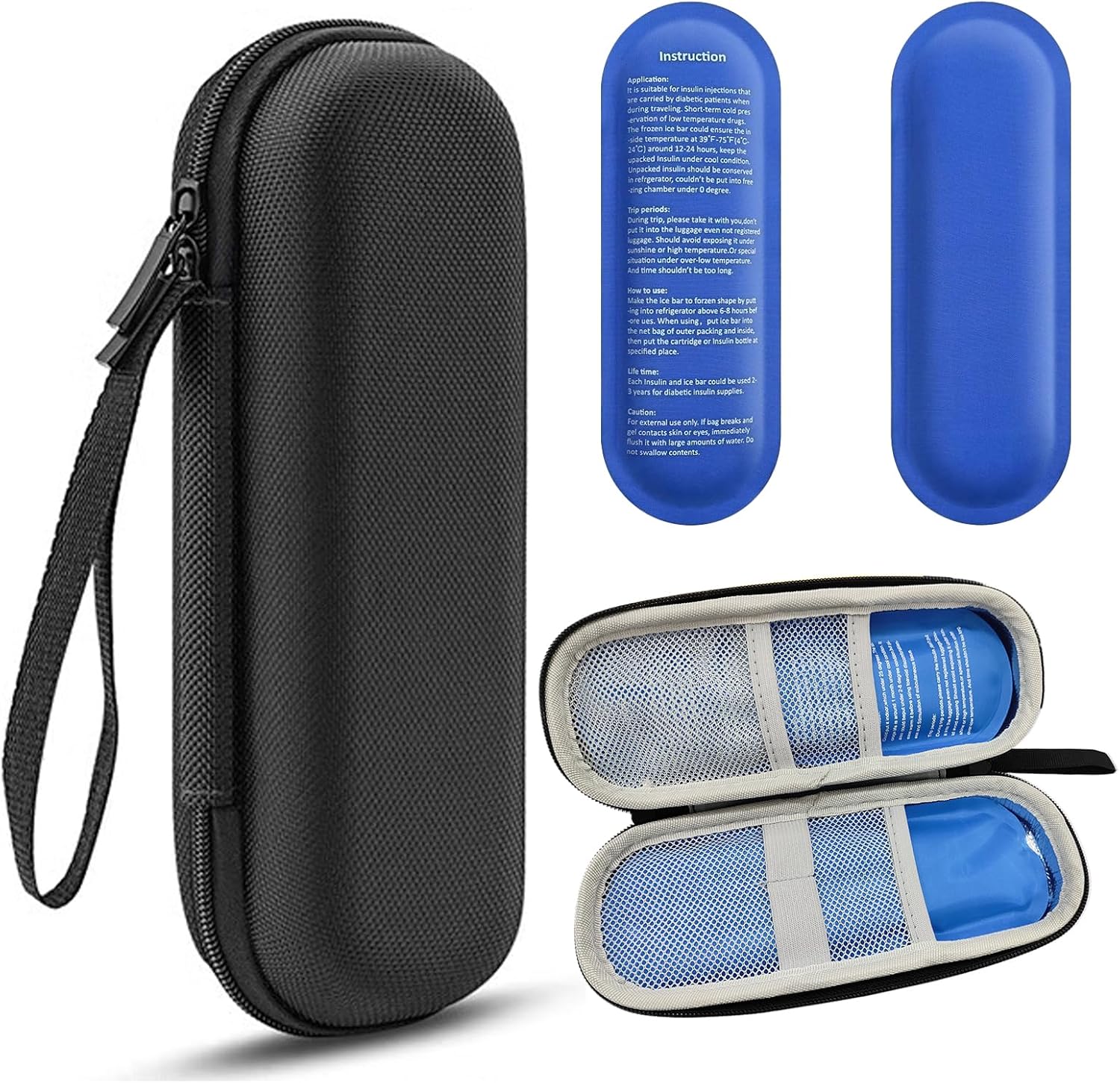
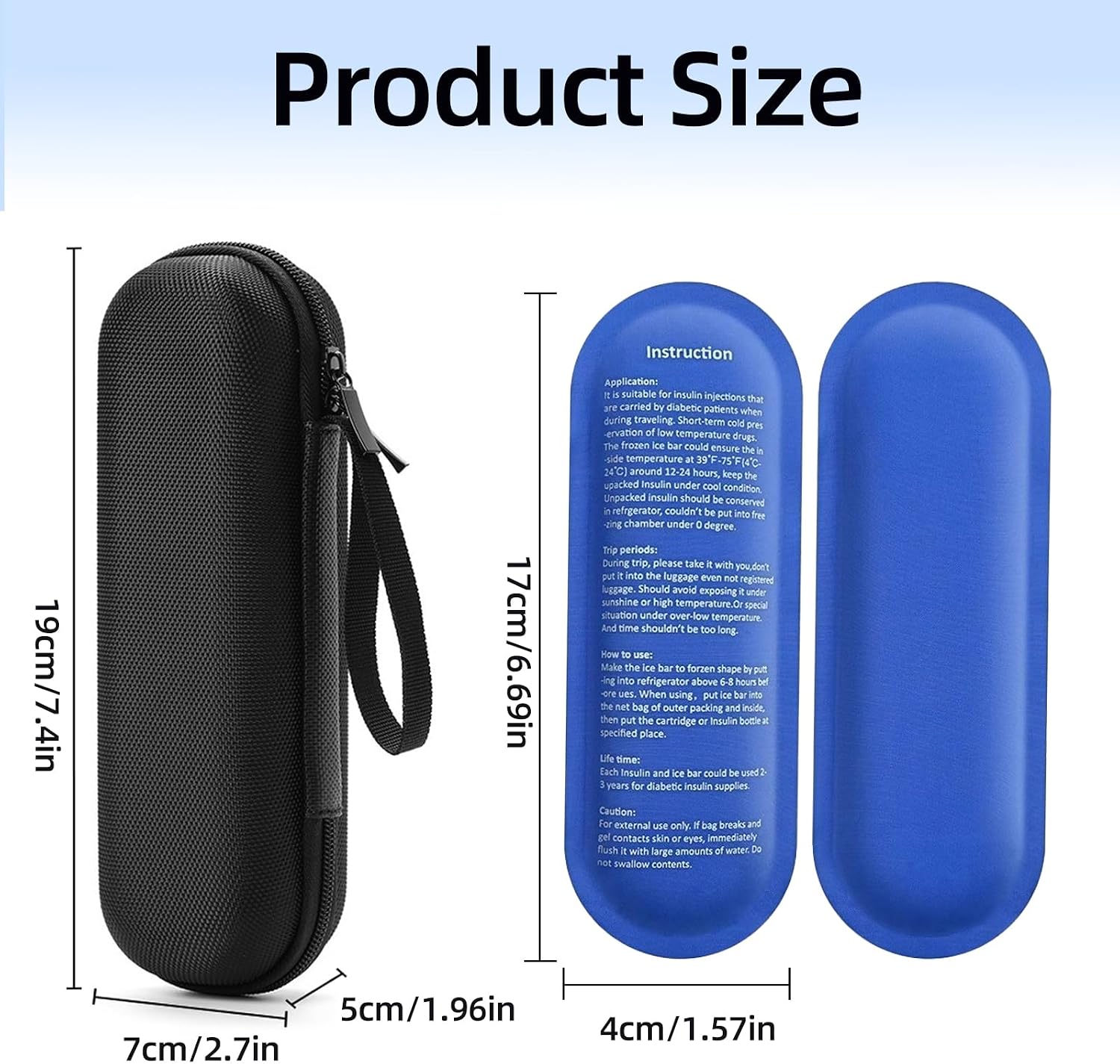
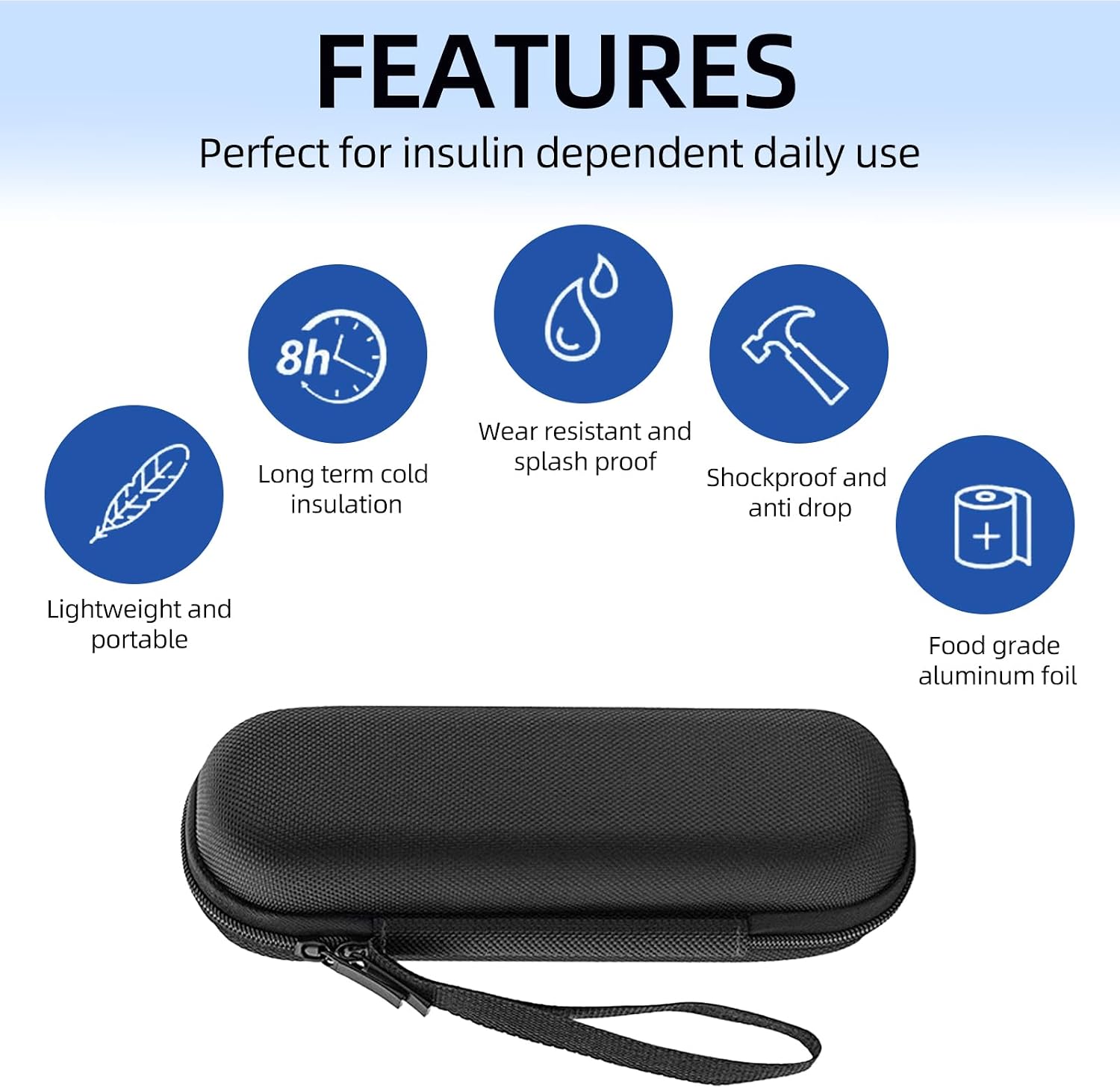
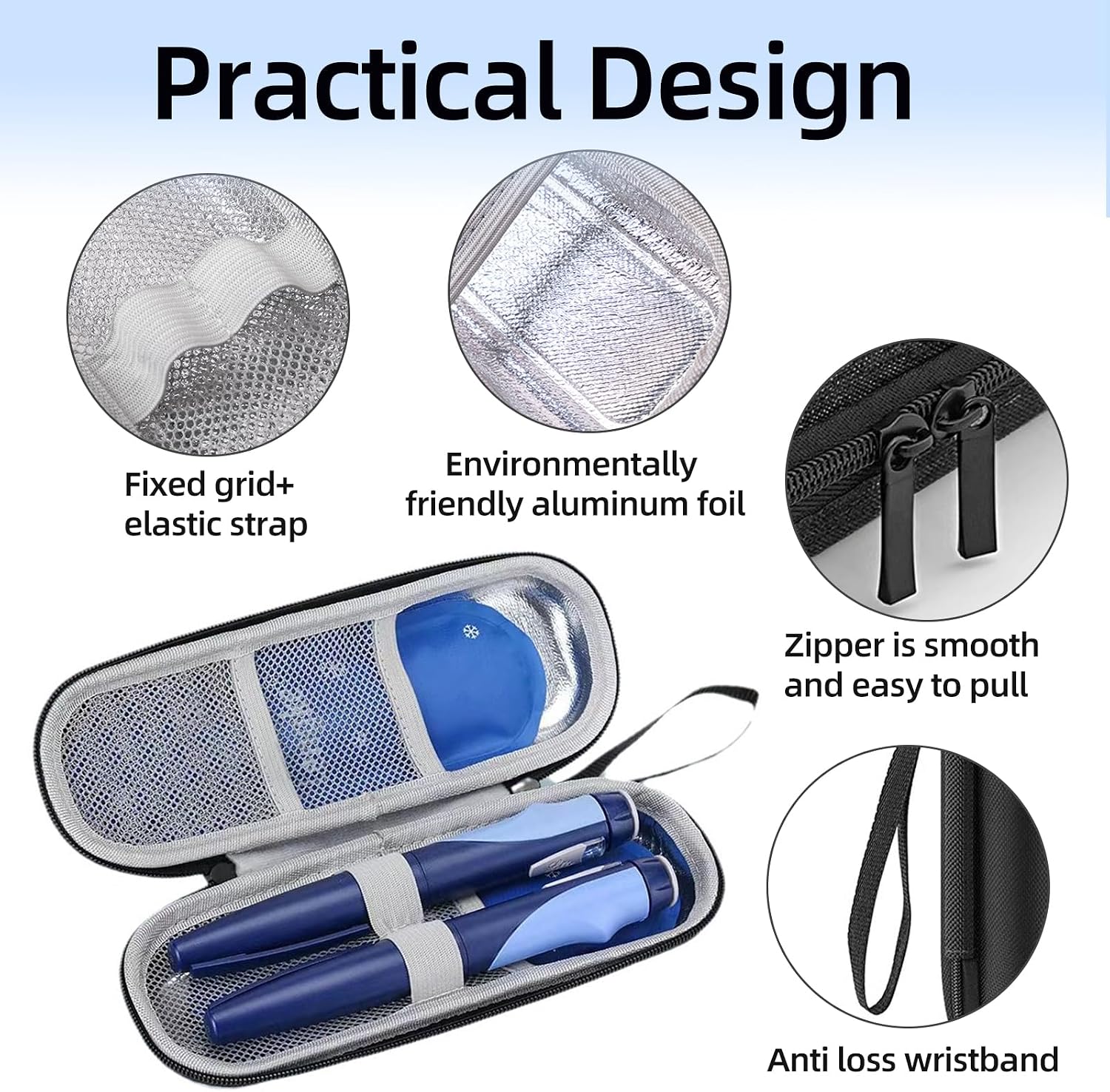
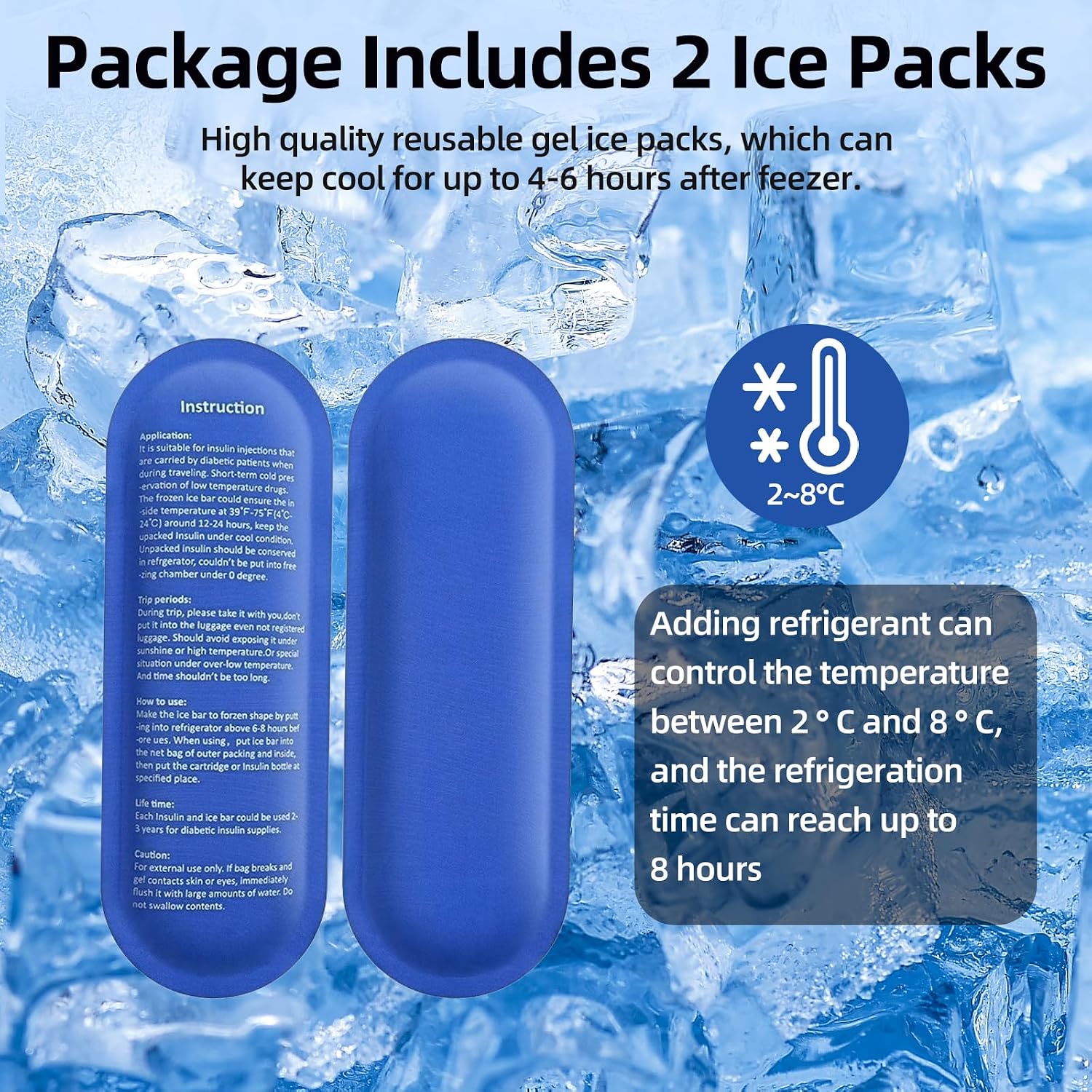
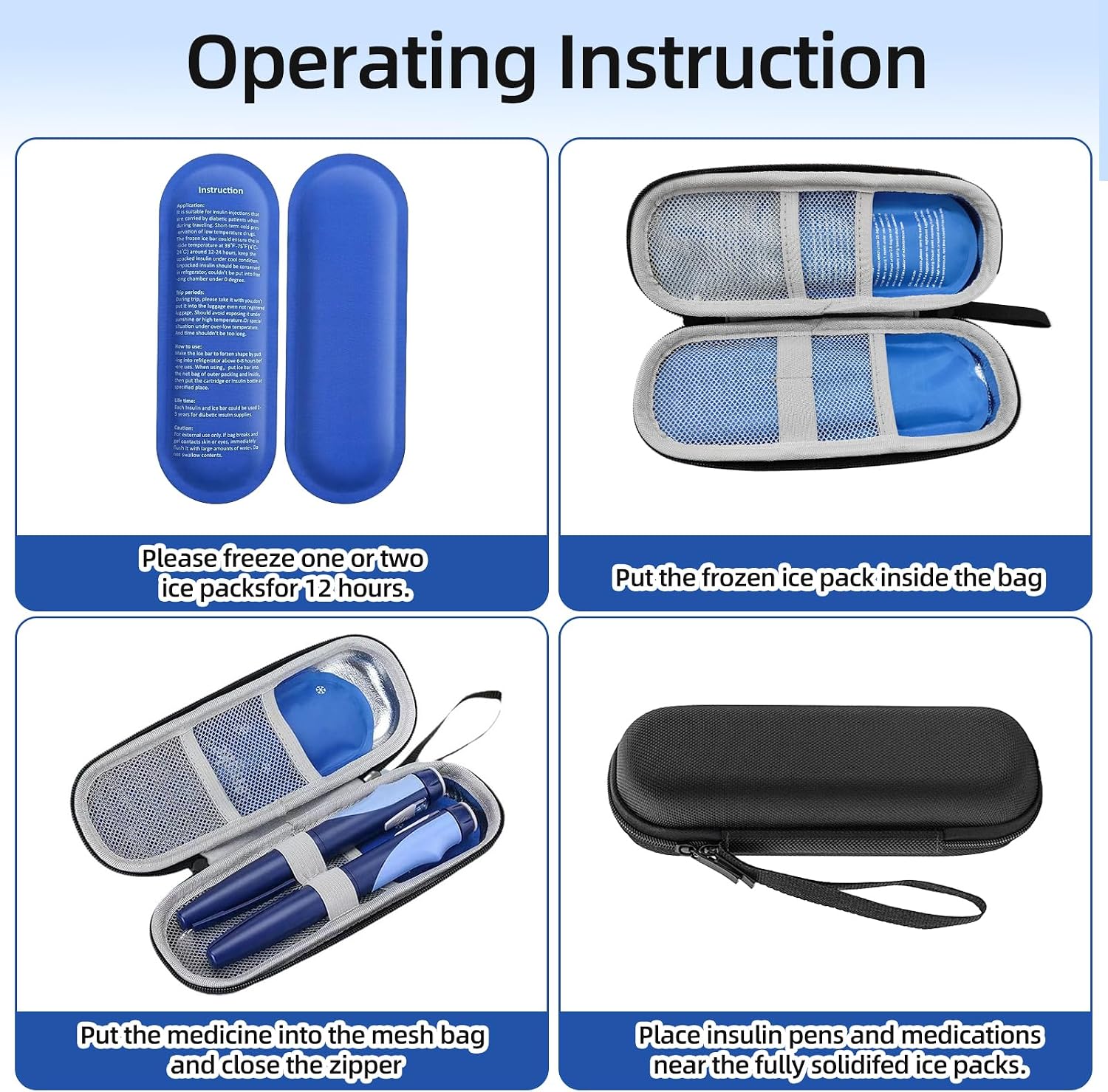
What it is and what it does\nThe QILUCKY Insulin Cooler Travel Case is a compact, purpose-built bag designed to help you carry insulin, pens, vials and related diabetic supplies on the go. It combines a robust outer shell with an insulated interior and dedicated compartments, so you can store essential items in a single, portable sleeve. If you travel, camp, or simply need a reliable option for short trips, this case aims to keep insulin at a safe temperature without adding bulk to your luggage.\n\n## How it’s built and what’s inside\nOn the outside you’ll find a durable Oxford fabric shell paired with a triple-layer EVA and aluminium foil lining on the interior. This combination is chosen to form a reasonable thermal barrier while withstanding the rigours of everyday use. The kit includes 1 insulin cooler suitcase plus 2 nylon ice packs. The ice packs are designed to chill beforehand for 7–8 hours, then be placed inside the bag to help keep the contents cool for 4–6 hours. It’s a pragmatic setup for short journeys and day trips where access to refrigeration may be limited.\n\n## How it performs in real life\nOn paper, the insulation offers a sensible balance between temperature control and portability. The zipper seal and water-repellent shell add a layer of protection against damp and rain, which is useful when you’re commuting or hiking. In practice, the containment depends on external conditions such as ambient temperature and how much the bag is opened during the journey. If you’re carrying multiple items or long days away from a fridge, you may need to optimise the packing by prioritising insulin and essential supplies, then using the bag’s remaining space for spare tissues or consumables.\n\n## What works well for whom\nThis case suits travellers who prioritise compact design and straightforward use. It is a practical choice for packing insulin pens, vials, needles and simple accessories in one place, reducing the risk of misplacing items while away from home. It also doubles as a compact storage option for those who need temporary protection for diabetic supplies during outdoor activities or quick getaways. It may appeal to people who want a non-bulky, all-in-one solution rather than a larger medical cooler bag.\n\n## Where it’s less convincing\nIf you require long-haul cooling or extended periods away from refrigeration, this case may not be the best option. Four to six hours of cooling is suitable for shorter trips or day outings, but multiple refrigerations or hot climates can overwhelm the insulation. It’s not a specialised medical refrigeration device, so users should manage expectations accordingly and consider backup storage options for longer journeys.\n\n## Practical considerations before you buy\n- Check the dimensions (20 x 7 x 5 cm) to ensure it fits your insulin pens, vials and accessories.\n- Consider how you’ll chill the included ice packs and whether you need extra packs for longer trips.\n- Assess the level of insulation you require based on your typical travel time and climate.\n- Look at how you’ll carry it alongside other luggage and whether you need a secondary bag for larger supplies.\n- Be mindful that repeated opening of the bag may shorten the effective cooling window, especially in very warm environments.\n\n## Comparison in context: alternatives and approaches\nIf you mainly travel with just a pen or a small number of items, a compact travel case like this can be more convenient than a larger medical cooler. For longer trips or hotter climates, you might prefer a bag with more substantial insulation or a dedicated cooling system. For people who have access to refrigerated storage at destinations, this is a sensible, lightweight option to cover short segments of travel without overinvesting in a heavy cooler.\n\n## What you’ll notice in day-to-day use\nIn use, you’ll likely appreciate the portability and the “one bag, all essentials” approach. The material feels sturdy enough for regular travel, and the outer fabric should resist minor splashes and rain. The real-life experience will hinge on how you pack and how often you need to access insulin during your journey.\n\n## Is it worth it? Final decision\nConsider this case if you prioritise compactness, straightforward use, and a ready-made solution for short trips. It makes sense for travellers who want to keep insulin and related supplies together and protected while on the move, without the heft of a larger cooler. Not ideal if your trips routinely exceed 6 hours away from refrigeration or if you require professional-grade cooling for medical accuracy. In short, it represents solid value for short trips and casual travel, provided you temper expectations about cooling duration.\n\n## Quick FAQ\n- How long does the cooling last once opened? In typical conditions, about 4–6 hours, depending on external temperature and how often the bag is opened.\n- Can I fit multiple insulin pens and extra supplies? The interior is designed for insulin pens, vials, and needles with a dedicated compartment, plus space for smaller accessories, check the items you plan to carry before buying.\n- Is the case waterproof? The shell is described as water resistant with a waterproof seal, but it’s not a fully waterproof hard case and should be kept out of heavy rain where possible.\n- Is it suitable for everyday use or just travel? It’s designed for travel and outdoor use, with practical insulation for short trips rather than continuous medical refrigeration.\n- What about hygiene and cleaning? The interior is lined to form a thermal barrier, wipe clean with a damp cloth and mild detergent if needed, ensuring it’s completely dry before reuse.