

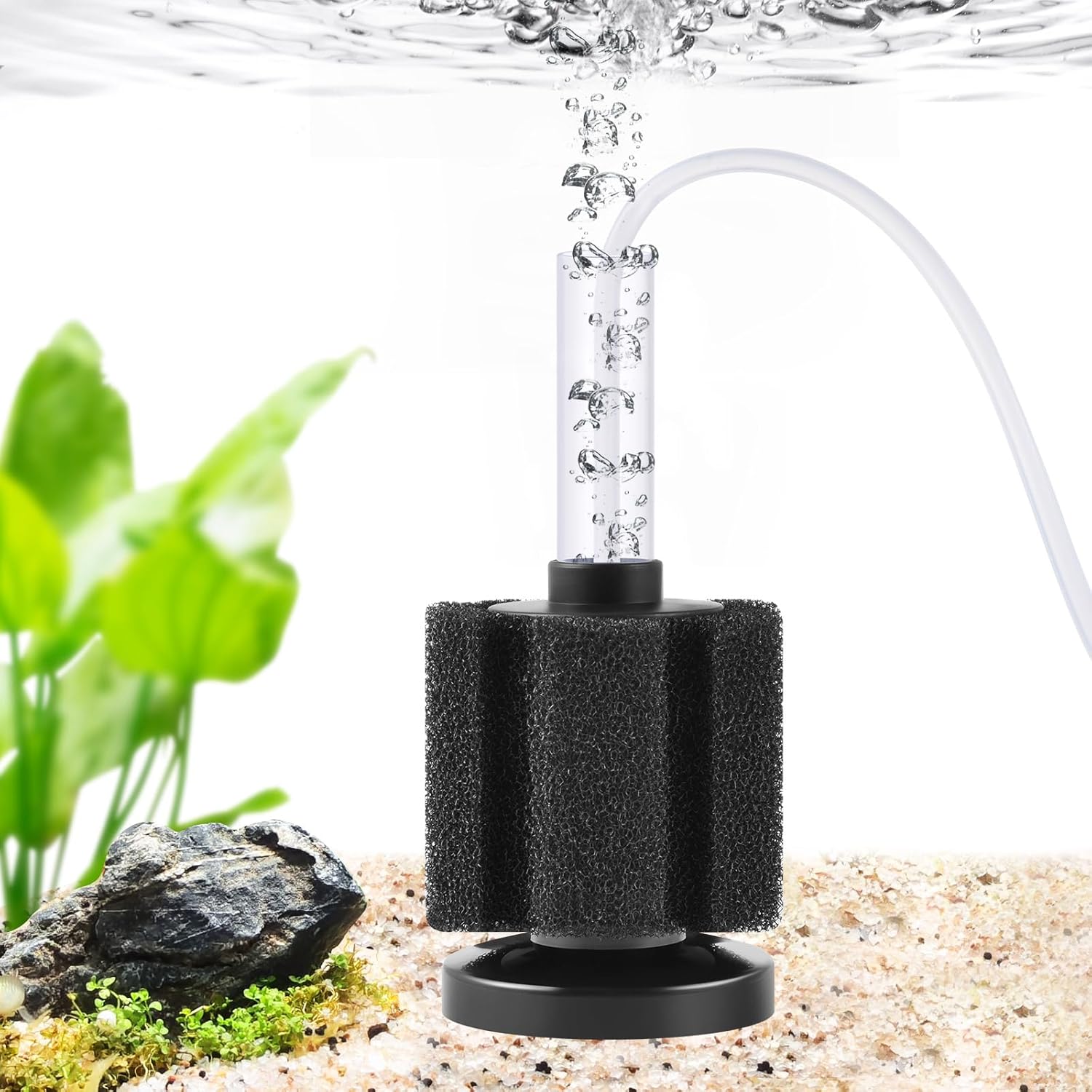
PYPABL Aquarium Sponge Filter (M) – Ultra quiet air-driven bio sponge filter for up to 190 litres
Product description
The essentials
If you’re setting up a betta, shrimp, or fry tank, you usually want two things at once: clean water and gentle flow. This PYPABL aquarium sponge filter (size M) is designed around an air lift system, where air bubbles drive circulation and help with oxygenation. The sponge then does the heavy lifting for filtration, catching debris while also providing a surface for beneficial biofiltration.
In plain terms, it’s the kind of filter that tends to suit breeding/rearing setups because it avoids blasting the tank with strong currents. That’s a big deal when you’re dealing with very small swimmers or delicate shrimp. It’s not perfect for every aquarium style—if you need high turnover for heavily stocked tanks, you may find the pace a bit too “calm”. But for the right purpose, it’s a sensible, low-drama choice.
Key features and what they mean in practice
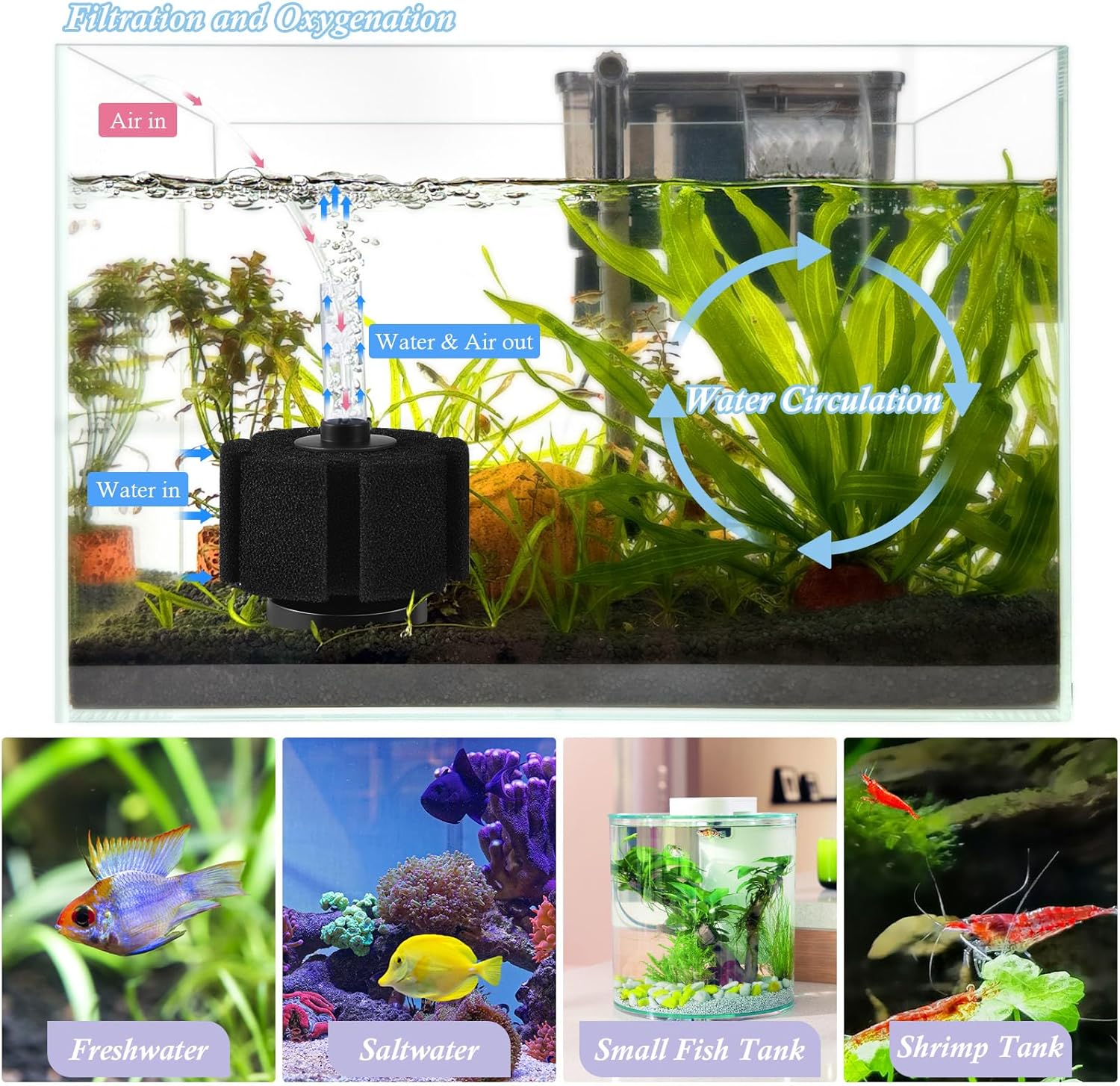
The filter combines what the manufacturer calls 3-in-1 filtration, oxygenation and circulation. The filtration part is the sponge, which physically traps impurities and debris. The oxygenation and circulation part comes from the air-driven air lift system: bubbles rise and pull water through the sponge.
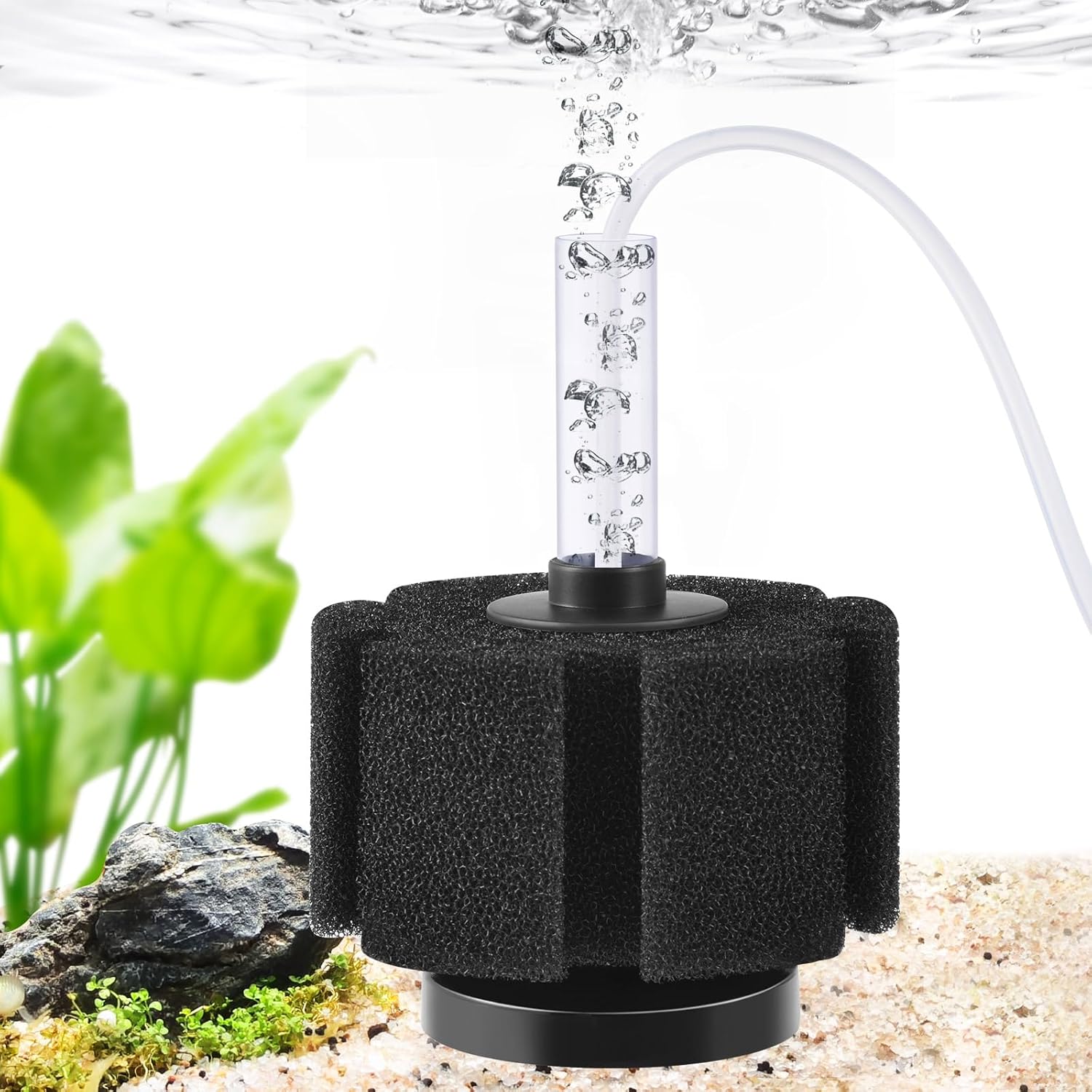
Where this really helps is in everyday tank routine. With a sponge filter, you’re typically dealing with slower, steadier flow rather than a hard jet. That tends to be kinder to fry and shrimp, and it can also reduce the “turbulence” problem some people see when they use more powerful hang-on or canister-style options.
There’s also a practical point that often gets overlooked: it’s described as reusable and easy to disassemble and clean. You’re not swapping disposable media every few weeks. Instead, you maintain the sponge by cleaning it on a schedule.
A small limitation to be aware of
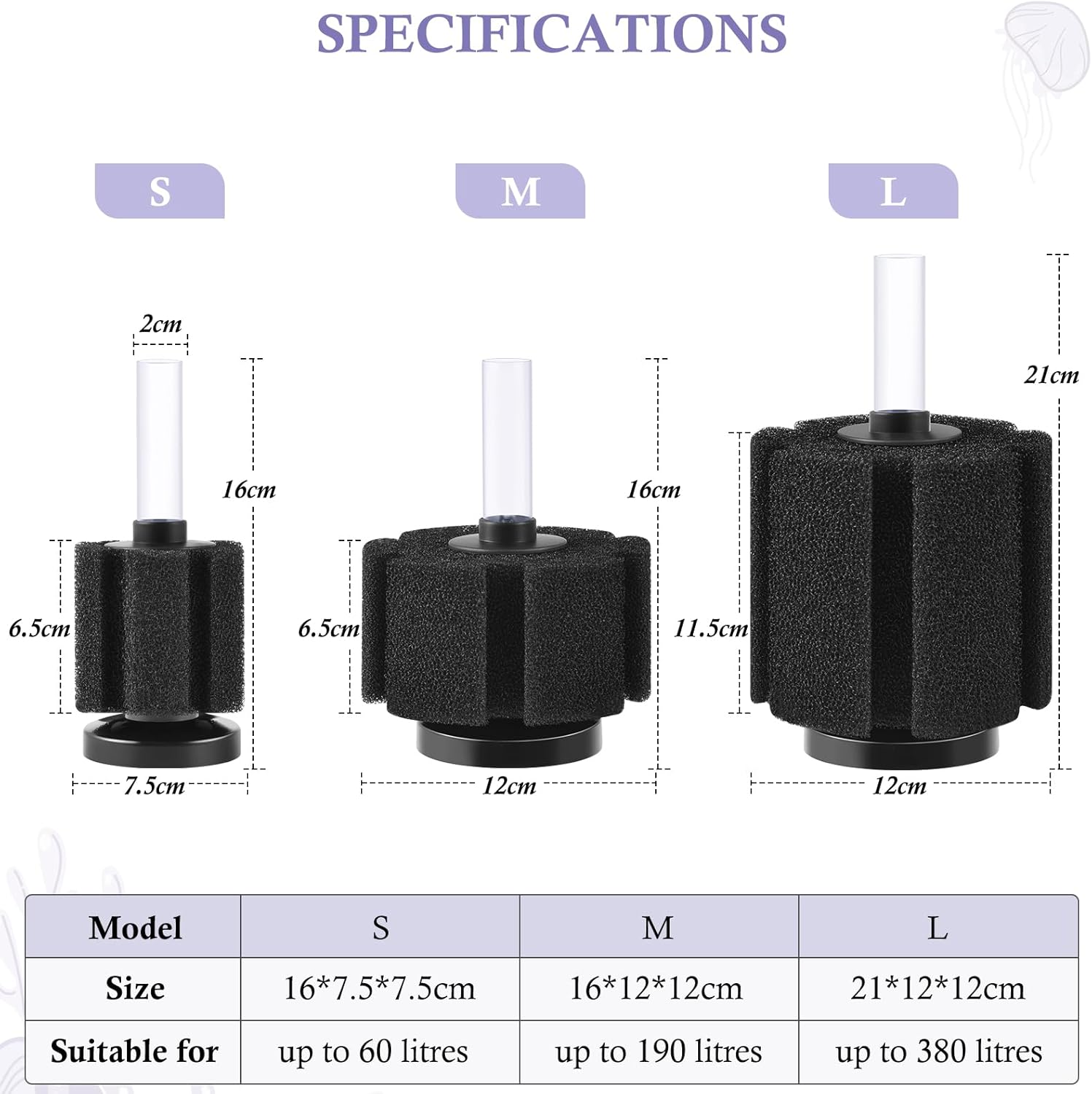
This air-driven sponge filter does not include an air pump. To run it, you’ll need to purchase one separately. If you don’t already have an air pump for the air tube/air lift setup, make sure you plan for that before buying.
What stands out (and where it’s likely to fit)
Ultra quiet operation
Because it’s powered by air rather than an electric motor, it’s positioned as ultra quiet. The idea is that you should mostly just hear a slight stream of bubbles, not a noisy water pump hum. If your tank is in a bedroom, office, or near where you relax, this is one of the more noticeable advantages on paper.
Reusable bio sponge
The sponge is described as a biochemical sponge with a honeycomb structure for better filtration. The filter is meant to support biofiltration rather than only mechanical trapping. That matters if you’re trying to keep water chemistry steadier over time.
Worth noting that cleaning guidance is provided: they recommend cleaning with aquarium water every 2–4 weeks. That gives you a clear maintenance rhythm, but do keep in mind that the “right” frequency can depend on how messy your tank is.
Technical overview
- Type: air-driven submersible sponge filter (air lift system)
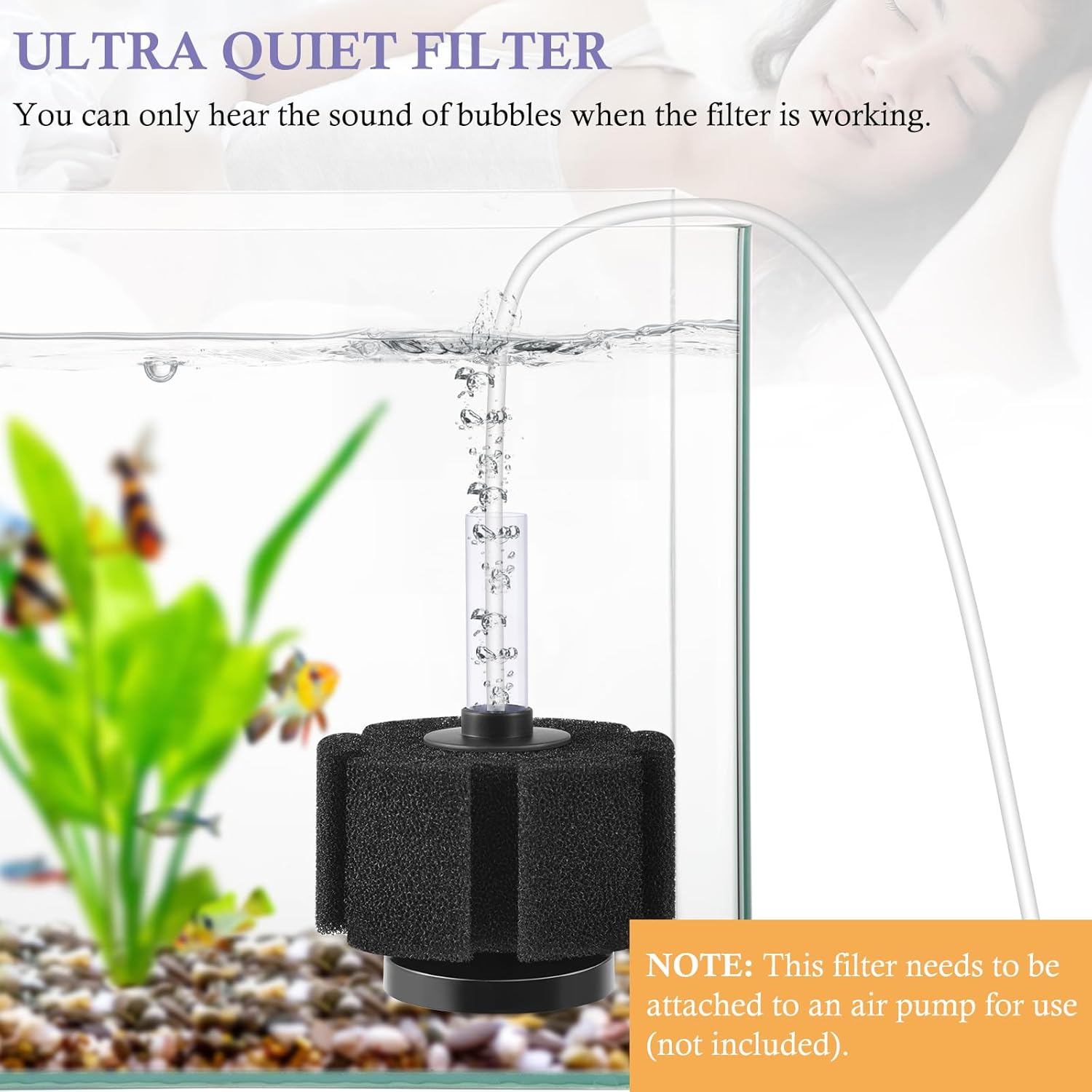
- Tank capacity (size M): up to 190 litres
- Main functions: filtration, oxygenation, circulation
- Media: biochemical sponge (honeycomb structure)
- Noise profile: powered by air, described as ultra quiet
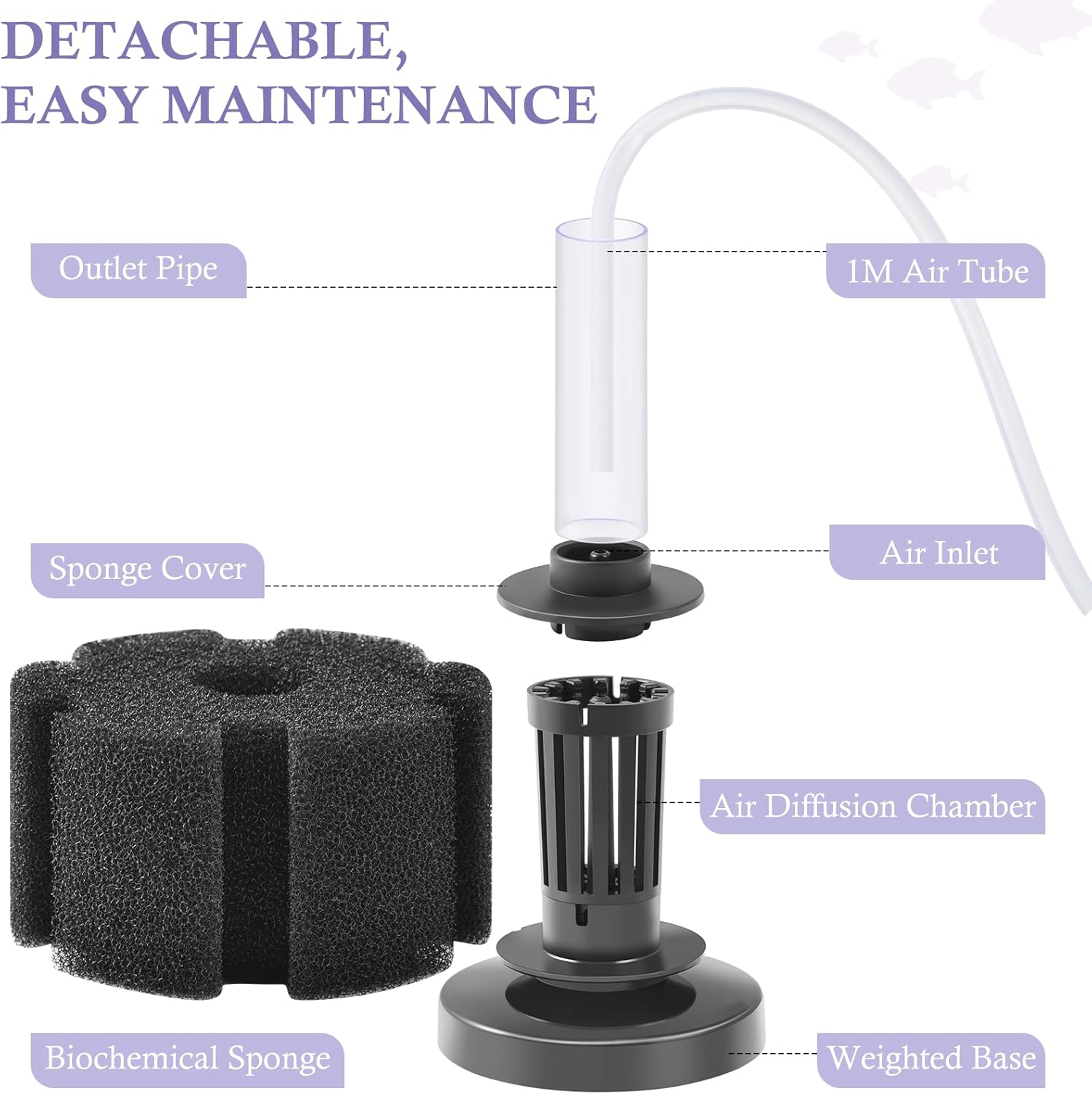
What’s included in the box: sponge filter, outlet pipe, and an air tube (1M / 3.3FT). Warranty is stated as 24 months.
Care and setup tips for best results
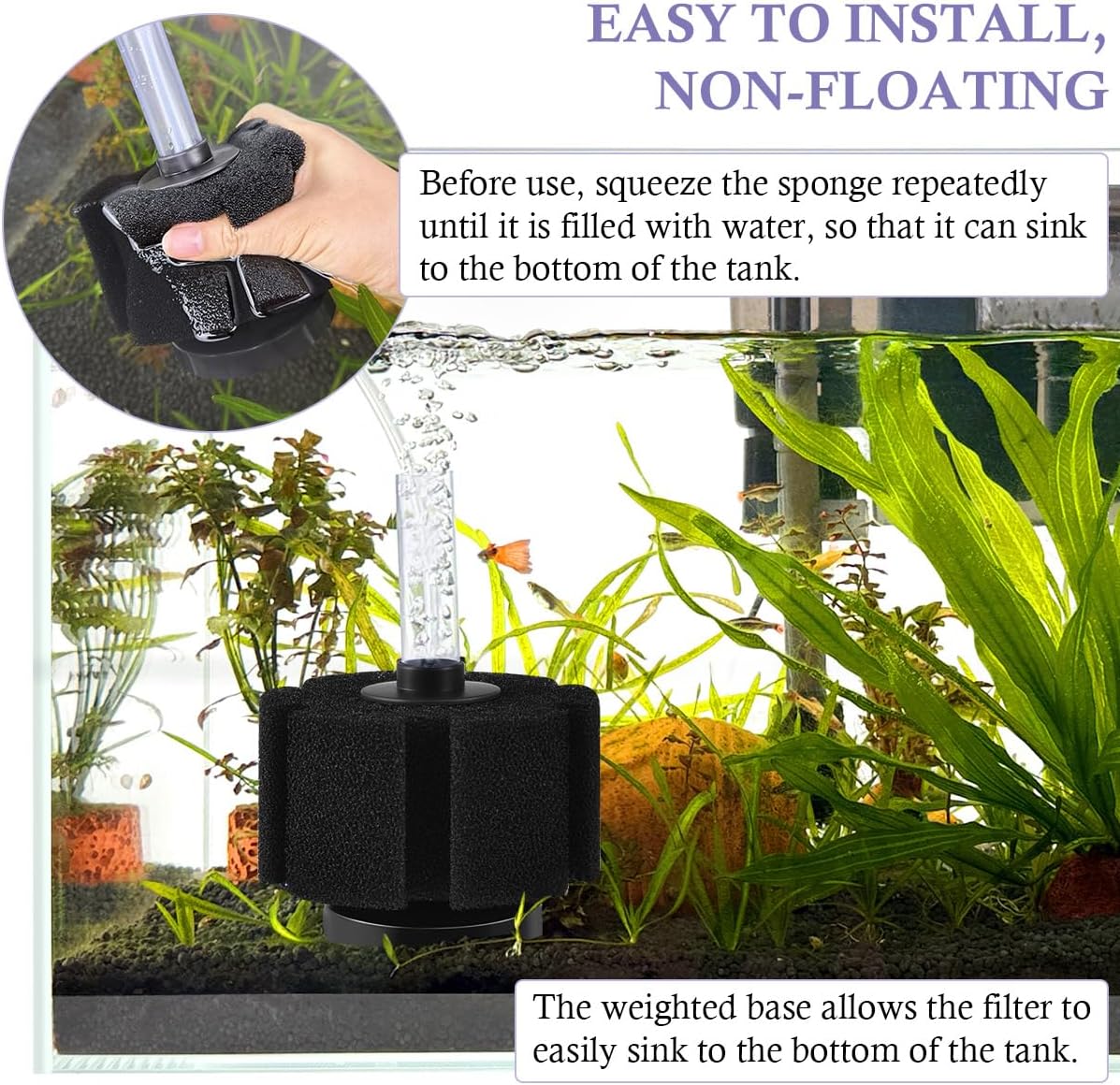
Before use, you’re advised to squeeze the sponge repeatedly until it’s filled with water so it can sink to the bottom of the tank. That small step helps the sponge settle properly and begin doing its job.
For cleaning, the manufacturer suggests using aquarium water every 2–4 weeks. Don’t overcomplicate it: the goal is to keep the sponge from clogging while still preserving the biological surface.
A practical micro-scenario: imagine you’ve got a breeding tank where fry are still tiny and you’re worried about them getting pushed into corners. With an air lift sponge filter, the water movement is typically gentler, and the sponge becomes a safe zone rather than a strong-current hazard.
Is it worth it?
It’s a good fit if you’re running a betta, shrimp, or fish fry tank and you want filtration with a calmer flow—this style of air-driven sponge filter is built specifically for that kind of setup. It also makes sense if you prefer reusable media and a maintenance routine you can manage without constant replacements.
You may want to skip it if your tank is heavily stocked or you’re aiming for aggressive circulation and high turnover from day one. It might not be a great match if you don’t want to run an air system, and the fact it doesn’t include an air pump is a simple but important deciding factor.
If you like the idea of a filter that prioritises biological surface area and gentle movement, the M size (up to 190 litres) is worth considering—just double-check your tank volume and make sure you’ve got (or plan to buy) a compatible air pump.
Quick FAQ
Does the PYPABL sponge filter include an air pump?
No. The filter is air-driven but does not come with an air pump, so you’ll need to buy one separately to operate it.
What size tank is the M version for?
The M size is described for tanks up to 190 litres.
How often should the sponge be cleaned?
The manufacturer recommends cleaning with aquarium water every 2–4 weeks.
Is it suitable for saltwater as well as freshwater?
It’s stated as suitable for both freshwater and saltwater.
Who is it best for?
It’s positioned as an ideal choice for fish fry farming, shrimp tanks, and betta tanks, particularly where you want less intense water flow.