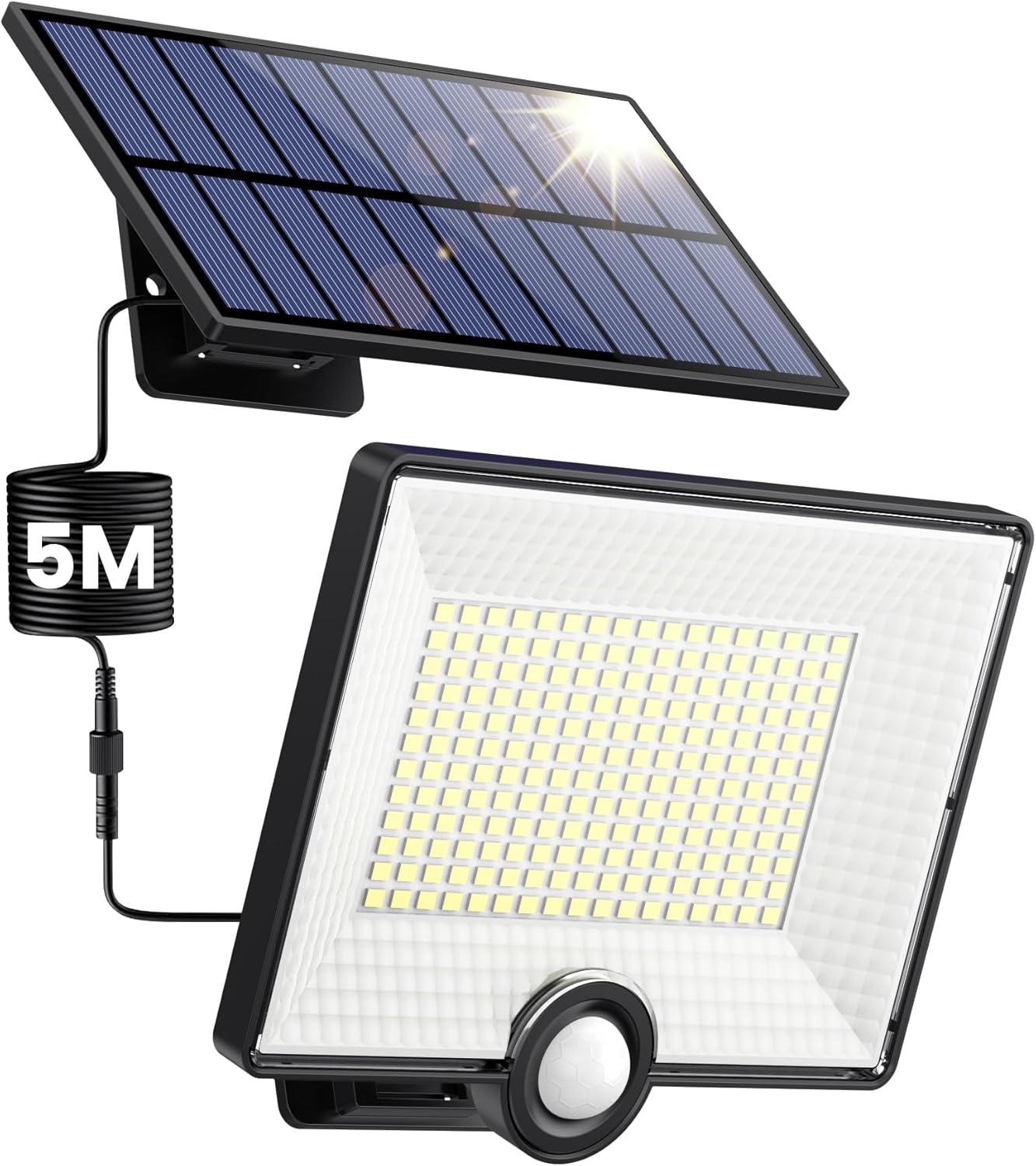
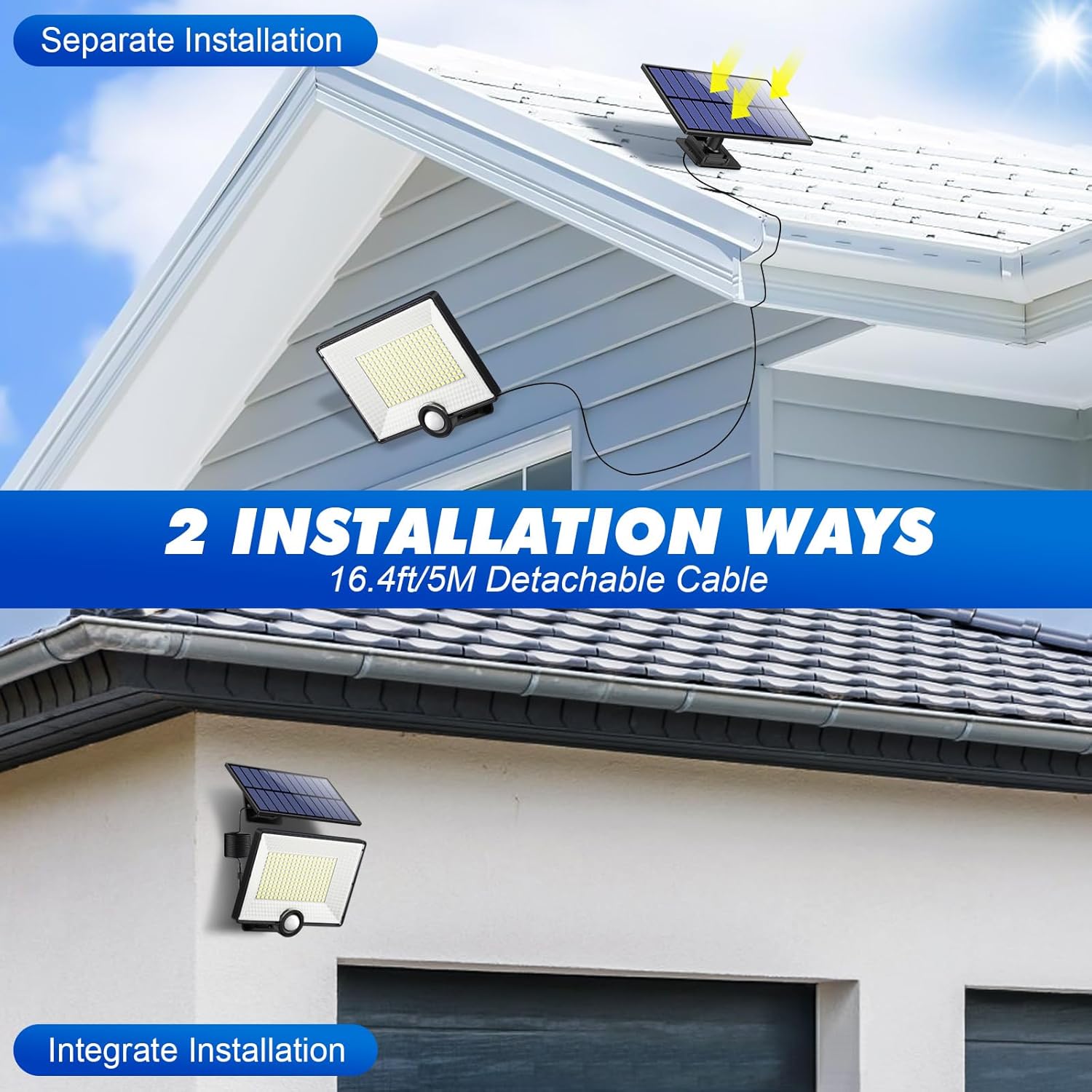
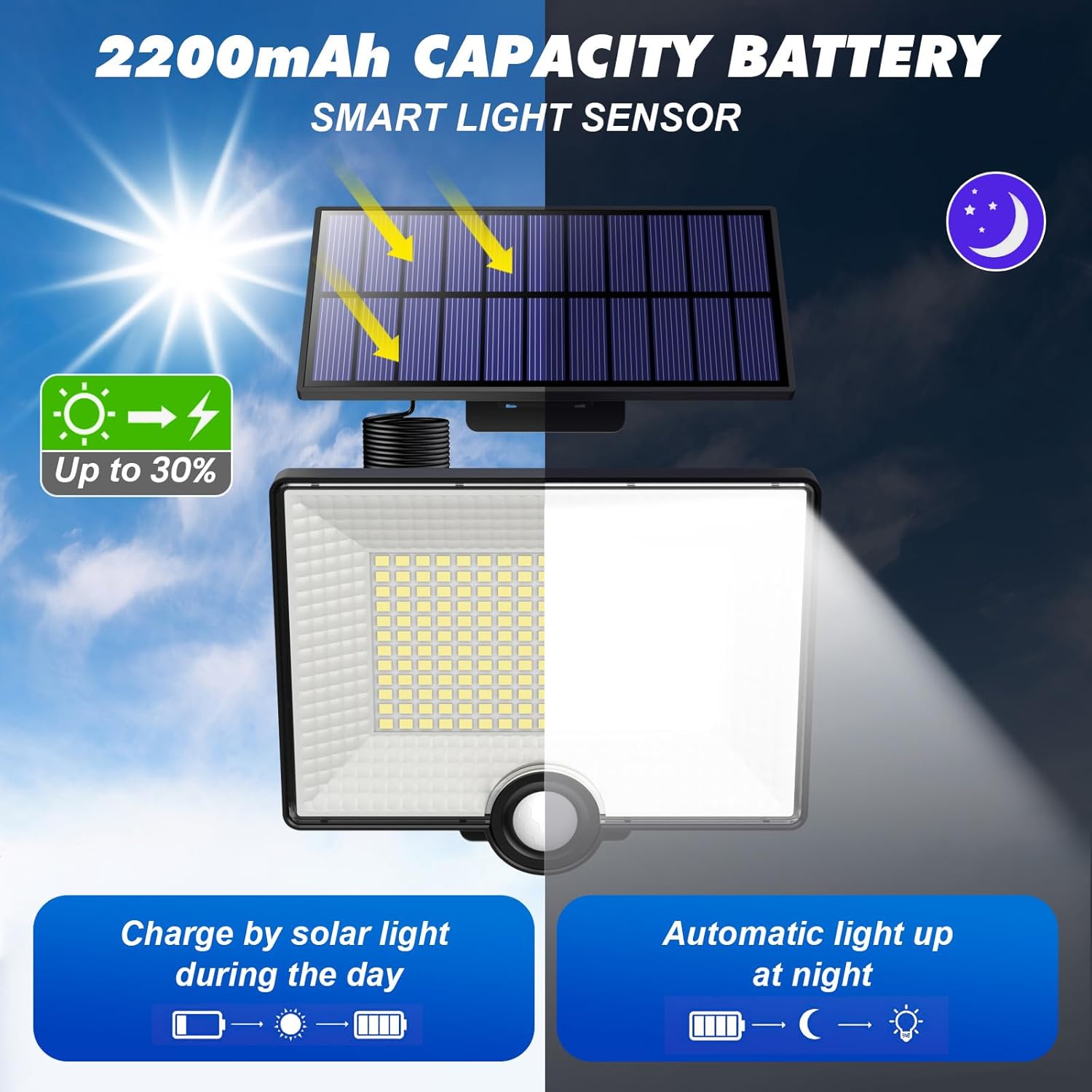
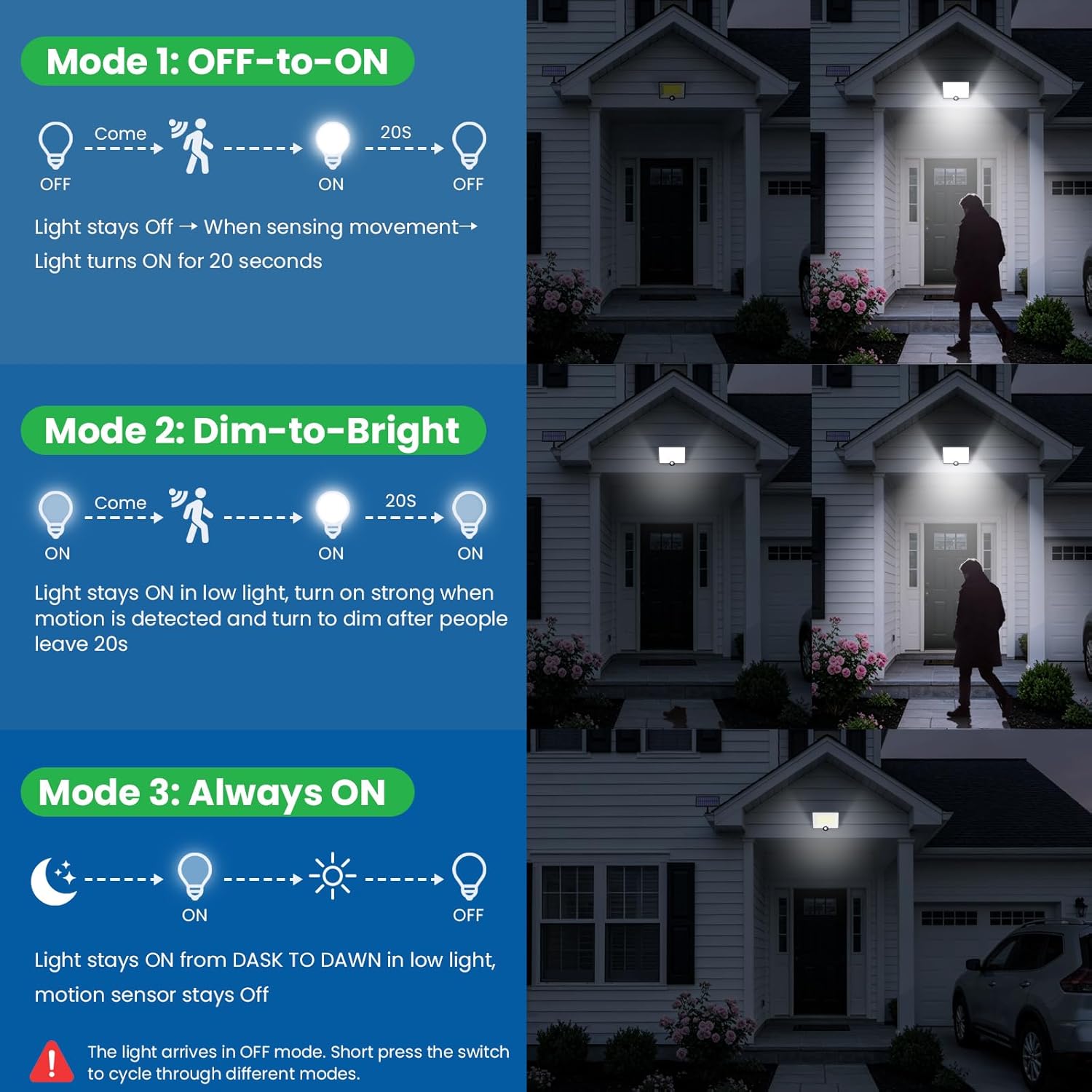
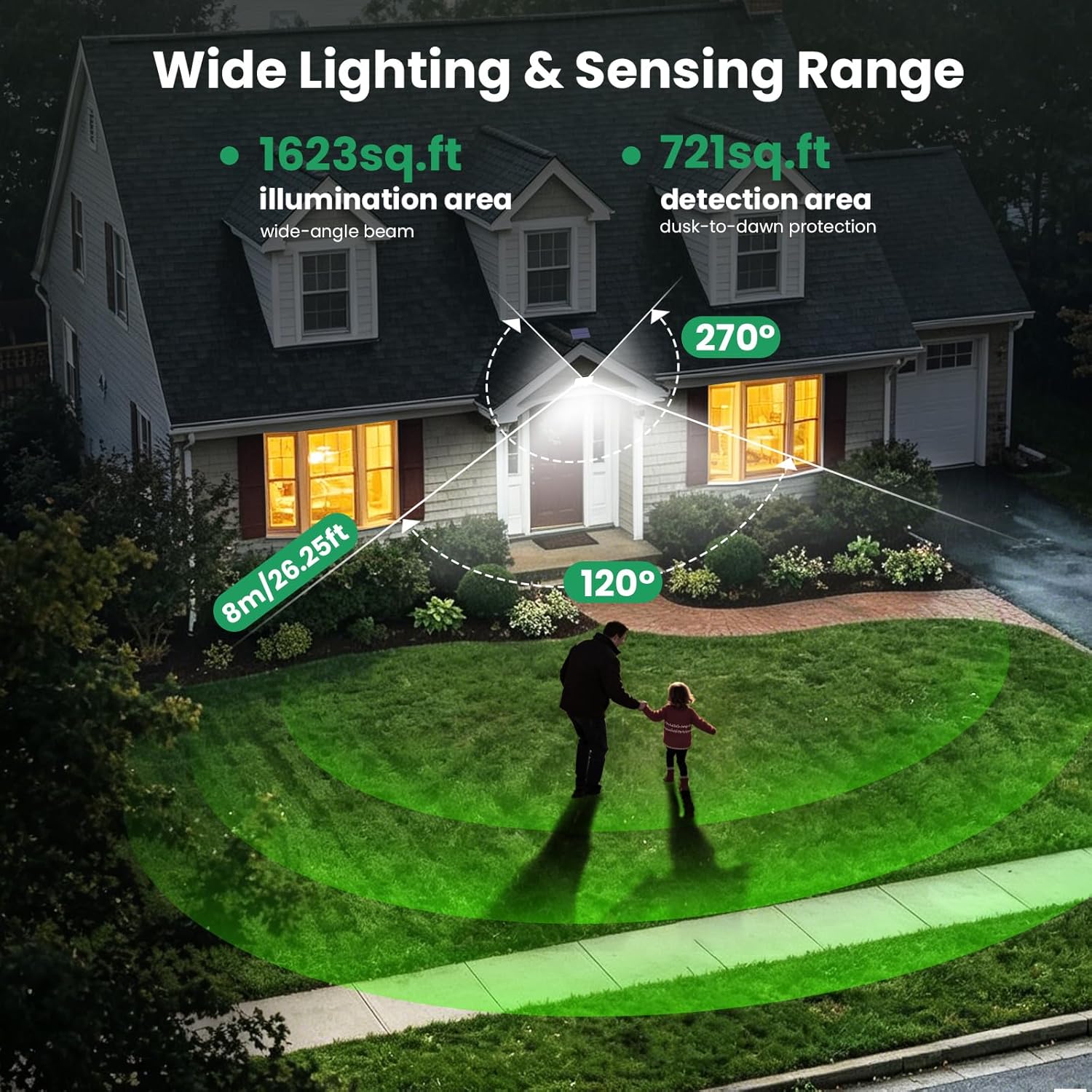
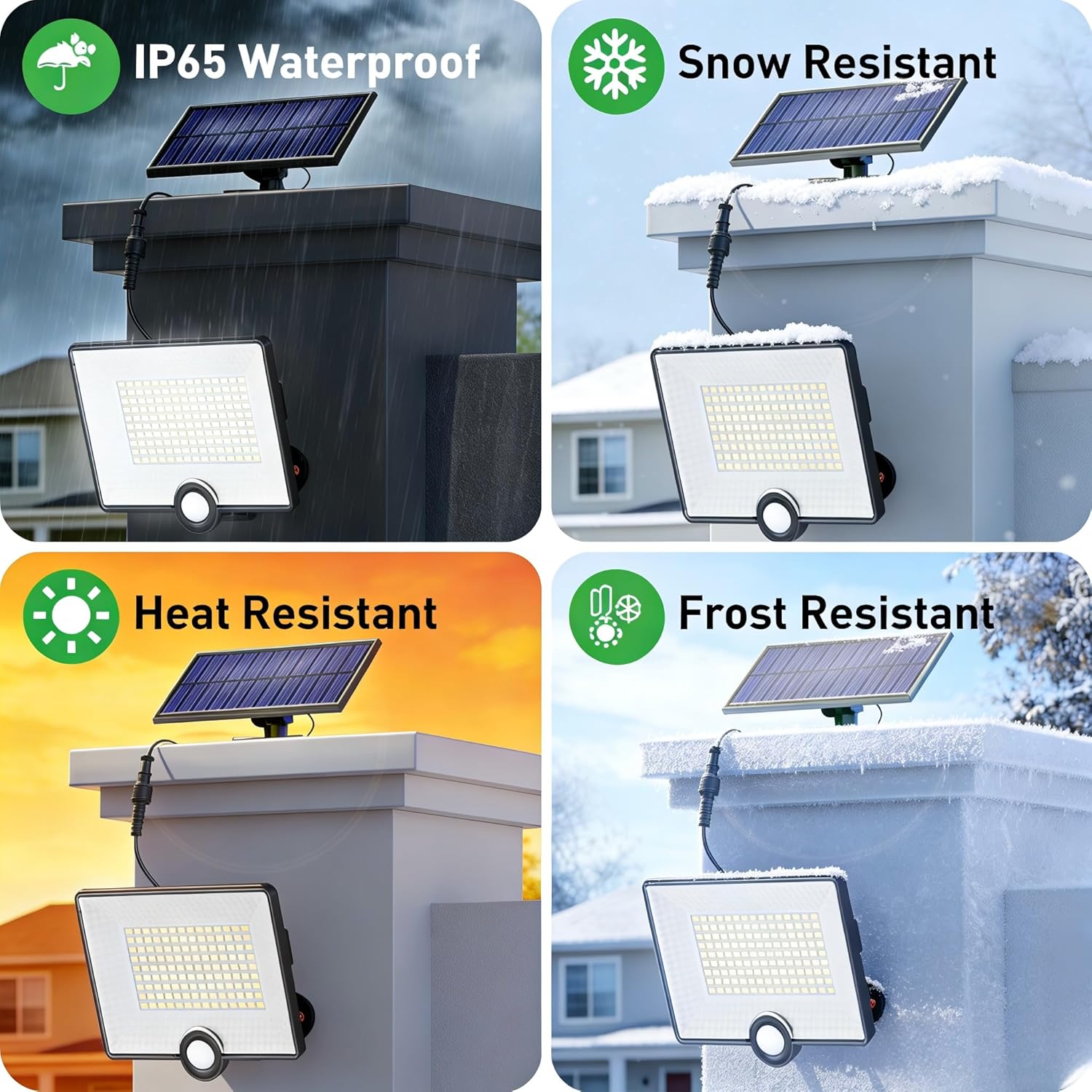
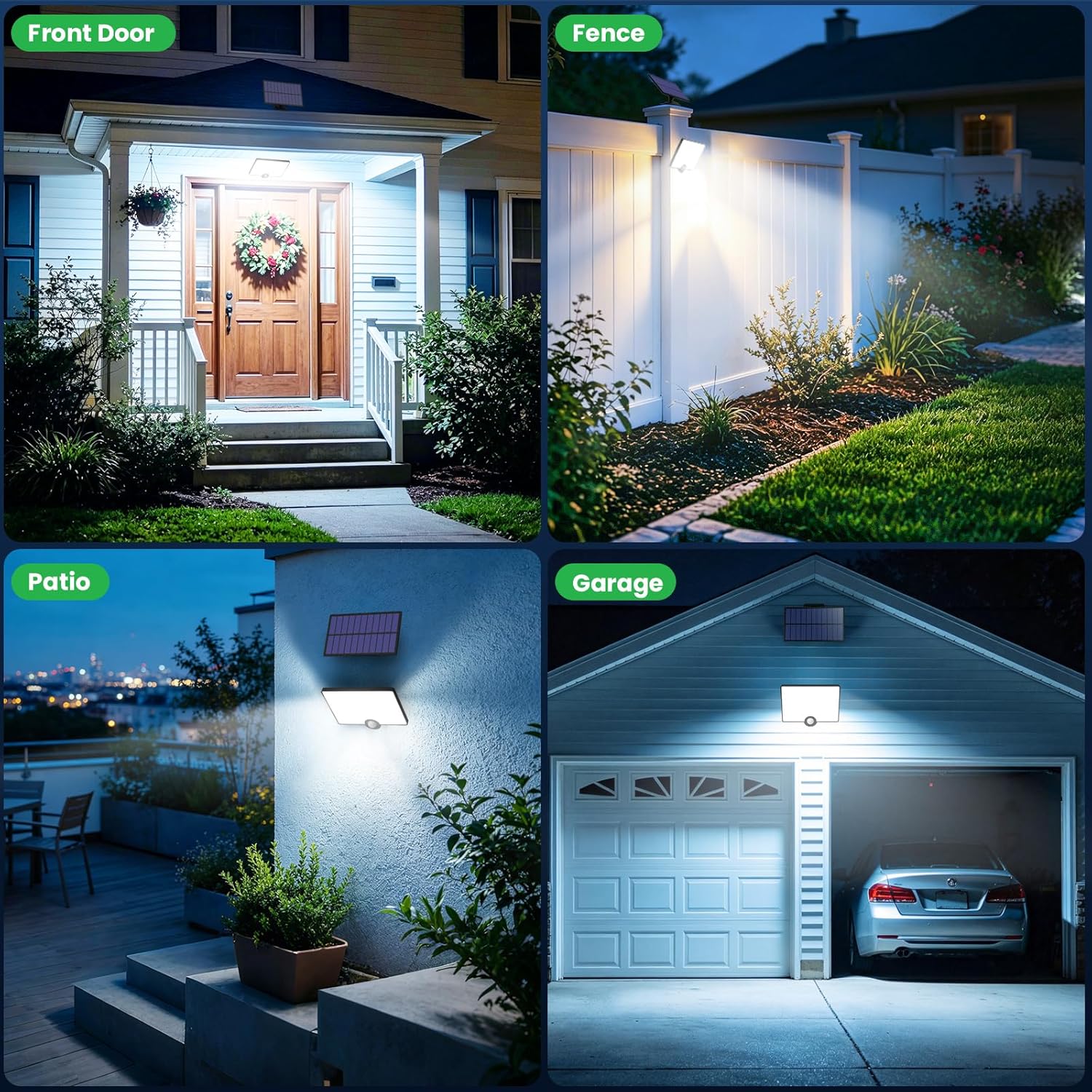
What this is and what it aims to solve\n\nOn the surface, this is a solar powered outdoor light system designed to illuminate driveways, yards and entryways with security in mind. It combines a high-output LED array (204 LEDs) delivering around 2000 lumens of cool white light (7000K) with a solar panel designed to improve daytime charging efficiency. If you’re after a low-maintenance lighting setup that doesn’t rely on mains power, this model aims to offer a practical balance of brightness, daily autonomy and ease of installation. The split panel design is a notable point: you place the solar panel in the sunniest spot while positioning the light unit where you actually need illumination. The 16.4ft cable length gives flexibility for installation in shaded corners, under eaves or inside spaces like garages and porches, where a traditional single-unit solar light might struggle.\n\n## How it works and what to expect\nNewer solar panel technology is claimed to achieve higher charging efficiency, with a stated 30% conversion efficiency and a 2200mAh rechargeable cell. In practice, that combination is aimed at enabling all-night illumination after a daytime charge, subject to weather and daily sun hours. The light offers three modes to cover typical scenarios: a strong mode that activates on motion and then turns off after a brief inactivity period, a dimmed sensor-based mode for longer nights of gentle visibility, and a constant dim mode for steady background light. You can swap between modes with a back-panel button, which keeps the control logic straightforward and user-friendly.\n\n## Motion sensing and coverage in real use\nThe PIR sensor is designed to detect motion up to about 8 metres, with a broad 270° illumination angle. That broad coverage helps reduce blind spots along paths or around the garden perimeter. In real life, this means the light tends to react quickly to approaching people or even pets, which enhances security without flooding the entire area all night. It’s worth noting that the sensor’s reach and the exact light spread will depend on installation height and surrounding obstacles, so some trial placement is sensible.\n\n## Durability and weather resilience\nConstructed from high-impact ABS and rated IP65, the light is built to withstand typical UK weather—rain, frost and even occasional snow. While no outdoor fixture is completely invincible, the IP65 rating and robust construction offer a reasonable expectation of year-round operation, provided it isn’t subjected to extreme, persistent conditions. The system is designed for tool-free, screw-based mounting on walls, fences or gates, which keeps maintenance straightforward and avoids electrical work.\n\n## Practicality, pros and cons\nOn the plus side, the split-panel approach delivers installation flexibility and energy-conscious operation with no ongoing electricity costs. The 16.4ft cable helps place the light where it’s most needed, not just where the sun shines, which is a real advantage in partly shaded garden spaces. The brightness is clear-cut for security lighting, and the three modes offer adaptable use throughout the year. However, a couple of caveats are worth keeping in mind: the 8 m motion detection range is typical for solar security lights but may feel modest on very large properties, and the all-night performance relies on regular daylight charging—cloudy weeks can shorten runtime. For spaces with predominantly diffuse shade or very long nights, you might not get the same continuous illumination as a wired, high-capacity alternative.\n\n## Who it’s for and who it isn’t ideal for\nIt’s a reasonable choice for homeowners seeking a low-maintenance, energy‑efficient option to deter intruders and improve visibility around gateways, garages, patios and sheds. It suits those who value quick installation and flexibility in placement over absolute, high-precision lighting control. If you prioritise single-unit compactness over flexible placement, or you need exceptionally long continuous illumination through the night regardless of daylight input, you may want to compare with more powerful or differently configured options.\n\n## What to check before buying\nEnsure you can position the solar panel where it receives good sun during the day, while the light head is placed where you actually need lighting at night. Check the total length of the cable (16.4ft) to verify you can route it without strain or obstruction. Consider the local climate and typical sunlight hours, the claimed all-night operation assumes decent daytime charging.\n\n## Practical use example\nImagine coming home after dark to a softly lit path to the door. The motion sensor senses you from across the driveway, lighting the path for a few seconds and then dimming to maintain visibility with battery preservation in mind. If you’re hosting a late evening gathering, the bright mode can quickly switch on as guests approach the area, then revert when the space is quiet again.\n\n## Tech at a glance (briefly)\n- LED: 204 beads, approx. 2000LM, 7000K cool white\n- Battery: 2200mAh rechargeable\n- Solar: split panel design with 30% conversion efficiency claim\n- Cable: 16.4ft between panel and light head\n- Sensor: PIR motion, 8 m range, 270° coverage\n- Modes: three automatic/manual settings\n- Durability: ABS body, IP65 waterproof\n- Installation: tool-free, wall/fence/gate mounting\n\n## Final buying decision\nFinal verdict: It makes sense if you value the flexibility of a split-panel system, straightforward installation and a practical brightness level for security lighting around a home. It may not be the best option if you need unconstrained all-night brightness in a large, unlit area or if your site has prolonged cloudy spells and you expect continuous high-lumen output every night. If you prioritise energy efficiency, ease of setup and a reasonable balance between cost and capability, this model is worth considering.\n\n## FAQ (quick answers)\n- How bright is 2000LM in real life? It provides strong illumination suitable for security purposes but is best judged in your own setting with test placement.\n- Can the panel charge indoors? The panel should be placed outdoors where sun exposure is best, the 16.4ft cable allows some flexibility, but charging indoors is not the intended use.\n- How long does it take to recharge? The description notes 8 hours of daytime charging as a guideline for all-night use, assuming typical UK daylight conditions.\n- Is installation difficult? It’s designed to be tool-free and straightforward, but ensure the panel and light head are positioned optimally to maximise charging and coverage.