

POWERUP 4.0 smartphone-controlled RC paper aeroplane kit with autopilot & gyro stabiliser
Product description
The essentials
If you want the thrill of an RC flight without starting with a full-blown aeroplane build, the POWERUP 4.0 kit is designed for exactly that: you fold a sheet of paper, fit it into the system, and fly it using a smartphone connection. The pitch here is pretty clear—rapid setup, guided control via a Bluetooth module, and enough stabilisation to keep things fun rather than frustrating.
On paper (and in actual usage scenarios), it also leans heavily into “learning by doing”. You’re meant to experience flight behaviours through different wing configurations, and then step into more advanced manoeuvres thanks to an Acro mode. It’s not a precision aircraft for professional aerobatics, but it does look built for hobbyists, tinkerers, and students who want repeatable experimentation in the outdoors.
Key points
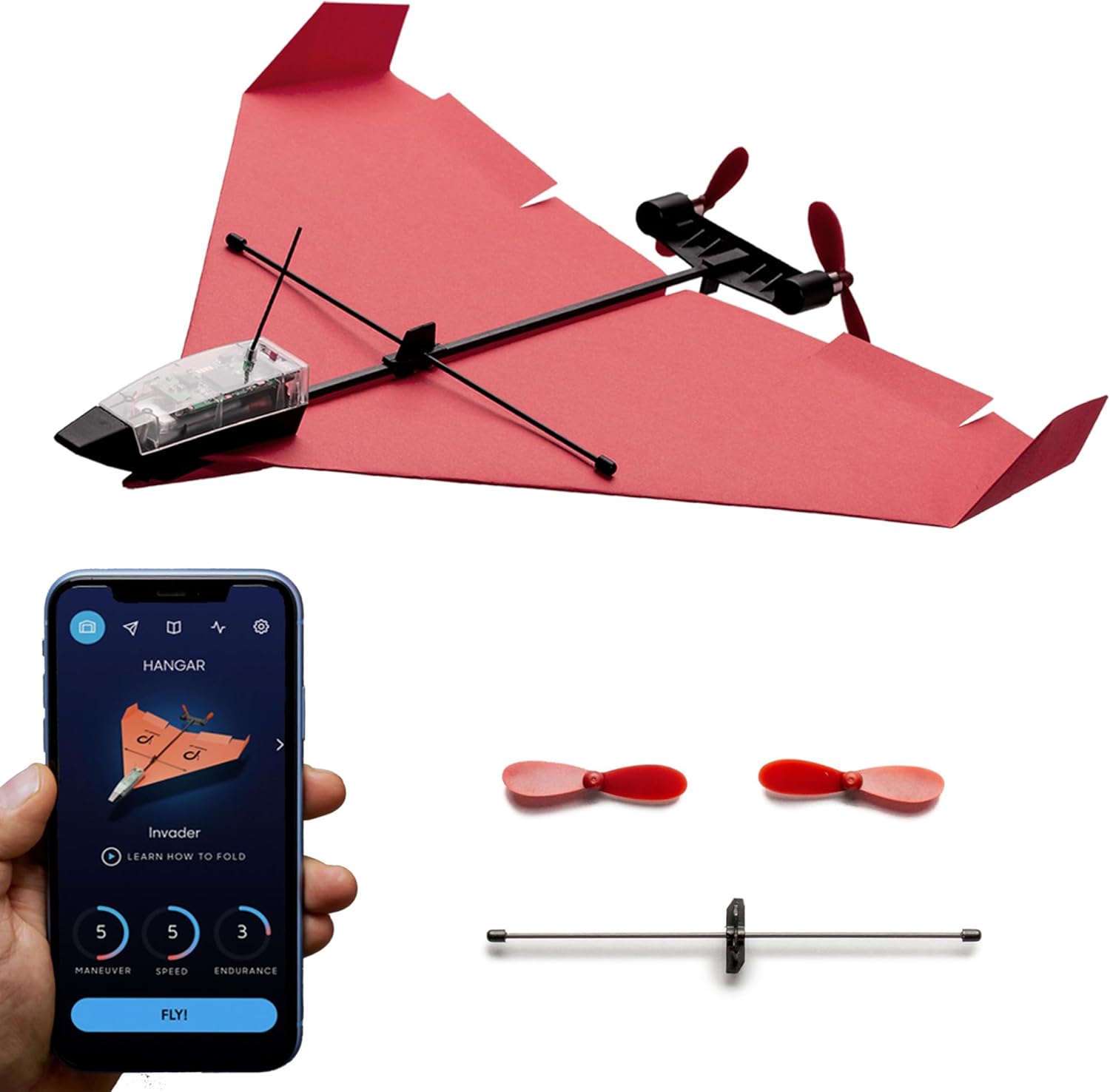
What stands out most is the mix of smartphone control, onboard assistance, and the promise of stability during tricky moves. The onboard computer is described as calibrating the paper aeroplane for imperfect weather, and it includes launch assist and a wind stabiliser. There’s also an acrobatics-focused approach: the kit aims to enable loops, barrel rolls and hammerheads with the special Acro mode.
Worth noting, this is a paper/foam/balsa-style ecosystem rather than a traditional model aircraft setup. That can be a real plus if you like fast iterations and lower material fuss, but it also means you’ll want to choose your flying conditions carefully—wind and uneven surfaces can still make life harder than the system’s stabilisation alone.
Tech summary
Here are the details that matter for a buying decision, based on the information provided:
- Type: Smartphone-controlled RC paper aeroplane kit with Bluetooth control
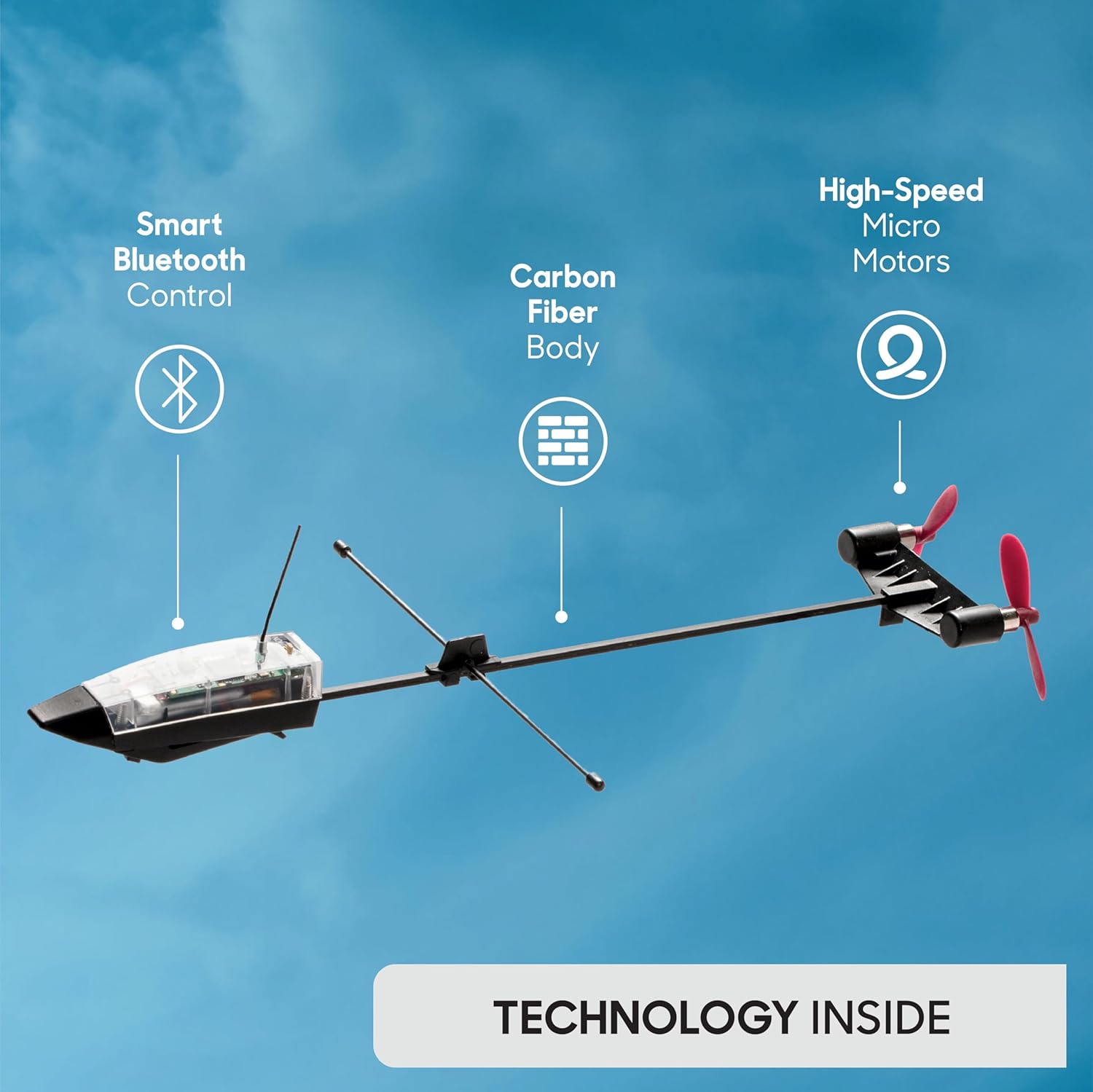
- Control concept: Bluetooth module connects to your phone for autopilot control
- Stabilisation: Built-in gyro stabiliser and onboard computer calibration
- Manoeuvre mode: Acro mode for high-speed tricks such as loops, barrel rolls and hammerheads
- Flight support: Launch assist and wind stabiliser
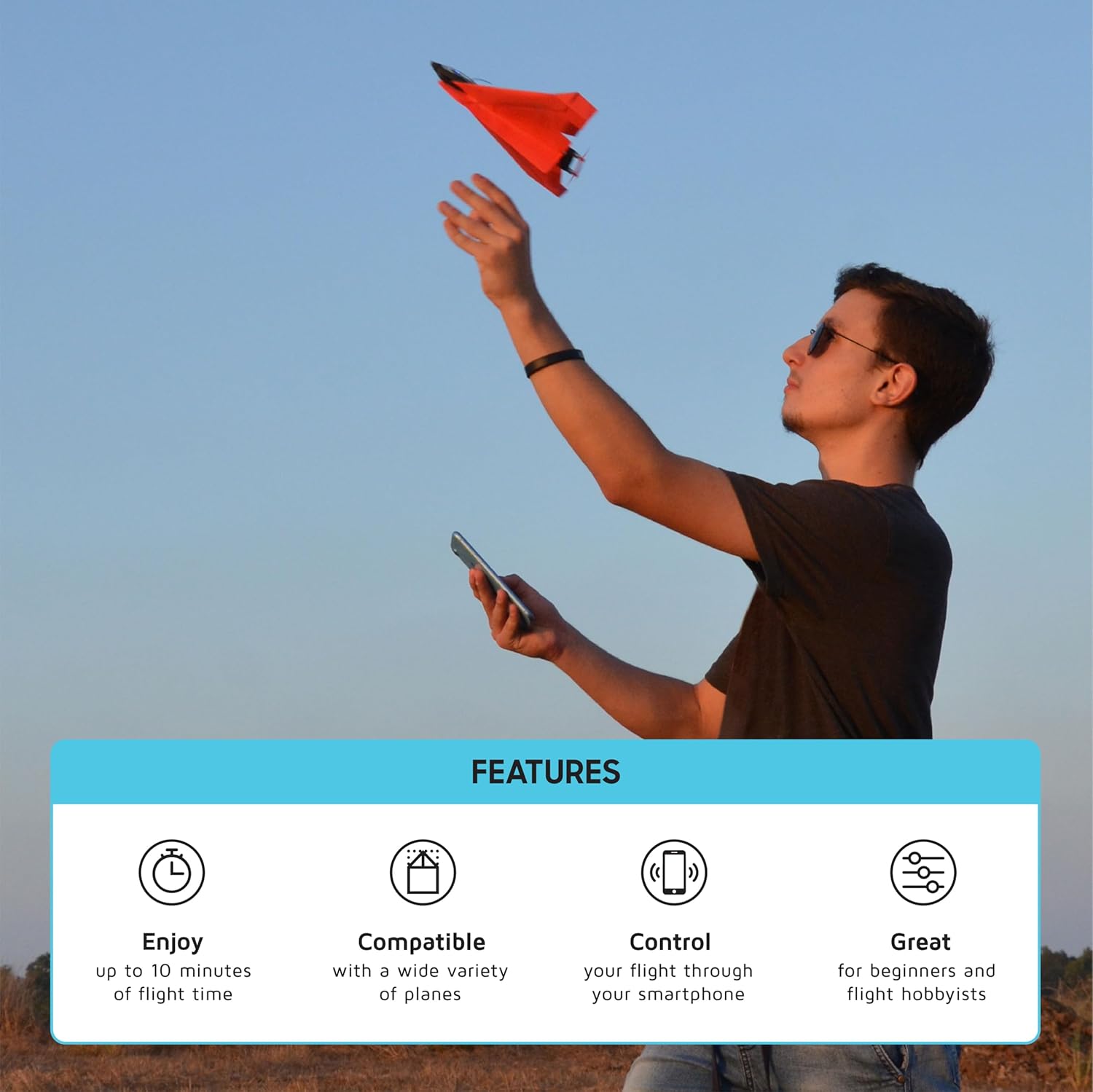
- Charging: 30-minute quick charge for around 10 minutes of flight time
- Range: up to 230ft (includes the idea of safely landing if out of range)
- Speed: up to 20mph
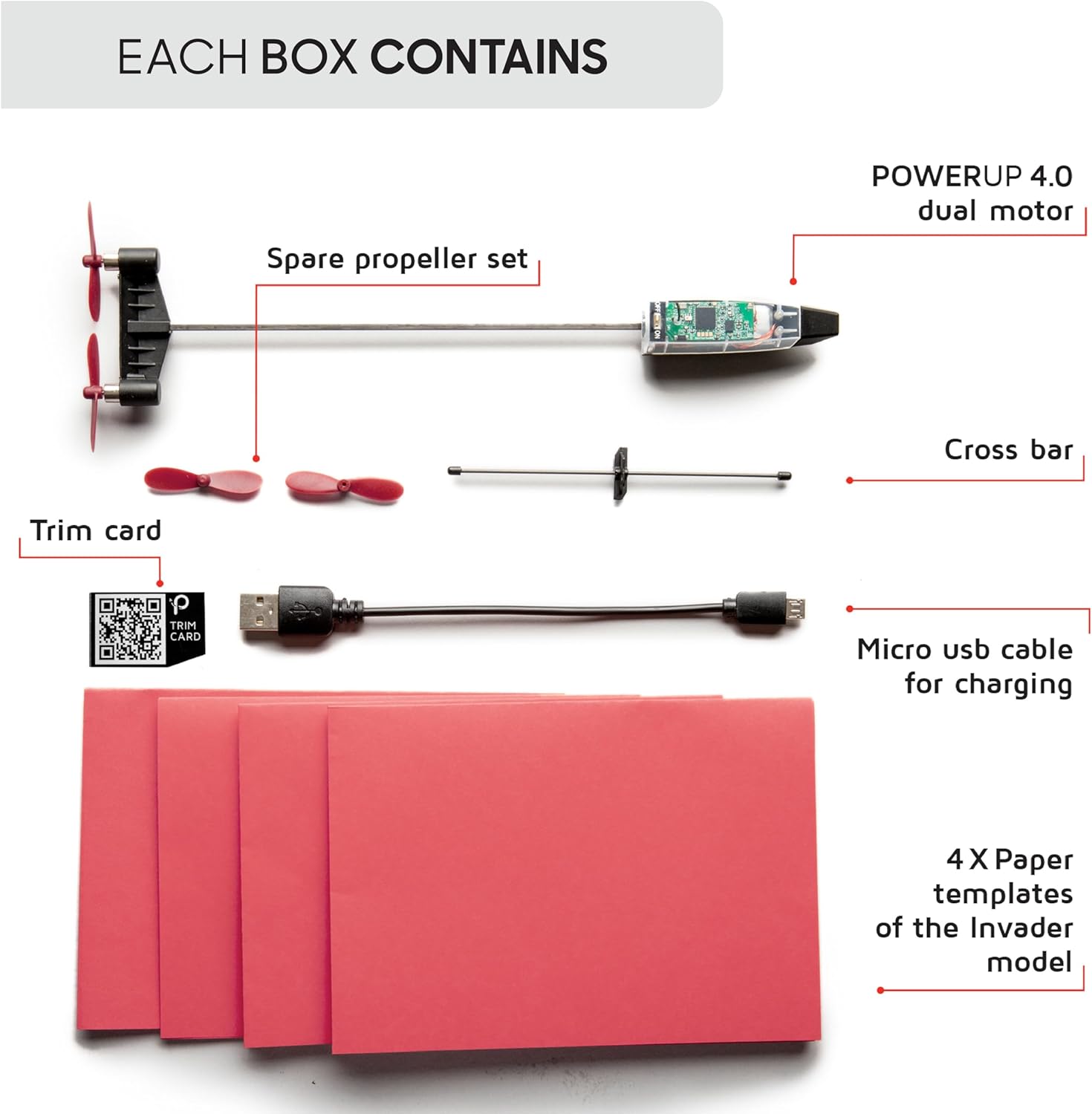
- Build: tough carbon fibre body, nylon-reinforced nose, and motor mount
- Durability note: designed to handle crashes
- Warranty: two-year warranty
- Charging connection: included micro USB cable to a charging port
What you’ll notice day to day
The everyday feel of a kit like this is mostly about how quickly you can get to “take-off”. With the included charging approach (a quick charge gets you a short flight window), you’re likely to be doing multiple short sessions rather than planning one long, uninterrupted run.
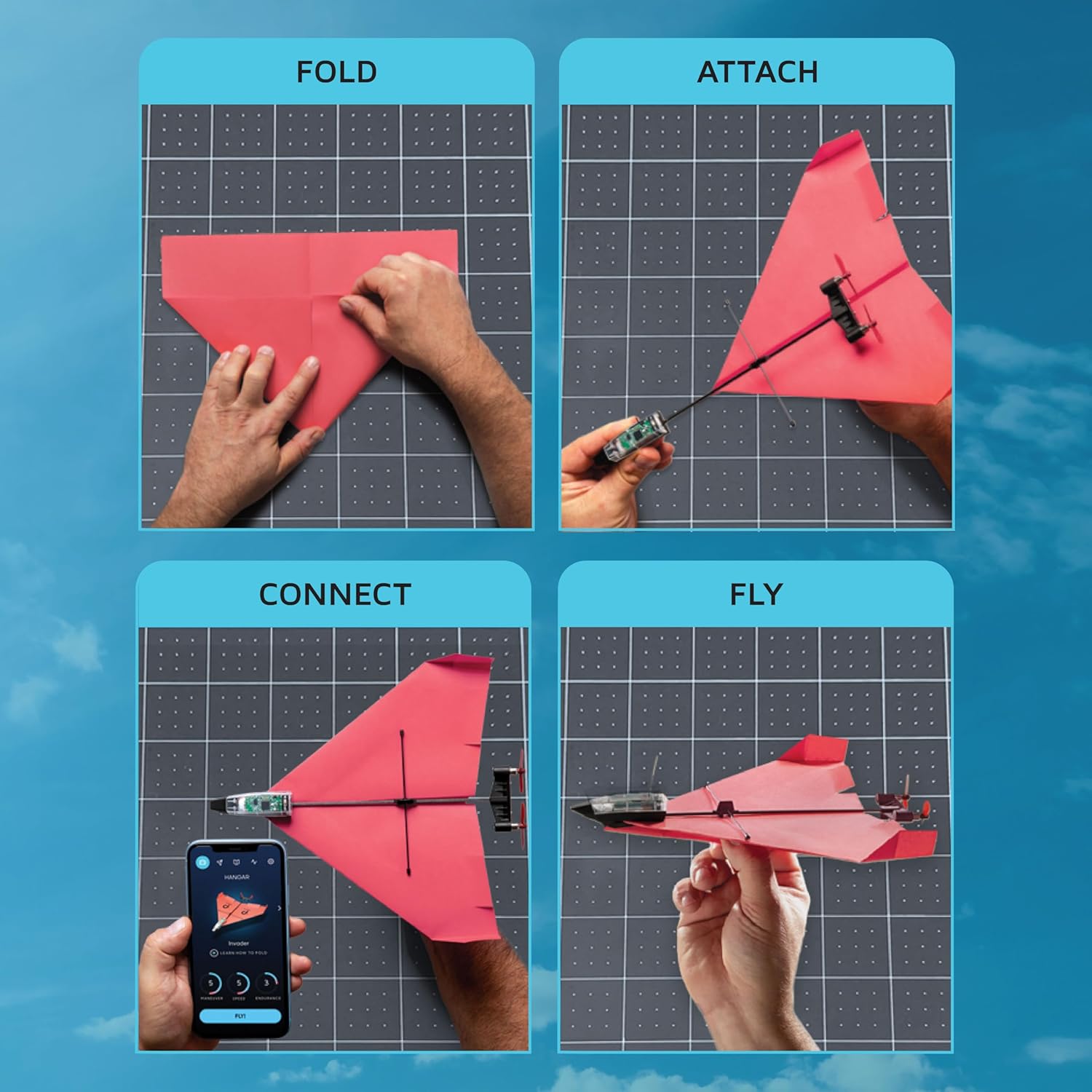
A practical example: you’re outdoors, you fold and fit the paper plane, then connect the Bluetooth module to your phone and use the provided controls. When you launch, you’re relying on launch assist and the onboard calibration to smooth out the rough edges of imperfect conditions. After that, Acro mode is the route to the more dramatic tricks, assuming the flying area and wind level are reasonable.
It’s also the kind of product where “learning curve” matters. If you’re expecting plug-and-play like a toy car, you may find yourself wanting a couple of tries to get the launch rhythm and control feel right.
Where it shines
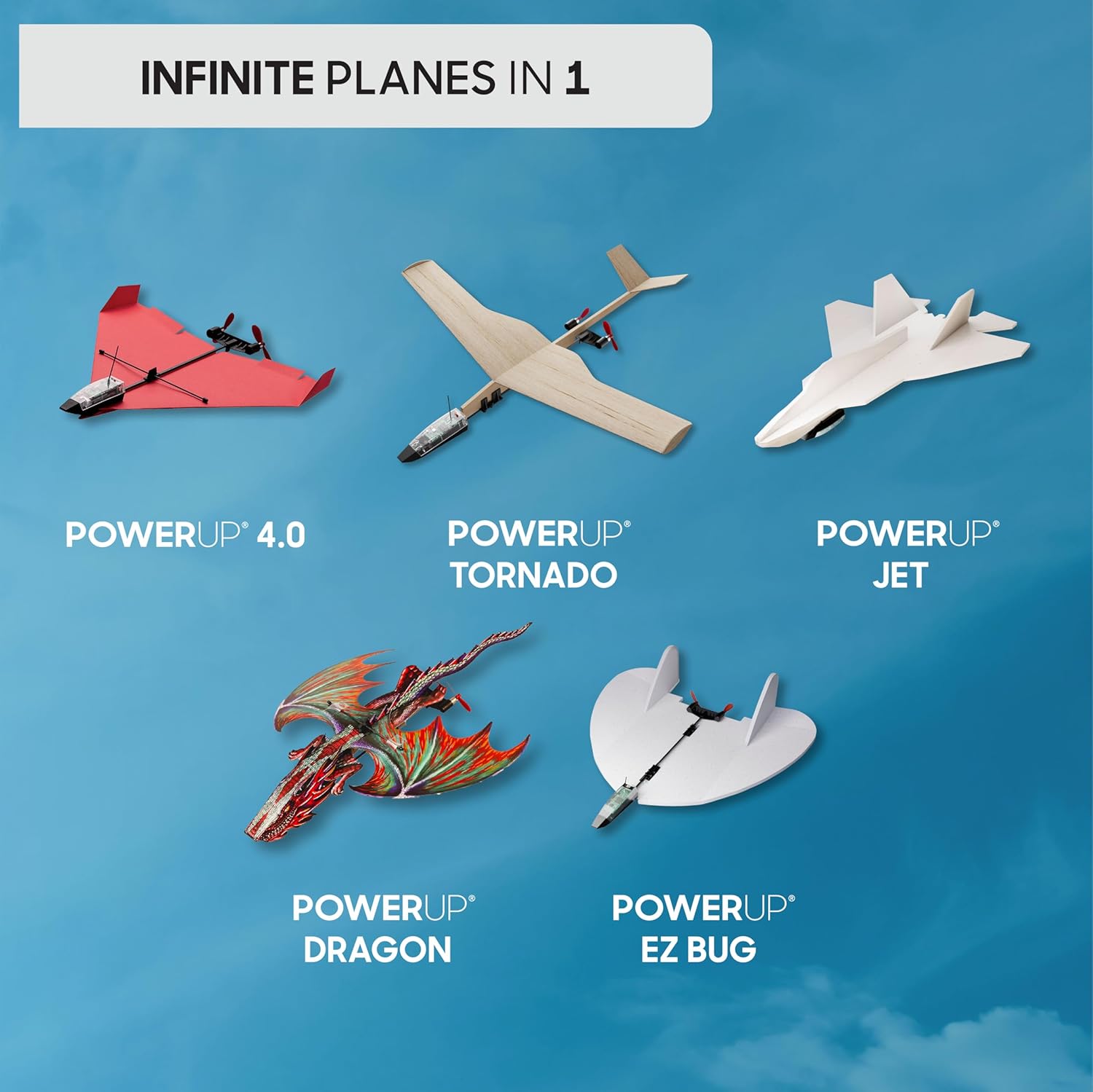
- If you want an RC experience with a STEM angle: the kit is positioned around aerodynamic forces and learning through wing configurations.
- If you enjoy tinkering: it’s framed for hobbyists, tinkerers and students who want to experiment with how different setups behave.
- If you care about stability rather than pure manual control: the autopilot-style support, wind stabiliser and calibration are aimed at making flights more forgiving.
- If you need durability for real-world use: carbon fibre body and crash-handling plus a two-year warranty are the right sort of reassurance for something that’s meant to be flown outdoors.
What it may not be for
It may not suit you if you mainly want long flight times—based on the quick-charge to flight-time ratio, you should expect shorter sessions. It might also be a weaker fit if you fly only in challenging conditions (strong gusts or constantly shifting wind), because no stabiliser fully removes the reality of weather.
Also, if you’re looking to “learn” by building a conventional model aeroplane from scratch, this kit is more about folding a paper aeroplane and controlling it with smartphone support, not full mechanical construction.
Is it worth it?
Buy it if you like the idea of a smartphone-controlled RC paper aeroplane kit that leans on onboard calibration, launch assist and stability, and you’re genuinely interested in trying manoeuvres like loops and barrel rolls via Acro mode. It’s a good match for outdoor class settings, family exploration, students, and anyone who wants a fast, repeatable way to experiment with aerodynamic ideas.
You may want to skip it if you’re expecting very long flight sessions, or if you know you’ll be flying in consistently unpredictable wind where even the described wind stabiliser may not be enough to keep things smooth. And if your goal is a more traditional, longer-duration model aircraft build-and-tune project, this one focuses on the paper-plane experience rather than that style of hobby.
Mini FAQ
What does the smartphone connection do?
The Bluetooth module connects to your phone and supports autopilot control, so you’re not just flying blind—you’re using the phone as the controller while the onboard system assists stability.
How long can you fly after charging?
The kit is described as offering about 10 minutes of flight time after a 30-minute quick charge, so plan for multiple short sessions.
How far does it work?
The described range is up to 230ft, and the onboard computer is said to safely land the plane if it goes out of range.
Is it designed for beginners?
It’s positioned for hobbyists, tinkerers and students, but the presence of stabilisation, calibration and launch assist suggests it’s meant to be more approachable than a purely manual setup.
What kind of flying should I do?
The kit is aimed at outdoor flights where you can use launch assist and attempt tricks in Acro mode, but you’ll still want a safe, open area and sensible wind conditions.