

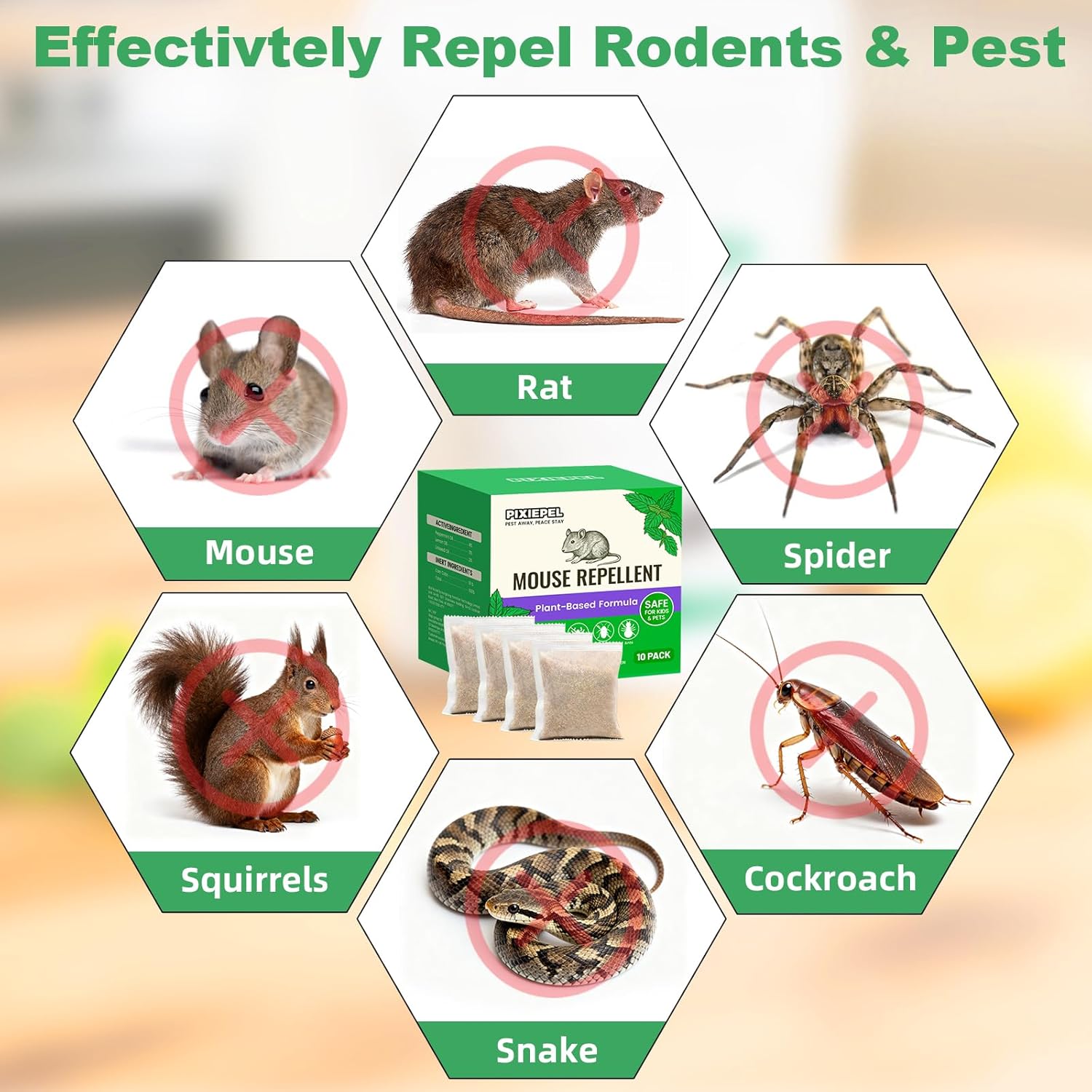

PIXIEPEL Mouse Repellent Pouches 10 pack 🐭
Product description
This pack of natural-scented pouches uses peppermint, lemon and linseed oils to help deter mice and other small pests around the home and outdoor spaces. The PIXIEPEL Mouse Repellent Pouches come in a 10-pack and are intended for placing in cupboards, garages, cars, RVs and boats to reduce the chance of rodent and insect visits while leaving a fresh aroma for people.
Key Points
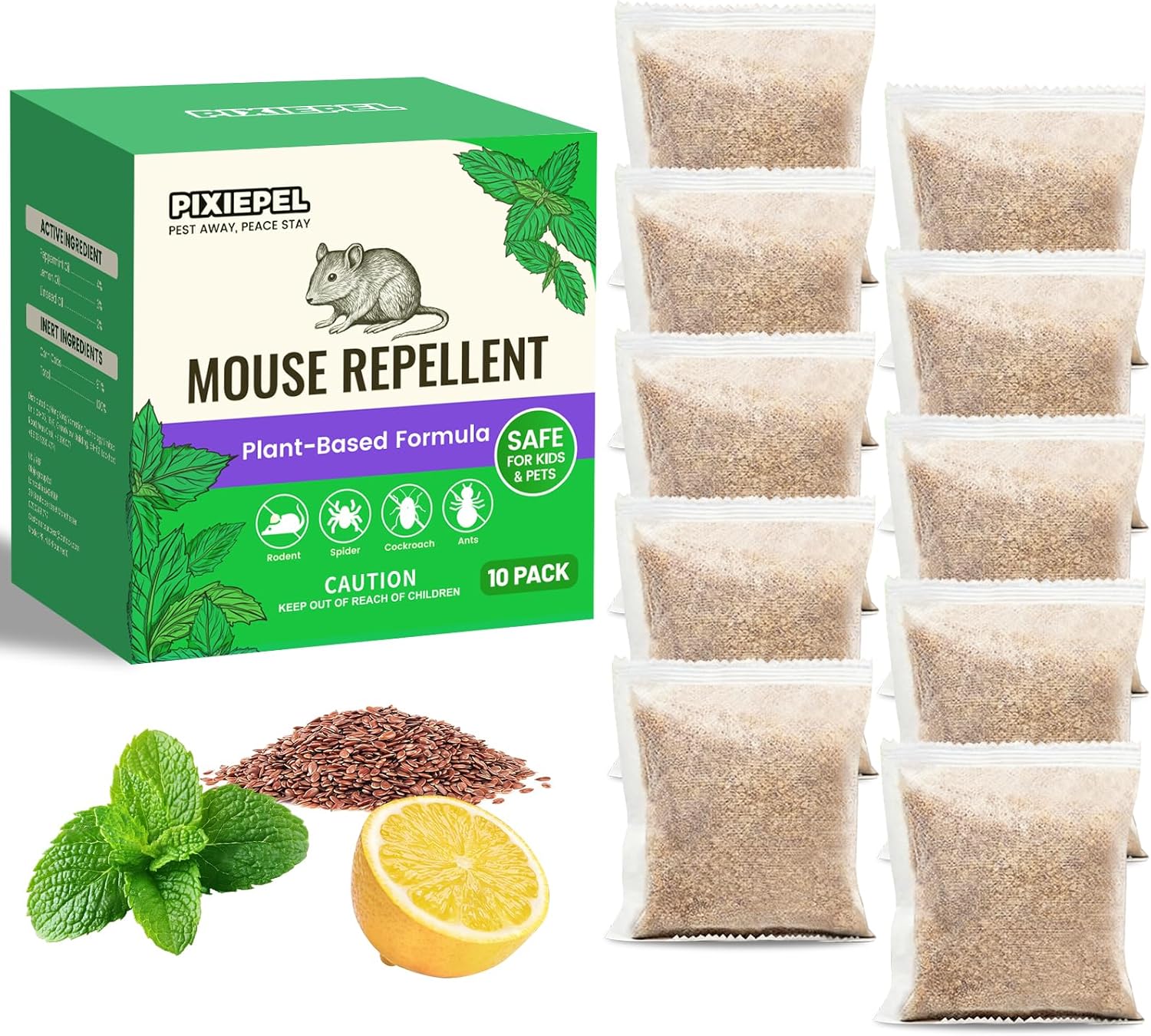
The pouches rely on plant-based essential oils as the active scent, which according to the manufacturer is unpleasant to rodents and many insects. Each pouch is compact and portable, making it straightforward to position where pests are likely to enter or nest. They are marketed for indoor and outdoor use and can be left in enclosed areas such as storage compartments and vehicles. Consider that scent strength may vary over time, and replacement will be necessary to maintain effectiveness.

Technical Specifications
- Name: PIXIEPEL Mouse Repellent Pouches, 10 Pack
- Contents: 10 scented pouches.
- Main ingredients: peppermint oil, lemon oil, linseed oil.
- Recommended locations: home, car, garage, shed, RV, boats.
- Usage: place near suspected entry points or inside storage areas.
Benefits

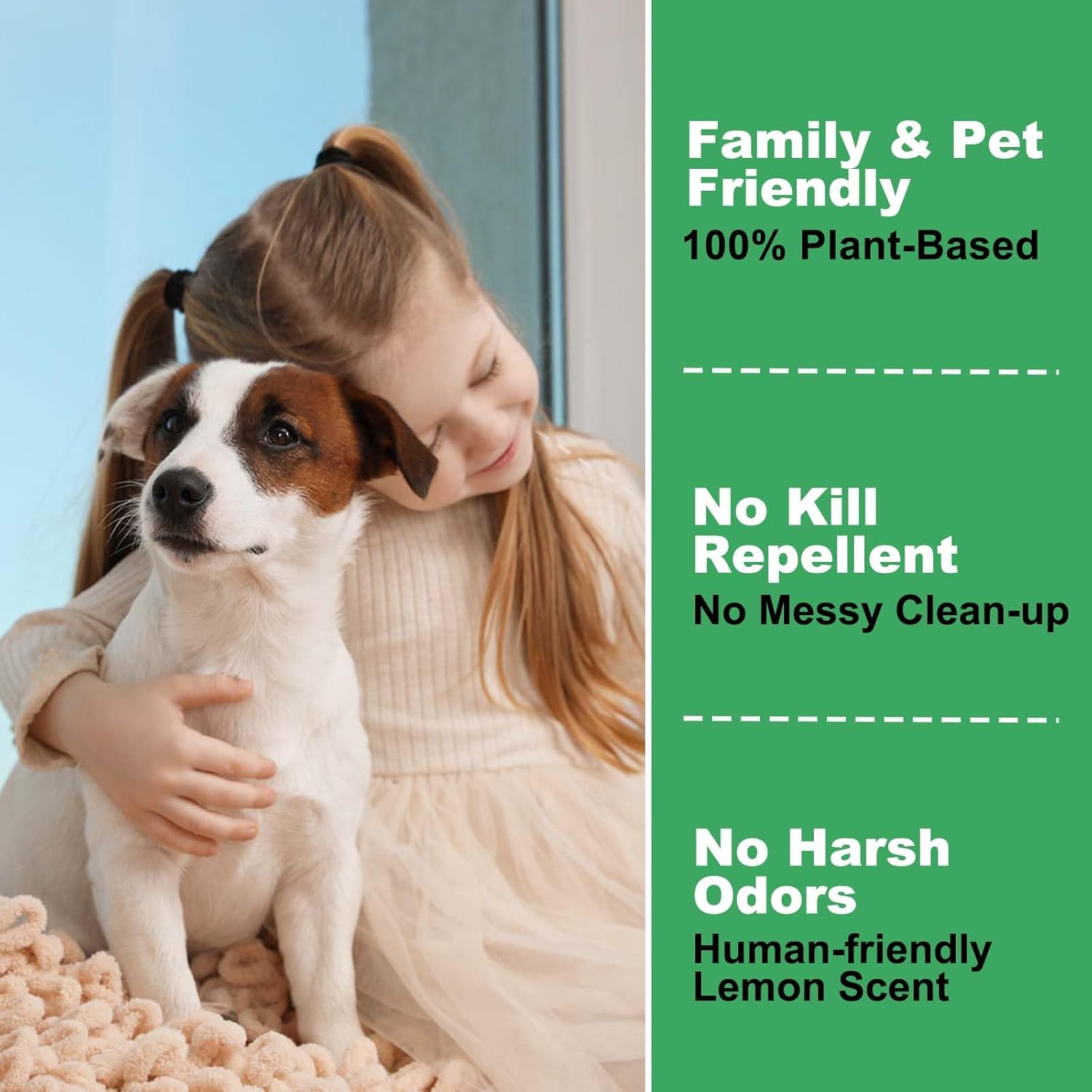
Using botanical oils means there are no traps or poisons to handle, which some households prefer for safety around children and pets. The fresh fragrance can be more acceptable than chemical odours in confined spaces, and the lightweight pouches are easy to move as needs change. For people seeking a low-maintenance approach, these pouches offer a passive deterrent that requires only occasional replacement.
Usage Recommendations
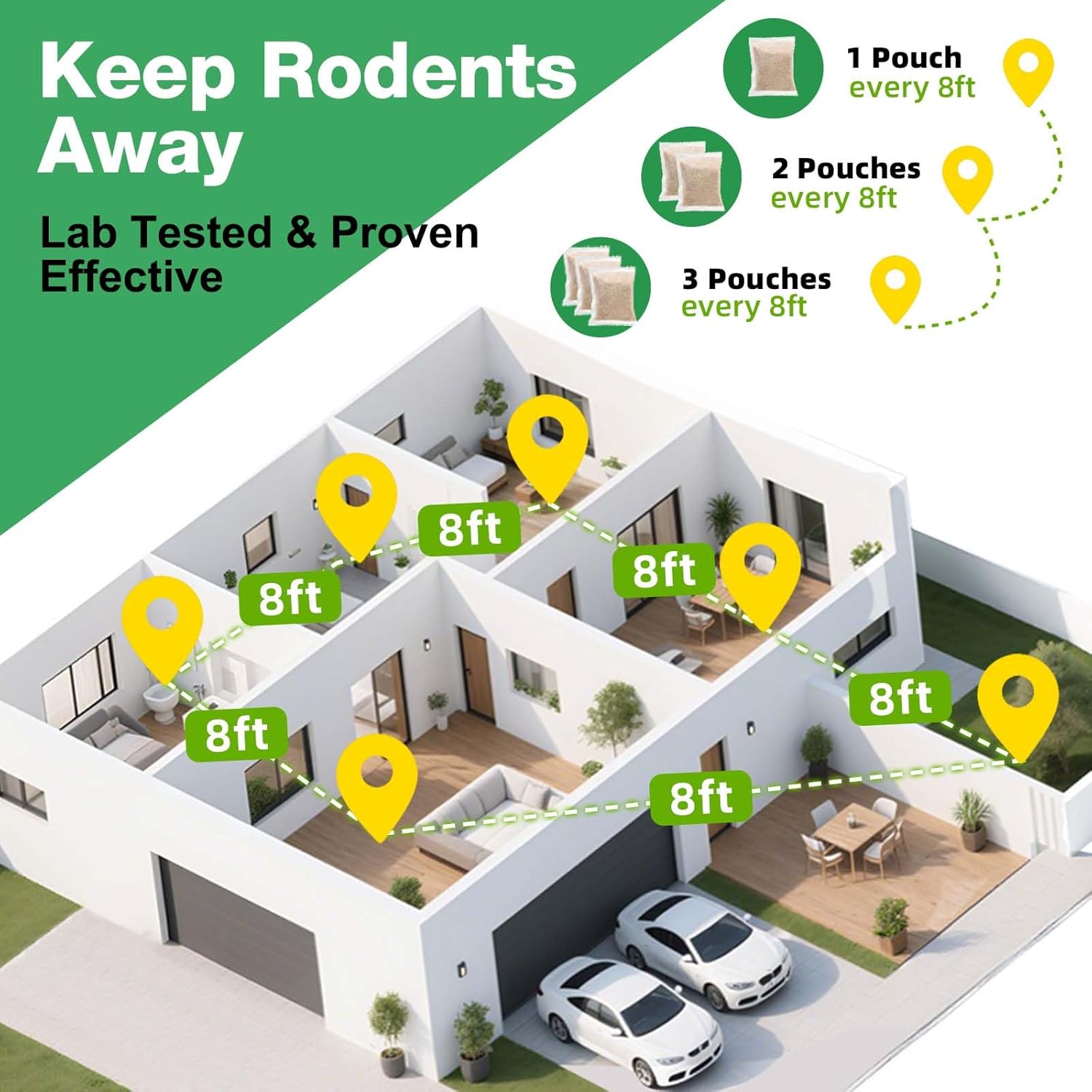
Place the pouches in small clusters at likely points of access such as behind appliances, in cupboards, under car seats or along shed shelving. Replace pouches when the scent fades, especially in larger or well-ventilated areas because aromas dissipate faster there. If you have severe infestations, consider combining these pouches with other control methods, since they may not eliminate established rodent populations on their own.