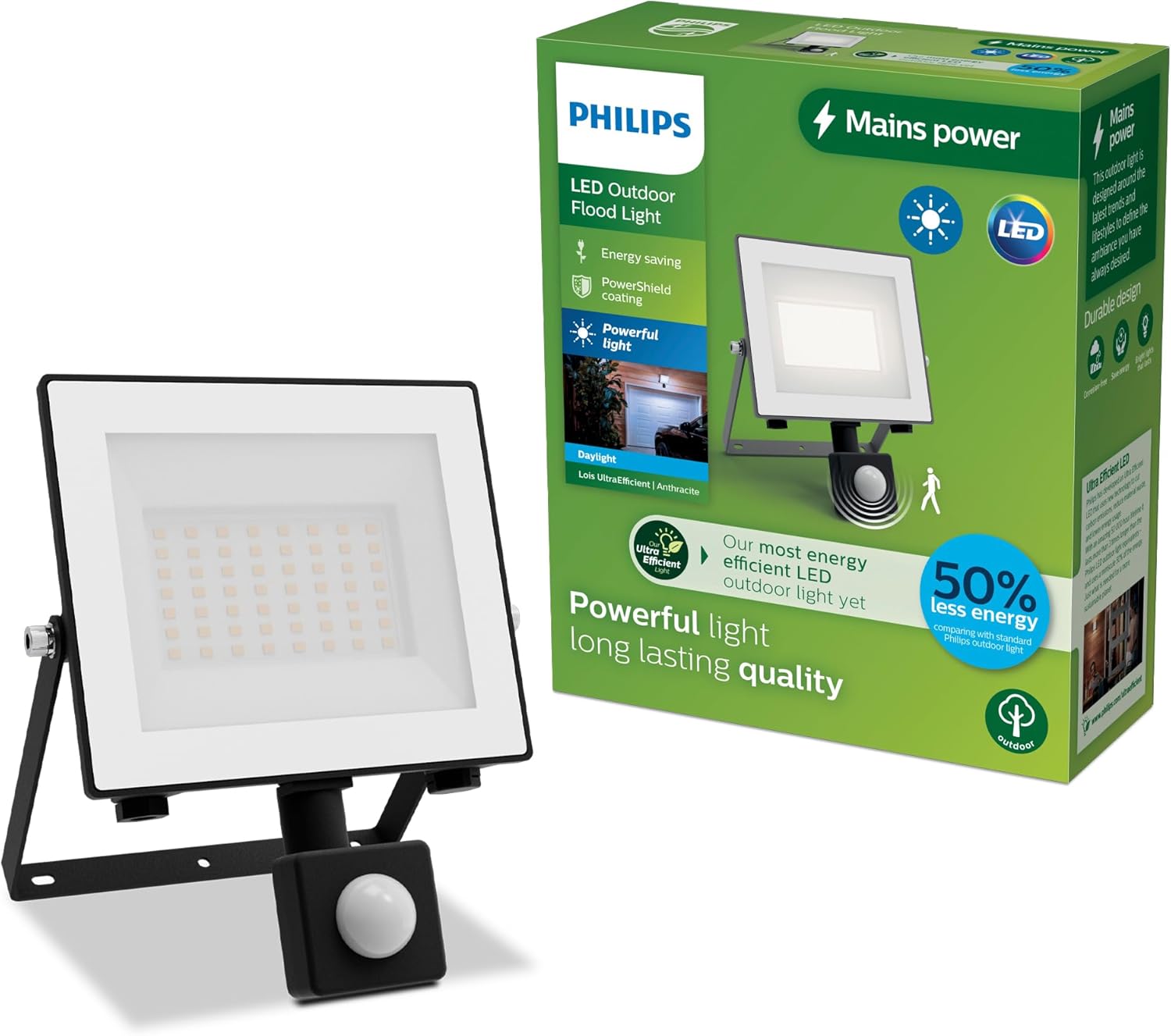
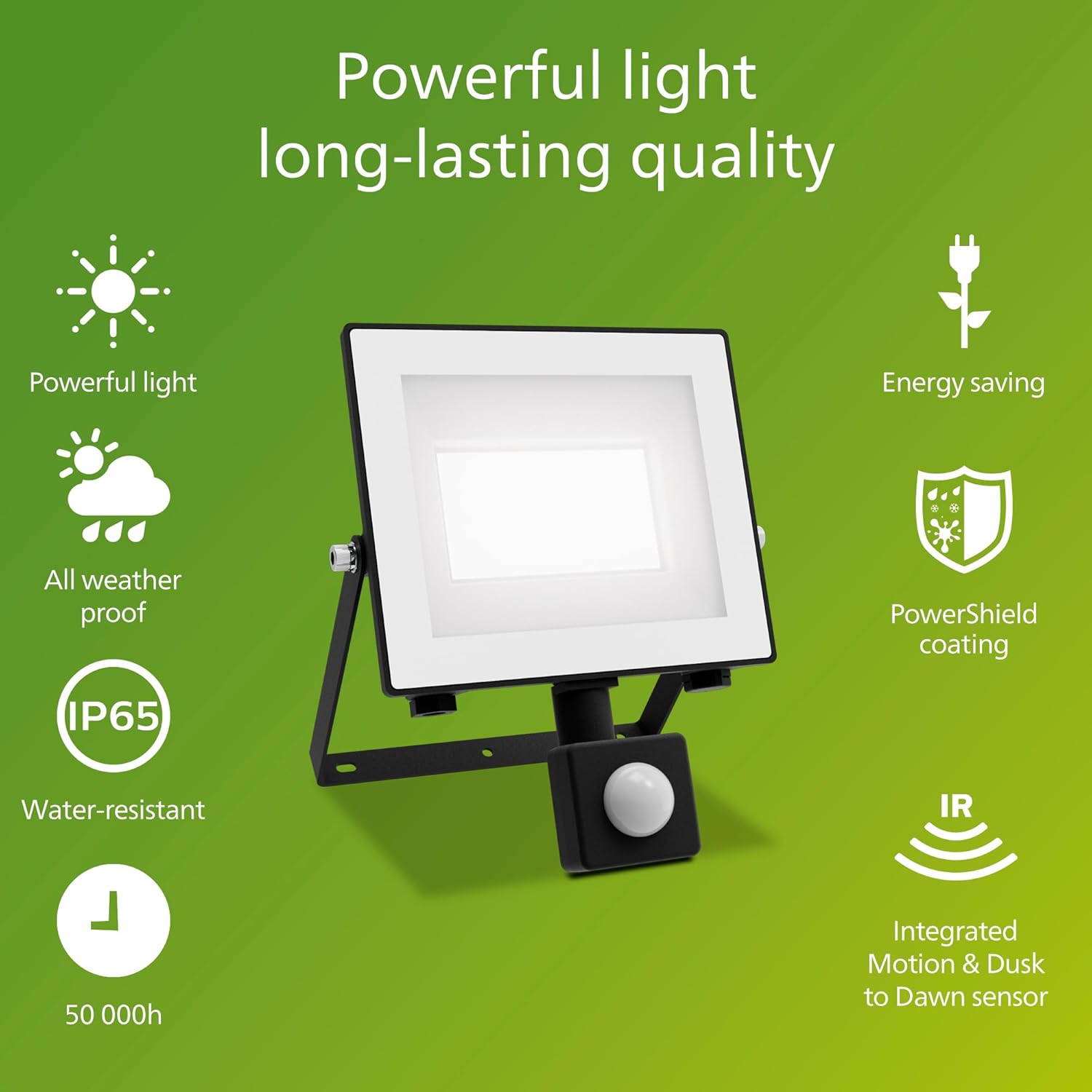
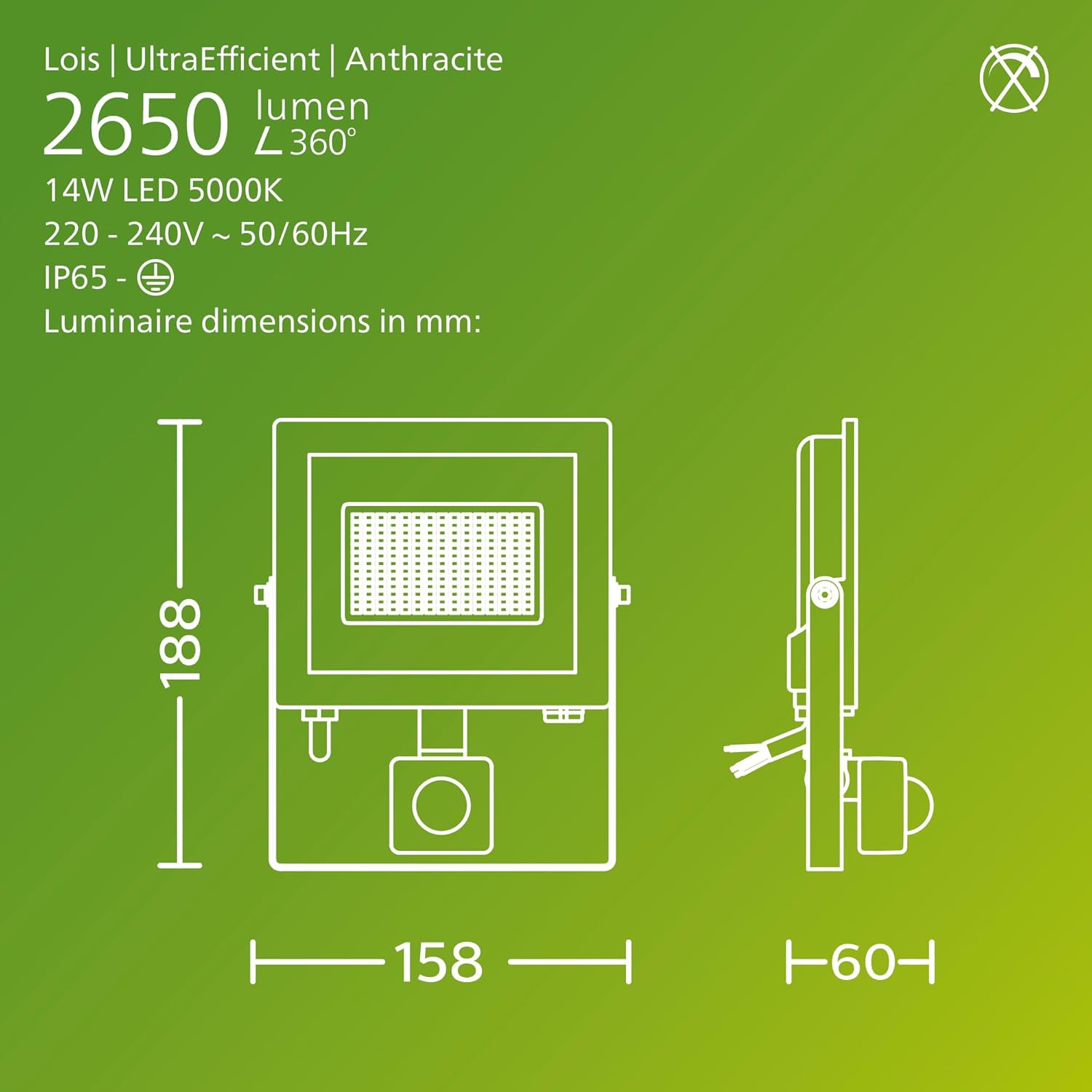
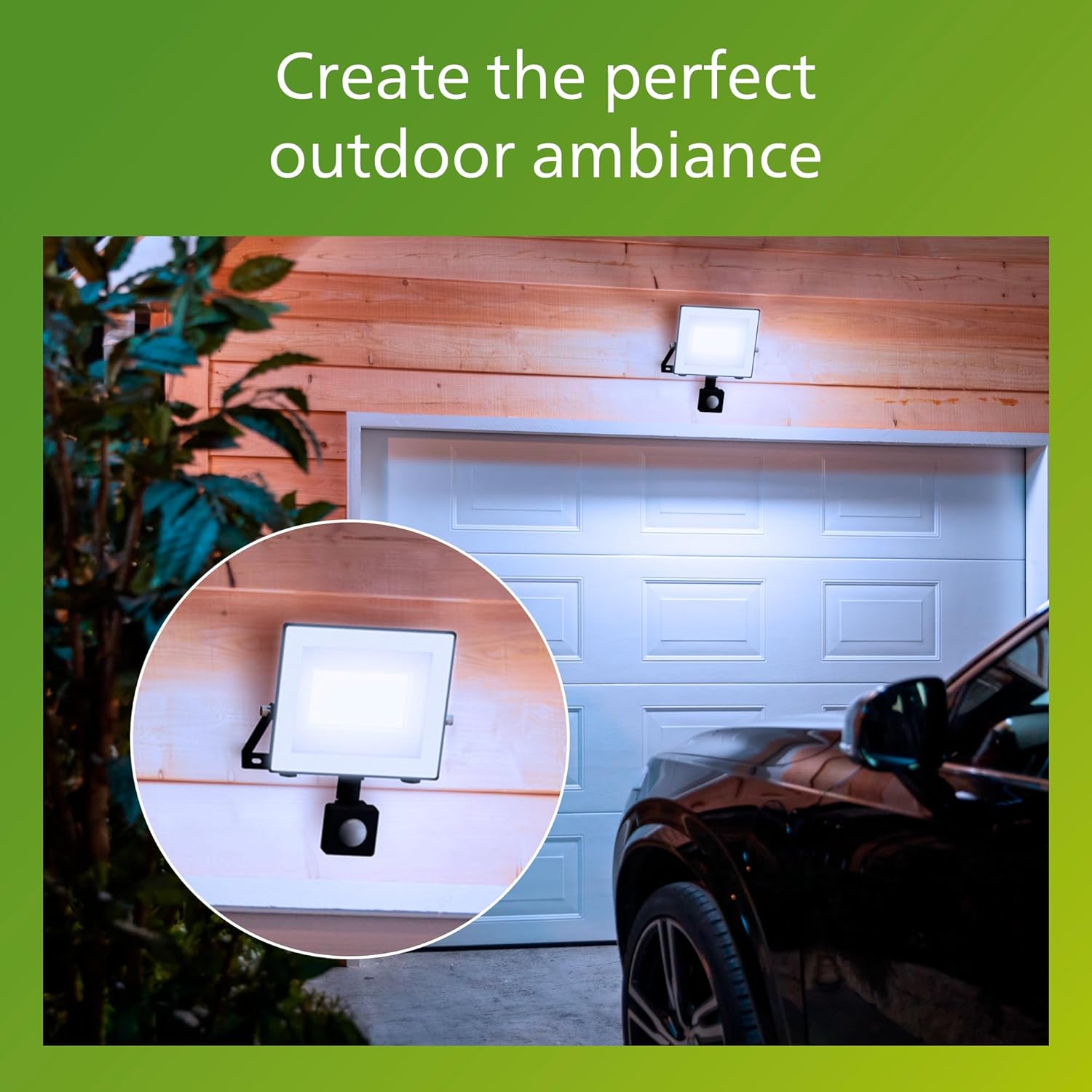
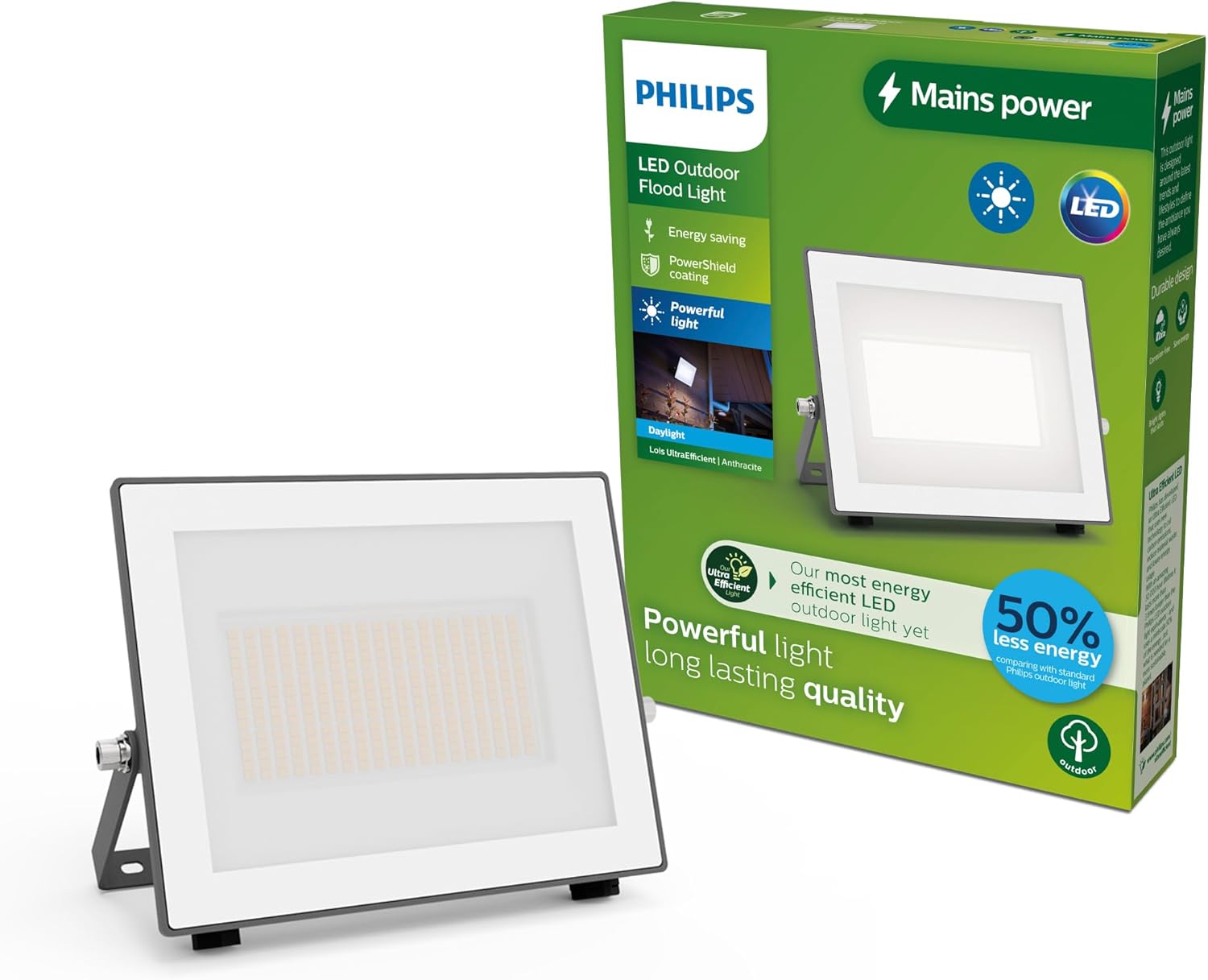
What it is and what problem it solves\nThe PHILIPS Lois Outdoor Floodlight with Sensor is a compact, energy-efficient outdoor light designed to illuminate spaces like driveways, paths and gardens. With a 14 W LED that delivers 5000 K daylight colour, it offers bright, trustworthy illumination while aiming to curb ongoing electricity use. The built-in motion sensor and dusk-to-dawn feature are intended to improve security and convenience, turning on when movement is detected or when darkness falls.\n\n## How it performs on paper\nOn paper, the light emphasises long life and durability. Philips advertises up to 50,000 hours of operation, a powder-coated finish designed to resist fading, scratches and rust, and an IP65 rating for protection from water splashes in all-weather conditions. It’s pitched as suitable for exterior spaces that require dependable lighting with limited maintenance.\n\n## Best use cases\nIt makes sense for homeowners who want automatic illumination that activates with activity or light levels, such as hedges, doorways or a perimeter path. The 50,000 hours life suggests fewer lamp changes over many years, which can suit properties with hard-to-reach fittings.\n\n## What stands out, and where it may fall short\nWhat stands out is the combination of motion-activated light plus dawn/dusk control, plus a robust powder coating finish. The 14 W LED and 5000 K colour are common for general outdoor tasks and security lighting. A potential caveat is that the description notes the product contains a light source of energy efficiency class B, buyers seeking ultra-low-energy operation might compare this with higher efficiency options, although class B often aligns with mid-range efficiency in lighting ranges.\n\n## Who it’s for and who should think again\nThis floodlight suits those prioritising automatic night-time illumination and a straightforward installation in moderate climates. It’s probably not the best choice if you primarily need mood lighting, very warm accents, or a higher-efficacy unit for frequent, prolonged use in a large area. If you’re after a minimal aesthetic or a lighter that blends with contemporary exteriors, the anthracite finish should help it blend in, but colour matching to existing fittings is worth checking.\n\n## What to check before buying\nBefore purchasing, confirm the mounting position (height and angle) will optimise sensor coverage and avoid false triggers from nearby movement. Check that the fixture’s size and power rating suit the intended area and that the finish matches your exterior finish. If your space is exposed to harsher elements or salts (coastal areas), the IP65 rating is helpful, but ensure the overall setup keeps cables tidy and protected.\n\n## Quick comparison and alternatives to consider\nIf you want fewer energy concerns or more precise light control, you might weigh options with higher lumen output or different colour temperatures. For smaller budgets or simpler setups, a non-sensor outdoor light could be tempting, for larger gardens or driveways, you may need more powerful or smarter options. This PHILIPS model sits in a practical mid-range niche: reliable, low-maintenance security lighting with automated features, rather than a flagship luminaire.\n\n## What you’ll notice in daily use\nIn practice, you’ll likely appreciate the automatic on/off driven by motion and dusk-to-dawn logic, reducing the need to manually switch exterior lights. The daylight 5000 K tone provides clear perception for navigation and safety, though preferences vary, some may prefer a warmer tone for late evenings. It’s not a perfect solution for decorative lighting, but it delivers clear, functional illumination rather than ambience.\n\n## Is it worth it?\nIt’s worth considering if you prioritise practical, low-maintenance exterior lighting with automatic activation and a durable finish. Not the best fit if you want a high-eye appeal piece or very warm light for ambience. If security and convenience rank highly, this model can offer measurable value over time, subject to space and usage patterns.\n\n## FAQ (practical guidance only)\n- How does the dusk-to-dawn feature work? It automatically switches on when it gets dark and remains active until daylight returns.\n- Do I need a lot of technical know-how to install it? Basic outdoor lighting installation knowledge should suffice, but follow manufacturer guidance for safe electrical work.\n- Can I adjust the sensor range? Sensor behaviour is described in the product notes, check the installation guide for any adjustability options.\n