

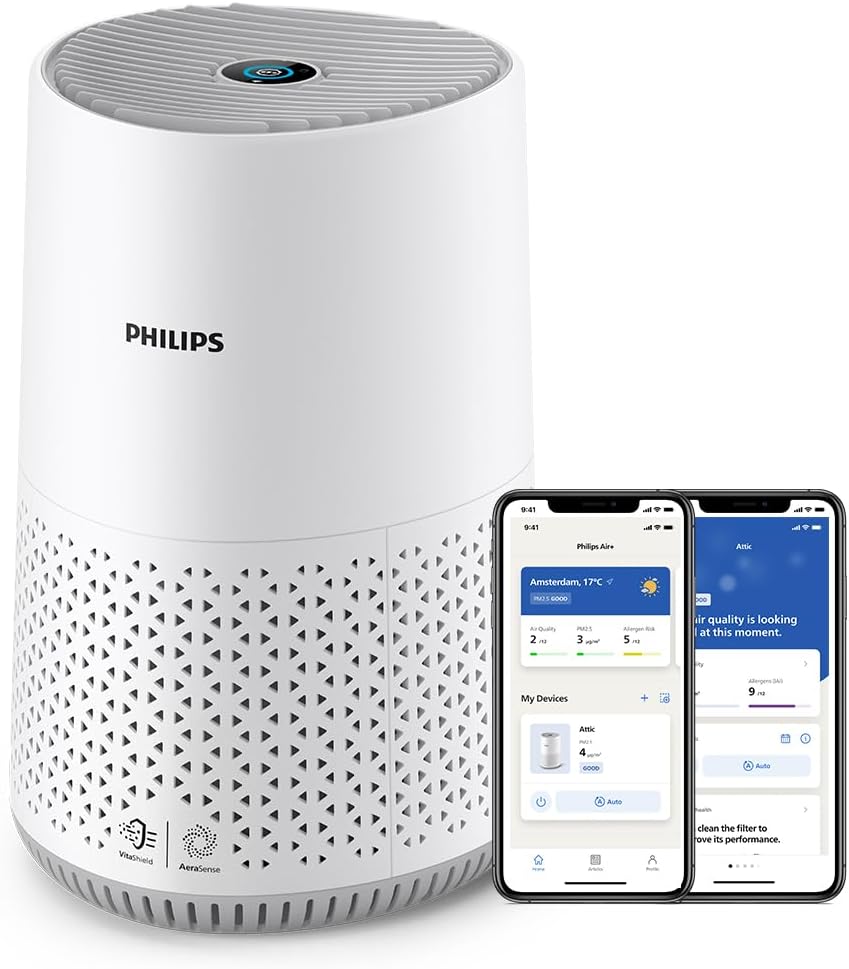
Philips Air Purifier 600 Series AC0651/10 (White) with Smart Sensor and HEPA filter, app control
Reviews
Price
Product description
If you’re dealing with allergies or just want cleaner air at home, a room air purifier lives or dies by one thing: how quickly it can shift polluted air, and how consistently it keeps an eye on conditions. The Philips Air Purifier 600 Series (AC0651/10) is built around that idea, with a HEPA setup designed to capture very fine particles and a smart sensor that feeds back on air quality.
Quick overview
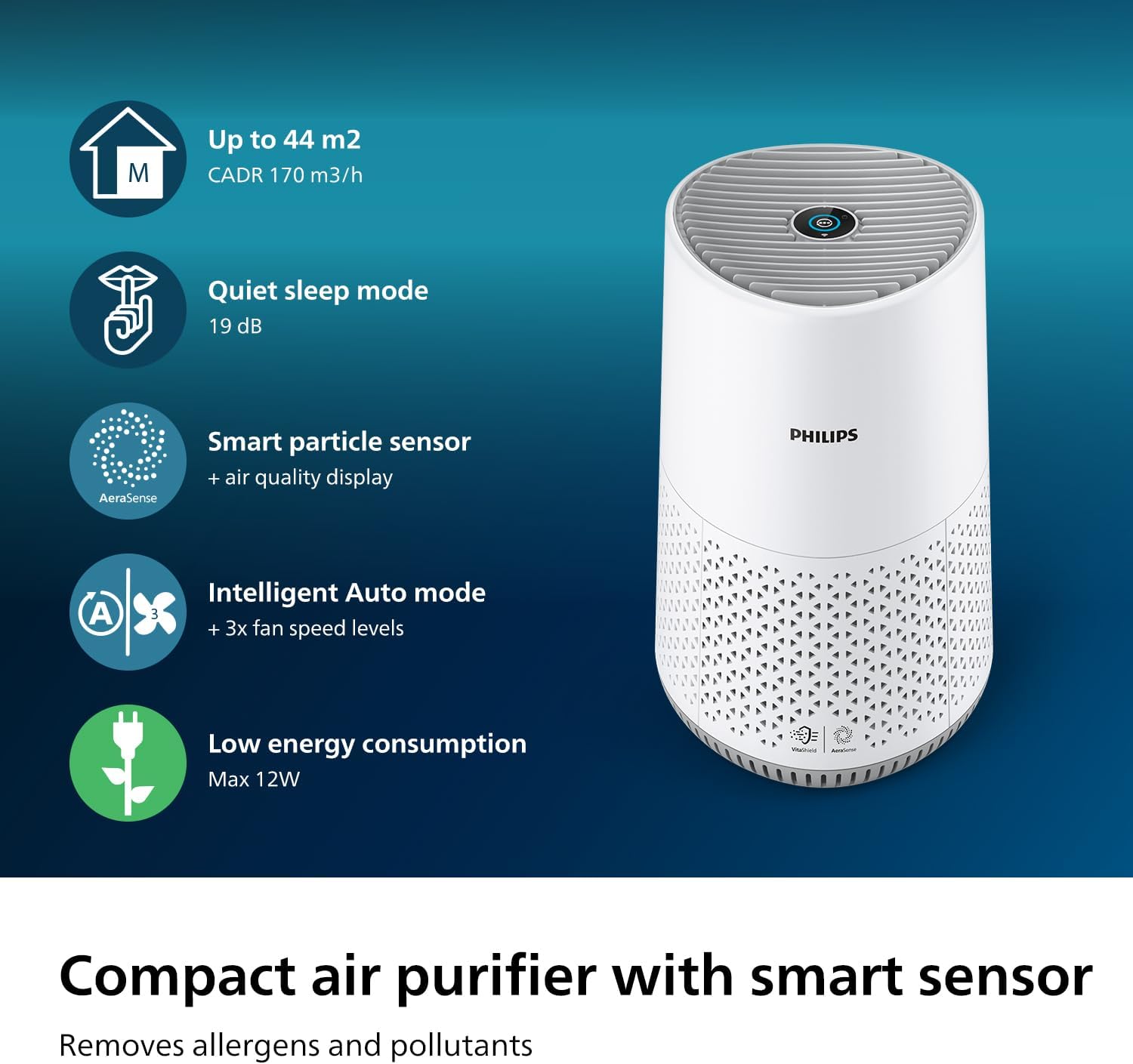
This is an air purifier aimed at everyday bedrooms and living spaces rather than whole-house air systems. On paper, it’s sized for rooms up to 44m2, with a CADR of 170 m3/h. Philips also states that its airflow can clean a room in under 17 minutes, and that the HEPA filter removes 99.97% of pollutants.
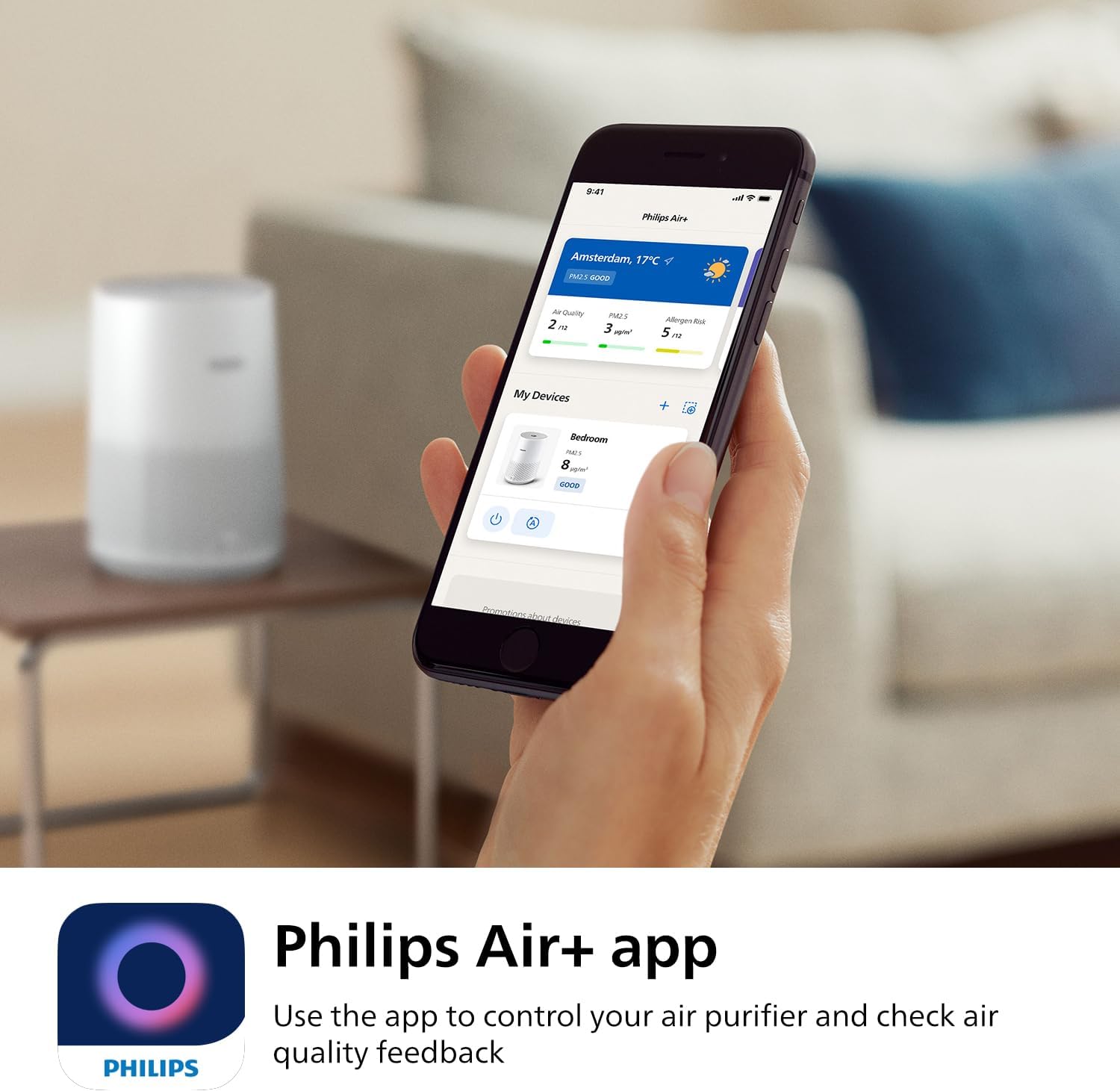
A big part of the experience here is automation and visibility: the AeraSense sensors measure the air and you can check levels either on the device’s digital display or via the Air+ app. There’s also an energy-efficiency claim, plus an ultra-quiet sleep mode for night-time use.
Key features that matter in daily use
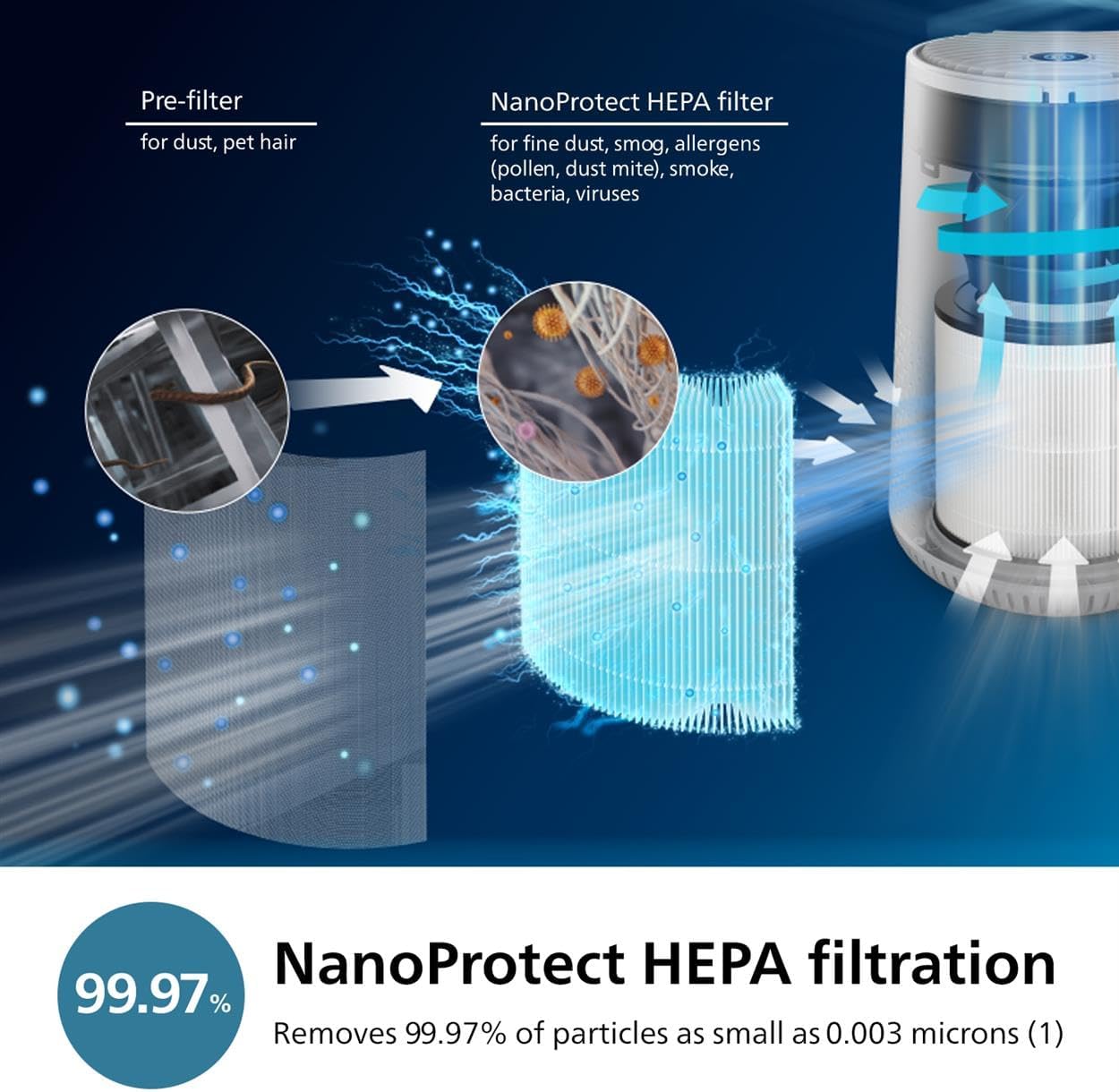
The standout is the HEPA angle. Philips describes a NanoProtect HEPA approach that traps pollutants and uses an electrostatic charge to attract them, with a stated particle removal rate of 99.97%. It also says it can clean up to 2X more air than traditional HEPA H13 filters—though that’s still a “claims on the box” figure, so you’ll want to treat it as a marketing performance expectation rather than something you should automatically equate to every home situation.
In use, you’ll likely notice two things: the purifier is meant to react to your air conditions (via the smart sensor), and it gives you feedback through the display or the app. That helps if you’re the kind of buyer who wants more than “it runs” and prefers seeing whether the device thinks the room is improving.
What the smart sensor and app control actually do
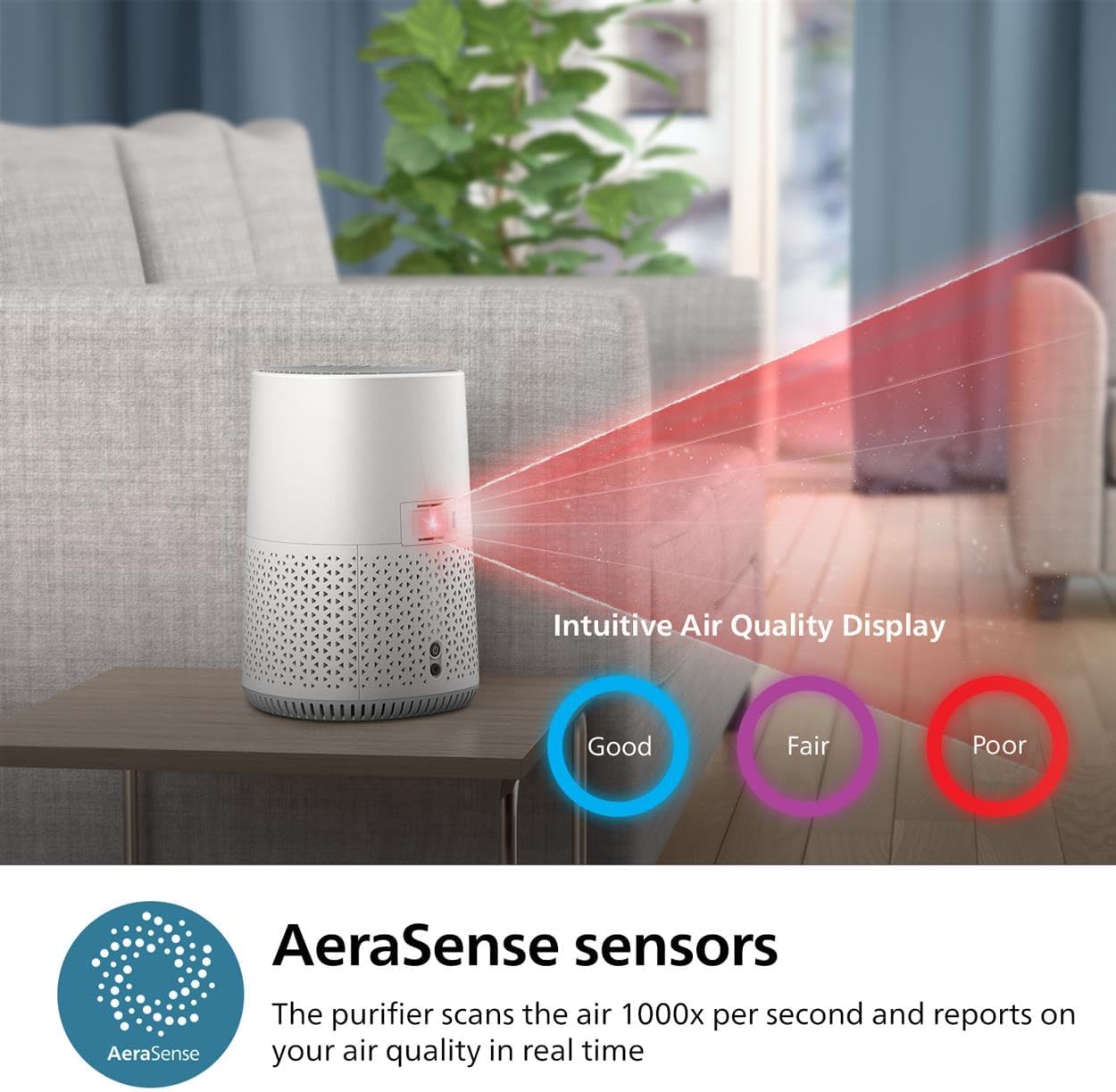
The AeraSense sensors are designed to scan the air and report on air quality. Philips positions this as “air quality feedback”, so you can keep an eye on pollution levels at home without guessing. If you’re trying to manage triggers like pollen or pet dander, that feedback loop can be useful—especially when you’re deciding whether to run at higher speeds or trust the purifier to maintain conditions.
There’s a practical upside to the app control too: instead of having to be in the same room to check status, you can monitor from elsewhere (based on Philips’ Air+ app support described in the product details).
Performance, energy use and noise: the trade-offs
Philips states the purifier is energy-efficient, operating at a maximum of 12W. That’s a sensible detail if you plan to run it regularly rather than just occasionally.
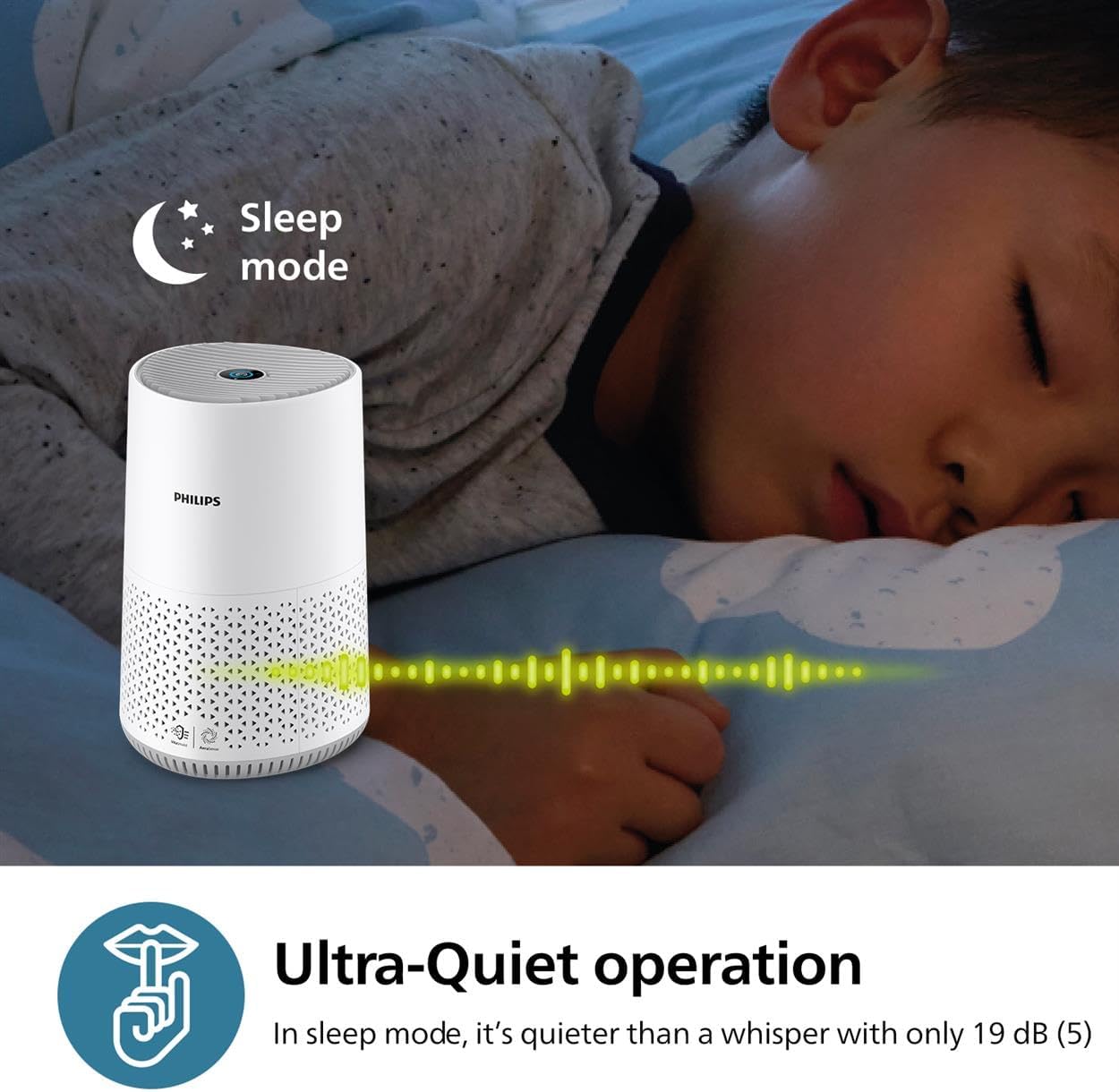
Noise-wise, the sleep mode is a highlight. Philips quotes 19 dB in sleep mode, and it also dims the digital display light to reduce light disturbance. This isn’t a “stage silent” promise for every environment, but as a general spec it’s clearly designed for bedrooms.
Worth noting: “covers up to 44m2” is an important boundary. If your room is larger, or if you’re trying to tackle heavy pollution sources in an open-plan layout, you may find it doesn’t keep up as well as you’d hope.
Key points for allergy sufferers and common irritants
Philips explicitly frames this for allergy sufferers and mentions particles like PM2.5, pollen and pet dander. The HEPA filter is the mechanism behind that promise, with the stated 99.97% particle removal.
A realistic way to think about it: if you live with seasonal pollen, have pets, or notice fine particles building up indoors, a purifier like this is designed to reduce what’s floating around. It won’t replace ventilation or address the source of damp/mould, but it can help reduce airborne particles that feed symptoms.
Microexample: imagine you come home after being outside during pollen season. You switch the purifier on in your bedroom, check the air quality reading on the display (or Air+ app), and let it run on a quieter setting at night. Over time, the feedback should tell you whether the room air is improving.
Where it shines (and where it may not)
It makes sense if you want a purifier for a single room up to 44m2, value sensor-based feedback, and need something that won’t be disruptive at night.
It might not be the best match if your space is substantially bigger than 44m2, if you’re expecting it to solve whole-home air quality in one go, or if you prefer a setup that focuses purely on manual control with no reliance on sensor readings.
Also, the “under 17 minutes” cleaning claim is based on the purifier’s stated CADR and airflow approach. Real-world results can vary depending on room airflow, layout, and how polluted the air is when you switch it on.
Care & setup considerations
From the information provided, there’s HEPA-based purification and sensor-driven monitoring, so the main thing to plan for is ongoing filter upkeep (HEPA performance is the reason these units are bought in the first place). If you’re comparing alternatives, it’s worth checking how replacement filters fit your routine and whether the app/sensor features are something you’ll actually use.
Final verdict
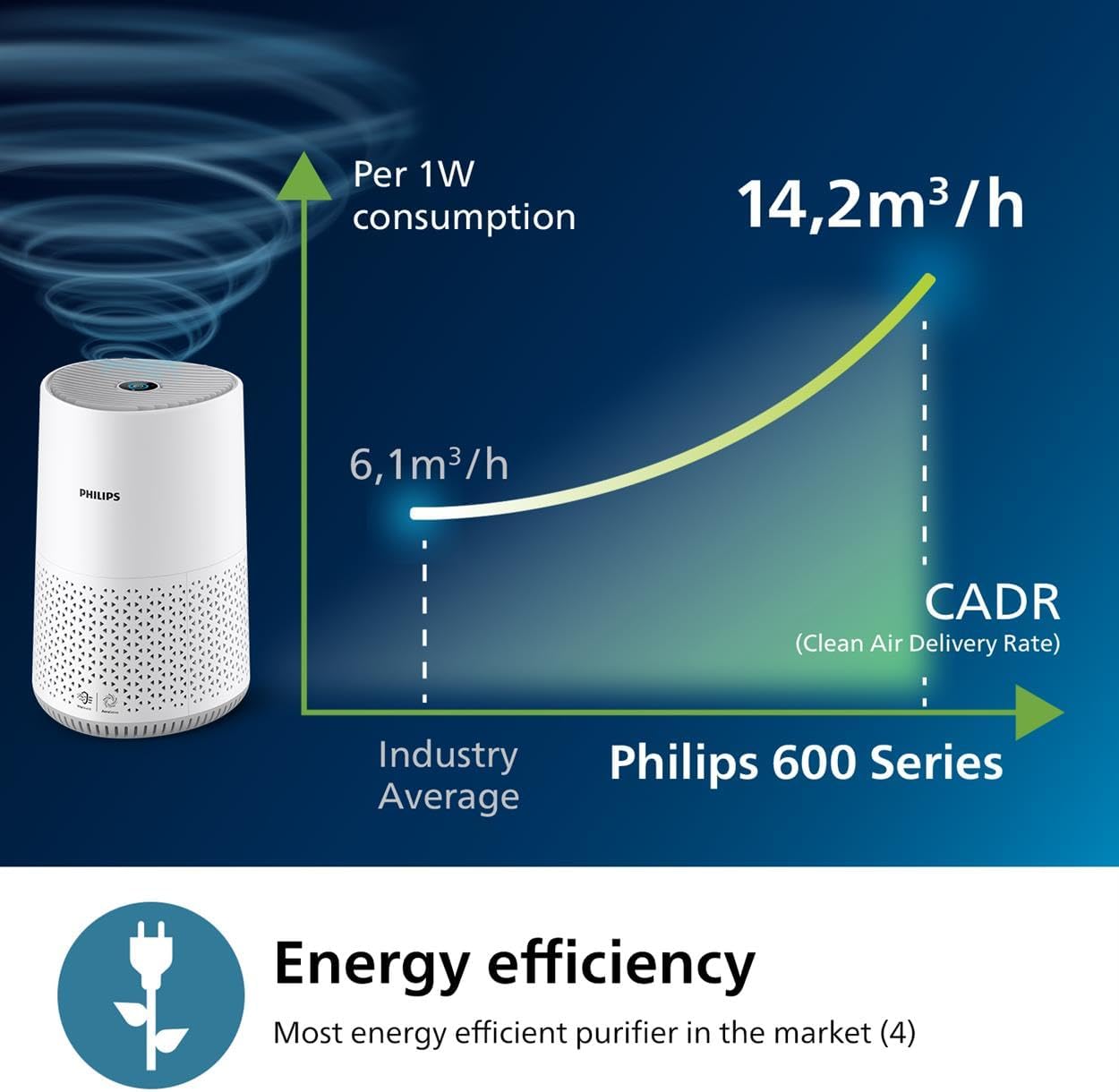
A solid pick if you’re shopping for an energy-efficient HEPA air purifier for allergy-related airborne particles, and you want app and sensor feedback rather than just a basic “fan with a filter”. The sleep mode noise level and dimmed display are particularly relevant if the purifier will run overnight.
You may want to skip it if your main goal is whole-house coverage, your rooms regularly exceed the stated coverage area, or you’re not keen on devices that lean on sensor readings and app monitoring.
Mini FAQ
Can it cover a whole house?
The stated coverage is up to 44m2, so it’s designed for individual rooms rather than whole-home air purification.
Does it help with allergies?
Philips positions it for allergy sufferers and specifically mentions pollen, pet dander and PM2.5, with 99.97% particle removal stated for the HEPA filter.
Is it suitable for night-time use?
Yes, Philips quotes 19 dB in sleep mode and a dimmed display light to help reduce night-time disturbance.
How do you check air quality?
You can check via the device’s digital display or through the Air+ app, using the AeraSense smart sensor feedback.