

PATIKIL 50ml Erlenmeyer Flasks for Lab Experiments 🧪

Reviews
Product description
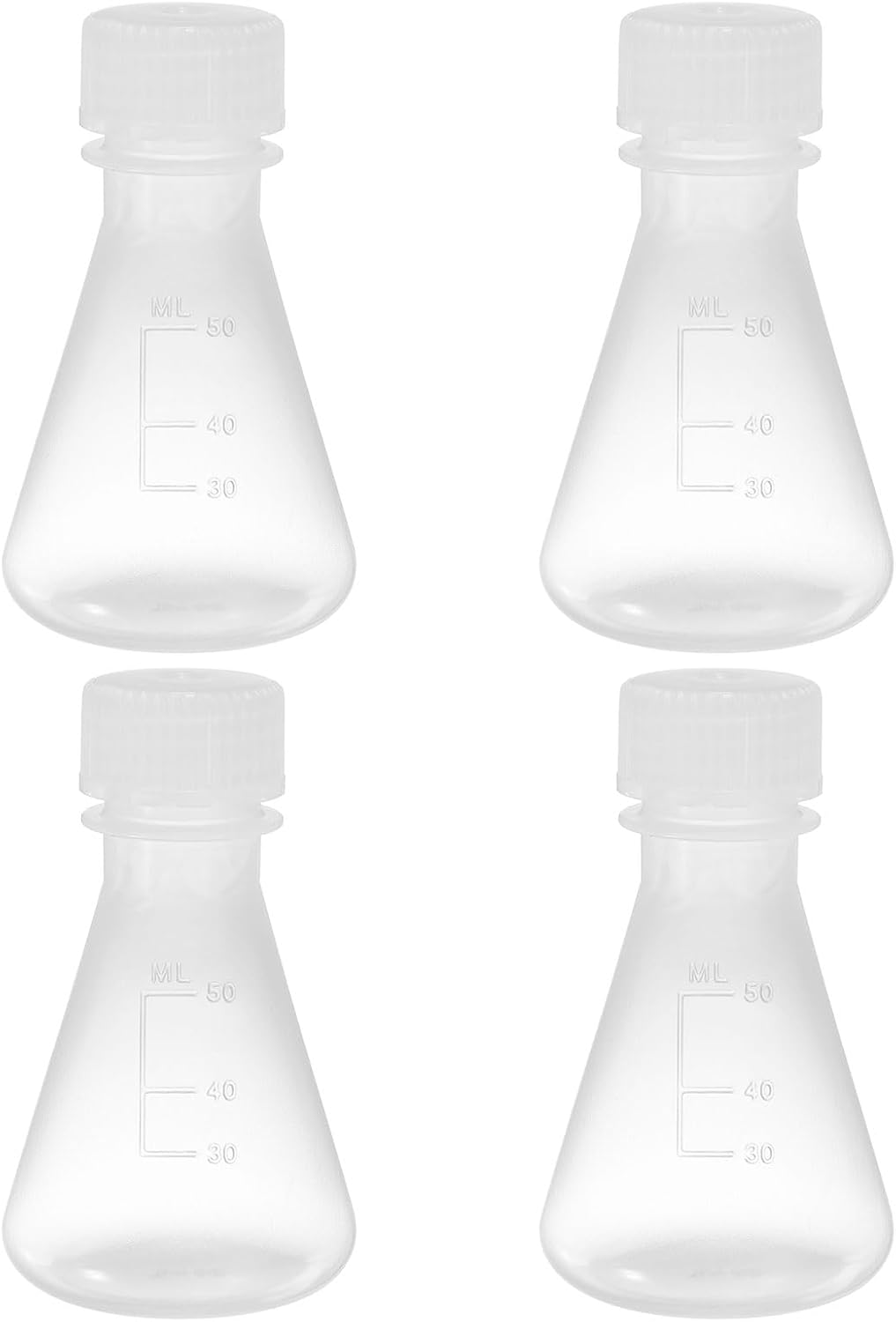
This set of four small Erlenmeyer flasks offers a compact and versatile solution for measuring, mixing and storing liquids in educational and light laboratory settings. The 50 ml capacity and narrow mouth make them practical for school experiments and hobby chemistry where controlled pouring and reduced evaporation matter.
Key Points
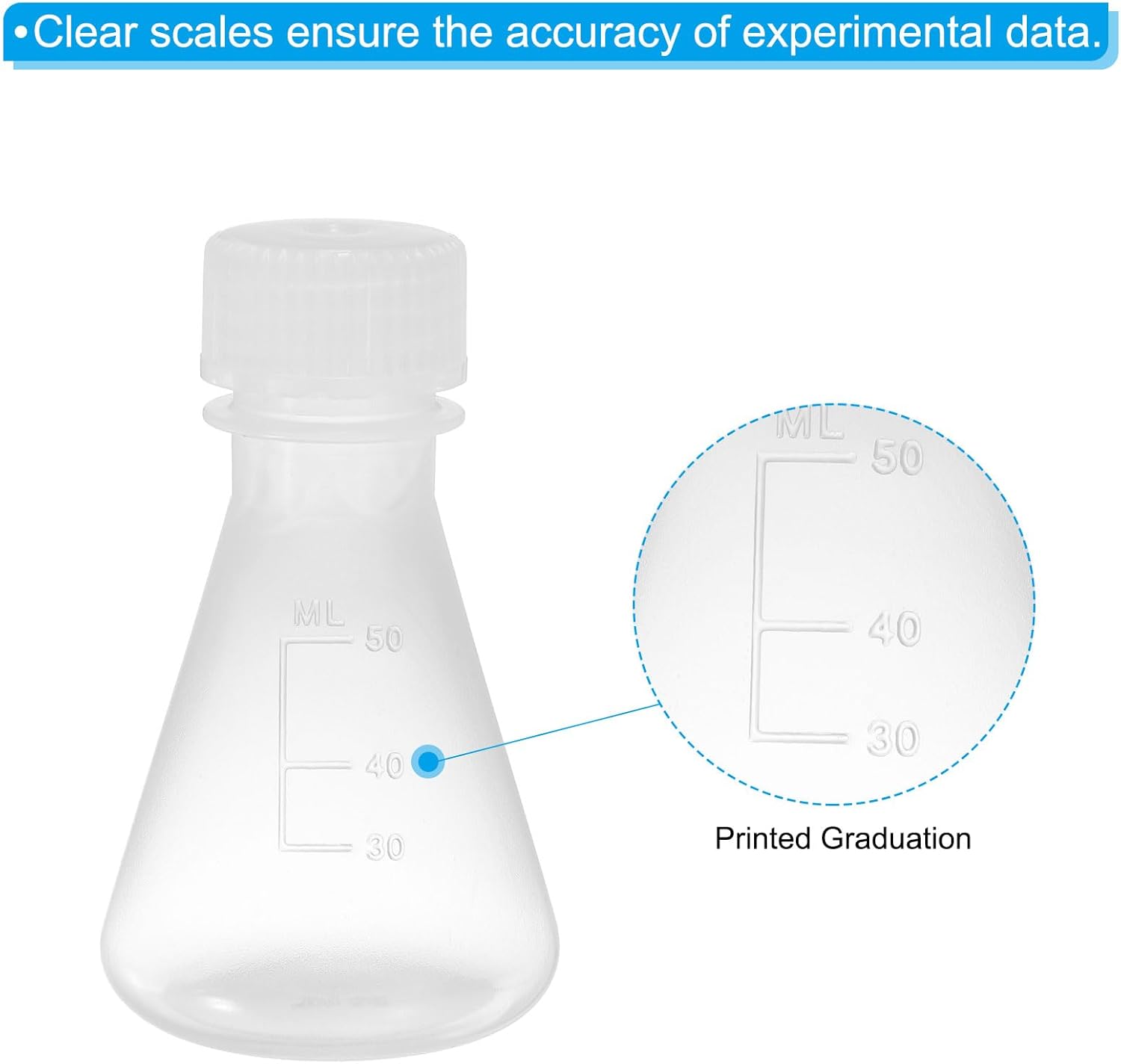
These flasks are made of transparent plastic and include screw caps, which simplifies temporary storage and reduces spillage during handling. The moulded graduations on the sides allow approximate volume checks, making them useful for demonstrations and routine tasks in teaching labs. 🧪
According to the manufacturer, some descriptions also reference borosilicate glass as a material offering resistance to high temperatures and chemical corrosion, however the product title and main specification identify the items as plastic. Consider this detail if you expect glassware performance. 🔬
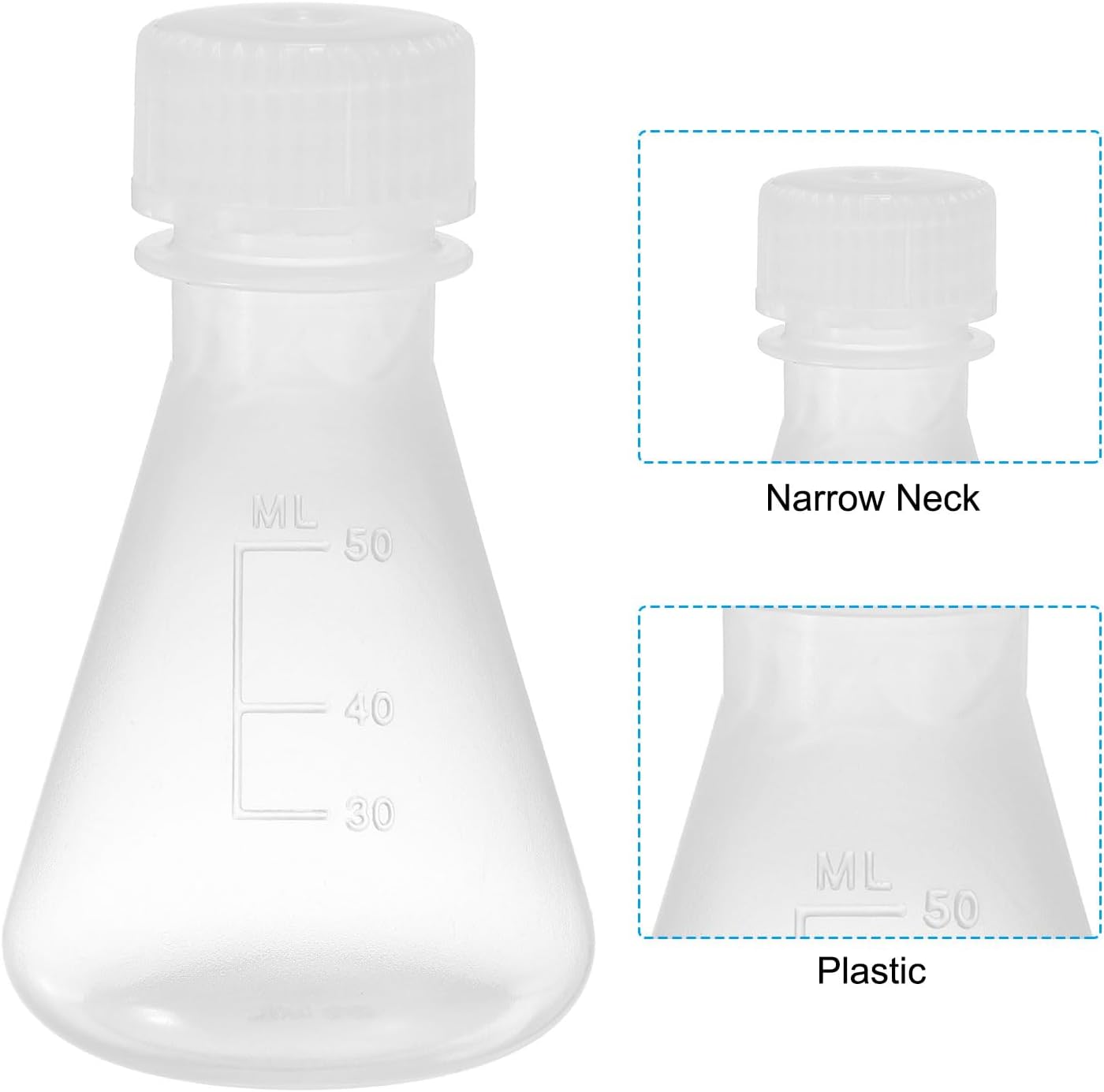
The flasks have a stable flat base and a narrow neck that helps when swirling or mixing reagents, while the screw cap provides a tighter closure than an open mouth. Their small height and compact footprint make them easy to store on crowded benches and in kits.
Technical Specifications
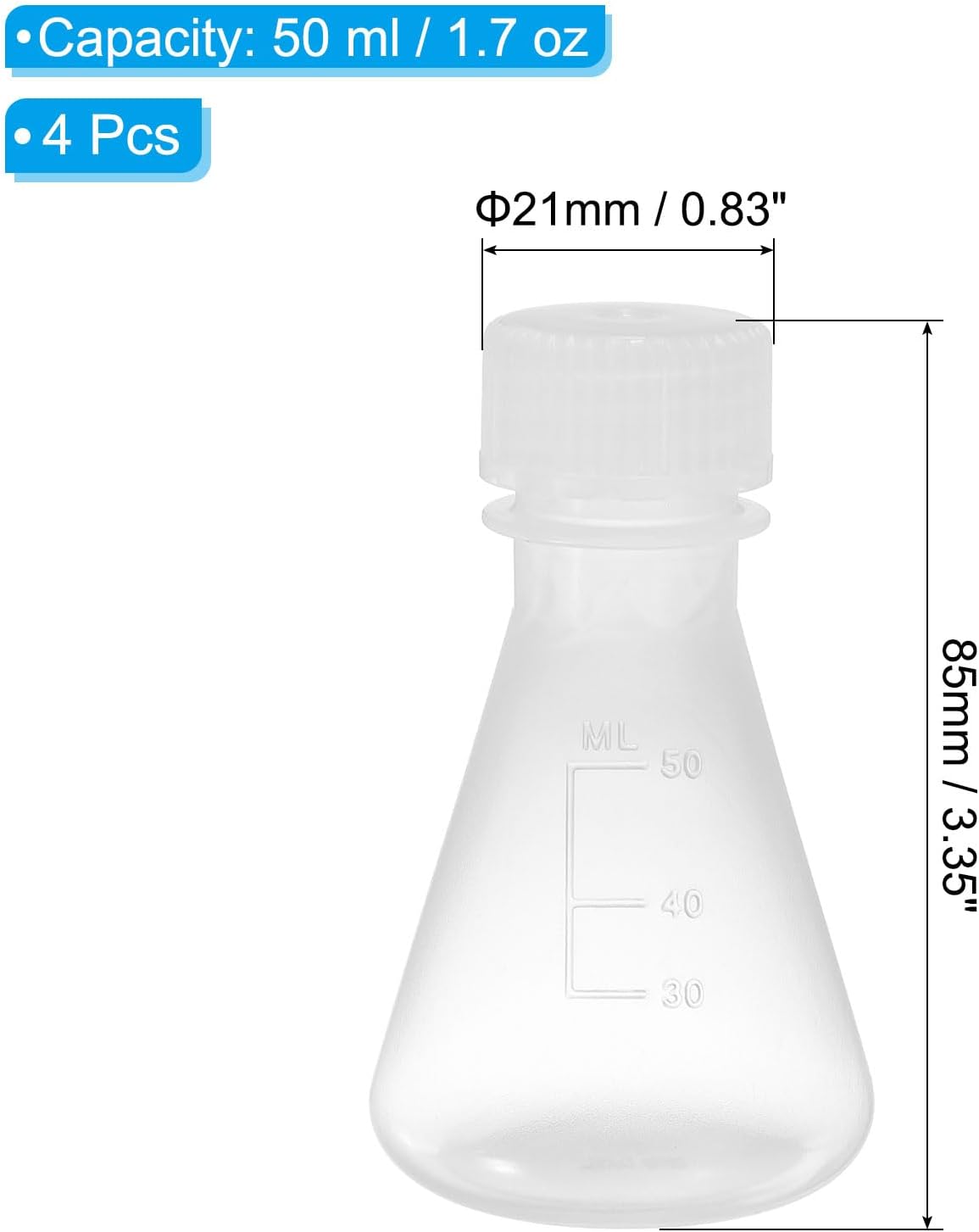
- Name: PATIKIL 4Pcs 50ml Plastic Erlenmeyer Flasks
- Capacity: 50 ml
- Material: Plastic (manufacturer notes also mention borosilicate glass, according to the manufacturer)
- Total height: 85 mm
- Outer mouth diameter: 21 mm
- Colour: Transparent
- Pack quantity: 4
Usage Recommendations
For classroom demonstrations and student practicals, use the graduated marks as a guide rather than an exact measurement. When measuring reagents where precision matters, complement these flasks with a calibrated pipette or measuring cylinder. Also, if heating is required during an experiment, consider the material note above and avoid direct flame contact with plastic items. 🔥
When preparing solutions, pour slowly into the narrow mouth to reduce splashing and to maintain control when adding small volumes. The screw caps are convenient for short term storage of non-volatile liquids, though prolonged storage of aggressive solvents may not be suitable for plastic. For cleaning, rinse promptly after use to prevent residue build up and follow local lab cleaning protocols.
End users should handle all laboratory glassware or plasticware with care and follow standard safety procedures when mixing chemicals, including wearing protective eyewear and gloves where appropriate. .
Price evolution
Description:
This set of four small Erlenmeyer flasks offers a compact and versatile solution for measuring, mixing and storing liquids in educational and light laboratory settings. The 50 ml capacity and narrow mouth make them practical for school experiments and hobby chemistry where controlled pouring and reduced evaporation matter.
Key Points
These flasks are made of transparent plastic and include screw caps, which simplifies temporary storage and reduces spillage during handling. The moulded graduations on the sides allow approximate volume checks, making them useful for demonstrations and routine tasks in teaching labs. 🧪
According to the manufacturer, some descriptions also reference borosilicate glass as a material offering resistance to high temperatures and chemical corrosion, however the product title and main specification identify the items as plastic. Consider this detail if you expect glassware performance. 🔬
The flasks have a stable flat base and a narrow neck that helps when swirling or mixing reagents, while the screw cap provides a tighter closure than an open mouth. Their small height and compact footprint make them easy to store on crowded benches and in kits.
Technical Specifications
- Name: PATIKIL 4Pcs 50ml Plastic Erlenmeyer Flasks
- Capacity: 50 ml
- Material: Plastic (manufacturer notes also mention borosilicate glass, according to the manufacturer)
- Total height: 85 mm
- Outer mouth diameter: 21 mm
- Colour: Transparent
- Pack quantity: 4
Usage Recommendations
For classroom demonstrations and student practicals, use the graduated marks as a guide rather than an exact measurement. When measuring reagents where precision matters, complement these flasks with a calibrated pipette or measuring cylinder. Also, if heating is required during an experiment, consider the material note above and avoid direct flame contact with plastic items. 🔥
When preparing solutions, pour slowly into the narrow mouth to reduce splashing and to maintain control when adding small volumes. The screw caps are convenient for short term storage of non-volatile liquids, though prolonged storage of aggressive solvents may not be suitable for plastic. For cleaning, rinse promptly after use to prevent residue build up and follow local lab cleaning protocols.
End users should handle all laboratory glassware or plasticware with care and follow standard safety procedures when mixing chemicals, including wearing protective eyewear and gloves where appropriate. .