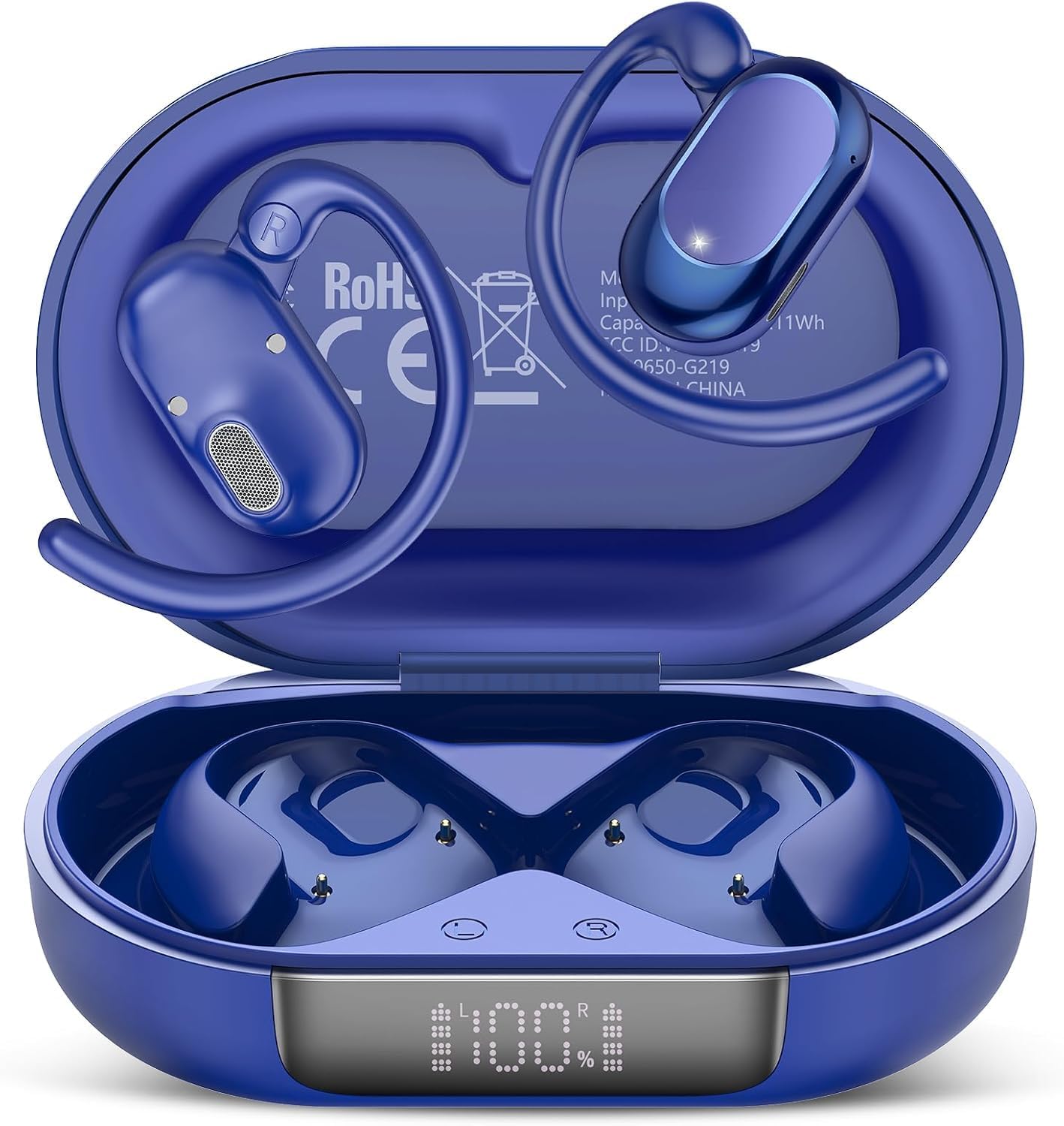
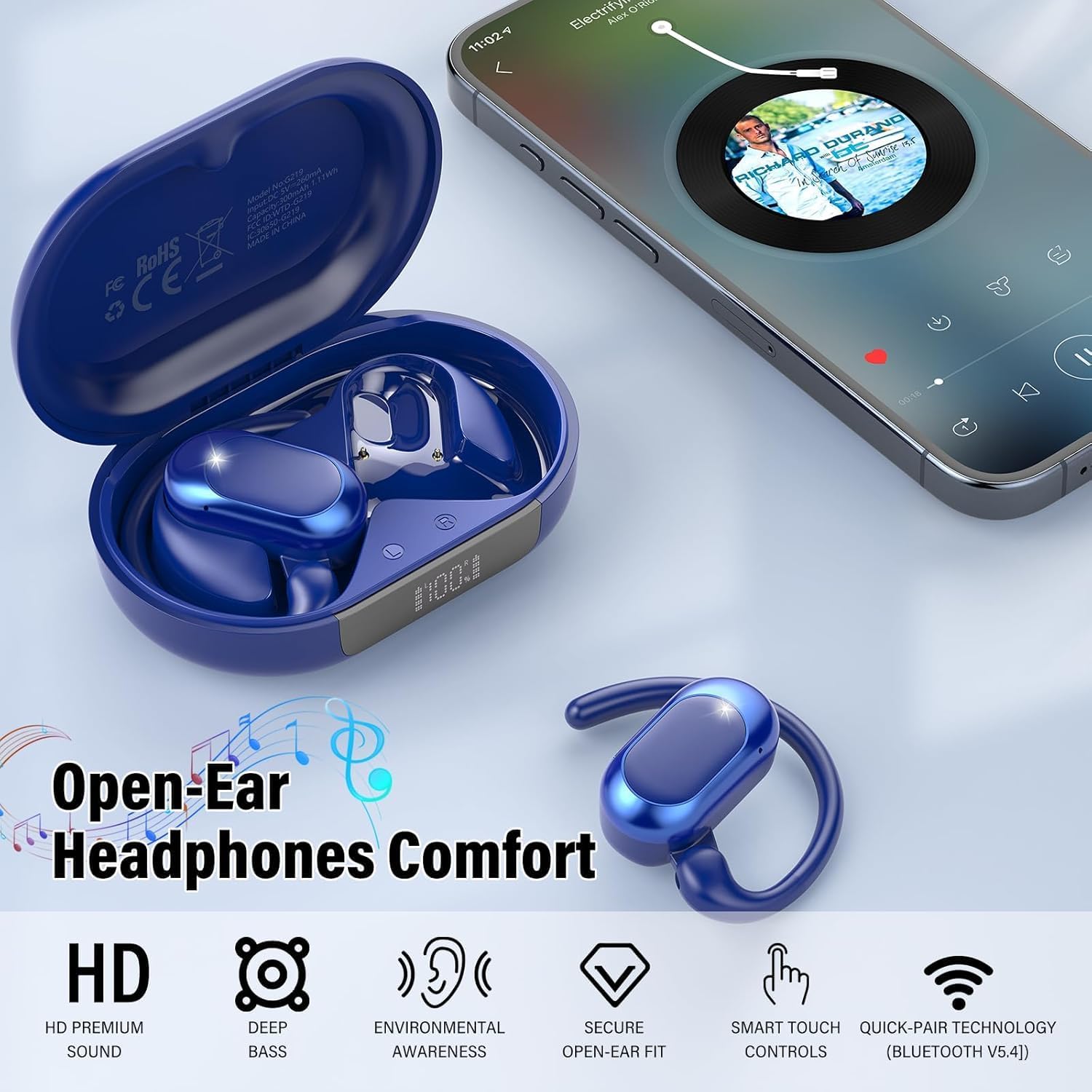
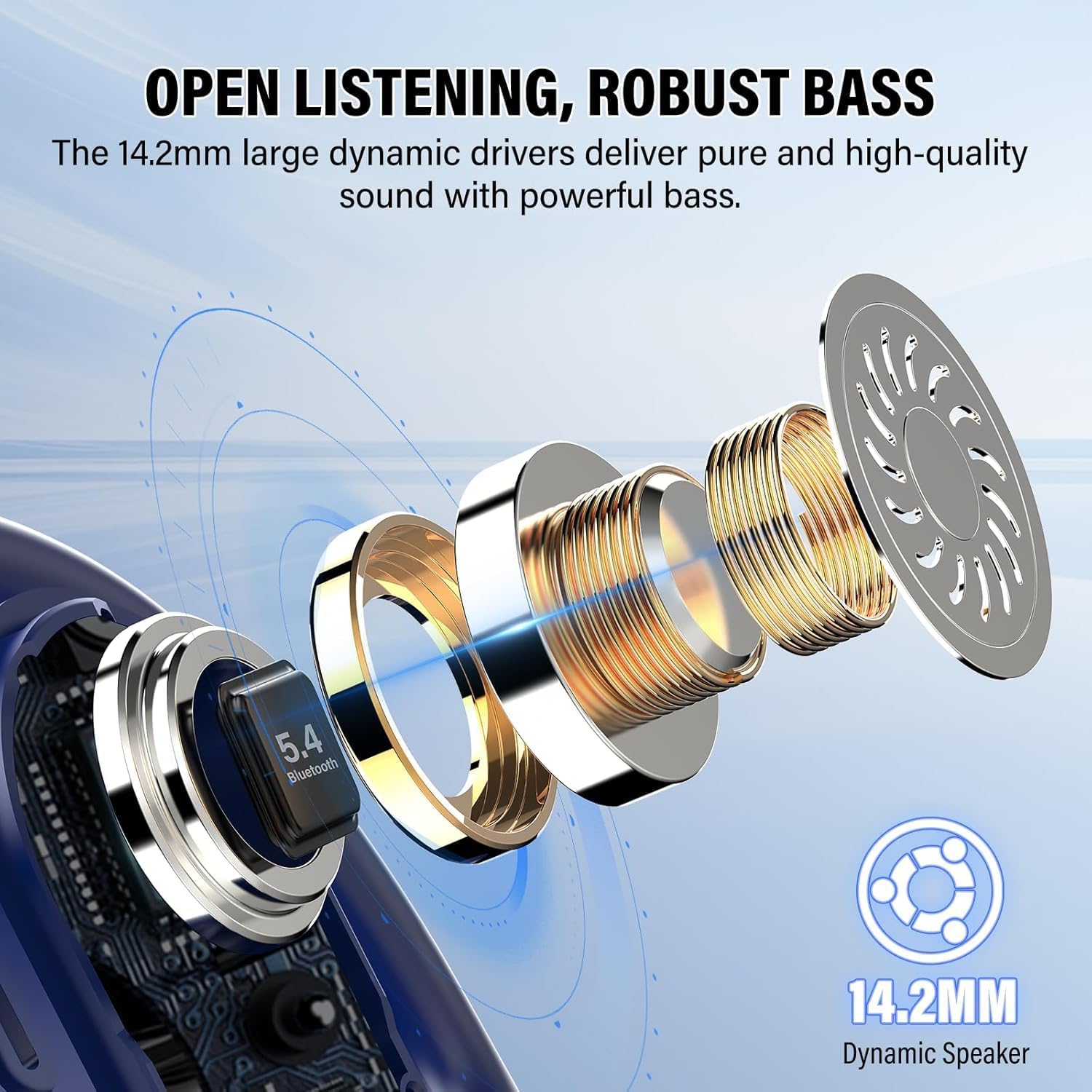
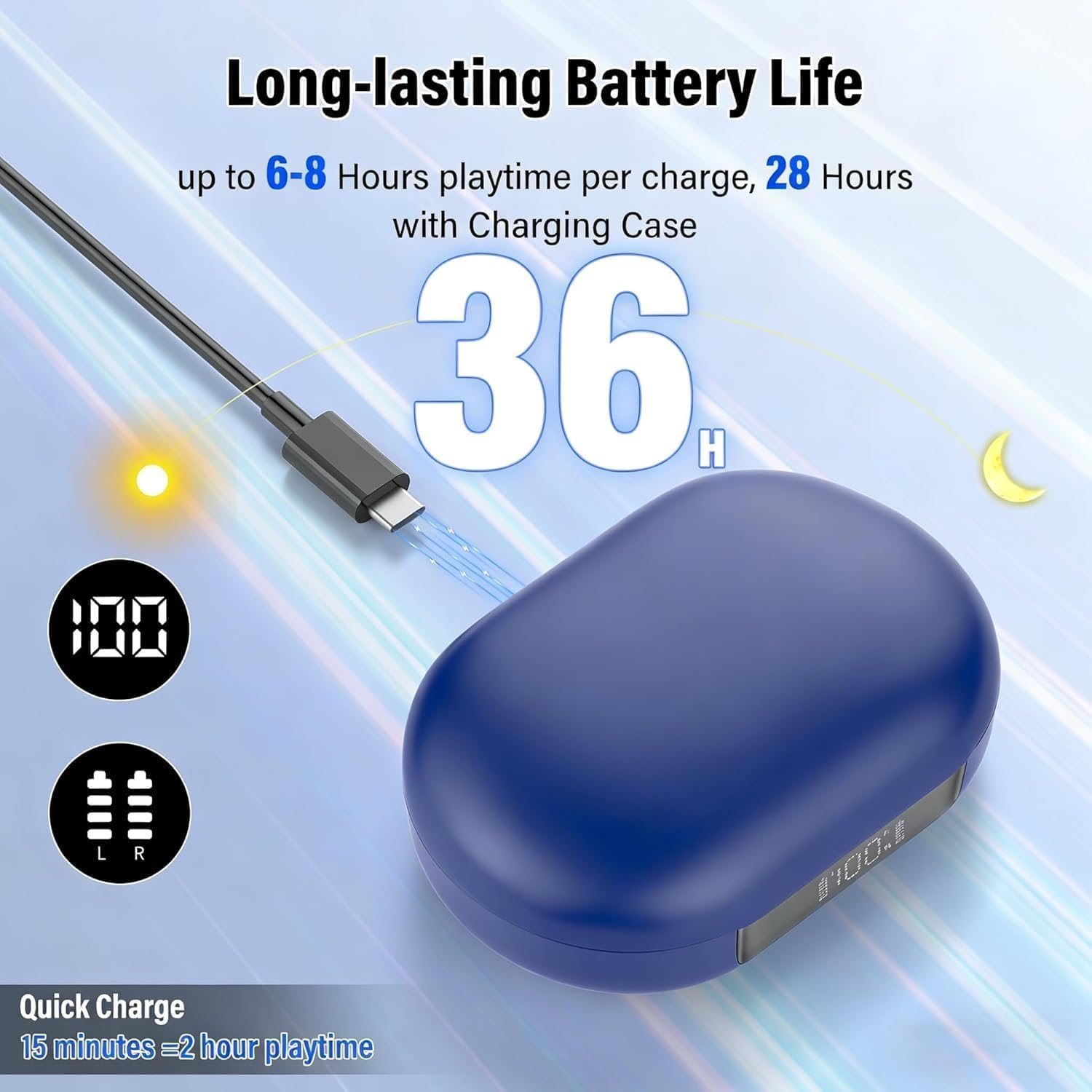
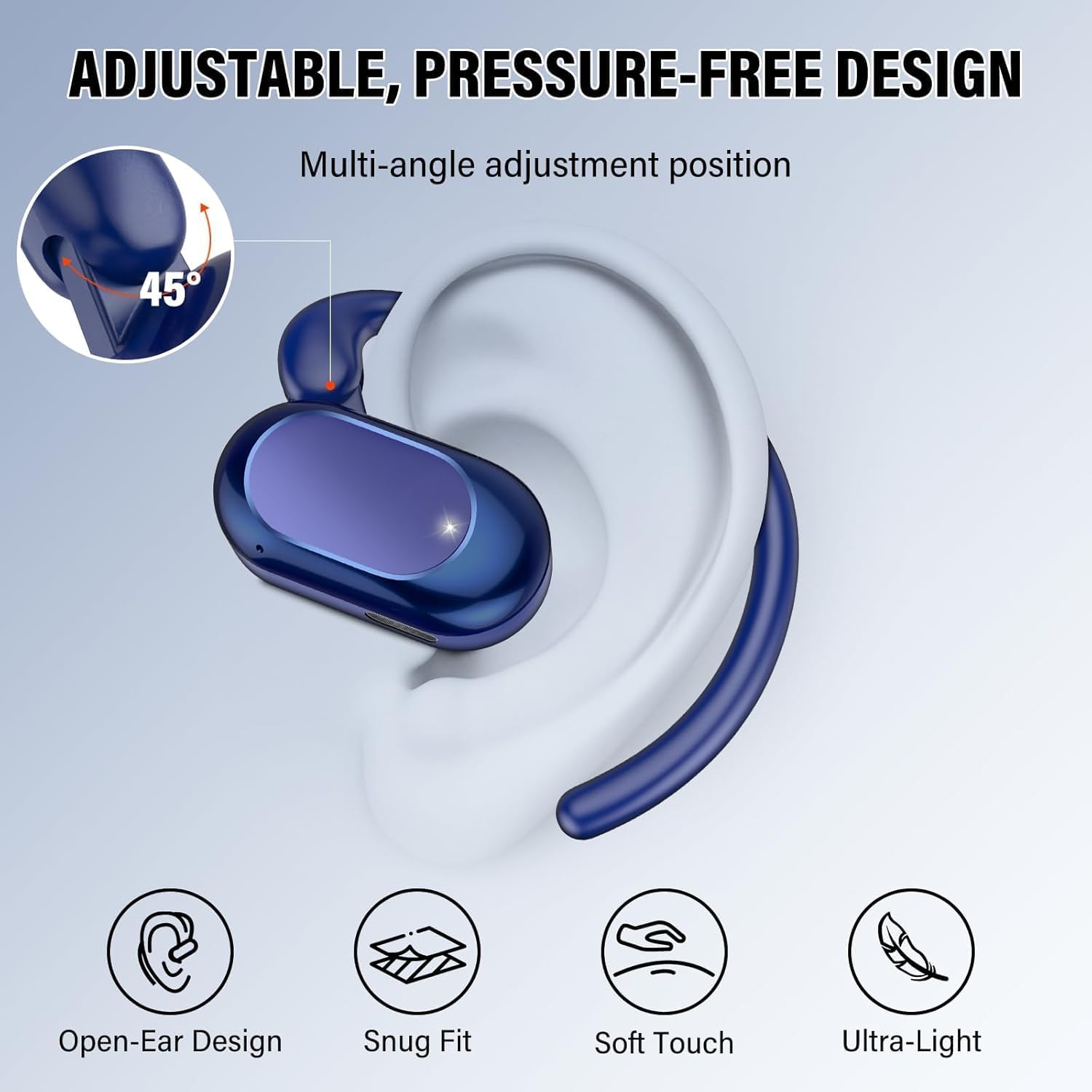
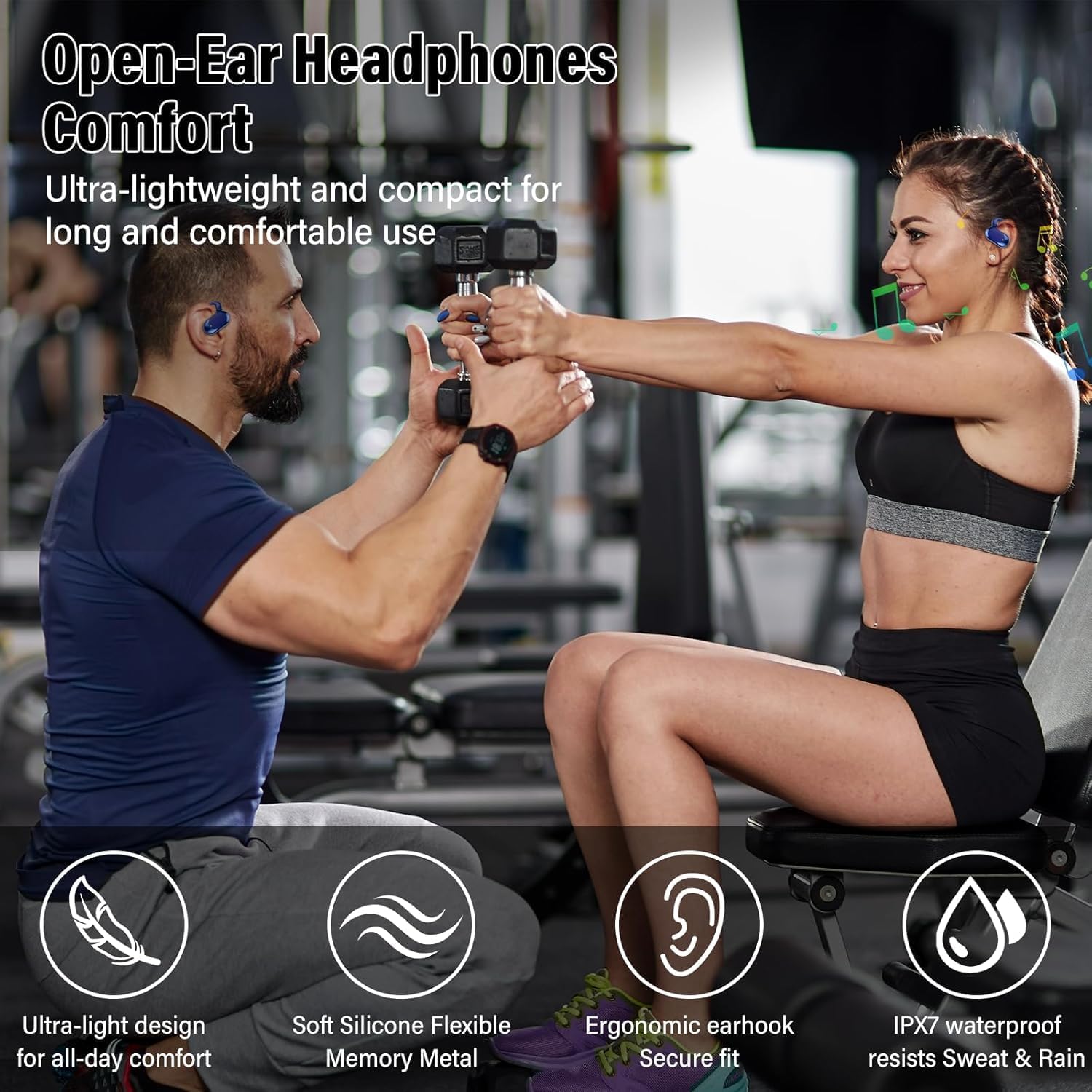
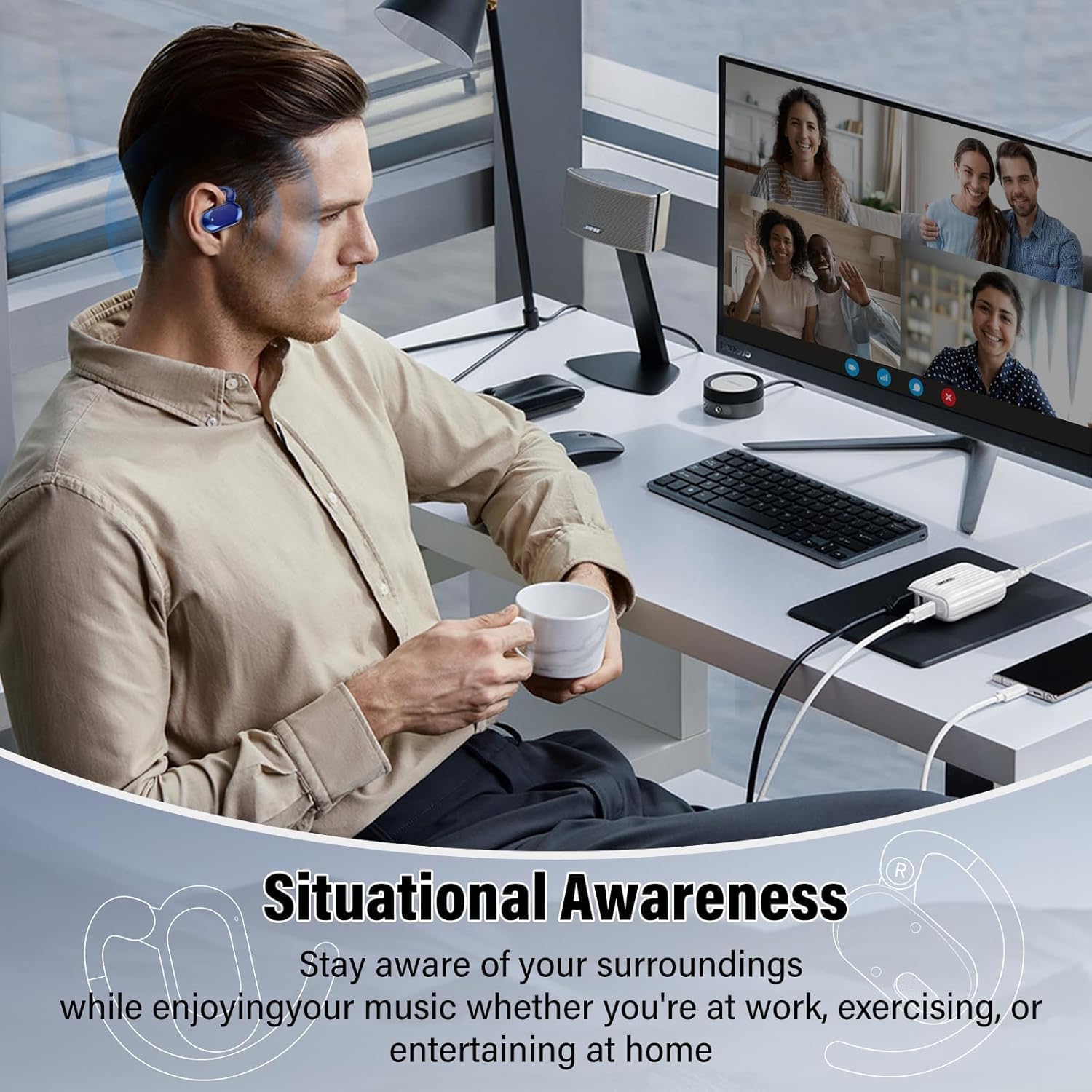
What it is and what problem it solves\nOpen Ear Headphones use a bone conduction design to keep the ear canal unobstructed while delivering hi-fi stereo sound. The fit is lightweight and designed for comfort during sports, running, commuting, and all-day use, so you can stay aware of your surroundings without sacrificing audio.\n\n## How it fits and feels\nThe ergonomic structure contours to the ears for a secure, fatigue-free wear. The open-ear approach means you can hear ambient sounds like traffic or announcements, which can be a safety advantage when exercising outdoors or navigating busy spaces. A pair feels balanced and comfortable enough to wear for extended periods, though as with any headset, comfort can vary with individual ear shape and activity level.\n\n## Sound quality and calls\nDriven by a 14.2mm dynamic driver, the headphones aim to deliver deep bass and clear trebles across a 20Hz–20kHz range. For calls, ENC (Environmental Noise Cancellation) helps reduce background noise so your voice is clearer when you’re on the move. The Bluetooth 5.4 connection promises quick pairing and a stable link up to 10 metres, with SBC/AAC codecs for smooth streaming.\n\n## Battery life and display\nA standout is the claimed 36 hours of total playtime with the charging case, which is useful for long gym weeks or travel. A high-brightness dot-matrix display shows case battery level and real-time status for each earbud, helping you plan charging on the go. USB-C charging is relatively rapid, with the case recharged in about 1.5 hours.\n\n## Durability and controls\nIPX7 rating signals sweat and weather resistance, making them suitable for intense workouts or light rain. Touch controls let you manage playback, calls, volume, and voice assistant access with taps. Built-in protections, such as NTC temperature protection and OVP, contribute to safe charging.\n\n## Who it’s for\nIf you value awareness of your surroundings while listening to music or taking calls during workouts, these open-ear buds align with that use. They suit runners, cyclists, commuters, and gym-goers who don’t want to block ambient sound or feel boxed-in by traditional in-ear designs.\n\n## What to check before buying\nConsider whether you prioritise ambient awareness over absolute isolation from noise. Also, comfort and fit can be subjective with open-ear designs—what suits one person may feel less secure to another during high-intensity activity. Check how the open-ear fit interacts with glasses or headbands you use.\n\n## Practical usage example\nImagine you’re running along a busy park path. You can enjoy your playlist while still hearing a coach’s directions or warning bells from others nearby, which is something true open-ear designs aim to balance.\n\n## Alternatives and buying context\nThis approach is more about situational awareness and comfort over maximum isolation. If you value a snug in-ear seal and deeper passive noise reduction, a different design might be more appropriate. For everyday gym use or outdoor training where weather and sweat are factors, the IPX7 rating and long battery life are practical advantages.\n\n## Is it worth it?\nIt suits you if you want to stay connected to your environment while listening on the move and you don’t mind the potential trade-off in bass depth compared with closed-back options. If you prioritise total noise isolation or ultra-lightweight in-ear buds, you might prefer other styles.\n\n## FAQ\n- Do these support fast charging? Yes, the case recharges quickly via USB-C.\n- Can I use them for calls in noisy environments? ENC aims to filter background noise, but performance depends on ambient conditions.\n- How stable is the Bluetooth connection in crowded areas? Bluetooth 5.4 provides a stable link within 10 metres, though walls and interference can affect range.