

Ohuhu Large Fruit Cage Plant Cages for Garden (2 x 1.2 x 1.6 m) with Zippered Door and HDPE Netting
Product description
What it is and why people buy it
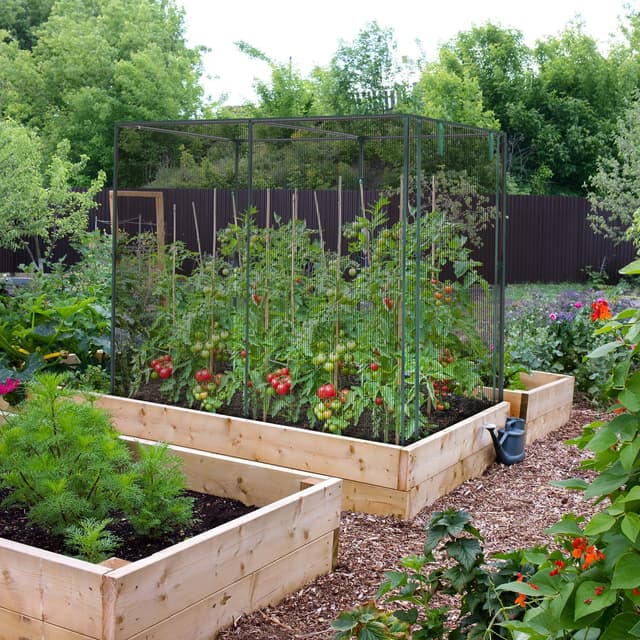
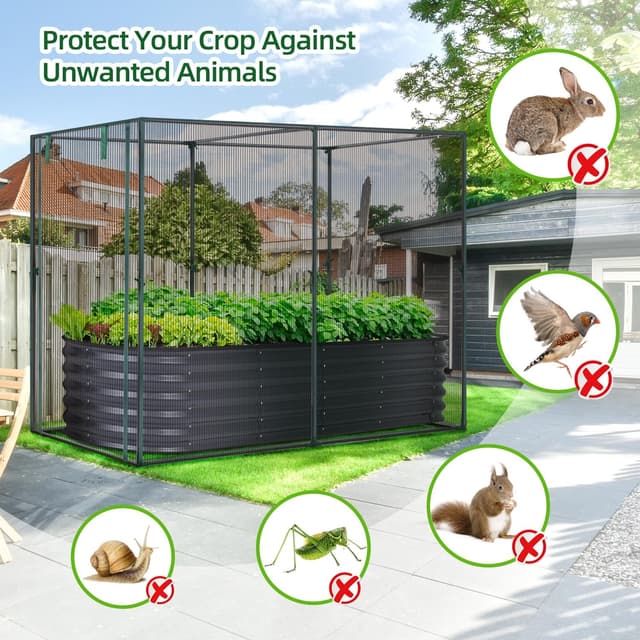
If you’re growing vegetables, fruit, or even flowers that get picked off by birds, this kind of fruit cage can feel like a simple, practical solution. The Ohuhu plant cage is designed as a protective tent-style structure with netting, aimed at keeping wildlife away while still letting air and light do their job.
On paper, it’s a straightforward idea: create a lightweight enclosure over raised beds or garden plots, then access your plants via a zippered door. The appeal is mostly about day-to-day convenience—water, care, and harvest without having to remove the whole cover every time.
That said, it won’t suit every situation. If your garden setup is very small, very awkward to peg down, or you’re only protecting a few plants, a cage like this can feel like more structure than you need.
Key dimensions and how the size plays out
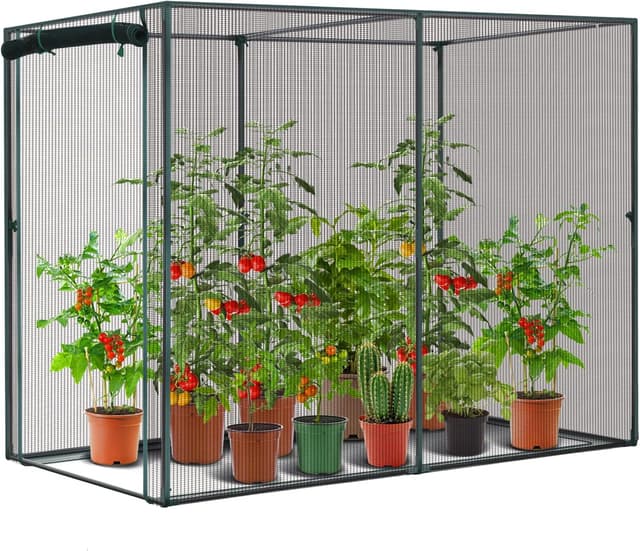
The cage is described as large and spacious, with an overall size of L 200cm x W 120cm x H 160cm. That height matters more than you might think: it gives room for plants to grow and makes working under the cover more manageable than very low net tunnels.
It’s also worth noting the “tent” format. You’re not just draping netting over plants, you’re using a framed setup. In practice, this tends to keep the netting sitting in a more consistent position, rather than sagging immediately. Of course, real results depend on how you position it in your garden and how your crops grow, but the design intent is clearly about giving plants space to flourish.
What stands out in the structure
This cage uses steel tubes connected by plastic connectors for stability. The combination is meant to give a sturdy frame without making the whole thing unnecessarily heavy. The description also highlights that it’s lightweight and “easy to assemble”, then easier to disassemble and store when the season ends.
A frame like this is also the bit you’ll interact with repeatedly: moving it around your garden, repositioning it, and taking it down at the end. If your priority is flexibility across beds (rather than setting it up permanently), this kind of build is the right direction.
There’s also an anchoring approach. The cage can be secured down with heavy duty steel pegs, intended to keep the tent effectively against strong winds. That’s a helpful reassurance, because net covers that aren’t secured can become more of a nuisance than a protection.
HDPE netting: the practical protection layer
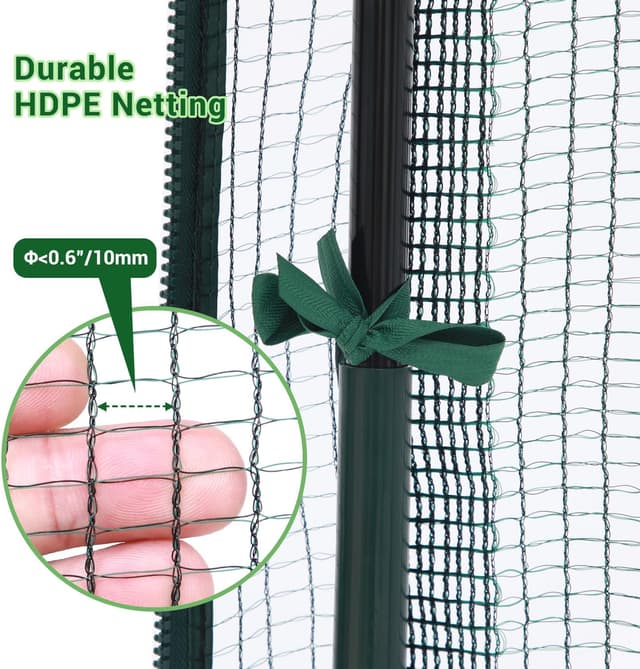
The cover uses HDPE netting described as 40g/m², with an aperture diameter of approximately 1cm. In plain terms, it’s the mesh layer that’s meant to block birds and other wildlife, while still allowing airflow.
The net is also presented as UV and ROT resistant, and reusable for longer protection. It’s described as strong yet lightweight, with higher breaking loads that won’t tear easily, plus it’s rust-resistant. That last point matters because many garden covers fail over time at the connection points or when they’re left exposed.
A limitation to keep in mind: “protection” is never absolute outdoors. If you’re dealing with heavy pest pressure, you’ll still want to combine this cage with sensible gardening habits (such as keeping the area tidy and checking gaps around the base).
Easy access with the zippered door
Access is built in via a zipper door cover, with zippers on both sides of the door. The idea is that you can enter and exit through the zippered door and directly water, care for, and harvest crops.
This is one of those features that can save time across the season. Instead of lifting and refitting netting, you can open the door, do what you need to do, and close it back up. It’s especially useful during harvesting windows when you don’t want to disturb plants or repeatedly open the enclosure.
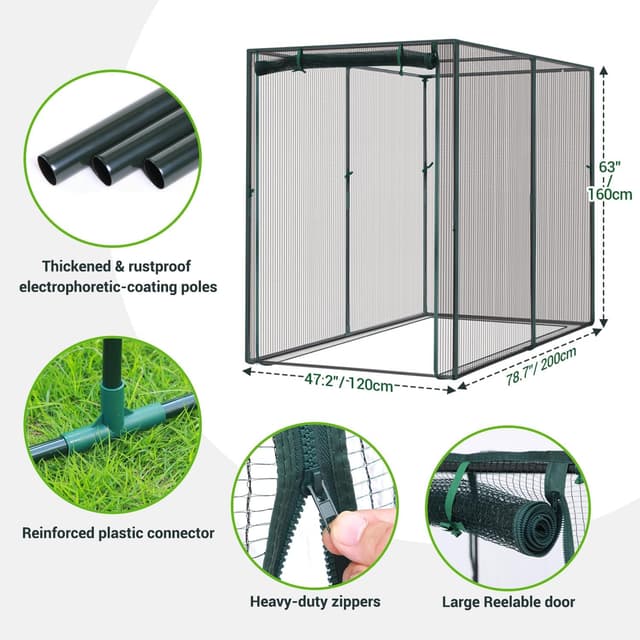
The net is also securely attached to the frame using fabric straps. If you’ve ever had flimsy netting slip off frames, you’ll appreciate that the design here focuses on keeping the cover in place.
Where it fits best (and when it may not)
This crop cage is described as widely used in gardens, lawns and yards, for vegetables, fruits, flowers, and other plants. So if your goal is protective netting over an established growing area, it lines up well.
It may not be the best match if: - you only need to cover a handful of plants (it might feel oversized and harder to manage) - your garden doesn’t allow proper pegging/anchoring (wind resistance depends on secure placement) - you want something that’s purely decorative or temporary for occasional use (this is a season-long protection concept)
If you prioritise a framed cage that you can assemble, disassemble, and store, it’s designed for exactly that routine.
Practical example: a realistic day of use
Imagine you’ve planted leafy vegetables and are starting to notice bird activity. You assemble the frame, stretch the HDPE net over it, and secure it down with the steel pegs. A few days later, you’re ready to water and check for damage. Instead of removing the cover, you open the zippered door, reach in to water or inspect, then zip it back closed.
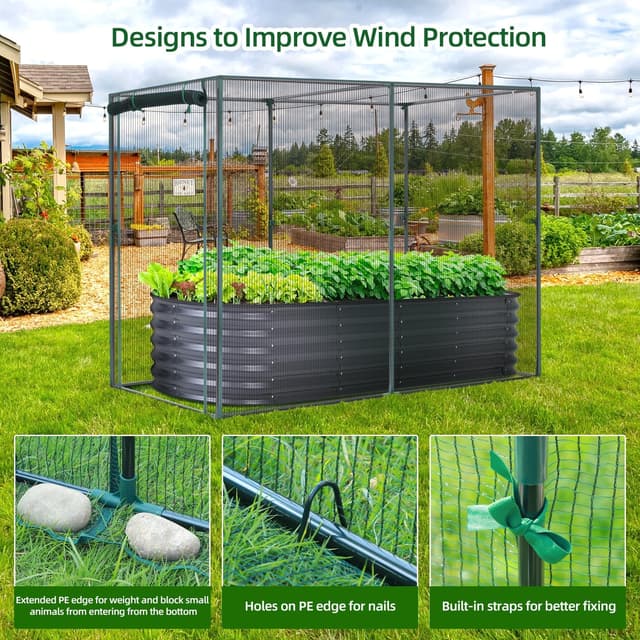
When harvest time comes, you can do it the same way—access without dismantling the structure. That’s the “value” in this style of cage: less faff, more consistent protection.
What to check before you buy
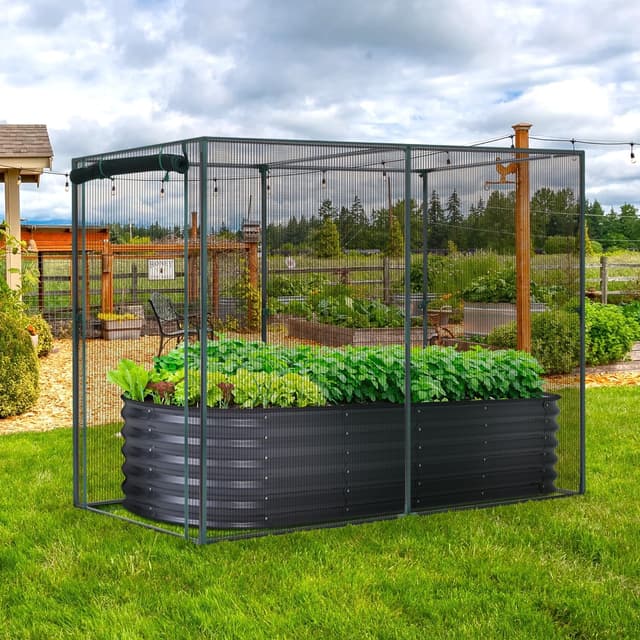
Before committing, it’s worth sanity-checking a few practical points based on the information provided: - The stated size (L 200cm x W 120cm x H 160cm) versus the bed or growing area you want to cover. - Whether you can secure it properly with the included steel pegs, particularly if your garden gets windy. - How you plan to store it at the end of the season, since the description suggests it’s designed for disassembly. - If your plants will need regular access frequently, the zippered doors are a clear advantage.
Final verdict
Is it worth it?
A solid pick if you want a spacious, framed fruit cage with HDPE netting and zip access, and you’re protecting vegetables, fruit, or flowers from wildlife in an outdoor garden or yard. The size and door access are the standout practical elements, and the pegging approach is a sensible add-on for wind.
You may want to skip it if you don’t have the space for the full dimensions, can’t reliably anchor it, or you’re only protecting a very small number of plants where a simpler cover would likely be easier.
Mini FAQ
How do you access the plants? Through the zippered door, which has zips on both sides for entering/exiting and tending crops.
What is the netting made from? The cover is described as 40g/m² HDPE netting with an aperture diameter of around 1cm.
Is it meant for outdoor use in bad weather? The netting is described as UV and ROT resistant and rust-resistant, with breaking loads intended to resist tearing.
Can it be stored after the season? The description says it’s easy to disassemble and store when the season ends.
Does it cope with wind? It can be secured down with heavy duty steel pegs, intended to help it stay effective against strong winds.