

OFFCUP 200x25 Mini Compact Binoculars: Lightweight, High-Powered Pocket Binoculars for Outdoors and Travel
Reviews
Price
Product description
What this is and what it’s for
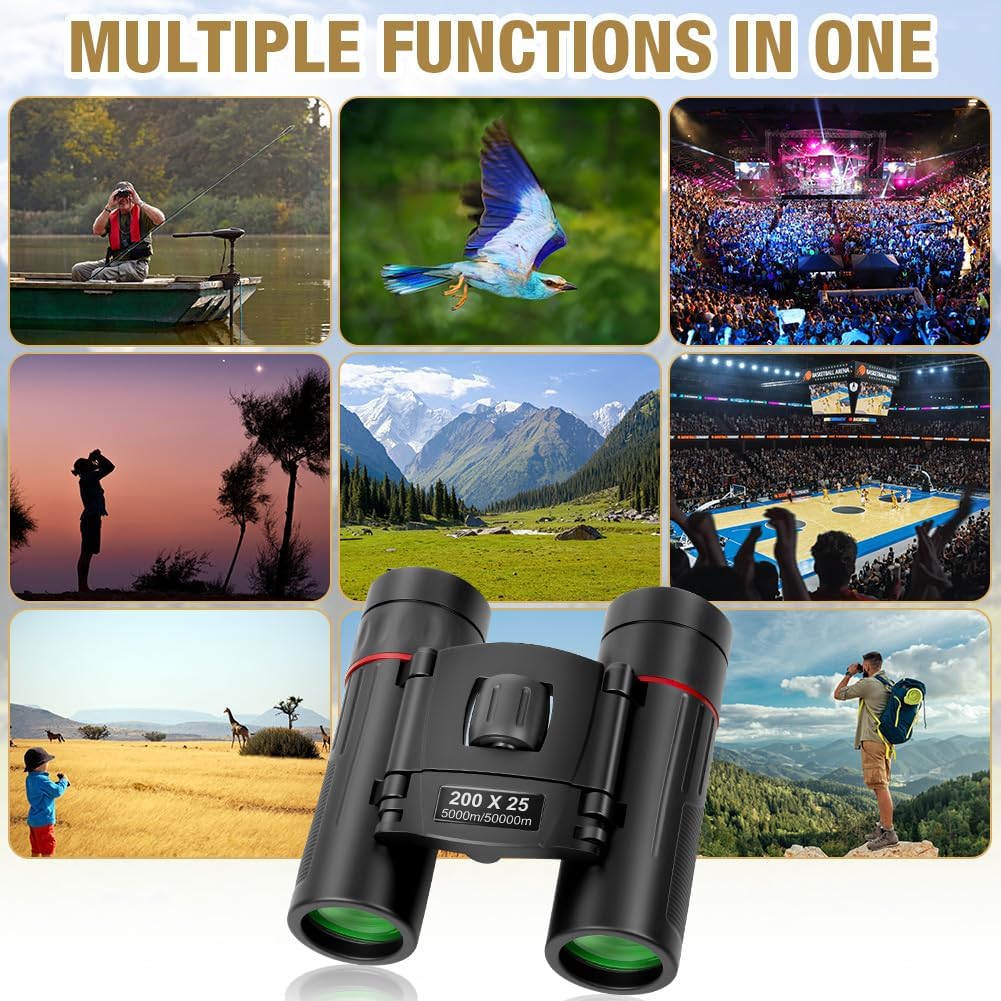
OFFCUP 200x25 Mini Compact Binoculars are a pocket-sized pair designed for both adults and children who want an accessible way to observe from a distance. With 200x magnification and a 25mm objective, they promise a long-distance view in scenarios ranging from birdwatching and hunting to theatre and travel. The aim is simple: to bring distant details closer without burdening you with heavy gear. If you prioritise portability and ease of use alongside a capable optical performance, this model is worth considering.
How the optics are set up
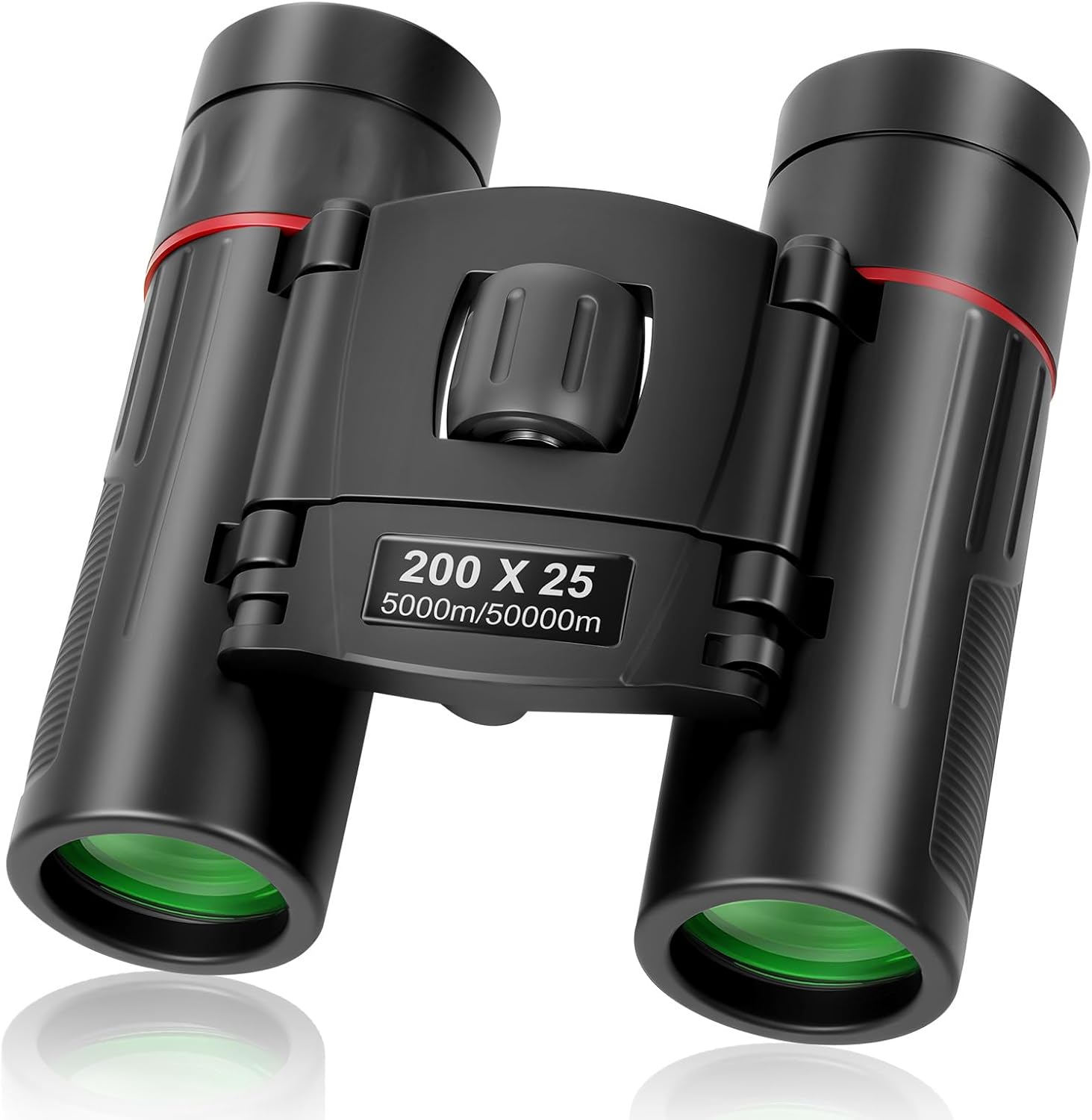
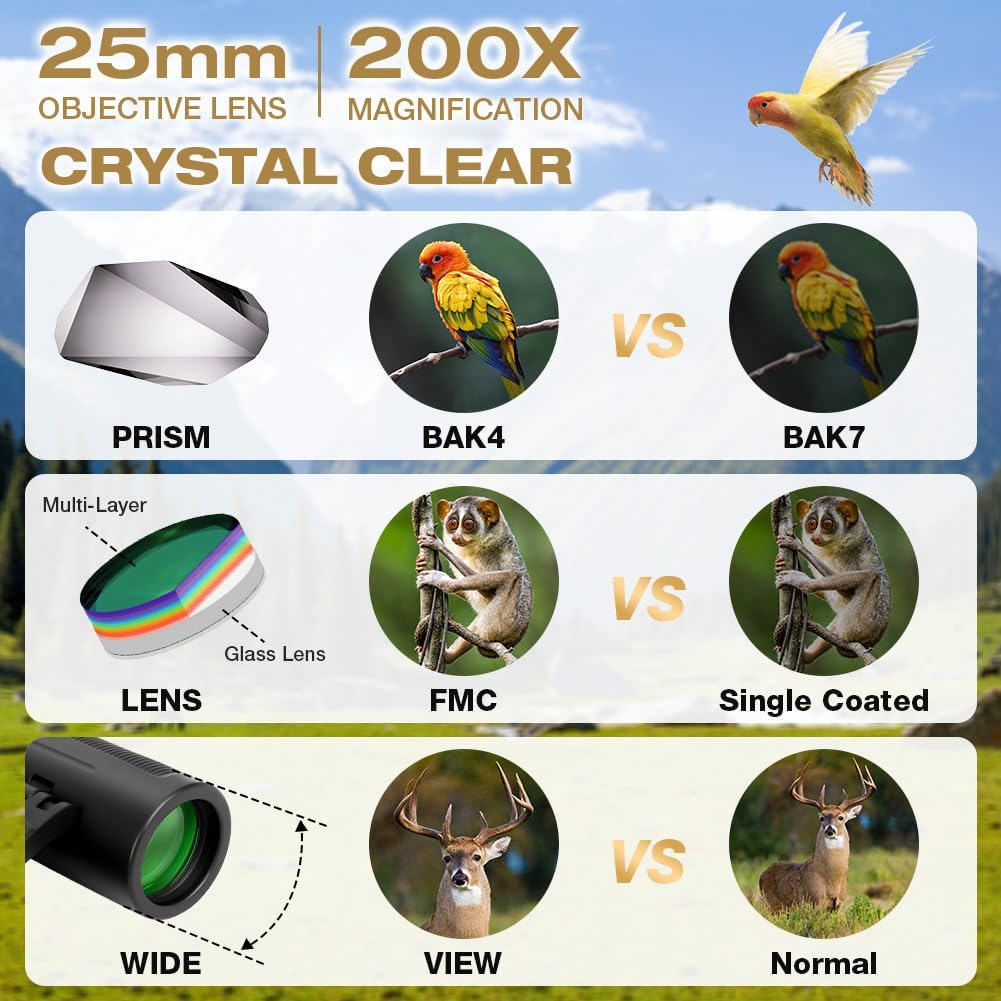
On paper, these binoculars rely on FMC multi-layer broadband coatings on the objective and eyepiece lenses, described as a green and blue film pairing, together with a BAK4 prism. The intent is to improve light transmission and colour reproduction, producing brighter, more contrasted images across different light conditions. In practice, you’ll likely notice that the view remains crisp enough for day-to-day observation, with reduced eye fatigue during longer sessions. That said, the exact impression can depend on ambient light and the observer’s distance to the subject.
How to use them correctly
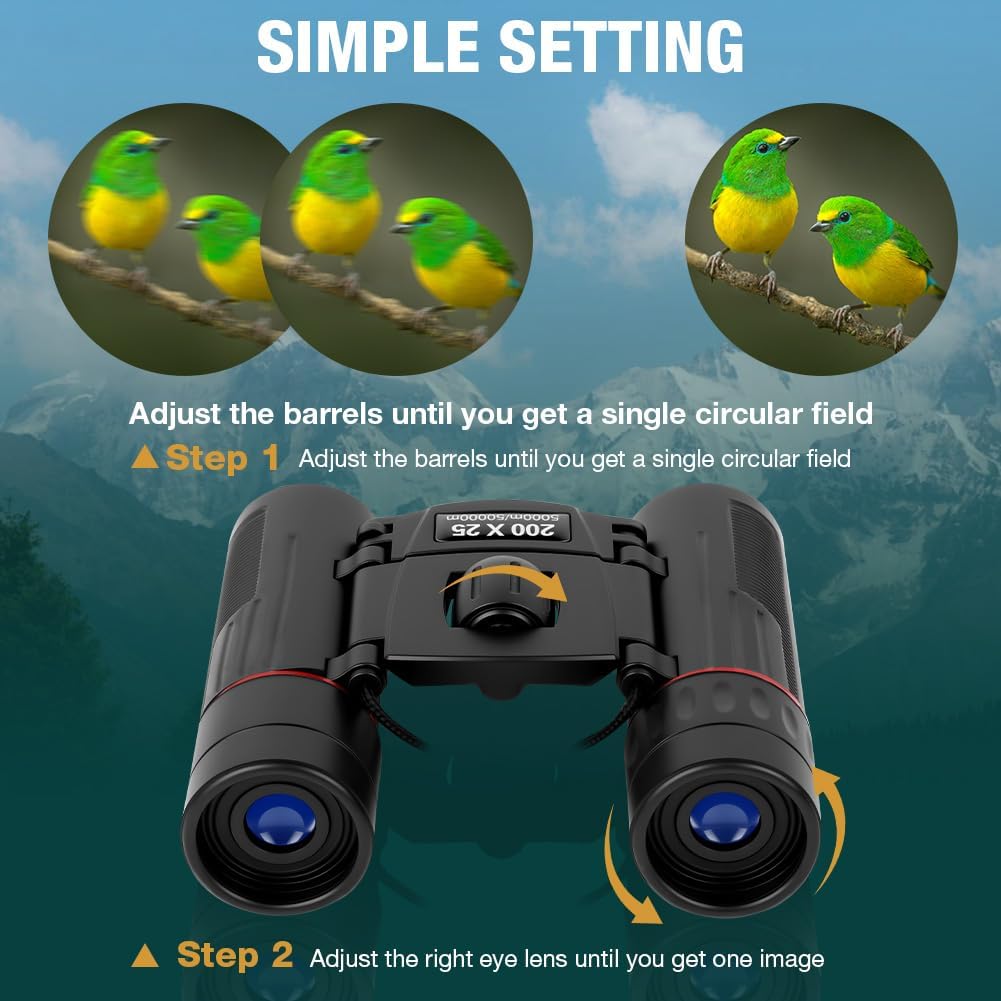
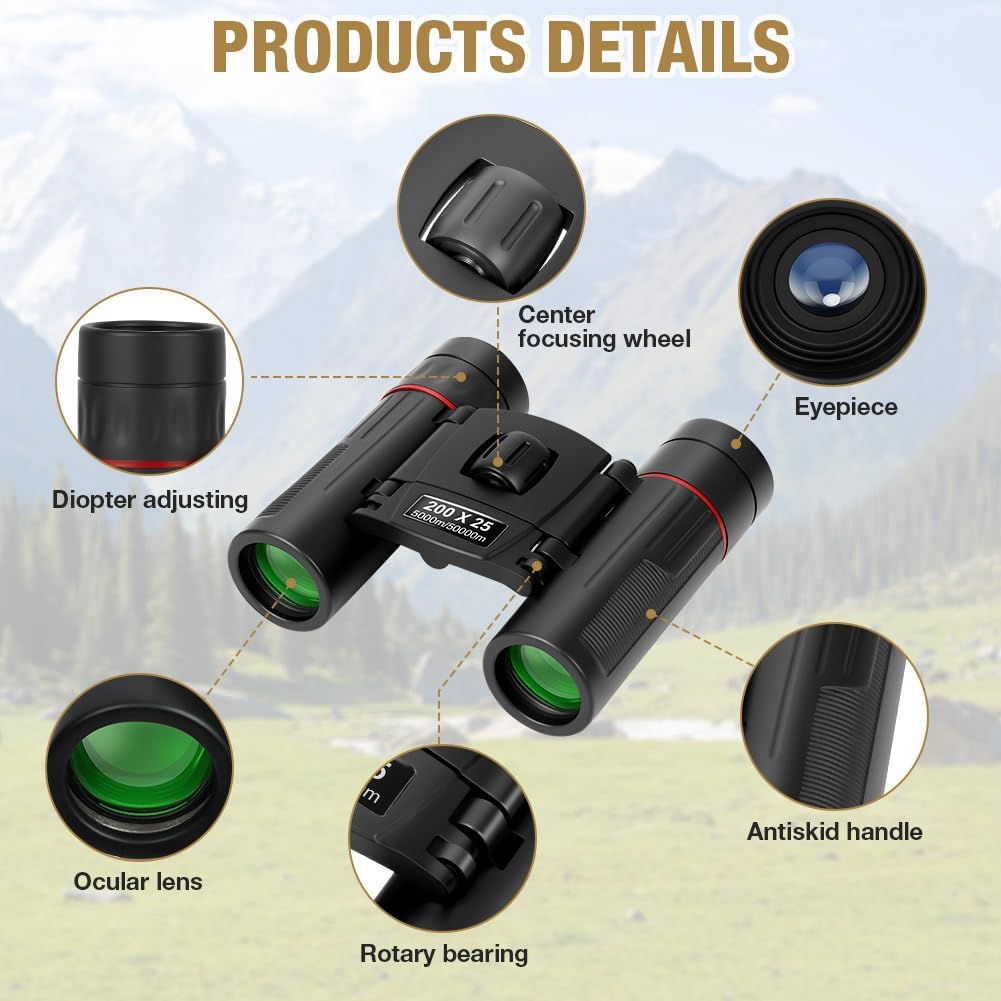
The product uses a precision focusing system. Start by holding the body lightly and adjusting the inter-pocular distance so the left and right views align with minimal ghosting. Then rotate the centre focus wheel until the scene on the left is clear, and fine-tune the right eyepiece with the diopter adjustment ring to unify both eyes. This sequence is intended to help users with different vision needs get a sharp image without fuss. For most casual users, a quick trial will help synchronise focus and eye relief, but remember that very close-up adjustments can still take a moment to perfect.
Weight, size and handling
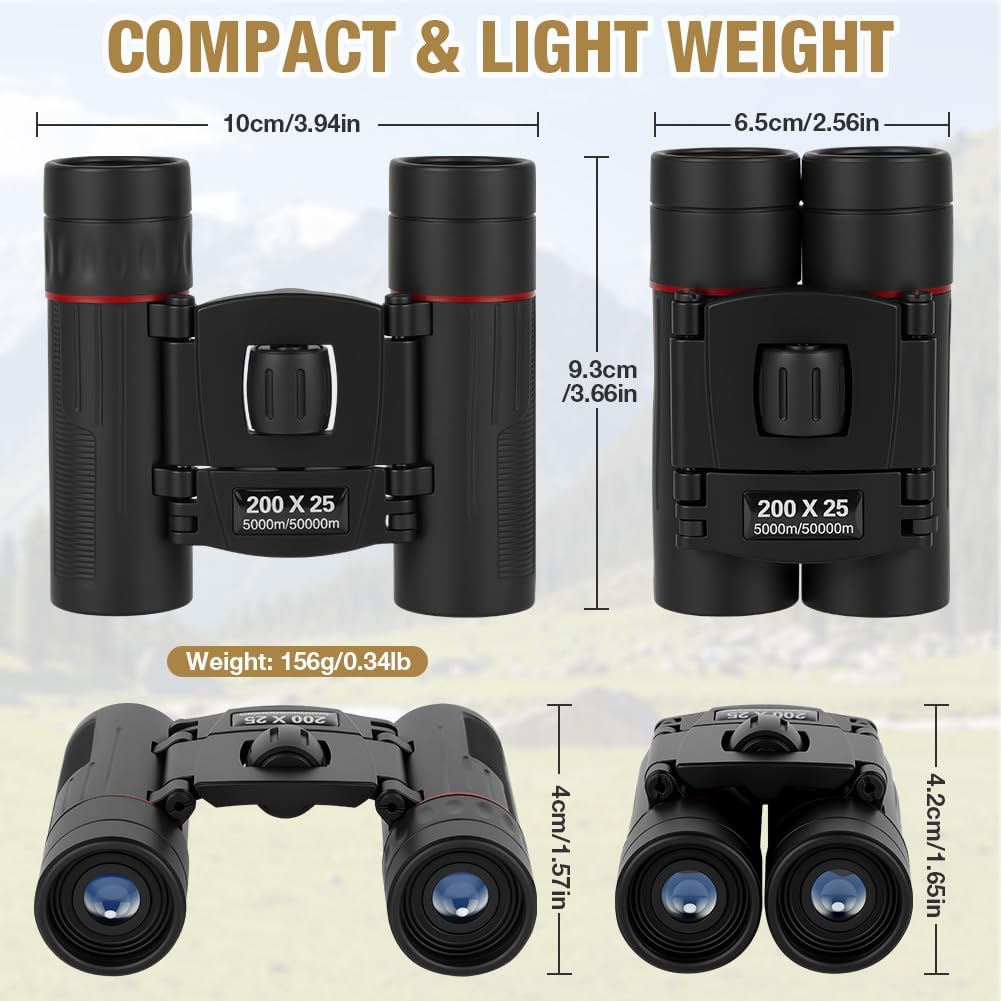
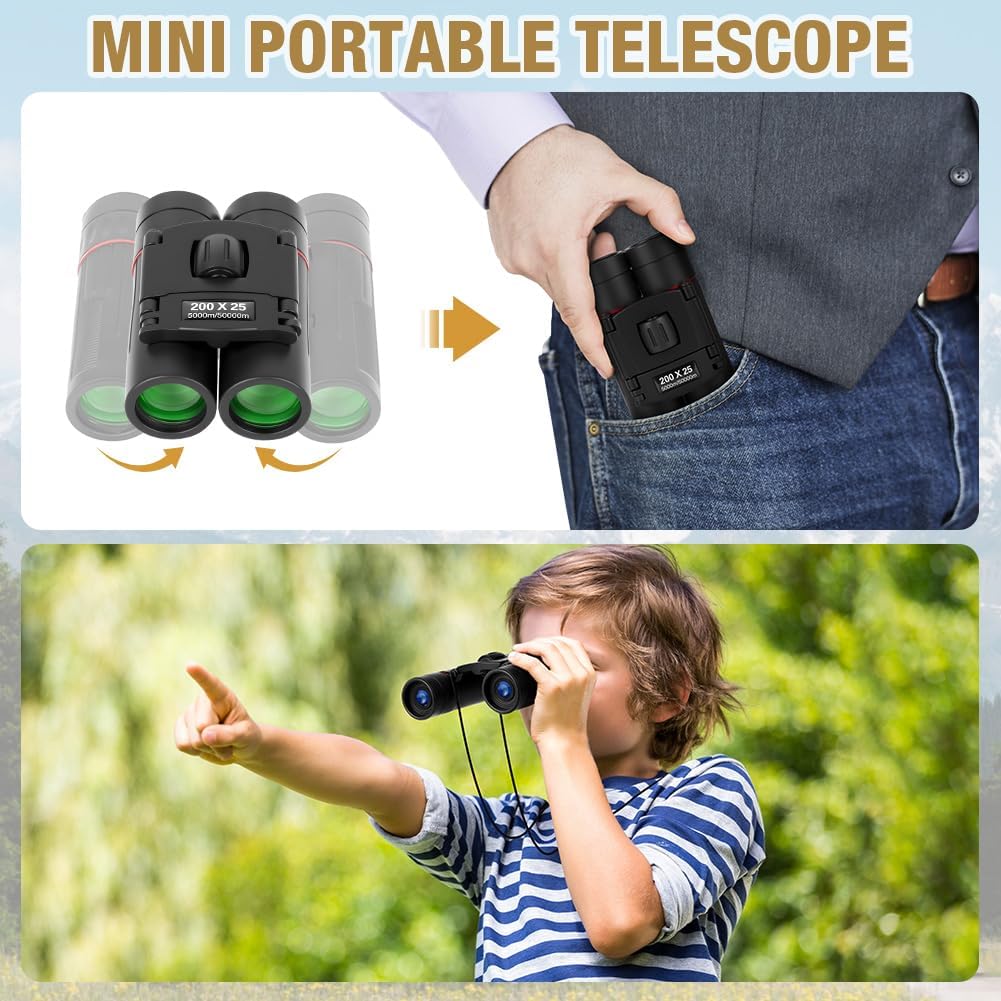
A standout point is the portability: the entire unit weighs around 151 g and has a compact footprint, making it easy to pocket or slip into a small bag. The outer shell uses a rubber-like surface to provide grip, and the focus wheel is likewise finished in a non-slip material. It’s the kind of design that suits travellers, walkers, and families who want something unobtrusive to carry on day trips. A waist bag is mentioned as part of the kit, which helps with quick stow-and-go when you’re out for the day.
Practical strengths and potential limits
On the upside, the binoculars are versatile across multiple contexts—from outdoor viewing to indoor events. The compact design means it’s less of a burden during hikes or city sightseeing, and the broad approach to usage suggests they can cover a broad set of needs. However, there are reasonable caveats to bear in mind. At 200x magnification, vibrations or hand shake can impact image stability, particularly if you’re not using a steady stance or a tripod. The 25 mm objective is relatively small, which can influence light gathering in dimmer environments, so the brightest scenes will naturally look better than low-light situations. If you’re seeking top-tier image quality for professional fieldwork in low light, this model may fall short of higher-priced rivals.
Who this is best for
These binoculars are well suited to casual observers who want a compact, affordable optical solution for nature walks, travel, or event viewing. They strike a balance between portability and reach, which makes them useful for family days out, beginners testing an interest in birding, or travellers who don’t want to check in bulky gear. If you value a simple, one-device option that remains easy to carry in a pocket or bag, they can be a sensible pick.
When it makes sense to buy
Consider these if you prioritise lightness and ease of transport alongside a surprising level of magnification for a pocket unit. They’re a sensible option for beginners who want to experiment with longer-range observation without a heavy setup, or for children who may benefit from a lighter, easier-to-handle pair during outdoor adventures. They’re less ideal if your priority is peak image quality in low light, or if you need ultra-stable viewing for detailed microscopy-type work.
What to check before buying
Before purchasing, think about where you’ll use them most. If your plans involve frequent low-light environments, you may want to temper expectations about brightness. Check the fit for your own eye spacing and whether the diopter adjustment aligns well with your vision. If you’re hoping for rough-and-ready viewing that travels well, test the handling and ensure that the centre focus wheel and diopter ring operate smoothly with one hand.
How it compares to alternatives (in context)
In the spectrum of binoculars, this model appears to sit in the entry-to-mid range for portability with a notable zoom, aimed at casual use rather than professional fieldwork. If you’re prioritising ultra-stable viewing and low-light performance, a larger, heavier pair with bigger objective lenses would typically be preferable. Conversely, if you want a compact, affordable option for light outdoor use and occasional indoor viewing, this kind of small, pocket-friendly design makes sense as a practical compromise.
Usage example: a moment in the wild or at a venue
Imagine strolling through a park on a crisp morning. You’re scanning trees for birds, and a distant robin hops into view. The compact binoculars slip into a pocket, you raise them with one hand, and within a moment you catch the red on its chest—clear enough to identify the species at a glance. Later, you find yourself at a stadium or theatre, the same pair helps you catch facial expressions in close-up from the back rows, without weighing you down.
FAQ
- How portable are these? They’re described as ultra-light and compact, designed to fit in a pocket or small bag, which suits quick trips and family outings.
- Will they perform well in dim light? The coatings and coatings are intended to improve light transmission, but the 25 mm objective lens size means performance may decline in lower light than larger binoculars.
- Are they easy for kids to handle? The rubbery grip and light weight make them approachable for children, though supervision and setup may be helpful for younger users.
- Do they require steadying for clear images at 200x? Yes, a steady hand or support will help, small sizes can tremble with higher magnification, so a stable stance is advised.
Final decision point
Is it worth it? Worth considering if you want a lightweight, pocket-friendly option that covers a broad range of casual observing needs and you don’t require maximum light gathering or pinpoint low-light performance.