

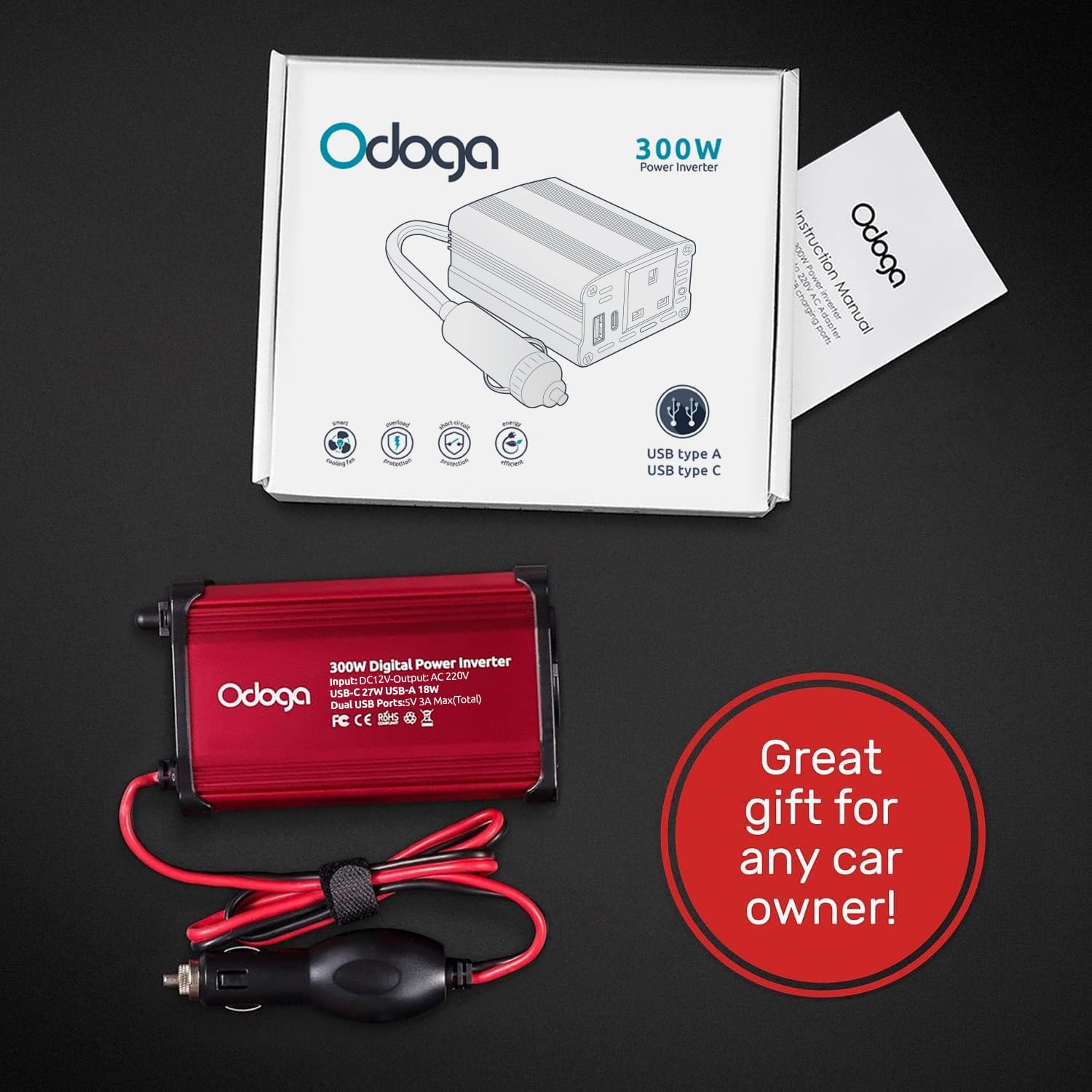
Odoga 300W Car Power Inverter (12V to 240V) with USB-A & USB-C 3A Charging Ports
Product description
What it is and why you’d want one
If you spend time in the car and you regularly need power for normal gadgets, a car power inverter is the missing link. This Odoga unit is designed to take a 12V car supply and turn it into standard AC power via an outlet, while also offering USB-A and USB-C charging ports for smaller devices.
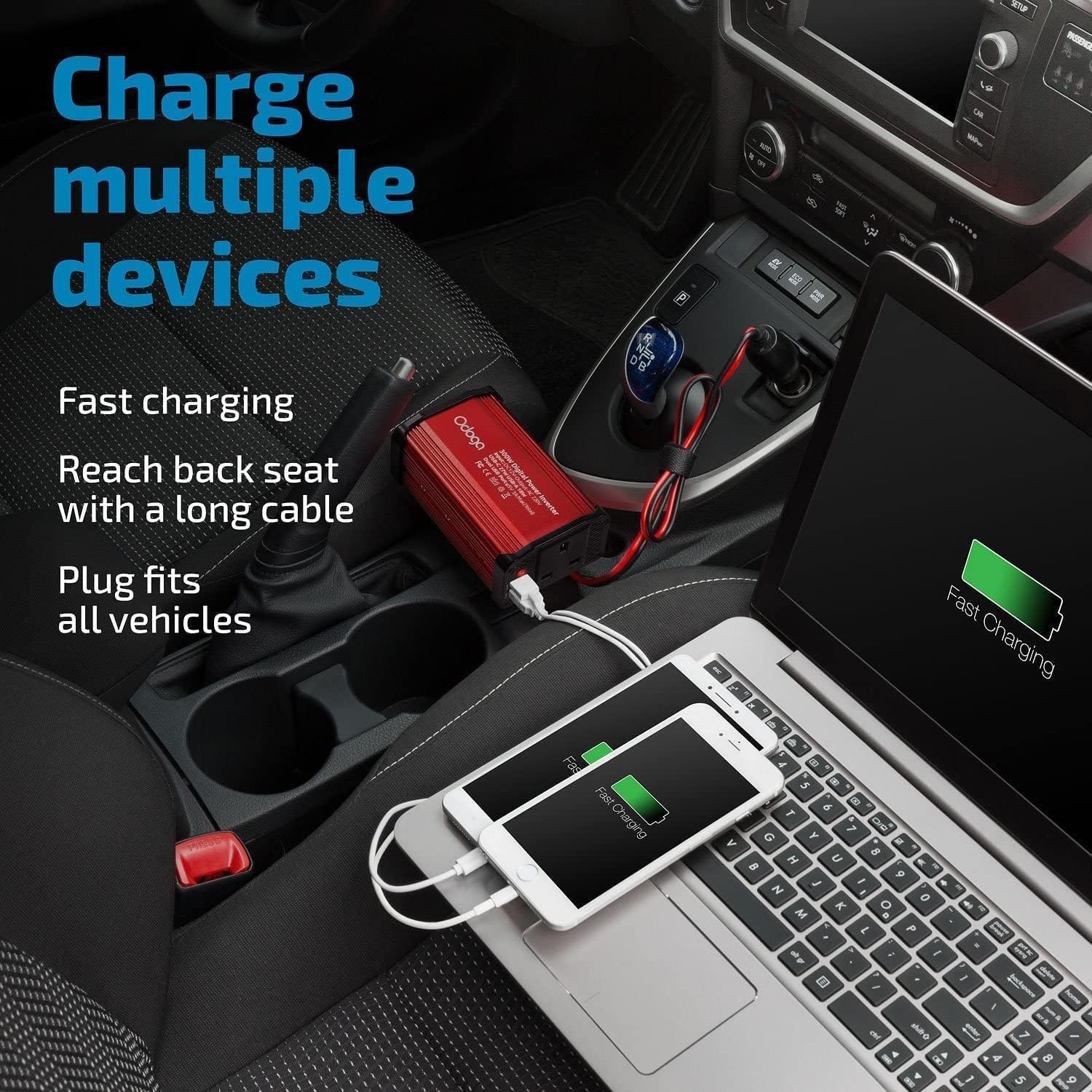
On paper, it’s aimed at road trips, commuting, and day-to-day “need a plug right now” situations: topping up a phone and tablet together, running a camera charger, powering a small device that expects an AC connection, and generally reducing the amount of power bricks you carry.
That convenience is the main draw, especially if you want one compact inverter rather than a handful of chargers. The catch, as always with inverters, is that real-world performance depends on what you plug in and how much power the connected device actually draws.
The essentials: what you actually get
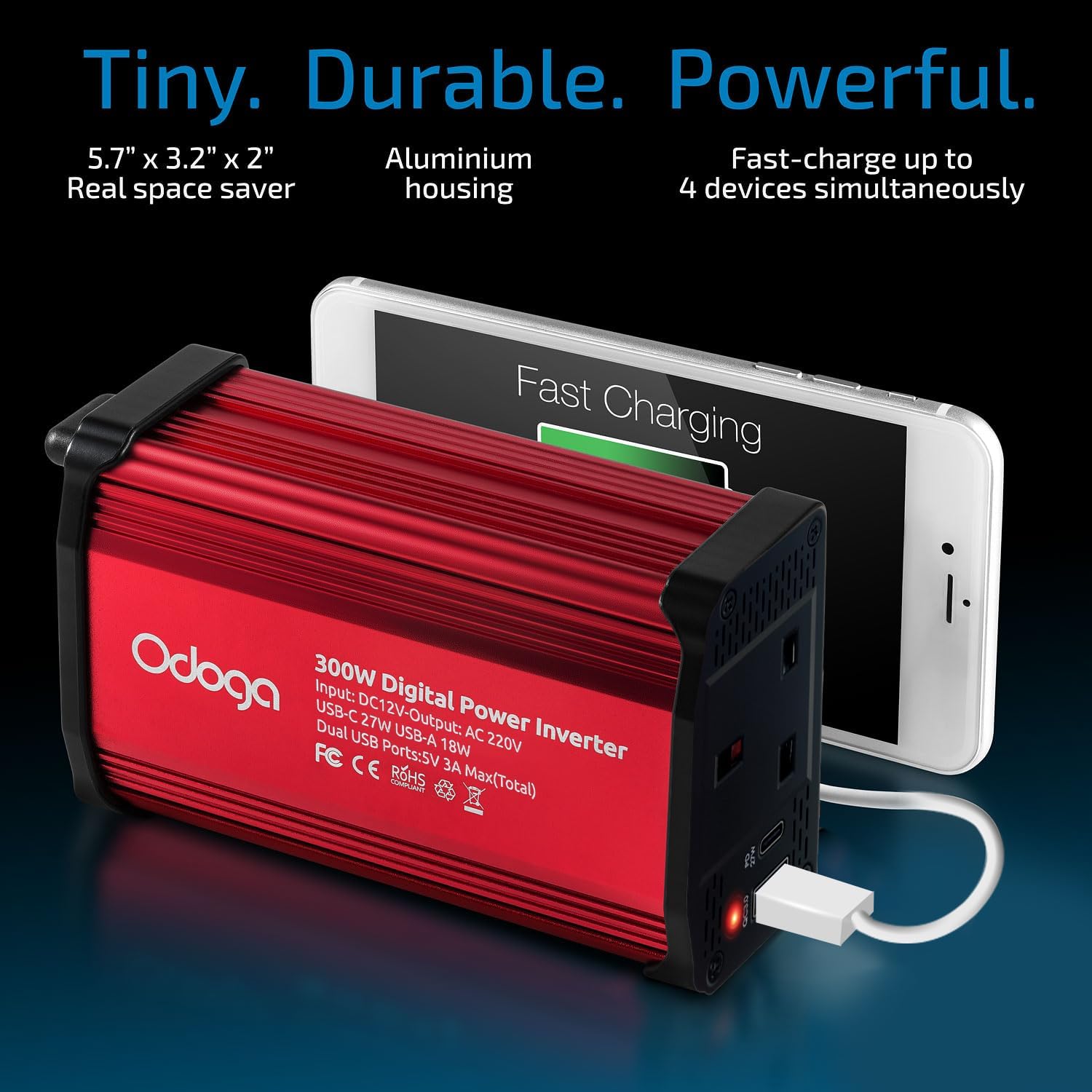
This is a 300W DC to AC car inverter with a modified sine wave design. It includes a 240V/230V AC outlet plus USB-A and USB-C ports rated at 3A, which the product description positions for fast charging of up to three items at the same time.
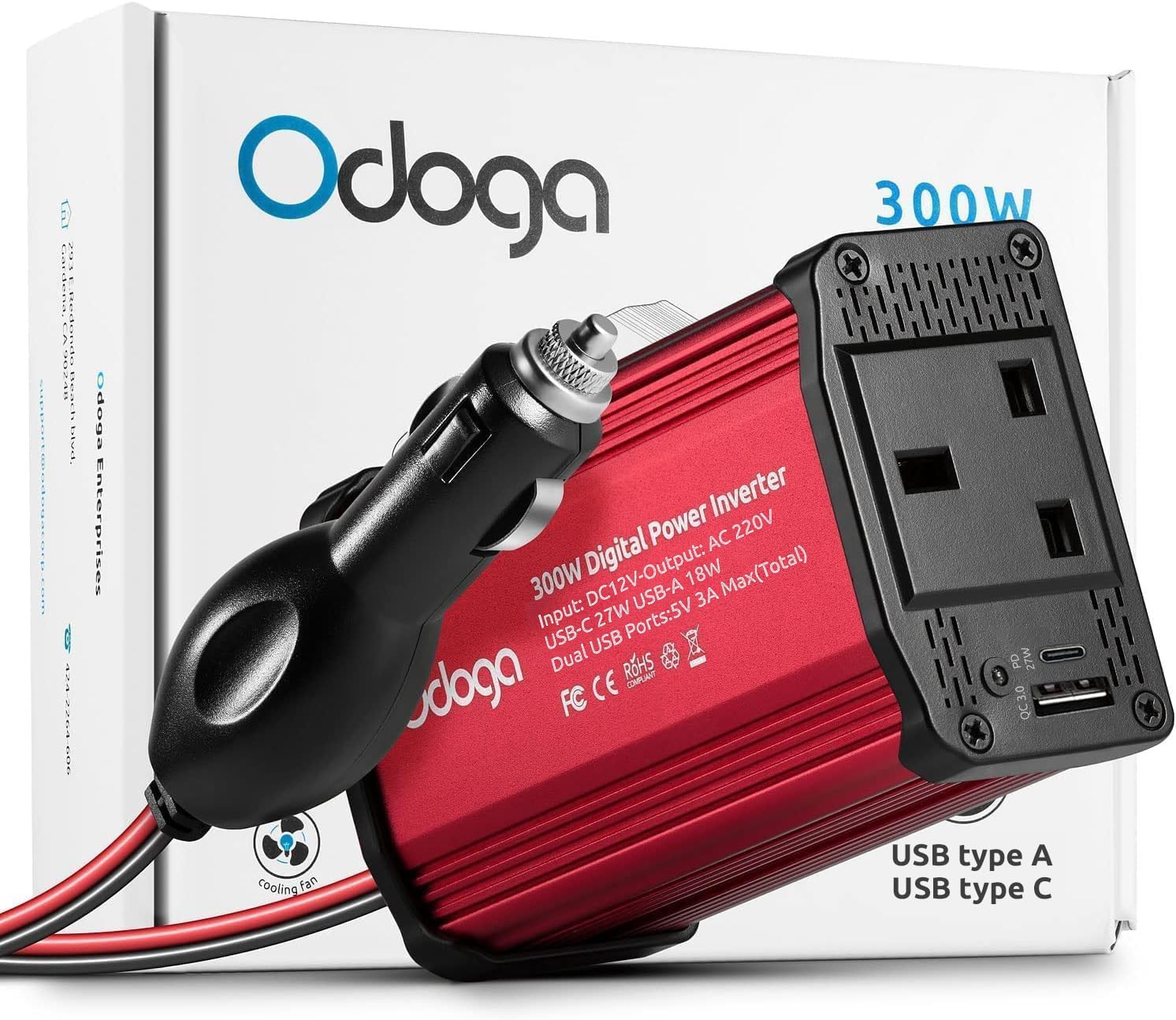
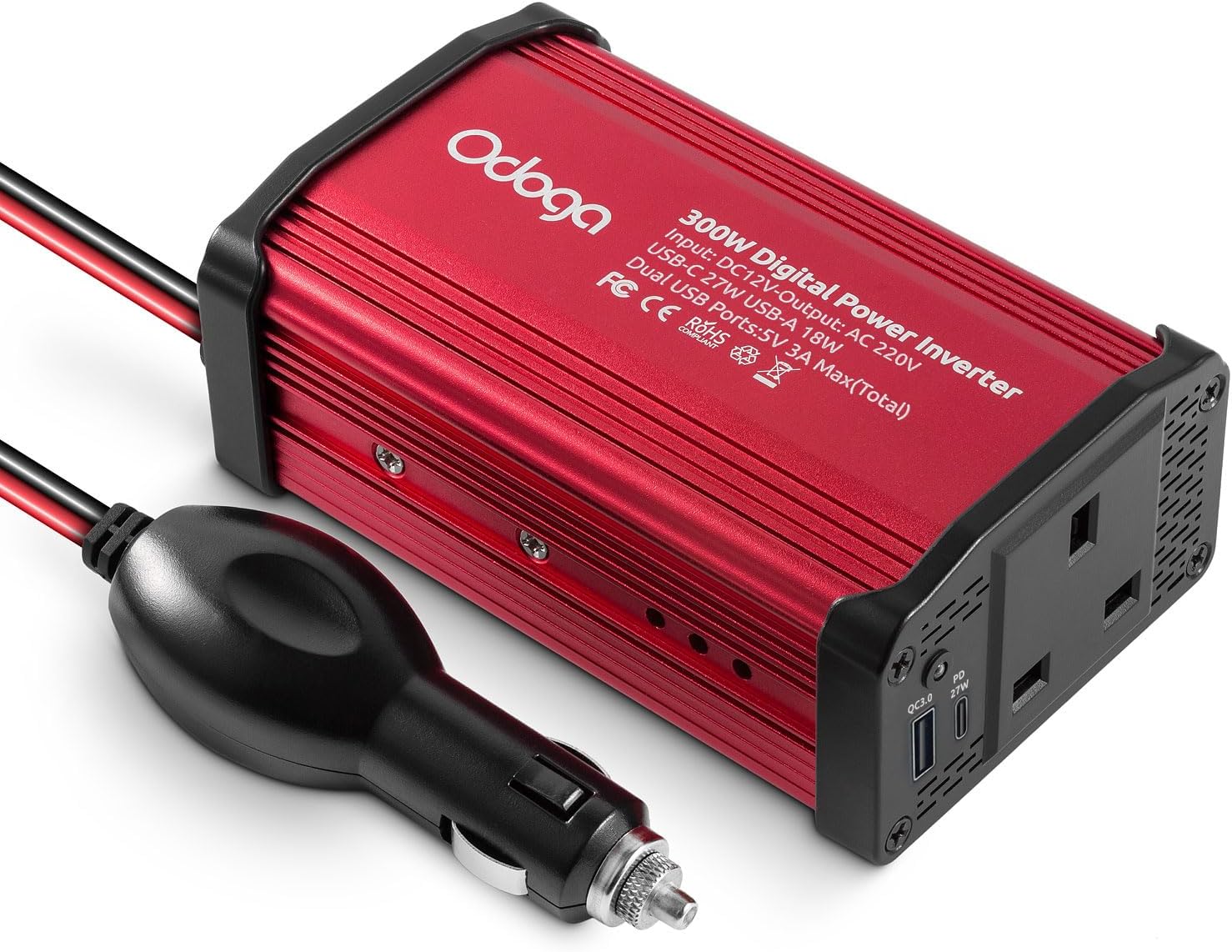
Physically, it’s built in a red aluminium body, with a built-in cooling fan to help manage heat. The “small as a mobile phone” claim in the description is useful as a mental benchmark: you’re not looking at a huge power station, more something you can keep in a glovebox, drawer, or travel kit.
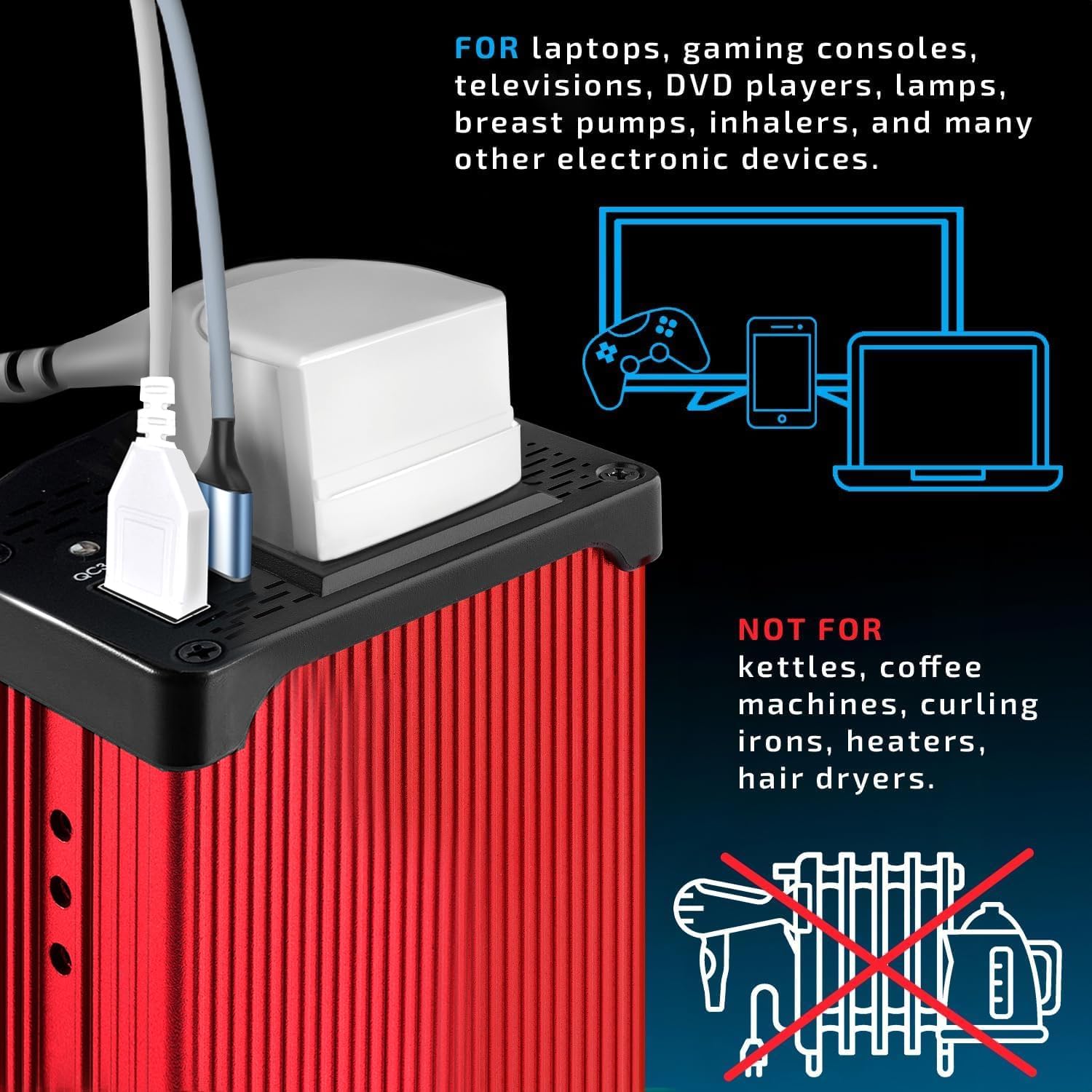
The important thing to note: modified sine wave inverters are often fine for charging electronics, but they may be less suitable for equipment that is sensitive to waveform quality (for example, certain power supplies and devices with motors). The listing doesn’t spell out exclusions, so it’s worth checking your device requirements before you rely on it.
What stands out in day-to-day use
The most practical benefit is the mix of outputs. With an AC outlet plus USB-A and USB-C, you can cover the common charging scenarios in one go. For example, you could plug in a laptop charger to the AC outlet while simultaneously charging a phone and a tablet via USB—useful when you’re trying to keep everyone’s devices topped up during a long journey.
It also features multiple safety measures listed in the description: short circuit, over charge, low/over voltage, and over temperature protection, plus built-in fuses. There’s also mention of auto-shutdown and a smart, quiet cooling fan.
In plain terms, safety and stability are the “quiet” features you tend to appreciate only when something goes wrong—or when you notice the fan isn’t constantly screaming under load.
Key points to consider before buying
The big decision question is whether modified sine wave is acceptable for your devices. If your main goal is charging (phones, tablets, cameras, laptop chargers that accept AC input), it often matches that use case better than you might think. But if you need to power something more demanding or sensitive, you may want to be cautious.
Also, the “up to 3 items together” idea is convenient, yet it doesn’t automatically mean every combination will run comfortably at the same time. The inverter’s overall power is still limited (rated at 300W in the product name). So if you plan to use multiple power-hungry devices at once, you’ll want to keep expectations realistic.
Finally, car inverters live and die by installation basics: using the correct 12V source, keeping connections secure, and avoiding overloading. The listing highlights protections, but it won’t replace good usage habits.
Tech specs (from the listing)
- Type: Car power inverter (12V to 240V/230V converter)
- Output: AC outlet (240V / 230V as stated)
- Power rating: 300W DC to AC
- Waveform: Modified sine wave technology
- USB ports: USB-A and USB-C (3A)
- Power charging: Supports fast charging of up to 3 items together (as described)
- Safety protections: Short circuit, over charge, low/over voltage, over temperature, built-in fuses, auto-shutdown
- Additional protection: Reverse-connect, overload, voltage, short circuit protection (as described)
- Cooling: Built-in cooling fan
- Housing material: Aluminium body
- Colour (housing): Red
Who it suits (and who may want to skip it)
It makes sense if you want a compact inverter for travel and everyday car power needs—especially if your devices are mainly chargers (phone, iPad/tablet, iPhone, camera gear) and you like the idea of using both USB and a mains-style outlet.
Worth considering if you’re building a simple “in-car charging kit” and you’d rather bring one compact unit than separate chargers for each device type.
It might not be a great match if you’re planning to run equipment that’s sensitive to waveform quality, or if you expect to power high-draw appliances for long periods. The listing doesn’t define limitations by device type beyond the protections, so if your use case is unusual or power-hungry, you may find a more clearly matched solution easier to trust.
Safety, cooling, and reliability (what the listing promises)
This Odoga inverter leans heavily on safety features in its description: short circuit protection, over charge protection, low/over voltage protection, and over temperature protection, plus built-in fuses and auto-shutdown. There’s also mention of reverse-connect and overload protection.
It’s a good sign that the fan is explicitly included, because inverters can generate heat under load. The description also calls the cooling fan smart and quiet, which is the sort of detail that matters if you keep it plugged in for charging on stops.
That said, safety features are there to protect the device and the installation. They don’t give you unlimited power—so you still need to stay within the inverter’s rated capacity and use it as intended.
In the box and setup expectations
The listing text provided focuses on the inverter unit itself, its outputs, protections, and aluminium housing, but it doesn’t specify what’s included (for example, whether you get specific cables or mounting accessories). Before you buy, it’s worth checking the “In the box” or packaging details on the retailer page to avoid any surprises.
As a general setup approach (based on how car inverters are typically used), you’ll want to place it where airflow isn’t blocked and where you can keep an eye on connections if you’re running it for a while.
When it makes sense
If your priority is convenient car charging for a mix of USB devices and one or two items that need an AC plug, this Odoga 300W inverter fits the brief. The combination of an outlet plus USB-A/USB-C 3A ports, along with the safety protections listed, makes it a practical choice for travel days and everyday carry.
Quick FAQ
Will it charge my phone and tablet at the same time?
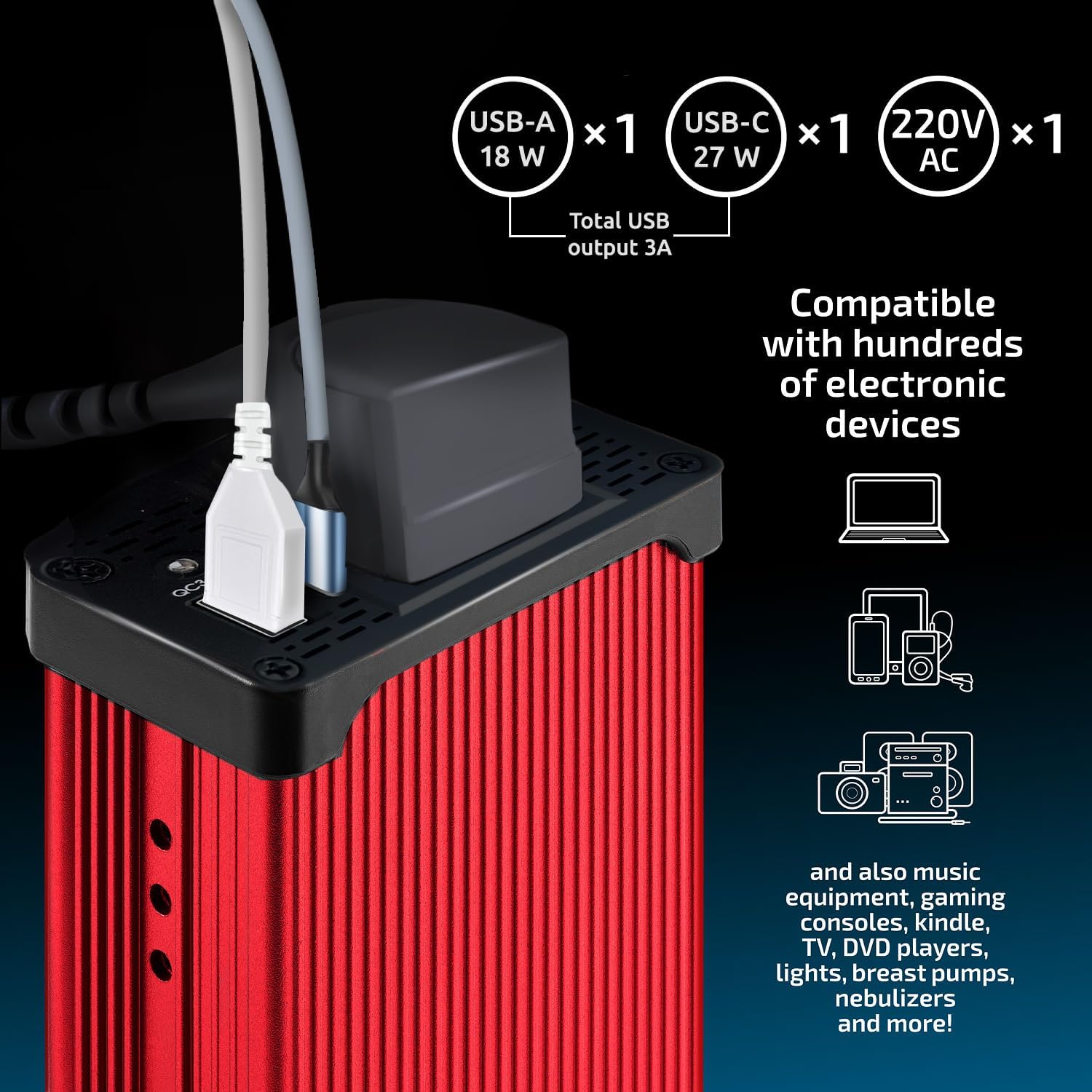
The listing says you can charge up to three items together using the AC outlet plus USB-A and USB-C ports, with 3A charging on the USB ports.
Does it provide a standard mains-style output?
It’s described as a 12V to 240V/230V DC to AC inverter with an AC outlet, using modified sine wave technology.
Is the modified sine wave suitable for a laptop charger?
The product is positioned for charging devices like a laptop, iPad and phones in its description. Still, if your laptop charger is sensitive to waveform quality, it’s wise to confirm compatibility based on your charger’s requirements.
How safe is it to use in a car?
The description lists short circuit, over charge, low/over voltage, and over temperature protections, plus built-in fuses, reverse-connect protection, and auto-shutdown.
Final verdict
Is it worth it?
It’s a solid buy if you want one compact car power inverter that covers both AC plug charging and USB charging in a single unit, and your devices are mainly things like laptop chargers, tablets and phones. The safety protections and cooling fan are the kind of features you’ll appreciate for peace of mind.
You may want to skip it if you’re planning to power more sensitive or high-demand equipment, because the listing only specifies modified sine wave and a 300W rating—both of which can limit what works comfortably. If you’re buying for straightforward charging rather than “run anything”, this Odoga looks like a sensible, no-nonsense choice.