

Ocetea 240W USB-C to USB-C Charger Cable (2-Pack, 2m) with PD 3.1 and QC 5.0 fast charging
Product description
Quick overview
If you keep multiple USB-C devices on the go, you’ll probably have run into the same annoyance: not all USB-C cables behave the same. On paper, the Ocetea 240W USB-C to USB-C charger cable aims to be one of the “proper” cables—supporting higher-power fast charging protocols and focusing on durability (braided shielding, reinforced connector design, and a stated track record for bending/plug tests).
It’s a cable built for people who want fewer cables on the desk and in the bag, rather than a basic lead that you swap in whenever. That said, a cable’s headline wattage only matters if your charger and device actually support the same level of charging—so it helps to check what your devices and power adapter are capable of.
Key features that matter day to day
The main selling points here are the charging profile and the build.
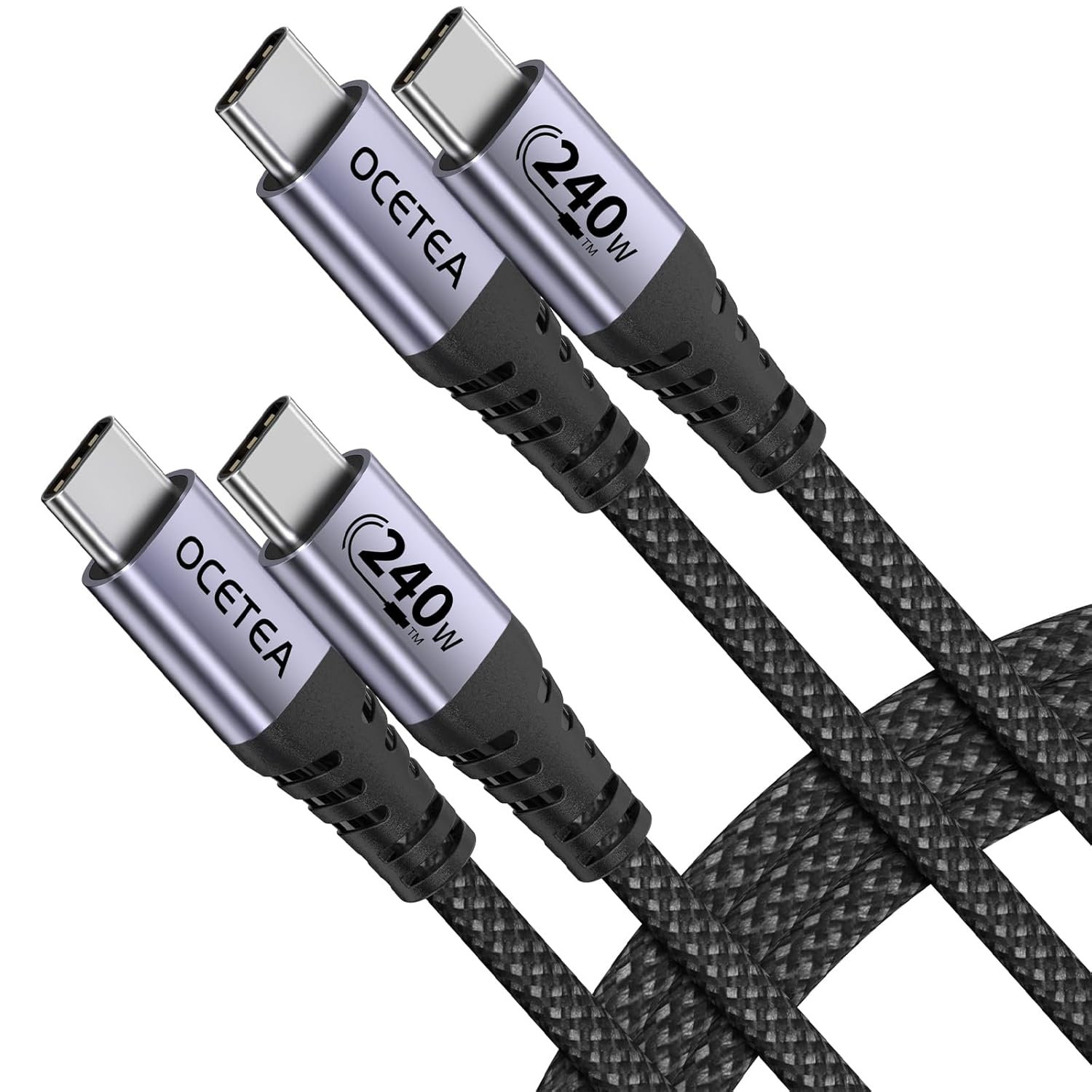
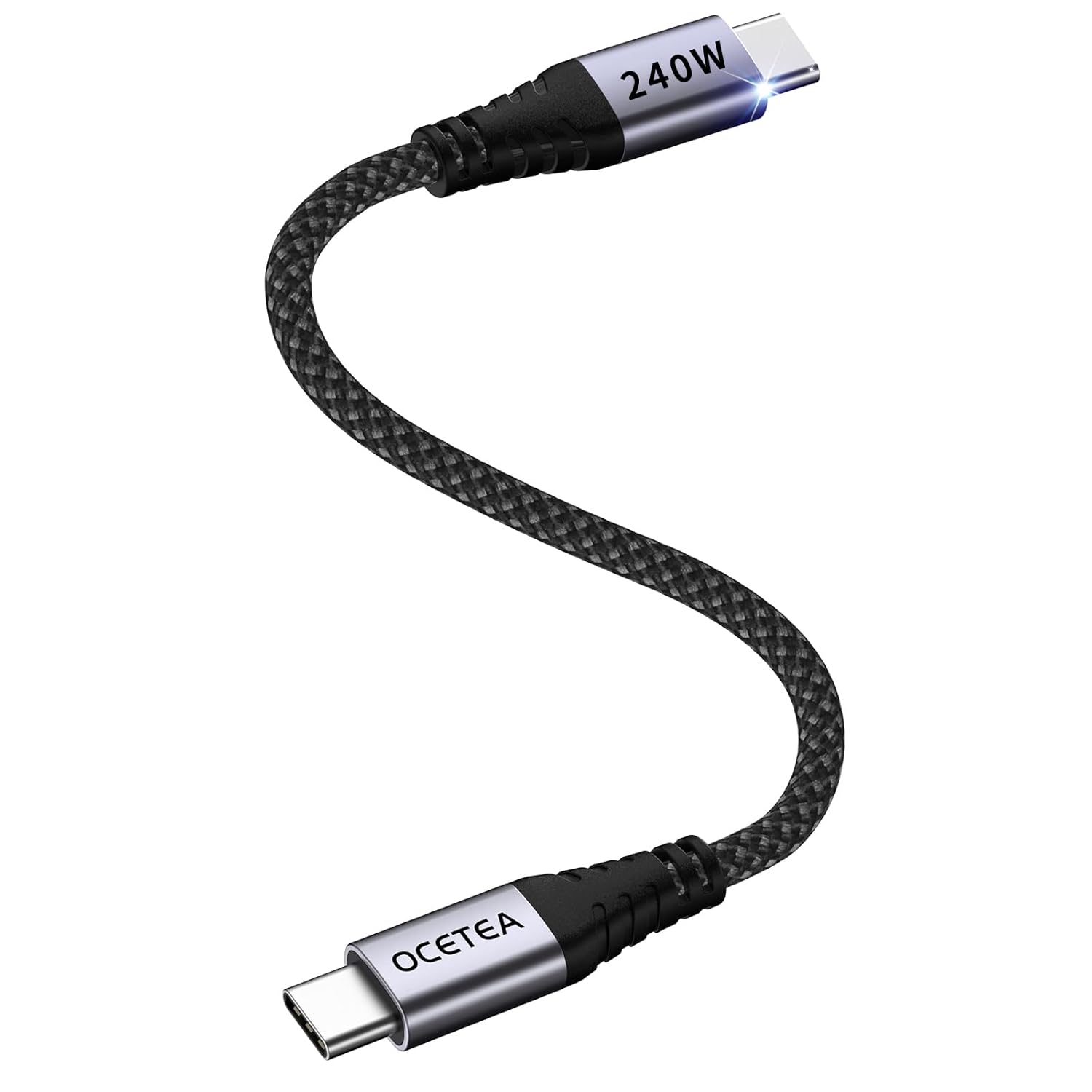
First, it’s designed around PD 3.1 and QC 5.0 fast charging protocols, with support for charging at up to 240W, and compatibility with lower wattages mentioned in the description (180W/140W/120W/100W/60W and below). Practically, that’s useful if you’re charging different devices—from a phone to a laptop—because the cable is meant to work across a range rather than forcing you into one strict setup.
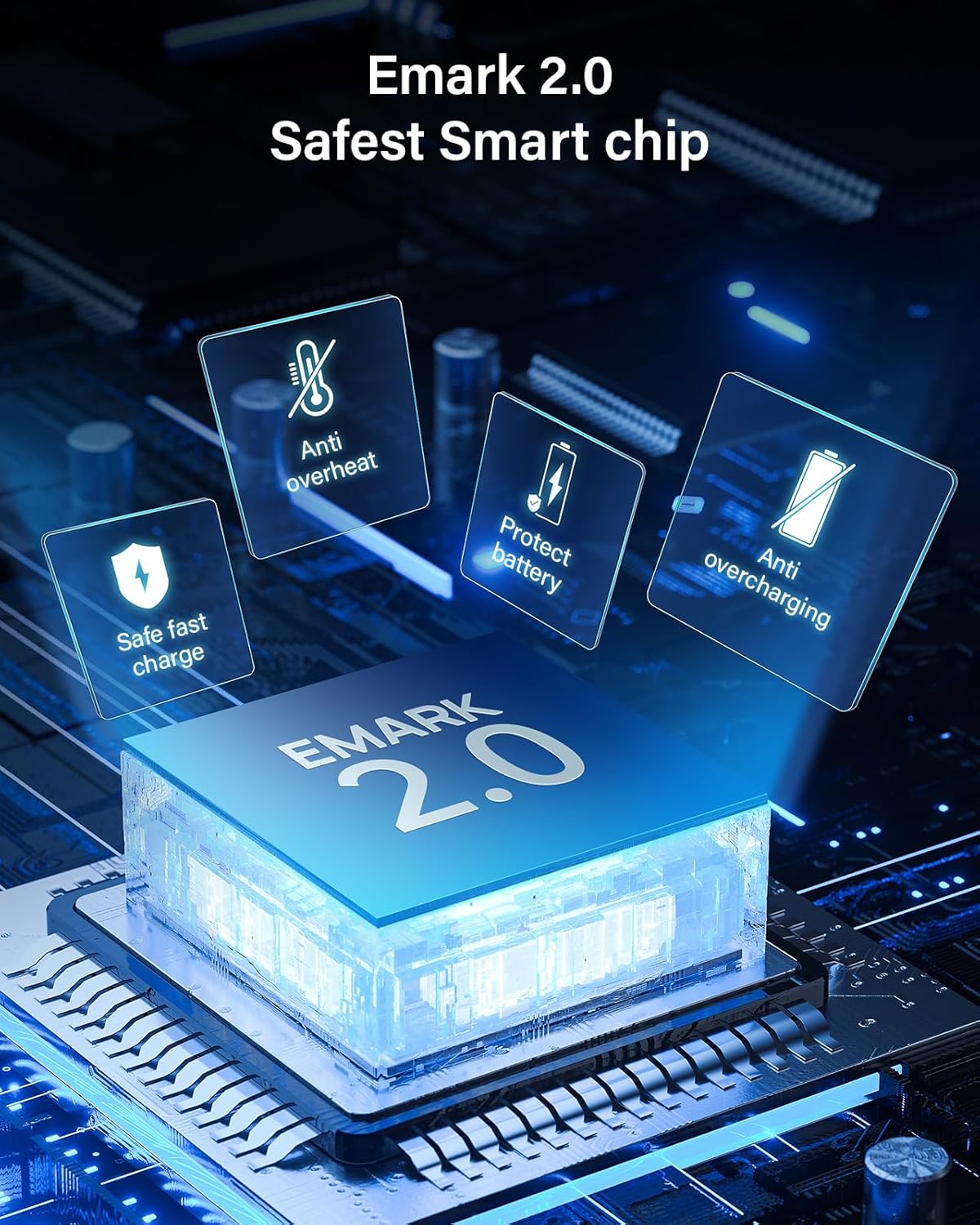
Second, safety and reliability are handled through an E-mark chip that (according to the description) supports protection at higher charging power and automatically adjusts output voltage and current to match the device’s needs. No cable can “fix” a mismatch between charger and device, but having that sort of handshake behaviour is exactly what you want when charging at higher speeds.
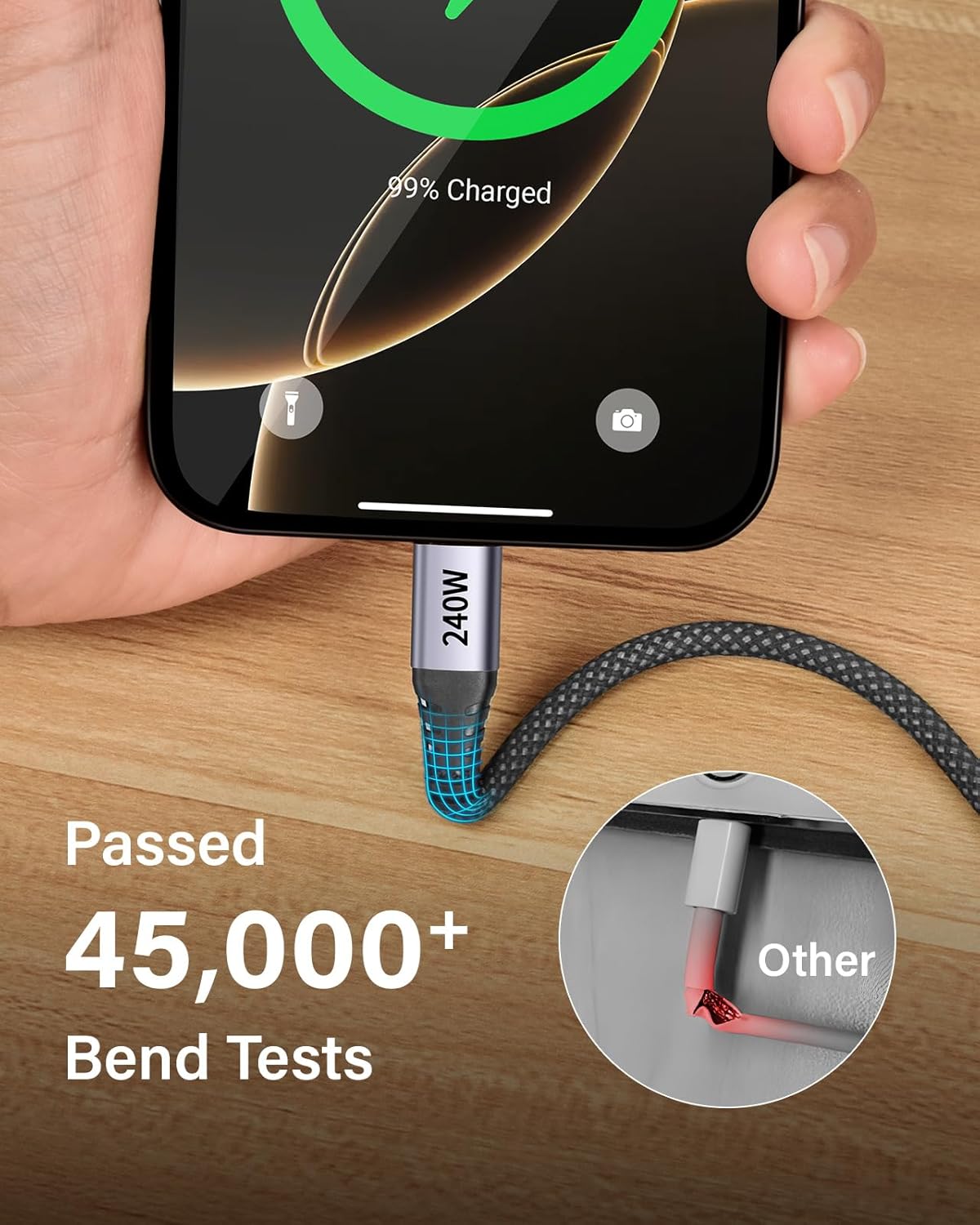
Third, durability is treated as a core feature. The USB-C connector uses stainless steel 316 in the description, and the cable is a 48-strand 600D braided mesh (stated lifetime claim is “over 15X higher than other USB C cables”). It also claims performance through 45,000+ bending and plug/unplug tests, which is reassuring if you tend to bend, twist, and unplug cables often.
What to know about real-world charging
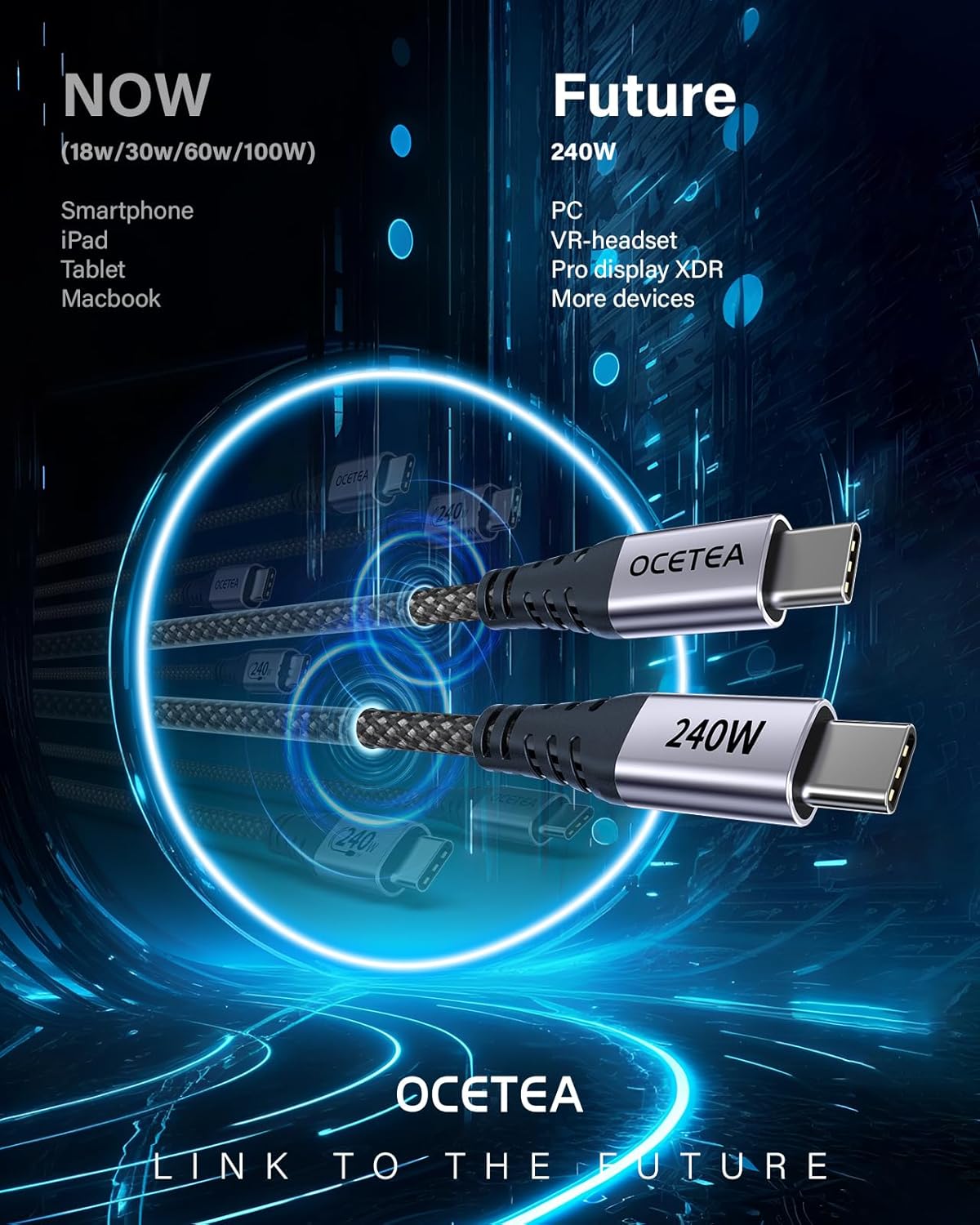
This is a USB-C to USB-C cable, positioned for high-power fast charging when the whole chain supports it (charger + device + cable).
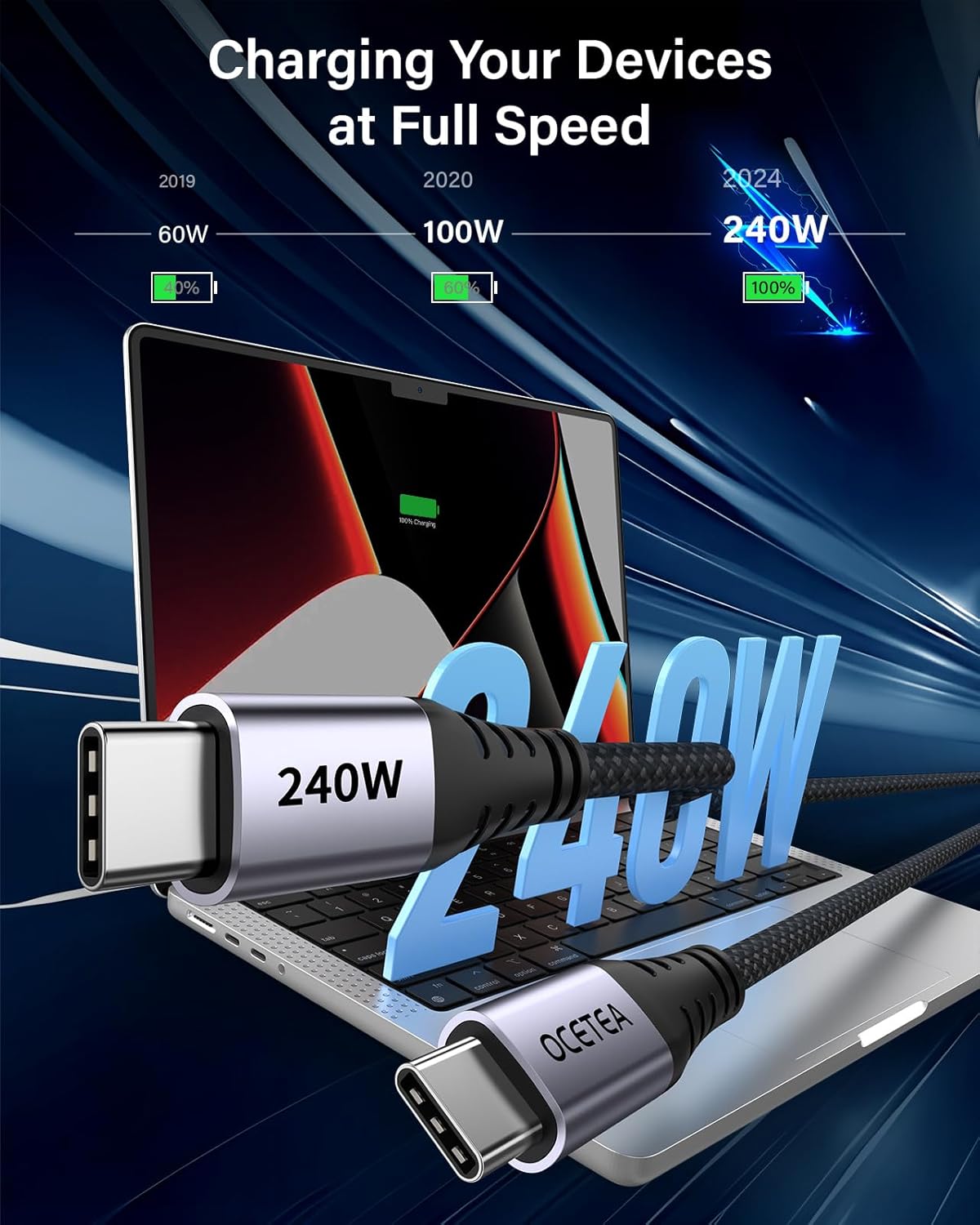
It’s worth noting that the “up to 240W” figure is only reachable in compatible scenarios. If you’re charging a device that only negotiates lower wattage, the cable should still fall back to that lower level (the description explicitly states it supports lower wattages), but the speed will be limited by the device and your power adapter—not the cable.
A quick practical example: imagine you’re at home with a laptop, then you need to top up a tablet or a phone in the same corner of the room. Swapping cables each time is annoying, using a single 2m cable lets you keep one consistent setup, especially if you also want to charge a handheld device like a Steam Deck or Switch (both are mentioned as supported among USB-C-port devices).
Where this cable fits best (and where it doesn’t)
It makes sense if
It’s a good fit if you want one durable USB-C cable for mixed charging across laptops, phones, tablets, and USB-C handhelds, and you specifically care about fast charging protocols rather than just “it works”. The 2-pack also helps if you like having one cable at home and one in your bag.
You’ll also likely like it if your current cables feel fragile at the connector end, or you’ve had issues with cables becoming kinked or fraying after frequent use.
You may want to skip it if
It might not be a great match if you’re mainly charging low-power devices and you don’t need high-wattage support—then you’re probably paying for headroom you won’t use.
Also, if your setup is very specific (for instance, you’re not using USB-C charging at all, or you rely on a different connector type), this won’t solve that problem.
Tech specs
- Type: USB-C to USB-C charger cable
- Charging support: up to 240W (PD 3.1 and QC 5.0 protocols mentioned)
- Cable length: 2m (6.6ft)
- Pack: 2 cables
- Connector material (stated): aviation stainless steel 316
- Cable construction (stated): 48-strand 600D braided mesh
- Durability testing (stated): 45,000+ bending and plug/unplug tests
- Safety/protection (stated): E-mark chip, automatic voltage/current adjustment
- Compatibility (stated): works with USB-C-port devices requiring 240W/200W/170W/140W/100W/60W/18W and below
Buying checklist before you commit
Before you buy, it’s worth checking three things so you’re not disappointed:
- Your charger’s output: the cable can only perform as fast as the power adapter can deliver.
- Your device’s charging support: some devices won’t negotiate the highest wattage even if the cable is rated higher.
- Your use pattern: if you’re constantly packing/unpacking a cable, the braided mesh and connector reinforcement are more likely to pay off.
If you want a cable for occasional charging, a basic lead may be cheaper. If you’re trying to replace the “everyday cable you actually use”, this one is clearly aiming at that job.
FAQs
Is the 240W rating guaranteed for every device?
Not necessarily. The description states the cable supports up to 240W and lower wattages, but real charging speed depends on what your charger and device negotiate.
Will it work with laptops and phones?
The description says it works with USB-C-port devices and lists categories like laptops, phones, tablets, Steam Deck, and Switch. Beyond that, compatibility depends on your devices’ USB-C charging support.
How long are the cables?
Each cable is 2m (6.6ft) long, and you get a 2-pack.
Does it include a warranty?
The description says it comes with a lifetime warranty and that support is available if you have problems, with service within 24 hours.
Final verdict
Worth considering if you want a tougher-than-average USB-C charging cable with strong fast-charging protocol support and a 2-pack setup for home and travel. It’s designed for buyers who care about higher charging performance and cable longevity.
Better avoided if you only need standard, low-power charging most of the time, or if your devices/charger don’t support USB-C fast-charging negotiation in the first place—because in those cases the extra headroom won’t translate into noticeable speed.