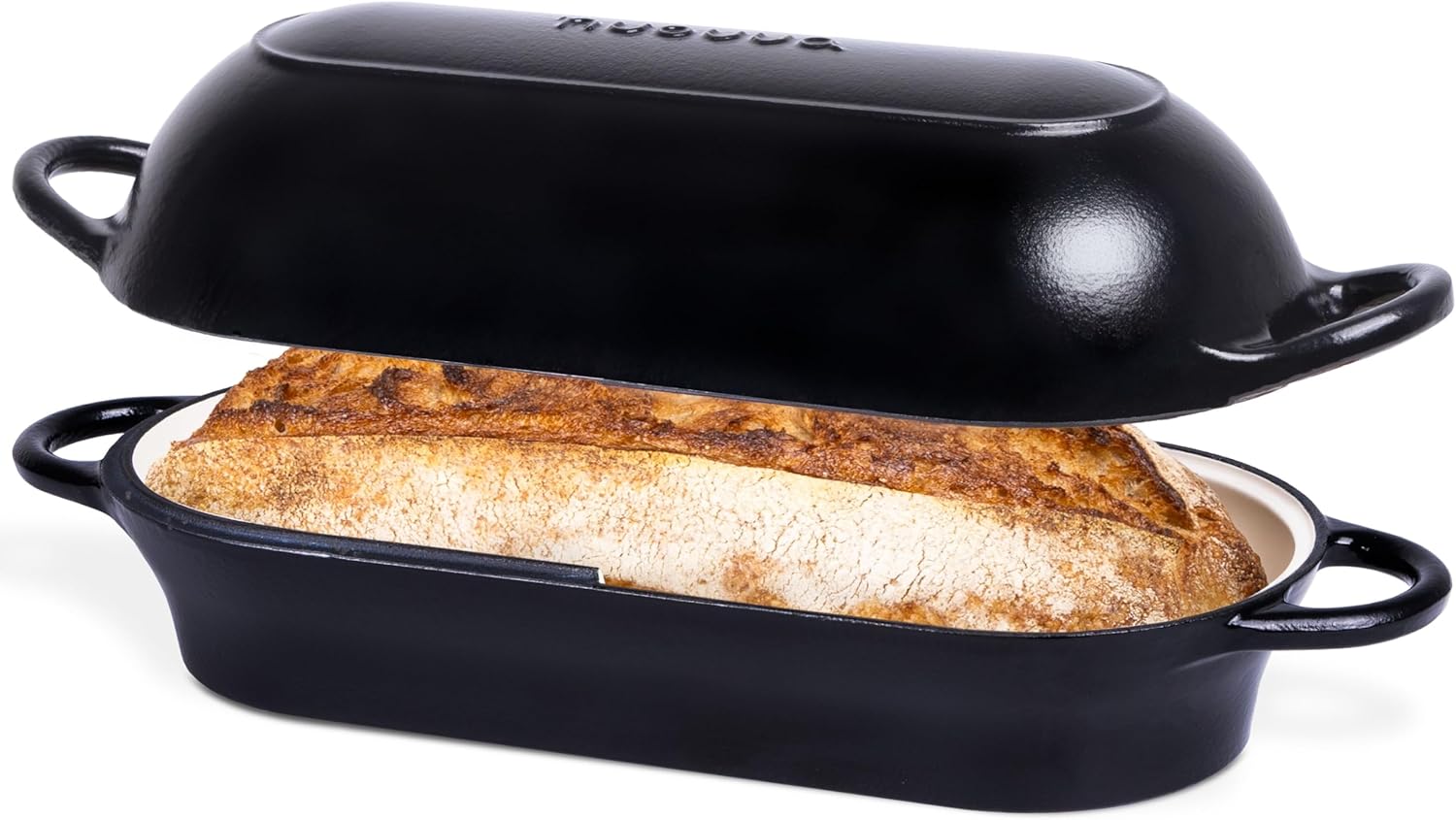
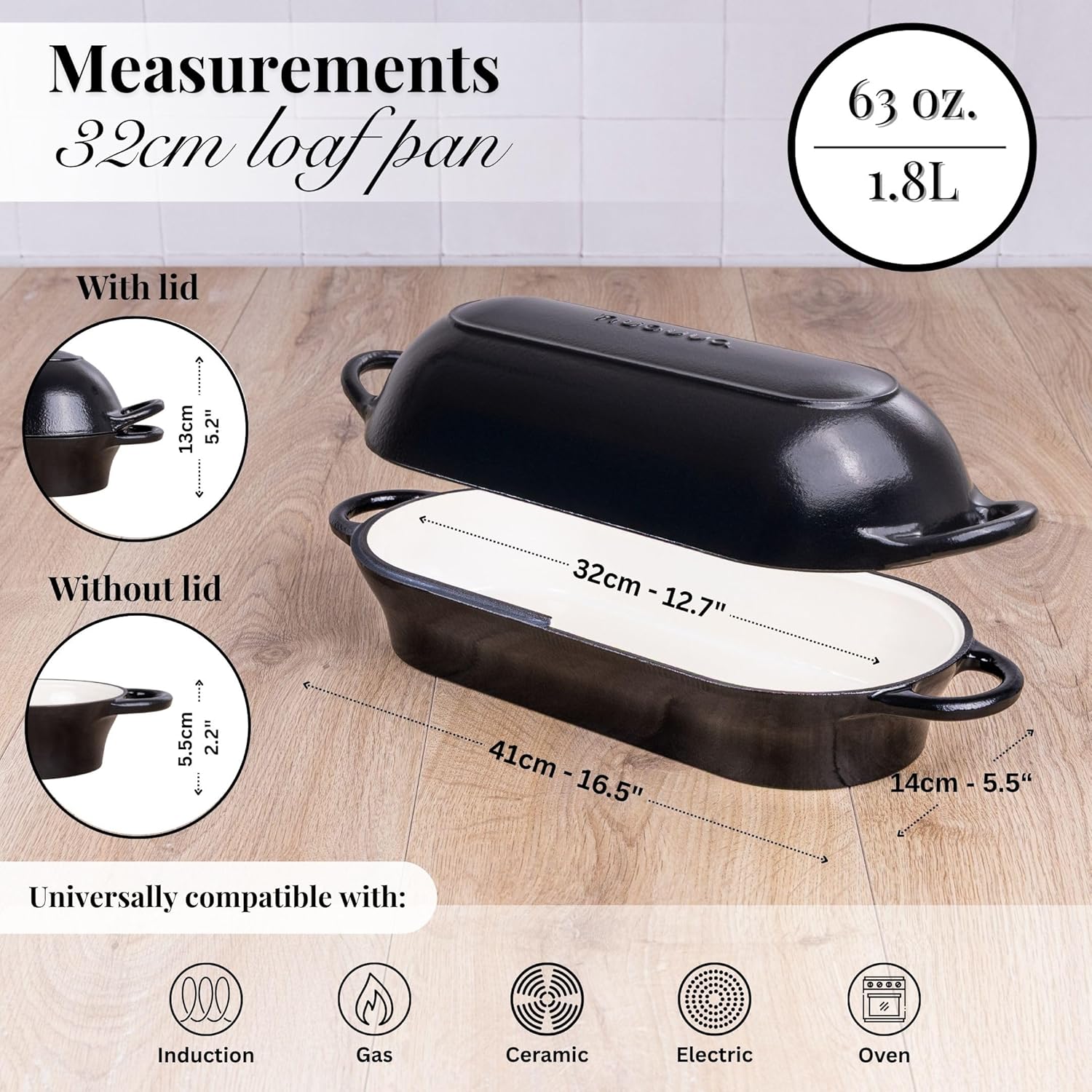
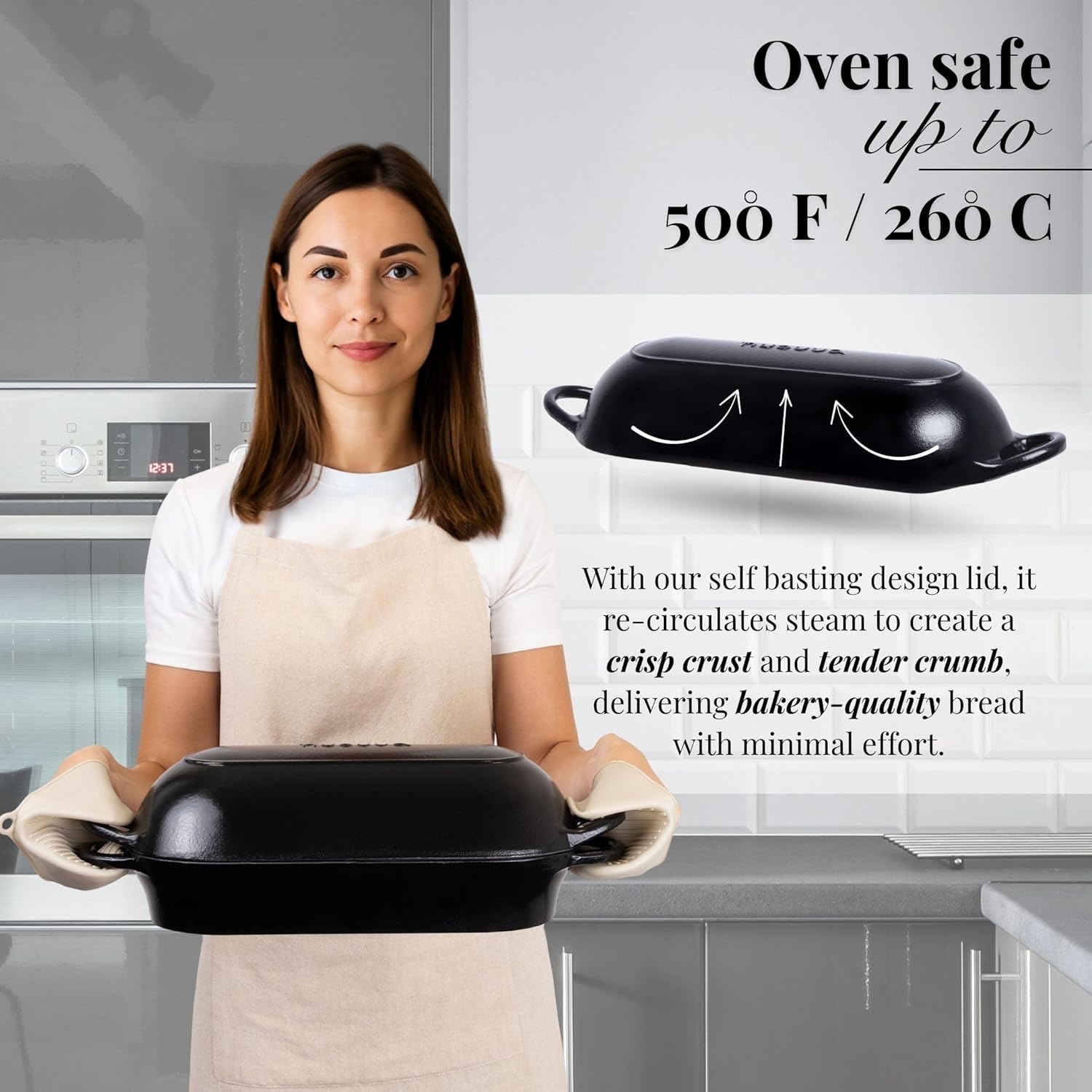
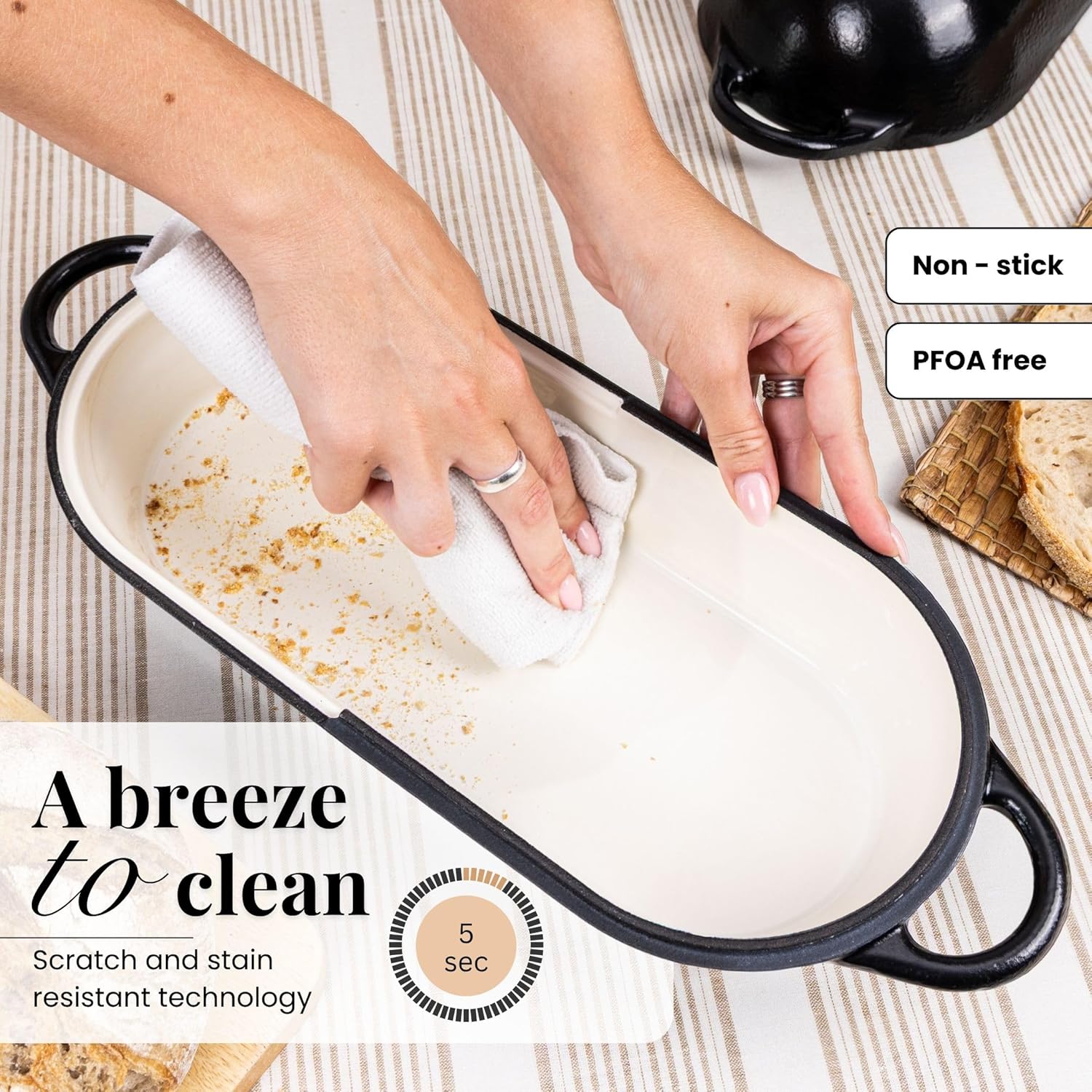
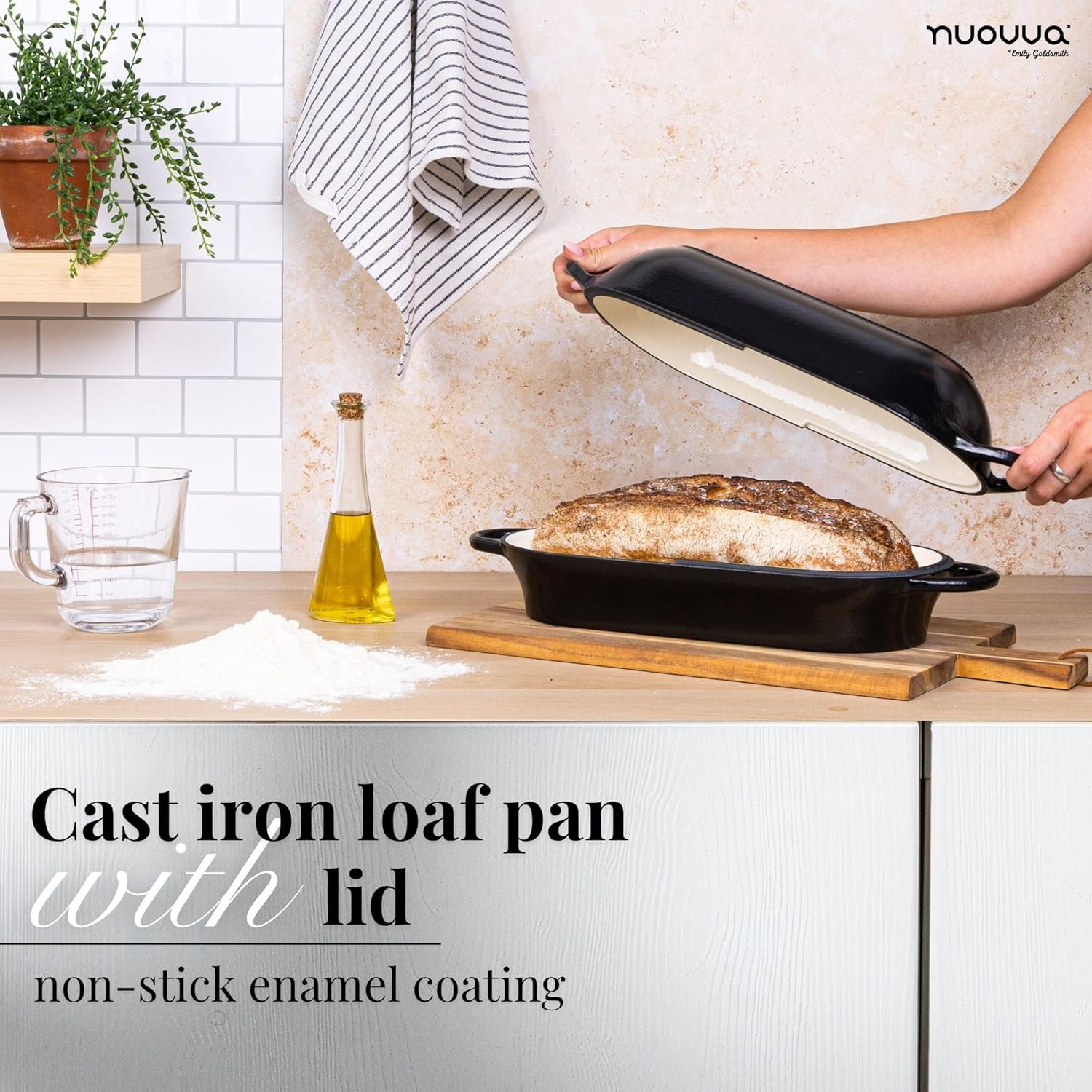
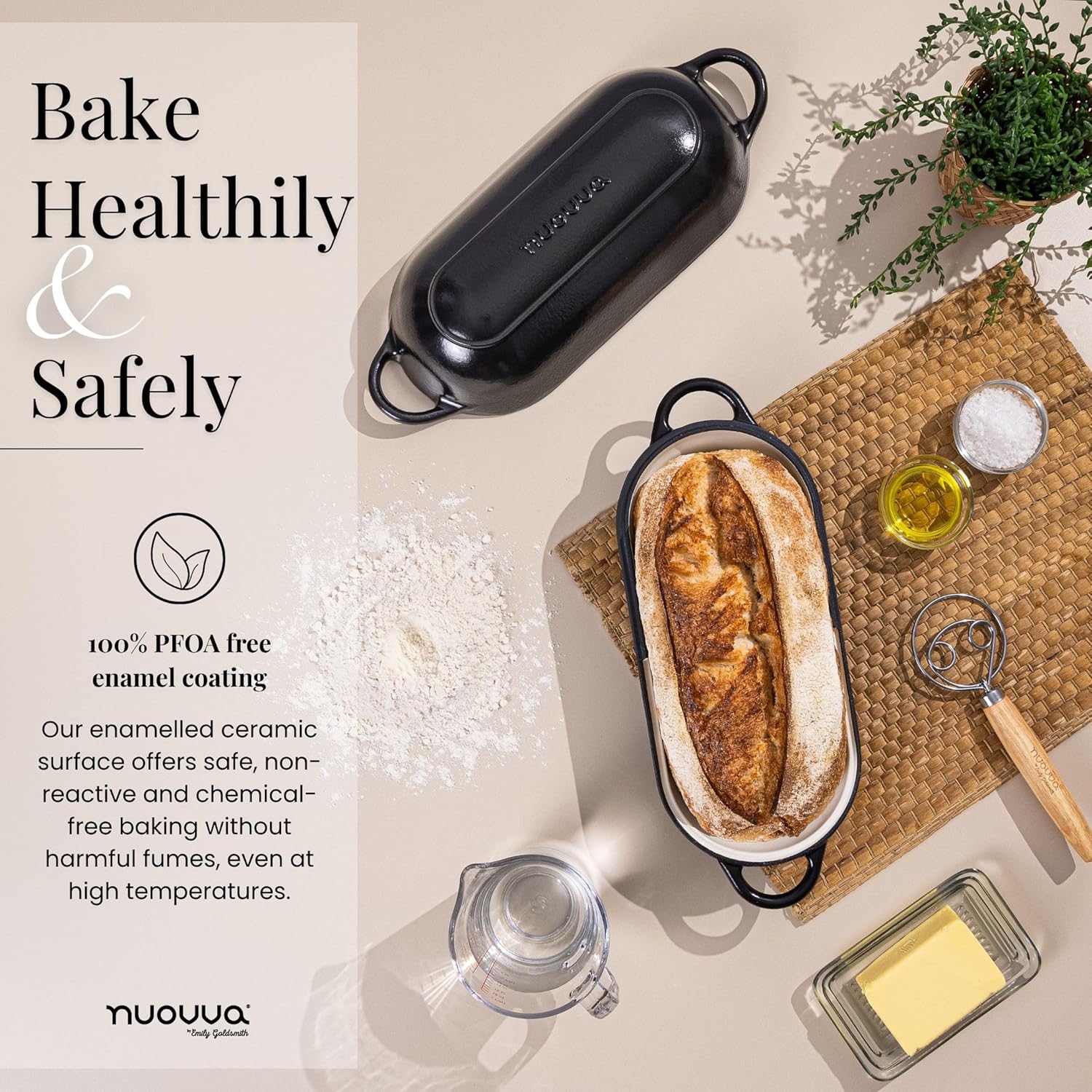
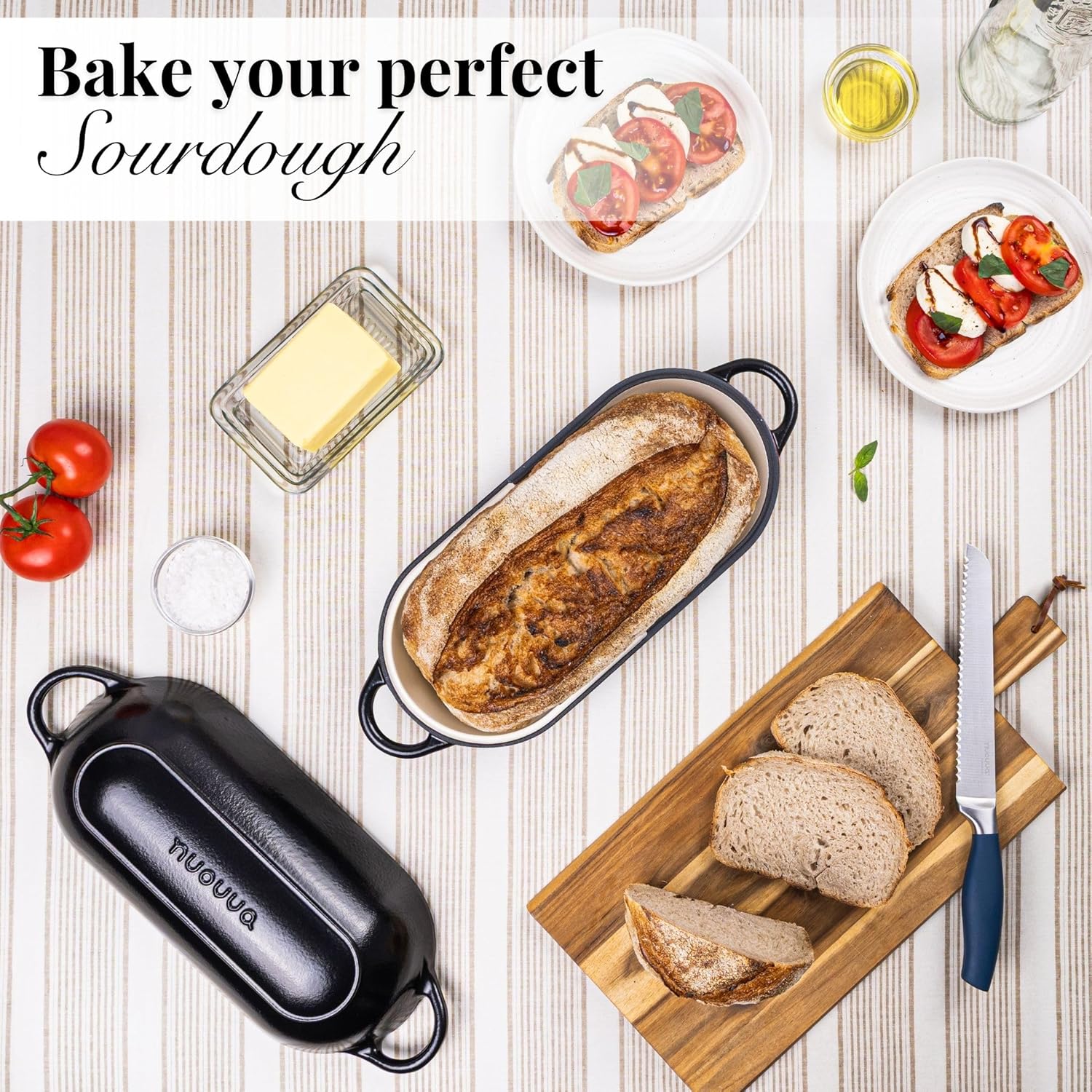
What it is and why it matters\nThis is an enamelled cast iron bread loaf pot designed to help you bake sourdough and other breads with a professional finish at home. The reinforced three‑layer enamel coating aims to resist chips and staining over time, while the cast iron core is chosen for its heat retention and even distribution. If you value a loaf with a crisp crust and uniform crumb, this pot offers a straightforward way to achieve reliable results without turning to a dedicated pro oven.\n\n## How it performs in practice\nOn paper, cast iron retains heat well and supports even baking, which is ideal for breads that benefit from steady heat. The self‑basting ridges on the moisture‑locking lid are designed to draw steam back onto the dough, helping maintain moisture and flavour during the bake. In day‑to‑day cooking, this means you’re less likely to end up with dry tops or uneven mids. It’s also marketed as versatile beyond baking bread, suitable for braising meats and stewing vegetables, which can be convenient if you’re cooking a full meal in one pot.\n\n## What stands out, and what may disappoint\nWhat stands out is the combination of a moisture‑retaining lid with a non‑stick enamel surface that should be easier to clean than bare cast iron. The enamel is described as reinforced and chip‑resistant, which is reassuring for frequent bakers. However, there are a couple of caveats to consider: you’ll want to confirm daily cooking needs align with a rectangular loaf pot shape, as some recipes and setups work best in round Dutch ovens. Also, while enamel helps with cleaning, cast iron requires a light, careful approach to avoid chipping if bumped or dropped.\n\n## Who it’s best for\nThis pot suits home bakers who regularly bake bread, particularly sourdough, and who appreciate even heat, moisture retention, and a lid that returns steam. It could also appeal to cooks who like to braise or slow‑cook in the same vessel and want a single pot for multiple uses. If you mostly bake quick breads or do not mind re‑adjusting techniques for rectangular shapes, it remains a reasonable option.\n\n## Who might want to think twice\nIf you prioritise ultra‑lightweight cookware, or you primarily bake flatbreads and prefer a shorter handling experience, this enamelled cast iron option may feel heavier and slower to heat up compared with lighter alternatives. Also, if you frequently encounter non‑stick issues in non‑stick pans, you may want to evaluate whether the enamel coating meets your expectations for longevity in your kitchen.\n\n## When it makes sense to buy\nChoose this pot if you want a sturdy, heat‑retaining vessel that supports bread with a moist, well‑developed crumb and you value the lid’s self‑bas backtasting effect. It’s a practical choice for regular bread bakers who also enjoy occasional braising tasks or one‑pot meals.\n\n## Before you buy, what to check\n- Confirm the exact dimensions you need for your oven and worktop space, since manufacturers sometimes list slightly different figures for “without handles” vs. “with handles.”\n- Consider your preferred bread shapes, a rectangular loaf pot notes a specific geometry that may suit certain recipes better than a round Dutch oven.\n- Ensure you’re comfortable with cast iron care and the suggested cleaning approach to preserve the enamel.\n\n## Practical usage example\nImagine pulling a boule‑style loaf from the oven and watching the lid release a gentle hiss of steam as the loaf finishes. The crust comes away with a satisfying crack, and the interior is evenly baked from edge to centre. This is the kind of consistent result many home bakers associate with a professional bake‑off, achieved here with a single pot that doubles for braising on subsequent meals.\n\n## What to consider alongside alternatives\nIf you’re weighing options, you’ll find several enameled cast iron vessels of varying shapes and sizes. A round Dutch oven might offer more even lid‑to‑pan steam distribution for certain breads, while a rectangular model helps when you want to slide a loaf straight from pan to cooling rack. If you prize ultralight, quick‑heat cookware, a different material could be more suitable.\n\n## Is it worth it? (Final verdict)\nIt’s a solid pick if you value durable enamelled cast iron with good moisture management and you bake breads frequently. If you mainly bake quick loaves or prefer compact, lighter gear, you may opt for alternatives that prioritise weight or shape for your specific recipes.\n\n## Quick FAQ\n- Can it be used on induction hobs? Yes, it’s designed to be compatible with gas, electric, ceramic, and induction cooktops.\n- Is the enamel easy to clean? The coating is described as non‑stick and chip‑resistant, making routine cleaning simple with a normal wash.\n- What temperature is it safe to use? It’s oven‑safe up to 500°F, which covers most bread baking and braising tasks.