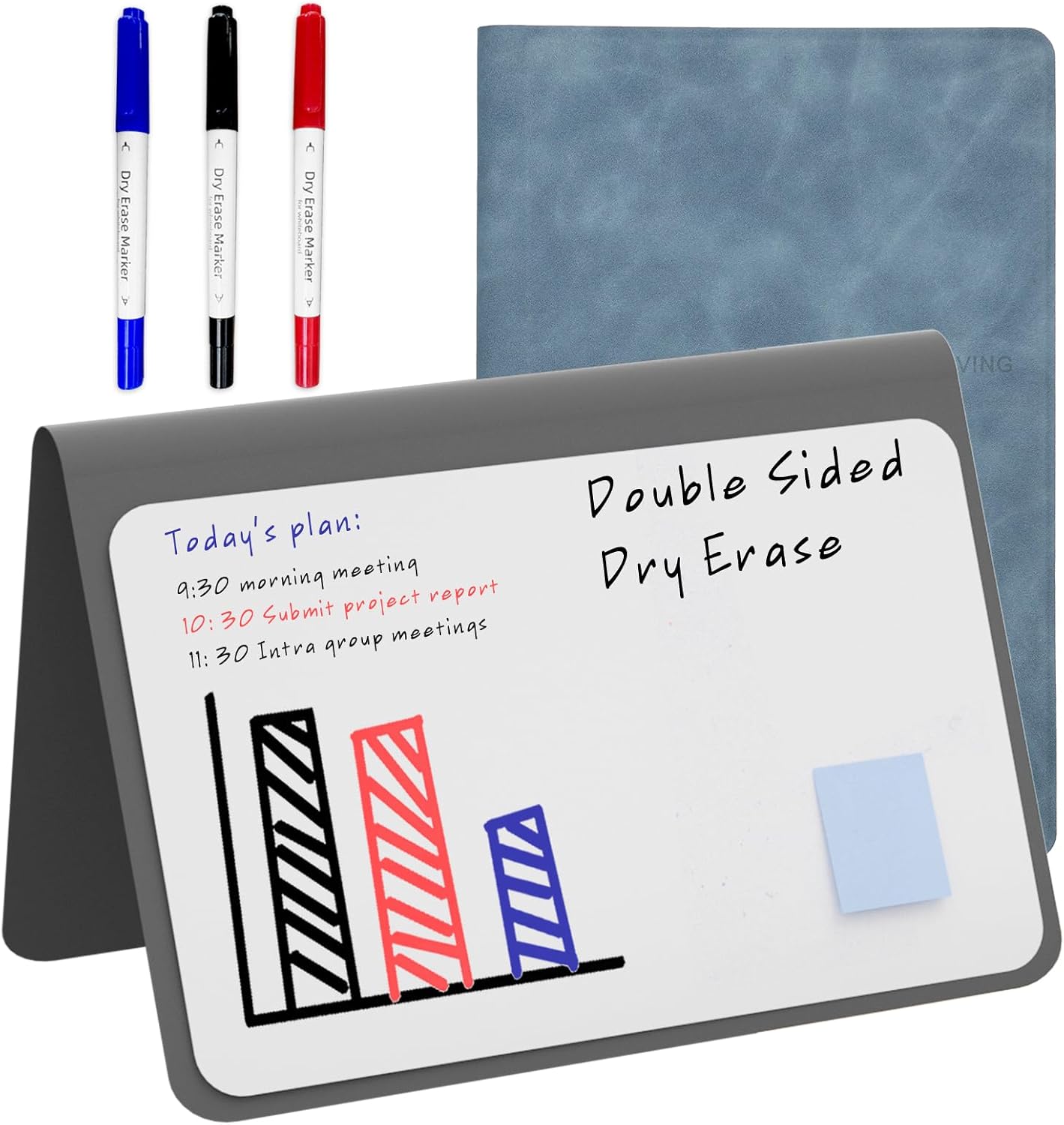
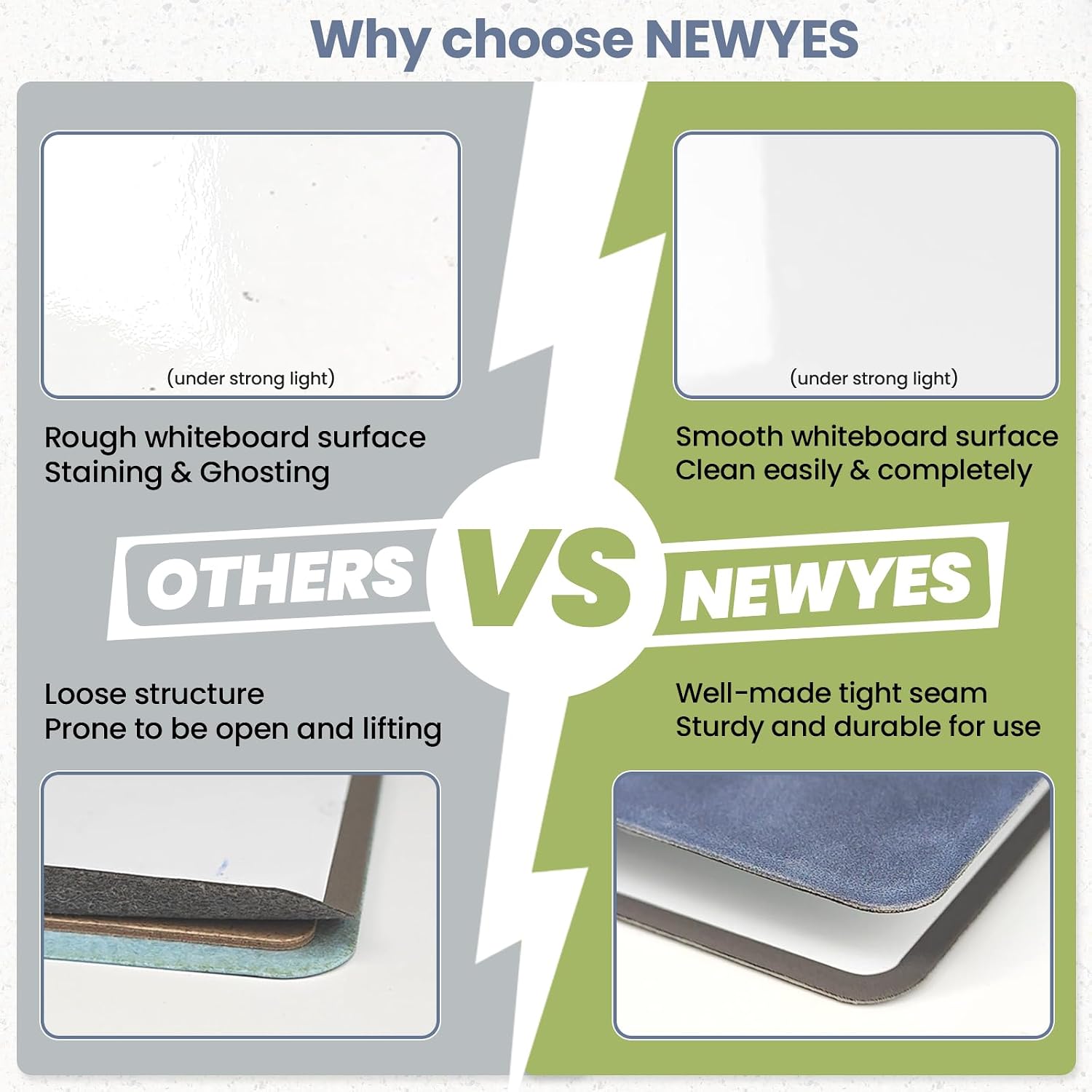
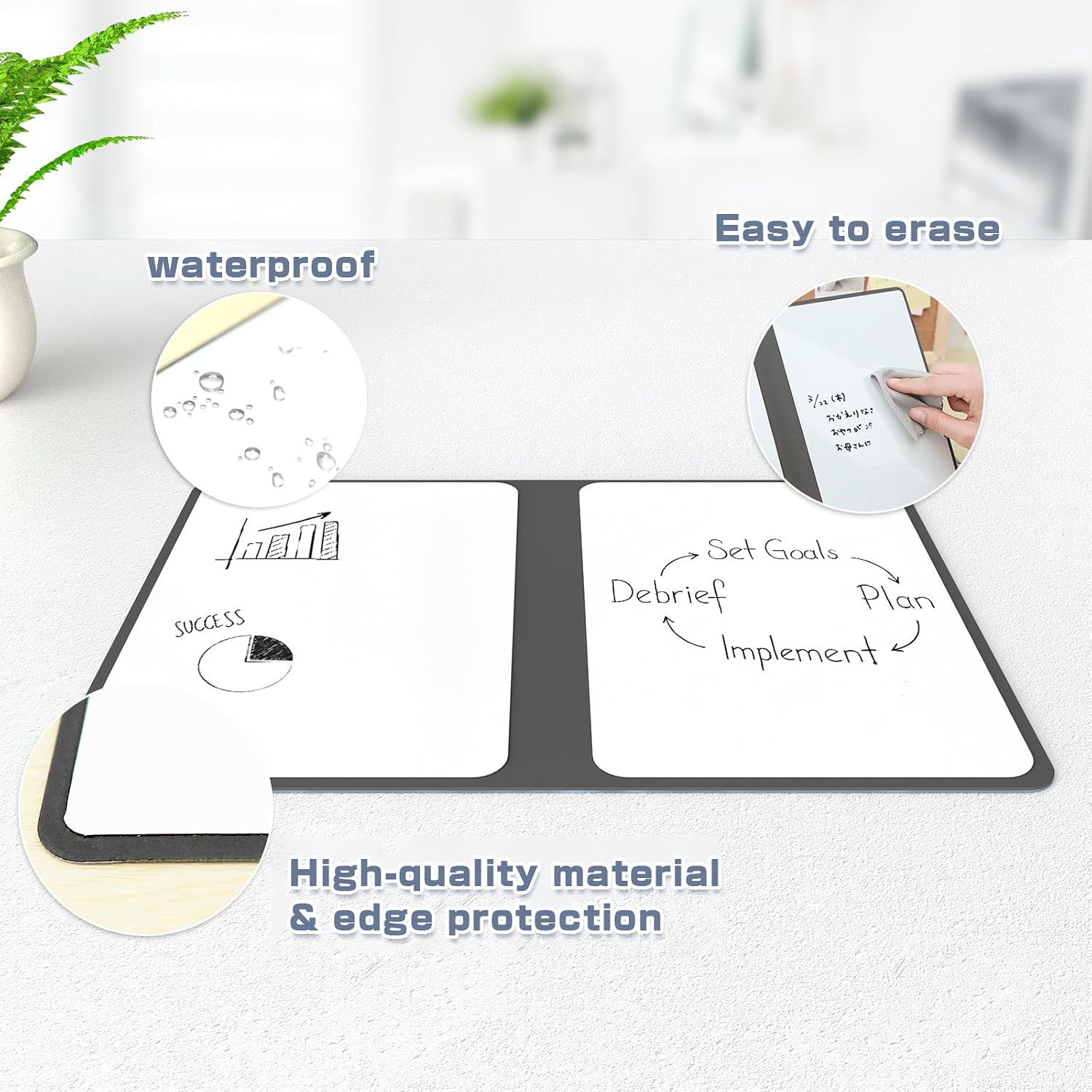
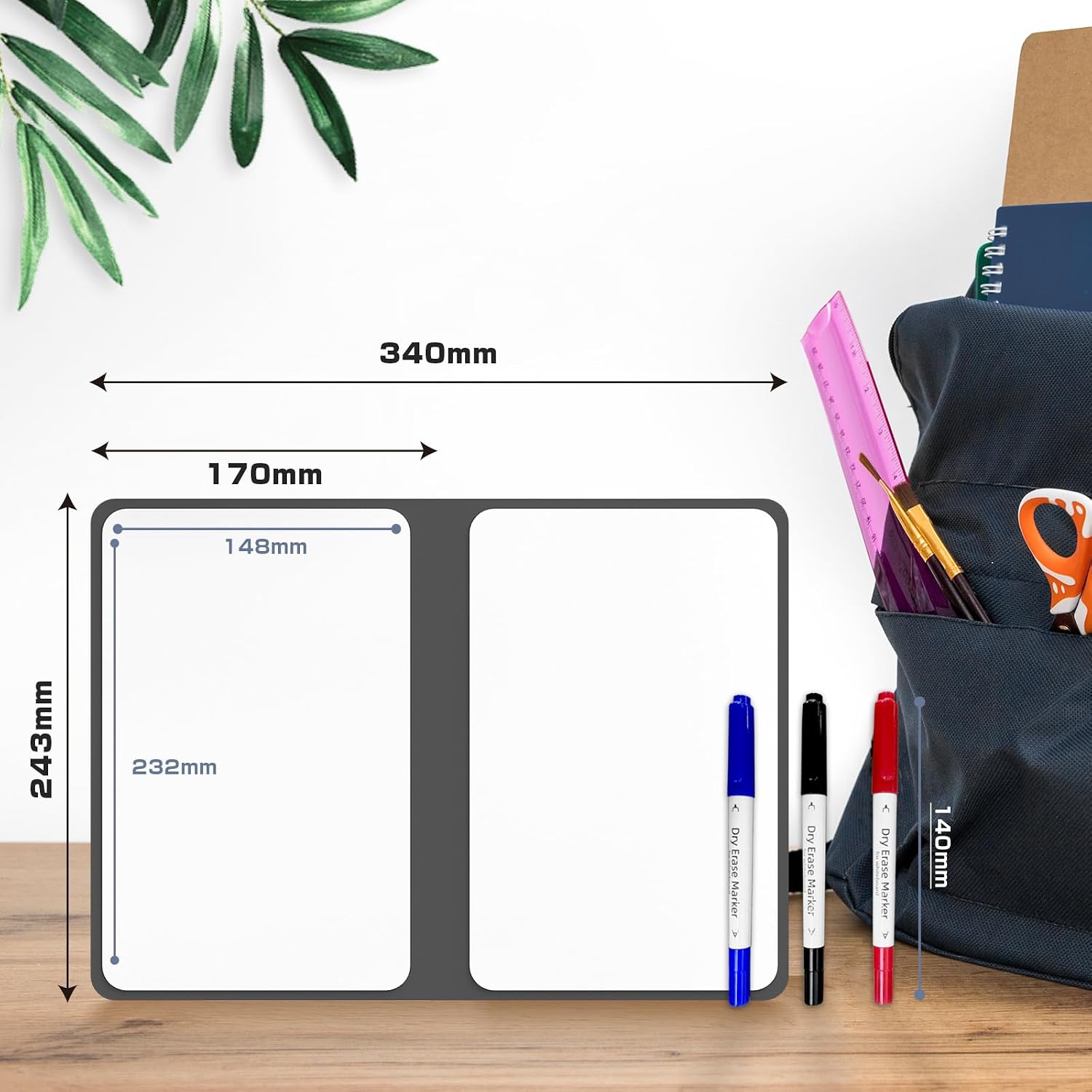
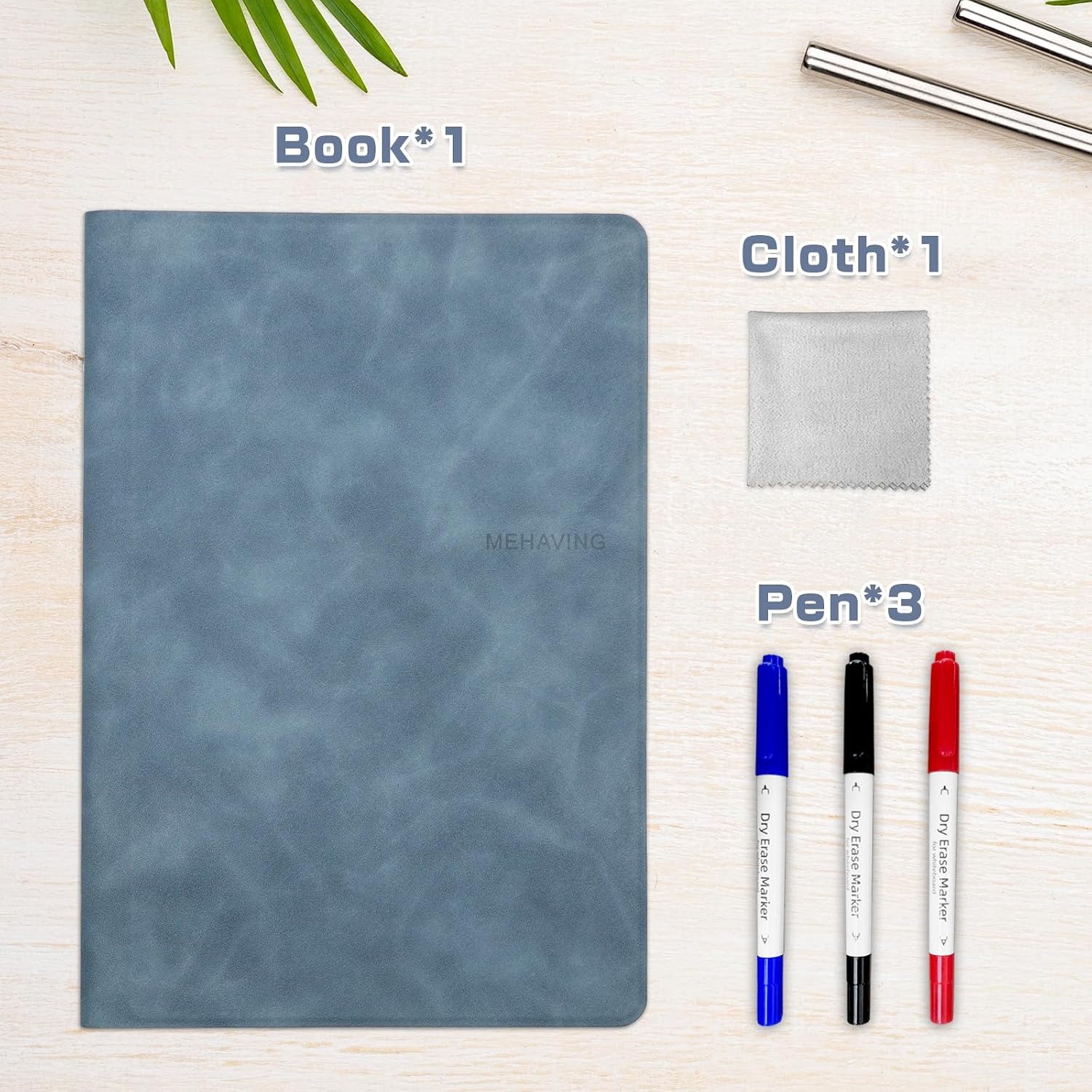
What it is and what it solves\nThe NEWYES Dry Erase Small Whiteboard A5 Notepad is a compact, double‑sided whiteboard designed to replace quick scraps of paper with a reusable writing surface. It aims to help you capture ideas, plan tasks and summarise meetings without wasting paper. On the surface, it feels like a practical desk companion: light enough to move around, yet sturdy enough to withstand regular writing and erasing. On the practical side, the board is described as smooth and erasable with no leftover stains after wiping, a feature that could save you time cleaning up after notes. If you’re the sort of person who jot notes, draw quick charts or lay out a to‑do list, this could slot into your daily routine with minimal fuss. However, as with any dry erase option, the actual erase quality and durability depend on how often you use it and the state of the cleaning cloth you have at hand.\n\n## Design and materials (on the surface)\nThe board is lightweight, listed at 160 g, and sized at 338 mm x 242 mm. The material and finish are described as smooth and scratch resistant, suggesting it can stand up to everyday use in an office, classroom or home study corner. It’s not a full‑size whiteboard, but its portability makes it convenient for desk space where you need to quickly capture ideas and then erase to reuse. It’s worth noting that the perceived longevity will hinge on the quality of its surface over time and whether you routinely use compatible erasers or cloths that won’t scratch the surface.\n\n## How you’d use it (everyday scenarios)\nThis kind of board is commonly used to save draft notes, plan tasks or log short meetings. In practice, you might keep it by the computer to capture quick ideas, sketch a chart during a quick planning session, or jot down a to‑do list for the day. It’s useful for learners who want to practise problems or students who need a reusable space for explanations during study without pulling out sheets of paper. The board also suits parents who want a reusable checklist for daily routines. The flexibility to reuse reduces paper waste, though it does rely on you having a reliable way to erase completely and keep the surface clean.\n\n## Who it’s for (target users)\nIn theory, office workers, managers, teachers, students and parents can benefit. If your typical day involves quick note‑taking, brainstorming or visual planning, it could help you keep thoughts organised without accumulating scrap papers. If you frequently need to share a quick layout or a diagram with someone else, you might find the dual‑sided design handy for separate ideas or drafts. That said, it may not be the best choice if your notes require a highly glossy surface or if you need a larger writable area for detailed charts.\n\n## Pros and cons (a balanced view)\nPros: lightweight and portable, double‑sided for more writing space, smooth writing surface, easy to erase and reuse, aims to cut down paper waste. Cons: the long‑term durability depends on surface wear and consistent erasing, the overall writing area is smaller than standard boards, which may constrain more detailed charts or lengthy notes. If you prioritise heavy‑duty daily use or require a premium glass surface, this model might feel modest in comparison.\n\n## When it makes sense to buy\nIf you want a compact, reusable board for quick notes, planning, doodling or classroom demos, and you value a lightweight solution you can move between workspaces, this NEWYES option could fit. It’s particularly convenient if you’re aiming to cut down on paper waste and prefer a simple, low‑maintenance surface that you can wipe clean.\n\n## When you might rethink it\nIf your notes are sprawling or require lots of detail, or if you need robust long‑term durability with minimal surface wear, you may want to consider a larger or more premium writing surface. Also, if erasing performance degrades with time or if you frequently need to erase to pristine brightness, it’s worth testing the erase process early to ensure no stubborn marks remain.\n\n## What to check before buying\nEnsure the erasing method you plan to use (cloth or handkerchief) leaves no residues and that you can wipe the surface clean in one pass for quick reuse. Consider where you’ll place the board—on a desk or a small wall area—and whether the size (338 x 242 mm) suits your typical notes or charts. Think about your daily routine: do you benefit from a portable, lightweight board that travels with you, or would a larger surface better support your planning needs?\n\n## Quick comparison (contextual)\nCompared with paper notes, this board offers reusability and reduces waste, compared with larger office boards, it sacrifices some writing area for portability. If you want a dedicated on‑the‑desk note space that travels with you, this form factor can be more convenient than a stationery pad. If you need a high‑end writing experience, or a board designed for heavy daily use, you might look for alternative options with more premium materials or larger writable surfaces.\n\n## Is it worth it? (Buying verdict)\nWorth considering if you prioritise portability, reuse, and a simple system for quick notes and planning. It isn’t a guarantee of flawless long‑term durability, so assess how often you’ll erase and how you’ll maintain the surface. If your use case is occasional note‑taking in study or small‑scale planning, this board could be a sensible add‑on to your desk. If your needs are primarily for large, detailed diagrams or daily heavy writing, it may not be the best match.\n\n## FAQ (practical questions)\n- Can I erase easily? Yes, with a cloth or handkerchief, and the surface is described to leave no dirty stains after wiping.\n- How portable is it? It’s lightweight at 160 g and measures 338 mm by 242 mm, making it easy to carry between spaces.\n- Is it suitable for classrooms? It’s described as suitable for office, classroom and home use, including planning and memos.\n