

NeoSander Reciprocating Detail Sander — Compact, Low-Vibration Precision for 3D Printing & Model Making
Product description
What this is and what it’s for
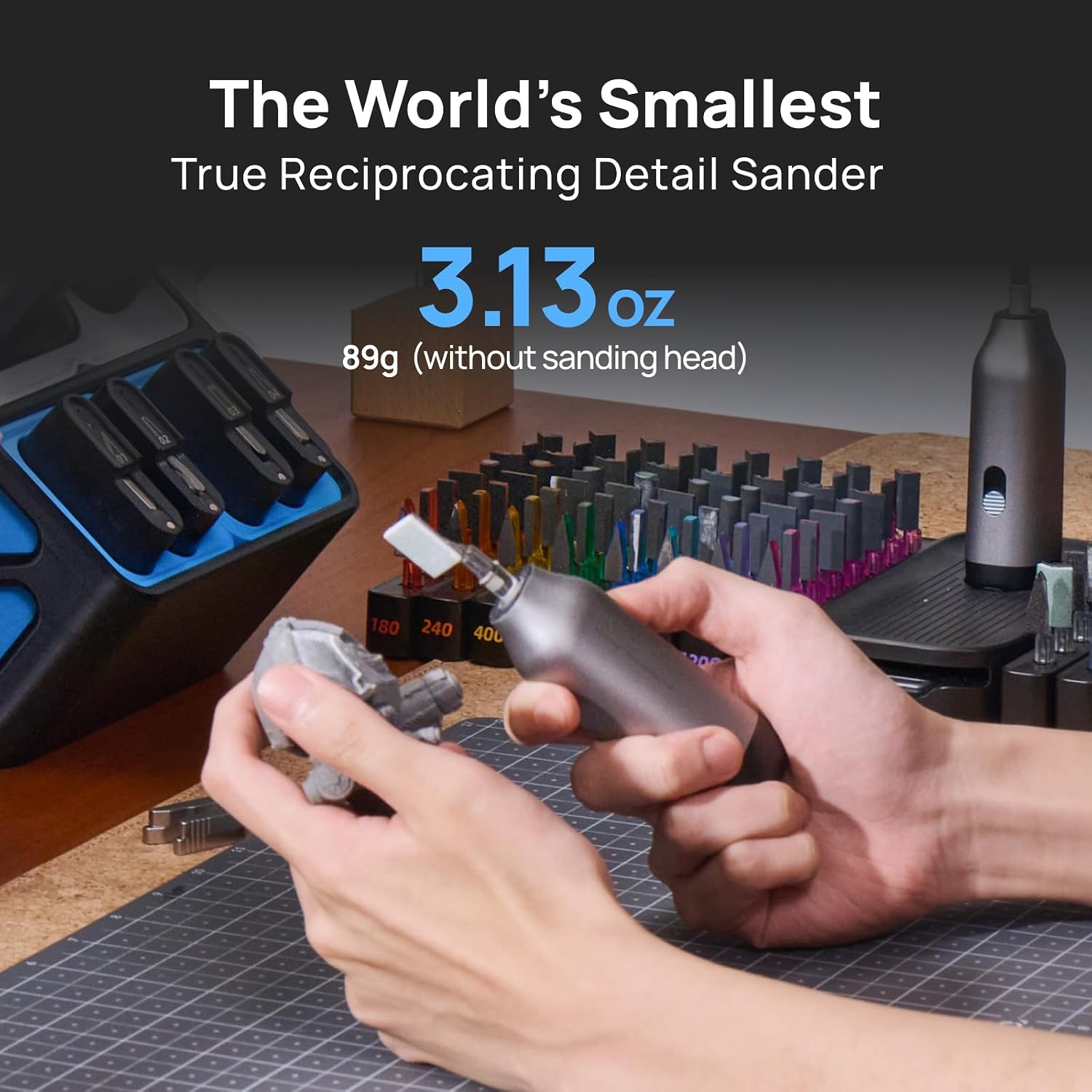
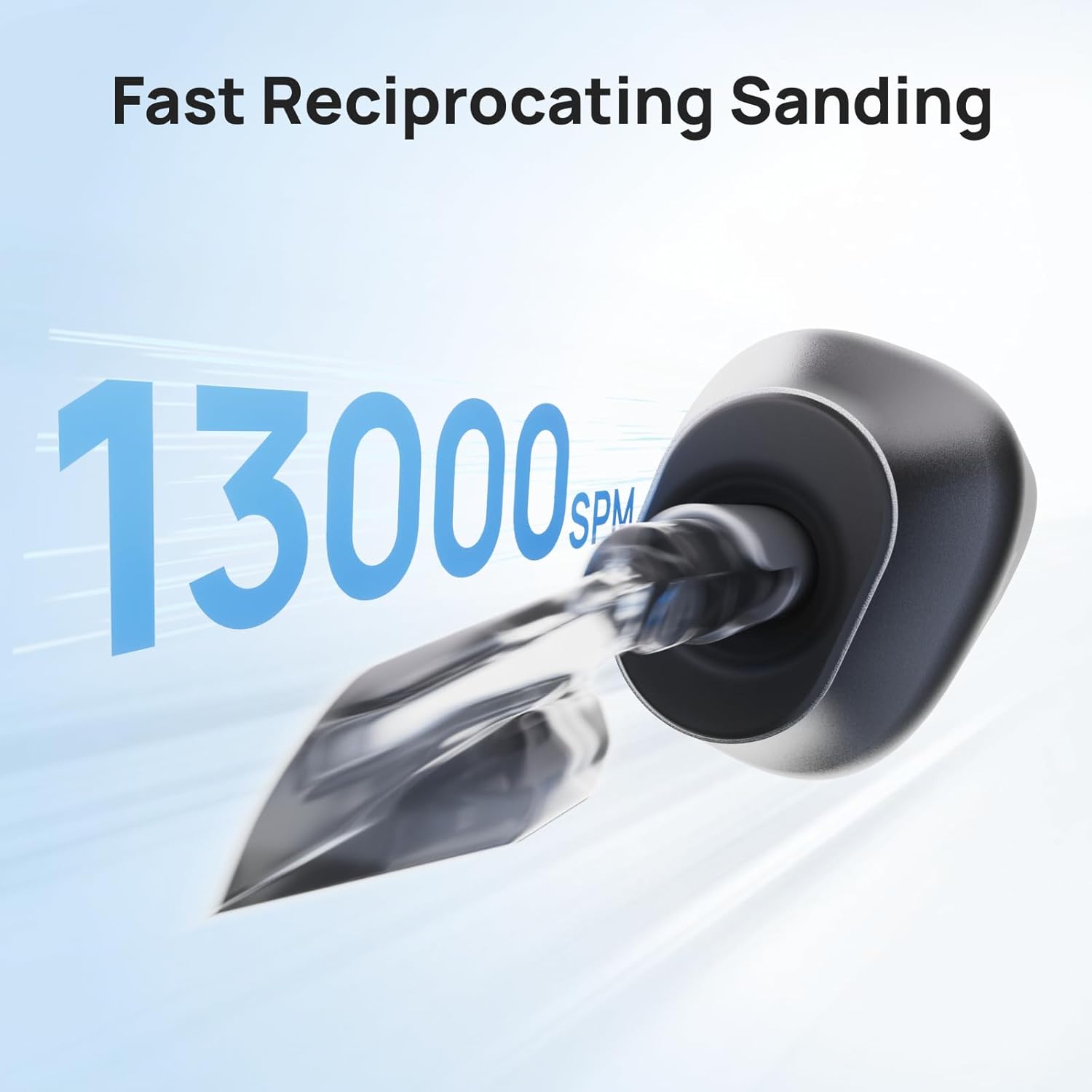
The NeoSander Reciprocating Detail Sander is a compact, palm-sized electric tool designed for fine post-processing work. Its key strength lies in a true reciprocating linear motor delivering up to 13,000 SPM, which makes it suitable for delicate shaping and finishing tasks across 3D printing, model making, and small craft projects. If you routinely polish tight spaces or finish miniatures, this tool aims to offer a more controlled sanding experience than bulkier setups.
How it works in practice
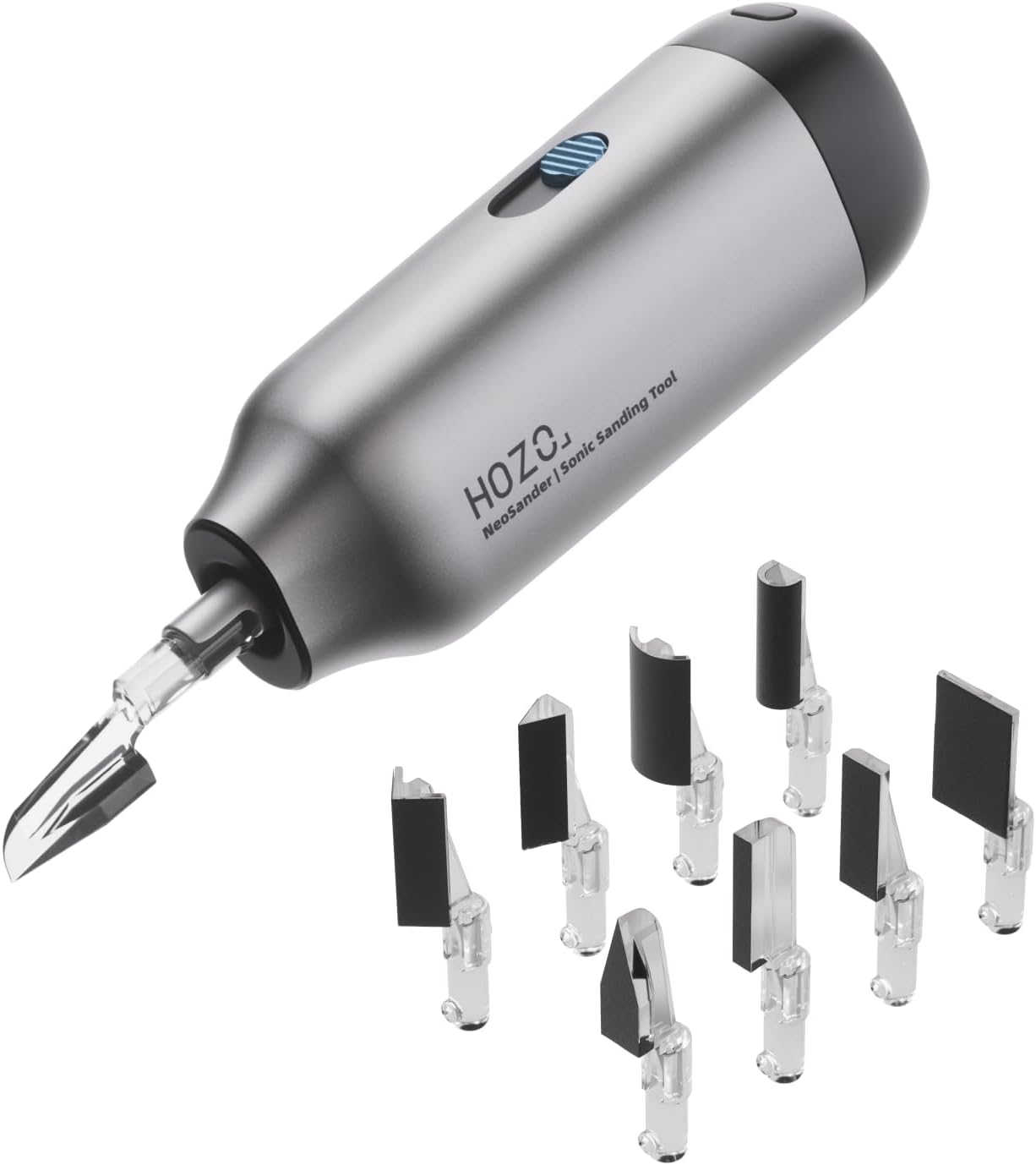
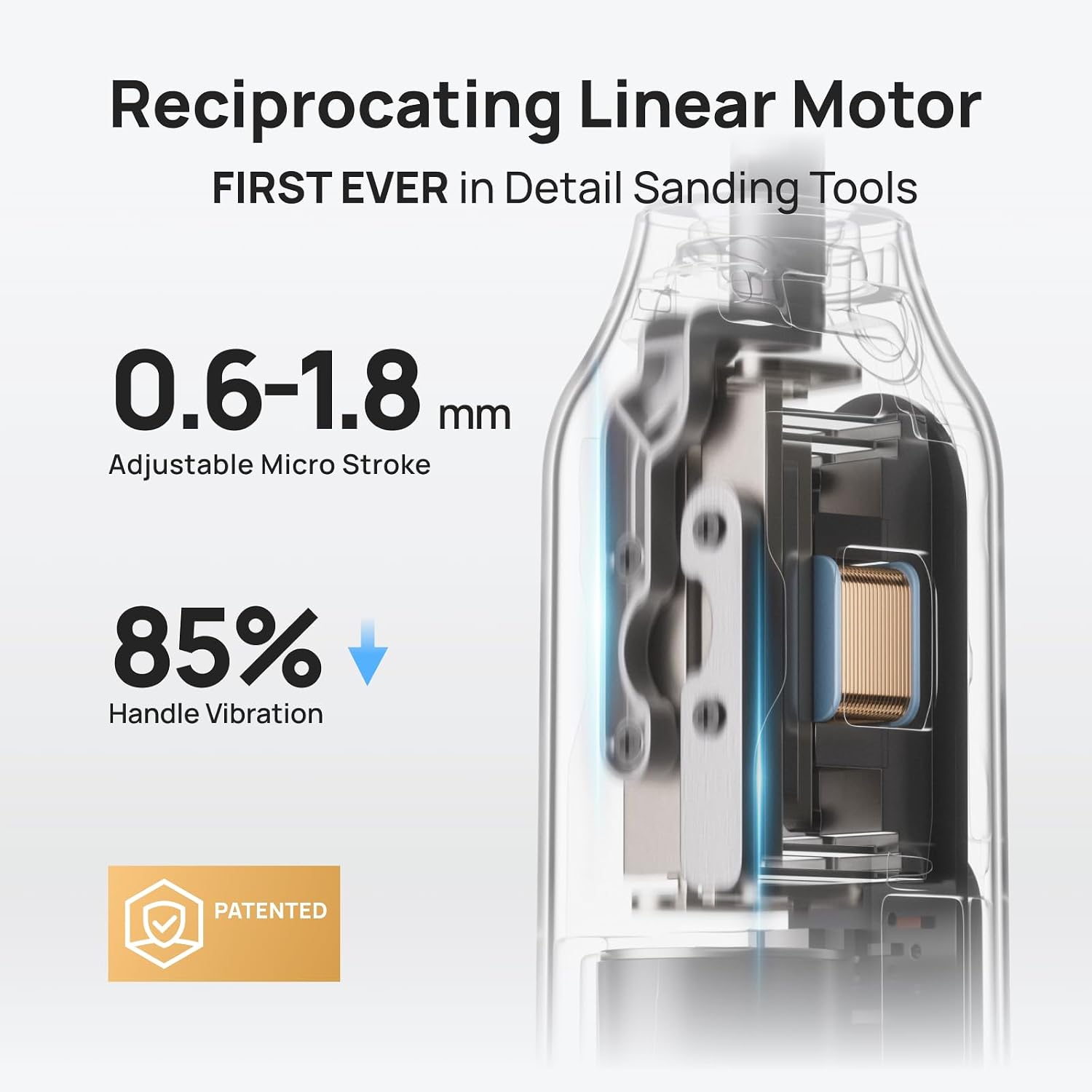
A notable feature is the stepless stroke adjustment from 0.6 to 1.8 mm. In practical terms, you can switch between aggressive material removal and fine finishing without swapping heads or tools, which helps keep your workflow steady. The compact form factor (104 × 33 × 28 mm) and a light weight of just 89 g (excluding sanding heads) make it comfortable to handle for extended periods, reducing hand fatigue compared with larger detail sanders.
Build quality and ergonomics
NeoSander emphasises a low-vibration design. Its flat-oval aluminium body is paired with an internal counterweight balancing system that actively cancels vibration, aiming to cut hand tremor by up to 85%. For long sessions of precision work, this could translate to steadier control and more consistent results.
Dust control and versatility
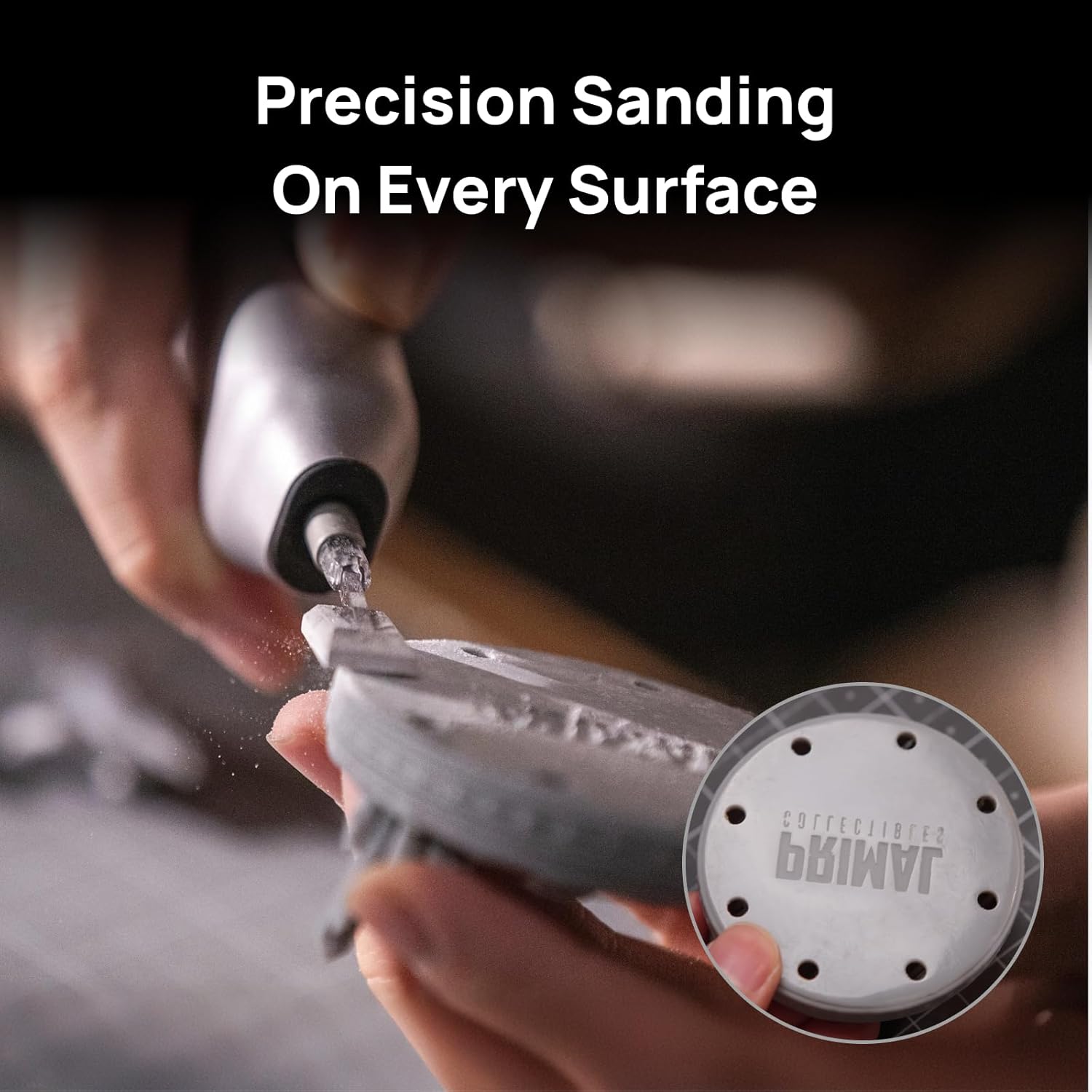
The front section offers IP54 dust and splash resistance, which is meaningful if you occasionally sand damp or use finer grits where dust can interfere with the finish. A silicone dust guard is included to help limit ingress and extend tool life. The ability to perform wet sanding with fine-grit paper broadens its use cases, especially if you’re aiming for ultra-smooth surfaces on small parts.
What to expect in real-world scenarios
This tool is designed for detail-oriented tasks rather than bulk material removal. It sits in the mid tier of convenience for hobbyists who need a compact, controllable sander that can reach restricted areas – think post-processing after FDM 3D prints, smoothing miniatures, or shaping small craft components. It isn’t a heavy-duty production sander, so if your projects demand aggressive stock removal or a larger sanding footprint, you may prefer a different solution.
Strengths and what could be better
You’ll notice the immediate benefit of the adjustable stroke: fewer tool swaps means less downtime between speed settings. The vibration reduction is a meaningful comfort factor, especially when you’re finishing tiny items. On the downside, the overall footprint and weight mean the tool is best suited for detail work, for larger surfaces or heavy material removal, this device will struggle to keep pace.
Who this is for
- Hobbyists and makers who frequently work on small parts, 3D printed components, or model details.
- Crafters needing precise control in tight spaces where a larger sander isn’t practical.
- Beginners who want a straightforward, adjustable-detail sander without a steep learning curve.
Who it isn’t ideal for
- Projects that require rapid, heavy material removal or larger sanding areas.
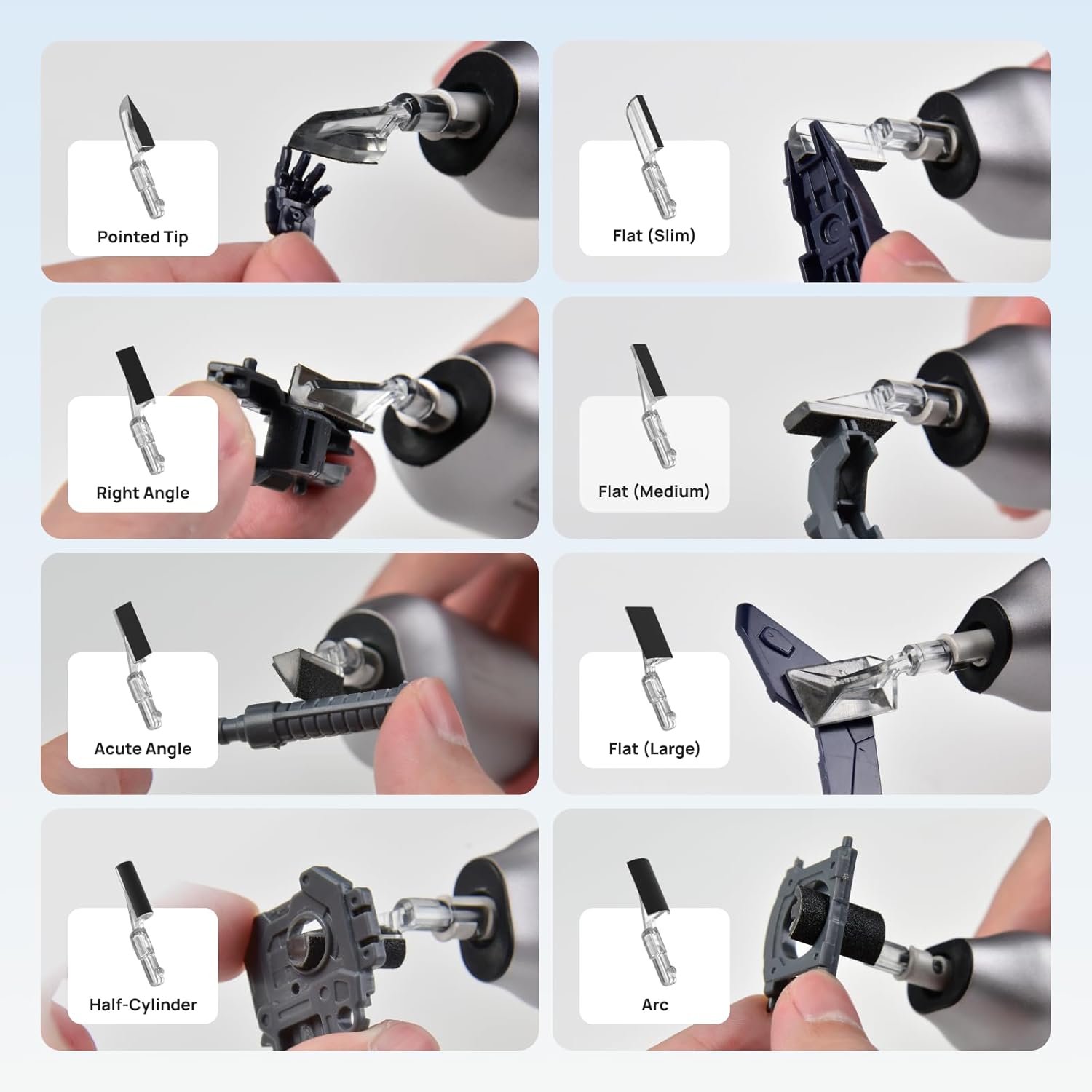
- Professionals demanding industrial-grade durability or a broader selection of compatible accessories beyond the included heads.
When it makes sense to buy
If your work involves frequent fine shaping, finishing, or smoothing of small parts, and you value a low-vibration experience that can adapt its stroke to the task, this NeoSander model could align with your needs. It’s particularly compelling if you prioritise control in confined spaces and the option of wet sanding to improve surface quality.
What to check before you buy
- Confirm compatibility with the sandpaper sizes you plan to use and whether you’ll need specific grit ranges for wet sanding.
- Consider the balance between its compact size and your typical project scale. For very small parts, it should perform well, for larger scale tasks, you may want a different tool.
- Assess whether you value the vibration reduction enough to justify the trade-off in sheer sanding heft.
Practical use example
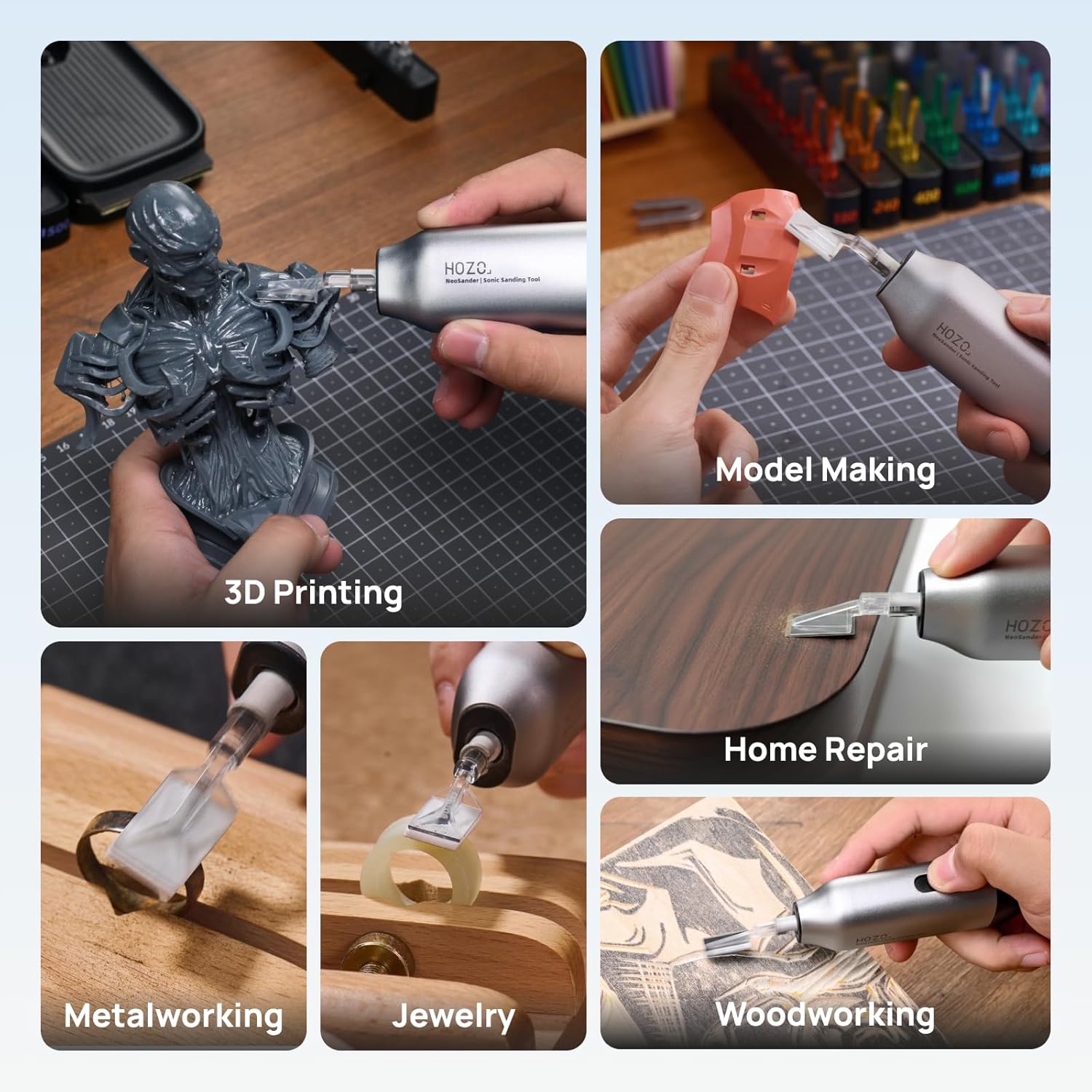
Imagine finishing a tiny resin or plastic model where every edge needs a crisp, smooth fillet. You can set a medium stroke for quick shaping, then trim to a fine stroke for polish, all without changing heads. The IP54 rating and dust guard help keep the workspace cleaner when you’re brushing away fine particles or lightly dampening the surface to reduce dust during finish work.
Tech specs at a glance
- Power and motion: Reciprocating linear motor delivering up to 13,000 SPM
- Stroke: Stepless adjustment from 0.6–1.8 mm
- Ergonomics: Flat-oval aluminium body with counterweight balancing system
- Vibration: Up to 85% reduction claimed
- Durability and protection: IP54 front section for dust and splash resistance, silicone dust guard
- Size and weight: 104 × 33 × 28 mm, 89 g (excluding sanding heads)
- Suitable for: 3D printing post-processing, model making, crafts & DIY projects
Is it worth it?
Worth considering if you prioritise precise control in tight spaces and want a compact, low-vibration sander for detailed finish work. It may not be the best option if you regularly need heavy material removal or a larger sanding footprint.
FAQ
- Can I use this for wet sanding? Yes, the IP54 rated front and compatible sandpapers enable wet sanding with fine-grit sheets.
- How important is the stroke adjustability? The stepless 0.6–1.8 mm adjustment allows switching between shaping and finishing without changing tools, which can save time on detailed tasks.
- Will it improve finish on 3D prints? For fine post-processing and smoothing small features, it can offer better control and consistency than larger, less precise tools.